
Cocuk kitaplari alanindaki ozgun verimiyle ulkemizin 2013 Astrid Lindgren Anma Odulu (ALMA) adayi olan Behic Ak'in "Tombis Kitaplar" dizisi, sanatcinin yeni yazip cizdigi ucuncu kitabiyla suruyor. Benim Bir Karsim ve Bizim Tombis Tastan Hic Anlamiyor kitaplarinda farkli sorularin cevaplarini arayan Memo ile bu cevaplari pek de umursamayan yakin arkadasi Tombis, bu sefer de cocukluk hayallerinin sinirsizligina taniklik ediyorlar. Sanatci bu kitabiyla, cocuklari buyuk hayaller kurmaya ve hayallerinin pesinden gitmeye davet ediyor. Cocuklari olasiliklar ve farkliliklar uzerine dusunduren Tombis Kitaplar, gelecekteki felsefe okumalarinin kapisini araliyor. Dizi, hem desenleriyle hem de ve yaratici okuma olanagi saglayan metniyle kucuk okurlar kadar yetiskinlerin de en sevdiklerinden. (Tanitim Bulteninden)

Dogdugun gunun oykusunu biliyor musun? Ulkemizin cok sevilen cocuk kitabi yazarlarindan, mizah ustasi Behic Ak'in yarattigi "Tombis Kitaplar" dizisi dort kitaba ulasti. Benim Bir Karisim, Bizim Tombis Tastan Hic Anlamiyor ve Bizim Tombis Fiyonk Makarnayi Cok Seviyor'un ardindan, Ben Ne Zaman Dogdum? yepyeni bir sorunun pesine dusuyor. Her kitapta farkli bir sorunun cevabini arayan Memo ile bu cevaplari pek de umursamayan arkadasi Tombis, bu kez dogum gunlerinin sadece rakamdan ibaret olmadigini, her tarihin icinde sakli oykuleri kesfediyor. Cocuklari farkliliklar uzerine dusunduren "Tombis Kitaplar", felsefe okumalarinin da kapisini araliyor. Dizi, hem renkli desenleriyle hem de yaratici okumalara davet eden oykuleriyle kucuk okurlar kadar yetiskinlerin de ilgisini cekiyor. Bir kusun yumurtadan cikmasina tanik olan Memo, kendi dogdugu gunu merak eder. Annesinin, buyukannesinin, dedesinin, cevresindeki herkesin o gune iliskin bambaska anilari vardir! Acaba arkadasi Tombis ne hatirlamaktadir?.. (Tanitim Bulteninden)

Mizah ustasi Behic Ak'in, merakli Memo ve arkadasi Tombis'in oykulerini anlattigi "Tombis Kitaplar" minik okurlariyla yeniden bulusuyor! Her karista yeni bir cevap, her karista farkli bir dunya! Her yastan kitap severin zevkle okudugu "Gulumseten Oykuler" dizisinin yaraticisi, mizah ustasi Behic Ak yazip resimledigi "Tombis Kitaplar" dizisinin ilk kitabiyla bu kez minik okurlariyla bulusuyor. Yasadigimiz zamana kendine ozgu cizgileri ve oykuleriyle hayat veren sanatci, merakli Memo ve arkadasi Tombis'in bu ilk oykusunde, bir karisin kac farkli anlama gelebildigini ilgi cekici bir kurguyla anlatiyor. Cocuklarin kendi sorularini sormalari, kendi oykulerini yaratmalari icin esin kaynagi olan Behic Ak, kitabinda onlari fikir ve anlam uretmeye ozendirirken, gelecekteki felsefe okumalarinin da yolunu aciyor. Gunisigi Kitapligi'nin ozenli bir tasarimla yeniden bicimledigi dizinin ikinci kitabi Bizim Tombis Tastan Hic Anlamiyor cok yakinda kitapci raflarinda. Tamirci Ali Usta'yla el sikisan Memo, elinin iriyari adamin avucunun icinde kayboldugunu gorur. Memo, karisinin hep ufacik kalacagindan kaygilanir. Acaba herkesin karisi nasildir? Her rastladigina bunu sormaya baslar. Tabii, arkadasi Tombis'e de. Hayret! Amma da degisik karis vardir...

"Gulumseten Oykuler" dizisinin yaraticisi Behic Ak, "Tombis Kitaplar" dizisinin ikinci kitabinda cocuklari yine felsefeye davet ediyor. Bir cakiltasi kac farkli hikâye anlatabilir? Dunyanin en prestijli cocuk edebiyati odullerinden Astrid Lindgren Anma Odulu (ALMA) 2014 Turkiye adayi olan Behic Ak, yazip resimledigi "Tombis Kitaplar" dizisinin ikinci kitabinda merakli Memo ve arkadasi Tombis'in yeni oykusunu okurlariyla paylasiyor. Farkli dusuncelerin ve duygularin yasama kattigi zenginligi merakli bir cocugun gozunden aktaran sanatci, karikatur tadindaki cizimleriyle ve dusundurucu, renkli karakterleriyle, bir cakiltasina herkesin degisik anlamlar yukleyebilecegini anlatiyor. Cocuklari cevrelerindeki dunyayi gozlemlemeye ve sorgulamaya ozendiren kitap, felsefeye giris niteligi tasiyor. Gunisigi Kitapligi'nin ozenli bir tasarimla yeniden bicimleyerek dizilestirdigi "Tombis Kitaplar" yeni oykulerle devam edecek. Memo, plajda dolasirken kucuk bir cakiltasi bulur. Rastladigi herkes, bu tasta farkli farkli ozellikler kesfeder. Bir tas hem cok cesur, hem de cok tok olabilir mi?
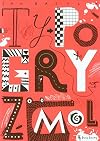
Ksiazka aktywnosciowa wspomagajaca nauke liter - do bazgrolenia, rysowania, malowania i wyklejania. Te litery chyba zwariowaly! Udaja wiezowce i zamieniaja sie w zwierzeta. Zakopuja sie w sniegu i zjezdzaja na nartach. Wyglupiaja sie i zapraszaja cie do zabawy. W co? W co tylko zechcesz! Tu wszystko jest mozliwe! Gryzmol, rysuj, maluj i wyklejaj. Baw sie ksztaltami liter i cwicz wyobraznie. Do dziela!
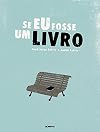
Se você fosse um livro, como gostaria de se relacionar com os leitores? Na tentativa de formular respostas criativas para a pergunta, o poeta português José Jorge Letria e o ilustrador André Letria - pai e filho - criaram a obra Se eu fosse um livro. O título faz uma investigação poética sobre o que um livro supostamente esperaria da interação com seu público.
Com imaginação, José Jorge, o pai poeta, sugere que o objeto teria um leque de desejos, dos mais simples - "ter sempre um lugar reservado no quarto mágico de cada criança" - aos mais ambiciosos - "crescer sem limites até me transformar em uma biblioteca!".
As metáforas visuais criadas por André, o filho ilustrador, exploram as possibilidades de invenção a partir das formas do objeto livro - que ora flutua como uma pipa no céu, ora se transforma em vassoura pronta para varrer a ignorância do mundo. O trabalho rendeu a Se eu fosse um livro o Prêmio Junceda Ibéria, concedido em Barcelona pela Associação Profissional de Ilustradores da Catalunha.
Com imaginação, José Jorge, o pai poeta, sugere que o objeto teria um leque de desejos, dos mais simples - "ter sempre um lugar reservado no quarto mágico de cada criança" - aos mais ambiciosos - "crescer sem limites até me transformar em uma biblioteca!".
As metáforas visuais criadas por André, o filho ilustrador, exploram as possibilidades de invenção a partir das formas do objeto livro - que ora flutua como uma pipa no céu, ora se transforma em vassoura pronta para varrer a ignorância do mundo. O trabalho rendeu a Se eu fosse um livro o Prêmio Junceda Ibéria, concedido em Barcelona pela Associação Profissional de Ilustradores da Catalunha.
Os meninos carvoeiros nao conhecem outra vida, a nao ser o trabalho duro nas carvoarias. E a historia de um deles que Roger Mello conta neste livro. Uma historia narrada de forma poetica e original e nao sem esperanca e que traz ainda as expressivas ilustracoes do autor, que captam com sensibilidade e forca a vida cinzenta dos pequenos carvoeiros.
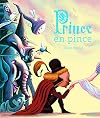
Prince en pince pour les jolies et minces. Gare aux pas, car crapaud écrabouillé, Beauté envolée! » Il était une fois...? Le prince Guillaume de Malotruy était bon chasseur et coureur de jupons. Au cours d’une chasse coquine, il écrasa par mégarde un crapaud. Mal lui en prit! Le malheureux batracien était l’animal de compagnie de la sorcière Scaramouche qui, avide de vengeance, jeta un sort à l’assassin. Dès lors, chaque nouvelle splendide dulcinée, une fois la bague au doigt, se transforma en laideron. Vingt-trois mariages plus tard (et vingt-trois mariées au cachot), le conseiller princier Cornélius usa d’un ingénieux stratagème : Guillaume épousa une marionnette joliment prénommée Isadora, une beauté impérissable. L’histoire aurait pu s’arrêter là si le prince ne s’était pas tant ennuyé dans les bras de son Isadora de bois. Surpris de trouver une bibliothèque dans les profondeurs de ses cachots, créée à l’attention des détenues et gérée par une certaine Cunégonde - bien hideuse demoiselle enlevée par erreur - , le prince analphabète tomba sous le charme de la voix suave de sa disgracieuse bibliothécaire. De nouvelles noces en perspective...? Un délicieux et irrévérencieux conte par un Benoît Perroud au sommet de son art. Sa parfaite maîtrise des codes du genre, la verve de sa plume et l’humour savoureusement noir de ses illustrations font de ce Prince en pince un album remarquable et assurément inoubliable! show more À partir de sept ans. show less
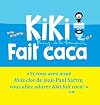
Kiki est manifestement concentré. Si concentré qu'il ne répond pas à ceux qui viennent prendre de ses nouvelles. Si concentré qu'il semble à peine perturbé par les requins qui font des ronds autour de lui. Si concentré qu'il en est cramoisi...
Bon, vous avez compris ce qu'il fait, Kiki (de toutes façons c'est dans le titre).
Bon, vous avez compris ce qu'il fait, Kiki (de toutes façons c'est dans le titre).
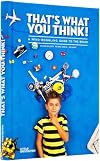
This book provides insightful, easy-to-follow answers to children's questions about the brain accompanied by fun, enlightening photographs. We use our brains every day, but how do they actually control our thoughts, our movements, and our feelings? Does the brain turn itself off at night? Can people who research the brain read minds? In That's What You Think!, experts respond to 80 questions posed by children about the brain. Their answers explore how our brains develop, what they are made of, and how they work. They reveal astounding information and facts not only about the human brain, but also about the gray matter of earthworms, ants, and sperm whales. The images created by Jan von Holleben capture our personal control rooms in action--as we taste, get scared, study, juggle, and sleepwalk. These fun, enlightening photographs clearly demonstrate that even when we do nothing at all, our brains are hard at work.
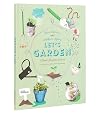
Whether in a big backyard or on a small city balcony, children will have a blast with this do-it-yourself book full of great gardening ideas.
No need for sophisticated equipment or a large yard: Let’s Garden is a true DIY book that children can easily follow to take their first steps in gardening. Inspired by their own children’s fascination with everything that sprouts, Clara Lidström and Annakarin Nyberg teamed up to create a book that would encourage others to interact with their surroundings, whether in the countryside or the city.
From planting a sunflower in a pot and feeding the birds with leftover seeds to growing your own garlic and using it to flavor homemade cream cheese, Let’s Garden is full of inventive ideas. Step-by-step instructions are presented alongside whimsical illustrations and photographs, inspiring children to get their hands dirty!
No need for sophisticated equipment or a large yard: Let’s Garden is a true DIY book that children can easily follow to take their first steps in gardening. Inspired by their own children’s fascination with everything that sprouts, Clara Lidström and Annakarin Nyberg teamed up to create a book that would encourage others to interact with their surroundings, whether in the countryside or the city.
From planting a sunflower in a pot and feeding the birds with leftover seeds to growing your own garlic and using it to flavor homemade cream cheese, Let’s Garden is full of inventive ideas. Step-by-step instructions are presented alongside whimsical illustrations and photographs, inspiring children to get their hands dirty!
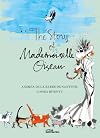
In this delightful tale, Mademoiselle Oiseau helps turn shy Isabella into a confident girl. This is a story about friendship, dreams, and gowing up. On the top floor of a lovely old Parisian apartment building in the Avenue des Temps Perdus lives the slightly odd Mademoiselle Oiseau. No one knows exactly how old she is. In fact, since she never leaves her house, nobody really knows her at all. Sometimes, though, one can catch a glimpse of this elegant lady with her unkempt curls and endlessly long pearl necklaces when she's out on her terrace amid her countless cats and birds. Isabella is a 9-year-old girl who lives in the apartment under Mademoiselle oiseau's. She is so unremarkable that she's practically invisible. One day, when Isabella comes home from school and gets in the elevator, she accidentally presses the number for the sixth floor rather than the fifth. She doesn't even realize her mistake until she sticks her key into the lock and Mademoiselle Oiseau opens the door. When Isabella and Mademoiselle Oiseau meet, a wonderful friendship begins. They spend their days together exploring Mademoiselle Oiseau's roof garden, creating fashion shows with silk dresses and high-heeled shoes, or--to the amazement of everyone--making it snow on a spring day. Soon, Isabella has become a much braver, more confident girl.
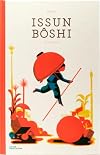
This classic Japanese fairy tale tells the story of Issun Boshi, the tiny son of an old, long childless couple. Tiny and brave--these are the two most striking characteristics of Issun Boshi. His mother had longed to have a child for so many years that she finally added "even if it is a very small one" to her wish. When the elderly couple did in fact bear a son, he turned out to be only one inch high. He was thus called Issun Boshi, Japanese for one-inch boy. Although his parents raised him very lovingly, Issun Boshi realized one day that he would not grow any taller. He then left his home to set off on a journey to find his place in the world. Because he saw himself as a swordfighter, a samurai, he made sure to take along the right equipment: a needle was his sword, a soup bowl was his boat, and a chopstick was its rudder. As in any proper fairy tale, Issun Boshi is tested in several adventures. He handles himself so bravely that, in the end, he is rewarded with just the right princess.
Everyone knows the Eiffel Tower, yet no one knows the love story that led to its construction. Author Alice Brière-Haquet and illustrator Csil have pooled their creative talents to tell this touching story about overcoming hardship with clever invention fueled by love. Mr. and Mrs. Eiffel are a happy couple enjoying living in the most romantic city in the world, Paris. Until one day, Mrs. Eiffel begins to feel desperately unwell. The experts are unanimous: the only thing that can save her is fresh air. Her husband, a bright engineer, decides he will take matters into his own hands and build a tower that will reach the clouds in an attempt to restore her health.
Csil's poetically minimal illustrations in black, white, and pink are incredibly evocative, and Alice Brière-Haquet's words are a delight to read aloud.
Csil's poetically minimal illustrations in black, white, and pink are incredibly evocative, and Alice Brière-Haquet's words are a delight to read aloud.
Insightful and considerate answers to 70 questions boys and girls have about puberty and young love. Even before they experience puberty and young love themselves, girls and boys have many questions about sex and sexuality. Parents often don't know the best way to answer them and it's practically impossible to find the right time to start a conversation about the birds and the bees. Especially today, when most young people have access to the internet and its explicit or dubious content, it is extremely important to address the topic of sex education with children proactively and give it the attention it needs and deserves. As daunting as it might be for parents to take the lead, leaving the internet or a classmate to "explain" sexuality is not an option. Thankfully, the book Does This Happen to Everyone? offers a welcome alternative with a contemporary look and feel that is both fitting for kids and appealing to adults. Does This Happen to Everyone? is an empathetic and entertaining publication that radiates joy, imaginativeness, and fun. In it, Photo artist Jan von Holleben and writer Antje Helms provide answers to the most important questions about puberty in words and images that are relaxed and uninhibited, yet suitable for children. The book takes questions, worries, and fears seriously and responds to them in a direct, yet sensitive way that anyone can understand.
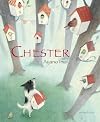
Auch Chester bemerkt, dass es zu Hause am besten ist: Chester hat die Nase voll. Seine Familie ist hektisch geworden. Der Morgenspaziergang mit ihm - dem Familienhund - wird vergessen. Chester haut ab. Aber im Wald mögen die Vögel keine 'Wölfe'. In der Grossstadt will man ihn nicht. Schliesslich wird Chester von einer Dame adoptiert und lebt verwöhnt auf seidenen Kissen. Doch Chester eignet sich nicht zum Schosshund und läuft wieder davon. Er ist schon ganz verzweifelt, bis er schliesslich seine Lieben wieder findet. Jetzt schenken sie ihm alle Aufmerksamkeit in der Familie. Die zarten und lustigen Bilder zeigen Chesters Schicksal. Sie sind elegant und gut gestaltet. Bleibt zu hoffen, dass das Beispiel Chesters bei Kindern nicht Schule macht. Ab 4 Jahren, gut, Ruedi W. Schweizer.
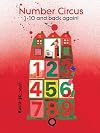
What fun it can be to get to know numbers: lift the flaps, open die-cut doors, and peek in a mirror. There is a surprise everywhere in this unique counting adventure with bold, saturated colors from acclaimed illustrator Kveta Pacovská.
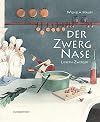
Der kleine Jakob, der ganze Stolz seiner Eltern, hilft der Mutter auf dem Markt. Als er einer alten Frau, über die er gespottet hat, die Einkäufe heimträgt, schläfert diese ihn ein, lässt ihn 7 Jahre für sich arbeiten und verwandelt ihn dann in einen hässlichen Zwerg, den nicht einmal seine Eltern wiedererkennen. Als Zwerg Nase schlägt er sich durchs Leben, wird Leibkoch beim Herzog und findet schliesslich mithilfe der Gans Mimi, deren Leben er verschont, das Kraut "Niesmitlust" und dadurch die Erlösung. Für ihre beeindruckenden Illustrationen zu diesem Märchen, das Wilhelm Hauff in seinem 2. Märchenalmanach 1826 veröffentlichte, erhielt Lisbeth Zwerger 1994 den "Rattenfänger-Literaturpreis" der Stadt Hameln und der Titel wurde hier angeboten und breit empfohlen. Der Text der vorliegenden, unveränderten Neuausgabe folgt dem Original von W. Hauff und dürfte in seiner Gänze Kindern, selbst wenn ihnen die Geschichte aus anderen Medien bekannt ist, frühestens ab 8 Jahren zugänglich sein. Bibliotheken, in denen der Titel nicht (mehr) vorhanden ist, sollten zugreifen. Ab 8
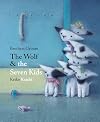
In this classic Brothers Grimm tale, seven young goats match wits with a vicious wolf. He tries to trick them while their mother is away. Will he succeed? Beautifully illustrated by Japanese artist Keiko Kaichi, this edition provides an enchanting perspective on the familiar story.
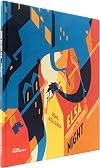
In a very poetic way, Elsa and the Night tells the story of an extraordinary friendship. Can one make friends with the night? In this story, Elsa can! How, may you ask, could someone even meet the night? Well, one day Elsa is sitting at her kitchen table and, because she is bored, counting the raisins in her cereal. She then suddenly hears a sound coming from under the sofa. When she investigates and catches the thing making the noise, she realizes that it's neither an animal nor a ghost. It's the night. Because Elsa winds up hiding the night in her cookie jar--and giving it a few of her raisins--the day outside doesn't end. When she takes the night out of its hiding place, it has the chance to hear her talk about her adventures with her friend, an elephant named Olaf. Elsa tells the night that she is very sad because Olaf got sick and no medicine was able to help him. The night not only listens to Elsa, but also accompanies her on a heartwarming and moving journey where it cares for her, protects her, and finally carries her through the town in its arms.

Featuring exotic images and empathetic language, this modern day Indian fairy tale teaches children to respect and appreciate nature. The story of the honey hunter beings in Sundarban, a land of eighteen tides and six seasons, where three rivers meet in a huge mangrove forest. At first, everything is peacefulfor the thousands and thousands of honey-bees that live there not far from the Bay of Bengal. They fly from flower to flower, collecct nectar, and supply both people and animals with their sweet, liquid gold. Everyone who lives in Sundarban loves honey, but one most of all: a small, black-haired boy named Shonu. One year, the seasons in Sundarban get mixed up and the region is plagued by powerful cyclones followed by drought and hunger. Shonu becomes so unbelievably hungry that he sneaks into the mangrove forest and breaks the golden rule: he takes honey from the hives even though it is not yet harvest time. Shonu doesn't quite realize that what he has done could get him into deep trouble with the almighty demon tiger...This modern day fairy tale reveals what can happen when someone interferes with nature's rhythm. It teaches children to respect and appreciate the environment. Inspired by Muslim and Hindu myths, author Karthika Nair and illustrator Joelle Jolivet have created a compelling narrative style and visual language to tell their tale.
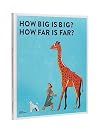
Imaginative comparisons help children comprehend various units of measure. How fast is 120 kilometers per hour? How heavy are 4 tons? How loud are 150 decibels? Units of measure are abstract--until, that is, they are contrasted with other quantities. The entertaining juxtapositions in How Big is Big? How Far is Far? make dimensions and measurements more comprehensible for children. The book features amusing comparisons that make units of length, distance, weight, speed, volume, and time easier to grasp. The Queen of England's crown, for example, weighs more than 100 portions of cotton candy. Some babies can cry as loud as a jet fighter sounds when it takes off. When the world's oldest living tortoise was born, there were no electric lights, telephones, cars, or airplanes. How Big is Big? How Far is Far? is full of amazing facts for children thirsting for knowledge. Intelligent and witty illustrations by Jan Van Der Veken help young readers better understand how large, far away, heavy, loud, or old something actually is when they come across a unit of measure.
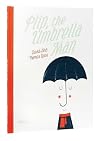
The constant rain gets Plip so down that he decides to become an umbrella. But even as an umbrella man, life isn't always easy. Plip came into the world as an ordinary man. But when it started to rain, he became more and more unhappy. At first, he thought the rain would stop. When it didn't, Plip decided to live the rest of his life as an umbrella man. Plip now walks through the world protected from raindrops, but he's lonely. When he meets an umbrella woman, they try to hug, but their umbrellas get in the way. This makes Plip even sadder and he finally closes himself up and leaves the umbrella woman behind. Feelings rage inside of him. Cyclones, tornadoes, and typhoons break over him and his umbrella can't hold up. It turns inside out and collects a whole sea of rainwater that gets heavier and heavier until Plip has no choice to pour himself out. With his story of Plip, author David Sire explores important facets of life including doubt, love, and confidence. To emphasize the inner workings of Plip's psyche, illustrator Thomas Baas works only with cool blue tones and one warm red. The metaphor of rain and its various meanings inspire young readers to think about how they deal with their own emotions.
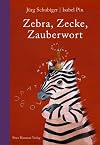
Klang, Raum und Bild: Schon der Titel dieses Bilder-Buchs sagt es aus: Da wird voll Lust und Witz mit Sprache gespielt, untermalt von Bildern, die Raum zum weiter Fantasieren geben. Auf je einer Seite wird das ganze Alphabet durch fabuliert, wobei je zwei Buchstaben ein doppelseitiges Bild ergeben. Die Zweizeiler pro Buchstaben eröffnen bildlich und klanglich eine ganze Welt mit Stabreimen, Sprachschöpfungen, voller Schabernack, Zungenbrecher wie Sandstrand und Strandsand und wundervollen Vergleichen, sind doch die Quallen auf Geisterreise, der Ara ruft auch Schweinehund und spuckt dabei ein gewisses Bürstchen aus. Isabel Pins grosszügige Illustrationen heben diese Sprachbilder meisterhaft hervor, je länger man sie betrachtet, desto mehr entdeckt man. Genussvoll liegt die veraltete Echse in der Astgabel und bietet der Elfe ihren Schwanz als Schaukel an oder das Monster, das erschrecken möchte, hat sehr wohl zackige Zähne, aber einen schelmischen Blick und ein Fell, das zum Knuddeln einlädt. So hätte ich das ABC auch gerne gelernt! Ab 5 Jahren, *****, Elisabeth Tschudi-Moser.
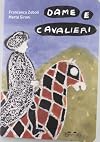
Giocare con l'arte, imparare a osservare quel che c'è nei quadri, per riflettere su come e perché i pittori immaginano, disegnano, rappresentano cose, persone, animali, piante, città, paesaggi...Creare una collezione personale di immagini da appendere e da regalare, divertendosi a colorare, comporre, scomporre, ritagliare, incollare, in libertà e senza paura, i grandi capolavori di tutti i tempi.Strascichi, giubbe, cappelli, elmi, gualdrappe, giustacuori, corpetti, vesti, sopravvesti, panciotti, manicotti, berretti, mantelli... Gli abiti più sontuosi della storia della pittura in una galleria dei più celebri ritratti di gentiluomini e gentildonne. Una sfilata di strepitosa eleganza per scatenare il proprio talento di sarti: per vestire, acconciare, abbigliare liberamente grazie a un catalogo di splendide carte tutte da ritagliare e ricomporre.
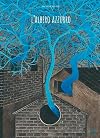
C'era una volta un gigantesco albero azzurro al centro di una città. Era così grande che i suoi rami attraversavano le case. Tutti lo amavano. Tutti eccetto il re, che ne era invidioso, tanto che un giorno ordinò di abbatterlo. Ma i rami tagliati rimasti nelle case crebbero e ciascuno di loro divenne a sua volta un albero azzurro. Oggi l'intera città è una bellissima foresta. Una potente metafora sulla libertà. Età di lettura: da 5 anni.
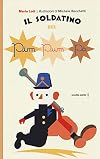
C’era una volta -e ora non c’è più- chi viaggiava in treno stipato come una sardina e chi stracomodo in prima classe. C’era una volta -e ora non c’è più- chi veniva di punto in bianco licenziato e non riusciva più a mantenere la famiglia. C’era una volta -e ora non c’è piùchi senza lavoro era costretto ad emigrare in terre lontane per cercare fortuna. C’era una volta -e ora non c’è più- chi usava le conquiste della scienza solo per arricchirsi e non per star tutti meglio. C’era una volta -e ora non c’è piùchi col potere tutto questo garantiva e con la forza manteneva. C’era una volta -e per fortuna qualche sua traccia ancor oggi si trovail soldatino del pim pum pà. Aveva, e ancora in testa ha, l’idea di raddrizzare i torti. Di rovesciare le ingiustizie. Un attualissimo racconto in versi di un grande maestro della letteratura per ragazzi accompagnato dalle immagini di un giovane talento dei nostri giorni.

This is a rhyming story of a mouse and a monster. Little mouse goes for a walk in a dangerous forest. To scare off his enemies he invents tales of a fantastical creature called the Gruffalo. So imagine his surprise when he meets the real Gruffalo.


Сomic strip or "comic" series of continuous images that narrate a story. Initially this method was used more for comic concepts but with the passage of time set foot in the areas of document and enter history. What is important in this type of narrative association of image and text at the same time. Short texts that sometimes the language of the narrator, sometimes as dialogue brought in the picture