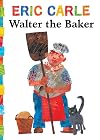
Great illustrations. Our two-year-old loves this book. Portions are definitely lost on her. She does enjoy that it contains dialogue. I'd say it's more appropriate for older children in the four-year-old or older range. Good to read with pretzels.
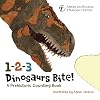
Learn to identify and name different dinosaurs, and to count.
Inconsistent. Some passages are beautifully rendered, but the narrative is quite uneven in others. Beware: style-wise it's neither poetry nor novel but a blend.
Easy read. Legal analysis for the non- lawyer. Nothing special in a good way or a bad way.
Overall: scary how many and how much of our constitutional protections are worn away by the judicial branch that once protected them.
Overall: scary how many and how much of our constitutional protections are worn away by the judicial branch that once protected them.
First portion of the memoir provides lots of insight into Thomas' upbringing and the extraordinary difficulties, including poverty and lack of family stability he survived, and the freedom from those difficulties that religion, hard work, and education promised him. His gratitude to teachers and family for requiring much of him is clear, as is his angst and anger during his college years and his regrets for his having held others in contempt during his black panther-supporting college years etc. The final portion of the book which concerns his Supreme Court confirmation hearings and the Anita Hill debacle lack the clarity that the earlier portions of the book have. I think that he's just still so angry and hurt by that process that he is unable to provide the same combination of objective and subjective analysis that make the other portions of the book successful.

Great reference book for basic rules of etiquette.
Funny, insightful and entertaining. A necessary read for anyone interested in statistics and/or economics.

Easy read. Fast paced. Slightly better than many beach book mysteries. Enjoyed it.
Good book for an infant/toddler who loves animals. There's something textured on every page; however, some are pretty similar.
The Happiest Baby on the Block:The New Way to Calm Crying and Help Your Newborn Baby Sleep Longer by Harvey Karp, M.D.. The title speaks for itself. The book was amusing; repetitive in places. I hope that the information in it proves to be true and helpful in calming a newborn baby. If nothing else, it was a quick, fun, easy read.
Doc by Mary Doria Russell-Doc is about John Henry Holliday, a western gun-slinging dentist, most well known for his relationship with the Earp brothers. The book starts with a description of Holliday's childhood and is followed by his move West and relationship with the Earps. For whatever reason, I enjoyed Russell's other books more than this one; though, I haven't quite been able to articulate why yet. The book is an odd combination of biography and novel for me. I enjoyed the biographical narrative voice more than the novel portions to be honest. I loved Sparrow and Children of God. If you're interested in reading any of Russell's novels, I'd start with those before Doc. In the end, I enjoyed the novel but not as much as her others.
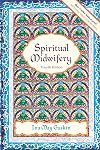
My husband and I were of divided minds on this one. I was able to get past the sort of hippie-go-lucky language and tone of the book to the meat of it--namely, that childbirth is a wonderful natural process that can go much better for the mother when she is surrounded by supportive individuals who are acting on her behalf and the baby's in a personal way rather than in a institutional, impersonal, intervention focused hospital. Obviously if a woman feels cared for and relaxed and at ease, anything, including childbirth would be easier to get through. My husband could not, however, get over the hippie nature of the book. While the book did not convince me to have a home birth, it did reinforce my intuition that the female body is made for birthing and that the focus of childbirth should be to support the body in doing what it normally does on the bodies' time table and in a way that works for that particular mother, rather than trying to hasten events with multiple medical interventions that carry with them side effects that may prolong labor and endanger the mother or child. The book is a collection stories from various individuals at a commune with topics concerning miscarriage, childbirth, postpartum depression, c-section, breach births etc... It's worth reading if you are unfamiliar with childbirth and would like read something that is insightful but not medical in an institutional way. It is female/human ability focused without being totally against medical show more interventions when they are needed; it just has the point of view that they're used far more than needed. show less
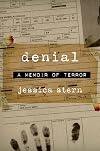
Stern's book is a biography of sorts. It details her history as a victim of various types of sexual trauma and her ability to deny or disassociate from that trauma and work as an interviewer of terrorists around the world. I wouldn't say it was a fun read but it was an interesting one. I can't think of another book to which I would compare it. It was very straightforward about horrendous acts of abuse and rape suffered by the author, but, even in its straightforwardness, there is further demonstration of her PTSD and disassociation from the events themselves. In some ways, in order to have any sense of clarity one would have to have the ability to distance themselves from horrible events; she has the ability in spades. She does make clear, though, that even the ability to deny events is not without consequence.
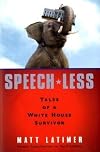
It was funny and I was entertained--more by the personal story than by the politic insights. I'm not sure that Latimer was all that fair or insightful because I don't know enough about the individuals he wrote of (from other multiple sources that is), but I liked the self-deprecating humor, particularly the early portions of his book about his family and childhood. What the latter portions of the book lack is a real sense of humility or modesty and perhaps perspective. Almost all of the speech writing portions concern instances where his advice wasn't accepted and things turned out poorly as a result, or conversely his advice was accepted and things turned out great. He's still one smart and interesting dude though.
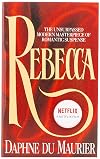
Rebecca contains, of course, one of the most recognizable opening sentences ever written: "Last night I dreamt I went to Manderly again..."The gothic story conjures up shades of Jane Eyre, but it's heroine falls short of being as strong as Jane. She, like Jane, comes from an educated, but relatively lowly economic background, and marries into an extraordinary amount of wealth. She is never named at all and is known throughout by her married name alone. I enjoyed the novel but found myself repeatedly being irritated by the heroine's extraordinary lack of confidence. I totally understood why she felt overwhelmed by her new situation, but I couldn't quite buy the level of her lack of confidence. In Jane Eyre, I can see why, given her horrible childhood, her lack of recognized beauty, and the inability of society to recognize intelligence in a woman as a strength, that she feels crazy and alone. That explanation for Jane's lack of confidence is much stronger than Rebecca's. Rebecca lacked the inner strength that I find in Jane. In Rebecca, her marriage overcomes boredom that comes from working as a companion for shallow woman, whereas Jane Eyre overcomes real poverty and violence.
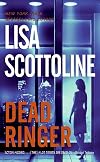
Dead Ringer is a beach book about a female lawyer whose character and credibility is under attack and whose practice is in decline through no fault of her own. It didn't really differentiate itself from the myriad of mystery come attorney books out there. Look Again by Scottoline is much more interesting and is a cut above the thousands of contemporary beach books out there; though, it focuses on a journalist, not an attorney.
Every few years I enjoy rereading Aesop’s Fables. When I come across a different edition with wonderful, new-to-me illustrations, I just can’t help myself. The morals of the Fables are occasionally contradictory, that’s where they’re most interesting in fact. For example, some tales seem to indicate that opposites attract and can help one another; in other instances alike things are attracted to one another and those things that are different are dangerous and can cause them harm; still, one has to fight the urge, because they are so amusing, to agree with all of Aesop’s “lessons” on all points. The best thing you can get from it as a child is that the world can be a contradictory place and that the best thing to do is ask questions about the truth of any given assertion or act. Aesop, if he did exist, seems like he could probably move from being a skeptic to being paranoid pretty easily. It’s good to read the tales with a dose of good humor.
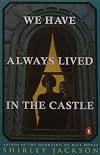
I didn’t enjoy Shirley Jackson’s The Haunting of Hill House, even though I generally like the genre of Gothic Horror, but We Have Always Lived in the Castle totally redeems the master of mystery in my eyes. The two Blackwood sisters live in a small-town in a country home where virtually all their family members died of arsenic poisoning during a family meal. Suspicion abounds in the community about the older sister having poisoned her family, even though she was acquitted of their murders. The little story is haunting and offers an unsettling portrayal of what evil can look like. Jackson creates a grating unease that’s present throughout the book. What the narrator says about the relationship between the sisters and what common sense tells you each of them have the emotional capacity for are very different; it helps to create nervous tension throughout.

I love children's books that can be read hundreds of times without my tiring of them--the ones whose pages become worn but that one can never really bear to part with. They're incredibly entertaining for children but also contain deeper, subtle adult messages. Those are the sorts of books I enjoyed as a child, that I've also come to love as adult as my understanding of them deepened. They offer more than familiarity and comfort. A good children's book speaks to some aspect of how we understand the world or ourselves in it. For me, The Velveteen Rabbit is one of those books. It's a story of a toy bunny who becomes real. It's his love of a little boy and that little boy's love of him that's so complete and magical that through their love he becomes real. Love remains even when the object of it changes or is removed; it is not experienced without pain and an acknowledgment of an otherness. It's a sweet wonderful story that I will never stop loving.
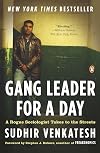
I really expected more from Gang Leader for a Day. It reads more like a novel than an academic piece. Plus it's hard to believe that he was in graduate school at the time that he started working on it and that he was unaware that his activities with a gang were not protected by the First Amendment, that he could be held legally liable for watching/encouraging criminal activities even if they were ultimately being studied for research purposes, nor how entirely unethical it was for him to lie in order to ingratiate himself with his research subjects and to get closer to the gang's leader. I expected a lot of the piece because I really liked Freakonomics and it's authors spoke very highly of Sudhir Venkatesh. I didn't find his conclusions to be all that interesting or new, nor did I find his final opinions/arguments to be all that irresistible. He appeared to be far to close to his research subjects, failing at many points to ask what would have been more interesting questions.
Not by Fire but by Ice: Discover What Killed the Dinosaurs...and Why It Could Soon Kill Us by Robert W. Felix
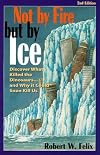
I don't know quite what to say about Not by Fire but by Ice. Felix argues that we are in a cooling trend, heading toward another ice age. I'm not quite sure what to make of it because I'm not a scientist. It was interesting; it appears to be fairly comprehensive; it's also impossible for me to tell whether the conclusions he reaches from what appear to be pretty well-settled facts are accurate. I did not enjoy his IN YOUR FACE, style of writing, whereby he uses more caps than a newspaper headline. I could do without the italics and the bolding and the exclamation points!!!!!! The style took away from what may be some pretty compelling ideas.
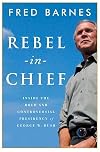
Rebel-in-Chief holds few surprises. I like Fred Barnes and have often found him to be quite insightful, but I find little more than hero worship in this book. It's not that I disagree with Barnes' characterization of Bush as a revolutionary republican; it's that Barnes doesn't really seem to question whether that might be a good or bad thing. On the other hand, Barnes is clearly a bright and fine writer.
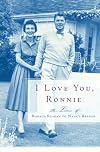
I Love You, Ronnie can be devoured in under an hour. While reading it, I kept recalling images of Nancy Reagan leaning across Ronald Reagan’s coffin and patting it as she spoke to him and saying her personal goodbyes. The image was touching: a spouse completely and totally in love with her husband, mourning his passing. It would appear from the letters that Ronald Reagan was equally devoted. There certainly were some anachronisms present in the way that Reagan regarded his wife and family, but he did seem completely enamored with them—particularly Nancy, his help-mate.
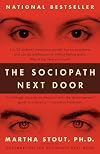
Sociopath Next Door wasn't exactly what I thought it would be. I didn't really get much from the pop psychology parts or the case studies; the tidbits concerning philosophy and ideas about why one nation or another might have fewer of greater numbers of sociopaths than others was much more interesting. I don't necessarily agree with her characterization of Western and Eastern cultures, nor do I buy that individualism is as poisonous as she appears to. Her discussion about Freud and the absence of love in his system was really interesting. That said, the majority of the book, while easy to read, was not as engaging as the portions that she spent less time discussing.
Inspired by notes that a six-year old daughter left behind for her parents to discover. I can understand why her parents wanted to write it but it was really difficult to digest as a reader. It's horrible that any family would have to watch their child live with or die from any disease like cancer, but this isn't the sort of book that I would recommend for others unless they're looking for solace, having lost young family members to a degenerative disease. I know some find the book inspiring, but it hit me differently; I found it to be overwhelmingly sad.
Blue Blood tells the story of Edward Conlon's campaign from Harvard English major graduate to gold shield NYPD Detective. While chronicling his own journey, he also peppers readers with info about his family and general NYPD history. I enjoyed it; though, it runs a little long, coming in at over five hundred pages. Fielding domestic violence calls--which he doesn't seem to think much of--and the like, he tires of the smallness of patrol, acquiring a taste for chasing drugs and guns, not because of having made any case as to why that might be more important, but because it was simply more fun. He perfectly captures the ineffectiveness of poor leadership, the degree to which human pettiness can find a friend in the mechanisms inherent in a large bureaucracy. I completely understand his frustrations with juries that refuse to return indictments or guilty verdicts because of biases against the police or "the system." His interactions with illogical prosecutors who are afraid of trying cases and are constantly looking for easy ones that result in guilty pleas rang true with what I've seen in bigger jurisdictions. I've spoken with detective friends, trying to find someone to talk to about the book with, but I keep getting the same response: "that's the book by the Harvard plant that got a job as a cop for the purpose of writing his book." I don't think that he got the job to be able to write the book, but I do think that he knew at the time of taking the job that he would write show more a book about his experiences. show less
Everyone knows the plot to Charles Dickens A Christmas Carol: Scrooge is visited by the ghosts of Past, Present, and Future; he realizes that life is about more than money and that he’d like to be remembered well by friends and family. Its story is familiar and timeless. Scrooge learns that the true meaning of Christmas is found in sharing one’s money and time, actively loving the world as God did by giving us his son. In terms of bending time as a plot device, it was probably pretty cutting edge when written; also, Dickens captures ugliness and pettiness like few others can. It’s an enjoyable short read from a writer who composes with true emotion, advocating for the plight of the poor. I wonder what Dickens’ writings would have been like if he’d been born into a less class conscious culture, one where people were freer to move about the economic spectrum.