This is the third and final book in a trilogy, The Jerusalem Prophesies, and is the first one I have read. Stumbling across some arcane material in Jerusalem Tom Bohannon and friends embark upon a mission to discover what the code hides. Each book takes the reader to a new level of discovery, with each discovery being more potent in power than the last. Many trilogies make reading of any particular book out of order comparatively easy, this, unfortunately, did not. I cannot cavil at the repetitiveness of his explanations which happen every few chapters but rather with their lack of sufficient detail. As a result I found it difficult to understand motives and character of various actors in the story. The bad guys are definitely bad but I must say rather inept in their pursuit of the definitely good guys. At the end we find that a heavenly power has been sending Tom on a mission to retrieve Aaron’s Rod and has been protecting him throughout but not without cliff hanging chases and hair raising encounters. The author explains several times that, although Tom Bohannon and friends come close to death, the power protects particularly him and I suppose the others by association, because Tom is “A Man of God” and has a mission. All’s well that ends well although a financial attack by Saudi Arabia and a declaration of war by Iran with attacks on our Persian Gulf fleet, brought up in one chapter, are disposed of very handily by saying they were. Definitely not my kind of book.
 This review was written for LibraryThing Early Reviewers.
A look at the fall of Rome from the viewpoint of the destroyers. The Hun Odoacer and his brother Onulf are nearly captured when children by the Ostrogoth Orestes. It takes them over twenty years but they get their revenge and Odoacer ascends the throne as King of Italia thus ending the story of Rome.
Tiro, the confidential secretary of a Roamn seantor opens the door to a terrified stranger he sets in motion a chain of events that will propel his master into one of the most suspensfulcourtroom dramas in history. The stranger is a Sicilian a victim of the island's governor, the Senator is Cicero, an ambitious lawyer and great orator who is determined to obtain Imperium - suprem power in the state.
A continuation of the fascinating adventures of Sir Thomas Kydd. Only this tie has ill-advisedly spoken his mind about the actions of the Lords Admiralty in confidence to a friend. Overheard by a scurrilous newspaperman (but I am redundant) who prints the conversation to Kydd's harm. As a result he loses the promised frigate abuilding and is assigned as Captain to the mutiny infected Tyger. The story builds suspense as Sir Thomas works to build a good crew and claim the Tyger as true defender of England.
A new detective on the scene; Chinese American Peter Strand. Peter is a detective, true, but his skills lie in the forensics of accounting and high finance. Asked by a client, owner of The Blue Dragon apartment complex, to calm his mostly Asian tenants after a murder has them up in arms. Despite his oriental appearance, Peter is a thorough-going American, unable to speak any foreign language much less Chinese. He approaches his task with some trepidation but the client has offered a good fee and Peter feels he will be able to accomplish his task.
As he delves into the situation it becomes apparent that the murder was not gang-related but rather had been committed by on of the tenants and Peter is caught up in trying to find out who.
A good book for the teen-age reader with simple logic used to solve the mystery. Also explores other relationships in a straight-forward manner. Peter Strand will be a welcome addition to the younger readers collections.
As he delves into the situation it becomes apparent that the murder was not gang-related but rather had been committed by on of the tenants and Peter is caught up in trying to find out who.
A good book for the teen-age reader with simple logic used to solve the mystery. Also explores other relationships in a straight-forward manner. Peter Strand will be a welcome addition to the younger readers collections.
This review was written for LibraryThing Early Reviewers.
What a pleasure it is to open a Jonathan Kellerman thriller. No matter his main character you know the writing will be taut and pithy. There is also the fact that the reader will be delving into psychological nooks and crannies as a few of the many facets of humanity are explored. How can this possibly be? Echoes in the mind and yet when Dr. Kellerman explains it all seems so obvious.
In The Murderer’s Daughter we are introduced to a new character, Grace Blades. A brilliant psychologist whose specialty is the assisting those so traumatized that they are known as The Haunted and Grace as the Haunted Whisperer she is so successful with them. But this is a dual story. First we find Dr. Blades as a successful practitioner who has a secret life of sexual encounters. In one of these encounters she makes contact with a man who turns up at her office the next day revealed as a possible patient come all the way from Texas to California for her help. His name; Anthony Toner or as he signs it, A. Toner. But meeting with Grace as a possible patient he becomes rattled and flees the office. The next day he is found dead and the police discover her business card in his shoe. And Grace thinks she knows him from her past.
And now, in typical Kellerman fashion, the story starts to proceed down two paths; first Grace trying to solve a mystery that threatens her life and second interspersed her story as a child orphaned at 5 ½ and moved from one foster home to another. As we come to know show more Dr. Blades better we can see why, prodigious IQ and all, became a solitary, a personality content within itself, not seeking or accepting social interaction, but always polite.
Grace Blades is complete within herself. She is strong, trained in martial techniques necessary to survive, skilled with gun, unafraid to take on an aggressive male. This reader wants to have more of her but it seems a bit difficult, given the ending, to see more of her. show less
In The Murderer’s Daughter we are introduced to a new character, Grace Blades. A brilliant psychologist whose specialty is the assisting those so traumatized that they are known as The Haunted and Grace as the Haunted Whisperer she is so successful with them. But this is a dual story. First we find Dr. Blades as a successful practitioner who has a secret life of sexual encounters. In one of these encounters she makes contact with a man who turns up at her office the next day revealed as a possible patient come all the way from Texas to California for her help. His name; Anthony Toner or as he signs it, A. Toner. But meeting with Grace as a possible patient he becomes rattled and flees the office. The next day he is found dead and the police discover her business card in his shoe. And Grace thinks she knows him from her past.
And now, in typical Kellerman fashion, the story starts to proceed down two paths; first Grace trying to solve a mystery that threatens her life and second interspersed her story as a child orphaned at 5 ½ and moved from one foster home to another. As we come to know show more Dr. Blades better we can see why, prodigious IQ and all, became a solitary, a personality content within itself, not seeking or accepting social interaction, but always polite.
Grace Blades is complete within herself. She is strong, trained in martial techniques necessary to survive, skilled with gun, unafraid to take on an aggressive male. This reader wants to have more of her but it seems a bit difficult, given the ending, to see more of her. show less
This review was written for LibraryThing Early Reviewers.
While this book certainly lies within the “thriller” genre with fast action and narrow escapes I found it awkward reading. Have you ever been with a group of friends new to you and attempted to follow their conversation as they talk about people, places and things with great familiarity that are utterly unknown to you? That is how I felt when reading Pyramid. I note that Mr. Gibbins has written eight previous novels with titles that imply a thread. Presumably if I had read those previous books I would be a part of the intimate circle and would have understood the allusions and asides in Pyramid. Having not spent the sum of money necessary to get up to speed I simply found it a case of condensing fact from the vapor of nuance.
I have no objection to the idea of having a protagonist in a series of books that are connected by his activities and in which some references are made to these previous actions. But it takes an excellent writer to accomplish this task for it is easy to slip into the fallacy that readers are as au courant on the subject as the writer. It is tough enough when the project at hand requires detailed explanation: how much, how little to say, much less the broad reach of a series of books. The final product of the author must be a book that can stand alone despite previous adventures. Thus the reader is tempted to find out more of the writer’s work rather than feeling it an unnecessary expense to learn more.
Within Pyramid there are enough close calls show more and hairbreadth misses to satisfy the most ardent thriller reader as Jack Howard and his faithful sidekick Costas search for a subterranean complex beneath the pyramids of Giza. The object of this search is to link the religion of Pharoah Ahkenaten with that of Moses. An interesting concept. As they seek answers to questions as formed by various discoveries made by previous archeologists and their own, a tracery of sorts comes into view. But I doubt that Dan Brown, of the Da Vinci Code, is lying awake wondering if he is being overtaken. show less
I have no objection to the idea of having a protagonist in a series of books that are connected by his activities and in which some references are made to these previous actions. But it takes an excellent writer to accomplish this task for it is easy to slip into the fallacy that readers are as au courant on the subject as the writer. It is tough enough when the project at hand requires detailed explanation: how much, how little to say, much less the broad reach of a series of books. The final product of the author must be a book that can stand alone despite previous adventures. Thus the reader is tempted to find out more of the writer’s work rather than feeling it an unnecessary expense to learn more.
Within Pyramid there are enough close calls show more and hairbreadth misses to satisfy the most ardent thriller reader as Jack Howard and his faithful sidekick Costas search for a subterranean complex beneath the pyramids of Giza. The object of this search is to link the religion of Pharoah Ahkenaten with that of Moses. An interesting concept. As they seek answers to questions as formed by various discoveries made by previous archeologists and their own, a tracery of sorts comes into view. But I doubt that Dan Brown, of the Da Vinci Code, is lying awake wondering if he is being overtaken. show less
This review was written for LibraryThing Early Reviewers.
Definitely a pocket sized book, one a golfer could put in his golf bag and use as a handy reference at the 19th Hole to settle bets. A treasure trove of historical fact and fanciful fiction. After all don’t you want to know why there are 18 holes on the modern golf course? And it is not because there are 18 shots in a bottle of scotch despite all you might hear or hope. A short primer on exercises to keep fit during those long winter months when, despite all you may want to, there is not a course open anywhere within reason. A list of five movies to entertain you, golf bag essentials to carry. Finally a section of what to do out on the course, from etiquette to health tips to first aid for both the body and your game.
Finally there are a few jokes to lighten your mood after perhaps a not so wonderful round and all your buddies have made their personal best score and refuse to understand your melancholia. Wretched though you may feel take heart; it is all behind you and your little pocketbook will assuage your hurts and comfort you.
Finally there are a few jokes to lighten your mood after perhaps a not so wonderful round and all your buddies have made their personal best score and refuse to understand your melancholia. Wretched though you may feel take heart; it is all behind you and your little pocketbook will assuage your hurts and comfort you.
This review was written for LibraryThing Early Reviewers.
Without a doubt the darkest of mysteries in the best sense of noir. Unrelievedly depressing, expressing nothing but the seamy, underside of life, politics and economic stress. Has I not seen combat I probably owuld have committed suicide after reading this tragedy.
Holly Barker returns to Orchid Beach on a forced vacation from her post as a CIA officer. While there she becomes involved in the investigation and hunt for a serial rapist. All her old friends are there along with a retired army colonel who had been her boss and who had tried to rape her. Since he was the new Chief of Police it makes for some awkward moments. That, combined with the appearance of another old enemy, provides some interesting twists to the plot.
Written in 2001, a time when the general public was becoming very aware of what computers could do but did not understand how. In this thriller we find the hero to be a computer hacker who is totally immersed in that electronic world, the "Blue Nowhere", and we discover thatr our worst fears coud be realized by way of his keyboarding expertise. Wyatt Gillette had made one bad mistake in his life and was in prison paying for it. His expertise with computers and the software that runs them, makes him invaluable to the police investigating a murder that had been perpetrated by someone who knew all about the victim, information that could only have been stolen from computers that had all her information stored on them.
the plot has lots of twists and turns and provides interesting and fascinating insights into the hackers world. While computers have become more accessible to more people than ever before, the structure of this novel remains as valid today as when it was written - there is danger in The Blue Nowhere.
the plot has lots of twists and turns and provides interesting and fascinating insights into the hackers world. While computers have become more accessible to more people than ever before, the structure of this novel remains as valid today as when it was written - there is danger in The Blue Nowhere.
Up to Sanford's best even though writing under a nom de plume. Computer hacking in the early days of home computers and what could be done then.
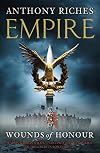
A good look at the auxiliary forces set up by the Romans and used to guard Hadrian's Wall. The Auxiliaries were looked down upon by the Legions but probably wrongly so. Perhaps it was simply because the Auxiliaries were formed of local men. In any case they had roman officers at the top (similar to our having white officers at the top of our negro battalions in the second world war) and so we get the whiff of Roman Emperor's meddlinjg in the daily activities of the men on the fornt lines.
One thing I noted was that the author used terms of rank for officers in the units that I had never heard of before. The first was Captain, which, so far as I know, was not used until the mid 1500's or so. Second was the term "Chosen Man." Again not a term I thought to be used before the Napoleonicv wars. But then I am not a great historian, just an avid reader of the Roman era.
One thing I noted was that the author used terms of rank for officers in the units that I had never heard of before. The first was Captain, which, so far as I know, was not used until the mid 1500's or so. Second was the term "Chosen Man." Again not a term I thought to be used before the Napoleonicv wars. But then I am not a great historian, just an avid reader of the Roman era.
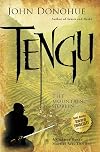
Conor Burke, an advanced martial arts guy and his Sensei become involved in the investigation of the kidnapping of a wealthy man's ddaughter only to find that they are the actual targets of The Tengu or "Mountain Goblin." only to find themselves
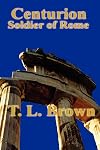
This book was apparently written by a third grader. I have read better in the Dick and Jane books. Constant repetition, little nuance to the plot, explanations where none are needed, no explanations where thay are required, and mis-spelling by the dozens. Finally, there are no "captains" in the Roman Legions. When I saw that word about 15 pages in I put this travesty down and am about to give it over to immolation!
Treasure of Our Tongue: The Story of English from Its Obscure Beginnings to Its Pres by Lincoln Kinnear Barnett
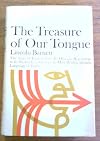
Fifty plus years old but still informative and and a delight to read. English has indeed taken over huge portions of the world and Dr. Barnett succinctly explains why as well as exploring its antecedents and origins. A good reference book too for a writer.
Perceval and Gawain in Dark Mirrors: Reflection and Reflexivity in Chretien de Troyes's Conte del Graal by Rupert T. Pickens
To really enjoy this book you have have either just finished reading the Conte de Graal because you enjoy the Arthurian legends, just rediscovered the college book you kept for some unknown reason and it contains the Conte or you are determined to reacquaint yourself with Chretien’s unfinished masterpiece by approaching it in a sideways manner. If none of the above apply there is always the Internet. A quick Google of Conte de Graal revealed a number of excellent summaries. Indeed the book itself provides an excellent review.
The subtitle of Perceval and Gawain in Dark Mirrors is "Reflections and reflexivity in Chretien de Troyes’s Conte de Graal" and is much more, shall I say it, reflective of what the book examines. Exploring which portions of the tale reflect other portions, adumbrate some activity, comment on the brilliant lights that reflect off armor, that sort of thing.
A close study of the preface and the Prologue of the book will stand you in good stead as you embark on this journey. I leave you with the following quote from the preface: “In nearly all narrative loci in Chretien’s last romance–episodes, discrete segments of episodes–are junctures of a variety of specular, speculative, and spectacular strands that run throughout the poem’s texture.” Have fun.
The subtitle of Perceval and Gawain in Dark Mirrors is "Reflections and reflexivity in Chretien de Troyes’s Conte de Graal" and is much more, shall I say it, reflective of what the book examines. Exploring which portions of the tale reflect other portions, adumbrate some activity, comment on the brilliant lights that reflect off armor, that sort of thing.
A close study of the preface and the Prologue of the book will stand you in good stead as you embark on this journey. I leave you with the following quote from the preface: “In nearly all narrative loci in Chretien’s last romance–episodes, discrete segments of episodes–are junctures of a variety of specular, speculative, and spectacular strands that run throughout the poem’s texture.” Have fun.
This review was written for LibraryThing Early Reviewers.
Chet Atkins was a tremendously influential session man whose distinctive sound defined the sound of an entire genre. His instrumental and production talents graced countless Nashville hits in the ‘50's and 60's and the solo sides that he cut during this period at RCA are remarkable not only for their virtuosity but also for their honey-sweet country sound and unexpected musical inventiveness. If there was a new trend or sound, Chet was the first to give it a go, but nothing he did had the plastic taste of novelty; he took a palpable delight in everything he recorded. He came to be called Mr Guitar because he could play any genre from country to blues, to jazz to classical and did so with a flair. Some critics have noted that much of his immense catalog as a solo artist is unimpressive but his virtuosity as a guitarist has never been questioned.
It is obvious that Mr Reinhart is a great fan of Chet Atkins and he certainly has a fine list of songs to discuss. Unfortunately the book is written as if it were a collection of blog articles gathered into one cover. There are a frequent number of repeated bits of information including several that are simply repeats of the same sentence, just in different reviews. A good editor should have caught much of this and tightened up the writing. Failing access to an editor Mr. Reinhart would have done well to read Strunk & White’s “Elements of Style” both before embarking on this project and while he was writing it. The phrase show more “jelled together” should be avoided like the plague.
As a work on Chet Atkins I would put this title as a secondary reference. show less
It is obvious that Mr Reinhart is a great fan of Chet Atkins and he certainly has a fine list of songs to discuss. Unfortunately the book is written as if it were a collection of blog articles gathered into one cover. There are a frequent number of repeated bits of information including several that are simply repeats of the same sentence, just in different reviews. A good editor should have caught much of this and tightened up the writing. Failing access to an editor Mr. Reinhart would have done well to read Strunk & White’s “Elements of Style” both before embarking on this project and while he was writing it. The phrase show more “jelled together” should be avoided like the plague.
As a work on Chet Atkins I would put this title as a secondary reference. show less
This review was written for LibraryThing Early Reviewers.
Should you believe in the old adage “if you like sausages don’t watch them being made” and you believe that war is sometimes necessary don’t read this polemic. Mr. Cockburn is thoroughly of the opinion that senior officers should not have the slightest idea of what is happening on the battlefield and their attempts to so discern events is futile, unrewarding and expensive. Being one of the elite of journalists he is very inclined to toss off remarks such as “the general told me specifically that...” and we are supposed to believe that his conclusion taken from such remarks are gospel and certainly not hearsay.
I am of the Viet Nam war and I am very used to the snarky and frequently incorrect reportage of the elite journalists and those who emulate them. One of their favorite memes was to quote the black humor that those of us at the point of the spear used to blunt reality, as though it were gospel. And Mr Cockburn does not disappoint. Captains appear to assure us that the commanders have no idea of what is happening, Colonels, whom we are told are called “Sun Tzu” by their compatriots, provide us with keen insight on experimental programs as the military attempts to keep up with technology and the ancient rite of the guerrilla - all rotten to the core in their personal opinion. And since this reflects Mr. Cockburn’s bias it is handed down as though that Chinese Sage had pronounced it himself.
The author is firmly convinced that experimental approaches to show more command and control, COIN or Counter Insurgency (that ancient term found in the jargon of early examinations of fighting the disappearing enemy albeit an apparent revelation to him because it was used by someone he disliked) should not be undertaken
Overall an interesting book written by one who understands that war is hell but has no interest in telling us how he would wage it. He is a bean-counter and attempts to appear authoritative by simply being verbose, telling the same story several times. In fact I got the impression he was cutting and pasting from various articles he had previously written and perhaps forgot what he had said in the previous chapter. But then he is a luminary in the field of journalism and perhaps that is considered de rigeur. show less
I am of the Viet Nam war and I am very used to the snarky and frequently incorrect reportage of the elite journalists and those who emulate them. One of their favorite memes was to quote the black humor that those of us at the point of the spear used to blunt reality, as though it were gospel. And Mr Cockburn does not disappoint. Captains appear to assure us that the commanders have no idea of what is happening, Colonels, whom we are told are called “Sun Tzu” by their compatriots, provide us with keen insight on experimental programs as the military attempts to keep up with technology and the ancient rite of the guerrilla - all rotten to the core in their personal opinion. And since this reflects Mr. Cockburn’s bias it is handed down as though that Chinese Sage had pronounced it himself.
The author is firmly convinced that experimental approaches to show more command and control, COIN or Counter Insurgency (that ancient term found in the jargon of early examinations of fighting the disappearing enemy albeit an apparent revelation to him because it was used by someone he disliked) should not be undertaken
Overall an interesting book written by one who understands that war is hell but has no interest in telling us how he would wage it. He is a bean-counter and attempts to appear authoritative by simply being verbose, telling the same story several times. In fact I got the impression he was cutting and pasting from various articles he had previously written and perhaps forgot what he had said in the previous chapter. But then he is a luminary in the field of journalism and perhaps that is considered de rigeur. show less
This review was written for LibraryThing Early Reviewers.
Wales, the land of coal mines, what are to the American eyes unpronounceable names and for those of us of a certain age, Tom Jones. But there is a lot more there than those trivial pieces of knowledge. And DI Drake leads us into a view of the Welsh that we would otherwise miss. Combined with his prickly nature, his OCD and his fears that he will be unsuccessful in solving this grisly murder makes for a melange of interesting activities.
First there is DI Drake. Because of his OCD he is becoming more and more estranged from his wife. He needs his Sudoku puzzles to provide him with calm along with Bruce Springsteen for company when he drives. But he also finds that contact with some of the seamier sides of life infuriate him but he cannot let that interfere. His staff are understanding but they too have their quirks and eccentricities. And finally there are the citizens of Conwy, a village small enough that everyone knows everyone and their business too. Big wigs in London want to build a nuclear power plant in the area and need to buy up land, smallholders are unsure and there is, as always, those opposed to the plan. And an Englishman who owns large swathes of land and cottages by the sea and claims his family has lived in Wales for centuries arouses DI Drake’s ire because he cannot even pronounce Welsh Christian names much less understand the language. And there is another dark and dirty secret bubbling under the surface.
It all starts with a fisherman found on the show more beach, murdered in a particularly gruesome manner. He had been one of the small landowners being whipsawed over selling or not selling. As Drake starts his investigation a second murder is reported, this time of a young girl. Are the two crimes related? A hard question that must be answered soon because the Police Superintendent wants action soon. This is starting to affect relationships at the gentry level - not to be bourne!
More than just a Welsh equivalent of a police procedural story it tells of relationships, outlooks, raw feelings. The language situation I found particularly apt. The same situation occurs here in the agrarian/fishing South where I live that is now being inundated by New Yorkers and New Jerseyites whose harsh vowels, abrupt ways and lack of understanding grate against the Southern psyche. This is a good story, one that requires close attention but that is easily given as the author winds his way through the Welsh coast and DI Drake solves a complex murder mystery. show less
First there is DI Drake. Because of his OCD he is becoming more and more estranged from his wife. He needs his Sudoku puzzles to provide him with calm along with Bruce Springsteen for company when he drives. But he also finds that contact with some of the seamier sides of life infuriate him but he cannot let that interfere. His staff are understanding but they too have their quirks and eccentricities. And finally there are the citizens of Conwy, a village small enough that everyone knows everyone and their business too. Big wigs in London want to build a nuclear power plant in the area and need to buy up land, smallholders are unsure and there is, as always, those opposed to the plan. And an Englishman who owns large swathes of land and cottages by the sea and claims his family has lived in Wales for centuries arouses DI Drake’s ire because he cannot even pronounce Welsh Christian names much less understand the language. And there is another dark and dirty secret bubbling under the surface.
It all starts with a fisherman found on the show more beach, murdered in a particularly gruesome manner. He had been one of the small landowners being whipsawed over selling or not selling. As Drake starts his investigation a second murder is reported, this time of a young girl. Are the two crimes related? A hard question that must be answered soon because the Police Superintendent wants action soon. This is starting to affect relationships at the gentry level - not to be bourne!
More than just a Welsh equivalent of a police procedural story it tells of relationships, outlooks, raw feelings. The language situation I found particularly apt. The same situation occurs here in the agrarian/fishing South where I live that is now being inundated by New Yorkers and New Jerseyites whose harsh vowels, abrupt ways and lack of understanding grate against the Southern psyche. This is a good story, one that requires close attention but that is easily given as the author winds his way through the Welsh coast and DI Drake solves a complex murder mystery. show less
The highlights of a hardscrabble town named Barataria on the Louisiana Gulf Coast and the lowlifes that live there. Creole descendants from the Acadians of Canada who moved south before the Louisiana Purchase make their living as watermen seining for shrimp mainly but also other seafood including the occasional alligator.
A cast of the usual colorful characters provide impetus to the plot in a wide variety of ways from a deranged metal detector enthusiast searching for gold, a pair of twins with a garden of Marijuana deep in the swamps and a set of low level criminals intent on finding the garden. The straight man is a teenager attempting to find his way in life and knowing that the best way is to follow the traditions, build a Louisiana Skiff and drag for shrimp as his family has done for generations. The BP oil spill plays a large part as well. I had hoped there would be a little leavening of humor ala Elmore Leonard but, alas such was not to be.
The interplay of the various denizens of Barataria is written well, the plot sufficiently convoluted to demand your attention and the outcomes satisfactory.
A cast of the usual colorful characters provide impetus to the plot in a wide variety of ways from a deranged metal detector enthusiast searching for gold, a pair of twins with a garden of Marijuana deep in the swamps and a set of low level criminals intent on finding the garden. The straight man is a teenager attempting to find his way in life and knowing that the best way is to follow the traditions, build a Louisiana Skiff and drag for shrimp as his family has done for generations. The BP oil spill plays a large part as well. I had hoped there would be a little leavening of humor ala Elmore Leonard but, alas such was not to be.
The interplay of the various denizens of Barataria is written well, the plot sufficiently convoluted to demand your attention and the outcomes satisfactory.
This review was written for LibraryThing Early Reviewers.
Like all good seafaring heroes such as C. S. Forester’s Horatio Hornblower, and Patrick O’Brien’s Jack Aubrey, Julian Stockwin’s Thomas Kyyd has risen far in Britain’s naval forces. In Pasha we find Captain Kyyd has been made a Knight of the Bath thus overcoming his humble beginnings, becoming “a man of consequence.” And to our further delight his closest friend Renzi has assumed the mantle of Earl of Farndon.
We do not lose anything by all this elevation. Rather Mr. Stockwin sends his heroes to the Dardanelles and Constantinople during the time of Napoleon’s attempts to break out of Europe in which he was trapped by the British navy. Looking East Bonaparte sought influence at the Court of the Ottoman Empire which would provide him with a land bridge allowing him unfettered access to India and beyond. To this end he has sent Horace Sebastiani, a brilliant general and diplomat.
And around this historical happening we find our heroes in their usual roles but this time separated and each’s activities unknown to the other. Captain Kyyd’s task is to break into the Dardanelles and Renzi’s to appear at the Ottoman Court as a flighty English scholar but to undermine Sebastiani’s influences. Mr. Stockwin has written an excellent adventure, his heroes have their usual human qualities which keep them from becoming insufferable and the reader can continue to admire them for their fortitude and skills. And best of all Boney is foiled again.
We do not lose anything by all this elevation. Rather Mr. Stockwin sends his heroes to the Dardanelles and Constantinople during the time of Napoleon’s attempts to break out of Europe in which he was trapped by the British navy. Looking East Bonaparte sought influence at the Court of the Ottoman Empire which would provide him with a land bridge allowing him unfettered access to India and beyond. To this end he has sent Horace Sebastiani, a brilliant general and diplomat.
And around this historical happening we find our heroes in their usual roles but this time separated and each’s activities unknown to the other. Captain Kyyd’s task is to break into the Dardanelles and Renzi’s to appear at the Ottoman Court as a flighty English scholar but to undermine Sebastiani’s influences. Mr. Stockwin has written an excellent adventure, his heroes have their usual human qualities which keep them from becoming insufferable and the reader can continue to admire them for their fortitude and skills. And best of all Boney is foiled again.
This review was written for LibraryThing Early Reviewers.
This book, as with many Brad Thor books, is apparently designed for the young male. The men are all handsome, highly intelligent and stone cold killers as trained by the government. The women are the same just change the word "handsome" to "gorgeous". There are two stories that slowly meld into one but are difficult to maintain an interest in at the beginning.
A good story, well told but, as in life, we lose some of the characters we came to like in the first of the series. One wonders who will be left when the embassy returns to Constantinople in the, I hope, third book of the series.
An examination of how not to lead under intense survival conditions. Troubles were easily predictable and certainly many of them could have been avoided by firmer control by the expedition's leader.
Every culture has a “tainted hero”, a person who steps outside of the normal moral or legal boundaries to right a wrong unobtainable through the usual societal channels. Many of them do their task and then disappear, Shane for example, while other remain on the scene, Robin Hood comes to mind. In most cases we can accept what they do as we see a positive outcome as a result of their actions.
Author Carcaterra offers us a hero far beyond tainted. A gangster, a murderer the apex crime syndicate boss. Vincent Morelli by name, the Wolf brags about owning each and everyone on the planet, his crime tentacles are so extensive and deeply sunk. Almost every dollar spent in the world provides some portion to his bank accounts. Tragedy has struck him, however: his wife and daughter were killed in an aircraft explosion that Morelli is convinced was actually aimed at him.
We are offered a redeeming feature - he calls for war against terrorists as the authors of his tragedy and as possible threats to his vast crime empire. In this book the Wolf tracks down a well-known terrorist bomber named Raza who, as the plot would have it, is being financed by the Russian Mafya. Finding that Raza has been making his bombs bigger each time in a plan to become the best known and most feared bomber, The Wolf turns his attention to disrupting Raza’s plans, killing him and foiling the Russians.
The planning, preparation and liaising between criminal groups for each step is done behind the scenes. show more The reader is simply presented with the fait accompli. The culminating action/step takes place and the chapter ends. It is almost as thought the story could have been simply “The Wolf was damaged, he gathered the crime bosses from around the world, declared war on terrorists and killed a number of people one of whom was a bomber who was not the killer of his wife and children. The next book will be out in a year.” show less
Author Carcaterra offers us a hero far beyond tainted. A gangster, a murderer the apex crime syndicate boss. Vincent Morelli by name, the Wolf brags about owning each and everyone on the planet, his crime tentacles are so extensive and deeply sunk. Almost every dollar spent in the world provides some portion to his bank accounts. Tragedy has struck him, however: his wife and daughter were killed in an aircraft explosion that Morelli is convinced was actually aimed at him.
We are offered a redeeming feature - he calls for war against terrorists as the authors of his tragedy and as possible threats to his vast crime empire. In this book the Wolf tracks down a well-known terrorist bomber named Raza who, as the plot would have it, is being financed by the Russian Mafya. Finding that Raza has been making his bombs bigger each time in a plan to become the best known and most feared bomber, The Wolf turns his attention to disrupting Raza’s plans, killing him and foiling the Russians.
The planning, preparation and liaising between criminal groups for each step is done behind the scenes. show more The reader is simply presented with the fait accompli. The culminating action/step takes place and the chapter ends. It is almost as thought the story could have been simply “The Wolf was damaged, he gathered the crime bosses from around the world, declared war on terrorists and killed a number of people one of whom was a bomber who was not the killer of his wife and children. The next book will be out in a year.” show less
This review was written for LibraryThing Early Reviewers.
Mr. Allison hurls us into 21st Century detective procedures with a vengeance. No longer does the hard-boiled gumshoe detect through tailing the suspect, take pictures of malfeasances and finally grapple directly with the evil-doers. Now it is all through the Internet, cell phones, virtual machines scattered around the world and a wide array of digital devices and procedures most of which the author explains with care and certitude although there were several occasions when I just had to accept that something worked without knowing why. Even his car is fitted carefully with digital care. But that old standby, the gun in the glove box remains. In this case a Glock. Our man might be digitally adept but he retains that which we like in our PI’s: a willingness to shoot without hesitation.
We still have personality quirks though. A hero named Chaucer (his father had been an English Professor) but prefers the name Chalk. The academic’s faint distaste of business and its dealings. A dislike of sartorial splendor. And a mental illness that requires frequent medication.
The story opens with a dying movie magnate, glorying in the sobriquet “Hollywood Hyena”, seeking Chalk’s aid in finding his three sons. Not an easy job since the three were by different mothers each of whom had received the magnate’s sperm through California Cryo Futures, a sperm bank that maintains the anonymity of both its donors and recipients.
The three sons are traced and found. They all three have a show more certain similar characteristic - a taste violence. During the tracing several pharmaceutical robberies occur at each of which a strange message is left always the same words and numbers just in different order each time. Old kidnapings that had involved the Hollywood Hyena come to the surface. Military veterans start receiving mysterious packages fill with medications and the note “Use or sell” signed GR.
Since this book is planned as the first in a series we spend a lot of time learning about Chalk and his background. Ex-FBI, divorced, childless, Bi-polar and paranoiac. I have read several novels recently in which the protagonist has some form of extreme, for lack of a better word, illness and the reader finds how this affects the plot just as other, more mundane backgrounds (FBI, Soldier, sailor, etc) do. Also I believe that as happens to many writers Mr. Allison suffers from the Curse of Knowledge in that some of his explanations depend upon a more intimate knowledge of the digital subject, so familiar to him, than I think his readers share. It is, however, a good book, well-written leaving us with a taste for more Chalk. show less
We still have personality quirks though. A hero named Chaucer (his father had been an English Professor) but prefers the name Chalk. The academic’s faint distaste of business and its dealings. A dislike of sartorial splendor. And a mental illness that requires frequent medication.
The story opens with a dying movie magnate, glorying in the sobriquet “Hollywood Hyena”, seeking Chalk’s aid in finding his three sons. Not an easy job since the three were by different mothers each of whom had received the magnate’s sperm through California Cryo Futures, a sperm bank that maintains the anonymity of both its donors and recipients.
The three sons are traced and found. They all three have a show more certain similar characteristic - a taste violence. During the tracing several pharmaceutical robberies occur at each of which a strange message is left always the same words and numbers just in different order each time. Old kidnapings that had involved the Hollywood Hyena come to the surface. Military veterans start receiving mysterious packages fill with medications and the note “Use or sell” signed GR.
Since this book is planned as the first in a series we spend a lot of time learning about Chalk and his background. Ex-FBI, divorced, childless, Bi-polar and paranoiac. I have read several novels recently in which the protagonist has some form of extreme, for lack of a better word, illness and the reader finds how this affects the plot just as other, more mundane backgrounds (FBI, Soldier, sailor, etc) do. Also I believe that as happens to many writers Mr. Allison suffers from the Curse of Knowledge in that some of his explanations depend upon a more intimate knowledge of the digital subject, so familiar to him, than I think his readers share. It is, however, a good book, well-written leaving us with a taste for more Chalk. show less
Classic Crichton; carefully written, thoroughly researched, human characters all providing an excellent read. The book, copyrighted in 2003 which meant probably written in 2001 or 2002, examines the abortion question which, at that time was thoroughly illegal. Crichton makes a strong case for reversing that but without tendentiousness. It is interesting to note how the public view of the operation has changed in the 11 year span from the publishing of this book.
A long, tedious tale running the gamut of human emotions and fears amongst a variety of peoples facing the last Ice Age
Probably MacLean's poorest book. Too wordy, too much philosophical thought