
My first attempt to read scientific analysis.
I am mesmerized by the attempt.
Obviously I still have the doubt that it tried to see the entire scenario with a tunnel view. The possibility of confirmation bias also looms in the horizon. But the way the writer created and presented his case , I am completely satisfied. It is not an exhaustive proof.
I am mesmerized by the attempt.
Obviously I still have the doubt that it tried to see the entire scenario with a tunnel view. The possibility of confirmation bias also looms in the horizon. But the way the writer created and presented his case , I am completely satisfied. It is not an exhaustive proof.

Giving it a 4 cause it didnot impress me out of my mind .
I like it a lot , the feeling of the new people who are going into war.
Zetsu seems very very intriguing.
Bringing back the old dead people do has its own charm.
Seeing Haku and Zabuza , feeling of nostalgia do strikes me .
Happy to see Sai and his brother's ending.
Loved the introduction of the seven swordsman.
I like it a lot , the feeling of the new people who are going into war.
Zetsu seems very very intriguing.
Bringing back the old dead people do has its own charm.
Seeing Haku and Zabuza , feeling of nostalgia do strikes me .
Happy to see Sai and his brother's ending.
Loved the introduction of the seven swordsman.
A connecting episode so not that impressive. It seemed a bit childish .
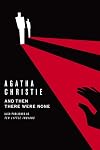
I am not an Agatha Christie fan. For me , her books have always been popcorn novels. Novels I read in between classics.
However, this book has completely changed my perception.
Not only does it maintain the characteristic of other Christie books of being small, crisp and light on the eyes. It also successfully portrays the feelings each of the ten protagonist feels. It has hints strewn through out the book, however this book takes you for a ride. Even if you have mentally prepared yourself not to accept what is being written, but by the time you finish this book ; you will completely forget your resolve; you will be mesmerized by the beauty of this book .
It is a must read AGATHA CHRISTIE novel.
However, this book has completely changed my perception.
Not only does it maintain the characteristic of other Christie books of being small, crisp and light on the eyes. It also successfully portrays the feelings each of the ten protagonist feels. It has hints strewn through out the book, however this book takes you for a ride. Even if you have mentally prepared yourself not to accept what is being written, but by the time you finish this book ; you will completely forget your resolve; you will be mesmerized by the beauty of this book .
It is a must read AGATHA CHRISTIE novel.
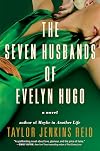
Before starting this review, I should get this off my chest. I started this book with a biased mindset. I did not expect a book about an aging megastar and her 7 husbands to ever get a 5 star from me. I thought it to be too frivolous, a mindless read between the "more serious" books I am reading, a book I would forget as soon as I have finished reading - a good mind break. But then Evelyn happened.
The Seven Husbands of Evelyn Hugo is a crisp small book (having only 7 chapters after each husband of hers)which is written in a very simple way but that which manages to hold your attention and leave you yearning for more after every chapter. Through these seven chapters we see the rise and fall and rise of the unapologetic , courageous and pragmatic Evelyn Hugo. Without giving out too much, this book deals with both LGBTQ and minority issue without making the characters solely defined by those. Infact we get to know that one of the characters is a person of color way later into the book. This is a novelty at least for me as I am used to characters whose first few lines clearly establish their minority status (racially, religiously and/or sexually). However, this is not why this book got her 5 stars from me. This book got its 5 stars for how real, flawed , hypocritical and at the same time vulnerable and strong almost all the characters were. Also adding to it was the larger than life moments Evelyn lived. This book at least created the illusion of giving us readers a sneak show more peak into good old Hollywood, the art of making films, the drive down the memory lane to see how a now iconic moment came into being. I found myself mesmerized and clapping and cheering when a particular scene got shot.
All in all, this book is like a slice of time frozen in its pages ( The last time I felt something similar was when I read Anna Karenina in 2011). This is a book which has successfully been able to freeze a society with all its peculiarities in its pages. It has been able to show important social events in a simple way without making it lose its gravity but most importantly it has been able to bring out Evelyn , a fictitious character, and make her into a living persona of flesh and blood.
Read this novel for a pleasant happy exciting read. show less
The Seven Husbands of Evelyn Hugo is a crisp small book (having only 7 chapters after each husband of hers)which is written in a very simple way but that which manages to hold your attention and leave you yearning for more after every chapter. Through these seven chapters we see the rise and fall and rise of the unapologetic , courageous and pragmatic Evelyn Hugo. Without giving out too much, this book deals with both LGBTQ and minority issue without making the characters solely defined by those. Infact we get to know that one of the characters is a person of color way later into the book. This is a novelty at least for me as I am used to characters whose first few lines clearly establish their minority status (racially, religiously and/or sexually). However, this is not why this book got her 5 stars from me. This book got its 5 stars for how real, flawed , hypocritical and at the same time vulnerable and strong almost all the characters were. Also adding to it was the larger than life moments Evelyn lived. This book at least created the illusion of giving us readers a sneak show more peak into good old Hollywood, the art of making films, the drive down the memory lane to see how a now iconic moment came into being. I found myself mesmerized and clapping and cheering when a particular scene got shot.
All in all, this book is like a slice of time frozen in its pages ( The last time I felt something similar was when I read Anna Karenina in 2011). This is a book which has successfully been able to freeze a society with all its peculiarities in its pages. It has been able to show important social events in a simple way without making it lose its gravity but most importantly it has been able to bring out Evelyn , a fictitious character, and make her into a living persona of flesh and blood.
Read this novel for a pleasant happy exciting read. show less
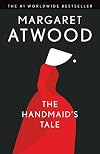
I started this book expecting it to be an all out dystopia but didn't know I was setting myself up for a surprise. But let me not jump the horses and start from the beginning or what I think should be the beginning.
The writing style is very simple yet the insights are very profound , the writer expresses complex human feeling with extreme ease; this is one of the biggest USP of this novel.
Also another important feature that was prevalent through out the novel was the incremental clarity it provided. I felt as if I was walking enshrouded with fog and with every step a little more detail could be perceived more clearly , this was prevalent in both the flashbacks she provided, which started as short vague episodes and transitioned incrementally into a full fledged chapter, as well as disclosing the world current "offred" resided and how it came to be. Also, the intent of the narration is not clear but gains clarity as it progresses. I remember thinking the protagonist was speaking to herself to gain a semblance of control over her life and slowly growing into the realization that this , infact is a narration intended for an audience. I am taking the liberty of classifying the above stated feeling also into this "incremental clarity" quota.
Going to the setting of the novel , though the specific or granular features are very different yet I cannot help but feel a similarity with 1984 in the broader sense of comparison. Having said that , this book is not predictable at all show more - be it offred's relation with the commander , the night of the ceremony. The novel is also not without its thrilling moments.
The biggest problem I found in this book was the ending was very hurried. The thing between Nick and offred seemed immature and not well thought out or premature . I will go ahead and say the Nick and offred angle was a disaster, she could have handled it better . Yet , maybe this was her intent ; in such an abnormal world - not all actions have a well thought out reasons. Well thought out reasons are privilege of a normal world.
I also remember struggling with the notion whether this book falls in the "feminist" area. I was unsure of it till a long way into the novel. I remember having a discussion with my boyfriend and realizing that both he and I feeling very different . I , personally, felt horrified and could easily visualize myself as either Serena Joy or even a handmaid ; whereas , he , on further probing disclosed he didnot connect with the female characters and did not feel so threatened .
" He doesn’t mind it at all. Maybe he even likes it. We are not each other’s, any more. Instead, I am his."
This line cleared my thought and I decided it would surely be a feminist novel.
Finally, the ending , the ending changes everything. Being convinced it was an all out dystopic novel I was fairly surprised to such a great extent that the genre shifted for me. It is no longer a dystopic novel for me , though I am confused where should I actually put it. The ending was sweeter, almost bordering on optimism, than I expected.
Just for this hurried , unfinished ending - this novel lost 1 star from me. Ironically , this book will be in my favourite's list just for the ending. show less
The writing style is very simple yet the insights are very profound , the writer expresses complex human feeling with extreme ease; this is one of the biggest USP of this novel.
Also another important feature that was prevalent through out the novel was the incremental clarity it provided. I felt as if I was walking enshrouded with fog and with every step a little more detail could be perceived more clearly , this was prevalent in both the flashbacks she provided, which started as short vague episodes and transitioned incrementally into a full fledged chapter, as well as disclosing the world current "offred" resided and how it came to be. Also, the intent of the narration is not clear but gains clarity as it progresses. I remember thinking the protagonist was speaking to herself to gain a semblance of control over her life and slowly growing into the realization that this , infact is a narration intended for an audience. I am taking the liberty of classifying the above stated feeling also into this "incremental clarity" quota.
Going to the setting of the novel , though the specific or granular features are very different yet I cannot help but feel a similarity with 1984 in the broader sense of comparison. Having said that , this book is not predictable at all show more - be it offred's relation with the commander , the night of the ceremony. The novel is also not without its thrilling moments.
The biggest problem I found in this book was the ending was very hurried. The thing between Nick and offred seemed immature and not well thought out or premature . I will go ahead and say the Nick and offred angle was a disaster, she could have handled it better . Yet , maybe this was her intent ; in such an abnormal world - not all actions have a well thought out reasons. Well thought out reasons are privilege of a normal world.
I also remember struggling with the notion whether this book falls in the "feminist" area. I was unsure of it till a long way into the novel. I remember having a discussion with my boyfriend and realizing that both he and I feeling very different . I , personally, felt horrified and could easily visualize myself as either Serena Joy or even a handmaid ; whereas , he , on further probing disclosed he didnot connect with the female characters and did not feel so threatened .
" He doesn’t mind it at all. Maybe he even likes it. We are not each other’s, any more. Instead, I am his."
This line cleared my thought and I decided it would surely be a feminist novel.
Finally, the ending , the ending changes everything. Being convinced it was an all out dystopic novel I was fairly surprised to such a great extent that the genre shifted for me. It is no longer a dystopic novel for me , though I am confused where should I actually put it. The ending was sweeter, almost bordering on optimism, than I expected.
Just for this hurried , unfinished ending - this novel lost 1 star from me. Ironically , this book will be in my favourite's list just for the ending. show less
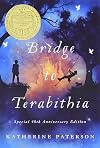
It was more of a heart wrenching ending than a teary ride , as I anticipated. The ride was smooth , linguistically simple and did not overdo the fantasy or terebithia angle. The climax came suddenly . This was surely a ride down memory lane .I am too emotional right now to give an unbiased or well thought out review or rating and hence giving it a 5 which I am sure will go down to 4 or most probably 3 . This book will surely be a must read for my nephews , nieces and my children. Welcome to my favourite list.
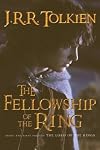
It is a book of black and white, with not a single drop of grey.
To a great extent, it appears childish.
I don't know why Sauron turned evil or how his deeds are evil.
The good are extremely good, starting from the way they look to the way they live.
And the evil are dark and ugly.
The hero of this book is THE RING.
It is alluring, majestic and dark.
It calls for you. You kind of feel its power reaching out to you from the pages.
The imagery is beautiful.
The feeling of doom is present everywhere, yet you will find untouched moments of childlike happiness , which does not feel out of place.
The writing style is very different from Hobbit. I think I am a bit disappointed as Hobbit transported me to a land of songs and music. However, I don't have any complains as this book is graver than hobbit. I would have been amazed if the writer would have been able to portray the gravity of this book but still maintained the music of Hobbit. It was just a wish , no complains that it was not fulfilled.
To a great extent, it appears childish.
I don't know why Sauron turned evil or how his deeds are evil.
The good are extremely good, starting from the way they look to the way they live.
And the evil are dark and ugly.
The hero of this book is THE RING.
It is alluring, majestic and dark.
It calls for you. You kind of feel its power reaching out to you from the pages.
The imagery is beautiful.
The feeling of doom is present everywhere, yet you will find untouched moments of childlike happiness , which does not feel out of place.
The writing style is very different from Hobbit. I think I am a bit disappointed as Hobbit transported me to a land of songs and music. However, I don't have any complains as this book is graver than hobbit. I would have been amazed if the writer would have been able to portray the gravity of this book but still maintained the music of Hobbit. It was just a wish , no complains that it was not fulfilled.
Majestic would be an understatement for this book.
Beautiful and logical flow of narration , at least till 1990s.
I would love to believe that this book is fairly unbiased.
I would advice everyone to read this book and get acquainted with the paradox i.e. India.
Beautiful and logical flow of narration , at least till 1990s.
I would love to believe that this book is fairly unbiased.
I would advice everyone to read this book and get acquainted with the paradox i.e. India.
First thing first, I don't think this book is for people completely unaware about Mongol history and the impact that they had over the present world as we know it.
I started this book as a complete noob in this area and it disappointed me to a great extent. The book is extremely haphazard in its subject matter in the initial few chapters. It seems as if the writer wants to tell everything about that incident in just a few lines (the past history of the incident, the present and how this incident will impact the future), and this makes the entire thing feel very rushed and confusing.However, as you continue (with a lot of patience) , you will get used to this style of writing. Whether this thing is because the research in this area is incomplete or unstructured or the writer wants to include everything at one go, I will never know.
However, at the same time ,you cannot say this book does not do justice to the Mongol history. It is unbiased and also has a few dedicated chapters on the present political scenario, which I think is really important to give us , readers , a perspective about the way of things.
I will advice people to pick up a different book in this subject matter. But you can also go for this book ,you won't be disappointed , just that you may have a bit of difficulty in the initial phases.
I started this book as a complete noob in this area and it disappointed me to a great extent. The book is extremely haphazard in its subject matter in the initial few chapters. It seems as if the writer wants to tell everything about that incident in just a few lines (the past history of the incident, the present and how this incident will impact the future), and this makes the entire thing feel very rushed and confusing.However, as you continue (with a lot of patience) , you will get used to this style of writing. Whether this thing is because the research in this area is incomplete or unstructured or the writer wants to include everything at one go, I will never know.
However, at the same time ,you cannot say this book does not do justice to the Mongol history. It is unbiased and also has a few dedicated chapters on the present political scenario, which I think is really important to give us , readers , a perspective about the way of things.
I will advice people to pick up a different book in this subject matter. But you can also go for this book ,you won't be disappointed , just that you may have a bit of difficulty in the initial phases.
Disclaimer: This is a personal review and should not be taken into consideration before taking up this book
Pros:
1. A comprehensive history of the vast vast and complex Communism , cold war and its fall.
2. Very neutral . He seems to have no emotions into it and is just recording the happening with a little insight (that history always provides).
3. Very well defined scope of what he is going to deal with.
4. The writer has included everything , even small incidences of communist rising.
5. Loved certain moments as it provided a kind of simplicity and happiness that makes me like a book. Basically loved the Rise and Fall of Berlin Wall , the naivety or simplicity of Che Guevera made my day and made me believe in goodness for sometime. As a whole , I love Cold War politics and this book didnot disappoint me in it .
Cons:
1. For non native speaker , it is a super tough read. The language does not follow a free simple flow.
2. Very Western world centric. I don't buy his proclamation that Communism has ended whereas there is A huge China to prove otherwise. Though he justifies his thoughts , stating that China is at best a hybrid Communist state is a faulty one; if you look at it every Communist country molded Marx-Engels idea to suit their concept of power.
3. Pt.[2] brings to this , he seemed to treat Non European or Western countries/entites to be third class citizen who has no contribution to the world politics and all ideas have originated from the West, to be later used by show more them.
4. The writer has not dwelled upon the reasons behind such drastic change in the ideologies of USSR leaders. This was a personal peeve for me , as it seemed very astonishing to see the U turns taken by Krushchev or Gorbachev , without understanding where it came from . Though Gorbachev was a little explained towards the end but Khrushchev remained a mystery.
5. He seemed to be very harsh towards the strong leaders and to the idea as a whole right from the beginning. I personally would have liked a gradual change in tone as the novel proceeded.
Loved and hated the book equally. Will 3 star it till I don't find a book that will either make this book stand's better or worse. show less
Pros:
1. A comprehensive history of the vast vast and complex Communism , cold war and its fall.
2. Very neutral . He seems to have no emotions into it and is just recording the happening with a little insight (that history always provides).
3. Very well defined scope of what he is going to deal with.
4. The writer has included everything , even small incidences of communist rising.
5. Loved certain moments as it provided a kind of simplicity and happiness that makes me like a book. Basically loved the Rise and Fall of Berlin Wall , the naivety or simplicity of Che Guevera made my day and made me believe in goodness for sometime. As a whole , I love Cold War politics and this book didnot disappoint me in it .
Cons:
1. For non native speaker , it is a super tough read. The language does not follow a free simple flow.
2. Very Western world centric. I don't buy his proclamation that Communism has ended whereas there is A huge China to prove otherwise. Though he justifies his thoughts , stating that China is at best a hybrid Communist state is a faulty one; if you look at it every Communist country molded Marx-Engels idea to suit their concept of power.
3. Pt.[2] brings to this , he seemed to treat Non European or Western countries/entites to be third class citizen who has no contribution to the world politics and all ideas have originated from the West, to be later used by show more them.
4. The writer has not dwelled upon the reasons behind such drastic change in the ideologies of USSR leaders. This was a personal peeve for me , as it seemed very astonishing to see the U turns taken by Krushchev or Gorbachev , without understanding where it came from . Though Gorbachev was a little explained towards the end but Khrushchev remained a mystery.
5. He seemed to be very harsh towards the strong leaders and to the idea as a whole right from the beginning. I personally would have liked a gradual change in tone as the novel proceeded.
Loved and hated the book equally. Will 3 star it till I don't find a book that will either make this book stand's better or worse. show less

India's northeast does not have a lot of literature documenting its journey. Whatever is there is usually written by the natives of that regions and usually lacks the objectivity of a third person.
This book is also written by someone who is from this place , but unlike the other literature that I have glanced through, this book exudes an unbiased perspective of the entire issues assailing that region.
This I believe is the biggest positive of this book. I am not saying you will agree with the writer's analysis completely. I have not been able to palate a lot of his opinions but that does not in any way undermine his unbiased approach.
Another positive of this book is he digs into history to get the root cause. He did not limit himself to the north eastern states of India but instead went to all the neighboring countries , tried explaining their scenario and also concluded as to how the current status of those countries are effecting our states. Also he actively explains the role the neighboring countries and even our center has played or is playing on stabilizing and destabilizing this region.
However, there are certain things that work against this book.
One of the primary being the skewed weightage given to different topics and states. For instance , Assam and its condition was explained in depth whereas a lot of states were just glossed over. I personally was looking forward to the writer's interpretation of the politics of all the states and not just facts. Also show more certain topics were hardly analysed, I was disappointed when the heroin factories that is causing havoc through out the north east was mentioned for the first time in the end of the book.
The book also seemed chaotic towards the end. The topics were not neatly sewn together and seemed clunky in conjugation .
Overall it is a good book due to lack of any other book or literature in this area. show less
This book is also written by someone who is from this place , but unlike the other literature that I have glanced through, this book exudes an unbiased perspective of the entire issues assailing that region.
This I believe is the biggest positive of this book. I am not saying you will agree with the writer's analysis completely. I have not been able to palate a lot of his opinions but that does not in any way undermine his unbiased approach.
Another positive of this book is he digs into history to get the root cause. He did not limit himself to the north eastern states of India but instead went to all the neighboring countries , tried explaining their scenario and also concluded as to how the current status of those countries are effecting our states. Also he actively explains the role the neighboring countries and even our center has played or is playing on stabilizing and destabilizing this region.
However, there are certain things that work against this book.
One of the primary being the skewed weightage given to different topics and states. For instance , Assam and its condition was explained in depth whereas a lot of states were just glossed over. I personally was looking forward to the writer's interpretation of the politics of all the states and not just facts. Also show more certain topics were hardly analysed, I was disappointed when the heroin factories that is causing havoc through out the north east was mentioned for the first time in the end of the book.
The book also seemed chaotic towards the end. The topics were not neatly sewn together and seemed clunky in conjugation .
Overall it is a good book due to lack of any other book or literature in this area. show less
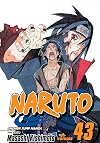
Heartbroken would be an understatement for this episode.
This is so dystopic.
The reason I love naruto series is because of these pearls of beauty.
Such imagination , such beauty.
It breaks my heart to see everything that Itachi strived for to come undone , just by the stroke of truth.
Such a master-stroke by Tobi or Uchiha.
Loved the politics in it.
Feel said for Sasuke , such a puppet.
This is so dystopic.
The reason I love naruto series is because of these pearls of beauty.
Such imagination , such beauty.
It breaks my heart to see everything that Itachi strived for to come undone , just by the stroke of truth.
Such a master-stroke by Tobi or Uchiha.
Loved the politics in it.
Feel said for Sasuke , such a puppet.
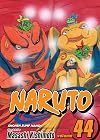
Nothing good or bad about this episode.
Not really enjoying the eight tail angle .
Like the dissent between suigetsu and sasuke.
Intrigued by the Karin angle a little bit . Excited to know about the writer's angle.
Liked knowing the senjutsu part.
In short an average episode post something so heart wrenching.
I think the reader needs that.
Not really enjoying the eight tail angle .
Like the dissent between suigetsu and sasuke.
Intrigued by the Karin angle a little bit . Excited to know about the writer's angle.
Liked knowing the senjutsu part.
In short an average episode post something so heart wrenching.
I think the reader needs that.
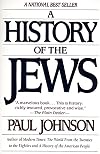
Paul Johnson has comprehensively chronicled the journey of the Jews in this mere 644 paged book. Given the fact that he has captured about 4000 years of world history focussing on the Jews, this is a commendable feat in itself. This book starts at a time when the Jews didn't even call themselves that and ends at the 1970's. This book takes us back to about a few dozens of years before collective Jewish faith started being adopted.
Paul Johnson has divided this book into seven logical subparts namely Israelites, Judaism, Cathedocracy, Ghetto, Emancipation, Holocaust and Zion with each part dealing with an essential aspect of Jewish history.
Personally, for me, this book did not start as a favourite. I had so much difficulty reading the initial few parts that I almost chucked it away. The writer in the beginning parts relies heavily on the old testament and uses it as a point of truth and as history. Being from a non-Abrahamic religion and having no prior contact with Abrahamic stories, it was challenging for me to make sense of the references he was using (I relied heavily on Wikipedia to understand what each story meant or get a geographic idea of the texts he was using). Also, I felt the author assumes his audience is already aware of the conception of Jewish faith and this makes it extremely difficult for a beginner to this subject to understand what he is trying to say. Adding to this, he considered these stories and events to be history which was unpalatable for me show more because of the cultural and demographic differences we have had.
Though these issues mostly resolved itself as we progress into the later parts, one theme that remains constant throughout the book was eurocentrism. I always felt an insidious undercurrent of condescension to be present, be it for the non-Abrahamic European/middle eastern culture or to polytheism. Paul Johnson does not even acknowledge the existence of Asian culture and religious philosophy. I do realise that these topics are outside the scope of this book, but you cannot claim a philosophy to be superior or the best in this world without analysing or even mentioning other philosophies. It is as if these philosophies either didn't exist or is not worth mentioning.
Now moving towards the positives, this book provides a very unbiased opinion about the Jewish issue. Unlike what I feared, this book does not paint the Jews into victimhood; the writer also draws light to the quirks and idiosyncrasies of the Jewish faith, that always kept them aloof of the contemporary cultures in Europe and America and may have contributed (not a justification to the fate meted out to them) to some prevalent anti-semitic feelings. I also feel that the time given to each topic is extremely balanced. Another beautiful aspect of this book is its continuity. The author seamlessly transits from one point to the other and it makes reading this tome very convenient. The opinions that the author provides coupled with the flow of the narration makes it the highlight of this book.
So, in summary, the pros and cons of this book would be:-
Pros:
1. A comprehensive analysis of the Jewish journey for anyone who wants to know everything about them.
2. Beautiful continuity between chapters and topics.
3. The insights provided by the authors are the USP of this book.
Cons:-
1. An extremely steep learning curve for a complete beginner (at least the inception part).
2. Found it eurocentric and may touch a wrong cord for non-European readers.
3. Not an easy read for a casual enthusiast about the topic. The reader needs to be motivated or passionate about the topic to be able to finish this.
In conclusion, I feel people who want to know about the history of the Jews need to give this book a try. I also personally think that as the book finishes its narration at the 1970s, we may need a new chapter to cover half a century that has passed since the last chapter was written , though that does not seem plausible given the age of the writer.
Happy reading! show less
Paul Johnson has divided this book into seven logical subparts namely Israelites, Judaism, Cathedocracy, Ghetto, Emancipation, Holocaust and Zion with each part dealing with an essential aspect of Jewish history.
Personally, for me, this book did not start as a favourite. I had so much difficulty reading the initial few parts that I almost chucked it away. The writer in the beginning parts relies heavily on the old testament and uses it as a point of truth and as history. Being from a non-Abrahamic religion and having no prior contact with Abrahamic stories, it was challenging for me to make sense of the references he was using (I relied heavily on Wikipedia to understand what each story meant or get a geographic idea of the texts he was using). Also, I felt the author assumes his audience is already aware of the conception of Jewish faith and this makes it extremely difficult for a beginner to this subject to understand what he is trying to say. Adding to this, he considered these stories and events to be history which was unpalatable for me show more because of the cultural and demographic differences we have had.
Though these issues mostly resolved itself as we progress into the later parts, one theme that remains constant throughout the book was eurocentrism. I always felt an insidious undercurrent of condescension to be present, be it for the non-Abrahamic European/middle eastern culture or to polytheism. Paul Johnson does not even acknowledge the existence of Asian culture and religious philosophy. I do realise that these topics are outside the scope of this book, but you cannot claim a philosophy to be superior or the best in this world without analysing or even mentioning other philosophies. It is as if these philosophies either didn't exist or is not worth mentioning.
Now moving towards the positives, this book provides a very unbiased opinion about the Jewish issue. Unlike what I feared, this book does not paint the Jews into victimhood; the writer also draws light to the quirks and idiosyncrasies of the Jewish faith, that always kept them aloof of the contemporary cultures in Europe and America and may have contributed (not a justification to the fate meted out to them) to some prevalent anti-semitic feelings. I also feel that the time given to each topic is extremely balanced. Another beautiful aspect of this book is its continuity. The author seamlessly transits from one point to the other and it makes reading this tome very convenient. The opinions that the author provides coupled with the flow of the narration makes it the highlight of this book.
So, in summary, the pros and cons of this book would be:-
Pros:
1. A comprehensive analysis of the Jewish journey for anyone who wants to know everything about them.
2. Beautiful continuity between chapters and topics.
3. The insights provided by the authors are the USP of this book.
Cons:-
1. An extremely steep learning curve for a complete beginner (at least the inception part).
2. Found it eurocentric and may touch a wrong cord for non-European readers.
3. Not an easy read for a casual enthusiast about the topic. The reader needs to be motivated or passionate about the topic to be able to finish this.
In conclusion, I feel people who want to know about the history of the Jews need to give this book a try. I also personally think that as the book finishes its narration at the 1970s, we may need a new chapter to cover half a century that has passed since the last chapter was written , though that does not seem plausible given the age of the writer.
Happy reading! show less
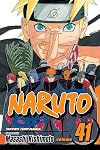
Loved this episode.
I was feeling saturated by the continuous fight sequence, the mesmerizing creativity .
Everything was going good , yet it felt "seen it before" feeling.
I am happy , this episodes brought back everything that I loved Naruto for.
This episode seems a foreboding of so much emotion that I can't wait to read the next .
I am excited , excited to know who Pein actually is.
Can't wait to get my heart broken.
I was feeling saturated by the continuous fight sequence, the mesmerizing creativity .
Everything was going good , yet it felt "seen it before" feeling.
I am happy , this episodes brought back everything that I loved Naruto for.
This episode seems a foreboding of so much emotion that I can't wait to read the next .
I am excited , excited to know who Pein actually is.
Can't wait to get my heart broken.
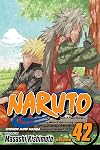
Disappointed with the Jiraiya angle.
Felt pulling Naruto into it was unnecessary.
Excited to see Tobi. Can't believe Uchiha Madara is alive.
Love the genjutsu fight .
Disappointed Itachi had personal motivation in keeping Sasuke alive , thought he would have some convulated atonement in mind.
Felt pulling Naruto into it was unnecessary.
Excited to see Tobi. Can't believe Uchiha Madara is alive.
Love the genjutsu fight .
Disappointed Itachi had personal motivation in keeping Sasuke alive , thought he would have some convulated atonement in mind.
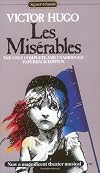
Stopping it midway. Cannot continue as it has so much of details about everything and it is making me so confused. Maybe will restart it some other day.
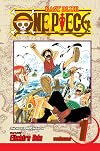
I liked the initial volume. Very light hearted. Nothing serious or emotional. Since I am a bit Naruto fan, I am finding a lot of Naruto character hangover here (though this book started before Naruto).
Hoping it gets better as we progress.
Hoping it gets better as we progress.
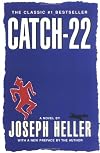
I tried really hard to like this book. It was unique and fresh and had many moments of mirth but it was very slow at developing a plot; so slow that I ran out of patience when I had read 50% of the book and the story or plot is yet to start.
This review will be highly skewed towards the negatives (cause I left it midway); however, I am consciously trying to include some positives as well.
One thing that really struck me when I was reading the preface was the review of a petulant reviewer that this book seems to be screaming to its reader and though I was sceptical as to how that was possible; it was one of the aptest insights about this book. Catch-22 is a story of Yossarian (whatever I have read till now) who is desperately trying to protect himself from dying as everyone is out there to kill him. He is repeatedly getting stuck in participating in a war he has no interest in cause one of his seniors keep on increasing the number of mandatory flying trips before he can be relieved. Not only this but almost all the events in this chirpy war tale is due to random events and idiosyncrasies of the cast involved. Though it is a fun read with deep insightful moments about the futility of war you do not feel any connection to any person what so ever. This lack of connection is felt acutely as you progress and made me almost despair of a storyline. Maybe this book was too random for my taste. This book also dwells in extremes, it introduces a positive incidence and then twists show more and turns it into something negative by overusing it.
All in all, it is an enjoyable read. The only thing that acted against it is the size of the book and the lack of emotional contact with the casts. show less
This review will be highly skewed towards the negatives (cause I left it midway); however, I am consciously trying to include some positives as well.
One thing that really struck me when I was reading the preface was the review of a petulant reviewer that this book seems to be screaming to its reader and though I was sceptical as to how that was possible; it was one of the aptest insights about this book. Catch-22 is a story of Yossarian (whatever I have read till now) who is desperately trying to protect himself from dying as everyone is out there to kill him. He is repeatedly getting stuck in participating in a war he has no interest in cause one of his seniors keep on increasing the number of mandatory flying trips before he can be relieved. Not only this but almost all the events in this chirpy war tale is due to random events and idiosyncrasies of the cast involved. Though it is a fun read with deep insightful moments about the futility of war you do not feel any connection to any person what so ever. This lack of connection is felt acutely as you progress and made me almost despair of a storyline. Maybe this book was too random for my taste. This book also dwells in extremes, it introduces a positive incidence and then twists show more and turns it into something negative by overusing it.
All in all, it is an enjoyable read. The only thing that acted against it is the size of the book and the lack of emotional contact with the casts. show less
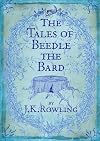
The only reason I started this book was because it was about a 100 pages and I was bored and had nothing better to do. You can safely surmise that I was not expecting much out of this book and out of the writer , to be precise. I remember having read Harry Potter and its magic not really touching me. But, boy I was wrong . This book takes you to a world where magic and muggles co existed. It actually convinces you that such a world can exist , this book cleverly pulls of the stunt of being a fairytale with a healthy narration of the society as it was.
A lovely book, crisp and takes you to a beautiful journey where everything is possible.
A lovely book, crisp and takes you to a beautiful journey where everything is possible.
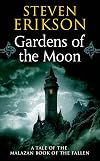
Overall rating: 3/5
Standing at about 600 pages this book is one of the toughest book I have read (this comes from a person who have read very pedantic non fiction). The writer, just like the Gods in this book, is not merciful. He drops his reader into a whirlpool of vengeful gods, chaotic empire, annexations and bloodshed and is left to his or her own means to make sense of the chaos or drown. However, if the reader perseveres they will be met by an amazing world , unique characters and a gripping story line that has adequate twists and turns to keep them hooked. Now there are different ways of surviving this book; few suggests following the summary of malazan read and re read blog in tor; I personally stuck to a mood board which helped me gain clarity as I plodded ahead.
The plot looses steam at around 50% but then quickly gains momentum at around 70% and does a clean wrapping up of a couple of plotlines towards the end. It also provides fodder to entice readers into the next installment but I personally would have preferred a cliffhanger.
Most of the characters didnot feel well chalked out and their emotions felt very sudden and inorganic. Also, I feel though there was enough bloodshed, blood that actually mattered were not spared. I also acutely felt the absence of mindgames and politics, everything felt very on the surface , which I am hoping the next installment would compensate.
Now, coming to my biggest disappointment. The much hyped Jarghut angle had a very lukewarm show more finish. So much narrative and suspense build up for such an ending was a major disappointment for me.
Final Verdict I read this book primarily cause it posed as an extreme challenge. I would not be reading the next installment if it was not from the very reknowned "Malazan book of the fallen series". For me the next book will be make or break for this series. show less
Standing at about 600 pages this book is one of the toughest book I have read (this comes from a person who have read very pedantic non fiction). The writer, just like the Gods in this book, is not merciful. He drops his reader into a whirlpool of vengeful gods, chaotic empire, annexations and bloodshed and is left to his or her own means to make sense of the chaos or drown. However, if the reader perseveres they will be met by an amazing world , unique characters and a gripping story line that has adequate twists and turns to keep them hooked. Now there are different ways of surviving this book; few suggests following the summary of malazan read and re read blog in tor; I personally stuck to a mood board which helped me gain clarity as I plodded ahead.
The plot looses steam at around 50% but then quickly gains momentum at around 70% and does a clean wrapping up of a couple of plotlines towards the end. It also provides fodder to entice readers into the next installment but I personally would have preferred a cliffhanger.
Most of the characters didnot feel well chalked out and their emotions felt very sudden and inorganic. Also, I feel though there was enough bloodshed, blood that actually mattered were not spared. I also acutely felt the absence of mindgames and politics, everything felt very on the surface , which I am hoping the next installment would compensate.
Now, coming to my biggest disappointment. The much hyped Jarghut angle had a very lukewarm show more finish. So much narrative and suspense build up for such an ending was a major disappointment for me.
Final Verdict I read this book primarily cause it posed as an extreme challenge. I would not be reading the next installment if it was not from the very reknowned "Malazan book of the fallen series". For me the next book will be make or break for this series. show less
I was very young when I read this novel and so am very sure this review will be marred by the obvious romanticizing the past. What I remember of this book would be the ferocious personality of Kamal. I warn you before hand that this book will be all about her. She was unapologetic , clear headed and so so powerful and also a sexual being. I remember I was awed by this lady and her point of view , not being from a very conservative background myself ; I was not shocked at her liaisons but what shocked me was the ease with which she collected her broken heart and moved forward. Being a teen , I was still under the shroud of "true love" and I think this was a bit uncomfortable for me.
Another important and really nice feeling about this book was the representation of the Bengali community.
The only complain I think I had of this book was the physical appearance of the lady. She was extremely attractive and to quote the entry I wrote in my diary about her was , "While reading this novel, I wondered why inorder to show a strong and clear headed woman , the writer chose a beautiful (physically) woman. I really am curious to see the impact would be if instead of her an average or even an ugly woman was chosen." So, I think this esteemed writer (who I don't think I am even capable of criticizing) , as a lot of other , did fail in this aspect .
Another important and really nice feeling about this book was the representation of the Bengali community.
The only complain I think I had of this book was the physical appearance of the lady. She was extremely attractive and to quote the entry I wrote in my diary about her was , "While reading this novel, I wondered why inorder to show a strong and clear headed woman , the writer chose a beautiful (physically) woman. I really am curious to see the impact would be if instead of her an average or even an ugly woman was chosen." So, I think this esteemed writer (who I don't think I am even capable of criticizing) , as a lot of other , did fail in this aspect .
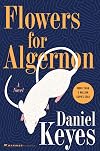
This book is a science fiction. In the emotional front this book or piece of literature is spot on. Whether be it a 68IQ Charlie or a stumbling awkward Charlie or the Charlie consumed by the fire of genius , I connected with him through out . It makes me wonder if everyone did the same , if everyone felt what a 185 IQ Charlie Gordon felt, was the writer so skilled as to pull off this stunt of convincing 100s of people that this is what a 185 IQ person feels and this feeling was nothing strange or deviant from that of a normal IQ person.
The science part was not exactly convincing. I felt the writer had his own agenda to prove in this book and it seemed obvious in a lot of places. I do not dig the keep god's creation as it is part so much , so this skepticism is obvious from my side. The science part was not devoid of the imprints of that era and I personally would feel it failed the test of time .
The plot was very good. The feelings were beautifully shown and we had a lot of insights through out the book. I would recommend it to everyone as it very convincingly is able to emote the feelings through a wide spectrum. However the validity of these emotions will always be in question and should not be generalized. Read this with a pinch of salt and take it as fiction.
The science part was not exactly convincing. I felt the writer had his own agenda to prove in this book and it seemed obvious in a lot of places. I do not dig the keep god's creation as it is part so much , so this skepticism is obvious from my side. The science part was not devoid of the imprints of that era and I personally would feel it failed the test of time .
The plot was very good. The feelings were beautifully shown and we had a lot of insights through out the book. I would recommend it to everyone as it very convincingly is able to emote the feelings through a wide spectrum. However the validity of these emotions will always be in question and should not be generalized. Read this with a pinch of salt and take it as fiction.
Prisoners of Geography: Ten Maps That Tell You Everything You Need to Know About Global Politics by Tim Marshall
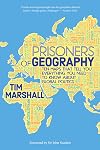
Actual Rating: 4.5/5
Before I try to write a review of this book, I feel it is important to know a little bit about the creator behind it. Tim Marshal is a 60-year-old journalist who specializes in foreign affairs and analysis of political development across the world. He has spent many years of his professional life enjoying a front seat view of the various political drama unfolding across the world. And these amazing insights and experiences are beautifully captured in this book.
Sitting at a humble 256 pages, "Prisoners of Geography" tries to capture the political past, present and a little of the future of the world through the lens of geopolitics. Now, this I believe is the biggest selling point of this book. Usually, writers (I am talking about you "The Invention of Religion") do not leave a scope of dissent when they are trying to prove their point. However, Tim Marshall graciously cites examples of countries driven more by their religion/socio-cultural features than their geography. This very act of showing that his theme of how "geography drives the world" may not be all-encompassing for me is the best trait about this book.
Tim Marshall starts the book with the largest country in World Russia, moving onto China, USA and then a flurry of countries and political unions. He finally ends his piece with the Arctics (a region slowly coming into prominence as the world is descending into a battle for natural resources). Throughout his journey, he maintains an easy to show more read unbiased narrative peppered with tongue in cheek humour, precious insights and anecdotes about political hypocrisies. The chapters dealing with China and US of A are my personal favourites and his unbiasedness actually shines through in these chapters (especially when he discusses Uighur Muslim crisis and Mr Trump).
Each chapter starts with a short concise peek into the past of the region under discussion, so people who are not aware of that region or are beginners into world politics need not feel intimidated or get deterred.
Each chapter is also isolated in itself and does not heavily depend on its predecessors, so it can be a leisure, sporadic read and need not be finished in a single go. However, people like me who read this book continuously, you will find a seamless connectivity across the chapters which adds to its charm.
I think the final positive about this book is the time period it covers. Tim Marshall has actually covered political events as late as early 2019. This makes this book a fairly updated refresher about world politics (most of the political books I have read usually ends in the 90s). The large timeframe it covers actually helps us get a perspective about events that actually matters, events that drove our world into its present state and events that can decide its course in the future . It also gives us an awakening that events that we think are important may not be as important as we would like to believe.
Now, coming to its faults. There are two things that peeved me while reading this book. The first one (which I think is the valid one) being the absolute absence of Australia and New Zealand. These countries are not even mentioned in this book (Antarctica gets a few lines). I am not sure what am I supposed to understand by it. Does the great barrier reef and its depletion not play any role in world politics? Will Australia and New Zealand get obliterated in the coming future? If so, will that not create its own unique problems? Are they so boring that they do not even deserve a mention? I am very disappointed by the radio silence Tim Marshall maintained about these regions.
The second one is not as much as flaw as my personal disappointment. When Tim Marshall covered India and Pakistan, he somehow painted India with broad strokes. This made me think that maybe he has also simplified a lot of other countries (which me not being its native may not be aware of). Thus, what I am trying to say is do not consider this book a tell-all about the regions that are covered. These regions may have more nuances than what is mentioned in this book and if you are interested in reading about them, you should dig deeper about those books.
All in all, Prisoners of Geography is an amazing book; an amazing gifting option (maybe not to an Australian or a new Zealandia) and an amazing coffee table book option. It covers a lot of topics in its 256 pages and actually is fairly successful in providing a macroscopic view of the world.
Happy Reading!! show less
Before I try to write a review of this book, I feel it is important to know a little bit about the creator behind it. Tim Marshal is a 60-year-old journalist who specializes in foreign affairs and analysis of political development across the world. He has spent many years of his professional life enjoying a front seat view of the various political drama unfolding across the world. And these amazing insights and experiences are beautifully captured in this book.
Sitting at a humble 256 pages, "Prisoners of Geography" tries to capture the political past, present and a little of the future of the world through the lens of geopolitics. Now, this I believe is the biggest selling point of this book. Usually, writers (I am talking about you "The Invention of Religion") do not leave a scope of dissent when they are trying to prove their point. However, Tim Marshall graciously cites examples of countries driven more by their religion/socio-cultural features than their geography. This very act of showing that his theme of how "geography drives the world" may not be all-encompassing for me is the best trait about this book.
Tim Marshall starts the book with the largest country in World Russia, moving onto China, USA and then a flurry of countries and political unions. He finally ends his piece with the Arctics (a region slowly coming into prominence as the world is descending into a battle for natural resources). Throughout his journey, he maintains an easy to show more read unbiased narrative peppered with tongue in cheek humour, precious insights and anecdotes about political hypocrisies. The chapters dealing with China and US of A are my personal favourites and his unbiasedness actually shines through in these chapters (especially when he discusses Uighur Muslim crisis and Mr Trump).
Each chapter starts with a short concise peek into the past of the region under discussion, so people who are not aware of that region or are beginners into world politics need not feel intimidated or get deterred.
Each chapter is also isolated in itself and does not heavily depend on its predecessors, so it can be a leisure, sporadic read and need not be finished in a single go. However, people like me who read this book continuously, you will find a seamless connectivity across the chapters which adds to its charm.
I think the final positive about this book is the time period it covers. Tim Marshall has actually covered political events as late as early 2019. This makes this book a fairly updated refresher about world politics (most of the political books I have read usually ends in the 90s). The large timeframe it covers actually helps us get a perspective about events that actually matters, events that drove our world into its present state and events that can decide its course in the future . It also gives us an awakening that events that we think are important may not be as important as we would like to believe.
Now, coming to its faults. There are two things that peeved me while reading this book. The first one (which I think is the valid one) being the absolute absence of Australia and New Zealand. These countries are not even mentioned in this book (Antarctica gets a few lines). I am not sure what am I supposed to understand by it. Does the great barrier reef and its depletion not play any role in world politics? Will Australia and New Zealand get obliterated in the coming future? If so, will that not create its own unique problems? Are they so boring that they do not even deserve a mention? I am very disappointed by the radio silence Tim Marshall maintained about these regions.
The second one is not as much as flaw as my personal disappointment. When Tim Marshall covered India and Pakistan, he somehow painted India with broad strokes. This made me think that maybe he has also simplified a lot of other countries (which me not being its native may not be aware of). Thus, what I am trying to say is do not consider this book a tell-all about the regions that are covered. These regions may have more nuances than what is mentioned in this book and if you are interested in reading about them, you should dig deeper about those books.
All in all, Prisoners of Geography is an amazing book; an amazing gifting option (maybe not to an Australian or a new Zealandia) and an amazing coffee table book option. It covers a lot of topics in its 256 pages and actually is fairly successful in providing a macroscopic view of the world.
Happy Reading!! show less
Liked the twist.
Initially felt it to be very similar to "NEVER LET ME GO".
But , I have high hopes from it.
Initially felt it to be very similar to "NEVER LET ME GO".
But , I have high hopes from it.
This is my second venture into historical non fiction, the first being The Last Mughal.
I lived through each and every moment of the REICH.
Having pretty inferior knowledge about world politics, I would say it is not a good book to start reading about World War II as it completely focuses on THE THIRD REICH (as expected). However, it served my purpose of knowing Hitler. I won't say the writer is not unbiased , it is after all a victor's tale, but it has highlighted each and every aspect of Hitler.
5 stars for being such an engrossing and amazing read.
The writing style is beautiful, the writer always gives a gist of what is to be expected in the next chapter. It helped me form a beautiful timeline.
Reand and get mesmerized.
I lived through each and every moment of the REICH.
Having pretty inferior knowledge about world politics, I would say it is not a good book to start reading about World War II as it completely focuses on THE THIRD REICH (as expected). However, it served my purpose of knowing Hitler. I won't say the writer is not unbiased , it is after all a victor's tale, but it has highlighted each and every aspect of Hitler.
5 stars for being such an engrossing and amazing read.
The writing style is beautiful, the writer always gives a gist of what is to be expected in the next chapter. It helped me form a beautiful timeline.
Reand and get mesmerized.
Set in Nazi occupied France, Kristin Hannah's The nightingale follows the journey of estranged sisters Vianne and Isabelle Rosignol. Though related, the sisters have completely different attitude and reaction towards the war and most importantly towards France's occuptation by Germany. Issabelle is the fiesty hot headed teen dying to participate and fight the nazis ; whereas Vianne takes the role of a docile french lady waiting for her husband to return. One of my complains against this book is there is not much character development of the characters, sans one. As a reader I instantly connected with Isabelle and I rooted for her throughout the book; however I despaired to see challenges. I feel the writer could have introduced certain obstacles that could have shaken her resolve and humanized her more.
Written in simple English and divided into crisp chapters, The Nightingale is an easy page turner which can be completed in a sitting or not.
Though the novel is written as a memoir we are not sure who the narrator is. Infact, it is the very last chapter which discloses the identity of the narrator. Through out the novel I found myself rooting for a particular character to be narrator. I applaud the writer for her capability to maintain the mystery for over 600 pages.
The novel is successful in capturing the changing social and political scenario of France as the war progresses. The author uses German and French characters to reflect this progression. However, the reader in show more me wishes she would have shown this change in a more nuanced manner and not in this "X is good , Y is bad" way that she chose to do.
As a reader you will find yourself completely invested in the story and I am sure you would find yourself moist eyed by the time you turn the last page. I personally cried my eyes out. This brings me to the biggest complain I have of this book - the climax. I feel Hannah Kristin introduced the climax just to make sure her readers are left heartbroken. It does not feel like an organic end and feels forced just to get a dramatic ending (which she is obviously successful at).
Another point I would like to mention is this book is meant for a very specific brood of readers. I am skeptical whether any ready except the ones that identify as female would connect with the characters. The entire novel is for the female reader, which need not naturally be bad , but is something that I felt I should mention.
All in all a good engaging read you can give your weekend to. show less
Written in simple English and divided into crisp chapters, The Nightingale is an easy page turner which can be completed in a sitting or not.
Though the novel is written as a memoir we are not sure who the narrator is. Infact, it is the very last chapter which discloses the identity of the narrator. Through out the novel I found myself rooting for a particular character to be narrator. I applaud the writer for her capability to maintain the mystery for over 600 pages.
The novel is successful in capturing the changing social and political scenario of France as the war progresses. The author uses German and French characters to reflect this progression. However, the reader in show more me wishes she would have shown this change in a more nuanced manner and not in this "X is good , Y is bad" way that she chose to do.
As a reader you will find yourself completely invested in the story and I am sure you would find yourself moist eyed by the time you turn the last page. I personally cried my eyes out. This brings me to the biggest complain I have of this book - the climax. I feel Hannah Kristin introduced the climax just to make sure her readers are left heartbroken. It does not feel like an organic end and feels forced just to get a dramatic ending (which she is obviously successful at).
Another point I would like to mention is this book is meant for a very specific brood of readers. I am skeptical whether any ready except the ones that identify as female would connect with the characters. The entire novel is for the female reader, which need not naturally be bad , but is something that I felt I should mention.
All in all a good engaging read you can give your weekend to. show less
This book has a huge emotional connection with me. This is the first book , I read along with my mother, discussing its nuances and progressing as the character progresses.
Why is it beautiful?
Cause it is extremely simple to read. It does not bombard you with difficult sentence structure or very uncommon word.
The story seeps into your thought process.
It shows two sides of the same coin and it mesmerized me as a little girl.
Why is it beautiful?
Cause it is extremely simple to read. It does not bombard you with difficult sentence structure or very uncommon word.
The story seeps into your thought process.
It shows two sides of the same coin and it mesmerized me as a little girl.