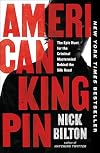
Nick Bilton’s American Kingpin describes the rise and fall of the darknet market The Silk Road, and its creator, Ross Ulbricht. The book focuses primarily on Ulbricht and a handful of agents from the DEA, FBI, IRS, and Homeland Security who wage a semi-coordinated effort to identify and capture the Silk Road leader, who was known online as the Dread Pirate Roberts.
Ulbricht grew up in Austin, Texas, a middle-class kid with strong libertarian leanings. According to Bilton, he had thought about creating an unregulated online marketplace long before the Silk Road went online in 2011, but the technology he needed didn’t exist yet. By 2011, those technologies were widely available. The Tor web browser provided online anonymity, while Bitcoin allowed users to complete purchases without the buyer or seller having to reveal their idenities.
Ulbricht taught himself to code and created a website like eBay that initially sold only psychadelic mushrooms. He posted news of the site’s existence to a few user forums, and from there it grew into something beyond Ulbricht’s wildest dreams. New sellers signed on, peddling cocaine, heroine, LSD, designer drugs, guns, explosives, hacking kits, and human organs for transplant. Much of the book describes Ulbricht’s frantic attempts to keep up with the unstoppable growth of site he created.
Caught off guard by the site’s wild success, Ulbricht enlisted the help of a number of colorful characters to improve security, monitor user show more forums, and resolve disputes between buyers and sellers.
About six months after launch, Gawker published news of the site’s existence, describing it as the Amazon.com of drugs. This caught the attention of political figures and law enforcement, who vowed to shut the site down and arrest whoever ran it. The problem was that Tor, which had been created by the US government to protect the online anonymity of informants and political dissidents living under repressive regimes, also did a good job hiding the identity of The Dread Pirate Roberts. As Roberts/Ulbricht posted openly about his libertarian views and plans for The Silk Road, no one could figure out who or where he was. If anyone were to unmask him, it could only be due to an error on his part–some misuse of the technology that protected him, or some slip-up in the real world outside of Tor and the dark web.
American Kingpin does an excellent job chronicling how a number of low-level federal law enforcement agents found little clues here and there: a pink pill the in mail in Chicago, a few stray and seemingly unrelated posts in online forums, an envelope full of fake IDs. The government ultimately identified Ulbricht in spite of a poorly coordinated investigation marked by lack of communication and inter-agency turf wars.
In fact, the final identification came almost as a matter of chance, during a conference call when an IRS inspector made an offhand comment about a username Ulbricht had chosen on StackOverflow. Another agent listening in on the call was able to connect that information to a detail in the FBI’s investigation.
Ulbricht’s arrest, which was widely reported at time, is one of the most thrilling moments in contemporary crime, and Bilton does an excellent job recounting the minutes leading up to the unplanned encounter, in which a number of agents had to make a impromptu split-second decisions.
A number of reviewers have criticised Bilton’s writing for its hyperbole and occasional inaccuracies. Part of his job as writer is to flesh out a description of characters he has not met and scenes he did not witness. It’s impossible to do this with one-hundred percent accuracy, so the writer has to work with the facts he has. When the facts are limited, as they are about Ulbricht’s personality and private life, the author must resort to repeating them, and that can wear a little thin.
Bilton also has a bad habit of throwing in unnecessarily heavy-handed foreshadowing. The effect is like lathering cheap ketchup on a fine filet mignon. This story is so fascinating, it doesn’t need any dressing up.
On the plus side, Bilton’s research is thorough, and he does a good job handling a large cast of characters and a great deal of technical information. To get the full impact of a story as complex as this one, you need to keep all the details and players straight. This is where Bilton’s work shines. If you like a good crime read or a good procedural, or if you just want to learn about how online crime works in the twenty-first century, this is an excellent read. show less
Ulbricht grew up in Austin, Texas, a middle-class kid with strong libertarian leanings. According to Bilton, he had thought about creating an unregulated online marketplace long before the Silk Road went online in 2011, but the technology he needed didn’t exist yet. By 2011, those technologies were widely available. The Tor web browser provided online anonymity, while Bitcoin allowed users to complete purchases without the buyer or seller having to reveal their idenities.
Ulbricht taught himself to code and created a website like eBay that initially sold only psychadelic mushrooms. He posted news of the site’s existence to a few user forums, and from there it grew into something beyond Ulbricht’s wildest dreams. New sellers signed on, peddling cocaine, heroine, LSD, designer drugs, guns, explosives, hacking kits, and human organs for transplant. Much of the book describes Ulbricht’s frantic attempts to keep up with the unstoppable growth of site he created.
Caught off guard by the site’s wild success, Ulbricht enlisted the help of a number of colorful characters to improve security, monitor user show more forums, and resolve disputes between buyers and sellers.
About six months after launch, Gawker published news of the site’s existence, describing it as the Amazon.com of drugs. This caught the attention of political figures and law enforcement, who vowed to shut the site down and arrest whoever ran it. The problem was that Tor, which had been created by the US government to protect the online anonymity of informants and political dissidents living under repressive regimes, also did a good job hiding the identity of The Dread Pirate Roberts. As Roberts/Ulbricht posted openly about his libertarian views and plans for The Silk Road, no one could figure out who or where he was. If anyone were to unmask him, it could only be due to an error on his part–some misuse of the technology that protected him, or some slip-up in the real world outside of Tor and the dark web.
American Kingpin does an excellent job chronicling how a number of low-level federal law enforcement agents found little clues here and there: a pink pill the in mail in Chicago, a few stray and seemingly unrelated posts in online forums, an envelope full of fake IDs. The government ultimately identified Ulbricht in spite of a poorly coordinated investigation marked by lack of communication and inter-agency turf wars.
In fact, the final identification came almost as a matter of chance, during a conference call when an IRS inspector made an offhand comment about a username Ulbricht had chosen on StackOverflow. Another agent listening in on the call was able to connect that information to a detail in the FBI’s investigation.
Ulbricht’s arrest, which was widely reported at time, is one of the most thrilling moments in contemporary crime, and Bilton does an excellent job recounting the minutes leading up to the unplanned encounter, in which a number of agents had to make a impromptu split-second decisions.
A number of reviewers have criticised Bilton’s writing for its hyperbole and occasional inaccuracies. Part of his job as writer is to flesh out a description of characters he has not met and scenes he did not witness. It’s impossible to do this with one-hundred percent accuracy, so the writer has to work with the facts he has. When the facts are limited, as they are about Ulbricht’s personality and private life, the author must resort to repeating them, and that can wear a little thin.
Bilton also has a bad habit of throwing in unnecessarily heavy-handed foreshadowing. The effect is like lathering cheap ketchup on a fine filet mignon. This story is so fascinating, it doesn’t need any dressing up.
On the plus side, Bilton’s research is thorough, and he does a good job handling a large cast of characters and a great deal of technical information. To get the full impact of a story as complex as this one, you need to keep all the details and players straight. This is where Bilton’s work shines. If you like a good crime read or a good procedural, or if you just want to learn about how online crime works in the twenty-first century, this is an excellent read. show less
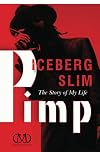
This is one brutal book, and a damn good one. Slim writes with a fire that you rarely see even from great authors at their best. He doesn’t sugarcoat anything, nor does he lace his narrative with apologies to reassure delicate readers. He simply gives a straightforward account of a cruel world in which the cruelest rise to the top… at least for a while.
The book takes place mostly on the south side of Chicago between the late 1930s and the late 1950s. Slim, then going by the name Young Blood, arrives from Milwaukee with about one week of experience pimping his girlfriend, Phyllis. He finds a hotel on a street where rich white tricks cruise for black whores, turns his girl out on the street, and then goes looking for more to recruit.
On his first night in Chicago, in the spring of 1938, he sees a man beat an unconscious woman almost to death in front of a huge crowd of onlookers. The man then lifts the woman onto his shoulder, throws her into his car and drives off. Slim turns to another man in the crowd:
This is part of Slim’s initiation into the cutthroat underworld of a notoriously show more corrupt city. He calls his neighborhood Hell, and describes a nighttime walk after shooting cocaine:
Slim knows he doesn’t yet have the toughness or experience to make it as a pimp in this rough town, so he goes looking for a mentor.
Slim soon finds his mentor in the city’s top pimp, Sweet Jones. Sweet, who is close to fifty when they meet, had come to Chicago from Georgia as a teen and made a fortune. He had a stable of ten whores, and was universally feared and respected.
Sweet, whose parents had likely been slaves, tells Iceberg that the best pimps, the ones who wrote the book, were freed slaves who had come to Chicago from the South. They saw a world composed of masters and slaves, and they knew which side of that relationship they wanted to be on.
Sweet teaches Slim to maintain absolute physical and psychological control over his women through physical brutality and psychological manipulation. The treatment he prescribes is essentially the same playbook that plantation owners practiced on slaves: beat them, gaslight them, remind them at every turn that they are worthless and powerless, wring all you can out of them until they’re physically and psychologically ruined. Then go find new ones to recruit.
If you want to be a master, you have to find someone beneath you to enslave, someone even more down and out than yourself. Sweet says, “‘Berg, ain’t but one real Heaven for a pimp. He’s in it when there’s a big pool of raggedy, hungry young bitches.” By that measure, the ghetto in Chicago during the depression, full of desperate souls with no escape, was a pimp’s Heaven. (Though Slim always describes the ghetto as Hell with a capital H.)
Both Sweet and Iceberg learned hardness and hatred from the traumas of their youth. As Bessel Van Der Kolk said in his book on trauma, The Body Keeps the Score, “Hurt people hurt other people.”
Pimp does have some funny points, like when Iceberg thinks he’s conning someone else, but is actually the one getting conned. The story of how he got his nickname is also a good one, while his sporadic encounters with his parents are painfully poignant.
This book would probably be unpublishable today. It would never make it past the sensitivity readers because the author doesn’t ask for sympathy or forgiveness, nor does he engage in the kind of moral hand-holding readers today seem to demand. He does not condemn each atrocity in the same breath as he reports it. He trusts his readers to be adult enough to recognize the horrors of the world he describes. His conscience does begin to creep in over time, but for the most part, he simply chronicles world as it was, and the things he and others did to survive. That may be too much for some readers.
I don’t know why Iceberg Slim and Donald Goines are not taught in university literature programs. I went through two degrees without ever hearing of either author. Maybe it’s because the professors interested in “literary diversity” only like the kind of diversity that doesn’t offend their sensibilities. Maybe they insist their authors be squarely on the “right” side of every issue, lamenting wrongs instead of portraying them in a way the reader actually feels.
Or maybe the professors think writers like Slim and Goines are too lowbrow, too sensational. The fact is, virtually all of the West’s “classic” literature was popular literature in its day, and it was popular precisely because audiences could connect with it on a visceral level. Shakespeare himself wrote partly to appeal to the illiterate groundlings, while Charles Dickens published his revered novels as serials in bi-weekly penny papers targeted at the uneducated masses. If today’s academics had been there at the time, they may have considered both Shakespeare and Dickens as popular entertainments unworthy of serious study, pointing students instead toward Latin.
The works of Slim and Goines have been in print consistently for fifty years, which is an extraordinarily long time in today’s publishing world. They persist because they’re good, because however sensational they may be, they portray something real that people across generations can connect with. I don’t think any rational, sane human being would want to live in the worlds that Slim and Goines portray, but many of them have no choice, and someone has to tell their story. show less
The book takes place mostly on the south side of Chicago between the late 1930s and the late 1950s. Slim, then going by the name Young Blood, arrives from Milwaukee with about one week of experience pimping his girlfriend, Phyllis. He finds a hotel on a street where rich white tricks cruise for black whores, turns his girl out on the street, and then goes looking for more to recruit.
On his first night in Chicago, in the spring of 1938, he sees a man beat an unconscious woman almost to death in front of a huge crowd of onlookers. The man then lifts the woman onto his shoulder, throws her into his car and drives off. Slim turns to another man in the crowd:
I said, “That stud would have gotten busted sure as hell if the heat had made the scene.”
He stepped back and looked at me like I was fresh in town from a monastery in Tibet.
He said, “You must be that square, Rip Van Winkle, I heard about. He’s heat. He’s vice heat. They call him Poison. He’s got nine whores. He’s a pimp. The broad is one of them. She got drunk with a trick.”
This is part of Slim’s initiation into the cutthroat underworld of a notoriously show more corrupt city. He calls his neighborhood Hell, and describes a nighttime walk after shooting cocaine:
I walked toward a rainbow bouquet of neon maybe ten blocks away. My senses screamed on the razor-edge of cocaine. It was like walking through a battlefield. The streaking headlights of the cars arcing through the night were giant tracer bullets. The rattling, crashing street cars were army tanks. The frightened, hopeless black faces of the passengers peered through the grimy windows. They were battle-shocked soldiers doomed forever to the front trenches.
I passed beneath an El-train bridge. A terrified, glowing face loomed toward me in the tunnel’s gloom. It was an elderly white man trapped behind enemy lines. A train furled by overhead. It bombed and strafed the street. The shrapnel fell in gritty clouds.
Slim knows he doesn’t yet have the toughness or experience to make it as a pimp in this rough town, so he goes looking for a mentor.
I was still black in a white man’s world. My hope to be important and admired could be realized even behind this black stockade. It was simple, just pimp my ass off and get a ton of scratch. Everybody in both worlds kissed your ass black and blue if you had flash and front.
Slim soon finds his mentor in the city’s top pimp, Sweet Jones. Sweet, who is close to fifty when they meet, had come to Chicago from Georgia as a teen and made a fortune. He had a stable of ten whores, and was universally feared and respected.
Sweet, whose parents had likely been slaves, tells Iceberg that the best pimps, the ones who wrote the book, were freed slaves who had come to Chicago from the South. They saw a world composed of masters and slaves, and they knew which side of that relationship they wanted to be on.
Sweet teaches Slim to maintain absolute physical and psychological control over his women through physical brutality and psychological manipulation. The treatment he prescribes is essentially the same playbook that plantation owners practiced on slaves: beat them, gaslight them, remind them at every turn that they are worthless and powerless, wring all you can out of them until they’re physically and psychologically ruined. Then go find new ones to recruit.
If you want to be a master, you have to find someone beneath you to enslave, someone even more down and out than yourself. Sweet says, “‘Berg, ain’t but one real Heaven for a pimp. He’s in it when there’s a big pool of raggedy, hungry young bitches.” By that measure, the ghetto in Chicago during the depression, full of desperate souls with no escape, was a pimp’s Heaven. (Though Slim always describes the ghetto as Hell with a capital H.)
Both Sweet and Iceberg learned hardness and hatred from the traumas of their youth. As Bessel Van Der Kolk said in his book on trauma, The Body Keeps the Score, “Hurt people hurt other people.”
Pimp does have some funny points, like when Iceberg thinks he’s conning someone else, but is actually the one getting conned. The story of how he got his nickname is also a good one, while his sporadic encounters with his parents are painfully poignant.
This book would probably be unpublishable today. It would never make it past the sensitivity readers because the author doesn’t ask for sympathy or forgiveness, nor does he engage in the kind of moral hand-holding readers today seem to demand. He does not condemn each atrocity in the same breath as he reports it. He trusts his readers to be adult enough to recognize the horrors of the world he describes. His conscience does begin to creep in over time, but for the most part, he simply chronicles world as it was, and the things he and others did to survive. That may be too much for some readers.
I don’t know why Iceberg Slim and Donald Goines are not taught in university literature programs. I went through two degrees without ever hearing of either author. Maybe it’s because the professors interested in “literary diversity” only like the kind of diversity that doesn’t offend their sensibilities. Maybe they insist their authors be squarely on the “right” side of every issue, lamenting wrongs instead of portraying them in a way the reader actually feels.
Or maybe the professors think writers like Slim and Goines are too lowbrow, too sensational. The fact is, virtually all of the West’s “classic” literature was popular literature in its day, and it was popular precisely because audiences could connect with it on a visceral level. Shakespeare himself wrote partly to appeal to the illiterate groundlings, while Charles Dickens published his revered novels as serials in bi-weekly penny papers targeted at the uneducated masses. If today’s academics had been there at the time, they may have considered both Shakespeare and Dickens as popular entertainments unworthy of serious study, pointing students instead toward Latin.
The works of Slim and Goines have been in print consistently for fifty years, which is an extraordinarily long time in today’s publishing world. They persist because they’re good, because however sensational they may be, they portray something real that people across generations can connect with. I don’t think any rational, sane human being would want to live in the worlds that Slim and Goines portray, but many of them have no choice, and someone has to tell their story. show less

Margaret Millar was best known for her mystery and suspense novels. Wives and Lovers, published near the height of her career in 1954, is somewhat of a departure. The story takes place in Channel City, a thinly veiled version of Santa Barbara where Millar lived with her husband, mystery writer Ross MacDonald.
If you come to this this book expecting a hook and an immediately engaging plot, you'll be frustrated. Wives and Lovers is set of interwoven character studies and a sociological portrait of a fairly wealthy small city in mid-century California. The value of the book lies in Millar's exceptional depth of insight, the richness and complexity of her characters, and the eloquence and grace of her writing. You have to slow down to read this one, and it's well worth it.
The primary characters are Gordon Foster, the dentist; his assistant Hazel Anderson; Hazel's ex-husband, George; Gordon's wife, Elaine; Gordon's lover, Ruby; and Hazel's housemate Ruth. The book also includes a number of richly drawn minor characters, including the boardinghouse landlady, Carrie Freeman, and the Superior Court Judge, Anton Bowridge. With the exception of the older Bowridge and the young Ruby, all of the characters are middle-aged, and all are working through the adjustments of midlife, recalibrating hopes and attitudes after finding the lives they had expected didn't pan out.
Mrs. Freeman's attitude at the arrival of her new tennant, Ruby, sums up the weariness and wariness many of the show more middle-aged characters are struggling against: "She peered down at the car with the look of chronic suspicion that landladies acquire after years of people."
Millar creates a sharp contrast between the misery of those who refuse to forgive, and the grace of those who put in the hard work of understanding and forgiveness. She probes each character in turn and shows how the rigid and intolerant are psychologically incapable of joy or even happiness, how they are toxic to those around them, not just creating but also compounding their own troubles and the troubles of the world.
This novel would not--could not--be published today under a mystery imprint. It's literature with a capital L, and not the precious or pretentious kind. It simply examines the many facets and ordinary characters of a world we already see and reveals in it a depth and richness we rarely take the time to discover. There's too much in here to absorb in a single reading, so this one is on my list to read again. show less
If you come to this this book expecting a hook and an immediately engaging plot, you'll be frustrated. Wives and Lovers is set of interwoven character studies and a sociological portrait of a fairly wealthy small city in mid-century California. The value of the book lies in Millar's exceptional depth of insight, the richness and complexity of her characters, and the eloquence and grace of her writing. You have to slow down to read this one, and it's well worth it.
The primary characters are Gordon Foster, the dentist; his assistant Hazel Anderson; Hazel's ex-husband, George; Gordon's wife, Elaine; Gordon's lover, Ruby; and Hazel's housemate Ruth. The book also includes a number of richly drawn minor characters, including the boardinghouse landlady, Carrie Freeman, and the Superior Court Judge, Anton Bowridge. With the exception of the older Bowridge and the young Ruby, all of the characters are middle-aged, and all are working through the adjustments of midlife, recalibrating hopes and attitudes after finding the lives they had expected didn't pan out.
Mrs. Freeman's attitude at the arrival of her new tennant, Ruby, sums up the weariness and wariness many of the show more middle-aged characters are struggling against: "She peered down at the car with the look of chronic suspicion that landladies acquire after years of people."
Millar creates a sharp contrast between the misery of those who refuse to forgive, and the grace of those who put in the hard work of understanding and forgiveness. She probes each character in turn and shows how the rigid and intolerant are psychologically incapable of joy or even happiness, how they are toxic to those around them, not just creating but also compounding their own troubles and the troubles of the world.
This novel would not--could not--be published today under a mystery imprint. It's literature with a capital L, and not the precious or pretentious kind. It simply examines the many facets and ordinary characters of a world we already see and reveals in it a depth and richness we rarely take the time to discover. There's too much in here to absorb in a single reading, so this one is on my list to read again. show less