
Robert Heinlein is perhaps one of the best known future history authors of the 20th century, having written many different novels all exposing the flaws of society. Revolt in 2100 is composed of three shorter stories, If this Goes On, Coventry, and Misfit, and was originally written for a science fiction magazine called Astounding Science Fiction, where it was first published as a novel in 1953, though the earliest of the stories, Misfit, was written in 1939. I found that this knowledge was important, because there is no warning in the book that all three stories have nothing connecting them. Although the relationships of the characters to seem to be children, parents, or other relatives of the characters in the other stories. In the beginning of the novel there is a very helpful chart made by Heinlein of all the books he had written and their chronological fit, including characters, inventions at that time, and social developments. Heinlein’s challenge to his readers is not to worry or ponder the dangers of the future, but to understand why things happen, and what we can do to prevent social order from being stretched and destroyed.
Overall, If this Goes On, was a fantastic novel, but what interested me was that the main character and the hero were not the same thing, even though the main character, named John Lyle, did heroic things, said heroic things, but the real hero was his friend, Zebadiah Jones, who is educated, disagrees with the religious dictatorship, and show more makes it his mission to educate John as well. Zeb, as he is referred to, at one point speaks freely about his distaste in the government, and he makes a point that I highly agree with. That everyone should have the right to speak their mind however they please, but they also have the right to be silent about it. I took this notion with me as I have been watching what goes on in our world today. In the United States, in the year 2010, we are not as technologically advanced as we thought we might be in 1950, we don’t have personal ram jets, and we don’t have weapons that don’t use particles. We still have bullets, and we still have some of the same social problems Heinlein talks about in the book. There are people who have distaste for people of different race, color, religion or otherwise, for no other reason than just because. These prejudices have been around since humans could tell that one man looked different than his neighbor, and still exist in Heinlein’s history of the future. In early June 2010, Helen Thomas made a comment about Israel that was neither proper nor appropriate. But it shows that people’s prejudices still guide them.
Heinlein uses If this Goes On to show what would happen if the Church, any church took over using religion to unite the people under one dictatorship, the Church that took over the country used propaganda and scapegoats to make the majority of the people follow them, and accept the Church as the governing body. I found it interesting that Heinlein would be so blunt about making the Church the enemy, but it really emphasizes his point that the separation of Church and State is imperative to the survival and freedom of a nation and its citizens.
Revolt in 2100 will make any reader think twice when they see something in a newspaper, on the radio, or on television, when statements are made that are based on prejudice and hatred, Heinlein’s words echo with deeper meaning. The Future that Heinlein wrote about is a possibility, and it is our job as citizens, and individuals, to keep that from happening, whether we are of a majority, or a minority, religiously, socially, ethnically. We are all people and that means me must protect each other. I find the words of Zebadiah Jones inspiring, because they had personal meaning to me as and religious minority, as well as my own knowledge of other people’s differences. show less
Overall, If this Goes On, was a fantastic novel, but what interested me was that the main character and the hero were not the same thing, even though the main character, named John Lyle, did heroic things, said heroic things, but the real hero was his friend, Zebadiah Jones, who is educated, disagrees with the religious dictatorship, and show more makes it his mission to educate John as well. Zeb, as he is referred to, at one point speaks freely about his distaste in the government, and he makes a point that I highly agree with. That everyone should have the right to speak their mind however they please, but they also have the right to be silent about it. I took this notion with me as I have been watching what goes on in our world today. In the United States, in the year 2010, we are not as technologically advanced as we thought we might be in 1950, we don’t have personal ram jets, and we don’t have weapons that don’t use particles. We still have bullets, and we still have some of the same social problems Heinlein talks about in the book. There are people who have distaste for people of different race, color, religion or otherwise, for no other reason than just because. These prejudices have been around since humans could tell that one man looked different than his neighbor, and still exist in Heinlein’s history of the future. In early June 2010, Helen Thomas made a comment about Israel that was neither proper nor appropriate. But it shows that people’s prejudices still guide them.
Heinlein uses If this Goes On to show what would happen if the Church, any church took over using religion to unite the people under one dictatorship, the Church that took over the country used propaganda and scapegoats to make the majority of the people follow them, and accept the Church as the governing body. I found it interesting that Heinlein would be so blunt about making the Church the enemy, but it really emphasizes his point that the separation of Church and State is imperative to the survival and freedom of a nation and its citizens.
Revolt in 2100 will make any reader think twice when they see something in a newspaper, on the radio, or on television, when statements are made that are based on prejudice and hatred, Heinlein’s words echo with deeper meaning. The Future that Heinlein wrote about is a possibility, and it is our job as citizens, and individuals, to keep that from happening, whether we are of a majority, or a minority, religiously, socially, ethnically. We are all people and that means me must protect each other. I find the words of Zebadiah Jones inspiring, because they had personal meaning to me as and religious minority, as well as my own knowledge of other people’s differences. show less
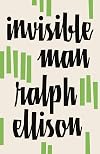
Invisible Man Reflection
In the recent events that have occurred over this summer, one thing stands out for many Americans, the dangerous and often volatile subject of race, gender, and ethnicity. Have we as a country matured past our great and terrible misconceptions about race? After 1964 we dubbed ourselves leaders in the fight against racial profiling, telling other nations to forget their past and live as one with their fellow humans. But have we really graduated to the point where this is true for ourselves? We know from experience that learning from the past is quite difficult. Are we really able to avoid judging a person by their physical appearance?
Invisible Man, by Ralph Ellison, is a testament to physical appearance and racial discrimination. The theme of fear and distrust is present throughout the entire book. The white people are afraid of the blacks, and the black people don’t trust the whites. This frightening story is told from the perspective of a young black man in the 1930’s. Though not actually invisible, the Invisible Man is ignored by people everywhere, and like the stranger on the street, most people don’t think about who he is other than wondering if he is dangerous. This novel shows the reader a lifetime of examples of what racial profiling can do to a person, and makes the reader wonder if they have done the same to others.
No one can deny that if they see someone in a dark alley, partially hidden in the shadows of night, they will be show more afraid. What is disturbing is the tendency to generalize people into a particular stereotype. For many, that stereotype is the tall black man. After the tragedy this summer at the Holocaust Museum in Washington D.C., perhaps it should be the elderly white man.
On July 16, 2009, Professor Henry Gates Jr. of Harvard University was arrested outside his own home. Lucia Whalen had called the police when she saw two men breaking into a house on the street near her office. When the police arrived to investigate the scene, they found an older black man claiming to be a Harvard professor. The man turned out to be Professor Gates, and had identification to prove it, but the way he acted towards police Sgt. James Crowley resulted in his arrest for disorderly conduct. The charges were later dropped.
Would Sgt. Crowley have acted differently if Professor Gates was white? Racial discrimination has been around a long time. Although written in 1959 before the civil rights legislation, it seems sometimes that things haven’t changed much from the events described in the book. The Invisible Man was only “invisible” because white men and women didn’t want to see him. Ralph Ellison’s challenge to all people is not to judge a person by the color of their skin, or what they wear, their religion, or their sexual orientation. To devalue individuals makes us all invisible.
Invisible Man is a powerful, violent and disturbing novel; a classic that stands the test of time to remind us how easy it is to discriminate. I enjoyed the book, but it’s hard to describe why. Maybe because it made me think about the ways stereotypes are used all the time. The way the author wrote the novel so that the reader would never know the narrator’s name was fascinating, and made the story come alive. But the most powerful part of the novel is the narrator’s identity. The story starts with the narrator’s present then he tells the reader about his past. Finally, the reader is returned to the present, and at the very end, the reader gets a little snippet of what will happen to his future. By being a nobody he is Somebody, and Ellison gives him a past that can let him choose a future. show less
In the recent events that have occurred over this summer, one thing stands out for many Americans, the dangerous and often volatile subject of race, gender, and ethnicity. Have we as a country matured past our great and terrible misconceptions about race? After 1964 we dubbed ourselves leaders in the fight against racial profiling, telling other nations to forget their past and live as one with their fellow humans. But have we really graduated to the point where this is true for ourselves? We know from experience that learning from the past is quite difficult. Are we really able to avoid judging a person by their physical appearance?
Invisible Man, by Ralph Ellison, is a testament to physical appearance and racial discrimination. The theme of fear and distrust is present throughout the entire book. The white people are afraid of the blacks, and the black people don’t trust the whites. This frightening story is told from the perspective of a young black man in the 1930’s. Though not actually invisible, the Invisible Man is ignored by people everywhere, and like the stranger on the street, most people don’t think about who he is other than wondering if he is dangerous. This novel shows the reader a lifetime of examples of what racial profiling can do to a person, and makes the reader wonder if they have done the same to others.
No one can deny that if they see someone in a dark alley, partially hidden in the shadows of night, they will be show more afraid. What is disturbing is the tendency to generalize people into a particular stereotype. For many, that stereotype is the tall black man. After the tragedy this summer at the Holocaust Museum in Washington D.C., perhaps it should be the elderly white man.
On July 16, 2009, Professor Henry Gates Jr. of Harvard University was arrested outside his own home. Lucia Whalen had called the police when she saw two men breaking into a house on the street near her office. When the police arrived to investigate the scene, they found an older black man claiming to be a Harvard professor. The man turned out to be Professor Gates, and had identification to prove it, but the way he acted towards police Sgt. James Crowley resulted in his arrest for disorderly conduct. The charges were later dropped.
Would Sgt. Crowley have acted differently if Professor Gates was white? Racial discrimination has been around a long time. Although written in 1959 before the civil rights legislation, it seems sometimes that things haven’t changed much from the events described in the book. The Invisible Man was only “invisible” because white men and women didn’t want to see him. Ralph Ellison’s challenge to all people is not to judge a person by the color of their skin, or what they wear, their religion, or their sexual orientation. To devalue individuals makes us all invisible.
Invisible Man is a powerful, violent and disturbing novel; a classic that stands the test of time to remind us how easy it is to discriminate. I enjoyed the book, but it’s hard to describe why. Maybe because it made me think about the ways stereotypes are used all the time. The way the author wrote the novel so that the reader would never know the narrator’s name was fascinating, and made the story come alive. But the most powerful part of the novel is the narrator’s identity. The story starts with the narrator’s present then he tells the reader about his past. Finally, the reader is returned to the present, and at the very end, the reader gets a little snippet of what will happen to his future. By being a nobody he is Somebody, and Ellison gives him a past that can let him choose a future. show less