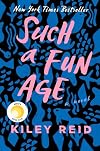
I devoured it in a couple days. It's been a while since I've read a book that fast. The writing is clunky at times, and there were a few times I had to read and reread a passage, wondering what the heck they were talking about. But it's a good story, and an interesting treatise on impact vs. intent, which is something that is talked about a lot, but I think is an under-explored area of fictional relationships in general and race relations in particular, at least. It's really effective at illustrating white liberal racism and fetishization of people of color (esp. Black women). The fact that Emira doesn't have her shit together feels a little revolutionary. Roxane Gay said in response to someone chiding her for criticizing a piece of art featuring a lesbian couple, that she appreciated that the characters were flawed, "because usually we have to be perfect."
4Q4P
I thought this book was ok. I didn't love it, but I can see the appeal. By the end, I was a little sick of Ruby, the main character. I didn't really ever understand her motivations. When she rejected the love interest, I didn't understand her reasoning and I didn't really care, by that point. I thought that it was written well- especially the descriptions of Ruby's surroundings, but the characters rang a little false to me, especially Ruby's boss, and her brother-in-law. I agree with one reviewer from Booklist who says that Ruby's brother in law and her boyfriend are too good to be true. They are important characters in the story, yet they lack depth. I also agree with the same reviewer who said that the central theme of Ruby and Cora's mother betraying them gets a little lost in the romantic subplot.
It's a flawed novel, but it is engaging. I think that it will appeal to a certain kind of reader.
I thought this book was ok. I didn't love it, but I can see the appeal. By the end, I was a little sick of Ruby, the main character. I didn't really ever understand her motivations. When she rejected the love interest, I didn't understand her reasoning and I didn't really care, by that point. I thought that it was written well- especially the descriptions of Ruby's surroundings, but the characters rang a little false to me, especially Ruby's boss, and her brother-in-law. I agree with one reviewer from Booklist who says that Ruby's brother in law and her boyfriend are too good to be true. They are important characters in the story, yet they lack depth. I also agree with the same reviewer who said that the central theme of Ruby and Cora's mother betraying them gets a little lost in the romantic subplot.
It's a flawed novel, but it is engaging. I think that it will appeal to a certain kind of reader.
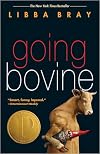
5Q5P. I loved this book. Going Bovine is the story of Cameron, a perpetually stoned 16 year old who's relationship with his parents and twin sister, Jenna, is rocky, until he's diagnosed with Mad Cow disease. After he's hospitalized, he's visited by an angel, Dulcie, who sends him on a Quixotic mission to save the world and maybe himself. He sets off his Gonzo, his Mexican American, dwarf friend. Together they battle fire giants, save the ancient Norse god and current garden gnome, Balder, from certain doom at the hands of vapid t.v. personalities and bring down a happiness cult. Or maybe none of that happens.
Cameron is reading Don Quixote for school, and there are plenty of Quixotic parallels throughout. It's a sharp satire, but the story is touching and Cameron is fleshed out and relatable. I agree with one reviewer from SLJ who said that teens might tune out before the end, because it's a pretty long book, and the ending is a little disappointing. But I also think that a lot of teens will love the humor and outrageous plot. It's a pretty complex and layered story. I think that even reluctant readers can find something that they can cling to that will see them through to the end.
Cameron is reading Don Quixote for school, and there are plenty of Quixotic parallels throughout. It's a sharp satire, but the story is touching and Cameron is fleshed out and relatable. I agree with one reviewer from SLJ who said that teens might tune out before the end, because it's a pretty long book, and the ending is a little disappointing. But I also think that a lot of teens will love the humor and outrageous plot. It's a pretty complex and layered story. I think that even reluctant readers can find something that they can cling to that will see them through to the end.
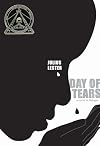
5Q4P. I really enjoyed the format of Day of Tears. Told through dialogue and soliloquy, the stories of all the people- slaves and free alike- are fascinating. I think it does an excellent job of putting human faces on the practice of slavery. I also thought it did a great job of portraying some of the inner conflicts people felt about being slaves or being slave owners. Samson for example, felt like he found someone who wouldn't beat him or sell him and that was enough for him. He couldn't understand why his son would want to be free. Francis obviously cared for Emma and wanted her love, but turned away from her. Her story in particular, I think provides a window into how people can turn off their empathy or humanity and choose not to see suffering.
Emma is the center of the book and her story is gut wrenching. It's so well written, I think any child would be able to put themselves in Emma's shoes. Imagine being sold by someone on a whim, and never being able to see your family again. I think one of the most poignant moments in the book is when Emma's father, Will tells Butler, "I should have let you die," referring to the time when they were both children that Will saved Butler from drowning.
Also, the inclusion of the actual lists from the sale is chilling. Reading through them, it's difficult to understand how people could have been so callous.
Emma is the center of the book and her story is gut wrenching. It's so well written, I think any child would be able to put themselves in Emma's shoes. Imagine being sold by someone on a whim, and never being able to see your family again. I think one of the most poignant moments in the book is when Emma's father, Will tells Butler, "I should have let you die," referring to the time when they were both children that Will saved Butler from drowning.
Also, the inclusion of the actual lists from the sale is chilling. Reading through them, it's difficult to understand how people could have been so callous.
4Q2P
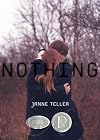
I'm not sure I would recommend this book to any teens. I want to say that I liked it or enjoyed it, but those aren't exactly accurate descriptions. I didn't dislike it. I was disturbed by it. Moved? I'm not sure. It's haunting, for sure. I think it could prompt great discussion in a classroom, but I'm not sure it's something that a student will pick up on his or her own and start reading for enjoyment. I gave it a 4 for quality, because I think it's very well written and effective.
Part of the reason why Nothing is hard to read, is because you never get insight into the emotions of the characters. You never feel connected to them in any way. I feel like that makes it all the more effective. The starkness and emotional disconnectedness make what the children did, and how things escalated all the more difficult to comprehend. At the same time, you can see that their actions are born out of a kind of brutal logic.
Johanna Lewis writing for the School Library Journal says, "Danish kids apparently love a good existential discussion, but the group’s circular debates may bore and/or confuse American middle schoolers." I think in a sense she's right. I don't think this book is one that students, particularly middle schoolers, will pick up and read for fun. But I do think it would make a great discussion for a book club or classroom. I also think it might be a little more appropriate for high school aged teens.
SLJ review taken from show more target="_top">http://www.amazon.com/Nothing-Janne-Teller/dp/144244116X/ref=sr_1_1?s=books&.... show less
I'm not sure I would recommend this book to any teens. I want to say that I liked it or enjoyed it, but those aren't exactly accurate descriptions. I didn't dislike it. I was disturbed by it. Moved? I'm not sure. It's haunting, for sure. I think it could prompt great discussion in a classroom, but I'm not sure it's something that a student will pick up on his or her own and start reading for enjoyment. I gave it a 4 for quality, because I think it's very well written and effective.
Part of the reason why Nothing is hard to read, is because you never get insight into the emotions of the characters. You never feel connected to them in any way. I feel like that makes it all the more effective. The starkness and emotional disconnectedness make what the children did, and how things escalated all the more difficult to comprehend. At the same time, you can see that their actions are born out of a kind of brutal logic.
Johanna Lewis writing for the School Library Journal says, "Danish kids apparently love a good existential discussion, but the group’s circular debates may bore and/or confuse American middle schoolers." I think in a sense she's right. I don't think this book is one that students, particularly middle schoolers, will pick up and read for fun. But I do think it would make a great discussion for a book club or classroom. I also think it might be a little more appropriate for high school aged teens.
SLJ review taken from show more target="_top">http://www.amazon.com/Nothing-Janne-Teller/dp/144244116X/ref=sr_1_1?s=books&.... show less
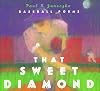
5Q3P I gave That Sweet Diamond a 3P, but I think the popularity rate will be higher for kids who are interested in poetry or baseball. It's really hard to imagine a sweeter collection of poems, perfect for the season. They made me want to sit in the stands on a hot day, drink a beer, have a hot dog, jeer at the opposing team. I love baseball and I miss it. Reading this collection made me remember how much.
I think baseball is a subject that it's easy to get weepy or sentimental about. But these poems are bright and funny with only a hint of nostalgia. That's not to say they lack substance. They are evocotive of a hot summer day at the stadium, full of love for the game without resorting to hero worship or maudlin Americana.
Each poem is from a different perspective or about a different aspect of the game: the pre-game excitement, the pitcher, the hitter, the lonely infielder, the vendor, the epic spit.
I think baseball is a subject that it's easy to get weepy or sentimental about. But these poems are bright and funny with only a hint of nostalgia. That's not to say they lack substance. They are evocotive of a hot summer day at the stadium, full of love for the game without resorting to hero worship or maudlin Americana.
Each poem is from a different perspective or about a different aspect of the game: the pre-game excitement, the pitcher, the hitter, the lonely infielder, the vendor, the epic spit.
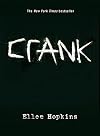
4Q4P. I loved Crank and I was devastated by it, in the way that some books worm your way in and rearrange your brain. I listened to it, which I think is probably a much different experience than reading it. But I loved hearing the verse spoken aloud.
Crank is the story of Kristina, a 16 year old who's life changes drastically after going to visit her junkie father for 3 weeks one summer. She meets a boy, tries meth and falls in love. Both with the boy and "the monster." She discovers, or invents, a personality or persona that she never knew existed. Kristina takes a backseat to Bree, who doesn't make the best decisions. Bree loves to flirt wit boys and get down with the monster. When Kristina returns home, Bree doesn't won't be stifled and Kristina's life spirals quickly out of control.
I would have given Crank a 5Q, but there were a few things I thought were off. I'm not sure any respectable teenager this side of 1985 would refer to a line as a toot. I could be wrong, but it seems kind of like a modern teen saying something is far-out (which actually, Kristina does at one point). I also thought that Kristina's family had way to many "annual events." After the first couple It started reading like a tired device meant contrast old Kristina with new Kristina/Bree.
The book ended abruptly, and in my opinion, powerfully. The reader isn't sure if Kristina will ever break free from the monster, which I suppose is realistic. Meth is scary hard to quit. There are two follow up show more novels in the series, so I suppose we find out whether Kristina ever shakes the monster.
After reading Crank, I found out that it was semi-autobiographical. Ellen Hopkins' daughter struggled with meth addiction. I think this makes the scenes with Kristina's mother especially touching. When Kristina wonders if everything would have been different if her mother had reached out to her, it's hard not to think that maybe Hopkins wonders the same thing. show less
Crank is the story of Kristina, a 16 year old who's life changes drastically after going to visit her junkie father for 3 weeks one summer. She meets a boy, tries meth and falls in love. Both with the boy and "the monster." She discovers, or invents, a personality or persona that she never knew existed. Kristina takes a backseat to Bree, who doesn't make the best decisions. Bree loves to flirt wit boys and get down with the monster. When Kristina returns home, Bree doesn't won't be stifled and Kristina's life spirals quickly out of control.
I would have given Crank a 5Q, but there were a few things I thought were off. I'm not sure any respectable teenager this side of 1985 would refer to a line as a toot. I could be wrong, but it seems kind of like a modern teen saying something is far-out (which actually, Kristina does at one point). I also thought that Kristina's family had way to many "annual events." After the first couple It started reading like a tired device meant contrast old Kristina with new Kristina/Bree.
The book ended abruptly, and in my opinion, powerfully. The reader isn't sure if Kristina will ever break free from the monster, which I suppose is realistic. Meth is scary hard to quit. There are two follow up show more novels in the series, so I suppose we find out whether Kristina ever shakes the monster.
After reading Crank, I found out that it was semi-autobiographical. Ellen Hopkins' daughter struggled with meth addiction. I think this makes the scenes with Kristina's mother especially touching. When Kristina wonders if everything would have been different if her mother had reached out to her, it's hard not to think that maybe Hopkins wonders the same thing. show less
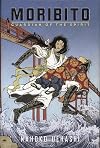
4Q4P. Set in a fantastic world that echos medieval Japan, Moribitu is the story of Balsa the gifted and bad-ass female bodyguard for hire and her charge, the prince Chagum. Chagum's father, the Mikado, wants to kill him because he believes that he is possessed by a water demon that will bring drought and famine to New Yogo. Moribitu is the story the adventures they have while Balsa is attempting to protect Chagum from his father and the demon Rarunga.
This is my first time reading any sort of Japanese fantasy. It's a rich story and very gripping and action packed, but I felt like the characters were a little flat. I never felt very connected to the book or the characters. Despite the lack of character depth, I think this will appeal to teens, especially the ones who are in to Manga.
This is my first time reading any sort of Japanese fantasy. It's a rich story and very gripping and action packed, but I felt like the characters were a little flat. I never felt very connected to the book or the characters. Despite the lack of character depth, I think this will appeal to teens, especially the ones who are in to Manga.
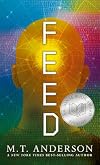
4Q4P, The world of Feed is my worst nightmare. Everyone is connected to a streaming feed of information embedded in their brain. It's an integration of technology and biology that I would imagine started out as a great technological innovation, but ended up creating a population of distracted, ill-informed, inarticulate consumers. The planet is dying or dead, everyone is sick and nobody seems to worry about it.
Tony McMillan of DigBoston says, "...ultimately the thrust of this novel is not how thoroughly communication technology and its marriage with consumer culture rots our intelligence, it’s how deeply it rots our compassion." But I think it goes further than that, I think not only does it rot our intelligence, it eats away at what makes us human; our ability to be present, to connect with other people, to reason. All of this connection tends to make us disconnect from where we are and what is happening to us right now. Feed is what happens when we aren't paying attention.
Tony McMillan of DigBoston says, "...ultimately the thrust of this novel is not how thoroughly communication technology and its marriage with consumer culture rots our intelligence, it’s how deeply it rots our compassion." But I think it goes further than that, I think not only does it rot our intelligence, it eats away at what makes us human; our ability to be present, to connect with other people, to reason. All of this connection tends to make us disconnect from where we are and what is happening to us right now. Feed is what happens when we aren't paying attention.
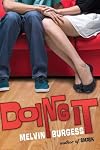
3Q 3P, Melvin Burgess said about Doing It, "I wrote Doing It because I do believe that we have let young men down very badly in terms of the kinds of books written for them. This book is my go at trying to bring young male sexual culture into writing." I think he successfully wrote this book about teenage sexuality from a boys perspective. Maybe that's why I didn't really connect with the material. I thought it was a little boring, but I could appreciate that it was well written. Maybe I'm too old and too female for teen boy angst.
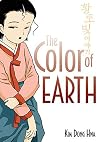
3Q 2P- A beautifully drawn graphic novel about a young girl coming of age. The writing is lyrical and sensual and the relationship between the girl, Ehwa, and her mother is touching and realistically portrayed. Kim Dong Hwa intertwines the story with references to flowers, rain and the seasons as metaphors and companions for Ehwa's burgeoning womanhood and awakening sexuality and her mother's loneliness and desire. There's an openness about puberty and sexuality that I found frank and refreshing in a YA book. I've read reviews that say The Color of Earth should be strictly limited to upper grades, but I think it would be a great middle school book. I think it's a great book for helping normalize the kinds of bodily changes that happen at puberty. It reminds me a bit of Are You There God, It's Me, Margaret in that way.
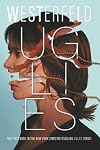
I gave Uglies a Voya rating of 4Q (better than most, marred by occasional lapses) and 4P (Broad appeal). I had a hard time with some of the language and terms used in the book. "Uglies" and "Pretties" and "Uglyville" and "New Pretty Town," are just some of the names that struck me as silly. I felt like it was a little heavy handed with some of the themes, and the the characters were very serious. Contrasted with the silly names and simplified language used by the characters, the novel (or series, as I read the first 3 books in The Uglies series) struck a sour note.
On the other hand, it was and interesting take on on the popular dystopian genre. It's a future where the population resides in city-states where juvenile children are sent to live in uglyville until they turn 16 and have cosmetic surgery to make them "Pretties." While the language isn't particularly engaging, the story is. It's a fast paced plot and the characters, while simplified and not particularly likable, are sympathetic.
On the other hand, it was and interesting take on on the popular dystopian genre. It's a future where the population resides in city-states where juvenile children are sent to live in uglyville until they turn 16 and have cosmetic surgery to make them "Pretties." While the language isn't particularly engaging, the story is. It's a fast paced plot and the characters, while simplified and not particularly likable, are sympathetic.