Alchemy: The Dark Art and Curious Science of Creating Magic in Brands, Business, and Life by Rory Sutherland
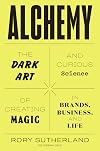
Sutherland gives a shallow but enjoyable look into the way humans "defy" logic—or more accurately, the way they operate with a different sort of logic than the kind you'll get from most economists. The book is chock full of interesting examples from the business world, and somewhat repetitively exhorts the reader to take chances, experiment, and make mistakes, rather than trying to logic your way to a solution. If simple logic could solve a problem, after all, someone would've already come around and solved it.
I was leaning towards 3 stars instead of 4, because the book could've been better put together. But it honestly is a fun and interesting read.
My problem with the book is that it lacks structure—which leads to the same few ideas being repeated over and over, illustrated by a series of (not always well-thought-out) anecdotes. For the most part the ideas are good, but poorly served by some of the author's anecdotes.
For example, a security guard once told the author to stop vaping in a no-smoking area; the author uses this anecdote (among other, better anecdotes) to illustrate how people "reverse-engineer a logical argument to suit an emotional predisposition," i.e. the guard didn't like vaping because he associated it with smoking (emotional predisposition) and therefore reverse-engineered a reason that the author couldn't vape in a no-smoking zone (he was 'projecting the image of smoking'). On the one hand, I think the idea the author is trying to communicate is show more completely reasonable, probably correct, and definitely something we should pay attention to. But the story is ridiculous. The guard's reply is unrealistic (who talks like that?) and suspiciously convenient for the author's purposes. Worse, the author falls into the very trap he complains about: ignoring reality in favor of your own rationalization. No-smoking areas exist to prevent second-hand smoke, and second-hand vape is still going to set off someone's asthma. Duh.
Other than that, this needs more citations. I don't know if that's missing from the back of my ARC, but considering the already abundant footnotes, I'd prefer more scholarly support for his arguments. show less
I was leaning towards 3 stars instead of 4, because the book could've been better put together. But it honestly is a fun and interesting read.
My problem with the book is that it lacks structure—which leads to the same few ideas being repeated over and over, illustrated by a series of (not always well-thought-out) anecdotes. For the most part the ideas are good, but poorly served by some of the author's anecdotes.
For example, a security guard once told the author to stop vaping in a no-smoking area; the author uses this anecdote (among other, better anecdotes) to illustrate how people "reverse-engineer a logical argument to suit an emotional predisposition," i.e. the guard didn't like vaping because he associated it with smoking (emotional predisposition) and therefore reverse-engineered a reason that the author couldn't vape in a no-smoking zone (he was 'projecting the image of smoking'). On the one hand, I think the idea the author is trying to communicate is show more completely reasonable, probably correct, and definitely something we should pay attention to. But the story is ridiculous. The guard's reply is unrealistic (who talks like that?) and suspiciously convenient for the author's purposes. Worse, the author falls into the very trap he complains about: ignoring reality in favor of your own rationalization. No-smoking areas exist to prevent second-hand smoke, and second-hand vape is still going to set off someone's asthma. Duh.
Other than that, this needs more citations. I don't know if that's missing from the back of my ARC, but considering the already abundant footnotes, I'd prefer more scholarly support for his arguments. show less
 This review was written for LibraryThing Early Reviewers.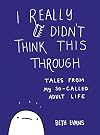
"I Really Didn't Think This Through: Tales From My So-Called Adult Life" is less about adulting and more about anxiety. Evans gives her readers a soft, kind, forgiving, slightly funny way to look at social anxiety and depression, through the lens of her own experience.
Not having anxiety myself, I didn't entirely connect with this book, but I would absolutely recommend it to anyone with any kind of anxiety — or even trying to understand anxiety. It's less of a "DO THIS TO FIX YOURSELF" and more "this is how I learned to be kind to myself."
It's not laugh-out-loud-until-you-can't-breathe funny like Hyperbole and a Half, but the illustrations are entertaining and helpful.
I got this book as a LibraryThing's Early Reviewer.
Not having anxiety myself, I didn't entirely connect with this book, but I would absolutely recommend it to anyone with any kind of anxiety — or even trying to understand anxiety. It's less of a "DO THIS TO FIX YOURSELF" and more "this is how I learned to be kind to myself."
It's not laugh-out-loud-until-you-can't-breathe funny like Hyperbole and a Half, but the illustrations are entertaining and helpful.
I got this book as a LibraryThing's Early Reviewer.
This review was written for LibraryThing Early Reviewers.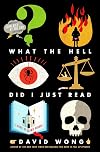
Another installment in the John Dies at the End series: same batshit crazy horror, same ridiculous not-quite-noir metaphors. Actually, the metaphors were even better this time... somehow he uses the most outlandish ideas to actually get the message across really well.
My only complaint is that the soy sauce wasn't as trippy as the first book, but I had the same complaint about book two.
My only complaint is that the soy sauce wasn't as trippy as the first book, but I had the same complaint about book two.
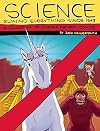
Most of the book is comics you can find on Saturday Morning Breakfast Cereal, but it’s a good collection. Not much to say on that front; it’s a comic for scientists and nerds (no, absolutely not like Big Bang Theory). The one thing that did strike me, purely as a function of reading so many SMBC in one sitting, is how casually half the characters are women. It’s like we’re half the population or something!
The second section is a smaller chunk of previously unrelated, theoretically nerdier comics. Didn’t seem quite as good, but whatever.
The last section is a set of illustrated stories from scientists — almost like the specials from PHD comics, but a lot more anecdotal. And funnier. Some were cool, some really gross, some touching. Definitely the best part of the book.
The second section is a smaller chunk of previously unrelated, theoretically nerdier comics. Didn’t seem quite as good, but whatever.
The last section is a set of illustrated stories from scientists — almost like the specials from PHD comics, but a lot more anecdotal. And funnier. Some were cool, some really gross, some touching. Definitely the best part of the book.
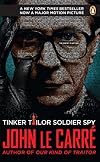
George Smiley, retired Cold War spy, untangles the knot of betrayal and double-agency that got him "retired" in the first place: there's a mole at the very top.
Featuring old memories, delicate operations, random schoolboy interludes, interpersonal drama, and almost no on-screen action.
I saw the movie first, which was probably for the best; I'm not sure I could've followed it without the vague recollection of the major players. But I saw it long enough ago that it couldn't ruin anything really.
And the movie was quite faithful: not just to the plot, but to the mood, and how delicious every small moment was. Le Carré's writing is gorgeous, even when the plot is difficult to follow. I regulator found myself not sure what was happening on a page, but nevertheless enjoying each sentence.
I don't think I'll be recommending to people. Way too dry for a lot of people.
And of course now I'm watching the movie again. This time I think I'll actually know what's going on! It's practically fast, compared to the book.
Featuring old memories, delicate operations, random schoolboy interludes, interpersonal drama, and almost no on-screen action.
I saw the movie first, which was probably for the best; I'm not sure I could've followed it without the vague recollection of the major players. But I saw it long enough ago that it couldn't ruin anything really.
And the movie was quite faithful: not just to the plot, but to the mood, and how delicious every small moment was. Le Carré's writing is gorgeous, even when the plot is difficult to follow. I regulator found myself not sure what was happening on a page, but nevertheless enjoying each sentence.
I don't think I'll be recommending to people. Way too dry for a lot of people.
And of course now I'm watching the movie again. This time I think I'll actually know what's going on! It's practically fast, compared to the book.
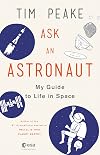
A well paced stroll through there astronaut experience, from what-it-takes, to training missions, through life on the ISS, and ending with touchdown and recovery.
Honestly the question/answer format was nice, but unnecessary; the questions weren't particularly interesting, and mostly just provided small chapter breaks in an already well-organized narrative. "Ask" an astronaut led me to expect something a little more, I don't know, wacky? Down-and-dirty, like Packing for Mars? But this was a good solid read.
Particularly of interest:
- WAY more diverse training than I would've thought, including a long undersea research mission (with a terrifying toilet situation) and cave exploration/camping.
- Oh hey offhand enema.
- Mild Russian badassery (could've done with more of this tbh).
- Occasional reminders that the author is British.
- Microgravity sounds fun except for all the many, many, many side effects, oh and also space debris that could explosively murder you at any point wow.
Honestly the question/answer format was nice, but unnecessary; the questions weren't particularly interesting, and mostly just provided small chapter breaks in an already well-organized narrative. "Ask" an astronaut led me to expect something a little more, I don't know, wacky? Down-and-dirty, like Packing for Mars? But this was a good solid read.
Particularly of interest:
- WAY more diverse training than I would've thought, including a long undersea research mission (with a terrifying toilet situation) and cave exploration/camping.
- Oh hey offhand enema.
- Mild Russian badassery (could've done with more of this tbh).
- Occasional reminders that the author is British.
- Microgravity sounds fun except for all the many, many, many side effects, oh and also space debris that could explosively murder you at any point wow.
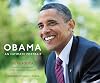
A gorgeous collection of photos from all aspects of the Obama presidency. Several of the photos are so iconic that they were immediately familiar, but even the new pictures had that same combination of drama and intimacy. (Apparently the photographer took nearly to million pictures!)
There's not too much text to comment on. The photographer wrote about the kind of intimate access he had to the president (his family, his day to day work, and the most pivotal events of his presidency), as did Obama in his forward.
Maybe it's the norm for photo books like this, but I did like how much white space there was -- sometimes entire blank pages.
There's not too much text to comment on. The photographer wrote about the kind of intimate access he had to the president (his family, his day to day work, and the most pivotal events of his presidency), as did Obama in his forward.
Maybe it's the norm for photo books like this, but I did like how much white space there was -- sometimes entire blank pages.
The Subtle Art of Not Giving a F*ck: A Counterintuitive Approach to Living a Good Life by Mark Manson
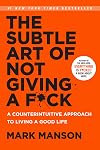
In a nutshell: Happiness comes from solving (not avoiding) problems; which, at best, leads you to a new, slightly less shitty set of problems.
"Being open with your insecurities paradoxically makes you more confidant and charismatic around others."
A fucking men.
"The avoidance of suffering is a form of suffering."
The book goes after the status obsessed and image conscious, but is even more vicious to the self-righteous above-it-all trolls.
The only thing I don't like is the assumption that this is new; it's not. Just because there was more suffering in the past (and hello, there's a lot of that still around) doesn't mean this dynamic wasn't still in play. Now we just have social media, and fewer people preoccupied with starving to death.
"Being open with your insecurities paradoxically makes you more confidant and charismatic around others."
A fucking men.
"The avoidance of suffering is a form of suffering."
The book goes after the status obsessed and image conscious, but is even more vicious to the self-righteous above-it-all trolls.
The only thing I don't like is the assumption that this is new; it's not. Just because there was more suffering in the past (and hello, there's a lot of that still around) doesn't mean this dynamic wasn't still in play. Now we just have social media, and fewer people preoccupied with starving to death.
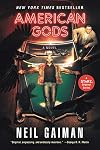
I wanted to read this before watching the TV adaptation, and I'm glad I did: it's absolutely nothing like I was expecting.
The title is almost misleading... while it's populated with plenty of actual gods and invented "American" gods, the story is really about the mostly human main character named Shadow. It's not the parade of familiar mythological figures I was expecting.
Even so, it was a great read. Gaiman approached the supernatural elements almost sideways, with a main character that just sort of... doesn't think to question. He seems halfway between shell-shocked and just chill, even up until the end. He's a standup guy with the kind of principles and stoicism a smart guy picks up in jail (at least in fiction).
The chapters are separated by little supernatural vignettes, small unknown gods coming to, and surviving in, America -- and more importantly, the people whose belief gives them life.
The title is almost misleading... while it's populated with plenty of actual gods and invented "American" gods, the story is really about the mostly human main character named Shadow. It's not the parade of familiar mythological figures I was expecting.
Even so, it was a great read. Gaiman approached the supernatural elements almost sideways, with a main character that just sort of... doesn't think to question. He seems halfway between shell-shocked and just chill, even up until the end. He's a standup guy with the kind of principles and stoicism a smart guy picks up in jail (at least in fiction).
The chapters are separated by little supernatural vignettes, small unknown gods coming to, and surviving in, America -- and more importantly, the people whose belief gives them life.

More comics from Saturday Morning Breakfast Cereal (and just a few extras at the end).
Comics about religion that will appeal to people who like science, math, and/or (!) religion. Probably not so funny to casually religious (or otherwise uninterested in the bible) readers, but more "umm....?" than offensive.
Comics about religion that will appeal to people who like science, math, and/or (!) religion. Probably not so funny to casually religious (or otherwise uninterested in the bible) readers, but more "umm....?" than offensive.
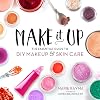
I don't wear a lot of makeup, and when I do, I wear a LOT of makeup. A lot of bright, high-pigment, store-bought makeup. But this one almost had me dipping my toe into DIY makeup -- I was searching for ingredients on Amazon and everything.
Don't ask me why I keep reading books that don't apply to me.
Anyway, if DIY makeup is your jam, this is the book for you. It's practical, scientific, methodical, no-nonsense, and concerned with safety. (Now I know: I can tell if makeup has gone off if it smells like crayons!) And I want to stress no-nonsense, since the book does discuss essential oils (tl;dr: they smell good and some act as preservatives). Includes base recipes/ingredients, vegan alternatives, pigments, color suggestions, price lists, supplier lists, safety information (like preservatives vs. antioxidants), stuff about hair (apparently oils absorb at different rates in your hair?) and a whole mess of other stuff.
Don't ask me why I keep reading books that don't apply to me.
Anyway, if DIY makeup is your jam, this is the book for you. It's practical, scientific, methodical, no-nonsense, and concerned with safety. (Now I know: I can tell if makeup has gone off if it smells like crayons!) And I want to stress no-nonsense, since the book does discuss essential oils (tl;dr: they smell good and some act as preservatives). Includes base recipes/ingredients, vegan alternatives, pigments, color suggestions, price lists, supplier lists, safety information (like preservatives vs. antioxidants), stuff about hair (apparently oils absorb at different rates in your hair?) and a whole mess of other stuff.
Dear Fahrenheit 451: Love and Heartbreak in the Stacks: A Librarian's Love Letters and Breakup Notes to the Books in Her Life by Annie Spence
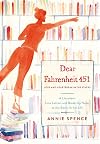
This was -- somehow -- a fun read, even though I haven't read let's say 90% of the books Anne mentions. It would definitely be a better read for someone with a wider taste in books (I'm coming to terms with being a terrible reader). But even without context, her "letters" were pretty funny.
The only part I skipped was the set of book recommendations at the end... I've got enough that I'm not reading, already.
I did leave with the intention of reading more celebrity biographies -- plus a photo-note of her "Crazy Surreal Shit in an Otherwise Mundane Setting" list, because that is right up my alley.
The only part I skipped was the set of book recommendations at the end... I've got enough that I'm not reading, already.
I did leave with the intention of reading more celebrity biographies -- plus a photo-note of her "Crazy Surreal Shit in an Otherwise Mundane Setting" list, because that is right up my alley.
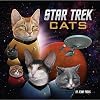
This was... odd. I'm not sure what I was expecting -- maybe something cutesy? -- but it was legitimately just Star Trek Cats. Illustrations of cats reenacting famous scenes from Star Trek: The Original Series. But hey, they're excellent illustrations! Especially Spock!Cat and Kirk!Cat.
I don't even know how to rate this. I don't know why it exists, but it does what it does really well?
I don't even know how to rate this. I don't know why it exists, but it does what it does really well?
This review was written for LibraryThing Early Reviewers.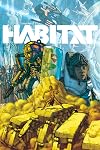
A quick and dirty sci-fi dystopia on some kind of multi-generational space ship. The young new Habsec (habitat security) officer isn’t so much a main character as a thread we follow from one warring department sect to another.
The world building is fantastic, especially the incorporation of 3D printing. I’m a sucker for techy dystopias where people have forgotten how technology works. I really appreciate the language, too: subtle slang, natural-sounding distortions of current tech terms, and (my pet peeve) not too many Meaningfully Capitalized Nouns.
My only two complaints are that the factions were hard to differentiate, making the in media res a bit difficult; and that it only barely has any resolution. Is this a series?
The world building is fantastic, especially the incorporation of 3D printing. I’m a sucker for techy dystopias where people have forgotten how technology works. I really appreciate the language, too: subtle slang, natural-sounding distortions of current tech terms, and (my pet peeve) not too many Meaningfully Capitalized Nouns.
My only two complaints are that the factions were hard to differentiate, making the in media res a bit difficult; and that it only barely has any resolution. Is this a series?
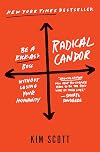
I... don't know why I keep reading/bookmarking management books--I'm not a manager--but this one was pretty interesting. "Radical candor" involves "caring personally and challenging directly" -- being open and honest with your co-workers and the people you manage, and encourage them to do the same, instead of keeping things impersonal and avoiding conflict. (With all sorts of buzzwords and charts; this is a management book after all).
You want to get to know the people you manage: their goals, their values, their "trajectories" (job goals), etc. People should be able to bring their whole self to work (something I wouldn't be able to appreciate until now, because I really do feel more like my normal-not-at-work self at my current job than I ever have. It's almost weird.)
It sounds stupidly obvious, but actually implementing something like that is tricky.
The one-on-one meetings she kept mentioning seemed ridiculous and unwieldy until the very last chapter: "I quit thinking of them as meetings and begin treating them as if I were having lunch or coffee with somebody"... suddenly, yeah, duh, that's how all the best planning happens, and the best way to check in with someone.
I'd highly recommend this for any sort of manager, really.
You want to get to know the people you manage: their goals, their values, their "trajectories" (job goals), etc. People should be able to bring their whole self to work (something I wouldn't be able to appreciate until now, because I really do feel more like my normal-not-at-work self at my current job than I ever have. It's almost weird.)
It sounds stupidly obvious, but actually implementing something like that is tricky.
The one-on-one meetings she kept mentioning seemed ridiculous and unwieldy until the very last chapter: "I quit thinking of them as meetings and begin treating them as if I were having lunch or coffee with somebody"... suddenly, yeah, duh, that's how all the best planning happens, and the best way to check in with someone.
I'd highly recommend this for any sort of manager, really.
The Daily Show (The Book): An Oral History as Told by Jon Stewart, the Correspondents, Staff and Guests by Chris Smith
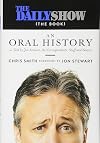
It's actually an oral history (IDK what I was expecting). There's some brief explanation, followed by pages and pages of interviews with Daily Show correspondents, producers, writers, etc., and of course Jon Stewart. The interviews are all chopped up and sorted by year and topic, so that most of the narrative comes right from people who were there.
I had NO idea this much work and planning went into how the show worked.
There's a whole system behind it, and it's a system that developed both organically and strongly guided by Jon and others on the show. I had no idea how much Jon rearranged things when he started, to end up with Daily Show as it is today, how focused his vision was (and more so over time), how central his vision was to creating the show we know, and how much pushback he got. Even the show's signature "roll the video!" was virtually unheard of-- the writers spent about a decade doing that manually, watching through countless DVR recordings and relying on memory for relevant cross-references, until they had the software developed to have news recordings saved to servers and text-searchable. I was young when Stewart took over for Kilborn, so I wouldn't have known the difference.
I got the sense that there were a lot of hard feelings and bruised egos, but that the interviewees had left it in the past, are now more circumspect, and respect what they'd built together.
If you like the Daily Show or have any interest in the news or television, read it. It's also a show more really great case study in how to change an office environment/culture, warts and all. show less
I had NO idea this much work and planning went into how the show worked.
There's a whole system behind it, and it's a system that developed both organically and strongly guided by Jon and others on the show. I had no idea how much Jon rearranged things when he started, to end up with Daily Show as it is today, how focused his vision was (and more so over time), how central his vision was to creating the show we know, and how much pushback he got. Even the show's signature "roll the video!" was virtually unheard of-- the writers spent about a decade doing that manually, watching through countless DVR recordings and relying on memory for relevant cross-references, until they had the software developed to have news recordings saved to servers and text-searchable. I was young when Stewart took over for Kilborn, so I wouldn't have known the difference.
I got the sense that there were a lot of hard feelings and bruised egos, but that the interviewees had left it in the past, are now more circumspect, and respect what they'd built together.
If you like the Daily Show or have any interest in the news or television, read it. It's also a show more really great case study in how to change an office environment/culture, warts and all. show less
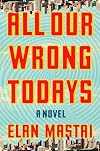
I flip-flopped on reading this one, because I wasn’t sure what direction the plot would go, and I’d been burnt by a promising quasi-time-travel plot a few weeks earlier. On the one hand, I’ve always been head-over-heels for crazy out-there retrofuturist worlds; on the other, was this going to turn into a sermon about soulmates and how things should be?
Now, I’m not going to say it was mind-bending, but it definitely wasn’t a sermon. It also wasn’t the time travel romp I was expecting; while not particularly deep, it was more focused on the human element, i.e. the impact of screwing up utopia for the whole world, but getting something that’s personally a little better. I was honestly split between liking the utopian world and liking the people we meet in the dystopia (a.k.a. our world). At the start, the future he described was so awesome that I didn’t want to keep reading–since I knew he was just going to screw it up.
The narrator (Tom) is self-deprecating, but mostly he stays on the side of humor and honesty rather than low self-esteem and naval-gazing. It's a hard science world through the lens of someone who… didn’t really pay attention in science class. So you get dumbed-down explanations (great for readers who don’t do scifi) but there’s a solid science backbone to the world.
The chapters were insanely short–a trend I’ve started noticing recently. It’s not a dense read, and although it could get a little slow, it was never plodding. show more It’s one of those books that’s ripe for a 2-hour movie adaptation. show less
Now, I’m not going to say it was mind-bending, but it definitely wasn’t a sermon. It also wasn’t the time travel romp I was expecting; while not particularly deep, it was more focused on the human element, i.e. the impact of screwing up utopia for the whole world, but getting something that’s personally a little better. I was honestly split between liking the utopian world and liking the people we meet in the dystopia (a.k.a. our world). At the start, the future he described was so awesome that I didn’t want to keep reading–since I knew he was just going to screw it up.
The narrator (Tom) is self-deprecating, but mostly he stays on the side of humor and honesty rather than low self-esteem and naval-gazing. It's a hard science world through the lens of someone who… didn’t really pay attention in science class. So you get dumbed-down explanations (great for readers who don’t do scifi) but there’s a solid science backbone to the world.
The chapters were insanely short–a trend I’ve started noticing recently. It’s not a dense read, and although it could get a little slow, it was never plodding. show more It’s one of those books that’s ripe for a 2-hour movie adaptation. show less
14 by Peter Clines
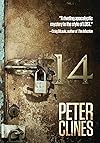
I've been reading a lot of space and time travel, so I kinda jumped into this in that mindset, and was pleasantly surprised when I double-checked the back cover summary. It's more of a light horror mystery? A new tenant moves into a hundred-year-old apartment building (which is, adorably, considered really old), meets his neighbors, and starts discovering odd things about all of their rooms. I remember thinking Goosebumps for adults!, but it was a little more big-picture than that. The back cover is entirely accurate; just add a pinch of deliciously steampunk tech and a dash of Lovecraft.
The pacing is slow but enjoyable at the beginning. The Lovecraft shows up at the end, and I enjoyed it even as someone who isn't a huge fan of Lovecraft. The tone is more like a light horror, or like Buffy, instead of dark, dramatic, nihilistic Lovecraft.
I could see this adapted to a movie... But I would pay good money to experience a full-scale day-long (week-long?!) escape room version of this.
The pacing is slow but enjoyable at the beginning. The Lovecraft shows up at the end, and I enjoyed it even as someone who isn't a huge fan of Lovecraft. The tone is more like a light horror, or like Buffy, instead of dark, dramatic, nihilistic Lovecraft.
I could see this adapted to a movie... But I would pay good money to experience a full-scale day-long (week-long?!) escape room version of this.
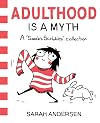
Comics about being a(n imposter) adult, basically. Light, fun, honest, realistic. Addresses things like anxiety, but not in a dark way. Perfect for any young adults, but particularly people who identify as introverted and/or people who experience anxiety.
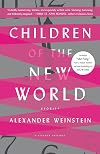
Almost all of these play to the strengths of short stories and scifi. The worlds are interesting and full. I can't put my finger down and say, duh, this is the moral of the story. They just make you think, often about several things at once, without giving you instructions on what to think, how to feel, how to react. Each story did what scifi does best: hold a mirror up to the present day.
Saying Goodbye to Yang
A short little piece about an electronic big brother, with little hints about what it means to be human, what role electronics have in our lives, racism (and bigotry from people who think they're anti bigotry). But just hints, no preaching.
The Cartographers
Making memories, digitally. A bit inception, a bit Eternal Sunshine of the Spotless Mind.
Heartland
A really creepy look at survival and parenting at the poverty line in an only slightly futuristic dystopia-in-progress.
Excerpts from The New World Authorized Dictionary
Uncomfortably realistic pop culture, tech, military, and advertising slang of the near future. Each one was surprisingly believable and, therefore, incredibly distributing.
Moksha
A suburban teen seeks spiritual (electronic) enlightenment. Electronic religion, opiate drug allusions, white guilt, cultural appropriation, and ethnic tourism. I really liked this one.
Children of the New World
The internet as we know it today, more or less, interpreted into highly realistic VR. Except in real life you don't get viruses from legitimate porn sites... that broke show more the suspension of disbelief for me.
Fall Line
An injured, retired X-Games skier looks back at his life. A look at social media celebrity, without much actual scifi.
A Brief History of the Failed Revolution
An essay, literally, on consciousness, after the advent and apparently complete solution of brain computer interface technology. Not as dry as it sounds! An interesting exercise in subtle scientific bias.
Migration
Weird VR sex, and the superiority of real life over virtual.
The Pyramid and the Ass
Technological reincarnation vs. natural reincarnation. This one edges away from pure scifi into some sort of spiritualism... or maybe pits the two against each other?
Rocket Night
Every year on Rocket Night they shoot the least-liked child into space. A blatant metaphor for children who get left behind by society, poverty, etc. Completely forgivable because it's so short and so hilariously absurd.
Openness
The (fairly undramatic) consequences of using technology to know your SO completely.
Ice Age
Post-apocalyptic-ice-age community... plus that one jerk who's figured out capitalism. show less
Saying Goodbye to Yang
A short little piece about an electronic big brother, with little hints about what it means to be human, what role electronics have in our lives, racism (and bigotry from people who think they're anti bigotry). But just hints, no preaching.
The Cartographers
Making memories, digitally. A bit inception, a bit Eternal Sunshine of the Spotless Mind.
Heartland
A really creepy look at survival and parenting at the poverty line in an only slightly futuristic dystopia-in-progress.
Excerpts from The New World Authorized Dictionary
Uncomfortably realistic pop culture, tech, military, and advertising slang of the near future. Each one was surprisingly believable and, therefore, incredibly distributing.
Moksha
A suburban teen seeks spiritual (electronic) enlightenment. Electronic religion, opiate drug allusions, white guilt, cultural appropriation, and ethnic tourism. I really liked this one.
Children of the New World
The internet as we know it today, more or less, interpreted into highly realistic VR. Except in real life you don't get viruses from legitimate porn sites... that broke show more the suspension of disbelief for me.
Fall Line
An injured, retired X-Games skier looks back at his life. A look at social media celebrity, without much actual scifi.
A Brief History of the Failed Revolution
An essay, literally, on consciousness, after the advent and apparently complete solution of brain computer interface technology. Not as dry as it sounds! An interesting exercise in subtle scientific bias.
Migration
Weird VR sex, and the superiority of real life over virtual.
The Pyramid and the Ass
Technological reincarnation vs. natural reincarnation. This one edges away from pure scifi into some sort of spiritualism... or maybe pits the two against each other?
Rocket Night
Every year on Rocket Night they shoot the least-liked child into space. A blatant metaphor for children who get left behind by society, poverty, etc. Completely forgivable because it's so short and so hilariously absurd.
Openness
The (fairly undramatic) consequences of using technology to know your SO completely.
Ice Age
Post-apocalyptic-ice-age community... plus that one jerk who's figured out capitalism. show less
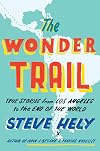
While the author did quite a few little anecdotes, he actually focused more on history (!) and wasn’t trying to be heartfelt -- to his benefit, in my opinion.
What kind of book is this? Well, that’s the question that kicks off the book. The answer: “This is the story of a trip, from Los Angeles to Patagonia. True tales and stories and adventures collected by a traveler. As long as there’ve been books, this has been a kind of book."
The amount of history involved made this book hard to pick up, but the short, bite sized chapters made for an easy read. Worth it for the first chapter alone -- a quick, funny, and colloquial history of the travelogue genre itself.
What kind of book is this? Well, that’s the question that kicks off the book. The answer: “This is the story of a trip, from Los Angeles to Patagonia. True tales and stories and adventures collected by a traveler. As long as there’ve been books, this has been a kind of book."
The amount of history involved made this book hard to pick up, but the short, bite sized chapters made for an easy read. Worth it for the first chapter alone -- a quick, funny, and colloquial history of the travelogue genre itself.
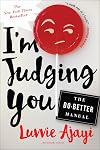
I couldn’t finish it. The writing was fine, and I pretty much agree with everything she says, but it’s just… exhausting. Too much moral crusading, not enough petty judginess. Don’t get me wrong, I agree with the moral crusading -- the book just isn’t funny enough to make me rehash all these issues again. Been there, done that, got the women's studies minor; I'm not learning anything or seeing any new perspectives. Or laughing all that much.
I want to hear more about annoying friends and group dinner leaches, not three pages on how Nigerians are habitually late (the author is Nigerian, and habitually late) and entire chapters on why sexim makes no sense.
Also, the little footnotes explaining that she’s used words like “damb” because “it’s more fun” … yeah, that’s not as funny as she thinks it is. Explaining a joke ruins it. Explaining accented speech is just… weird.
There's absolutely an audience for this book; it just isn't me.
I want to hear more about annoying friends and group dinner leaches, not three pages on how Nigerians are habitually late (the author is Nigerian, and habitually late) and entire chapters on why sexim makes no sense.
Also, the little footnotes explaining that she’s used words like “damb” because “it’s more fun” … yeah, that’s not as funny as she thinks it is. Explaining a joke ruins it. Explaining accented speech is just… weird.
There's absolutely an audience for this book; it just isn't me.
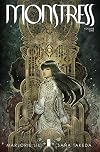
To flesh out the story a little: the intense young woman is missing an arm; survived some shadowy massacre; is the daughter of a powerful, now deceased woman; and is an “arcane” (human-magical hybrid) who can pass for human. She’s out for revenge against a sociopolitically powerful coven of witches who eat people .
Now, this world is matriarchal, and nearly all of the characters are female. What’s interesting is that this isn’t part of the plot; usually this sort of gender-swap dives head first into man vs. woman politics and/or the differences in a matriarchal society. Nope, not here. Monstress makes a statement simply by giving us a real, solid story that has nothing to do with gender… and just so happens to star women with only a handful of token men, rather than the other way around.
If shadowy, dark, and magical are words that pique your interest, jump right in. There’s some gore, but it’s not splashed front-and-center across the page.
Now, this world is matriarchal, and nearly all of the characters are female. What’s interesting is that this isn’t part of the plot; usually this sort of gender-swap dives head first into man vs. woman politics and/or the differences in a matriarchal society. Nope, not here. Monstress makes a statement simply by giving us a real, solid story that has nothing to do with gender… and just so happens to star women with only a handful of token men, rather than the other way around.
If shadowy, dark, and magical are words that pique your interest, jump right in. There’s some gore, but it’s not splashed front-and-center across the page.
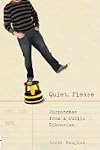
Pretty good. Not fantastic, but pretty good. Although there’s no strict timeline, we follow the author through getting hired as a page in a library, becoming more of a reference librarian, switching to a new library, and watching the renovation of his old library. He interrupts himself frequently and deliberately with sidebars and footnotes (the latter usually more entertaining than the former).
The writing was occasionally a bit self-important, but quippy and very quotable.
It's at least more inspirational than the ALA's repetitive calls to action and “reinventing the library."
The writing was occasionally a bit self-important, but quippy and very quotable.
It's at least more inspirational than the ALA's repetitive calls to action and “reinventing the library."
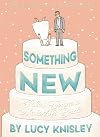
It’s the story of the author’s relationship, from cute first date, though a break-up, engagement, and DIY-heavy wedding planning with friends and family.
I won’t say it wasn’t sappy at times, but no more than I was expecting. Mostly it was full of little details that give it character and feeling organically, rather than long self-indulgent swathes of emotion.
I’ll be honest: this wasn’t advice I needed when planning our wedding, because… well, it’s the kind of advice I would give people (dude, it’s just a big fancy dress-up party). Definitely a must-read for anyone even a little bit stressed or conflicted about their wedding.
Over all, it was sincere and artsy. You know that really artsy girl you went to highschool with? The one who’s always covered in paint, creative, kinda quiet, but not super angsty or anything? That’s the author (or all of your friends, if you were that girl).
I won’t say it wasn’t sappy at times, but no more than I was expecting. Mostly it was full of little details that give it character and feeling organically, rather than long self-indulgent swathes of emotion.
I’ll be honest: this wasn’t advice I needed when planning our wedding, because… well, it’s the kind of advice I would give people (dude, it’s just a big fancy dress-up party). Definitely a must-read for anyone even a little bit stressed or conflicted about their wedding.
Over all, it was sincere and artsy. You know that really artsy girl you went to highschool with? The one who’s always covered in paint, creative, kinda quiet, but not super angsty or anything? That’s the author (or all of your friends, if you were that girl).
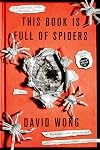
It didn't have the strange charm of the first book (especially the first half) but it had a more cohesive story and more consistent quality. Instead of several smaller, disjointed adventures, it was a more traditional story-line. This one is very close to a zombie story -- on the lighter end, like Zombieland, not gritty like 28 Days Later -- except it's invisible spider lobster things instead of a zombie virus or voodoo.
John, David, and Amy (and a hilarious Awesome Detective Guy) fight the forces of several government agencies to survive a zombie-like outbreak of evil murderous face-infesting spiders from another dimension -- but mostly they just make stupid mistakes. Realistically stupid mistakes, though.
John, David, and Amy (and a hilarious Awesome Detective Guy) fight the forces of several government agencies to survive a zombie-like outbreak of evil murderous face-infesting spiders from another dimension -- but mostly they just make stupid mistakes. Realistically stupid mistakes, though.
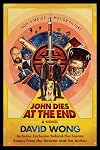
Soooooooooooooooooo good. A blurb on the back of the book calls it a mix of Douglas Adams and Stephen King. YES PLEASE. It’s impossible to imitate Adams’ inimitable randomness -- but David Wong seems more inspired by Adams, rather than imitating him. His prose is chock full of overdone and off-kilter metaphors, and the plot rambles about from one adventure to another, but the tone is more campy-scary Evil Dead than Adam’s dry British humor.
The story bounces around between timelines... and not always simply for effect. David, the narrator, and John, his charismatic and extremely irresponsible friend, come across a strange recreational drug called Soy Sauce that gives users a window into another dimension. After several crazy late-night phone calls, Dave gets a call from John while John is sitting right across from him, and it all goes to hell from there.
The story bounces around between timelines... and not always simply for effect. David, the narrator, and John, his charismatic and extremely irresponsible friend, come across a strange recreational drug called Soy Sauce that gives users a window into another dimension. After several crazy late-night phone calls, Dave gets a call from John while John is sitting right across from him, and it all goes to hell from there.
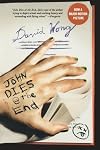
Soooooooooooooooooo good. A blurb on the back of the book calls it a mix of Douglas Adams and Stephen King. YES PLEASE. It’s impossible to imitate Adams’ inimitable randomness -- but David Wong seems more inspired by Adams, rather than imitating him. His prose is chock full of overdone and off-kilter metaphors, and the plot rambles about from one adventure to another, but the tone is more campy-scary Evil Dead than Adam’s dry British humor.
The story bounces around between timelines... and not always simply for effect. David, the narrator, and John, his charismatic and extremely irresponsible friend, come across a strange recreational drug called Soy Sauce that gives users a window into another dimension. After several crazy late-night phone calls, Dave gets a call from John while John is sitting right across from him, and it all goes to hell from there.
The story bounces around between timelines... and not always simply for effect. David, the narrator, and John, his charismatic and extremely irresponsible friend, come across a strange recreational drug called Soy Sauce that gives users a window into another dimension. After several crazy late-night phone calls, Dave gets a call from John while John is sitting right across from him, and it all goes to hell from there.
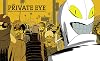
Not what I expected, but really good. The setting is futuristic, but with less emphasis on technology and much more on internet-persona-style anonymity. Masks, costumes, holograms, pseudonyms, secret identities -- all common fare. But here’s the kicker: there’s no internet. Internet, along with all sorts of other basic tech, no longer exists.
In this extensively anonymous world, the titular private eye (PI, or Patrick Immelman) acts more like a paparazzo, illegally investigating private lives and secret identities. The story kicks off with a beautiful young woman who hires him to see what he can dig up on her own secret identities.
If you’re interested in the idea of anonymity, if you like grey-area characters, this is the book for you. But it’s a great drama for anyone, as long as you don’t expect to be spoon-fed the plot. Not for people who can’t handle gore.
It was surprisingly realistic, despite the fantastical settings; the characters are all flawed and three-dimensional.
In this extensively anonymous world, the titular private eye (PI, or Patrick Immelman) acts more like a paparazzo, illegally investigating private lives and secret identities. The story kicks off with a beautiful young woman who hires him to see what he can dig up on her own secret identities.
If you’re interested in the idea of anonymity, if you like grey-area characters, this is the book for you. But it’s a great drama for anyone, as long as you don’t expect to be spoon-fed the plot. Not for people who can’t handle gore.
It was surprisingly realistic, despite the fantastical settings; the characters are all flawed and three-dimensional.
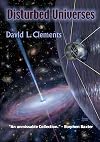
I love hard (sciency) sci fi, and this author gives his work a very strong base in science... so I had a difficult time giving myself permission to be critical of the writing. But I did find myself being (perhaps overly) critical of most of these short stories. They certainly weren't bad, but didn’t always have oomph. With that said, this was overall a pretty good read.
Re-Creation
Two machines -- one built to destroy, one built to preserve -- come into conflict over the fate of a spherical asteroid. A fun and imaginative thought experiment, even if the ‘twist’ was predictable. (And an example of missing oomph; I would’ve ended this with Instructions for Thawing, not just a monument.)
Last of the Guerrilla Gardeners
A group of "guerrilla gardeners" face imprisonment for spreading non-bioengineered seeds. A short and somewhat pretentious thought experiment on Monsanto-style litigation.
Seed Dealer
A continuation of the previous story, Seed Dealer follows a group of guerrilla gardeners who fight against a 'privatized ecology,' where it's illegal to plant anything non-GMO. Interesting (topical!) ideas, spouted by cardboard cutout characters. Fun little Oceans 13 ending, though.
His Final Experiment
A quick, interesting little story about a detective and the physics of free will… which Clements chose to write in a clunky future tense. Maybe if it was more elaborately in future tense (instead of the repetitive "Inspector Willis will do a thing..." replacing "Inspector Willis show more did a thing") it would've added something to the story. Nevertheless, it was an interesting little mystery.
Brane Surgery
The classic time travel question -- killing Hitler -- applied to a multiverse.
A Bright Shiny Night
An ethereal, bite-sized piece on psychoactive drugs.
The Stars Made Right
A Lovecraftian spy thriller examining human hubris and the natural (or in this case, eldrich) order of things. Brings way too much morality to Lovecraftian horror, but the characters are interesting at least.
The Mauna Kea Experience
All science, no fiction. A window into life as an astrophysicist gathering data high above sea level. It was like an introduction to a really interesting story interesting... so where's that story?
Launch Day
Another all science, no fiction: a mid-level scientist ponders the launch of the satellite he’s working on.
Inquisition
A scientist working on some unnamed Experiment, run by some unexplained fascist Inquisition, breaks the rules of communication. He expects to be accused of breaking the rules intentionally, but his offense is accidental; this is supposed to be shocking?
Catching Rays
This one is the best of the bunch. Two moonbase scientists accidentally catch an exotic cosmic ray particle,
Foothills of Shackleton
Astronomers on the Moon stop their game of Space Cricket to help a pair of miners trapped in a Moon hole using their Space Cricket bowling skills. show less
Re-Creation
Two machines -- one built to destroy, one built to preserve -- come into conflict over the fate of a spherical asteroid. A fun and imaginative thought experiment, even if the ‘twist’ was predictable. (And an example of missing oomph; I would’ve ended this with Instructions for Thawing, not just a monument.)
Last of the Guerrilla Gardeners
A group of "guerrilla gardeners" face imprisonment for spreading non-bioengineered seeds. A short and somewhat pretentious thought experiment on Monsanto-style litigation.
Seed Dealer
A continuation of the previous story, Seed Dealer follows a group of guerrilla gardeners who fight against a 'privatized ecology,' where it's illegal to plant anything non-GMO. Interesting (topical!) ideas, spouted by cardboard cutout characters. Fun little Oceans 13 ending, though.
His Final Experiment
A quick, interesting little story about a detective and the physics of free will… which Clements chose to write in a clunky future tense. Maybe if it was more elaborately in future tense (instead of the repetitive "Inspector Willis will do a thing..." replacing "Inspector Willis show more did a thing") it would've added something to the story. Nevertheless, it was an interesting little mystery.
Brane Surgery
The classic time travel question -- killing Hitler -- applied to a multiverse.
A Bright Shiny Night
An ethereal, bite-sized piece on psychoactive drugs.
The Stars Made Right
A Lovecraftian spy thriller examining human hubris and the natural (or in this case, eldrich) order of things. Brings way too much morality to Lovecraftian horror, but the characters are interesting at least.
The Mauna Kea Experience
All science, no fiction. A window into life as an astrophysicist gathering data high above sea level. It was like an introduction to a really interesting story interesting... so where's that story?
Launch Day
Another all science, no fiction: a mid-level scientist ponders the launch of the satellite he’s working on.
Inquisition
A scientist working on some unnamed Experiment, run by some unexplained fascist Inquisition, breaks the rules of communication. He expects to be accused of breaking the rules intentionally, but his offense is accidental; this is supposed to be shocking?
Catching Rays
This one is the best of the bunch. Two moonbase scientists accidentally catch an exotic cosmic ray particle,
Foothills of Shackleton
Astronomers on the Moon stop their game of Space Cricket to help a pair of miners trapped in a Moon hole using their Space Cricket bowling skills. show less
This review was written for LibraryThing Early Reviewers.