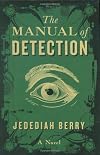
(Many others have summarized the plot, so I see no need to repeat it here.)
I feel I probably need to give this book another shot. I listened to the audiobook edition and feel that I probably did it a disservice, listening to it in 30-minute chunks on my commute to and from work. Not an ideal way to listen to a book.
I restarted the book (the first several minutes of it) at least three times, thinking there was something I'd missed. Initially I wasn't sure if the book was a detective story, a satire, an allegory, a pastiche or none of the above. The writing is deceptively simple, but it soon becomes apparent that (even for a seasoned reader of speculative fiction) something unusual and complex is going on. I think if I'd read the actual print version I might have connected more with The Manual of Detection. The book has been praised by people whom I respect, so I imagine I simply missed the boat. This is definitely one to revisit.
I feel I probably need to give this book another shot. I listened to the audiobook edition and feel that I probably did it a disservice, listening to it in 30-minute chunks on my commute to and from work. Not an ideal way to listen to a book.
I restarted the book (the first several minutes of it) at least three times, thinking there was something I'd missed. Initially I wasn't sure if the book was a detective story, a satire, an allegory, a pastiche or none of the above. The writing is deceptively simple, but it soon becomes apparent that (even for a seasoned reader of speculative fiction) something unusual and complex is going on. I think if I'd read the actual print version I might have connected more with The Manual of Detection. The book has been praised by people whom I respect, so I imagine I simply missed the boat. This is definitely one to revisit.
 This review was written for LibraryThing Early Reviewers.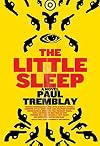
PI Mark Genevich can never be quite sure of what just happened at any given time during a typical day. It's entirely possible that Jennifer Times (daughter of the local DA and contestant on an American-Idol-style program) didn't show up at Genevich's office, wanting to hire him to help find her stolen fingers. Since Genevich falls asleep with little to no provocation, he could've easily dreamed up the entire encounter with Times. But when he awakes to find racy photos of the woman, he begins to wonder. Soon lots of people are after the photos. And Genevich.
You might think a hard-boiled detective novel called The Little Sleep about a narcoleptic South Boston private detective would be a lightweight (if not downright flippant) tongue-in-cheek take on classic Chandler noir. You'd be wrong. Tremblay's novel is a jewel of a tale for noir lovers, detective aficionados, and folks who simply love a good mystery.
That's not to say there's no humor in the book; wisecracks, loopiness and wacky characters abound. But there's also a rock-solid mystery with plenty of suspense and action.
Writing comedy is hard. So is writing noir fiction. The ability to successfully combine the two is rare. I'll admit that I had my doubts going into The Little Sleep, but after a few pages, I knew Tremblay was more than up to the task. Let's hope we see a lot more from Paul Tremblay and Mark Genevich in the future.
You might think a hard-boiled detective novel called The Little Sleep about a narcoleptic South Boston private detective would be a lightweight (if not downright flippant) tongue-in-cheek take on classic Chandler noir. You'd be wrong. Tremblay's novel is a jewel of a tale for noir lovers, detective aficionados, and folks who simply love a good mystery.
That's not to say there's no humor in the book; wisecracks, loopiness and wacky characters abound. But there's also a rock-solid mystery with plenty of suspense and action.
Writing comedy is hard. So is writing noir fiction. The ability to successfully combine the two is rare. I'll admit that I had my doubts going into The Little Sleep, but after a few pages, I knew Tremblay was more than up to the task. Let's hope we see a lot more from Paul Tremblay and Mark Genevich in the future.
This review was written for LibraryThing Early Reviewers.
Jeffrey Ford's new novel The Shadow Year is an expanded version of his novella "Botch Town" (from his collection The Empire of Ice Cream), a nostalgic tale narrated by a sixth-grade boy attempting to deal with not only the changes in his own life, but also those in his immediate Long Island neighborhood - including a prowler and a serial killer.
Readers of Ford's short fiction will find fewer speculative elements here, but threads of weird creepiness run throughout the book, especially in the form of the narrator's little sister who displays precognitive abilities. Strong elements of mystery and horror are also prominent as the narrator (along with his older brother Jim and sister Mary) tries to solve the mysteries of the prowler and the serial killer. Are they related? Are they the same person?
Yet it's the normal, day-to-day routine elements of The Shadow Year that give the book strength. Ford expertly captures the fun, adventure, confusion, sadness, joy, and fear that are all a part of youth.
Readers of Ford's short fiction will find fewer speculative elements here, but threads of weird creepiness run throughout the book, especially in the form of the narrator's little sister who displays precognitive abilities. Strong elements of mystery and horror are also prominent as the narrator (along with his older brother Jim and sister Mary) tries to solve the mysteries of the prowler and the serial killer. Are they related? Are they the same person?
Yet it's the normal, day-to-day routine elements of The Shadow Year that give the book strength. Ford expertly captures the fun, adventure, confusion, sadness, joy, and fear that are all a part of youth.
This review was written for LibraryThing Early Reviewers.
(I received this book through Library Thing's Early Reviewer program.)
When I'm reading a non-fiction book, I always ask myself two questions:
1. Does the book do what it has set out to do?
2. Is it entertaining/informative/worth my time?
As for the first question, I was never sure what Golf Unplugged set out to do. The book's introduction begins with a quote by Gene Sarazen:
"The future of the game rests on one thing. More public courses and cheaper golf. So that people that work in factories and work elsewhere, they can go out and enjoy a round of golf, not give up their whole salary to play one round of golf. All equipment has got to be cheaper. It's too expensive now."
That opening quote led me to believe I was about to read a book about how golf has changed throughout the years (if not the centuries) and how it can be made more available to more people. Unfortunately, that's not the book's purpose.
Apfelbaum's introduction is largely unfocused. The only clue as to what might be on his mind was near the very end of the introduction when he states, "If these tales inspire an interest in golf beyond the confines of the scorecard, obviously I'd be delighted."
What follows is a collection of stories, anecdotes, tales and history, most of which are very entertaining (which answers my second question). They just don't seem to have any unifying purpose, other than the fact that they're all about golf.
Apfelbaum spends time on such diverse topics as habits and quirks of the pros, show more what to do when golf is no longer fun, player profiles, presidential golfers, and a few scattered tips for the amateur. (But do we really need an eleven-page study on how Tiger Woods picks up a ball from a hole?)
Golf Unplugged will probably be enjoyed by avid golfers looking for that story they maybe haven't heard before (or heard in a long time), but the overall unfocused nature of the book makes for a frustrating read. show less
When I'm reading a non-fiction book, I always ask myself two questions:
1. Does the book do what it has set out to do?
2. Is it entertaining/informative/worth my time?
As for the first question, I was never sure what Golf Unplugged set out to do. The book's introduction begins with a quote by Gene Sarazen:
"The future of the game rests on one thing. More public courses and cheaper golf. So that people that work in factories and work elsewhere, they can go out and enjoy a round of golf, not give up their whole salary to play one round of golf. All equipment has got to be cheaper. It's too expensive now."
That opening quote led me to believe I was about to read a book about how golf has changed throughout the years (if not the centuries) and how it can be made more available to more people. Unfortunately, that's not the book's purpose.
Apfelbaum's introduction is largely unfocused. The only clue as to what might be on his mind was near the very end of the introduction when he states, "If these tales inspire an interest in golf beyond the confines of the scorecard, obviously I'd be delighted."
What follows is a collection of stories, anecdotes, tales and history, most of which are very entertaining (which answers my second question). They just don't seem to have any unifying purpose, other than the fact that they're all about golf.
Apfelbaum spends time on such diverse topics as habits and quirks of the pros, show more what to do when golf is no longer fun, player profiles, presidential golfers, and a few scattered tips for the amateur. (But do we really need an eleven-page study on how Tiger Woods picks up a ball from a hole?)
Golf Unplugged will probably be enjoyed by avid golfers looking for that story they maybe haven't heard before (or heard in a long time), but the overall unfocused nature of the book makes for a frustrating read. show less
This review was written for LibraryThing Early Reviewers.