
I loved the 'Unorthodox Engineers' stories when they originally appeared in the 'New Writings in SF' series in the early 70s, and I've been looking out for a copy of this collection ever since I learned of its existence.
I really enjoyed reading them again, although it's fairly easy to criticise the characterisation and some of the writing style - and some of the 'future' technology is a little archaic (video tapes?)...
Still worth a read if you like the idea of a bunch of (slightly) wacky engineers applying lateral thinking and improvisation to the problems presented by a series of increasingly bizarre planets (particularly the one where 1+1 = 1.58!)
I really enjoyed reading them again, although it's fairly easy to criticise the characterisation and some of the writing style - and some of the 'future' technology is a little archaic (video tapes?)...
Still worth a read if you like the idea of a bunch of (slightly) wacky engineers applying lateral thinking and improvisation to the problems presented by a series of increasingly bizarre planets (particularly the one where 1+1 = 1.58!)

I haven't finished it yet, but it's already making me laugh out loud...
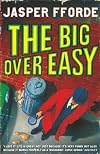
Thoroughly enjoyable - I laughed out loud even more than I did at the 'Thursday Next' books...
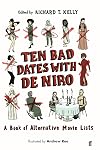
Entertaining and genuinely informative collection of random lists about film by a variety of film writers, critics and directors. Many of the films cited are not exactly box-office smashes - there are plenty that I hadn't even heard of, let alone seen, but I'm not exactly a film buff. Nonetheless I enjoyed most of the lists: only one or two were a little too obscure for enjoyment. And there are films described here that I may actually make an effort to see, having read about them here, surely a recommendation!
Example lists include 'Ten Films Which Traumatized Me When I Was Younger'; 'The Mighty Apoplexies of Pacino - Ten Scenes Where 'Shouty Al' Shows Up'; 'Ten Places You Wouldn't Expect To Find A Severed Head'; 'The Ten Best Uses of Steps or Staircases' ... I only had to see a few of these list titles to want to read it...
Example lists include 'Ten Films Which Traumatized Me When I Was Younger'; 'The Mighty Apoplexies of Pacino - Ten Scenes Where 'Shouty Al' Shows Up'; 'Ten Places You Wouldn't Expect To Find A Severed Head'; 'The Ten Best Uses of Steps or Staircases' ... I only had to see a few of these list titles to want to read it...
Darker than its predecessor 'Kev' - but indispensable precisely because Kev himself is such a fascinating character.
Outstanding - the first book made me smile, but with this one I actually came close to laughing out loud on the train...
Thoroughly enjoyable - the most overtly comical of the Zen novels. A professor of semiotics named Eduardo Ugo (sound familiar?), an opera-singing TV chef, a delusional private eye and an illegal immigrant from an imaginary country are all among the beautifully-sketched characters contributing to the fun...

Excellent compilation of blues-related articles from 'Guitarist' magazine. Profiles of, and interviews with, blues musicians, articles on different blues styles, and tutorials/lessons on playing blues guitar with tablature examples.

Excellent guidebook with terrific illustrations. Took us to parts of Manhattan I'd hardly heard of...
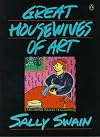
Absolutely brilliant pastiches of great artists, all depicting housewives in action ('Mrs Monet Cleans The Pool'; 'Mrs Gauguin Holds A Tupperware Party' and so on). Always makes me chuckle...
Makes me laugh every time...
Makes me laugh every time...
Elsewhere I described 'Father Ted' as possibly the funniest TV series ever made - which means I can't really use the same description for 'Blackadder'...
On reflection I'd say that 'Father Ted' has the broader range of humour - visual, behavioural, surreal - but that no-one has ever written funnier dialogue than Elton and Curtis did for Rowan Atkinson's various Edmunds. ("For you, Baldrick, the Renaissance was something that happened to other people, wasn't it?")
This book is only an (unofficial) episode guide rather than the full scripts, but it does contain favourite quotations for every episode, along with plot summaries, cast details and so on. Well worth having as a companion to the scripts and complete DVD set...
On reflection I'd say that 'Father Ted' has the broader range of humour - visual, behavioural, surreal - but that no-one has ever written funnier dialogue than Elton and Curtis did for Rowan Atkinson's various Edmunds. ("For you, Baldrick, the Renaissance was something that happened to other people, wasn't it?")
This book is only an (unofficial) episode guide rather than the full scripts, but it does contain favourite quotations for every episode, along with plot summaries, cast details and so on. Well worth having as a companion to the scripts and complete DVD set...
Is this the funniest TV series ever made? That would be an ecumenical question - but the scripts are every bit as head-spinningly funny as the shows themselves.
Includes dialogue cut from the actual broadcasts, and brief but entertaining commentaries from the writers. I particularly liked their observation that you could add the word 'priest' to any adjective (or other descriptor) and get a new character: thus 'the dancing priest', 'the monkey priest', 'the laughing priest' and so on (all of these actually appeared in the series, too...)
Includes dialogue cut from the actual broadcasts, and brief but entertaining commentaries from the writers. I particularly liked their observation that you could add the word 'priest' to any adjective (or other descriptor) and get a new character: thus 'the dancing priest', 'the monkey priest', 'the laughing priest' and so on (all of these actually appeared in the series, too...)
Highly amusing - and with some genuinely scary moments too. Rankin's later work has (IMHO) grown a little lazy, too reliant on jokes and author-to-reader asides, but the original four-book 'Brentford Trilogy' (did Rankin or Adams do that one first?) is excellent.
Gorgeous photographs & great recipes, but not as indispensable as her basic 'Indian Cookery'

The only essential cookbook in my kitchen. I'm on my second copy, and have bought several copies for other people...

For those that know 'Ringworld', we learned in 'Ringworld Engineers' that the Ringworld was built by Pak Protectors, and that Pak are tough, super-intelligent and dedicated to protecting their species, whatever it takes. In 'Protector' we learn more about the Pak and their links with humanity, and how one human - the prospector Jack Brennan - became a protector to our species and our planet...
Even if you haven't read any of the 'Ringworld' books, I'd rate this as an enjoyable read. The relationship between the Pak and humankind is a shockingly plausible bit of science fiction (I won't spoil it by revealing too much) and the story, which takes place across a timespan of several decades, romps along without getting bogged down in background detail. If you are able to get hold of this book and you enjoy SF, I'd thoroughly recommend it.
Even if you haven't read any of the 'Ringworld' books, I'd rate this as an enjoyable read. The relationship between the Pak and humankind is a shockingly plausible bit of science fiction (I won't spoil it by revealing too much) and the story, which takes place across a timespan of several decades, romps along without getting bogged down in background detail. If you are able to get hold of this book and you enjoy SF, I'd thoroughly recommend it.

The actual album reviews it contains will have dated, of course, but I think I learned more about the blues from this book than from any other single source.
Murray doesn't just give you a guide to blues albums available on CD, he traces the history of the blues and all its variations in style, discussing the styles and artists and then giving you some choices of listening.
I'm sure that Murray's style isn't everyone's favourite, but I find him hugely readable ('Crosstown Traffic' is, for me, indispensable) and he enjoys himself thoroughly here. I think that one of the defining qualities of a music writer is that they make you want to hear the music, and Charles Shaar Murray does that superbly in this book. I reckon that I've bought at least a dozen albums on the strength of recommendations in this book, and several of those were by artists I hadn't previously heard of at all.
Even if you're already a blues aficionado, I think you would enjoy this book - if you can find a copy! If you have a passing interest in the blues and want to dig a little deeper, you really should make an effort to track down a copy. (But I won't be selling mine!)
Murray doesn't just give you a guide to blues albums available on CD, he traces the history of the blues and all its variations in style, discussing the styles and artists and then giving you some choices of listening.
I'm sure that Murray's style isn't everyone's favourite, but I find him hugely readable ('Crosstown Traffic' is, for me, indispensable) and he enjoys himself thoroughly here. I think that one of the defining qualities of a music writer is that they make you want to hear the music, and Charles Shaar Murray does that superbly in this book. I reckon that I've bought at least a dozen albums on the strength of recommendations in this book, and several of those were by artists I hadn't previously heard of at all.
Even if you're already a blues aficionado, I think you would enjoy this book - if you can find a copy! If you have a passing interest in the blues and want to dig a little deeper, you really should make an effort to track down a copy. (But I won't be selling mine!)

Mark Harvey is a much put-upon man - until he 'accidentally' kills his wife, Maddie! Then what? Well, if people keep seeing 'Maddie' around, no-one will know she's dead... and wearing Maddie's wig, glasses and a dress, no-one will realise that they're seeing (at a distance) Mark in drag, will they?
So Mark uses a little deception to conceal his wife's death, while deciding what to do about it. But there's his wife's boyfriend to deal with, and the lodger... and then there's the neighbour who starts to fancy the 'new' Madeleine... and more 'accidental' deaths ensue, while Mark starts to enjoy his new identity...
Funny and enjoyable, even if some of the characters are a little two-dimensional.
So Mark uses a little deception to conceal his wife's death, while deciding what to do about it. But there's his wife's boyfriend to deal with, and the lodger... and then there's the neighbour who starts to fancy the 'new' Madeleine... and more 'accidental' deaths ensue, while Mark starts to enjoy his new identity...
Funny and enjoyable, even if some of the characters are a little two-dimensional.

I rate this as one of the best SF books - indeed, one of the best books, full stop - I have ever read. As far as I know this is the only one of Foster's books to be published in the UK, and now long since out of print - I had to buy the other six books of his that I own from the USA!
'Gameplayers' tells the story of a genetically engineered super race, the ler, who live in their own commune alongside humans. The ler lifestyle appears rural and primitive when contrasted with the humans' technologically advanced society - yet it is the ler who are the sophisticates, compared to an increasingly chaotic and uncontrollable humanity.
The ler know, however, that it is only a matter of time before the humans turn on them, and they have plans of their own... Now one of their leading game-players has turned up dead, outside the ler reservation, and both ler and humans have to find out what is happening.
The glory of this book is in the depth it manages to convey without becoming long or wordy. Ler society, with its customs and language, are superbly evoked without laboured explanation. The 'game' of the title is based on Conway's 'Life' game - now a mathematical field known as cellular automata - but is just a small part of the overall story. Ler language and marriage customs are equally fascinating.
If you have the chance to read this book, do so - it rates with the best work of better known SF writers such as Ursula LeGuin and Frank Herbert. There are two sequels, too - both show more excellent but, alas, even harder to find. I'm glad to see that the enlightened publisher has now re-issued these books - and Foster's others - in omnibus editions: maybe I will now replace my battered paperback copies. show less
'Gameplayers' tells the story of a genetically engineered super race, the ler, who live in their own commune alongside humans. The ler lifestyle appears rural and primitive when contrasted with the humans' technologically advanced society - yet it is the ler who are the sophisticates, compared to an increasingly chaotic and uncontrollable humanity.
The ler know, however, that it is only a matter of time before the humans turn on them, and they have plans of their own... Now one of their leading game-players has turned up dead, outside the ler reservation, and both ler and humans have to find out what is happening.
The glory of this book is in the depth it manages to convey without becoming long or wordy. Ler society, with its customs and language, are superbly evoked without laboured explanation. The 'game' of the title is based on Conway's 'Life' game - now a mathematical field known as cellular automata - but is just a small part of the overall story. Ler language and marriage customs are equally fascinating.
If you have the chance to read this book, do so - it rates with the best work of better known SF writers such as Ursula LeGuin and Frank Herbert. There are two sequels, too - both show more excellent but, alas, even harder to find. I'm glad to see that the enlightened publisher has now re-issued these books - and Foster's others - in omnibus editions: maybe I will now replace my battered paperback copies. show less