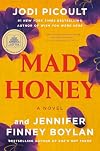
There is a lot going on in this novel making it unnecessarily complex with multiple threads that do not seem to always go together. Two authors with different styles and writing voices - I found it disconnected at times. I liked the details of the trial and the transgender information and discussion. It was interesting to read along with beekeeping. In the end, I felt like too much was concentrated on these elements and not enough around the facts of the death and what actually happened that night.

Engaging book for anyone considering a fast in their own life, or interested in fasting throughout history. Each chapter marks a day of the author’s 7-day fast, and includes interesting look at deprivation generally and fasting from food as a spiritual, political, or personal endeavor.
The research and examples included in each theme on fasting are very interesting and plentiful. There is really something for all and an intriguing look at fasting as a “turning toward” experience rather than turning away (p. 114). Oakes’ examples and historical references to using fasting as a social protest, personal protest, or spiritual exercise are as interesting as they are informational. Right out of the gate in the first chapter I learned my hometown of Minneapolis has a sound deprivation room and I was fascinated at the idea of being in a completely soundless space. It also allowed me to see fasting in a light that is outside of depriving oneself of food.
This was a great walk through history in seven days of one person’s fasting journey and centuries of the experiences of others.
 This review was written for LibraryThing Early Reviewers.
Guide To Norse Paganism: A Comprehensive Guide Exploring Norse Pagan History & Culture, Vikings, Myths and Legends of the Norse Gods & Goddesses, ... Runes, Rituals, Symbols, and Divination. by Emma Karlsson
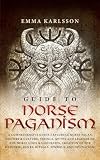
Emma Karlsson's book sets out to introduce readers to the knowledge needed to understand Norse Mythology and Paganism and provide guidelines for those who want to align with these teachings (xix). I found the writing easy to follow, especially for such a robust topic. Karlsson breaks down the similarities of world religions and the creation story of each. She relates information about the Nordic Eddas in a way that previous knowledge is not necessary to understand the context. I thought this was very helpful and glad she did not overlook the opportunity to contextualize without assuming the reader already has this knowledge. I found the Norse calendar and the Pantheon of the Norse Gods informative. Throughout the book I did not feel I was being indoctrinated but instead educated in an topic that interests me as a descendent of Swedish Americans and overall interest in Norse Mythology.
This review was written for LibraryThing Early Reviewers.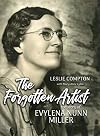
Early Reviewers July 2022 batch.
“The Forgotten Artist” is a biography of Southern California based artist Evylena Nunn Miller (1888-1966). Completed by her great niece, it is as much a story of an artist finding her way in the early 20th century in the Southern California art scene as it is that of a documentation of family history during a time in America that saw the freeing of enslaved individuals, Westward expansion, and missionary work overseas.
The story begins decades before Evylena’s birth as the author sets the background with the family migration from England to Virginia in the 1700’s to Kentucky where Miller's grandfather owned a large property that was farmed and maintained by enslaved individuals. Eventually members of the family moved to Kansas, where Evylena was born, and on to Orange County California. It is in Santa Ana that this fledgling artist graduates from high school in 1906 and connects with other artists in the area and Laguna Beach, a town already growing its reputation as an artist community.
Graduating from Pomona College in 1910, she began teaching in the area and continued her artistic pursuits. Known for her landscape paintings, she exhibited for the California Art Club and around Riverside, California. In 1919 she traveled East to attend the Arts Students League in New York and Berkshire Summer School of Art in the Berkshires. In 1920 she accepted an opportunity to go to Tokyo for the World Sunday School Convention through her show more Presbyterian church. This opportunity became a turning point in her development as an artist and a rare opportunity to travel for young women in the early 20th century. She met and worked with important Japanese artists, and exhibited while in Japan. Upon leaving Japan she continued to travel throughout Asia, Europe, and England before returning to California two years later. She remained in California, teaching and continuing to paint and exhibit around the area. Excursions she took around the Southwest allowed her to continue to explore techniques and the beauty of the natural world.
Her time overseas is well documented through her journal and letters she wrote to her family and friends back in California. Due to the family history nature of the narrative, the details are lengthy and at times confusing. The inclusion of a brief timeline would allow the reader to easily identify where they are in the story. For the researcher looking for first hand accounts and exhibition notes on the background of the Southern California artists exhibiting around Laguna Beach and throughout Orange County in the 1920’s - mid 20th Century, this book is a great compilation of exhibits from the period. Upon her death, the family donated paintings and money to the Bowers Museum in Santa Ana intending a more permanent display and recognition of the artist and her work. Writing and publishing the book is another step the family has taken to see that she is remembered as the accomplished, prolific artist, teacher, and friend who traveled the world and brought the landscape to life on canvas. show less
“The Forgotten Artist” is a biography of Southern California based artist Evylena Nunn Miller (1888-1966). Completed by her great niece, it is as much a story of an artist finding her way in the early 20th century in the Southern California art scene as it is that of a documentation of family history during a time in America that saw the freeing of enslaved individuals, Westward expansion, and missionary work overseas.
The story begins decades before Evylena’s birth as the author sets the background with the family migration from England to Virginia in the 1700’s to Kentucky where Miller's grandfather owned a large property that was farmed and maintained by enslaved individuals. Eventually members of the family moved to Kansas, where Evylena was born, and on to Orange County California. It is in Santa Ana that this fledgling artist graduates from high school in 1906 and connects with other artists in the area and Laguna Beach, a town already growing its reputation as an artist community.
Graduating from Pomona College in 1910, she began teaching in the area and continued her artistic pursuits. Known for her landscape paintings, she exhibited for the California Art Club and around Riverside, California. In 1919 she traveled East to attend the Arts Students League in New York and Berkshire Summer School of Art in the Berkshires. In 1920 she accepted an opportunity to go to Tokyo for the World Sunday School Convention through her show more Presbyterian church. This opportunity became a turning point in her development as an artist and a rare opportunity to travel for young women in the early 20th century. She met and worked with important Japanese artists, and exhibited while in Japan. Upon leaving Japan she continued to travel throughout Asia, Europe, and England before returning to California two years later. She remained in California, teaching and continuing to paint and exhibit around the area. Excursions she took around the Southwest allowed her to continue to explore techniques and the beauty of the natural world.
Her time overseas is well documented through her journal and letters she wrote to her family and friends back in California. Due to the family history nature of the narrative, the details are lengthy and at times confusing. The inclusion of a brief timeline would allow the reader to easily identify where they are in the story. For the researcher looking for first hand accounts and exhibition notes on the background of the Southern California artists exhibiting around Laguna Beach and throughout Orange County in the 1920’s - mid 20th Century, this book is a great compilation of exhibits from the period. Upon her death, the family donated paintings and money to the Bowers Museum in Santa Ana intending a more permanent display and recognition of the artist and her work. Writing and publishing the book is another step the family has taken to see that she is remembered as the accomplished, prolific artist, teacher, and friend who traveled the world and brought the landscape to life on canvas. show less
This review was written for LibraryThing Early Reviewers.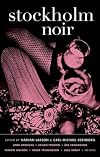
The short stories in Stockholm Noir are organized into three sections with themes of Crime and Punishment, Fear and Darkness, and The Brutality of Beasts. Each part offers four or five stories by leading Swedish authors. The book begins with a good introduction by the editors, illuminating the reader on Swedish culture and the popularity of Swedish crime stories. The introduction sets a background for the reader to enter the mind of the Swedish citizen and the conflicting reality of their relatively crime-free existence, and the lure of crime fiction.
My favorite stories were in the Part I: Crime and Punishment, but each section has stories that I enjoyed. The anthology moves through a nice succession of crime plots that progress to the dark and eerie side of the noir genre. I recommend the book for anyone interested in the crime, noir genre. My interest in Swedish crime fiction drew me to the book, and I appreciate the opportunity to review the book for LibraryThing.
My favorite stories were in the Part I: Crime and Punishment, but each section has stories that I enjoyed. The anthology moves through a nice succession of crime plots that progress to the dark and eerie side of the noir genre. I recommend the book for anyone interested in the crime, noir genre. My interest in Swedish crime fiction drew me to the book, and I appreciate the opportunity to review the book for LibraryThing.
This review was written for LibraryThing Early Reviewers.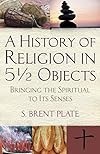
S. Brent Plate presents an interesting case to justify the inclusion of each of the 5 1/2 objects he discusses in this book. What I really appreciated is the thoroughness of his discussion. With each object, he discusses the religious and spiritual role they play in a number of cultures and religions. The connections he makes across cultures and their use of the same objects is very inspiring. It brings to mind the unity that can be found in the simplest items. The book is a great reflection on items that are often overlooked and the part they play in history and in current spiritual or everyday mediation is brought out in an interesting format in this book.
This review was written for LibraryThing Early Reviewers.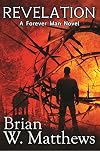
The concept of the story and the references to Christian artifacts and characters is interesting. The story weaves historical people and occurrences with modern issues. The problem this presented for me was the change in characters and locations throughout the book were difficult to follow at times.
I did not read the previous book by this author, so may that may be why I had a tough time in Part 1, but I don't give up on books easily, and was glad to have more context provided in Part 2. I think much of the information held back in Part 1 but provided in Part 2 made the story more engaging and would have been better if provided earlier. Specifically the information on the item Miles purchased and the background on the characters. At times throughout the book I found myself flipping back to previous pages to refresh myself on characters and their relevance. I did not find the book suspenseful, but did think it had adventure. At times it felt as if the story lines were disconnected, it came tougher for the most part in the end but smoother transitions would have helped me stay engaged in the story for longer periods of time.
I did not read the previous book by this author, so may that may be why I had a tough time in Part 1, but I don't give up on books easily, and was glad to have more context provided in Part 2. I think much of the information held back in Part 1 but provided in Part 2 made the story more engaging and would have been better if provided earlier. Specifically the information on the item Miles purchased and the background on the characters. At times throughout the book I found myself flipping back to previous pages to refresh myself on characters and their relevance. I did not find the book suspenseful, but did think it had adventure. At times it felt as if the story lines were disconnected, it came tougher for the most part in the end but smoother transitions would have helped me stay engaged in the story for longer periods of time.
This review was written for LibraryThing Early Reviewers.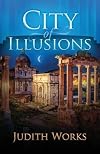
After seven years of marriage, Laura decides a change in scenery will cure her marriage woes. She and husband Jake make the move to Rome and she begins a job with the UN while he takes a break from teaching in Seattle intending to paint during their year aboard.
The author does a good job of capturing the expat experience of adjusting to a new country, finding housing, places to eat and shop and learning to live like a local. The story chronicles each month of their year in Rome as a chapter and moves at a good pace, if not too fast at times. Important Roman sites are explored through the characters and art history buffs familiar with the city are transported through the authors art references. In addition to the art, foodies will also like the story. Laura strives to write a food blog and the description of their meals will have the reader craving authentic Italian.
The character development is interesting. Jake is presented as a reluctant participant in his wife's desire to try something new and get them out of their slump by moving half way across the globe. I found myself becoming very frustrated with his character as both a man and husband, coming to a new understanding of him around the midway point thanks to an observation from a secondary character. His involvement as an unwitting antiquities smuggler was a stretch. Although as much time was devoted to him in the story as to his wife, the development of the Jake character seemed almost an after thought by the show more author, or at least of secondary importance.
Overall I enjoyed the book more in the second half where storylines became more developed. With some twists to keep the reader moving from chapter to chapter, this is a quick read. Great for the beach, a plane ride, or a rainy weekend. show less
The author does a good job of capturing the expat experience of adjusting to a new country, finding housing, places to eat and shop and learning to live like a local. The story chronicles each month of their year in Rome as a chapter and moves at a good pace, if not too fast at times. Important Roman sites are explored through the characters and art history buffs familiar with the city are transported through the authors art references. In addition to the art, foodies will also like the story. Laura strives to write a food blog and the description of their meals will have the reader craving authentic Italian.
The character development is interesting. Jake is presented as a reluctant participant in his wife's desire to try something new and get them out of their slump by moving half way across the globe. I found myself becoming very frustrated with his character as both a man and husband, coming to a new understanding of him around the midway point thanks to an observation from a secondary character. His involvement as an unwitting antiquities smuggler was a stretch. Although as much time was devoted to him in the story as to his wife, the development of the Jake character seemed almost an after thought by the show more author, or at least of secondary importance.
Overall I enjoyed the book more in the second half where storylines became more developed. With some twists to keep the reader moving from chapter to chapter, this is a quick read. Great for the beach, a plane ride, or a rainy weekend. show less
This review was written for LibraryThing Early Reviewers.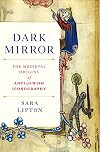
In her introduction, Lipton states her research was based off her observation on how Jews are not only portrayed in Christian images, but how the emphasis became the Jews as witness or viewers in Christian art. With her focus established, she concentrates her examples and discussion around the initial images from each century as she covers the changes that take place with the iconography of Jews from ca. 1015-1500.
I was excited to receive the book and started on it right away. Lipton has nice examples of each new set of iconography and discusses them thoroughly. The images are in black and white and somewhat difficult to make out the details, but overall it was helpful to have the images. As Lipton moved through the centuries the chapters were nicely organized, her discussions were informative, but I found them a bit too dense at times and it slowed my progress through the book. Lipton has done a great deal of research, but her observations are not always substantiated with her discussions.
At the midway point, my interest was piqued with the chapter on Chartres Cathedral. The reader is able to put themselves in the shoes of the thirteenth-century viewer as Lipton walks through portal and discusses the sculpture and stained glass throughout. In addition to the theories on Jewish iconography at Chartres and the other occurrences in medieval manuscripts in the body of the book, Lipton did an impressive amount of research and the notes at the back of the book are not to be show more missed.
Overall I did found myself easily distracted and at times lost in her theories. Perhaps her focus was too broad and she was trying to accomplish too much. I would not write the book off entirely though and will definitely keep it in my personal library of art historical reference books to refer to and use the notes as a great bibliographic reference. show less
I was excited to receive the book and started on it right away. Lipton has nice examples of each new set of iconography and discusses them thoroughly. The images are in black and white and somewhat difficult to make out the details, but overall it was helpful to have the images. As Lipton moved through the centuries the chapters were nicely organized, her discussions were informative, but I found them a bit too dense at times and it slowed my progress through the book. Lipton has done a great deal of research, but her observations are not always substantiated with her discussions.
At the midway point, my interest was piqued with the chapter on Chartres Cathedral. The reader is able to put themselves in the shoes of the thirteenth-century viewer as Lipton walks through portal and discusses the sculpture and stained glass throughout. In addition to the theories on Jewish iconography at Chartres and the other occurrences in medieval manuscripts in the body of the book, Lipton did an impressive amount of research and the notes at the back of the book are not to be show more missed.
Overall I did found myself easily distracted and at times lost in her theories. Perhaps her focus was too broad and she was trying to accomplish too much. I would not write the book off entirely though and will definitely keep it in my personal library of art historical reference books to refer to and use the notes as a great bibliographic reference. show less
This review was written for LibraryThing Early Reviewers.