
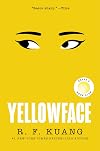
I devoured it in a single day! Refreshingly simple narration and casual language that holds your attention from start to finish. Kuang perfectly crafts each character with such realistic flaws that you’re left unsure how to feel about any of them.
The protagonist and narrator, June, epitomizes this complexity. Despite her numerous morally questionable actions, a small part of me couldn’t help but hope she gets away with her transgressions, simply because she resonated with me on a human level—a connection that’s both unsettling and also a testament to how well Kuang created her.
The last couple chapters left a strong impression on me—June remains trapped in her victimhood, never truly learning from her experiences. This lack of growth feels all too real, reinforcing the novel’s themes. Her subtle yet telling racist remarks—like complaining that Asian food is too oily and unhealthy while indulging in greasy comfort foods like pizza and doughnuts—and her frequent surprise at older Asian immigrants’ fluency in English without grammatical errors, as well as her confusing Diana with Athena despite their clear differences, all reveal her thinly veiled racism.
In the end, it’s striking how little June evolves. Instead of reflecting on her actions or offering any genuine apology, she doubles down, trying to figure out how to manipulate her exposure to her own advantage. It’s a bold, unflinching conclusion, and realistically, the only one possible.
The protagonist and narrator, June, epitomizes this complexity. Despite her numerous morally questionable actions, a small part of me couldn’t help but hope she gets away with her transgressions, simply because she resonated with me on a human level—a connection that’s both unsettling and also a testament to how well Kuang created her.
The last couple chapters left a strong impression on me—June remains trapped in her victimhood, never truly learning from her experiences. This lack of growth feels all too real, reinforcing the novel’s themes. Her subtle yet telling racist remarks—like complaining that Asian food is too oily and unhealthy while indulging in greasy comfort foods like pizza and doughnuts—and her frequent surprise at older Asian immigrants’ fluency in English without grammatical errors, as well as her confusing Diana with Athena despite their clear differences, all reveal her thinly veiled racism.
In the end, it’s striking how little June evolves. Instead of reflecting on her actions or offering any genuine apology, she doubles down, trying to figure out how to manipulate her exposure to her own advantage. It’s a bold, unflinching conclusion, and realistically, the only one possible.