
“When you buy a book in one of the Donceles bookstores, no matter how much you pay for it, no matter what language the book is in or where it was printed, you feel good about taking with you a little piece of Mexico City history.” Kurt Hollander, “Mexico City's Literary Circle,” L. A. Times, 8 Nov 2009
http://articles.latimes.com/2009/nov/08/travel/tr-mexicobooks8/2
K. T. McCall’s Exiliado Político gives us a good idea of the slightly different Mexican take on the tough style : a pistol-brandishing femme fatale dominates the lively cover, which is also noteworthy for its phantasmagoric combination of gaudy, slightly kitschy colors. The woman and the other characters - two tough guys scuffling - are rendered in a wooden, cartoonish style. Moreover, there’s a quasi-surrealistic collage effect as the giant woman’s body morphs into the two men and what appears to be a waterfront or boat setting. I’m not sure about the off-white blob beneath her hand -- rolodex? rumpled newspaper? My impression of this cover is that it’s an earnest, well intended attempt to imitate the 1950s hardboiled style. However, it falls a little short due to its clumsiness and overall lack of polish. One can’t argue about those colors making an impression, though.
K. T. McCall’s Exiliado Político gives us a good idea of the slightly different Mexican take on the tough style : a pistol-brandishing femme fatale dominates the lively cover, which is also noteworthy for its phantasmagoric combination of gaudy, slightly kitschy colors. The woman and the other characters - two tough guys scuffling - are rendered in a wooden, cartoonish style. Moreover, there’s a quasi-surrealistic collage effect as the giant woman’s body morphs into the two men and what appears to be a waterfront or boat setting. I’m not sure about the off-white blob beneath her hand -- rolodex? rumpled newspaper? My impression of this cover is that it’s an earnest, well intended attempt to imitate the 1950s hardboiled style. However, it falls a little short due to its clumsiness and overall lack of polish. One can’t argue about those colors making an impression, though.

I always thought the name Walbridge McCully was a little strange for a mystery author, but, unlikely name or not, she did have some success as a second-tier thriller writer in the 1940s, penning at least three mysteries, with Nassau’s Moon being her last. But certainly her best-known book is the nonfiction Grandma Raised the Roof (1954), which recalls her building a house at Little Maho Bay on St. John, the Virgin Islands, where she lived for about fifty years.
The two (alas, uncredited) cover artists for the Doubleday and Detective Novel Classics versions sure took the word ‘moon’ from the title and ran with it -- great atmosphere in both covers, nicely suggesting the tropical and offbeat setting of the Bahamas. I can’t quite decide which cover I like better, though I lean toward the one with the red clouds. However, the Detective Classics version earns some cool points for including the front page of the New York Times worked into the front cover.
Nassau’s Moon concerns a hospital nurse on assignment looking after a rich lady in the Bahamas who finds she has been framed for a murder in NY and is now the prime suspect. -- BCS
The two (alas, uncredited) cover artists for the Doubleday and Detective Novel Classics versions sure took the word ‘moon’ from the title and ran with it -- great atmosphere in both covers, nicely suggesting the tropical and offbeat setting of the Bahamas. I can’t quite decide which cover I like better, though I lean toward the one with the red clouds. However, the Detective Classics version earns some cool points for including the front page of the New York Times worked into the front cover.
Nassau’s Moon concerns a hospital nurse on assignment looking after a rich lady in the Bahamas who finds she has been framed for a murder in NY and is now the prime suspect. -- BCS

"She looked for thrills -- and found murder!" -- front cover.
Mystery about an athletic instructor & judo expert who takes a job as a bodyguard for a rich man's mistress. Features gloriously lurid, un-pc cover art [unattributed, alas] in Avon’s best style : a tough guy grabs a blonde in yellow dress by the hair and yanks her head back as he’s about to slug her with a pistol. On the back cover, she turns the tables and bites the guy’s arm as he’s trying to strangle her. Interesting to compare the Avon cover to the new reprint from Ramble House [http://www.ramblehouse.com/billiondollarbody.htm]. I like the Avon better!
-- BCS
Mystery about an athletic instructor & judo expert who takes a job as a bodyguard for a rich man's mistress. Features gloriously lurid, un-pc cover art [unattributed, alas] in Avon’s best style : a tough guy grabs a blonde in yellow dress by the hair and yanks her head back as he’s about to slug her with a pistol. On the back cover, she turns the tables and bites the guy’s arm as he’s trying to strangle her. Interesting to compare the Avon cover to the new reprint from Ramble House [http://www.ramblehouse.com/billiondollarbody.htm]. I like the Avon better!
-- BCS

Errol Flynn has been the subject of numerous biographies, with a goodly portion of them emphasizing the more sensationalist aspects of his life and career. Indeed, few Hollywood personalities have had such a checkered afterlife.
Flynn’s second wife Nora Eddington set the tone for posthumous biographers with her warts and all memoir Errol and Me [Signet, 1960], which actually had some nice things to say about Flynn. This was followed a year later by Florence Aadland’s The Big Love, which described Flynn's relationship with teenage companion Beverly Aadland during the final years of his life. In subsequent years there were more Flynn books, each more outrageous than the last. Along the way there were some highly creative interpretations of Flynn’s life [such as the theory that he was an Axis agent in WWII], and even more creative titles for the books, a prime example being The Life and Crimes of Errol Flynn. To be fair, there were also some good books written, with Tony Thomas’s The Films of Errol Flynn and Peter Valenti’s Errol Flynn : a Bio-Bibliography being two of the more notable. This period of Flynn scholarship reached a stunning apotheosis in 2000 with David Bret’s ultra hatchet job Errol Flynn : Satan’s Angel.
However, in recent years the pendulum has swung back and there's growing evidence of a pro-Flynn trend : more sympathetic books, including the first full-scale scholarly biography; a TCM documentary and star of the month honors; new printings of show more Wicked Ways; positive coverage of the Flynn centennary year of 2009; reissues of long out of circulation films; and perhaps most important, numerous pro-Flynn blogs and Web sites. Errol Flynn was a colorful character, certainly, but he was also a man of far more shadings and complexities than he is generally given credit for. The singular difficulty of separating Flynn the man from Flynn the legend was his very success in creating such a vivid – and vividly one-dimensional – public persona. The pivotal year was 1943, when Flynn had just been acquitted of statutory rape charges amid lurid national press coverage. At that point he had the difficult choice of either working to rehabilitate his career – with no certainty of success – or playing along with the public derision of him. For better or worse, Flynn chose the latter. [There’s a certain ironic justice that after nearly a half century of posthumous bad press, Flynn today enjoys a ‘rehabilitation’ of sorts, due to the efforts of scholars and devotees]. In any event, in the post-1943 years Flynn cultivated a dissolute public image, with one of the results being a certain psychic carryover into his films – a sharper-edged intensity to his performances http://greenbriarpictureshows.blogspot.com/2006/05/bitter-tea-of-errol-flynn-nev..., and, later, roles which lampooned his real-life image as roguish libertine (Adventures of Don Juan) and washed up alcoholic (The Sun Also Rises).
Which all brings us, in a roundabout way, to My Wicked, Wicked Ways, a minor masterpiece and arguably the best autobiography of a film actor to date. I first came across the book a few years ago at the local public library, actually a books on tape version narrated by Dan Lazar [I confess to never having actually read the book all the way through]. However, I listened and re-listened to the tape in its entirety, three or four times total over the course of a few years. It was an exercise in addictive listening; I particularly enjoyed how effectively narrator Lazar conveyed the Flynn attitude. But unfortunately the tapes’ three decades old sonics were beginning to show, and I was later saddened to discover that they had been withdrawn from the library collection, no doubt due to wear and tear.
What more to say about Wicked Ways? Much has been written about the book, and thus I’ll keep my comments brief. To begin, it’s not a perfect work : there’s no index, it tends to ramble, and there are inaccuracies along with Flynn’s trademark tendency to embellish the truth. And yes, there’s plenty of spice, but there’s also Flynn’s poetic side as he muses eloquently about life, love and the human condition. However, Flynn the showman and movie star intuited that his readers would expect more than poetry and wordsmithing, i.e. that he would have to give them a good show and tell a good story. And what a story he has given us! With the skill of a master raconteur, Flynn presents his life not so much as a conventional linear biography as a series of stream of consciousness vignettes. My favorites include: the early days in New Guinea; his voyage from the South Seas to London; the many [mis]adventures with his pals and mentors Hermann Erben and John Barrymore; the Spanish Civil War; a visit to a lesbian club in Paris; his famous lack of chemistry with Bette Davis; the shooting of The Roots of Heaven in French Equatorial Africa; and an opium-laced conversation with Diego Rivera, to cite but a few.
It was said that Flynn was a master of tall tales, but perhaps the greatest fiction that he put across on the public -- done at his own expense -- was that he was a mediocre actor and shallow human being. His masterly autobiography, however, serves as a corrective and reminds us that – for all his flaws – Flynn was a man of keen intellect, uncommon wisdom, and genuine literary talent, and Wicked Ways represents, along with his best films, his lasting artistic contribution.
[Reviews : R. Flesch, L.A. Times, March 11, 1960, p. B-5 ; R. Kirsch, L.A. Times, Jan. 17, 1960, p. E-6 ; A. Churchill, N.Y. Times, Jan. 3, 1960, p. BR-10. ; R.L. Coe, Wash. Times Herald, Jan. 2, 1960, p. C-11 ; http://piddleville.com/reviews/book-reviews/my-wicked-wicked-ways-1959/ ; http://via-51.blogspot.com/2011/02/book-review-my-wicked-wicked-ways-by.html show less
Flynn’s second wife Nora Eddington set the tone for posthumous biographers with her warts and all memoir Errol and Me [Signet, 1960], which actually had some nice things to say about Flynn. This was followed a year later by Florence Aadland’s The Big Love, which described Flynn's relationship with teenage companion Beverly Aadland during the final years of his life. In subsequent years there were more Flynn books, each more outrageous than the last. Along the way there were some highly creative interpretations of Flynn’s life [such as the theory that he was an Axis agent in WWII], and even more creative titles for the books, a prime example being The Life and Crimes of Errol Flynn. To be fair, there were also some good books written, with Tony Thomas’s The Films of Errol Flynn and Peter Valenti’s Errol Flynn : a Bio-Bibliography being two of the more notable. This period of Flynn scholarship reached a stunning apotheosis in 2000 with David Bret’s ultra hatchet job Errol Flynn : Satan’s Angel.
However, in recent years the pendulum has swung back and there's growing evidence of a pro-Flynn trend : more sympathetic books, including the first full-scale scholarly biography; a TCM documentary and star of the month honors; new printings of show more Wicked Ways; positive coverage of the Flynn centennary year of 2009; reissues of long out of circulation films; and perhaps most important, numerous pro-Flynn blogs and Web sites. Errol Flynn was a colorful character, certainly, but he was also a man of far more shadings and complexities than he is generally given credit for. The singular difficulty of separating Flynn the man from Flynn the legend was his very success in creating such a vivid – and vividly one-dimensional – public persona. The pivotal year was 1943, when Flynn had just been acquitted of statutory rape charges amid lurid national press coverage. At that point he had the difficult choice of either working to rehabilitate his career – with no certainty of success – or playing along with the public derision of him. For better or worse, Flynn chose the latter. [There’s a certain ironic justice that after nearly a half century of posthumous bad press, Flynn today enjoys a ‘rehabilitation’ of sorts, due to the efforts of scholars and devotees]. In any event, in the post-1943 years Flynn cultivated a dissolute public image, with one of the results being a certain psychic carryover into his films – a sharper-edged intensity to his performances http://greenbriarpictureshows.blogspot.com/2006/05/bitter-tea-of-errol-flynn-nev..., and, later, roles which lampooned his real-life image as roguish libertine (Adventures of Don Juan) and washed up alcoholic (The Sun Also Rises).
Which all brings us, in a roundabout way, to My Wicked, Wicked Ways, a minor masterpiece and arguably the best autobiography of a film actor to date. I first came across the book a few years ago at the local public library, actually a books on tape version narrated by Dan Lazar [I confess to never having actually read the book all the way through]. However, I listened and re-listened to the tape in its entirety, three or four times total over the course of a few years. It was an exercise in addictive listening; I particularly enjoyed how effectively narrator Lazar conveyed the Flynn attitude. But unfortunately the tapes’ three decades old sonics were beginning to show, and I was later saddened to discover that they had been withdrawn from the library collection, no doubt due to wear and tear.
What more to say about Wicked Ways? Much has been written about the book, and thus I’ll keep my comments brief. To begin, it’s not a perfect work : there’s no index, it tends to ramble, and there are inaccuracies along with Flynn’s trademark tendency to embellish the truth. And yes, there’s plenty of spice, but there’s also Flynn’s poetic side as he muses eloquently about life, love and the human condition. However, Flynn the showman and movie star intuited that his readers would expect more than poetry and wordsmithing, i.e. that he would have to give them a good show and tell a good story. And what a story he has given us! With the skill of a master raconteur, Flynn presents his life not so much as a conventional linear biography as a series of stream of consciousness vignettes. My favorites include: the early days in New Guinea; his voyage from the South Seas to London; the many [mis]adventures with his pals and mentors Hermann Erben and John Barrymore; the Spanish Civil War; a visit to a lesbian club in Paris; his famous lack of chemistry with Bette Davis; the shooting of The Roots of Heaven in French Equatorial Africa; and an opium-laced conversation with Diego Rivera, to cite but a few.
It was said that Flynn was a master of tall tales, but perhaps the greatest fiction that he put across on the public -- done at his own expense -- was that he was a mediocre actor and shallow human being. His masterly autobiography, however, serves as a corrective and reminds us that – for all his flaws – Flynn was a man of keen intellect, uncommon wisdom, and genuine literary talent, and Wicked Ways represents, along with his best films, his lasting artistic contribution.
[Reviews : R. Flesch, L.A. Times, March 11, 1960, p. B-5 ; R. Kirsch, L.A. Times, Jan. 17, 1960, p. E-6 ; A. Churchill, N.Y. Times, Jan. 3, 1960, p. BR-10. ; R.L. Coe, Wash. Times Herald, Jan. 2, 1960, p. C-11 ; http://piddleville.com/reviews/book-reviews/my-wicked-wicked-ways-1959/ ; http://via-51.blogspot.com/2011/02/book-review-my-wicked-wicked-ways-by.html show less

[Originally issued by Dell in 1960 as Cain’s Woman]. “I almost didn’t go down to the office that day. Not that it would have mattered, I suppose. She would have reached me anyway.” Thus begins Cain’s Wife, the first and only novel by Chicago author and painter O.G. Benson. The story elements are familiar – beautiful, mysterious woman, older husband, blackmailers, PI with heart of gold, sleazy bad guys, elegantly sinister bad guys – but Benson handles all with considerable deftness and aplomb, doing an especially nice job of creating a Chandleresque atmosphere in a Midwestern setting. Time has been kind to Cain’s Woman : little noticed upon its original release, today it’s a minor classic and cult favorite [see also: http://vinpulp.blogspot.com/2008/02/cains-woman-by-o-g-benson.html and http://killercoversoftheweek.blogspot.com/2009/04/cains-woman-by-og-benson.html].
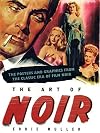
An elegant production with chapters on: styles of the Hollywood system; noir around the world; thematic and iconographic elements of film noir; noir's most familiar faces; prominent & prolific noir writers; noir's most acclaimed (and some neglected) directors. Includes over 250 posters, graphics, lobby cards, and other promotional material from the classic era of film noir.
An especially fun chapter is the one on `Noir Around The World: Exploring how artists in other cultures rendered a peculiarly American style.' Is it just me, or are the renditions from other cultures even more compelling than their supposedly more authentic American counterparts? (My favorite is the Belgian take on Three Strangers). In any case, author, noir buff and DVD commentator Eddie Muller provides an insightful text, which, combined with the book's gorgeous illustrations, is sure to be nothing short of catnip for lovers of the cinema of damp streets, neon lights, smoke-filled bars, cool detectives in trench coats, and ever-duplicitous femme fatales.
An especially fun chapter is the one on `Noir Around The World: Exploring how artists in other cultures rendered a peculiarly American style.' Is it just me, or are the renditions from other cultures even more compelling than their supposedly more authentic American counterparts? (My favorite is the Belgian take on Three Strangers). In any case, author, noir buff and DVD commentator Eddie Muller provides an insightful text, which, combined with the book's gorgeous illustrations, is sure to be nothing short of catnip for lovers of the cinema of damp streets, neon lights, smoke-filled bars, cool detectives in trench coats, and ever-duplicitous femme fatales.

Miami Murder Go-Round gets the full pulp treatment by the usually conservative Pocket Books in this 1952 reprint, which benefits from the high intensity cover art by Morgan Kane. Bright red colors frame a view from the top of a 3-D stairs, with bad guy at bottom, knife in hand. The Spillane-esque fun continues on the back cover with the blurb:
“This private eye, Rick Larkan, is really tough and needs to be. He’s got a blonde in his apartment, a blonde with half a million bucks in cold cash belonging to someone else. The blonde’s girl friend has been tortured and murdered. His own buddy has been killed. His clients want him to turn up another murderer, and the police want his help in cracking a gang of smugglers. And all this in America’s most lush playground, Miami…a town where vicious people often play too rough at vice and smuggling, and swollen citizens come floating in from Biscayne Bay…dead and stinking.”
This is the only novel by little-known writer Marston La France (1927-1975). His mystery writer credentials are on the curious side: one source lists him as a farmer in New York in the 1950s, another says he wrote Miami Murder Go-Round to finance his college expenses.
Apparently there was an Italian translation [Girandola a Miami, Verona: Editore Luciana Agnoli, 1954; tr. Luciana Agnoli Zucchini]. Would love to get hold of this one; the title, Girandola a Miami, is so . . . . noir! -- BCS
“This private eye, Rick Larkan, is really tough and needs to be. He’s got a blonde in his apartment, a blonde with half a million bucks in cold cash belonging to someone else. The blonde’s girl friend has been tortured and murdered. His own buddy has been killed. His clients want him to turn up another murderer, and the police want his help in cracking a gang of smugglers. And all this in America’s most lush playground, Miami…a town where vicious people often play too rough at vice and smuggling, and swollen citizens come floating in from Biscayne Bay…dead and stinking.”
This is the only novel by little-known writer Marston La France (1927-1975). His mystery writer credentials are on the curious side: one source lists him as a farmer in New York in the 1950s, another says he wrote Miami Murder Go-Round to finance his college expenses.
Apparently there was an Italian translation [Girandola a Miami, Verona: Editore Luciana Agnoli, 1954; tr. Luciana Agnoli Zucchini]. Would love to get hold of this one; the title, Girandola a Miami, is so . . . . noir! -- BCS

“You need more than luck in Shanghai” – Elsa Bannister (played by Rita Hayworth), The Lady from Shanghai (film, 1948)
Maybe I’m a sucker for all things Shanghai – Paris of the East; hotbead of intrigue, and so on. I’m especially fond of those old movies with the city‘s name in their title – Lady from Shanghai, Shanghai Express, Shanghai Gesture. The (Eurasian?) woman depicted on the front cover of Shanghai Incident is obviously the story’s femme fatale, and I just love the yellow dress, orange umbrella and high heels. By the way, I’m curious to know what those Chinese characters say at the top. And the Chinese woman in the background – is her gaze directed at the woman in yellow or beyond her, out towards the viewer?
I’ve always thought that the Gold Medal line of paperback books in the 1950s were among the best produced and had some of the coolest covers. This stunning design by cover art legend Robert McGinnis typifies the company’s bright, splashy style. I’m most familiar with his work for Dell, especially the series for the Mike Shayne novels, and is it my imagination, or did he change his style a bit for the GM covers? In any case, McGinnis, with Barye Phillips and Robert Maguire, probably did the best portraits of dangerous, seductive women which adorned the covers of so many paperbacks in the vintage era.
Shanghai Incident was first published by Gold Medal Books in 1955 (#456) [http://www.gm.bookscans.com/images/GM0456.JPG] with serviceable show more but less atmospheric cover art by Lou Kimmel. The author was listed as ‘Steve Dodge,’ a pseudonym for Stephen Becker. -- BCS
Review by Gary Lovisi : http://www.mysteryfile.com/Becker/Becker.html. show less
Maybe I’m a sucker for all things Shanghai – Paris of the East; hotbead of intrigue, and so on. I’m especially fond of those old movies with the city‘s name in their title – Lady from Shanghai, Shanghai Express, Shanghai Gesture. The (Eurasian?) woman depicted on the front cover of Shanghai Incident is obviously the story’s femme fatale, and I just love the yellow dress, orange umbrella and high heels. By the way, I’m curious to know what those Chinese characters say at the top. And the Chinese woman in the background – is her gaze directed at the woman in yellow or beyond her, out towards the viewer?
I’ve always thought that the Gold Medal line of paperback books in the 1950s were among the best produced and had some of the coolest covers. This stunning design by cover art legend Robert McGinnis typifies the company’s bright, splashy style. I’m most familiar with his work for Dell, especially the series for the Mike Shayne novels, and is it my imagination, or did he change his style a bit for the GM covers? In any case, McGinnis, with Barye Phillips and Robert Maguire, probably did the best portraits of dangerous, seductive women which adorned the covers of so many paperbacks in the vintage era.
Shanghai Incident was first published by Gold Medal Books in 1955 (#456) [http://www.gm.bookscans.com/images/GM0456.JPG] with serviceable show more but less atmospheric cover art by Lou Kimmel. The author was listed as ‘Steve Dodge,’ a pseudonym for Stephen Becker. -- BCS
Review by Gary Lovisi : http://www.mysteryfile.com/Becker/Becker.html. show less

Fantasy of history's most [in]famous wicked women, who get together in the infernal realms and swap gossip. Among those present are the usual suspects: Helen of Troy, Cleopatra, the queen of Sheba, Lucrezia Borgia, Delilah, Salome, Sappho, Thais, and others. Great quasi cheesecake front cover art of some of title characters in the style of Ray Johnson's art for Dell 414 (Cleopatra's Nights).
"Naughty, but still quite funny." -- from a Chicago Trubune review of the original edition.
"Naughty, but still quite funny." -- from a Chicago Trubune review of the original edition.
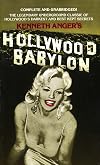
“The Legendary Underground Classic of Hollywood's Darkest and Best Kept Secrets.”
Books on the seamy side of the film industry have been around a long time, but a half century after its original publication, Hollywood Babylon seems ever more secure in its not-so-lofty status as Tinseltown's ultimate scandal-fest. The individuals covered amount to a veritable who’s who of the film industry’s baddest and brightest : Fatty Arbuckle, Errol Flynn, Charlie Chaplin, William Randolph Hearst, Thelma Todd, Ramon Novarro, Joan Crawford, et al. The suspects are the usual and the stories familiar, but never have they been told with more relish, nor more guaranteed to produce a plethora of schadenfreude-laced guilty pleasures in the best of us. As one Amazon reviewer aptly puts it : ‘Like heroin. Only way more addictive.’ Generously illustrated with deliciously tabloidy photos.
Of related interest : for a general survey of corruption and decay in Hollywood's Golden Age, presented in a more highbrow style, see: Otto Friedrich’s City of Nets (Harper & Row, 1986).
Books on the seamy side of the film industry have been around a long time, but a half century after its original publication, Hollywood Babylon seems ever more secure in its not-so-lofty status as Tinseltown's ultimate scandal-fest. The individuals covered amount to a veritable who’s who of the film industry’s baddest and brightest : Fatty Arbuckle, Errol Flynn, Charlie Chaplin, William Randolph Hearst, Thelma Todd, Ramon Novarro, Joan Crawford, et al. The suspects are the usual and the stories familiar, but never have they been told with more relish, nor more guaranteed to produce a plethora of schadenfreude-laced guilty pleasures in the best of us. As one Amazon reviewer aptly puts it : ‘Like heroin. Only way more addictive.’ Generously illustrated with deliciously tabloidy photos.
Of related interest : for a general survey of corruption and decay in Hollywood's Golden Age, presented in a more highbrow style, see: Otto Friedrich’s City of Nets (Harper & Row, 1986).

Though a longtime fan of film noir, I confess to not being familiar with the title film. But no matter; there’s plenty of great substance here in Gifford’s idiosyncratic essays on the dark side of cinema. As befits his subject matter, Gifford’s highly readable prose is suitably clipped and no-nonsense (neo-Chanlderese might describe it). And his opinions are often refreshingly contrarian. A case in point – re Barbara Stanwyck : “she does nothing for me.”
Another strength is that he covers films we don’t usually think of as being part of the noir canon, and in true contrarian fashion omits quite a few of the big guns.
The book comes with a front cover blurb by Elmore Leonard claiming some the essays are better than the films they describe – high praise indeed from a source of such impeccable noir credentials. A nice added bonus is a perceptive Introduction co-written by Edward Gorman and, more unlikely, novelist Dow Mossman.
But the true jewel in this production is the admittedly not very noirish looking cover (by Kirwan) in its over-the-top phantasmagorical glory (love the look on the girl’s face!). The design isn’t even hardboiled, but it sure gets its message across with the 1980s reto-vintage style which actually captures the 1950s spirit pretty well -- the frozen-in-an-instant moment of drama.
Suggestion : you’ll probably have a lot more fun with this book if you’ve already seen the movies he writes about – perhaps it’s best read in small show more doses, maybe one or two reviews at a sitting.– BCS show less
Another strength is that he covers films we don’t usually think of as being part of the noir canon, and in true contrarian fashion omits quite a few of the big guns.
The book comes with a front cover blurb by Elmore Leonard claiming some the essays are better than the films they describe – high praise indeed from a source of such impeccable noir credentials. A nice added bonus is a perceptive Introduction co-written by Edward Gorman and, more unlikely, novelist Dow Mossman.
But the true jewel in this production is the admittedly not very noirish looking cover (by Kirwan) in its over-the-top phantasmagorical glory (love the look on the girl’s face!). The design isn’t even hardboiled, but it sure gets its message across with the 1980s reto-vintage style which actually captures the 1950s spirit pretty well -- the frozen-in-an-instant moment of drama.
Suggestion : you’ll probably have a lot more fun with this book if you’ve already seen the movies he writes about – perhaps it’s best read in small show more doses, maybe one or two reviews at a sitting.– BCS show less
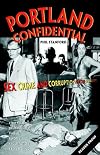
Having lived in Portland for a couple of years in the early 1990s, I had a personal interest in this book, its colorful premise notwithstanding. I confess that the Rose City’s noirish little secret had eluded me, its seamier past being well hidden by the coifurred, cultivated face – lots of coffee shops, used bookstores, and progressive thought. Boy, was I in for a surprise, and does this book deliver the goods!
The subtitle says much of this delicious quasi-exposé of Portland’s colorful history – there’s plenty of sex, crime and corruption to go around. Focusing on the vintage years of 1935-1955, the eminently readable text presents Portland’s seedy underside through the many personalities of the era. And all without a trace of wholesome environmentalism or double lattés!
From its wonderful Weegee-like cover dominated by the imposing figures of Candy Reneé and Big Jim Elkins (different kinds of figures, each, to be sure!), through Stanford’s chatty text with accompanying tabloidy photos, the book is a pure delight. But what really makes the story stick is the coverage -- often quite sympathetic -- of the many colorful personalities in all their small-time glory. The luminaries covered include the aforementioned Ms. Reneé, “Diamond Jim” Purcell, Blubber Maloney, Little Rusty, Tempest Storm, and the ever-present Big Jim Elkins. Even Bugsy Siegel makes a fleeting appearance, stopping by to check out Portland as a place to build one of his casinos. Alas, show more it rained every day he was in town, so he set his sights southward to the sunny climes of Hollywood and Las Vegas, and the rest, as they say, is history.
If there’s a weakness, it’s that the book stops fairly abruptly, ca. 1957, and many questions linger. When exactly did Portland stop being a corrupt and vice-ridden town, and why? How did a place with such a shadowy history transform itself, relatively quickly, into the Anti-Sleaze city, located at the other end of the legal and ethical spectrum? Who were the principals involved, and when did it take place? Most of all, can we hope for a sequel to sort out all the mysteries? For the moment, however, we’ll have to settle for savoring the current book, and indeed there’s much to savor. Well done, Phil. -- BCS show less
The subtitle says much of this delicious quasi-exposé of Portland’s colorful history – there’s plenty of sex, crime and corruption to go around. Focusing on the vintage years of 1935-1955, the eminently readable text presents Portland’s seedy underside through the many personalities of the era. And all without a trace of wholesome environmentalism or double lattés!
From its wonderful Weegee-like cover dominated by the imposing figures of Candy Reneé and Big Jim Elkins (different kinds of figures, each, to be sure!), through Stanford’s chatty text with accompanying tabloidy photos, the book is a pure delight. But what really makes the story stick is the coverage -- often quite sympathetic -- of the many colorful personalities in all their small-time glory. The luminaries covered include the aforementioned Ms. Reneé, “Diamond Jim” Purcell, Blubber Maloney, Little Rusty, Tempest Storm, and the ever-present Big Jim Elkins. Even Bugsy Siegel makes a fleeting appearance, stopping by to check out Portland as a place to build one of his casinos. Alas, show more it rained every day he was in town, so he set his sights southward to the sunny climes of Hollywood and Las Vegas, and the rest, as they say, is history.
If there’s a weakness, it’s that the book stops fairly abruptly, ca. 1957, and many questions linger. When exactly did Portland stop being a corrupt and vice-ridden town, and why? How did a place with such a shadowy history transform itself, relatively quickly, into the Anti-Sleaze city, located at the other end of the legal and ethical spectrum? Who were the principals involved, and when did it take place? Most of all, can we hope for a sequel to sort out all the mysteries? For the moment, however, we’ll have to settle for savoring the current book, and indeed there’s much to savor. Well done, Phil. -- BCS show less

This is one of my all-time favorite vintage paperback covers, certainly over-the-top even by the standards of one of its most sensationalist practitioners, Avon Books. The lighting and content – dead man’s [severed?] head, redheaded woman in low-cut red dress, and the bit of blood on cover – are reminiscent of those great Hammer horror films of the 1950s and 1960s, though in this case the book beats them to the punch by at least a decade. Again, lamentably, as was the case with so many Avon covers from the golden era, the cover artist is unattributed.
I must confess that I never heard of Freeman Wills Crofts before I came across this book. My research reveals that he was pretty big in the UK in the between-the-wars group of mystery writers, and apparently Raymond Chandler had a high regard for him. -- BCS
I must confess that I never heard of Freeman Wills Crofts before I came across this book. My research reveals that he was pretty big in the UK in the between-the-wars group of mystery writers, and apparently Raymond Chandler had a high regard for him. -- BCS

Very much a product of its time, Murder for the Bride is a good example of how the tough school of writers could borrow Red Scare themes and treat them in a hard-boiled style. Bride is the story of a man who unknowingly marries a communist agent, and of the many complications which follow. One of the Spillane-esque developments is the hero’s sniffing out the den of Red spies and the inevitable confrontation with the bad guys. Bride is MacDonald’s second novel and dates from his pre-Travis Magee period.
This version is a rare British paperback edition; I don’t recall seeing any other GM books which originated in the UK, and I’m not that familiar with the company’s publishing history to know how this one fits in the mix. Everything seems to be the same as the cover of the U.S. printing except that it happened to originate from the UK. A curious bit of trivia is that my copy didn’t have a GM number. It’s interesting to compare the earlier version with the reprint from the mid-sixties (Fawcett Gold Medal k1637). The cover for the latter is uncredited but at least one source lists the artist as Milton Charles. Both covers feature an attractive blonde, but I like the earlier version better, a stunner by the prolific Barye Phillips. Phillips usually emphasized glamour in his portrayals of women and this one has the glamour but a sharp edge as well, with the ominous gigantic red hand and shadows in the backgound seeming to suggest the Red Menace. -- BCS
This version is a rare British paperback edition; I don’t recall seeing any other GM books which originated in the UK, and I’m not that familiar with the company’s publishing history to know how this one fits in the mix. Everything seems to be the same as the cover of the U.S. printing except that it happened to originate from the UK. A curious bit of trivia is that my copy didn’t have a GM number. It’s interesting to compare the earlier version with the reprint from the mid-sixties (Fawcett Gold Medal k1637). The cover for the latter is uncredited but at least one source lists the artist as Milton Charles. Both covers feature an attractive blonde, but I like the earlier version better, a stunner by the prolific Barye Phillips. Phillips usually emphasized glamour in his portrayals of women and this one has the glamour but a sharp edge as well, with the ominous gigantic red hand and shadows in the backgound seeming to suggest the Red Menace. -- BCS

A rare venture by Dell into historical fiction has the added crossover appeal by being a representative – at least marginally so -- of that popular if not so easily definable genre of vintage sleaze. However, as was the case in so many paperbacks from the golden era, the racy promise of the book’s cover is never quite delivered in the contents.
Nonetheless, Dell 414 has much to recommend – the various chapters are well-written, even poetic, and Ray Johnson’s lush cover art balances just the right amounts of glamour and luridness, representing a nice departure from Dell’s earlier, non-realistic designs. Best of all, this was one of the last of the company’s famed mapbacks, and this map’s a doozy – the known world, ca. 30 B.C. (i.e. Middle East & the Mediterranean), “where the pagan Queen of Egypt lived and loved.” The usual suspects -- pyramids, sphinx, Paros lighthouse -- they’re all there. - BCS
Nonetheless, Dell 414 has much to recommend – the various chapters are well-written, even poetic, and Ray Johnson’s lush cover art balances just the right amounts of glamour and luridness, representing a nice departure from Dell’s earlier, non-realistic designs. Best of all, this was one of the last of the company’s famed mapbacks, and this map’s a doozy – the known world, ca. 30 B.C. (i.e. Middle East & the Mediterranean), “where the pagan Queen of Egypt lived and loved.” The usual suspects -- pyramids, sphinx, Paros lighthouse -- they’re all there. - BCS

I’m not too familiar w/ Macfadden Books. It’s my impression that they came to the vintage paperback party a little late in the day, and, fair or not, I tend to think of them as decidedly second-tier. But they did produce some cool, pulpy cover art that recalls (in a 1960s sort of way) those great quasi-trashy covers of nearly two decades prior for such vintage publishers as Avon, Eton and Graphic. I just love the Dead Man Control cover . . . . . [by the way – what about that title ; what exactly is ‘dead man control’? something to do with zombies?]. Anyway, things I like about the cover : the splashy, choppy red color which dominates the cover [I presume it represents blood -- well, duh!] ; the shadowy figure of the P.I. lurking in the background ; and the girl’s late 50s/early 60s hair style.
By the way, Helen Reilly seemed to be served very well by the covers of her books ; see : http://www.fantasticfiction.co.uk/r/helen-reilly/ [that Dell Silver Leopard cover is an absolute classic!] and http://www.mysteryfile.com/Reilly/Grost.html
- BCS
By the way, Helen Reilly seemed to be served very well by the covers of her books ; see : http://www.fantasticfiction.co.uk/r/helen-reilly/ [that Dell Silver Leopard cover is an absolute classic!] and http://www.mysteryfile.com/Reilly/Grost.html
- BCS

The Framed in Guilt cover is one of my absolute favorites. It really captures the sweaty desperation of a character in a tight spot. A pity that the artist is uncredited. I love the sheen on the clothes, especially the detail on the girl’s suit, and the way the hyper-realistic flash-of-lightning style has all the hallmarks of a nightmare, one of those where you’re being chased and can’t get away. The guy’s stepping though the barbed wire adds such a nice bit of extra intensity to the scene. And what’s with the shadowy, grayish blob in the cover's upper left-hand corner? Rocks on a mountainside? Or perhaps it represents a sinister individual who oversees everything with omniscient malevolence? In any case, this is one of the best covers from Graphic Books, one of the more under-appreciated paperback publishers that flourished in the early fifties. To me, their pulpy, quasi-trashy covers were closest in spirit to those terrific Avon covers of the forties and fifties in all their over-the-top sordidness. [By the way, is it just me or is the guy on the cover a dead ringer for Victor Mature?]
Note: my copy had the title slightly cut off at the top – a nice touch or just a slight defect in the printing of the book? The latter, I suspect, as I note that some of the pages in the text are cropped pretty close to the top.
The prolific Day Keene is a major figure in roman noir circles, though he’s never caught on with the general public in the same manner as a Chandler, show more Hammett or MacDonald. - BCS show less
Note: my copy had the title slightly cut off at the top – a nice touch or just a slight defect in the printing of the book? The latter, I suspect, as I note that some of the pages in the text are cropped pretty close to the top.
The prolific Day Keene is a major figure in roman noir circles, though he’s never caught on with the general public in the same manner as a Chandler, show more Hammett or MacDonald. - BCS show less

Blue City, an early novel by Kenneth Millar (a.k.a. Ross MacDonald), unsurprisingly, tells a tale of graft and corruption in an urban setting. An anonymous cover artist provides one of paperback fiction’s most unforgettable cover designs: a sinister gigantic hand, presumably emanating from a mysterious crime overlord, manipulates the citizens of Blue City as if they were puppets. -- BCS

The golden age vintage paperback cover artists well understood the erotic charge of high heels adorning a beautiful woman [http://salmongutter.blogspot.com/search/label/Fierce%20Heels]
but seldom do high heels become the focal point of the cover, much less the book’s story itself. But that’s exactly the case with (love the title!) 'The Spiked Heel,' a novel of nefarious doings in the shoe industry. The terrific, spicy cover art for the Crest printing is an eyeful, but I'm not sure I see the connection with the story, except perhaps in an allegorical sense:
“Would you like to know the secret of success? I’ll tell you. Smile. Smile, and crack skulls. Crack them, but smile while you’re doing it.”
Reviews : Richard Sullivan, Chicago Tribune, July 29, 1956, p. B11; James Kelly, NY Times, August 12, 1956, p. 219.
-- BCS
but seldom do high heels become the focal point of the cover, much less the book’s story itself. But that’s exactly the case with (love the title!) 'The Spiked Heel,' a novel of nefarious doings in the shoe industry. The terrific, spicy cover art for the Crest printing is an eyeful, but I'm not sure I see the connection with the story, except perhaps in an allegorical sense:
“Would you like to know the secret of success? I’ll tell you. Smile. Smile, and crack skulls. Crack them, but smile while you’re doing it.”
Reviews : Richard Sullivan, Chicago Tribune, July 29, 1956, p. B11; James Kelly, NY Times, August 12, 1956, p. 219.
-- BCS