
Yeah I gave up on this around page 400 because nothing had happened for about 200 pages, and I was informed by friends who had read it that not much happens EVER so I bailed. Didn't feel like reading 600 more pages of nothing happening.
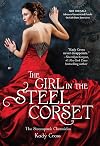
It is the middle of the night in Victorian London, and Finley Jayne is fleeing from from her lecherous employer. When duke Griffin King practically runs her over with his motorized bicycle when she appears out of the darkness, he takes her to the home he shares with his close friends to ensure that she is okay. She soon proves herself to be physically fit when she flings a grown man across the room after awaking in a panic. Thus begins a tenuous friendship between Finley and Griffin, and when their special skills are revealed to each other - as well as to Griffin's friends Emily and Sam - it turns out that they are connected far more than they ever would have guessed and have a common enemy.
If The girl in the steel corset is any indication of the genre, it turns out that I really, really like steampunk. This shouldn't be a surprise given that I adore dystopian fiction, historical fiction, and science fiction. It should have been a no-brainer. Nonetheless, more please!
Kady Cross vividly describes the London of her imagination. With automatons performing household tasks and tiny portable telegraph machines that are basically the Victorian version of texting (clever!), as well as potent descriptions of odors and atmospheres, it was easy to fall into the story. And fall in I did, whipping through 477 pages in 2 days.
Cross also switches perspectives often, from Finley to Griffin to Emily to Sam, which would sometimes drive me batty but is executed here with such skill that I show more actually liked it. The different points of view were often refreshing and provided valuable snippets of information, and I felt more connected to all of the characters as a result. Indeed, I found all of the characters to be very well developed and interesting, even secondary characters like Cordelia and Jack Dandy: not a cookie-cutter among them. True, The Machinist was a bit one-dimensional, but vengeance can do that to a person.
I'm not saying much about the characters because I found much of the joy of reading this book was watching the characters revealing themselves to the reader as well as to one another, and the plot unfolds naturally and excitingly. My one complaint is that I got a bit sick of hearing about Emily's "ropey" hair, which is a phrase that appears more than 10 times during the book (one of the advantages/curses of electronic galleys is document searching). If that's my only issue, as far as I'm concerned it's a darn good read.
About halfway through the book, it struck me that The girl in the steel corset is basically X-Men set in the late 19th century with robots. Finley, Griffin and their cohorts are mutants. Truly. They are never referred to as such, and the causes of their powers are clearly explained, but elements of comradery and fighting a common enemy are certainly there. Also like X-Men, it looks as if this is going to be a series and I will be keeping my eyes wide open for the second book in The Steampunk Chronicles.
**Electronic galley provided by NetGalley. show less
If The girl in the steel corset is any indication of the genre, it turns out that I really, really like steampunk. This shouldn't be a surprise given that I adore dystopian fiction, historical fiction, and science fiction. It should have been a no-brainer. Nonetheless, more please!
Kady Cross vividly describes the London of her imagination. With automatons performing household tasks and tiny portable telegraph machines that are basically the Victorian version of texting (clever!), as well as potent descriptions of odors and atmospheres, it was easy to fall into the story. And fall in I did, whipping through 477 pages in 2 days.
Cross also switches perspectives often, from Finley to Griffin to Emily to Sam, which would sometimes drive me batty but is executed here with such skill that I show more actually liked it. The different points of view were often refreshing and provided valuable snippets of information, and I felt more connected to all of the characters as a result. Indeed, I found all of the characters to be very well developed and interesting, even secondary characters like Cordelia and Jack Dandy: not a cookie-cutter among them. True, The Machinist was a bit one-dimensional, but vengeance can do that to a person.
I'm not saying much about the characters because I found much of the joy of reading this book was watching the characters revealing themselves to the reader as well as to one another, and the plot unfolds naturally and excitingly. My one complaint is that I got a bit sick of hearing about Emily's "ropey" hair, which is a phrase that appears more than 10 times during the book (one of the advantages/curses of electronic galleys is document searching). If that's my only issue, as far as I'm concerned it's a darn good read.
About halfway through the book, it struck me that The girl in the steel corset is basically X-Men set in the late 19th century with robots. Finley, Griffin and their cohorts are mutants. Truly. They are never referred to as such, and the causes of their powers are clearly explained, but elements of comradery and fighting a common enemy are certainly there. Also like X-Men, it looks as if this is going to be a series and I will be keeping my eyes wide open for the second book in The Steampunk Chronicles.
**Electronic galley provided by NetGalley. show less
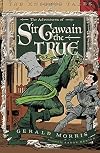
As a member of King Arthur's court, Sir Gawain is expected to be courteous and honourable. Unfortunately, despite his faultless record in tournaments, Sir Gawain has not quite been living up to expectations. When the mysterious Green Knight shows up at court during Christmas celebrations, Sir Gawain finds himself avowed to him and must keep his word despite the fact that it appears to mean certain death.
This is the third book in Gerald Morris' The knights' tales series, although it is the first one that I have had the pleasure to read. Based on the 14th-century poem Sir Gawain and the Green Knight, The adventures of Sir Gawain the True makes the tale easily understandable to young students, which is not a characteristic of the original if I recall my university English courses correctly. The core of the classic story is kept - the Green Knight's challenge, the woman with her sash, the magic - and the addition of modern humor and charming illustrations certainly accentuate its entertainment value.
I got a kick out of King Arthur as portrayed by Morris: he is determined to have his knights behave honourably and is very patient with them, but is occasionally exasperated. His reactions to his knights' lack of courtesy were often humourous, and his acknowledgments of improvement act as subtle cues to the reader that appropriate behaviour was displayed. After all, adventure aside, many Arthurian tales have morals and lessons within them and this version is no different. However, show more I didn't feel bonked over the head with a moral, and certainly Sir Gawain wasn't perfect from the beginning but manifested thoughtful and gradual change throughout the story.
The tale itself is a lot of fun, with dwarves, reclusive lords, and jousting all coming into play. Morris' descriptions of period vocabulary, such as damsel and vow, are provided in the text in such a way that they provide information, history, and humour without really bringing the reader out of the story. As a fan of both language and history, I certainly appreciated his incorporation of both into the narrative.
I am hesitant to discuss Aaron Renier's illustrations very much because I read an electronic galley on a Kindle and some of the drawings were split into two, which certainly detracted from my enjoyment of them. However, I did like what I saw despite the fact that Renier drew the knights and King Arthur as older than I envisioned them in my head, which took me aback a bit. That is my only critique (which should be taken with a grain of salt as ages and appearances were never discussed in the text) as the style and content of the illustrations were delightful.
Morris managed to pack a legendary tale into a little over 100 pages which in itself takes great skill, to say nothing of the humour and charm of the text and illustrations. Although I've not read the previous two installments of this series, I will be seeking them out and looking forward to get my hands on them as well as any future books in The knights' tales. show less
This is the third book in Gerald Morris' The knights' tales series, although it is the first one that I have had the pleasure to read. Based on the 14th-century poem Sir Gawain and the Green Knight, The adventures of Sir Gawain the True makes the tale easily understandable to young students, which is not a characteristic of the original if I recall my university English courses correctly. The core of the classic story is kept - the Green Knight's challenge, the woman with her sash, the magic - and the addition of modern humor and charming illustrations certainly accentuate its entertainment value.
I got a kick out of King Arthur as portrayed by Morris: he is determined to have his knights behave honourably and is very patient with them, but is occasionally exasperated. His reactions to his knights' lack of courtesy were often humourous, and his acknowledgments of improvement act as subtle cues to the reader that appropriate behaviour was displayed. After all, adventure aside, many Arthurian tales have morals and lessons within them and this version is no different. However, show more I didn't feel bonked over the head with a moral, and certainly Sir Gawain wasn't perfect from the beginning but manifested thoughtful and gradual change throughout the story.
The tale itself is a lot of fun, with dwarves, reclusive lords, and jousting all coming into play. Morris' descriptions of period vocabulary, such as damsel and vow, are provided in the text in such a way that they provide information, history, and humour without really bringing the reader out of the story. As a fan of both language and history, I certainly appreciated his incorporation of both into the narrative.
I am hesitant to discuss Aaron Renier's illustrations very much because I read an electronic galley on a Kindle and some of the drawings were split into two, which certainly detracted from my enjoyment of them. However, I did like what I saw despite the fact that Renier drew the knights and King Arthur as older than I envisioned them in my head, which took me aback a bit. That is my only critique (which should be taken with a grain of salt as ages and appearances were never discussed in the text) as the style and content of the illustrations were delightful.
Morris managed to pack a legendary tale into a little over 100 pages which in itself takes great skill, to say nothing of the humour and charm of the text and illustrations. Although I've not read the previous two installments of this series, I will be seeking them out and looking forward to get my hands on them as well as any future books in The knights' tales. show less
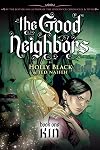
Rue's mother has been missing for three weeks and her professor father is becoming increasingly distant. Rue is struggling to live a reasonably normal life - going to school, hanging out with her friends - and ignore the strange creatures she keeps seeing. When her father is accused of murdering a young woman, Rue tries to get to the bottom of what really happened to the young woman as well as her mother, and finds far more than she bargained for.
I've been a fan of Holly Black since reading both The Spiderwick Chronicles and Tithe a few years ago, and Kin certainly reinforced to me her interest in and ability to write about humans (and people who initially believe that they are human) encountering the faerie realm. I have to say that I enjoyed both Tithe and The Spiderwick Chronicles more, however, and I'm having trouble putting my finger on why.
Naifeh's art, for one thing, is stunning. The style of both the drawing and the characters is distinctive, and the atmosphere is dark yet not particularly ominous. Rue's expressions and body language are exquisite, both of which lent meaning to her words. I also enjoyed the use of different perspectives and panel layouts throughout the book, and I appreciated how items seen early in the story turned up in a more significant way later on.
The story is more ominous than the drawings, and there is a sense of everything being not quite as it seems from the very beginning. Rue's character was well developed but Rue's parents played very show more little role other than causing plotting to happen, and I didn't have a sense of them as personalities. It seemed that way with many of the characters, but I'm hesitant to jump to that conclusion seeing as this is the first book in a series. Nonetheless, it felt to me as if Rue was the only "real" character in the book.
To be clear, I don't dislike Kin: it's gorgeous to look at and I am curious to see what's in store for Rue. I will seek out the sequels in the hopes that I enjoy them more. show less
I've been a fan of Holly Black since reading both The Spiderwick Chronicles and Tithe a few years ago, and Kin certainly reinforced to me her interest in and ability to write about humans (and people who initially believe that they are human) encountering the faerie realm. I have to say that I enjoyed both Tithe and The Spiderwick Chronicles more, however, and I'm having trouble putting my finger on why.
Naifeh's art, for one thing, is stunning. The style of both the drawing and the characters is distinctive, and the atmosphere is dark yet not particularly ominous. Rue's expressions and body language are exquisite, both of which lent meaning to her words. I also enjoyed the use of different perspectives and panel layouts throughout the book, and I appreciated how items seen early in the story turned up in a more significant way later on.
The story is more ominous than the drawings, and there is a sense of everything being not quite as it seems from the very beginning. Rue's character was well developed but Rue's parents played very show more little role other than causing plotting to happen, and I didn't have a sense of them as personalities. It seemed that way with many of the characters, but I'm hesitant to jump to that conclusion seeing as this is the first book in a series. Nonetheless, it felt to me as if Rue was the only "real" character in the book.
To be clear, I don't dislike Kin: it's gorgeous to look at and I am curious to see what's in store for Rue. I will seek out the sequels in the hopes that I enjoy them more. show less
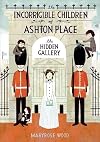
Governess Penelope Lumley is off to London with her three pupils - Alexander, Beowulf, and Cassiopeia Incorrigible - and their guardians, Lord and Lady Ashton. Penelope is excited to be able to visit with her beloved former headmistress, Miss Mortimer, and begins planning educational walking tours around the city for herself and the children using the guide Miss Mortimer sent to her. Things begin to go awry as soon as she and the Incorrigibles step off the train, from getting lost to strange proclamations from a fortune teller, but Penelope continues to be optimistic. When a luncheon with Miss Mortimer takes a mysterious turn, Penelope becomes determined to get to the bottom of who may be threatening her beloved Incorrigibles and why they were left in the woods to be raised by wolves in the first place.
The Incorrigible Children of Ashton Place books are spoofs of classic governess novels (such as Jane Eyre) and poke a lot of fun at Victorian life and culture, and this second book in the series certainly delivers on those counts. The fact that the children were actually raised by wolves is a gimmick that is still paying off in The Hidden Gallery, although I find that the children have stagnated a bit in their development and acculturation. In the first book (which I read a few months ago so have not reviewed here), the children had just been discovered so could not speak human language and were terrified of their new situation. The process of their linguistic and cultural show more acquisition was handled in a manner that was both charming and hilarious, as were Penelope's reactions to and methods of teaching the children. In this second book, while still charming and often hilarious, the children did not develop very much further. True, they are all clever and learn quickly, whether it's navigation techniques or geometry, but their skills did not seem to improve very significantly. Perhaps it is inevitable that they would not develop as much as during the first book, but more individual character evolution would have been nice to see, as in my mind the three children are almost interchangeable.
This lack of character development does not apply to Penelope, who is earnest and also very clever, if a bit naive. She doesn't shy away from a challenge (if it wasn't already obvious when considering her pupils), even if that challenge is befriending the moody, spoiled Lady Ashton. Indeed, Penelope has the sort of astute intellect that would be a menace if she discovered the powers of sarcasm. The addition of Simon Harley-Dickinson - whose surname I nearly always misread as Harley-Davidson - to the cast of characters was welcome, and I also enjoyed learning more about housekeeper Mrs. Clarke.
There is an entangled mystery to the Incorrigible Children books, and that is why the children were raised by wolves in the first place and what connection Lord Ashton has to them. Penelope is also tied up in all of this as an orphan who has the same hair colour as the Incorrigibles. Now, by the end of the first book it was obvious what was going on with Lord Ashton (I won't ruin it for you though), and by the end of The Hidden Gallery Penelope seems to have it figured out although it is not spelled out to the reader. True, perhaps Maryrose Wood assumes all the readers know what is going on with Lord Ashton, but it seems drawn out longer than necessary. I worry that, as much as I delight in these books, the mysteries will be drawn out to the point that the books will become episodic. I sincerely hope that does not come to pass.
As soon as I found out that there was a second book about Penelope and the Incorrigibles, I was determined to get my hands on it, and overall this sequel does not disappoint with its pokes at Victorian culture that made me giggle out loud. I am now waiting to get my paws on the third. show less
The Incorrigible Children of Ashton Place books are spoofs of classic governess novels (such as Jane Eyre) and poke a lot of fun at Victorian life and culture, and this second book in the series certainly delivers on those counts. The fact that the children were actually raised by wolves is a gimmick that is still paying off in The Hidden Gallery, although I find that the children have stagnated a bit in their development and acculturation. In the first book (which I read a few months ago so have not reviewed here), the children had just been discovered so could not speak human language and were terrified of their new situation. The process of their linguistic and cultural show more acquisition was handled in a manner that was both charming and hilarious, as were Penelope's reactions to and methods of teaching the children. In this second book, while still charming and often hilarious, the children did not develop very much further. True, they are all clever and learn quickly, whether it's navigation techniques or geometry, but their skills did not seem to improve very significantly. Perhaps it is inevitable that they would not develop as much as during the first book, but more individual character evolution would have been nice to see, as in my mind the three children are almost interchangeable.
This lack of character development does not apply to Penelope, who is earnest and also very clever, if a bit naive. She doesn't shy away from a challenge (if it wasn't already obvious when considering her pupils), even if that challenge is befriending the moody, spoiled Lady Ashton. Indeed, Penelope has the sort of astute intellect that would be a menace if she discovered the powers of sarcasm. The addition of Simon Harley-Dickinson - whose surname I nearly always misread as Harley-Davidson - to the cast of characters was welcome, and I also enjoyed learning more about housekeeper Mrs. Clarke.
There is an entangled mystery to the Incorrigible Children books, and that is why the children were raised by wolves in the first place and what connection Lord Ashton has to them. Penelope is also tied up in all of this as an orphan who has the same hair colour as the Incorrigibles. Now, by the end of the first book it was obvious what was going on with Lord Ashton (I won't ruin it for you though), and by the end of The Hidden Gallery Penelope seems to have it figured out although it is not spelled out to the reader. True, perhaps Maryrose Wood assumes all the readers know what is going on with Lord Ashton, but it seems drawn out longer than necessary. I worry that, as much as I delight in these books, the mysteries will be drawn out to the point that the books will become episodic. I sincerely hope that does not come to pass.
As soon as I found out that there was a second book about Penelope and the Incorrigibles, I was determined to get my hands on it, and overall this sequel does not disappoint with its pokes at Victorian culture that made me giggle out loud. I am now waiting to get my paws on the third. show less
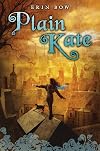
Let me start at the end: I was reduced to not a slightly teary, not a delicately weepy, but a blubbering, sobbing mess at the end of this book. I haven't cried so much because of a book since I struggled to read the last chapters of Tolkien's The Return of the King through a veil of tears, a comparison which may give you an indication of both how invested I was in the characters and the effectiveness of Bow's world-building.
Bow's prose certainly reflects the fact that she is a published poet, with phrases like "the sky had slid shut under a lid of low clouds" (p. 30) appearing throughout. This lyricism lent itself well to the dark, magical world that Plain Kate inhabits and tries her best to make her way safely through. The book is very atmospheric, and I could almost feel the cold damp of the fog traveling upriver, or hear the mud pulling at the bottom of Plain Kate's boots. The novel has a distinct Medieval, Eastern European feel to it, with towns and cities located at great distances from one another and tinkers and merchants selling their wares in outdoor markets.
Plain Kate is an evocative main character. She reveals herself slowly to other characters as well as to the reader, and coming to know her gradually made her feel all the more real. Her constant companion, Taggle the cat, is a wonderful comic foil to Plain Kate's seriousness while remaining an exceedingly loyal companion (despite his derision for dogs). Secondary characters, such as Drina and Behjet, are show more three-dimensional with their own tangled beliefs and personal sorrows that are hinted at and not always explained, leaving the reader to draw their own conclusions. As in reality, people and events were not always tied up neatly, which makes it easier to believe that the world in Plain Kate has no boundaries and continues to exist.
Although it took me a few dozen pages to get truly sucked into Plain Kate, once I was in it I wasn't prepared to leave until I got to the end. Had someone asked me after the first chapter if I would be an emotional wreck at the end of the book, I would have given a definitive no. I am exceedingly glad that I would have been wrong, and I will be recommending this book to many. show less
Bow's prose certainly reflects the fact that she is a published poet, with phrases like "the sky had slid shut under a lid of low clouds" (p. 30) appearing throughout. This lyricism lent itself well to the dark, magical world that Plain Kate inhabits and tries her best to make her way safely through. The book is very atmospheric, and I could almost feel the cold damp of the fog traveling upriver, or hear the mud pulling at the bottom of Plain Kate's boots. The novel has a distinct Medieval, Eastern European feel to it, with towns and cities located at great distances from one another and tinkers and merchants selling their wares in outdoor markets.
Plain Kate is an evocative main character. She reveals herself slowly to other characters as well as to the reader, and coming to know her gradually made her feel all the more real. Her constant companion, Taggle the cat, is a wonderful comic foil to Plain Kate's seriousness while remaining an exceedingly loyal companion (despite his derision for dogs). Secondary characters, such as Drina and Behjet, are show more three-dimensional with their own tangled beliefs and personal sorrows that are hinted at and not always explained, leaving the reader to draw their own conclusions. As in reality, people and events were not always tied up neatly, which makes it easier to believe that the world in Plain Kate has no boundaries and continues to exist.
Although it took me a few dozen pages to get truly sucked into Plain Kate, once I was in it I wasn't prepared to leave until I got to the end. Had someone asked me after the first chapter if I would be an emotional wreck at the end of the book, I would have given a definitive no. I am exceedingly glad that I would have been wrong, and I will be recommending this book to many. show less
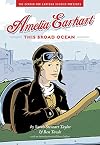
Amelia Earhart departed on her historic 1928 voyage across the Atlantic from the small Newfoundland port town of Trepassey. After several days of false starts due to weather and other complications, Earhart became the first woman to fly across the Atlantic Ocean. This graphic novel tells Earhart's story - and her influence - through the eyes of Grace, a curious young girl of Trepassey.
The framing of this story works very well: Grace is intent on being a reporter (even among the real newspaper reporters sent to Trepassey from around North America) which reflects Amelia Earhart's determination to be the first woman to fly across the Atlantic, and I found myself wanting to see them both succeed. In fact, I was hoping that Grace and Earhart shared a second characteristic and that they were both real historical figures. Alas, there is no indication in the supporting information that Grace was a real person.
This Broad Ocean has a distinctive visual style with the use of only black, white, and a light turquoise colour in the illustrations. The drawings are simple in both their lack of colours and the lines used, but movement is well indicated. I am not sure if it was intentional, but Grace and Earhart bear a striking physical resemblance to one another with freckles and short, fly-away hair (truly, they have the same haircut except that Grace's is a touch longer), which undoubtedly contributed to my impression that Grace is the reflection of a young Earhart.
Despite some show more fictionalization in this graphic novel, there is quite a bit of supplementary information to the main text of the book for those who are curious to know more. Over four pages of discussion about individual illustrated panels found in the book are at the back, as well as a bibliography and selected reading list. The introduction by Eileen Collins, the first woman to pilot a space shuttle, is a personal testament to Earhart's impact in her own life and achievements.
Ultimately, this is a great introduction to Amelia Earhart's life and influence in a format that is popular with young students. show less
The framing of this story works very well: Grace is intent on being a reporter (even among the real newspaper reporters sent to Trepassey from around North America) which reflects Amelia Earhart's determination to be the first woman to fly across the Atlantic, and I found myself wanting to see them both succeed. In fact, I was hoping that Grace and Earhart shared a second characteristic and that they were both real historical figures. Alas, there is no indication in the supporting information that Grace was a real person.
This Broad Ocean has a distinctive visual style with the use of only black, white, and a light turquoise colour in the illustrations. The drawings are simple in both their lack of colours and the lines used, but movement is well indicated. I am not sure if it was intentional, but Grace and Earhart bear a striking physical resemblance to one another with freckles and short, fly-away hair (truly, they have the same haircut except that Grace's is a touch longer), which undoubtedly contributed to my impression that Grace is the reflection of a young Earhart.
Despite some show more fictionalization in this graphic novel, there is quite a bit of supplementary information to the main text of the book for those who are curious to know more. Over four pages of discussion about individual illustrated panels found in the book are at the back, as well as a bibliography and selected reading list. The introduction by Eileen Collins, the first woman to pilot a space shuttle, is a personal testament to Earhart's impact in her own life and achievements.
Ultimately, this is a great introduction to Amelia Earhart's life and influence in a format that is popular with young students. show less
Beautiful, popular Leah takes awkward Laine under her wing when they are in fifth grade and declares them to be friends forever. Laine is confused by the attention but happily goes along with it. Laine even goes along with Leah's insistence that they secretly "practice" for marriage together, although Laine becomes increasingly confused by what it means about her relationship with Leah. While the girls grow apart as they enter high school, Leah maintains a powerful hold over Laine until a public confrontation results in tragedy.
Knowles tackles the topic of sexual abuse between children head-on, and she does it with a remarkably delicate touch while pulling no punches. Laine's confusion and desperation to keep Leah happy, as well as the tension between Laine and Leah in the years after their "practice" ends, are well-rendered. Although there are certainly scenes that are uncomfortable as a reader, nothing is graphically presented and the narrative focuses primarily on the emotions of the characters, especially Laine as the novel is from her point of view.
Leah and Laine are three-dimensional characters with specific and evident motivations, and their respective evolutions as they grow into teenagers are unsurprising but nonetheless poignant. Although I know very little about this topic, it would appear that the author did a good deal of research to create such believable characters, and this novel was an emotional and educational introduction to the subject and will not show more soon be forgotten. show less
Knowles tackles the topic of sexual abuse between children head-on, and she does it with a remarkably delicate touch while pulling no punches. Laine's confusion and desperation to keep Leah happy, as well as the tension between Laine and Leah in the years after their "practice" ends, are well-rendered. Although there are certainly scenes that are uncomfortable as a reader, nothing is graphically presented and the narrative focuses primarily on the emotions of the characters, especially Laine as the novel is from her point of view.
Leah and Laine are three-dimensional characters with specific and evident motivations, and their respective evolutions as they grow into teenagers are unsurprising but nonetheless poignant. Although I know very little about this topic, it would appear that the author did a good deal of research to create such believable characters, and this novel was an emotional and educational introduction to the subject and will not show more soon be forgotten. show less
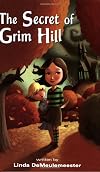
Cat and her younger sister, Sookie, have just moved to a new town with their mother, and Cat is not enjoying Darkmont High at all. Soccer-playing Cat soon finds out about soccer scholarships to the nearby private Grimoire school that are earned by the winning team of a Halloween match. Despite continually hearing from Sookie and their neighbour, Jasper, that something just isn't right about Grimoire, Cat goes ahead with her daily team practices until the bizarre events of an early Halloween party change her priorities.
I was spurred to read The Secret of Grim Hill by a new student who wondered if the library had the sequels because he enjoyed this book so much. He reads a lot and very quickly, so I thought if he liked it then it must be pretty good. Happily, it is.
Cat is a realistic tween protagonist: she is easily annoyed by her younger sister, very aware of her school's social hierarchy and endeavours to climb it, fulfills her household responsibilities despite wishing she didn't have to, and is quintessentially likable. When push comes to shove, Cat's priorities are in order (soccer and family at the top with homework dead last). Sookie is as much or even more compelling as a precocious, Monopoly-loving little girl who is generally as seemingly as annoyed with Cat as Cat is with her.
The atmosphere of Grim Hill is generally light with escalating indications to the reader that something dark is afoot. DeMeulemeester's incorporation and explanations of Celtic mythology and show more traditions are seamlessly done, and the tension builds to a peak that is exhilarating and urgent but not full-on scary. I look forward to reading one or more of the sequels (loaned from another school library for the student mentioned earlier) to see if the Celtic theme is maintained or if other mythologies are incorporated into the series.
Overall, a solid beginning to a middle-grade fantasy series. show less
I was spurred to read The Secret of Grim Hill by a new student who wondered if the library had the sequels because he enjoyed this book so much. He reads a lot and very quickly, so I thought if he liked it then it must be pretty good. Happily, it is.
Cat is a realistic tween protagonist: she is easily annoyed by her younger sister, very aware of her school's social hierarchy and endeavours to climb it, fulfills her household responsibilities despite wishing she didn't have to, and is quintessentially likable. When push comes to shove, Cat's priorities are in order (soccer and family at the top with homework dead last). Sookie is as much or even more compelling as a precocious, Monopoly-loving little girl who is generally as seemingly as annoyed with Cat as Cat is with her.
The atmosphere of Grim Hill is generally light with escalating indications to the reader that something dark is afoot. DeMeulemeester's incorporation and explanations of Celtic mythology and show more traditions are seamlessly done, and the tension builds to a peak that is exhilarating and urgent but not full-on scary. I look forward to reading one or more of the sequels (loaned from another school library for the student mentioned earlier) to see if the Celtic theme is maintained or if other mythologies are incorporated into the series.
Overall, a solid beginning to a middle-grade fantasy series. show less
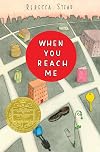
It's 1978 and Miranda is in sixth grade in New York City. She and her best friend Sal are drifting apart, and mysterious letters keep appearing which are addressed to her and accurately predict the future. Miranda doesn't know what to make of the notes and the events they describe, but her absolute favourite book - A wrinkle in time by Madeleine L'Engle - may turn out to be the key to the mystery.
There is so much going on in this brief (197-page) novel that it would take another few paragraphs to write a synopsis that covers the key plot points. I do not say this disparagingly in the least, as the author handled the story's complexities extraordinarily deftly and, for the most part, linearly. It is quite a feat, as is the fact that I hadn't the slightest clue who the mysterious letter-writer was until it was revealed. In fact, it is a book I intend to re-read in order to discover what I missed the first time.
The characters are what made this book a joy for me to read. Miranda is intelligent, perceptive, and valiantly trying to make some sense of the world around her. I appreciated the little details about her inner life, such as how she balances her fears with her realism by approaching people she's afraid of to ask the time so she can see that they are, in fact, not so scary. Also, she is aware of the little moments of poetry in daily life while not noticing that a close friend eats a special diet, which is that odd mix of worldliness and obliviousness that can be found show more in many 11-year-olds.
When You Reach Me is, at its essence, about the interactions between people in Miranda's world: Miranda's relationships with her mother and her mother's boyfriend, sixth-grade friendships that form almost as mysteriously as they end, and Miranda's observations of the people within her neighbourhood. The characters are lively and real and had their own things going on outside the walls of the story, especially Marcus and Julia. There always seemed to be a lot going on for Miranda, even if big events didn't happen very often. And if that isn't an accurate depiction of real life, then I'm not sure what is.
When you reach me is the Newbery-winning novel of 2010 and rightly so. show less
There is so much going on in this brief (197-page) novel that it would take another few paragraphs to write a synopsis that covers the key plot points. I do not say this disparagingly in the least, as the author handled the story's complexities extraordinarily deftly and, for the most part, linearly. It is quite a feat, as is the fact that I hadn't the slightest clue who the mysterious letter-writer was until it was revealed. In fact, it is a book I intend to re-read in order to discover what I missed the first time.
The characters are what made this book a joy for me to read. Miranda is intelligent, perceptive, and valiantly trying to make some sense of the world around her. I appreciated the little details about her inner life, such as how she balances her fears with her realism by approaching people she's afraid of to ask the time so she can see that they are, in fact, not so scary. Also, she is aware of the little moments of poetry in daily life while not noticing that a close friend eats a special diet, which is that odd mix of worldliness and obliviousness that can be found show more in many 11-year-olds.
When You Reach Me is, at its essence, about the interactions between people in Miranda's world: Miranda's relationships with her mother and her mother's boyfriend, sixth-grade friendships that form almost as mysteriously as they end, and Miranda's observations of the people within her neighbourhood. The characters are lively and real and had their own things going on outside the walls of the story, especially Marcus and Julia. There always seemed to be a lot going on for Miranda, even if big events didn't happen very often. And if that isn't an accurate depiction of real life, then I'm not sure what is.
When you reach me is the Newbery-winning novel of 2010 and rightly so. show less
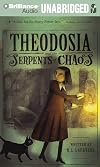
Theodosia's parents both study ancient Egypt and work for London's Museum of Legends and Antiquities. As a result, eleven-year-old Theodosia spends almost all her time at the museum which is wonderful since she is interested in antiquities, but it's not so great because she can sense the ancient curses that surround many of the Egyptian artifacts. When her mother finds and brings the legendary jeweled Heart of Egypt to the museum, Theodosia is not the only person who knows of its devastating powers, but it appears that she may the only one who can save Britain from the doom to come.
What a rip-roaring adventure! It's almost like The Mummy but with children as protagonists (and I mean that in the best possible way: action, adventure, Egyptian curses, chase scenes, but unfortunately for me no Medjai, sigh). Serpents of Chaos also involves pickpockets, a stowaway, hidden burial chambers, a demonized cat, and a secret brotherhood. How's that for excitement!
Amidst it all, Theodosia as a character is solid as a rock. She is clever, independent, daring, and is rather attached to her cat's presence while she sleeps in an empty sarcophagus most nights (her father is the Head Curator and rarely leaves his place of work while his wife is away on a dig). She also realizes that her ability to sense curses makes her different from her parents, and as a result she is essentially an expert in neutralizing Egyptian curses due to her extensive studies while she is stuck at the museum. The show more adults who surround her on a daily basis fail to recognize her knowledge, which causes Theodosia much frustration. This frustration drives many of her actions throughout the book, and she is determined to prove to her parents that she is of great worth.
The historical setting is an interesting one. The events occur in what seems to be early 1914, and the author does a stand-up job of simply explaining the complicated international relations that existed at that time and which provide a backdrop to the significance of the Heart of Egypt. I'm curious to read the sequels to Theodosia and the Serpents of Chaos for many reasons, but one of the main ones is to find out how the advent of the First World War will be incorporated into the plot if, indeed, it is.
This is a novel that should appeal to boys and girls with its wit, adventure, and magic, and will likely spur interest in ancient Egypt as well. show less
What a rip-roaring adventure! It's almost like The Mummy but with children as protagonists (and I mean that in the best possible way: action, adventure, Egyptian curses, chase scenes, but unfortunately for me no Medjai, sigh). Serpents of Chaos also involves pickpockets, a stowaway, hidden burial chambers, a demonized cat, and a secret brotherhood. How's that for excitement!
Amidst it all, Theodosia as a character is solid as a rock. She is clever, independent, daring, and is rather attached to her cat's presence while she sleeps in an empty sarcophagus most nights (her father is the Head Curator and rarely leaves his place of work while his wife is away on a dig). She also realizes that her ability to sense curses makes her different from her parents, and as a result she is essentially an expert in neutralizing Egyptian curses due to her extensive studies while she is stuck at the museum. The show more adults who surround her on a daily basis fail to recognize her knowledge, which causes Theodosia much frustration. This frustration drives many of her actions throughout the book, and she is determined to prove to her parents that she is of great worth.
The historical setting is an interesting one. The events occur in what seems to be early 1914, and the author does a stand-up job of simply explaining the complicated international relations that existed at that time and which provide a backdrop to the significance of the Heart of Egypt. I'm curious to read the sequels to Theodosia and the Serpents of Chaos for many reasons, but one of the main ones is to find out how the advent of the First World War will be incorporated into the plot if, indeed, it is.
This is a novel that should appeal to boys and girls with its wit, adventure, and magic, and will likely spur interest in ancient Egypt as well. show less
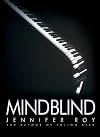
Nathaniel is fourteen years old, enjoys video games and The Amazing Race, and plays keyboards in a band with his best friend and the girl he adores. He is also a homeschooled university graduate, very skilled at mathematics, and has Asperger syndome. Nathaniel's life goal is to be an official genius, which is what many people consider him to be due to his incredible memory and knowledge. However, according to a book he read when he was seven years old, someone must "accomplish something outstanding" (p. 14) before he or she can be considered a genius, so Nathaniel is determined to meet that objective as soon as he can. It remains to be seen if life will get in the way of his goal, and how he might manage to achieve it.
Nathaniel has a typically complex teenage life: a girl he secretly has a crush on, divorced parents, not getting along with his father, and an embarrassing episode at a party. On top of that, he struggles to communicate with his family and friends due to his difficulty interpreting social cues, but he is an eminently likable person and quite self-aware. I enjoyed seeing the world from Nathaniel's perspective.
The supporting characters have a lot going on as well. Nathaniel's mother was a highlight for me, and her interactions with Nathaniel were kind, firm, and she often exhibited a sense of humour. In many ways, Nathaniel's father is the villain of the book in that he steadfastly refuses to try to relate to Nathaniel in a manner that is outside his comfort show more zone or expectations. The developing relationships that Nathaniel has with his father's wife and his four-year-old half-brother were lovely to observe, and Nathaniel's best friend Cooper was solid as a rock. So many people in Nathaniel's life were supportive of him and his gradual awareness of this was heartwarming.
Author Jennifer Roy has taken her experiences with her son (who, according to her website, also has Asperger syndrome and his highly gifted) and as a teacher and woven them into Mindblind. Thoughtful, humourous, illuminating, and highly recommended. show less
Nathaniel has a typically complex teenage life: a girl he secretly has a crush on, divorced parents, not getting along with his father, and an embarrassing episode at a party. On top of that, he struggles to communicate with his family and friends due to his difficulty interpreting social cues, but he is an eminently likable person and quite self-aware. I enjoyed seeing the world from Nathaniel's perspective.
The supporting characters have a lot going on as well. Nathaniel's mother was a highlight for me, and her interactions with Nathaniel were kind, firm, and she often exhibited a sense of humour. In many ways, Nathaniel's father is the villain of the book in that he steadfastly refuses to try to relate to Nathaniel in a manner that is outside his comfort show more zone or expectations. The developing relationships that Nathaniel has with his father's wife and his four-year-old half-brother were lovely to observe, and Nathaniel's best friend Cooper was solid as a rock. So many people in Nathaniel's life were supportive of him and his gradual awareness of this was heartwarming.
Author Jennifer Roy has taken her experiences with her son (who, according to her website, also has Asperger syndrome and his highly gifted) and as a teacher and woven them into Mindblind. Thoughtful, humourous, illuminating, and highly recommended. show less

I really enjoyed the first half of this novel - interesting premise, amusing narrative style, and the type of damaged protagonist that I tend to relish. It went downhill for me around the midpoint when the protagonist's ex-wife goes missing and, after a bizarre course of events, he ends up in the back of a van with notorious Nazi doctor Josef Mengele, and Mengele won't shut up about his "achievements." I've read plenty about the Holocaust and am well aware of the atrocities Mengele committed at Auschwitz, but this was just too much information. Way too much.
I truly enjoyed Stahl's style, and the main character is a hoot. I'm curious to read another book in this series and keep my fingers crossed that it doesn't follow the same pattern of wonderful first half and disappointing second half.
I truly enjoyed Stahl's style, and the main character is a hoot. I'm curious to read another book in this series and keep my fingers crossed that it doesn't follow the same pattern of wonderful first half and disappointing second half.
 This review was written for LibraryThing Early Reviewers.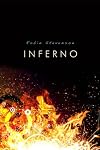
Smart, independent Dante is struggling at the school she's been attending since she and her parents moved over a year ago, and being brokenhearted due to her secret girlfriend moving away isn't helping matters. For her sixteenth birthday she changed her name to Dante after reading Dante Alighieri's Inferno, but her mother still calls her Emily and sends her to a support group for girls. It is there that Dante gets to know Parker, a mysterious girl who quit school and lives with her boyfriend.
Dante is an independent thinker and Parker easily convinces her to get involved in her protests against free speech and schools' strict rules. Soon Dante is sneaking out of her house in the middle of the night and scaling walls to hang banners. Things are not all fun and games for long however, and when Parker's group decides to protest the status quo in a way that people will notice and remember, Dante must decide how far she'll go to help a friend.
I like Dante, but then I almost always like smart and independent female protagonists. She's also a bit quirky but confident in her quirks, but I almost always like that too. So perhaps I was destined to like her. That said (and none too eloquently either), what I really enjoyed was knowing how Dante perceived herself and comparing that to how others saw her. How she came across so confident and self-assured and yet really didn't know what to do most of the time. How her actions were definitive but the decisions going into her actions show more often weren't. The saying "the road to hell is paved with good intentions" could certainly be used to explain what happens with Dante, but that may be taking the Inferno metaphor too far.
The people who populate the rest of Dante's world were fascinating. I particularly enjoyed her parents and their distinct personalities and reactions. Parker was complex and almost unbearable to watch sometimes. Her situation was heartbreaking but scarily accurate, and of all the characters I wonder most about what happened to her. I doubt I'm the only one she sticks with.
As a side note, I love the cover. show less
Dante is an independent thinker and Parker easily convinces her to get involved in her protests against free speech and schools' strict rules. Soon Dante is sneaking out of her house in the middle of the night and scaling walls to hang banners. Things are not all fun and games for long however, and when Parker's group decides to protest the status quo in a way that people will notice and remember, Dante must decide how far she'll go to help a friend.
I like Dante, but then I almost always like smart and independent female protagonists. She's also a bit quirky but confident in her quirks, but I almost always like that too. So perhaps I was destined to like her. That said (and none too eloquently either), what I really enjoyed was knowing how Dante perceived herself and comparing that to how others saw her. How she came across so confident and self-assured and yet really didn't know what to do most of the time. How her actions were definitive but the decisions going into her actions show more often weren't. The saying "the road to hell is paved with good intentions" could certainly be used to explain what happens with Dante, but that may be taking the Inferno metaphor too far.
The people who populate the rest of Dante's world were fascinating. I particularly enjoyed her parents and their distinct personalities and reactions. Parker was complex and almost unbearable to watch sometimes. Her situation was heartbreaking but scarily accurate, and of all the characters I wonder most about what happened to her. I doubt I'm the only one she sticks with.
As a side note, I love the cover. show less
This review was written for LibraryThing Early Reviewers.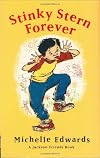
Pa Lia isn't too happy with Stinky Stern, the grade 2 class bully, after he teases her about the snowflake she made. When she witnesses him getting hit by a van after school and learns later that he dies as a result, Pa Lia doesn't know how to feel. With the help of the memories of Stinky Stern that her classmates share, Pa Lia begins to come to terms with her feelings.
Delicately drawn with wonderful descriptions of emotions, this is a frank and sensitive depiction of dealing with a young classmate's death.
Delicately drawn with wonderful descriptions of emotions, this is a frank and sensitive depiction of dealing with a young classmate's death.
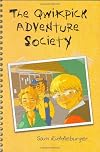
Lyle, Dave, and Marilla are all in grade 7 and have nothing to do on Christmas Day so they plan an adventure: a trip to the local sewage treatment plant to see the soon-to-be-defunct poop fountain. Clever and hilarious.