The Dark Tide: The most exciting new pulse-pounding crime thriller for 2022 from bestselling sensation Simon McCleave: Book 1 (The Anglesey Series) by Simon McCleave
This author has written more than 30 books. As such, I was surprised at first at how poorly written this one was - way too much dialogue, an unreasonable plot, and five different subplots that were apparently necessary to make up word count. Then I noticed he had written all 30 books in the last five years. How this happens I can't imagine but I wish someone would let me publish books like that. Redeeming qualities are a nice car chase scene near the end, and a good setup for a series story arc. Not so well set up that I will be looking for the next five books in the series, though, possibly all to be published in the next six months.
With the great strides being made in conversational AI in the past few years, it makes a lot of sense that someone would write a book exploring aspects of AI that have recently come to light through fictional artificial characters.
This is not that book. The AI entity Lock, down to the cadence of its speech and the aspects of humanity that it wrestles with, is a carbon copy of Data, the android Starfleet officer from Star Trek, who himself was inspired by the robot detective Daneel Olivaw from science fiction novels starting in the 1950's. This isn't to say that the book is bad. The writing is good and the plot and villain were interesting, but I suspect that there is a lot more ground to tread in exploring the capabilities and limitations of artificial beings as we see them today.
This is not that book. The AI entity Lock, down to the cadence of its speech and the aspects of humanity that it wrestles with, is a carbon copy of Data, the android Starfleet officer from Star Trek, who himself was inspired by the robot detective Daneel Olivaw from science fiction novels starting in the 1950's. This isn't to say that the book is bad. The writing is good and the plot and villain were interesting, but I suspect that there is a lot more ground to tread in exploring the capabilities and limitations of artificial beings as we see them today.
DNF. Maybe it was reading a book about DNA from 25 years ago, or the depiction of the Amish as super-scientists, or the strange interlude into a story about 8th century world travelers, or the series of beautiful women the affianced hero gets entangled with, but I just couldn't get into it.
The first half of the book is pretty good at covering the silk roads, although short shrift is given to pretty much anything east of Jerusalem, and the focus is more or less on how the trade routes affected the cities around the Mediterranean. The second half of the book covers events after Columbus, and the ways that exploitation of the New World catapulted the sad little backwater called Western Europe into the economic center of the world, and really at this point we leave the traditional route from Damascus to Luoyang behind to focus on worldwide empires, conquests, and other political matters. "A History of the World" is a much more correct title than "The Silk Roads", but it's a well-done history of the world if that's what you're looking for.
Not a terrible story, but tries too hard to be P.D. James. Lots of characters with complex back stories, but too many in the end and one has to be killed off halfway through the book. Misdirection at the end kept me from solving the mystery but the reveal was clumsy.

The only one of the series I've read, but I thought it was good. Apparently the main character is a "professional go-between" which I've never heard of before, but the plot was good and the characters well-developed. Only comes in at a couple of hundred pages, pretty typical for an early 1970's thriller. I will read more if I happen to run across them.

Berry Gordy is kind, self-deprecating, and humble, if you trust his autobiography. I don't have any reason not to; but I was really more interested in the history of Motown and specifically how the artist development department worked. That wasn't really covered - Gordy was more interested in his songwriting and his artists. It was interesting to read about his early boxing career and how close he is to his family. I certainly wouldn't call it hard-hitting or controversial, but a pleasant read.
Blood in Eden (Sister Fidelma Mysteries Book 30): An unputdownable mystery of bloodshed and betrayal by Peter Tremayne
About 60% a murder mystery, and 40% a textbook on 7th century Ireland.
Plot: 5. I really thought it was going to be silly at first, but as the book unfolded there were a lot of twists and turns that surprised me, and the final resolution played brilliantly into the minutiae of Irish law that this series is apparently famous for.
Execution: 2. The constant digression into explaining the meaning of some word or detailing some myth or historical happening drove me pretty nuts. I also got a little lost as the main characters journeyed hither and yon, to mountaintops, abbeys, and other places to answer their questions, and I ended up unsure as to whether these journeys took hours, weeks, or days.
Character development: 2. As book 30 in the series, the author gets a pass developing the main characters; if they haven't got personalities by this time, they never will. But the villagers were, for the most part, unreasonable and surly for not much reason at all. Any of the minor characters that were developed were mostly done to explain some fine point of language or culture.
Scenes: 1. I thought the writing was pretty unbearable, with overuse of synonyms for "said" and a habit of throwing in odd expository sentences rather than letting the scenes develop. Is this some sort of Irish writing tradition or something?
Puzzle: 3. It's kind of built-in to the story that everything is going to hinge on the main character realizing some odd fact or statute that only 7th-century Irish lawyers show more would ever know. So I wasn't at all surprised that I didn't guess the murderer in the end.
Overall: 2. The excellent and well-worked-out plot just didn't make up for having to slog through the writing in the end. Still, the author must be doing something right to get as many books out of a series as this. I'm just not sure what that thing is. show less
Plot: 5. I really thought it was going to be silly at first, but as the book unfolded there were a lot of twists and turns that surprised me, and the final resolution played brilliantly into the minutiae of Irish law that this series is apparently famous for.
Execution: 2. The constant digression into explaining the meaning of some word or detailing some myth or historical happening drove me pretty nuts. I also got a little lost as the main characters journeyed hither and yon, to mountaintops, abbeys, and other places to answer their questions, and I ended up unsure as to whether these journeys took hours, weeks, or days.
Character development: 2. As book 30 in the series, the author gets a pass developing the main characters; if they haven't got personalities by this time, they never will. But the villagers were, for the most part, unreasonable and surly for not much reason at all. Any of the minor characters that were developed were mostly done to explain some fine point of language or culture.
Scenes: 1. I thought the writing was pretty unbearable, with overuse of synonyms for "said" and a habit of throwing in odd expository sentences rather than letting the scenes develop. Is this some sort of Irish writing tradition or something?
Puzzle: 3. It's kind of built-in to the story that everything is going to hinge on the main character realizing some odd fact or statute that only 7th-century Irish lawyers show more would ever know. So I wasn't at all surprised that I didn't guess the murderer in the end.
Overall: 2. The excellent and well-worked-out plot just didn't make up for having to slog through the writing in the end. Still, the author must be doing something right to get as many books out of a series as this. I'm just not sure what that thing is. show less
I don't care for characters who have a hobby of memorizing quotes. An impressive feat in real life, but an excuse to pull half your book from Bartlett's in fiction. McGregor is a James Bond knockoff - handsome, muscular, a gourmet - but the story is very well written for all of that. Less than 200 pages, typical for the time, and well worth spending a few hours with.
An interesting characterization of a doctor in 1780 England. When a man dies under suspicious circumstances, the doctor is called in to perform an autopsy and determine just what those circumstances were in very much an 18th-century CSI-ish way.
Plot: 4. Well thought out and makes sense. The doctor's analysis of the various tissues of the murdered man is spelled out in loving detail, and makes for some fascinating writing.
Execution: 5. The flow of the book is neat and sensible. While the vast majority of the book is written from Dr. Silkstone's perspective, a few other characters get a turn as well, and those sections further the plot nicely. There's an unfortunate section where an important clue is handed to the doctor by a young boy for no apparent reason.
Character Development: 3. I'll withhold judgement on the doctor, who apparently gets several books to himself. Most of the other characters aren't really fleshed out - a village apothecary, a grieving sister, a man who likes eating a bit too much. A notable exception is the murdered man's richly drawn brother-in-law, who by turns demonstrates arrogant pride, love for his wife, and violent and drunken behavior.
Scenes: 2. Fairly solid in the first half of the book, but feels like the editor lost interest in the second half and let a lot of poor word selection in.
Puzzle: 5. Keeps you guessing until the end, and almost past the end as, just when we feel the case is all wrapped up, a surprise twist turns the plot on its head.
Plot: 4. Well thought out and makes sense. The doctor's analysis of the various tissues of the murdered man is spelled out in loving detail, and makes for some fascinating writing.
Execution: 5. The flow of the book is neat and sensible. While the vast majority of the book is written from Dr. Silkstone's perspective, a few other characters get a turn as well, and those sections further the plot nicely. There's an unfortunate section where an important clue is handed to the doctor by a young boy for no apparent reason.
Character Development: 3. I'll withhold judgement on the doctor, who apparently gets several books to himself. Most of the other characters aren't really fleshed out - a village apothecary, a grieving sister, a man who likes eating a bit too much. A notable exception is the murdered man's richly drawn brother-in-law, who by turns demonstrates arrogant pride, love for his wife, and violent and drunken behavior.
Scenes: 2. Fairly solid in the first half of the book, but feels like the editor lost interest in the second half and let a lot of poor word selection in.
Puzzle: 5. Keeps you guessing until the end, and almost past the end as, just when we feel the case is all wrapped up, a surprise twist turns the plot on its head.
One of those books where you aren't sure at first if you're reading a cozy mystery, a ghost story, or a thriller. The main character, an upper-class lady who leaves her husband after some physical abuse, is very likable and interesting. We're simultaneously introduced to a missing woman through her diary entries from a few years previous, and her vanity and foolishness do make one itch. The plot expands to a few additional characters.
Plot: 5. I wasn't sure where it was going at first - whether a ghost was responsible for the murders, or perhaps a madman in a hidden asylum. But some very interesting plot twists make the plot work out neatly - perhaps a little improbably, but I was quite satisfied.
Execution: 3. Each chapter begins with an excerpt of the missing woman's diary, so you can trace her descent into horror. It starts to feel a bit formulaic after a while.
Character development: 4. Lydia seems to me to be a bit too willing to leave the security of home and husband, but she is well fleshed-out overall. Many of the supporting characters could have easily been cardboard villains or heroes, but end up having complexities that keep them from from being quite that.
Scenes: 4. Some dovetailing into the politics of 1930's England are particularly interesting - the fascist meeting and those who ware against them. Some of the horror elements just come off as being silly, or at least tacked-on, when their mundane explanations are revealed.
Puzzle: 4. I lost track of all of the show more relationships between the main characters, which might have led me away from figuring out the eventual murderer. Certainly some of the revelations towards the end came as complete surprises, but when I figured out the implications and see how they fit together, I was usually impressed. show less
Plot: 5. I wasn't sure where it was going at first - whether a ghost was responsible for the murders, or perhaps a madman in a hidden asylum. But some very interesting plot twists make the plot work out neatly - perhaps a little improbably, but I was quite satisfied.
Execution: 3. Each chapter begins with an excerpt of the missing woman's diary, so you can trace her descent into horror. It starts to feel a bit formulaic after a while.
Character development: 4. Lydia seems to me to be a bit too willing to leave the security of home and husband, but she is well fleshed-out overall. Many of the supporting characters could have easily been cardboard villains or heroes, but end up having complexities that keep them from from being quite that.
Scenes: 4. Some dovetailing into the politics of 1930's England are particularly interesting - the fascist meeting and those who ware against them. Some of the horror elements just come off as being silly, or at least tacked-on, when their mundane explanations are revealed.
Puzzle: 4. I lost track of all of the show more relationships between the main characters, which might have led me away from figuring out the eventual murderer. Certainly some of the revelations towards the end came as complete surprises, but when I figured out the implications and see how they fit together, I was usually impressed. show less
The correct way to think about this book is as a character study of an early twentieth-century woman. The insights and thoughts into Wendy's psyche as she deals with her rage at the events that have befallen her, both in Never-Never Land and back in the real world. Her insistence on the truth of their happening gets her into trouble, and it is the most fascinating part of the book. Most children who visit a magical place quickly learn to keep it to themselves, but Wendy refuses to do that. The idea of a beloved magical character hiding a dark secret isn't particularly interesting; the return to Never-Never Land has been done dozens of times; and even the conceptualization of Peter as an abusive boyfriend isn't particularly insightful.
Plot: 3. Wendy attempts to rescue her daughter from Never-Never Land. The denouement is relatively straightforward; no surprises or twists, and doesn't give us any particular insight into Peter or Wendy. A decent ending for a fairy tale.
Execution: 4. The back-and-forth between present time and Wendy's past are nicely done. You get a lot of insight into Wendy at the right time, just when you've begun wondering exactly why Wendy is the way she is.
Character development: 5. Not only is Wendy beautifully fleshed out, but the characters around her are as well. Michael, the war veteran with PTSD, is especially well handled, and even the less important supporting characters, such as Wendy's husband and Tiger Lily, are given characteristics that make show more them spring off the page. Jane seems well ahead of her time with her scientific aspirations.
Scenes: 5. Everything is set up neatly and the writing is solid.
World: 4. Liberties are taken with Barrie's world that I'm not sure he would appreciate. His world - Peter's world - of boyish fantasy probably had its dark spots, but Jane and Wendy see through them into an almost Lovecraftian dark place.
Mostly I don't care for authors that write stories for characters that they didn't create, but the emphasis on how Never-Never Land affected the various characters, rather than being a cynical sequel, make Wendy, Darling an interesting exception, and well worth reading. show less
Plot: 3. Wendy attempts to rescue her daughter from Never-Never Land. The denouement is relatively straightforward; no surprises or twists, and doesn't give us any particular insight into Peter or Wendy. A decent ending for a fairy tale.
Execution: 4. The back-and-forth between present time and Wendy's past are nicely done. You get a lot of insight into Wendy at the right time, just when you've begun wondering exactly why Wendy is the way she is.
Character development: 5. Not only is Wendy beautifully fleshed out, but the characters around her are as well. Michael, the war veteran with PTSD, is especially well handled, and even the less important supporting characters, such as Wendy's husband and Tiger Lily, are given characteristics that make show more them spring off the page. Jane seems well ahead of her time with her scientific aspirations.
Scenes: 5. Everything is set up neatly and the writing is solid.
World: 4. Liberties are taken with Barrie's world that I'm not sure he would appreciate. His world - Peter's world - of boyish fantasy probably had its dark spots, but Jane and Wendy see through them into an almost Lovecraftian dark place.
Mostly I don't care for authors that write stories for characters that they didn't create, but the emphasis on how Never-Never Land affected the various characters, rather than being a cynical sequel, make Wendy, Darling an interesting exception, and well worth reading. show less
Loses points for the thing at the end asking readers to vote on who the heroine should be dating. Pander much?

I was sure I had figured out the killer almost from the beginning, based on some narrative clues and reading the back cover, but I was wrong. The surprise twist I was expecting never materialized - perhaps that is a surprise twist on its own.
The plot is better than the book. It's nicely complicated with a good piece of misdirection to confuse the issue at the end. The book is written at about an eighth grade level, though, and has a lot of what might be called "character development"; although to me it was just mushy romance stuff.
The book is definitely a murder mystery and not a romance, though. For all the lightweight writing, the killer, and also his motive, are nicely terrifying. Maybe appropriate for younger readers, but I'll stick to P.D. James and Michael Innes for myself.
The plot is better than the book. It's nicely complicated with a good piece of misdirection to confuse the issue at the end. The book is written at about an eighth grade level, though, and has a lot of what might be called "character development"; although to me it was just mushy romance stuff.
The book is definitely a murder mystery and not a romance, though. For all the lightweight writing, the killer, and also his motive, are nicely terrifying. Maybe appropriate for younger readers, but I'll stick to P.D. James and Michael Innes for myself.
Joe Gunther is still not as effective in the third person as he is in the first, but since Sammie takes the lead in this one it's not as important. Three intertwined stories in this book, all revolving around drugs, and at least two of them come off without being fully resolved. I'm torn as to whether the resolutions will be in the next, or later, books or if Mayor just ran out of space. But I'm looking forward to finding out.
Really a romance, with the fantasy side being very thin. The first section documents the early life of Dion, a naive and intolerant young girl suddenly forced to live with a courtesan. Her ability to adjust is helped by her habit of kicking six kinds of feces out of anyone who threatens her, however. The second part of the book goes into full-blown romance mode, but if you wade through it, a very acceptable high fantasy finale is your reward. The writing is high quality and has a variety of humorous sections. Well worth the read, even if you don't enjoy romances.
The Emperor's Tomb (with bonus short story The Balkan Escape): A Novel (Cotton Malone) by Steve Berry
You know what Steve Berry really likes?
He likes single-sentence paragraphs.
Or sometimes even shorter.
Two words.
I have a feeling he could have cut thirty pages out of the book just by using fewer paragraphs. The story, though, is mostly just a series of thriller cliches. A torture scene and an arbitrary murder scene to show what an awful person the bad guy is, two heroes fighting over a girl, helicopter chases, etc. I give it a slightly higher rating than I would have otherwise because of all the careful historical research that was done; but even so I think the scenic detail suffered as the author hurried along to get us to the next fight.
Historical thrillers.
There are better ones out there.
Find them.
He likes single-sentence paragraphs.
Or sometimes even shorter.
Two words.
I have a feeling he could have cut thirty pages out of the book just by using fewer paragraphs. The story, though, is mostly just a series of thriller cliches. A torture scene and an arbitrary murder scene to show what an awful person the bad guy is, two heroes fighting over a girl, helicopter chases, etc. I give it a slightly higher rating than I would have otherwise because of all the careful historical research that was done; but even so I think the scenic detail suffered as the author hurried along to get us to the next fight.
Historical thrillers.
There are better ones out there.
Find them.

The story, told in diary form, of two English children forced to the United States by World War II. Apparently based on an actual diary, the book gives the perspective of young Sabrina Lind as she crosses the Atlantic on an ocean liner, then moves in with an American friend of her mother's. From the perspective of 75 years later, it's a wistful look back - not only to a simpler time, but also to the interests and thoughts of an eleven-year-old girl.
The story does have a ring of truth to it. I doubt if even in those halcyon years of education, where seventh-graders are annoyed that they aren't getting enough Latin, that anyone could be as articulate as Sabrina. But Travers adds enough detail, while still retaining the odd spelling and punctuation that you might expect, to make a very compelling read.
Now if you're looking for the Hunger Games, look elsewhere. Even the action and excitement of Mary Poppins is lacking in this dreamy memoir. Not that it's all fun and games. The fear and terror of the children's hometown being bombed by the Luftwaffe, even from afar, is distinct and clear. But let yourself come back to the mind of a child, where everything is exciting and new, and you will enjoy this poignant reminiscence.
The story does have a ring of truth to it. I doubt if even in those halcyon years of education, where seventh-graders are annoyed that they aren't getting enough Latin, that anyone could be as articulate as Sabrina. But Travers adds enough detail, while still retaining the odd spelling and punctuation that you might expect, to make a very compelling read.
Now if you're looking for the Hunger Games, look elsewhere. Even the action and excitement of Mary Poppins is lacking in this dreamy memoir. Not that it's all fun and games. The fear and terror of the children's hometown being bombed by the Luftwaffe, even from afar, is distinct and clear. But let yourself come back to the mind of a child, where everything is exciting and new, and you will enjoy this poignant reminiscence.
Picturesque.
This seems to be the best word to describe the way the author provides more detail about the seamy underside of Victorian London than anyone could ever possibly want to know. If you prefer stories about happy puppies and kittens you will probably want to avoid this one. Nevertheless, the characters are strong and the writing is compelling, leaving me wanting to hear more about the world that they live in. It's really more historical fiction than a true mystery, even though the scene is Scotland Yard. The identity of the murderer is given away fairly early in the book, and the rest is focused on the characters' lives with a small bit concerning catching the killer.
This seems to be the best word to describe the way the author provides more detail about the seamy underside of Victorian London than anyone could ever possibly want to know. If you prefer stories about happy puppies and kittens you will probably want to avoid this one. Nevertheless, the characters are strong and the writing is compelling, leaving me wanting to hear more about the world that they live in. It's really more historical fiction than a true mystery, even though the scene is Scotland Yard. The identity of the murderer is given away fairly early in the book, and the rest is focused on the characters' lives with a small bit concerning catching the killer.
I really enjoyed the two ditzy detectives traipsing around London. As another reviewer mentioned, the mystery takes a back seat to the historical extrapolations and occult manifestations. It does avoid falling into the occult - the murderer is revealed eventually without having raise the victim in a seance or anything like that - but certainly fans of occult novels will feel quite at home. With that in mind, it's hard to find the target audience for this book. Christie fans might enjoy the Miss Marple-ish detectives; history buffs will enjoy the history; lovers of esoteric knowledge will go for the headless Anubis statues.
Surprisingly to me, many people seem happy with this conjunction. The Bryant and May series is certainly popular enough to go on with a dozen more books. For Water Room, I kept going back to Neil Gaiman's Neverwhere in my mind as I read, although I'm guessing there isn't a lot of overlap between the audiences. But there should be.
Incidentally, it's an interesting game to try to gauge a novel from the first sentence. If it's a first sentence that will grab you, then surely the book will be a good one, right? The first sentence of this book is devastatingly dull: "Arthur Bryant looked out over London and remembered." If only some judicious editing had moved the first sentence of the second chapter to the beginning:
"I came to you, Mr. Bryant," said Benjamin Singh, "because you have such an incredible capacity to be annoying."
Now that's a great first sentence!
Surprisingly to me, many people seem happy with this conjunction. The Bryant and May series is certainly popular enough to go on with a dozen more books. For Water Room, I kept going back to Neil Gaiman's Neverwhere in my mind as I read, although I'm guessing there isn't a lot of overlap between the audiences. But there should be.
Incidentally, it's an interesting game to try to gauge a novel from the first sentence. If it's a first sentence that will grab you, then surely the book will be a good one, right? The first sentence of this book is devastatingly dull: "Arthur Bryant looked out over London and remembered." If only some judicious editing had moved the first sentence of the second chapter to the beginning:
"I came to you, Mr. Bryant," said Benjamin Singh, "because you have such an incredible capacity to be annoying."
Now that's a great first sentence!
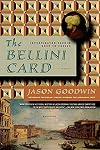
All through the book I felt that I was missing the undercurrents - a typical ugly American being confronted with Eastern subtlety. But if someone more subtle than I can follow the unspoken story, it's no less enjoyable for that. The twists and turns are - there is no other word for it - Byzantine, and the scenic descriptions of both Istanbul and Venice bring a great deal of realism to the story. Recommended for anyone who likes their mysteries with a dash of Eastern spice, a sprinkling of historical fact, and just a pinch of the mysteries of the ages.
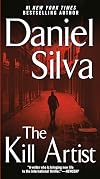
I read about the super talented international spy and assassin, who is also a world famous art restorer, and then I read about the French supermodel who is also secretly an Israeli international spy, and who desperately wants to sleep with the other international spy, and then I decided I'd had enough of Daniel Silva's adolescent fantasies.
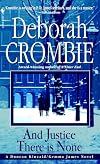
Brilliantly complex. Crombie weaves a complicated plot into a multigenerational cast of characters and yet still comes out making everything seem believable. The main characters, Kincaid and James, continue to be developed into fully three-dimensional beings, and the rather gimmicky habit that the author has of dropping the detectives into a picturesque bit of England doesn't distract from the story. All the clues required to solve the murder don't appear until the last few pages, so there's no real way to guess the murderer, but that's a minor detail in a terrific book.
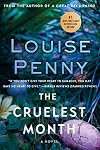
I read the first two books of the series and liked them. They're mysteries with some interesting character development and some neat foreshadowing to a larger story arc that seemed really promising. In this third one, however, over the course of three hundred pages Penny seems to not only try to wrap up every story arc she started, but also slip in a subplot for each one of the many regular characters she's created. The result is a boatload of insufficiently fleshed-out little stories. If they'd been fleshed out over the course of 1000 or 1500 pages, they might have been really good. At the end, every story arc is finished except for one new enemy that is rather clumsily tacked on near the end. Certainly far from a bad book, but could have been so much more. We'll see where the little town of Three Pines goes from here.
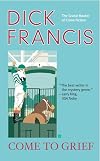
This book is a solid entry in the standard Francis formula, which involves jockeys with mysterious, highly placed enemies, racing grounds and stables, physical abuse, and a love interest. The writing is solid as always; a good way to spend a few hours. Although this is only the third in the Sid Halley series, the books that I've read by Francis always have the same main character. Sometimes his name changes is all.
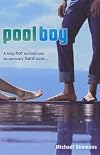
Read this on the recommendation of my 11-year-old, who told me, "Brett and I are a lot alike." without, I believe, understanding the implications of that statement. Brett is self-involved and spoiled, a one-time rich kid who's lost all his money, and the story involves the adult who comes along to teach him about life.
It's a bit of a story about redemption, a Secret Garden updated to the modern age, or a Thief Lord without the magic. I like that Brett doesn't actually have a complete, Scrooge-like change of heart - "From that time forward I became a better person" - but the changes in him are realistic.
The characters and scenario are quite realistic overall. A thoughtful, understated story of growing up in modern-day, upper-class California.
It's a bit of a story about redemption, a Secret Garden updated to the modern age, or a Thief Lord without the magic. I like that Brett doesn't actually have a complete, Scrooge-like change of heart - "From that time forward I became a better person" - but the changes in him are realistic.
The characters and scenario are quite realistic overall. A thoughtful, understated story of growing up in modern-day, upper-class California.
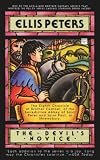
The language in all the Brother Cadfael novels never ceases to boggle my mind. How Peters managed to take modern English and make it sound as if it were straight out of the 12th century is nothing short of amazing. The Devil's Novice is one of the better entries in the series. The history, as always, is fascinating. One day I'll go back and read the entire series in order just so I can follow the ebb and flow of the war between Maud and Stephen. I found the characters to be quite compelling - the pride and stubbornness exhibited by several of them is exactly what I would have expected from a lord of the manor, and while the guilty party was narrowed down to a couple of people early in the story, I was never able to make out the motive until it was revealed, and at that point I felt that it fit together well.
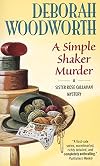
This is the only book in this series I've read, and I suspect more context would have made it more enjoyable. Sister Rose is an eldress of the Shakers (the book is set in 1930's Kentucky) so I suspected she was something of a Brother Cadfael character - a worldly figure drawn to a religious life in later years - but I think instead she's risen through the Shaker ranks after successes in earlier books.
While solving the murder is the main plot, there are subplots involving an invasion of sorts by another Utopian group, and a little girl with a abusive past. The plots all seemed to come together neatly, but only a couple of the characters really seemed authentic to me. This may well have been my fault - I think I'd be more in tune with aliens from Mars than 1930's Shakers. Overall, a solidly written piece of historical detective fiction, and I would be pleased to read more.
While solving the murder is the main plot, there are subplots involving an invasion of sorts by another Utopian group, and a little girl with a abusive past. The plots all seemed to come together neatly, but only a couple of the characters really seemed authentic to me. This may well have been my fault - I think I'd be more in tune with aliens from Mars than 1930's Shakers. Overall, a solidly written piece of historical detective fiction, and I would be pleased to read more.
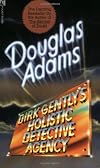
Adams' goals for this book are lofty. He attempts to imbue certain poems of Samuel Taylor Coleridge with clues to not only the origin of life, but possibly also its destruction. He explains the survival of the coelacanth, and the genius of J.S. Bach. He does this with a neat trick, that I can't really remember seeing in any other book: he starts his characters in an alternate universe, and has them go back in time and change the world so that it becomes our world. It's clever, but the issues he attempts to clear up with his trick are, interestingly, not those tackled by a typical time travel writer. Hitler is not covered. Area 51 is not even mentioned. Adams is interested in explaining the mysteries of art, not war. In this he anticipates the Da Vinci Code in a way (although Adams' plot is his own work and not a ripoff of another book, and Adams' book is much better written).
It has its weaknesses, of course, but I think any book about time travel asks for those. "Why didn't they just travel back in time and do X?" the readers cry. I'm sure there were very good answers to all those questions, so I can't help but wonder what we would have seen if Douglas Adams had survived for another few decades. Hitchhiker's is of course brilliant, but the sequels mostly just got sillier. This first book about Dirk is hugely underrated, but the sequel with the lovely title, "The Long, Dark, Teatime of the Soul", doesn't hold up as well. Would he have recovered the brilliance?
Regardless, show more the world lost a wonderful author when Douglas Adams died, and this book is both a worthy memorial and a demonstration of why. show less
It has its weaknesses, of course, but I think any book about time travel asks for those. "Why didn't they just travel back in time and do X?" the readers cry. I'm sure there were very good answers to all those questions, so I can't help but wonder what we would have seen if Douglas Adams had survived for another few decades. Hitchhiker's is of course brilliant, but the sequels mostly just got sillier. This first book about Dirk is hugely underrated, but the sequel with the lovely title, "The Long, Dark, Teatime of the Soul", doesn't hold up as well. Would he have recovered the brilliance?
Regardless, show more the world lost a wonderful author when Douglas Adams died, and this book is both a worthy memorial and a demonstration of why. show less
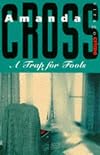
All of Kate Fansler's friends have the exact same voice. They speak with a massively complex sentence structure, are very self-referential and ironic. In short, they speak just as any good professor of English would do.
But one of the main elements of Amanda Cross I enjoy is a sort of literate superiority. In a lot of the earlier books, you definitely get the impression that anyone who didn't know exactly what James Joyce was writing about in Ulysses would never be able to solve the mystery. That feeling doesn't continue through to this book, unless you count Kate's point near the end of the book, that she never would have been able to solve the mystery without focusing on the narrative necessities. Certainly a strategy I've been known to use, but I've not had a character come out quite so bluntly and say it before.
I felt that the story started slowly, but sped up to pace in the middle. There's no ambiguity in the final resolution, although I don't think sufficient clues were provided to solve the mystery. There are many interesting characters, and there's something of a surprise ending that is worthwhile. Even if you've never read Ulysses, this book is a good intellectual read.
But one of the main elements of Amanda Cross I enjoy is a sort of literate superiority. In a lot of the earlier books, you definitely get the impression that anyone who didn't know exactly what James Joyce was writing about in Ulysses would never be able to solve the mystery. That feeling doesn't continue through to this book, unless you count Kate's point near the end of the book, that she never would have been able to solve the mystery without focusing on the narrative necessities. Certainly a strategy I've been known to use, but I've not had a character come out quite so bluntly and say it before.
I felt that the story started slowly, but sped up to pace in the middle. There's no ambiguity in the final resolution, although I don't think sufficient clues were provided to solve the mystery. There are many interesting characters, and there's something of a surprise ending that is worthwhile. Even if you've never read Ulysses, this book is a good intellectual read.