I've read this book once and it is one of my favorite books ever. Rebecca West is a brilliant writer, mostly because she is completely unafraid to tell you what she thinks.
And what she thinks is amazing. She is a remarkably insightful and wise person. She reminds me of Robertson Davies: there is at least one quotable or interesting observation per chapter or even per page.
This is the best of travel writing: fascinating explorations of a place I might never go, combined with a window into a genuinely individual mind. Spend the time with Dame West - it's worth every moment.
And what she thinks is amazing. She is a remarkably insightful and wise person. She reminds me of Robertson Davies: there is at least one quotable or interesting observation per chapter or even per page.
This is the best of travel writing: fascinating explorations of a place I might never go, combined with a window into a genuinely individual mind. Spend the time with Dame West - it's worth every moment.
I love Stephen Fry. I would pay to listen to him read the phone book. And this book is very well written -- it's creative, gripping, and very, very clever.
That said, I found this book disturbing, morally, and here's why. (Spoiler alert.) The main character is able to change history by ensuring that Hitler is never born, and he finds himself in a different world. Of course, history doesn't change much and a different Fuhrer arises in Germany and ultimately takes over all of Europe, after nuking Russia. A key point of the story is that this different Fuhrer does not undertake a Final Solution as Hitler did, but rather expels Europe's Jews to a homeland in Yugoslavia, where they are covertly sterilized through chemicals in the water. In the end, as of of the book's setting in the late 1990s, the Jewish community in Europe is no more.
Those aren't the only differences, as we learn. We also find out that there is an ongoing Cold War between the U.S. and Europe. The United States is technologically more advanced than we are even today, but socially backwards and stuck in the morals of the 1950s. Racist attitudes are acceptable and gay rights unheard of, even criminal.
The drama in the latter part of the book focuses on the protagonist, who has now realized he is gay, trying to re-establish the correct world (our world) in place of the new one in which he has found himself. The final scene is the hero being reunited with his partner in our world in which gay rights and identity show more are respected.
So, here's my problem. At no point does Stephen Fry even discuss the moral relativism of these two worlds, and whether, ultimately, one is preferable to the other. The message of the book is that our world is clearly preferable because we are more socially liberated and tolerant, even though in our world Hitler violently executed 6 million Jews. In essence, the hero trades a world where Jews are exiled and secretly sterilized -- despicable acts, surely, but different from concentration camps and Zyklon-B -- for the world we know today, where whole communities were gassed, shot, beaten, starved, or simply worked to death, and (here's the important part) *he never even considers it.* In essence, the end message is that a world that is tolerant of gay rights is preferable to any other, regardless of what happens in that world. To be clear, the greatest moral crime -- Germany's nuclear attack on Russia -- is only mentioned once, and doesn't figure into our hero's actions at all. Too bad.
I couldn't put it down while I was reading it, but now I'm not sure I'm happy that I did. show less
That said, I found this book disturbing, morally, and here's why. (Spoiler alert.) The main character is able to change history by ensuring that Hitler is never born, and he finds himself in a different world. Of course, history doesn't change much and a different Fuhrer arises in Germany and ultimately takes over all of Europe, after nuking Russia. A key point of the story is that this different Fuhrer does not undertake a Final Solution as Hitler did, but rather expels Europe's Jews to a homeland in Yugoslavia, where they are covertly sterilized through chemicals in the water. In the end, as of of the book's setting in the late 1990s, the Jewish community in Europe is no more.
Those aren't the only differences, as we learn. We also find out that there is an ongoing Cold War between the U.S. and Europe. The United States is technologically more advanced than we are even today, but socially backwards and stuck in the morals of the 1950s. Racist attitudes are acceptable and gay rights unheard of, even criminal.
The drama in the latter part of the book focuses on the protagonist, who has now realized he is gay, trying to re-establish the correct world (our world) in place of the new one in which he has found himself. The final scene is the hero being reunited with his partner in our world in which gay rights and identity show more are respected.
So, here's my problem. At no point does Stephen Fry even discuss the moral relativism of these two worlds, and whether, ultimately, one is preferable to the other. The message of the book is that our world is clearly preferable because we are more socially liberated and tolerant, even though in our world Hitler violently executed 6 million Jews. In essence, the hero trades a world where Jews are exiled and secretly sterilized -- despicable acts, surely, but different from concentration camps and Zyklon-B -- for the world we know today, where whole communities were gassed, shot, beaten, starved, or simply worked to death, and (here's the important part) *he never even considers it.* In essence, the end message is that a world that is tolerant of gay rights is preferable to any other, regardless of what happens in that world. To be clear, the greatest moral crime -- Germany's nuclear attack on Russia -- is only mentioned once, and doesn't figure into our hero's actions at all. Too bad.
I couldn't put it down while I was reading it, but now I'm not sure I'm happy that I did. show less
Excellent. For fans of Earley's Jim the Boy series, this collection includes several stories from Jim' perspective. This is slightly different from the actual novels and is a neat window into an author's creative process, as well as a chance to spend a little more time with Jim, his mother, and his indelible uncles Zeno, Al, and Coran.
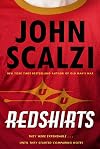
A slightly more thoughtful take on Galaxy Quest, but only slightly. Made little sense. Would have given it one star but Scalzi's tone is infectious and the parts I could bear to read made me laugh out loud twice.
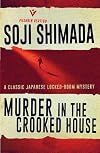
“But it was a knife.”
“It was a knife *inside an icicle*.”
Ridiculous. This is barely a novel - poor characterizations and a completely unbelievable motive. It really just the author f***ing with the audience: indeed, after daring the reader to solve the mystery, he admits later he left one detail out. Nice.
I gave it two stars instead of one only because it kept me reading to find out what possible explanation could link all the details.
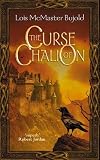
This is a perfect fantasy book. Tightly plotted, vivid characters, and a thought-provoking spiritual concept. It's worth every minute. Lois McMaster Bujold made her name with books about some guy named Vorkosigan. Those are very, very good, but this is her best.
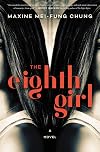
I started with four stars because this is a propulsive read, full of tension, and I respected (or so I thought) the author's clear expertise with the subject matter and the way she used it to create a compelling story.
I then gave it one star because the entire twist--Anna, Ella, and Grace are actually additional personalities of Alexa's--is completely unbelievable. Again, I wanted to give the author credit and assume that this could actually happen with someone with DID, but the execution is poor and inconsistent and clearly done for shock value. I went back and reread parts again and--even being willing to suspend some disbelief--the conceit doesn't always hold up. Some examples:
-- Alexa watches Ella have sex with Navid *through a window.* If they are the same person, how?
-- Alexa and Ella have a threesome with Shaun in which Alexa describes performing on Ella. How?
--Anna is described as having blonde hair. If she is the same person as Alexa, who is of Chinese descent, how? Is Alexa wearing a wig? In one scene Alexa describes leaving the home she shares with Anna while Anna is sitting and watching TV -- how?
-- When Ella and Alexa meet in public and argue in a cafe, is she talking out loud?
-- Ella and Grace have an argument in front of Alexa where Grace "shoulders" past Ella in her room and slams the door,
-- Anna is dating a guy named Ray, who appears to be real. If so, then how does this work? Alexa is working as a photojournalist, and seeing a psychiatrist, while Ella is working as a club as a sex worker, while Anna is working in an office and meeting Ray. When does she sleep?
-- Ella leaves voicemails for Alexa. How? Why? Does Alexa have two different phones?
-- Why is this book called the Eighth Girl when there are at least *nine* personalities: (1) Alexa, (2) Ella, (3) Grace, (4) Anna, (5) Runner, (6) Dolly, (7) Oneiroi, (8) Flo, and (9) the Fouls?
Setting these points aside, the book also completely fails to follow through on the subplots of Alexa getting raped or Alexa's tryst with Robin. Finally, there's Daniel, who is a complete sadsack and really contributes nothing to the book. Daniel's role is apparently to ramp up the tension by worrying about Alexa and also to show us how difficult it is to be a psychiatrist, which feels unnecessary and self-serving.
Now, if the book had been written so that Daniel had had a previous experience working with a client ("Jane Doe") who had DID that went badly, then the author could have used Daniel's reminiscing about his time with that client to show the reader how DID actually works, and also to provide a baseline for the risk Alexa is facing. That would have been more effective. It also could have given the author the ability to insert little clues along the way, i.e., Daniel recalling that when Jane Doe switched personalities, X happened, and then showing us Alexa doing X . Finally, a little more misdirection and vagueness in some of the interactions among the members of the Flock would be more consistent and, ultimately, clever.
Bottom line: a catchy, thrilling read but one that is deeply flawed by trying to make too much of a shock twist.