Very entertaining and informative, with the right mixture of history, anecdote and personal memoir. However, it really does need some pictures of the statues, landmarks and photographs being discussed. Two chapters discuss particular iconic photographs but even these are not included.
The genius of this book is that, while it starts out as an irreverent take on war, full of black and absurdist humour (almost too absurd to take seriously), by book's end the brutal accounting and emotion of Heller's writing takes the reader by the throat. I particularly admire how the author withholds the complete details of crucial incidents in Yossarian's life until the very end, where full the visceral horror of war is on display.Also worth noting that Catch 22, for me, is one of those rare books that have both a memorable first AND last lines.

Rather than a traditional novel in structure, this is a collection of subtly linked fictional field reports filed in the years following the global war against zombies.The book's strength is how well it passes the suspension of disbelief test, and it does so with great verve. The author's skill is in creating a world so full of detail and character that the reader can be quite happily absorbed into this alternate universe where humanity nearly came to an end without ever reading a false note that would take them out of their fictional revelry.And because it is all about zombies after all, there is plenty of wry and black humour to keep things entertaining. Through his various zombie books, Max Brooks has clearly given this scenario a great deal of thought, from the implications for military tactics right through to psychological, ecological and geo-political impacts.When the zombie apocalypse does arrive, rest assured no writer will leave you better prepared for Zack- physically, emotionally and intellectually - than Max Brooks. And no writer will entertain you more in the process.
Cricket's Strangest Matches: Extraordinary But True Stories from Over a Century of Cricket (Strangest series) by Andrew Ward
Genuinely fascinating reading, but some printing / typo errors in some of the cricket match scorecards let the book down.
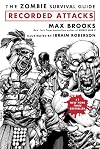
Vivid and finely detailed black and white drawings. Deadly serious about it's subject matter - great fun.
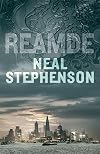
Hugely enjoyable and diverting - though not quite up to the perfection of Cryptonomicon or Quicksilver. Took off half a star for the repetitious device of once having described a scene, then having another character re-describe that scene as they figure out what happened in their absence. Nonetheless, Stephenson continues with his amazing ability to both keep the pace and offer entertaining digressions along the way. No detail escapes this author.

Having read John Bailey's excellent book Mr Stuart's Track, I was eager to read his latest book. Again he has chosen an Australian explorer, this time the famous and enigmatic Ludwig Leichhardt., and again he has done a masterful job.
The disappearance without trace of Leichhardt's 1848 expedition is one of the enduring mysteries of Australian history,and the author is clever in beginning the book with a brief account of that expedition. Read it and you will find it difficult not to carry on reading the whole book, such is the skill behind the kind of narrative history John Bailey writes.
Of course, the greatest event of Leichhardt's life was not that final ill-fated expedition of 1848, but his triumphant overland journey of1844-45. Making extensive use of diaries and published accounts, Bailey recreates all the struggles, setbacks, infighting and sheer exhausting hard work of that trip. The decision to rely so heavily on Leicchardt's words is a wise one, since Leichhardt himself is an observant and passionate writer. This is a full account of a life, not just the expeditions in Australia, and what emerges from this study of Leichhardt's life is that the character of the man is just as great a mystery as his fate. Although highly intelligent, widely read and a skilled scientist, Leichhardt clearly had great difficulties being a leader of men on the three expeditions he led. So it is no surprise that Bailey focuses as much attention on the interpersonal problems that plagued show more the expeditions as he does on the physical challenges, such as heat, hunger and disease.
I recommend this book to anyone who wants to get a clear picture of just how epic the challenges were for men of determination such as Leichhardt. Seemingly simple setbacks such as horses or cattle wandering off during the night could become interminably long sagas as the expeditioners tracked their lost animals for days or even weeks, halting all progress on their journey, all the while consuming supplies and succumbing to ill health and sickness. I was almost nauseous when reading the detailed accounts of the failed second expedition's encounter with constant rain and sickness, to which all men on the journey succumbed at one time or another.The author surmises such sickness was caused by unsanitary slaughtering and cooking practices, as the following graphic passage illustrates -
"Leichhardt's party was camped on a patch of mud surrounded by the strewn bones and rotting flesh of slaughtered animals. Over time the carcasses mounted up into what Leichhardt described at Charleys Creek as a 'charnel house of killed goats and sheep'. Flies and maggots swarmed over strips of exposed meat. Dogs roamed the camp and nearby was a diarrhoea-ridden latrine. The entrails of sheep and goats, resrved for the dogs, were packed in sacks ans stored next to meat for human consumption. At the call for supper men often walked directly from the toilet or from tending their horses and cattle without a thought to washing their hands. preparing food over an open fire meant the meat was often undercooked. Flies were a constant accompaniment to any meal. In short, the camp was a perfect breeding environment for the salmonella bacteria." (p.286) show less
The disappearance without trace of Leichhardt's 1848 expedition is one of the enduring mysteries of Australian history,and the author is clever in beginning the book with a brief account of that expedition. Read it and you will find it difficult not to carry on reading the whole book, such is the skill behind the kind of narrative history John Bailey writes.
Of course, the greatest event of Leichhardt's life was not that final ill-fated expedition of 1848, but his triumphant overland journey of1844-45. Making extensive use of diaries and published accounts, Bailey recreates all the struggles, setbacks, infighting and sheer exhausting hard work of that trip. The decision to rely so heavily on Leicchardt's words is a wise one, since Leichhardt himself is an observant and passionate writer. This is a full account of a life, not just the expeditions in Australia, and what emerges from this study of Leichhardt's life is that the character of the man is just as great a mystery as his fate. Although highly intelligent, widely read and a skilled scientist, Leichhardt clearly had great difficulties being a leader of men on the three expeditions he led. So it is no surprise that Bailey focuses as much attention on the interpersonal problems that plagued show more the expeditions as he does on the physical challenges, such as heat, hunger and disease.
I recommend this book to anyone who wants to get a clear picture of just how epic the challenges were for men of determination such as Leichhardt. Seemingly simple setbacks such as horses or cattle wandering off during the night could become interminably long sagas as the expeditioners tracked their lost animals for days or even weeks, halting all progress on their journey, all the while consuming supplies and succumbing to ill health and sickness. I was almost nauseous when reading the detailed accounts of the failed second expedition's encounter with constant rain and sickness, to which all men on the journey succumbed at one time or another.The author surmises such sickness was caused by unsanitary slaughtering and cooking practices, as the following graphic passage illustrates -
"Leichhardt's party was camped on a patch of mud surrounded by the strewn bones and rotting flesh of slaughtered animals. Over time the carcasses mounted up into what Leichhardt described at Charleys Creek as a 'charnel house of killed goats and sheep'. Flies and maggots swarmed over strips of exposed meat. Dogs roamed the camp and nearby was a diarrhoea-ridden latrine. The entrails of sheep and goats, resrved for the dogs, were packed in sacks ans stored next to meat for human consumption. At the call for supper men often walked directly from the toilet or from tending their horses and cattle without a thought to washing their hands. preparing food over an open fire meant the meat was often undercooked. Flies were a constant accompaniment to any meal. In short, the camp was a perfect breeding environment for the salmonella bacteria." (p.286) show less
Have you ever read a book composed entirely of questions? Would you consider reading such a book? If I told you that there is indeed such a book called The Interrogative Mood : a novel? by Padgett Powell and that is contains nothing but 164 pages of questions, would that further entice you to read it? What if I quoted the opening paragraph?
“Are your emotions pure? Are your nerves adjustable? How do you stand in relation to the potato? Should it still be Constantinople? Does a nameless horse make you more nervous or less nervous than a named horse? In your view, do children smell good? If before you know, would you eat animal crackers? Could you lie down and take a rest on the sidewalk? Did you love your mother and father, and do Psalms do it for you? If you are relegated to last place in every category, are you bothered enough to struggle up? Does your doorbell ever ring? Is there sand in your craw? Could Mendeleyev place you correctly in a square on a chart of periodic identities, or would you resonate all over the board? How many push-ups can you do?” (p.1)
Still not convinced that this is a book worth your time? What if said that, given most good literature is mostly about an author asking questions of his or her reader, then a book full of questions for the reader to ponder is surely this uncontroversial idea taken to its logical extreme?
If I employ nothing questions to review a book that is nothing but questions, is that tribute, plagiarism or just annoying? Am I show more doing the author a disservice? Are you now convinced to read The Interrogative Mood? Can I quote another passage; one that I feel better shows the surprising depth of the book?
“Do you like to listen to weather broadcasts or do you just like to see, in uncoached anticipation, weather happen? Will you be saddened that you life has been minor if in fact it has been minor? Is there anything you might do today that would distinguish you from being just a vessel of consumption and pollution with a proper presence in the herd? Have you ever spent time in the house of a recently deceased old woman and seen her Siamese-cat needlepoints and her baking supplies and her shoes and her inspirational sayings on the wall? Do you realize that people move on steadily, even arguably bravely, unto the end, stunned and more stunned, and numbed and more numbed, by what has happened to them and not happened to them? Have you ever heard the saying, Life is a sandwich of activity between two periods of bed-wetting” (p. 28)
Does a book composed of questions, and nothing but questions, end up saying more about the author or the reader? Wouldn’t you like to find out? show less
“Are your emotions pure? Are your nerves adjustable? How do you stand in relation to the potato? Should it still be Constantinople? Does a nameless horse make you more nervous or less nervous than a named horse? In your view, do children smell good? If before you know, would you eat animal crackers? Could you lie down and take a rest on the sidewalk? Did you love your mother and father, and do Psalms do it for you? If you are relegated to last place in every category, are you bothered enough to struggle up? Does your doorbell ever ring? Is there sand in your craw? Could Mendeleyev place you correctly in a square on a chart of periodic identities, or would you resonate all over the board? How many push-ups can you do?” (p.1)
Still not convinced that this is a book worth your time? What if said that, given most good literature is mostly about an author asking questions of his or her reader, then a book full of questions for the reader to ponder is surely this uncontroversial idea taken to its logical extreme?
If I employ nothing questions to review a book that is nothing but questions, is that tribute, plagiarism or just annoying? Am I show more doing the author a disservice? Are you now convinced to read The Interrogative Mood? Can I quote another passage; one that I feel better shows the surprising depth of the book?
“Do you like to listen to weather broadcasts or do you just like to see, in uncoached anticipation, weather happen? Will you be saddened that you life has been minor if in fact it has been minor? Is there anything you might do today that would distinguish you from being just a vessel of consumption and pollution with a proper presence in the herd? Have you ever spent time in the house of a recently deceased old woman and seen her Siamese-cat needlepoints and her baking supplies and her shoes and her inspirational sayings on the wall? Do you realize that people move on steadily, even arguably bravely, unto the end, stunned and more stunned, and numbed and more numbed, by what has happened to them and not happened to them? Have you ever heard the saying, Life is a sandwich of activity between two periods of bed-wetting” (p. 28)
Does a book composed of questions, and nothing but questions, end up saying more about the author or the reader? Wouldn’t you like to find out? show less
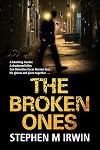
Very evocative genre-bending ghost story / crime thriller. However, I feel the adherence to familiar techniques of crime fiction is at the expense of the horror and ghost elements at times. If you are fan of detective fiction but would never consider the horror genre, then this novel might just be the crossover story for you. I'm a fan of dystopian fiction, and the world where everyone has a ghost following them (causing much social and economic chaos) is expertly rendered. Certainly this novel will make me keep an eye out for Stephen M. Irwin's next book, just to see what his imagination comes up with.
"Everyone who has anything good in their life has it because of someone else's suffering" (Bette, p.91)
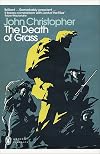
One of the classic 'floral apocalypse' novels of the post-war sci-fi era. All species of grass - including wheat, rice, rye, barley, pretty much all the staples of civilisation - die out following a global virus outbreak. The story follows a band of people, led by John Custance as they make their way from London through the barren English countryside toward the promise of a relatively fertile and fortified rural sanctuary owned by John's brother David.
The Death of Grass was first published in 1956, two years after William Golding's Lord of Flies and five years after John Wyndham's Day of the Triffids. I mention these two books because, while the scenario of Death of Grass is similar to that of Day of the Triffids -the breakdown of society in response to an apocalyptic event - the author's take on how crisis influences human behaviour is closer to that of Lord of the Flies. In other words, we witness the less attractive, though more pragmatic side of human nature.
In the excellent introduction to the book, Robert MacFarlane makes the point that, like Lord of the Flies before it, The Death of Grass demolishes the notion that England could be relied upon to be a bastion of civility and upholder of morals when global disaster strikes.Such ideas, coming so soon after the Allies victory over the evils of Nazism a decade before, must have been quite confronting at the time.
What makes Death of Grass still compelling to read more than half a century later is the skill with which show more the author describes the unravelling of a civil, at times apathetic, society and the radical changes this imposes upon the moral outlook of ordinary law-abiding citizens. John Custance realises pretty quickly that he must make some unholy alliances in order to prevail.
The Death of Grass is speculative fiction at its best, for it not only poses the question Could this happen?, but asks of the reader What would you do? show less
The Death of Grass was first published in 1956, two years after William Golding's Lord of Flies and five years after John Wyndham's Day of the Triffids. I mention these two books because, while the scenario of Death of Grass is similar to that of Day of the Triffids -the breakdown of society in response to an apocalyptic event - the author's take on how crisis influences human behaviour is closer to that of Lord of the Flies. In other words, we witness the less attractive, though more pragmatic side of human nature.
In the excellent introduction to the book, Robert MacFarlane makes the point that, like Lord of the Flies before it, The Death of Grass demolishes the notion that England could be relied upon to be a bastion of civility and upholder of morals when global disaster strikes.Such ideas, coming so soon after the Allies victory over the evils of Nazism a decade before, must have been quite confronting at the time.
What makes Death of Grass still compelling to read more than half a century later is the skill with which show more the author describes the unravelling of a civil, at times apathetic, society and the radical changes this imposes upon the moral outlook of ordinary law-abiding citizens. John Custance realises pretty quickly that he must make some unholy alliances in order to prevail.
The Death of Grass is speculative fiction at its best, for it not only poses the question Could this happen?, but asks of the reader What would you do? show less

A very thoughtful and moving account by philosopher Ramond Gaita of his father's struggles with poverty, migration and mental illness (both his own and his first wife's). The narrative style is very simple and matter-of-fact, but the depth of thought shines through. Not quite a conventional biography, more an account of a moral life, a son's homage to his father's great compassion and integrity of character in the face of adversity. Also a vivid picture of migrant life in post-war Victoria.
" [...] tragedy, with its calm pity for the affliction it depicts, was the genre that first attracted my passionate allegiance: I recognised in it the concepts that had illuminated the events of my childhood. They enabled me to see Mitru, my mother, my father and Vacek, living among his boulders, as the victims of misfortune, in their different ways broken by it, but never thereby diminished." (p.124)
This book deserves to sit alongside other Australian classics of biography like A. B. Facey's A Fortunate Life
" [...] tragedy, with its calm pity for the affliction it depicts, was the genre that first attracted my passionate allegiance: I recognised in it the concepts that had illuminated the events of my childhood. They enabled me to see Mitru, my mother, my father and Vacek, living among his boulders, as the victims of misfortune, in their different ways broken by it, but never thereby diminished." (p.124)
This book deserves to sit alongside other Australian classics of biography like A. B. Facey's A Fortunate Life

What makes you pick up and read a book? Recommendations from trusted friends and colleagues probably count the most. But sometimes all it takes is a single sentence read by chance in a newspaper. Discussing the Miles Franklin nominees last month, Stephen Romei said of debut author Jon Bauer’s Rocks in the Belly -
“… It is one of the most unsettling novels I have read in a while, with an emotional sharpness that hurt.” (The Australian, 12 March, 2011)
Unsettling. That intrigued me. I had to read this book.
And be warned, Rocks in the Belly is unsettling. Also confronting, unpleasant and laced with anger. It is also beautifully written, sensitive and wise, intensely sad and even funny at the right moments.
Rocks in the Belly is told in two distinct voices that narrate events in alternate chapters – that of an 8 year old boy living with his parents, and that of the same boy, but 20 years later, now a grown man returned home to Australia to care for his dying mother.
The boy is an only child, his parents passionate foster carers, particularly his mother. It becomes evident in the early chapters that this little boy, although quite sensitive and intelligent, is struggling to cope with the attention given to the foster boys that he is forced to share his parents and his home with. Pressures build to breaking point when Robert, the latest (and last) foster boy, arrives and forms a close bond with the mother. A terrible event ensues, shattering the family and forever show more scarring the emotional life of the boy.
As a man, he is returning home to the truth of what that eight year old child has made him into. Coming home brings out his anger and his darkest compulsions, all the time when he is confronting the responsibility of being carer to his mother, the very same woman who was carer to him in those fraught years of his childhood.
This did indeed unsettle me. But there is much skill and beauty in Bauer’s prose, particularly the amazing job he has done of voicing an 8 year old boy. I did laugh. I even shed a tear (at around page 275, you’ll understand if you read the book). This is a book to make you feel and think with equal intensity. show less
“… It is one of the most unsettling novels I have read in a while, with an emotional sharpness that hurt.” (The Australian, 12 March, 2011)
Unsettling. That intrigued me. I had to read this book.
And be warned, Rocks in the Belly is unsettling. Also confronting, unpleasant and laced with anger. It is also beautifully written, sensitive and wise, intensely sad and even funny at the right moments.
Rocks in the Belly is told in two distinct voices that narrate events in alternate chapters – that of an 8 year old boy living with his parents, and that of the same boy, but 20 years later, now a grown man returned home to Australia to care for his dying mother.
The boy is an only child, his parents passionate foster carers, particularly his mother. It becomes evident in the early chapters that this little boy, although quite sensitive and intelligent, is struggling to cope with the attention given to the foster boys that he is forced to share his parents and his home with. Pressures build to breaking point when Robert, the latest (and last) foster boy, arrives and forms a close bond with the mother. A terrible event ensues, shattering the family and forever show more scarring the emotional life of the boy.
As a man, he is returning home to the truth of what that eight year old child has made him into. Coming home brings out his anger and his darkest compulsions, all the time when he is confronting the responsibility of being carer to his mother, the very same woman who was carer to him in those fraught years of his childhood.
This did indeed unsettle me. But there is much skill and beauty in Bauer’s prose, particularly the amazing job he has done of voicing an 8 year old boy. I did laugh. I even shed a tear (at around page 275, you’ll understand if you read the book). This is a book to make you feel and think with equal intensity. show less

Informative companion to A. B. Facey's autobiography "A Fortunate Life". The author's focus is on the social history of the pioneering days of Australia and his explanation of social mores and government actions of the time help explain some of the events related in Facey's book, including the behaviour of Facey's mother, which to modern minds seems cruel.
Also provides commentary on some of the 'unspoken' aspects of Facey's world, such as white settler interaction with Aboriginal Australians in the Western Australian cattle / droving industry.
Also provides commentary on some of the 'unspoken' aspects of Facey's world, such as white settler interaction with Aboriginal Australians in the Western Australian cattle / droving industry.

This book has been on my "must read" list for a long time, if only for the fact that everyone around me has read it, never mind its canonical status in Australian literature.
A Fortunate Life is an epic yarn of one man's life, simply told, from the horrors of his mistreatment as a child farm worker to the even greater horrors of his experiences at Gallipoli in World War One. Yet the horrors are leavened with stories of humour and great achievement in farming the unforgiving country of rural Western Australia, raising a big family during the Depression and teaching himself to read and write.
The standout chapters for me were the author's recollections of his six months on a cattle drive through central Western Australia in 1909. when he was not yet 15 years old. This included a harrowing week lost and alone in the bush, surviving on grass and scavenged kangaroo meat, culminating in an encounter with Aboriginal Australians that not only saved his life but altered his perceptions.
Facey genuinely feels "thrilled" looking back on his life, despite the terrible hardships endured, because he relished a challenge and never faltered in his belief at "having a go at something", always "ready to take a risk and try something new. If it worked out, well good, if not I would just try something else."
A few chapters into this book and I was shaking my head, asking myself "How much more can this bloke stand?" I was amazed at his resilience, not just in surviving but in creating such a full show more and fulfilling life.
Highly recommended. A must read, that's if you haven't read it already. show less
A Fortunate Life is an epic yarn of one man's life, simply told, from the horrors of his mistreatment as a child farm worker to the even greater horrors of his experiences at Gallipoli in World War One. Yet the horrors are leavened with stories of humour and great achievement in farming the unforgiving country of rural Western Australia, raising a big family during the Depression and teaching himself to read and write.
The standout chapters for me were the author's recollections of his six months on a cattle drive through central Western Australia in 1909. when he was not yet 15 years old. This included a harrowing week lost and alone in the bush, surviving on grass and scavenged kangaroo meat, culminating in an encounter with Aboriginal Australians that not only saved his life but altered his perceptions.
Facey genuinely feels "thrilled" looking back on his life, despite the terrible hardships endured, because he relished a challenge and never faltered in his belief at "having a go at something", always "ready to take a risk and try something new. If it worked out, well good, if not I would just try something else."
A few chapters into this book and I was shaking my head, asking myself "How much more can this bloke stand?" I was amazed at his resilience, not just in surviving but in creating such a full show more and fulfilling life.
Highly recommended. A must read, that's if you haven't read it already. show less
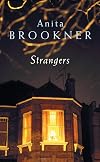
Before picking this book up, I knew little of Anita Brookner except that she won a Booker for her much earlier novel Hotel du Lac. So I am grateful for Greg Sheridan’s interesting column in The Austalian of 16th October, 2010, recommending novels that deal with the unpopular subject of old age. Strangers was one such novel.
Paul Sturgis is 72, retired, lives alone in his London flat and has neither family nor intimate friendships. He occupies his time with routine, travel, cultural pursuits and rumination, a”life of the mind” as he calls it. He cites Proust, James and Stendhal as great comforts and guides in such a life, bulwarks against meaningless solitude. But he ponders his mortality and fears a lonely future, imagining who will be there for him when he nears the end.
Into this solitary - if well provided for - existence enters two women who shake his stable world – Vicky, a 50-something divorcee he meets while holidaying in Venice, and Sarah, an old flame he once had a love affair with, now recently widowed.
Vicky forthrightly and casually insinuates herself into his life, though her unpredictability irks Pauls’ lifelong sense of routine and properness, while Sarah, a fragile shadow of the vivacious and demading lover he once knew, seems to promise the kind of dull domestic companionship an aging man might appreciate as he advances in years.
What follows are a series of dinner dates, visits and favours big and small that Paul carries out for the two women as he show more ponders making changes in his life. While he values companionship and conversation, a more permanent arrangement with either woman presents a dilemma for Sturgis, as his life hitherto has been one of control and independence,. Previous relationships with women had ended unsatisfactorily and his parents own loveless marriage, their life of endurance rather than excitement, still haunts him. His decision comes on the final page.
I was surprised at how much I enjoyed this. It is a fine psychological novel that addresses loneliness and mortality. A simple plot belies its philosophical depth. The universal question of "How is one to live?" poses many dilemmas when it is pondered by a character such as Paul Sturgis, with the vast bulk of his life already behind him. Brookner deftly shows that regardless of the quantity of life left to live, the importance of the question does not diminish.
Although this book addresses a pretty bleak subject, it is actually refreshing to read literature that sets out to address the human condition - in this case old age and loneliness - rather than seeking to divert us with whodunnits or vampires. The value of this book lies in how it makes you think of other life experiences, rather than how fast it compels one to turn the pages. Many reviewers have said Hotel du Lac is a superior book, so I will read it next. show less
Paul Sturgis is 72, retired, lives alone in his London flat and has neither family nor intimate friendships. He occupies his time with routine, travel, cultural pursuits and rumination, a”life of the mind” as he calls it. He cites Proust, James and Stendhal as great comforts and guides in such a life, bulwarks against meaningless solitude. But he ponders his mortality and fears a lonely future, imagining who will be there for him when he nears the end.
Into this solitary - if well provided for - existence enters two women who shake his stable world – Vicky, a 50-something divorcee he meets while holidaying in Venice, and Sarah, an old flame he once had a love affair with, now recently widowed.
Vicky forthrightly and casually insinuates herself into his life, though her unpredictability irks Pauls’ lifelong sense of routine and properness, while Sarah, a fragile shadow of the vivacious and demading lover he once knew, seems to promise the kind of dull domestic companionship an aging man might appreciate as he advances in years.
What follows are a series of dinner dates, visits and favours big and small that Paul carries out for the two women as he show more ponders making changes in his life. While he values companionship and conversation, a more permanent arrangement with either woman presents a dilemma for Sturgis, as his life hitherto has been one of control and independence,. Previous relationships with women had ended unsatisfactorily and his parents own loveless marriage, their life of endurance rather than excitement, still haunts him. His decision comes on the final page.
I was surprised at how much I enjoyed this. It is a fine psychological novel that addresses loneliness and mortality. A simple plot belies its philosophical depth. The universal question of "How is one to live?" poses many dilemmas when it is pondered by a character such as Paul Sturgis, with the vast bulk of his life already behind him. Brookner deftly shows that regardless of the quantity of life left to live, the importance of the question does not diminish.
Although this book addresses a pretty bleak subject, it is actually refreshing to read literature that sets out to address the human condition - in this case old age and loneliness - rather than seeking to divert us with whodunnits or vampires. The value of this book lies in how it makes you think of other life experiences, rather than how fast it compels one to turn the pages. Many reviewers have said Hotel du Lac is a superior book, so I will read it next. show less
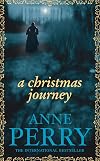
I read this purely to experience something "outside my comfort zone", that is, a genre or author I would not usually find appealing or interesting. Anne Perry is well known as a writer of Victorian era crime novels - certainly not my genre of reading choice. And, ever since 2003, she has released one of these little Victorian "Christmas" novels every year. Again, not my natural choice of reading, if only because I have always regarded such slender seasonal offerings as little more than clever marketing exercises foisted upon writers by their publishers.
Having said all that, this novella was quite enjoyable. Although the Christmas message of forgiveness reads a bit like an afterthought tacked onto the end (indeed, it is not really integral to the story, nor to the actions and motives of the characters), the story is enough to keep the reader interested for 124 pages.
Despite my reservations about these Christmas story enterprises by publishers, this book is nonetheless well written. Clearly Anne Perry has a keen interest in the social strictures of mid Victorian Britain and this is reflected in her detailed attention to the language and gestures of her characters. She communicates effectively the serious social consequences that could ensue from a mere few thoughtless words expressed in polite company. Whether this accurately reflects the reality of Victorian manners and mores is a matter fro scholars to comment on. For me, it seemed authentic enough, certainly quite alien show more from 21st century society . And the narration of the two main characters' arduous journey through a Scottish winter on horseback was vividly rendered.
At the very least, this book would make me consider reading one of Anne Perry's substantive crime fictions. show less
Having said all that, this novella was quite enjoyable. Although the Christmas message of forgiveness reads a bit like an afterthought tacked onto the end (indeed, it is not really integral to the story, nor to the actions and motives of the characters), the story is enough to keep the reader interested for 124 pages.
Despite my reservations about these Christmas story enterprises by publishers, this book is nonetheless well written. Clearly Anne Perry has a keen interest in the social strictures of mid Victorian Britain and this is reflected in her detailed attention to the language and gestures of her characters. She communicates effectively the serious social consequences that could ensue from a mere few thoughtless words expressed in polite company. Whether this accurately reflects the reality of Victorian manners and mores is a matter fro scholars to comment on. For me, it seemed authentic enough, certainly quite alien show more from 21st century society . And the narration of the two main characters' arduous journey through a Scottish winter on horseback was vividly rendered.
At the very least, this book would make me consider reading one of Anne Perry's substantive crime fictions. show less
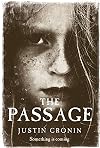
This is a worthy addition to the genre of post-apocalyptic horror fiction.
While it is a very original and richly detailed take on the genre, readers will recognise familiar elements from other modern classics. The creatures reminded me mostly of The Time Machine's Morlocks, but with a vampire twist, while the narrative of an epic journey across an American wasteland is reminiscent of The Stand, The Road and The Pesthouse.
Some of the scenes of attacks by the "virals" on humans (particularly in the latter sections of the novel) lurch into conventional suspenseful fiction cliche, but it's the patient accumulation of detail and backstory that makes this book worth the 700 plus pages.
If I ever found myself wanting to skip pages, it wasn't because I was bored, but I wanted to return to one of the parallel stories to see what was happening, such is the author's deft hand at structuring several story lines - often across several decades of events - into a coherent whole.
Don't let the length of the book put you off - the build up to the truly apocalyptic event at the centre of the story is very well done, the sense of dread never letting up. The journeys of the bands of human survivors across America are wrought with fine attention to detail - the reader gets a solid impression of what has been lost and what can be salvaged from an utterly transformed civilisation.
A wonderfully creepy book for late night reading ("lights out" takes on a whole new, sinister meaning having read show more this!), although it does tire your arms holding up a brick of a book like this. A good argument for an ebook. show less
While it is a very original and richly detailed take on the genre, readers will recognise familiar elements from other modern classics. The creatures reminded me mostly of The Time Machine's Morlocks, but with a vampire twist, while the narrative of an epic journey across an American wasteland is reminiscent of The Stand, The Road and The Pesthouse.
Some of the scenes of attacks by the "virals" on humans (particularly in the latter sections of the novel) lurch into conventional suspenseful fiction cliche, but it's the patient accumulation of detail and backstory that makes this book worth the 700 plus pages.
If I ever found myself wanting to skip pages, it wasn't because I was bored, but I wanted to return to one of the parallel stories to see what was happening, such is the author's deft hand at structuring several story lines - often across several decades of events - into a coherent whole.
Don't let the length of the book put you off - the build up to the truly apocalyptic event at the centre of the story is very well done, the sense of dread never letting up. The journeys of the bands of human survivors across America are wrought with fine attention to detail - the reader gets a solid impression of what has been lost and what can be salvaged from an utterly transformed civilisation.
A wonderfully creepy book for late night reading ("lights out" takes on a whole new, sinister meaning having read show more this!), although it does tire your arms holding up a brick of a book like this. A good argument for an ebook. show less
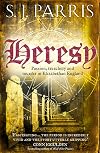
Not so much a historical novel as a crime novel given a historical veneer. While this book fairly rattles along as a murder mystery, the inclusion of historical figure Giordano Bruno as the sleuth is somewhat underutilised.
We get some of the facets of Bruno's life and intellectual interests, but this effort pales in comparison to superb novels such as Wolf Hall and The Name of the Rose.
Nonetheless, the story has piqued my interest in the religious schisms of 16th Century England. To the writer's credit, while the murder mystery is resolved, the reader is left with some questions to ponder about the tragic extent of bloodshed associated with religious conflict and the deeply personal struggles that individuals must contest with in choosing faith over filial love.
We get some of the facets of Bruno's life and intellectual interests, but this effort pales in comparison to superb novels such as Wolf Hall and The Name of the Rose.
Nonetheless, the story has piqued my interest in the religious schisms of 16th Century England. To the writer's credit, while the murder mystery is resolved, the reader is left with some questions to ponder about the tragic extent of bloodshed associated with religious conflict and the deeply personal struggles that individuals must contest with in choosing faith over filial love.
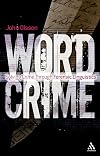
Readers who enjoy books about the English language will derive some pleasure from this book - for it focuses on the precise application of linguistics to crime solving - while lovers of the true crime genre might be somewhat disappointed that the names and locations of the cases have been changed to protect the innocent.
The writing style of the author tends to be a bit dry and technical, but this appears to be from a need for the author to simply state the facts of each case and stick to linguistics, rather than try his hand at popular psychology or amateur criminal profiling. Although such conscious avoidance of luridness might go against the grain of some pop true crime works, it is clear the author wishes to uphold the reputation of his profession.
But don't be put off - the book is divided into 23 chapters, one chapter for each different case, so this is a book that can be dipped in and out of on a chapter by chapter basis. Two standout chapters are "Is the Da Vinci Code Plagiarism?" and "Murder or Suicide?". Although Olsson wants the reader to decide for his/her self on whether Dan Brown plagiarised the work of an earlier novelist, it is pretty clear where he thinks the evidence points on this question, and his analysis behind how writers choose certain words to describe a scene is fascinating.
Equally fascinating, but very poignant, is the discussion about analysis of a suicide note for authenticity in "Murder or Suicide?". Olssen draws on the research of show more suicidologist Edwin Schneidman, combined with an analysis of a corpus of suicide notes from the British Transport Police to illustrate how popular misconceptions of suicide can be found in fake suicide notes.
It is interesting also how computer databases of words, such as the Oxford and Cobuild corpus, are now indispensable tools in much linguistic analysis. Even Google is used frequently by Olsson to create comparative frequencies of word usage.
At the very least, the reader will come away from this book with the knowledge that the words we use and the way we arrange them on the page can be like fingerprints when it comes to establishing authorship. Even when we are trying to pretend to sound like someone else, our words can in the end betray us. show less
The writing style of the author tends to be a bit dry and technical, but this appears to be from a need for the author to simply state the facts of each case and stick to linguistics, rather than try his hand at popular psychology or amateur criminal profiling. Although such conscious avoidance of luridness might go against the grain of some pop true crime works, it is clear the author wishes to uphold the reputation of his profession.
But don't be put off - the book is divided into 23 chapters, one chapter for each different case, so this is a book that can be dipped in and out of on a chapter by chapter basis. Two standout chapters are "Is the Da Vinci Code Plagiarism?" and "Murder or Suicide?". Although Olsson wants the reader to decide for his/her self on whether Dan Brown plagiarised the work of an earlier novelist, it is pretty clear where he thinks the evidence points on this question, and his analysis behind how writers choose certain words to describe a scene is fascinating.
Equally fascinating, but very poignant, is the discussion about analysis of a suicide note for authenticity in "Murder or Suicide?". Olssen draws on the research of show more suicidologist Edwin Schneidman, combined with an analysis of a corpus of suicide notes from the British Transport Police to illustrate how popular misconceptions of suicide can be found in fake suicide notes.
It is interesting also how computer databases of words, such as the Oxford and Cobuild corpus, are now indispensable tools in much linguistic analysis. Even Google is used frequently by Olsson to create comparative frequencies of word usage.
At the very least, the reader will come away from this book with the knowledge that the words we use and the way we arrange them on the page can be like fingerprints when it comes to establishing authorship. Even when we are trying to pretend to sound like someone else, our words can in the end betray us. show less

A riveting, beautifully written book whose final sentence left me keenly anticipating the sequel.
It is no small feat by the author that, despite the reader's knowledge how this story of Cromwell, Henry VIII, Anne Boleyn, and the rest, will play out, the suspense is gripping nonetheless.
The heart of the novel is Mantel's creation of Cromwell's character, her imaginative leap into the workings of his mind, in particular the sharpness of his wit.
As observed by just about every critic, the only flaw in this novel is the author's use of "he" to refer to Cromwell in sentences where the subject seems to be someone other than Cromwell. It does prevent fluent reading at times - indeed, it forced me to re-read paragraphs just to confirm the identity of the "he". However, I suspect Mantel has stuck with this grammatically perilous technique because "he", rather than "Cromwell", seems to maintain the intimacy of the reader's engagement with Cromwell. It is like you are standing next to him, silent and unobserved, while he is deftly insulting arch rival Stephen Gardiner or teasing out a secret from a lady of the court.
While I can understand not everyone will appreciate this book, few could deny there are some truly wonderful passages of description. Those who enjoy reading for the sheer joy of figurative language, rather than just a chore to get to the end of the story, will find much in this book that is rich and rewards your patience.
It is no small feat by the author that, despite the reader's knowledge how this story of Cromwell, Henry VIII, Anne Boleyn, and the rest, will play out, the suspense is gripping nonetheless.
The heart of the novel is Mantel's creation of Cromwell's character, her imaginative leap into the workings of his mind, in particular the sharpness of his wit.
As observed by just about every critic, the only flaw in this novel is the author's use of "he" to refer to Cromwell in sentences where the subject seems to be someone other than Cromwell. It does prevent fluent reading at times - indeed, it forced me to re-read paragraphs just to confirm the identity of the "he". However, I suspect Mantel has stuck with this grammatically perilous technique because "he", rather than "Cromwell", seems to maintain the intimacy of the reader's engagement with Cromwell. It is like you are standing next to him, silent and unobserved, while he is deftly insulting arch rival Stephen Gardiner or teasing out a secret from a lady of the court.
While I can understand not everyone will appreciate this book, few could deny there are some truly wonderful passages of description. Those who enjoy reading for the sheer joy of figurative language, rather than just a chore to get to the end of the story, will find much in this book that is rich and rewards your patience.
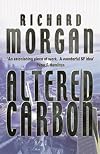
I sought out (rather than stumbled across, as happens with many of my reading choices) this book after reading other writers praise in various science magazines. This novel, they said, is one of the finer distillations of the idea of a 'transhuman' future, where entire human consciousnesses can be 'downloaded' into other bodies, stored in machines or even transmitted across networks.
The entertaining twist to this book is that it blends hard science fiction with hard-boiled crime noir. This is a dystopian and disorienting future, well anchored in the paranoiac tradition of Philip K. Dick, where standard ideas of human identity and consciousness are played with to dark and at times grimly humorous effect.
The plot twists and turns, and, like Chandler at his best, we don't always have a comfortable grip on what the hell is going on. This is multiplied when you are confronted with situations only sci-fi can deliver.
Consider this: An investigator is brought back from the dead and his consciousness beamed across space ("needlecast") to earth to investigate the supposed suicide of a victim also walking around again with the living. This investigator is in the body (or "sleeve") of someone else whose consciousness is being held elsewhere as punishment for a previous crime. And that someone else's girlfriend is still on the scene. And so on.
Richard Morgan blends the sci-fi jargon and mean-streets sensibility very well. The characters are all fairly well hard-bitten, although, just show more like in Chandler, there are always decent men and women who need protecting and whose values and aspirations are worth fighting for.
Some of the best writing is the description of people coming to terms with their new bodies or adjusting to the overwhelming array of chemical enhancements that circulate through their "sleeves" to heighten their senses and reaction times. There is also a mind-blowing sex-scene involving a drug designed to hyper-stimulate levels of empathy. The seasoned warrior, Kovacs, despite his experience, struggles with the questions of identity that these technologies present. What constitutes a person when they can swap bodies so readily? How will the justice system deal with mere abuses of the body, when the consciousness can escape unscathed?
A lot of science fiction is psychedelic - mind expanding. Both in a philosophical sense, but also as simple entertainment: the tantalising promise of an idea or notion before its time, perhaps heralding something bright and attractive, or perhaps a dark presage of things to come. The future depicted in Altered Carbon seems mostly a bad trip, unless you've got money. But, like all good sci-fi, the scope of imaginative freedom allows for some fun to be had with language:
"As I dressed in the mirror that night, I suffered the hard-edged conviction that someone else was wearing my sleeve and that I had been reduced to the role of a passenger in the observation car behind the eyes" (p.117)
And where else but in science fiction could you get away with the following paragraph, where the narration flips from second to first person. In the context of the novel it has a logic all of its own, as the reader enters the strange world being Takeshi Kovacs:
"Shrugging his way into the Inuit jacket, he met his own eyes in the mirror once more. The face he saw looking back was no more expressive than the mandroid at Larkin & Green. He stared impassively at it for a moment, then lifted one hand to rub at the scar over the left eye. A final glance up and down and I left the room with the sudden cold resurgence of control flooding through my nerves. Riding down the elevator, away from the mirror, I forced a grin." (p.119)
Kovacs is never settled in his new skin, his "sleeve", and this alienation is shared by the reader. It is a future rendered truly strange, and all the more compelling for being so. Yet, like all good crime and science fiction novels, humanity's finer instincts are never fully extinguished in the means streets of Altered Carbon's future. show less
The entertaining twist to this book is that it blends hard science fiction with hard-boiled crime noir. This is a dystopian and disorienting future, well anchored in the paranoiac tradition of Philip K. Dick, where standard ideas of human identity and consciousness are played with to dark and at times grimly humorous effect.
The plot twists and turns, and, like Chandler at his best, we don't always have a comfortable grip on what the hell is going on. This is multiplied when you are confronted with situations only sci-fi can deliver.
Consider this: An investigator is brought back from the dead and his consciousness beamed across space ("needlecast") to earth to investigate the supposed suicide of a victim also walking around again with the living. This investigator is in the body (or "sleeve") of someone else whose consciousness is being held elsewhere as punishment for a previous crime. And that someone else's girlfriend is still on the scene. And so on.
Richard Morgan blends the sci-fi jargon and mean-streets sensibility very well. The characters are all fairly well hard-bitten, although, just show more like in Chandler, there are always decent men and women who need protecting and whose values and aspirations are worth fighting for.
Some of the best writing is the description of people coming to terms with their new bodies or adjusting to the overwhelming array of chemical enhancements that circulate through their "sleeves" to heighten their senses and reaction times. There is also a mind-blowing sex-scene involving a drug designed to hyper-stimulate levels of empathy. The seasoned warrior, Kovacs, despite his experience, struggles with the questions of identity that these technologies present. What constitutes a person when they can swap bodies so readily? How will the justice system deal with mere abuses of the body, when the consciousness can escape unscathed?
A lot of science fiction is psychedelic - mind expanding. Both in a philosophical sense, but also as simple entertainment: the tantalising promise of an idea or notion before its time, perhaps heralding something bright and attractive, or perhaps a dark presage of things to come. The future depicted in Altered Carbon seems mostly a bad trip, unless you've got money. But, like all good sci-fi, the scope of imaginative freedom allows for some fun to be had with language:
"As I dressed in the mirror that night, I suffered the hard-edged conviction that someone else was wearing my sleeve and that I had been reduced to the role of a passenger in the observation car behind the eyes" (p.117)
And where else but in science fiction could you get away with the following paragraph, where the narration flips from second to first person. In the context of the novel it has a logic all of its own, as the reader enters the strange world being Takeshi Kovacs:
"Shrugging his way into the Inuit jacket, he met his own eyes in the mirror once more. The face he saw looking back was no more expressive than the mandroid at Larkin & Green. He stared impassively at it for a moment, then lifted one hand to rub at the scar over the left eye. A final glance up and down and I left the room with the sudden cold resurgence of control flooding through my nerves. Riding down the elevator, away from the mirror, I forced a grin." (p.119)
Kovacs is never settled in his new skin, his "sleeve", and this alienation is shared by the reader. It is a future rendered truly strange, and all the more compelling for being so. Yet, like all good crime and science fiction novels, humanity's finer instincts are never fully extinguished in the means streets of Altered Carbon's future. show less
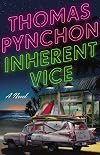
Thomas Pynchon is one of those cult writers that you feel you must read sometime, so I unwisely have started with this, his latest novel.
Clearly he is not a crime writer. While there is great humour and pathos to be had in reading Pynchon's surreal rendering of the dying days of hippie-era California (and many funny moments with potheads doing stupid pothead things), the crime story at the centre of the novel is meandering and poorly constructed and detracts from what could have been a successful satire on American paranoia at the height of the Manson-era America.
Still, this book makes me want to give earlier Pynchon fiction a go, which I hope is not dragged down by similar clumsy graftings of crime noir onto psychedelic whimsy. Why bother with Inherent Vice, when we have any number of Chandler novels that are truly crafted stories, or even Michael Connelly if you want to be contemporary.
There are cultural references aplenty (particularly LA surf music) and Pynchon seems to re-enter the world of LA pothead culture with much affection for its characters. There is a palpable poignancy in his writing about this time, a feeling of something culturally fresh succumbing to corruption and venality. But I simply struggled to maintain interest in the story as a whole, regardless of the occasional amusing vignette of Doc and his drug buddies.
Clearly he is not a crime writer. While there is great humour and pathos to be had in reading Pynchon's surreal rendering of the dying days of hippie-era California (and many funny moments with potheads doing stupid pothead things), the crime story at the centre of the novel is meandering and poorly constructed and detracts from what could have been a successful satire on American paranoia at the height of the Manson-era America.
Still, this book makes me want to give earlier Pynchon fiction a go, which I hope is not dragged down by similar clumsy graftings of crime noir onto psychedelic whimsy. Why bother with Inherent Vice, when we have any number of Chandler novels that are truly crafted stories, or even Michael Connelly if you want to be contemporary.
There are cultural references aplenty (particularly LA surf music) and Pynchon seems to re-enter the world of LA pothead culture with much affection for its characters. There is a palpable poignancy in his writing about this time, a feeling of something culturally fresh succumbing to corruption and venality. But I simply struggled to maintain interest in the story as a whole, regardless of the occasional amusing vignette of Doc and his drug buddies.
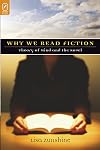
I always wondered why we, readers, tolerate fiction - it's all made up isn't it? Why bother? Why are we entertained? Why not stick to non-fiction? This book, drawing on research from the field of cognitive science, provides some clues as to why our brains enjoy and thrive on fictional narratives.
It doesn't answer all the questions - its focus is on how the reading brain creates truth from the characters depicted, rather then the story or plot per se (that would be a whole other book). Highly academic but accessible and rewarding if you take your time.
It doesn't answer all the questions - its focus is on how the reading brain creates truth from the characters depicted, rather then the story or plot per se (that would be a whole other book). Highly academic but accessible and rewarding if you take your time.
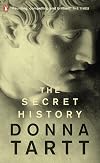
Proof of the author's skill at crafting a suspenseful tale is that the murder is revealed on the first page, yet I read on. Nor are the main characters particularly appealing, but I allowed myself to become absorbed in their solipsistic, arrogant world nonetheless.
Greek classicism is really just an intellectual prop for the students to appear aloof - this is not a novel of ideas per se. There is one or two references at the beginning about Greek ideas underpinning the bacchanal that kills the farmer, but, again, these are not essential to the story, just an exotic way to do a killing and accentuate the overinflated sense of superiority these students have.
I was waiting for the professor Julian Morrow to be fleshed out more, or at least to hear some of his profound utterances that made him such a figure of respect and awe for the students, but the reader is denied any real flashes of wisdom. Even Henry, a genius at translation, seems oddly ordinary in his speech.
Despite it's length, I can see why people re-read this, for the first time the plot pulls you forward. I imagine subsequent readings would allow the reader to pay attention more to the friendships, the moments where decisions are made, and the gestures that point to greater turmoil, for it is a novel of great attention to detail and luxuriates in creating atmosphere.
Other mediums have done similar tales with much greater tautness - Hitchcock's thrilling Rope springs to mind, while the charm and faint menace behind show more Henry's self assuredness reminded me of Patricia Highsmith's writing.
Despite my quibbles, I felt real pleasure reading this. Yes, they are dreary uni students who spend their days smoking, drinking and staring out from rain drizzled windows, but the world Donna Tartt creates is a richly textured one and I appreciated the ride on this different kind of thriller. show less
Greek classicism is really just an intellectual prop for the students to appear aloof - this is not a novel of ideas per se. There is one or two references at the beginning about Greek ideas underpinning the bacchanal that kills the farmer, but, again, these are not essential to the story, just an exotic way to do a killing and accentuate the overinflated sense of superiority these students have.
I was waiting for the professor Julian Morrow to be fleshed out more, or at least to hear some of his profound utterances that made him such a figure of respect and awe for the students, but the reader is denied any real flashes of wisdom. Even Henry, a genius at translation, seems oddly ordinary in his speech.
Despite it's length, I can see why people re-read this, for the first time the plot pulls you forward. I imagine subsequent readings would allow the reader to pay attention more to the friendships, the moments where decisions are made, and the gestures that point to greater turmoil, for it is a novel of great attention to detail and luxuriates in creating atmosphere.
Other mediums have done similar tales with much greater tautness - Hitchcock's thrilling Rope springs to mind, while the charm and faint menace behind show more Henry's self assuredness reminded me of Patricia Highsmith's writing.
Despite my quibbles, I felt real pleasure reading this. Yes, they are dreary uni students who spend their days smoking, drinking and staring out from rain drizzled windows, but the world Donna Tartt creates is a richly textured one and I appreciated the ride on this different kind of thriller. show less
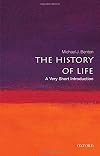
I have read a few of these Very Short Introduction books from Oxford University Press and I recommend them, for they strive not to simply lay out the facts, but convey the ideas - often contested ideas - behind the major areas of human thought and science.
This title continues the tradition. Rather than give a bland chronology of the last 4 billion years of life on earth, author Professor Michael J. Benton focuses on what he considers the most important trends. For example, we are told of the 'big five' mass extinction events, but only two (the end Permian and the Cretaceous Tertiary) are explained in detail, as they best exemplify not only how such events influence future ecosystems but just how difficult it is for scientists to fully explain how these catastrophic events come about.
My only criticisms of this particular work are the lack of a glossary and a 'further reading' list and / or bibliography, the latter essential is such a brief an introductory work as this.
Nonetheless, a stimulating read that goes beyond the facts and asks the reader to consider some bigger questions, for example:
"When I was a student, we were taught that the major groups of plants and animals had arisen, in succession, as improvements on what went before. The new group - here the dinosaurs - would prevail over the existing groups - here the rhynchosaurs and dicynodonts - by power of adaptation. After all, evolution is 'survival of the fittest', so it made sense that the succession of major show more life forms through time involved progression and improvement.
"I remember questioning this assumption. It seems such an obvious idea at one level, but how can we be sue that the succeeding plants and animals are always 'better' than their precursors? Evolution is a process whereby individual organisms, and species, may improve their fit to the environment, but then environments keep evolving. So the target for adaptation is not static. Therefore, can we be sure that dinosaurs prevailed because they were wholly better than what went before"? (pp.132-33) show less
This title continues the tradition. Rather than give a bland chronology of the last 4 billion years of life on earth, author Professor Michael J. Benton focuses on what he considers the most important trends. For example, we are told of the 'big five' mass extinction events, but only two (the end Permian and the Cretaceous Tertiary) are explained in detail, as they best exemplify not only how such events influence future ecosystems but just how difficult it is for scientists to fully explain how these catastrophic events come about.
My only criticisms of this particular work are the lack of a glossary and a 'further reading' list and / or bibliography, the latter essential is such a brief an introductory work as this.
Nonetheless, a stimulating read that goes beyond the facts and asks the reader to consider some bigger questions, for example:
"When I was a student, we were taught that the major groups of plants and animals had arisen, in succession, as improvements on what went before. The new group - here the dinosaurs - would prevail over the existing groups - here the rhynchosaurs and dicynodonts - by power of adaptation. After all, evolution is 'survival of the fittest', so it made sense that the succession of major show more life forms through time involved progression and improvement.
"I remember questioning this assumption. It seems such an obvious idea at one level, but how can we be sue that the succeeding plants and animals are always 'better' than their precursors? Evolution is a process whereby individual organisms, and species, may improve their fit to the environment, but then environments keep evolving. So the target for adaptation is not static. Therefore, can we be sure that dinosaurs prevailed because they were wholly better than what went before"? (pp.132-33) show less
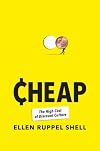
Having only recently bathed in the glow of rosy optimism that is Chris Anderson's Free, Cheap is the cold shower guaranteed to give the reader pause for thought. Many things are certainly a lot cheaper in America than they have ever been, but it's not all affordable. For example, on page 157: Average household income in 2003 was higher than it was in 1971, Americans spent 32% less on clothes, 52% less on appliances, and 18% less on food. However, over the same period mortgage payments have increased 76%, health insurance 74%.
Things are not cheap where it counts, and those things that are cheap are not sustainably so. Chapters 4 to 9 reveal the hidden costs - to skills, wages, the environment, human rights & culture - of cheap.
Let me add another statistic not cited by the author: In 2007, 62% of all bankruptcies were medical ; 75% of these medical debtors had health insurance. Staggering.
You would need half a dozen books or more to do this subject justice (for example, Eric Schlosser's Fast Food Nation represents a fuller treatment of the issues raised in chapter 8, "Cheap Eats"). Thankfully, Ellen Ruppel Shell provides extensive footnotes and references for those wanting to explore, say, the fascinating insights gained from the psychological studies of consumer behaviour in the excellent chapter 3, "Winner Take Nothing".
But is there a solution? How to arrest price's race to the bottom, dragging living wages and the environment with it? Even if the huge economies of the show more developing world do become bastions of democracy and rule of law, there is still human nature to contend with (again, see chapter 3).
By way of a remedy of sorts, Shell takes her cue from Adam Smith's ideal of "enlightened self interest" , and gives us the closest to a working example - on a large scale - in Wegmans Food Market. The key to company profits seems to be investment in well remunerated and looked after staff, which in turns attracts and keeps customers. Qualities beyond the number on the price tag that support wages and profits. And I love the idea that not all Wegman stores strive to be identical in look and layout.
A more subtle point is made which, again, is worthy of further exposition. In contrast to the local marketplace of Smith's time (but still in existence in local markets such as the example of Haymarket on p. 220) -
"Discounters shroud their offerings, selling virtually identical products as different brands, and B-grade versions of national brands. Or, like IKEA, they hide shoddy construction - and questionable practices - with clever image making and design. The cheaper the goods, it seems, the harder retailers work to keep us from knowing about them, And the more narrowly we focus on price, the easier we are to fool."
I must agree with her on IKEA - on my first and last visit to an IKEA store, a particle board storage shelf snapped in two under gentle pressure from my hand.
Enlightened self interest, in other words, is impossible in a world of commerce where it is difficult to know where a product came from or the conditions under which it was manufactured. Therefore, if consumers cannot buy based on knowledge of product, then price alone becomes the determinate.
An excellent read, even if the ideal marketplace of Smith seems unattainable. Perhaps the user generated revolution of web 2.0 will assist in greater product awareness amongst consumers. Or does the promise of instant gratification via online bargains just compound the problem?
Either way, I hope this book stimulates some serious comment from the economists and consumers alike.
Quotes:
"The key to economic prosperity is the organized creation of dissatisfaction". Charles Kettering, GM researcher and inventor, cited pp.22-23
"Television advertising was particularly vital for the low service discount chains that, with no experienced salesforce to push product, relied on the customer to come to their stores pre-loaded with wants." p.26
"Economics is a religion. It assumes rational behavior and that people will do what is best for them. But like religion, this is only a belief; there is no proof." Daniel Ariely, cited p.69 show less
Things are not cheap where it counts, and those things that are cheap are not sustainably so. Chapters 4 to 9 reveal the hidden costs - to skills, wages, the environment, human rights & culture - of cheap.
Let me add another statistic not cited by the author: In 2007, 62% of all bankruptcies were medical ; 75% of these medical debtors had health insurance. Staggering.
You would need half a dozen books or more to do this subject justice (for example, Eric Schlosser's Fast Food Nation represents a fuller treatment of the issues raised in chapter 8, "Cheap Eats"). Thankfully, Ellen Ruppel Shell provides extensive footnotes and references for those wanting to explore, say, the fascinating insights gained from the psychological studies of consumer behaviour in the excellent chapter 3, "Winner Take Nothing".
But is there a solution? How to arrest price's race to the bottom, dragging living wages and the environment with it? Even if the huge economies of the show more developing world do become bastions of democracy and rule of law, there is still human nature to contend with (again, see chapter 3).
By way of a remedy of sorts, Shell takes her cue from Adam Smith's ideal of "enlightened self interest" , and gives us the closest to a working example - on a large scale - in Wegmans Food Market. The key to company profits seems to be investment in well remunerated and looked after staff, which in turns attracts and keeps customers. Qualities beyond the number on the price tag that support wages and profits. And I love the idea that not all Wegman stores strive to be identical in look and layout.
A more subtle point is made which, again, is worthy of further exposition. In contrast to the local marketplace of Smith's time (but still in existence in local markets such as the example of Haymarket on p. 220) -
"Discounters shroud their offerings, selling virtually identical products as different brands, and B-grade versions of national brands. Or, like IKEA, they hide shoddy construction - and questionable practices - with clever image making and design. The cheaper the goods, it seems, the harder retailers work to keep us from knowing about them, And the more narrowly we focus on price, the easier we are to fool."
I must agree with her on IKEA - on my first and last visit to an IKEA store, a particle board storage shelf snapped in two under gentle pressure from my hand.
Enlightened self interest, in other words, is impossible in a world of commerce where it is difficult to know where a product came from or the conditions under which it was manufactured. Therefore, if consumers cannot buy based on knowledge of product, then price alone becomes the determinate.
An excellent read, even if the ideal marketplace of Smith seems unattainable. Perhaps the user generated revolution of web 2.0 will assist in greater product awareness amongst consumers. Or does the promise of instant gratification via online bargains just compound the problem?
Either way, I hope this book stimulates some serious comment from the economists and consumers alike.
Quotes:
"The key to economic prosperity is the organized creation of dissatisfaction". Charles Kettering, GM researcher and inventor, cited pp.22-23
"Television advertising was particularly vital for the low service discount chains that, with no experienced salesforce to push product, relied on the customer to come to their stores pre-loaded with wants." p.26
"Economics is a religion. It assumes rational behavior and that people will do what is best for them. But like religion, this is only a belief; there is no proof." Daniel Ariely, cited p.69 show less
Cassidy the hard-living Irish vampire is in top form in the opening story, "Cassidy : Blood and Whisky". A hilarious skewering of vampire myths with a fiery - and shocking - conclusion to boot. And just as we are coming around to Cass's finer qualities, an element of doubt, carried by Tulip and surfacing through some wronged characters from Cassidy's past, keeps the tension alive for the next volume.
Certainly some people will be offended by this series' continual wallowing in the baser realms of human behaviour, but these are great characters of fiction by writer and artist. Beneath all the bestial and beastly beahviour on exhibit, at the core the Preacher series is about love and friendship, oh, and the quest to hunt down God and teach him a lesson. Epic stuff.
Certainly some people will be offended by this series' continual wallowing in the baser realms of human behaviour, but these are great characters of fiction by writer and artist. Beneath all the bestial and beastly beahviour on exhibit, at the core the Preacher series is about love and friendship, oh, and the quest to hunt down God and teach him a lesson. Epic stuff.
I'm quite new to 'graphic novels' (they're comics aren't they?), but the librarian in me compels me to read them if only for professional interest. Yet I continue to be surprised and entertained by what I read, the standouts being so far Watchmen and Jimmy Corrigan.
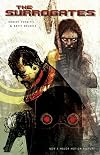
Given that a big budget Bruce Willis Hollywood treatment of Surrogates is due to land on Australian shores late 2009 I thought I would read the book. What attracted me was simply the idea that drives the story - what would a society like like where human beings live their lives through cybernetic surrogates?
Incredibly, when I first tried to read it back in May, no library in Australia had this book on their shelves - even our main supplier said it was "out of print". So, earlier this month, I ventured forth online to the ever-reliable bookdepository.co.uk and within a week and a half a copy was in my letterbox.
Surrogates is a visually different approach to your standard Marvel / DC fare. While lacking the narrative complexity and visual impact of Watchmen, it is no less compelling. Graphically, if you are used to the detail, crisp lines and bold colours of, say, Watchmen, then Surrogates will surprise you. Many of the panels look more like sketches with a colour wash over them, while the faces of the characters are quite simply rendered. Indeed, sometimes characters not to the fore of the panel - even main characters - host very plain, expressionless visages.
But this visual style matches the storyline. The show more murky grey, blue, green and brown washes bring to the fore the literally 'lifeless' nature of the city - after all, there are no people around - merely their mechanical surrogates. It seems to be always overcast or raining. A perfect setting for the world weary detective Harvey Greer, a married yet lonely man who, as he gets closer to solving the crimes that occur at the beginning of the story, comes to realise what has been lost in the rush to escape the outside world and only experience life through the intermediary of data feeds.
The slick "Virtual Self' mock ads throughout bring home the truth that Harvey suspects - people are dissatisfied with their real selves to the point of complete physical withdrawal, least they suffer rejection for not conforming to an image society demands, be it in the realm of employment, relationships or sexuality. Even Harvey's wife refuses to discard her virtual self for something as inconsequential as dinner with her husband.
Harvey's disappointment at the state of human affairs in general - his drooping moustache, slumped shoulders and downcast expression over his middle age paunch, is a fine example of the power of graphic novels to render a mood where straightforward fiction cannot. Bravo author and illustrator! - a brilliant marriage of text and illustration.
Today (14th September) I saw a preview of the film - at first glance it seems typical Bruce Willis fare - loud, fast, lots of explosions and a sizable body count. And, even from this few minutes of teaser, a major plot change is evident. But I will give the film a chance (remember Twelve Monkeys? - Willis can do cracking sci fi!), even if the look of the film seems more Die Hard than Bladerunner.
Finally, like all good science fiction, Surrogates is not simply an imagined future - it has something to say about the here and now. Already we are tempted to create an identity for ourselves through technology - whether it be fast cars, online personae or simply wanting to be seen around town with the latest iphone, loaded with the coolest apps. Look at me! I am what I plug into to! show less
Given that a big budget Bruce Willis Hollywood treatment of Surrogates is due to land on Australian shores late 2009 I thought I would read the book. What attracted me was simply the idea that drives the story - what would a society like like where human beings live their lives through cybernetic surrogates?
Incredibly, when I first tried to read it back in May, no library in Australia had this book on their shelves - even our main supplier said it was "out of print". So, earlier this month, I ventured forth online to the ever-reliable bookdepository.co.uk and within a week and a half a copy was in my letterbox.
Surrogates is a visually different approach to your standard Marvel / DC fare. While lacking the narrative complexity and visual impact of Watchmen, it is no less compelling. Graphically, if you are used to the detail, crisp lines and bold colours of, say, Watchmen, then Surrogates will surprise you. Many of the panels look more like sketches with a colour wash over them, while the faces of the characters are quite simply rendered. Indeed, sometimes characters not to the fore of the panel - even main characters - host very plain, expressionless visages.
But this visual style matches the storyline. The show more murky grey, blue, green and brown washes bring to the fore the literally 'lifeless' nature of the city - after all, there are no people around - merely their mechanical surrogates. It seems to be always overcast or raining. A perfect setting for the world weary detective Harvey Greer, a married yet lonely man who, as he gets closer to solving the crimes that occur at the beginning of the story, comes to realise what has been lost in the rush to escape the outside world and only experience life through the intermediary of data feeds.
The slick "Virtual Self' mock ads throughout bring home the truth that Harvey suspects - people are dissatisfied with their real selves to the point of complete physical withdrawal, least they suffer rejection for not conforming to an image society demands, be it in the realm of employment, relationships or sexuality. Even Harvey's wife refuses to discard her virtual self for something as inconsequential as dinner with her husband.
Harvey's disappointment at the state of human affairs in general - his drooping moustache, slumped shoulders and downcast expression over his middle age paunch, is a fine example of the power of graphic novels to render a mood where straightforward fiction cannot. Bravo author and illustrator! - a brilliant marriage of text and illustration.
Today (14th September) I saw a preview of the film - at first glance it seems typical Bruce Willis fare - loud, fast, lots of explosions and a sizable body count. And, even from this few minutes of teaser, a major plot change is evident. But I will give the film a chance (remember Twelve Monkeys? - Willis can do cracking sci fi!), even if the look of the film seems more Die Hard than Bladerunner.
Finally, like all good science fiction, Surrogates is not simply an imagined future - it has something to say about the here and now. Already we are tempted to create an identity for ourselves through technology - whether it be fast cars, online personae or simply wanting to be seen around town with the latest iphone, loaded with the coolest apps. Look at me! I am what I plug into to! show less
I borrowed this book from the library (my place of work) purely on the reputation of its author, Chris Anderson.
"Reputation" and "Attention", Anderson argues, are the two most important non-monetary currencies on the web, entities that can, with the right strategies, be monetized in support of a sustainable business model.
So the simple act of me selecting this particular book to borrow (from a trolley of about 50 new books) is evidence already of the veracity of his thesis, more so because that reputation is a product of my encounters with the author's ideas via citations from other web blogs, articles and posts. I came to have a copy of Free in my hand purely on stuff I read for free on the internet (usually about concepts raised in his earlier book, The Long Tail).
True, I have not personally paid for this copy I am adding to Library Thing, but Anderson made a sale to the local library. And the author's continuing free presence on the web will ensure he maintains that reputation and attention, ensuring that libraries around the world will buy his next book as well. So, at the very least, I can see the principles of Free being enacted in the very act of my choice of reading matter.
I approached this book with the expectation that this would be a exposition and critique of all things Free (yep - Free is a noun, sure sign this is a book for neophytes), particularly the illuminating and entertaining early chapters that discussed the etymology and history of all things show more free.
But, as one reads on, it becomes clear that Anderson is writing for the web entrepreneur. He is spruiking an idea to the business side of things: you can embrace Free, this is how Google does it, this is how online games do it, you can do it too, even if your not one of the big boys. It's an infectiously optimistic how-to guide, cunningly disguised with some stimulating research and conjecture normally reserved for more scholarly texts.
And, unlike similar books confident about our digital future, such as Print is Dead, Free does not disdain its critics with anti-Luddite diatribes (as entertaining as this was to read at the time!). Anderson makes it clear that not all Free strategies will work for all enterprises. There are risks, there is the problem of monopolisation by existing companies such as Google. But the message seems to be - this trend is with us, try your best to adapt to it. You might even thrive with it. You cannot go back.
However, any book about free and the internet must seriously address the issue of piracy. Anderson does not provide evidence to support his claim that piracy generates more audience dollars than it forgoes.
Regardless of how unlicensed copying is working for those performing artists in China and Brazil that Anderson discusses, the fact remains there is an awful lot of illegally copied material out there. Which, of course, means there is a lot of traditional Intellectual Property owners who remain yet to be convinced that the future is bright for all things free on the web.
While traditional newspapers and their paid journalists still exist, the free web will have a source of content. to feed off. File sharers are still posting copied CDs on the web. But what happens when all this content from traditional media sources begins to dry up and the web can no longer leech from the old world media? The challenge for Free in the future will be to make money from self-contained digital domain. Bloggers will no longer be able to give themselves credibility by linking to those sources - they will have to stand on their own two feet.
This is where polemics such as Andrew Keen's The Cult of the Amateur give us pause. Do we really want to have to wade through mountains of pop up ads and amateur inanity to get the substance? Do we really know what this future will look like? Can the Google monopoly be broken? The answer, for the moment, seems to lie in a blend of sources and models - traditional business, government funded entities (such as the ABC in Australia), resources like Wikipedia and full-blown charging online entities.
A question - Library Thing is free. How do they pay their way? show less
"Reputation" and "Attention", Anderson argues, are the two most important non-monetary currencies on the web, entities that can, with the right strategies, be monetized in support of a sustainable business model.
So the simple act of me selecting this particular book to borrow (from a trolley of about 50 new books) is evidence already of the veracity of his thesis, more so because that reputation is a product of my encounters with the author's ideas via citations from other web blogs, articles and posts. I came to have a copy of Free in my hand purely on stuff I read for free on the internet (usually about concepts raised in his earlier book, The Long Tail).
True, I have not personally paid for this copy I am adding to Library Thing, but Anderson made a sale to the local library. And the author's continuing free presence on the web will ensure he maintains that reputation and attention, ensuring that libraries around the world will buy his next book as well. So, at the very least, I can see the principles of Free being enacted in the very act of my choice of reading matter.
I approached this book with the expectation that this would be a exposition and critique of all things Free (yep - Free is a noun, sure sign this is a book for neophytes), particularly the illuminating and entertaining early chapters that discussed the etymology and history of all things show more free.
But, as one reads on, it becomes clear that Anderson is writing for the web entrepreneur. He is spruiking an idea to the business side of things: you can embrace Free, this is how Google does it, this is how online games do it, you can do it too, even if your not one of the big boys. It's an infectiously optimistic how-to guide, cunningly disguised with some stimulating research and conjecture normally reserved for more scholarly texts.
And, unlike similar books confident about our digital future, such as Print is Dead, Free does not disdain its critics with anti-Luddite diatribes (as entertaining as this was to read at the time!). Anderson makes it clear that not all Free strategies will work for all enterprises. There are risks, there is the problem of monopolisation by existing companies such as Google. But the message seems to be - this trend is with us, try your best to adapt to it. You might even thrive with it. You cannot go back.
However, any book about free and the internet must seriously address the issue of piracy. Anderson does not provide evidence to support his claim that piracy generates more audience dollars than it forgoes.
Regardless of how unlicensed copying is working for those performing artists in China and Brazil that Anderson discusses, the fact remains there is an awful lot of illegally copied material out there. Which, of course, means there is a lot of traditional Intellectual Property owners who remain yet to be convinced that the future is bright for all things free on the web.
While traditional newspapers and their paid journalists still exist, the free web will have a source of content. to feed off. File sharers are still posting copied CDs on the web. But what happens when all this content from traditional media sources begins to dry up and the web can no longer leech from the old world media? The challenge for Free in the future will be to make money from self-contained digital domain. Bloggers will no longer be able to give themselves credibility by linking to those sources - they will have to stand on their own two feet.
This is where polemics such as Andrew Keen's The Cult of the Amateur give us pause. Do we really want to have to wade through mountains of pop up ads and amateur inanity to get the substance? Do we really know what this future will look like? Can the Google monopoly be broken? The answer, for the moment, seems to lie in a blend of sources and models - traditional business, government funded entities (such as the ABC in Australia), resources like Wikipedia and full-blown charging online entities.
A question - Library Thing is free. How do they pay their way? show less