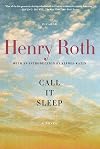
Henry Roth was a truly talented writer and I feel frustrated as a reader that there are only a few books of his to read. However, "Call it Sleep," is a wonderfully full and vibrant novel about a poor Eastern European Jewish family that settles in the Lower East Side slums of New York. David is the protagonist, a small, fearful, and imaginative boy who must contend with the fast moving intensity and danger as a foreigner in New York. He is surrounded by moving characters, such as his brutish and impatient father, who struggles to support his family or Aunt Bertha, the sanguine flirt who represents the peace and comfort of the old world. I don't ordinarily enjoy these kinds of sociological novels, but Roth is able to conjure up breathtaking images, and he paints his canvas with fascinating dialects with encompass the multi-culturism of American life. "Call it Sleep," is truly a neglected piece of depression-era literature.
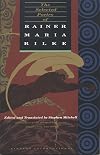
Du im Voraus
Verlone Geliebte, Nimmergekimmene,
Nicht weiss ich, welche Tone dir lieb sind.
Nicht mehr versuch ich, dich, wenn das Kommenende wogt,
Zu erkennen. Alle die grossen
Bilder in mir, im Fernen erfahrene Landschaft,
Stadte und Turme und Brucken und un-
Vermutete Wedung der Wege
Und das Gewaltige jener von Gottern
Einst durchwachsenen Lander:
Steigt zur Bedeutung in mir
Deiner, Entgehende, an.
You who never arrived
In my arms, Beloved, who were lost
From the start,
I don't even know what songs
Would please you. I have given up trying
To recognize you in the surging wave of the next
Moment. All the immense images in me-the far-off, deeply-felt landscape,
Cities, towers, and bridges, and un-
Suspected turns in the path,
And those powerful lands that were once
Pulsing with the life of the gods-
All rise within me to mean
You, who forever elude me.
This has been a passage from Rilke's `You who never arrived', one of the many beautiful and profound poems in this extraordinary collection, provided with an equally extraordinary translation by Stephen Mitchell. Rilke is almost universally established as the most important European poet of the 20th century. The poems in this collection will stay in your mind and in your heart long after you finish reading.
Verlone Geliebte, Nimmergekimmene,
Nicht weiss ich, welche Tone dir lieb sind.
Nicht mehr versuch ich, dich, wenn das Kommenende wogt,
Zu erkennen. Alle die grossen
Bilder in mir, im Fernen erfahrene Landschaft,
Stadte und Turme und Brucken und un-
Vermutete Wedung der Wege
Und das Gewaltige jener von Gottern
Einst durchwachsenen Lander:
Steigt zur Bedeutung in mir
Deiner, Entgehende, an.
You who never arrived
In my arms, Beloved, who were lost
From the start,
I don't even know what songs
Would please you. I have given up trying
To recognize you in the surging wave of the next
Moment. All the immense images in me-the far-off, deeply-felt landscape,
Cities, towers, and bridges, and un-
Suspected turns in the path,
And those powerful lands that were once
Pulsing with the life of the gods-
All rise within me to mean
You, who forever elude me.
This has been a passage from Rilke's `You who never arrived', one of the many beautiful and profound poems in this extraordinary collection, provided with an equally extraordinary translation by Stephen Mitchell. Rilke is almost universally established as the most important European poet of the 20th century. The poems in this collection will stay in your mind and in your heart long after you finish reading.
Image and Reality of the Israel-Palestine Conflict, New and Revised Edition by Norman G. Finkelstein
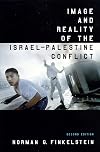
Norman Finkelstein has certainly exposed a rather impressive gathering of intellectual and scholarly frauds. This text provides informed interpretations of historical data, and political and ideological mechanisms of control and domination in the form of Zionism. Finkelstein particularly excels here in his dismantlement of Joan Peter's book, From Time Immemorial, a fraud of the highest order. Finkelstein continues to offer counter-arguments to historian Benny Morris' interpretations of data in the nature of the Palestinian expulsion. The book also offers a fairly comprehensive explanation of the current "peace" processes such as the Camp David meetings and the Oslo accords, although his constant drawing of comparisons to South African Apartheid can be wearying. I noticed a reviewer of this book argued that Finkelstein's scholarship was incorrect by claiming that Peter's conclusions were accurate based on the findings of other sources (the reviewer refused to name the source). He then went on to accuse Finkelstein of being a racist, as it is very convenient to do so. I request that that individual please be serious when talking about these issues, debate the scholarship but don't tell Finkelstein to shut up, he has a legitimate argument and it is grounded in politics and history, not anti-semitism. As long as people are incapable of, or perhaps unwilling to comprehend the notion that a group of people and their history and beliefs are not the same thing as the policies of show more the people's state, then the Middle East conflict will continue to be unresolved. show less
The Holocaust Industry: Reflections on the Exploitation of Jewish Suffering, New Edition by Norman G. Finkelstein
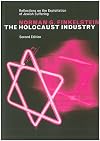
When I first heard all the controversy surrounding Mr. Finkelstein's book I had to read it myself and find out what all the fuss was about. And the book proved to be a devastating and air-tight argument examining the immoral and corrupt racket that is the Holocaust Industry. I understand that this is a touchy subject, and I can also understand that this book may be upsetting to some who feel that the book could reinforce dangerous and ugly stereotypes, but I don't think it ultimately will. Finkelstein's argument is focused and serious, and he is able to support his claims with first-rate research, providing comprehensive footnotes built into the text. Finkelstein argues that the Holocaust was not a historically unique event, and that all who support that claim are attempting to write a blank check to the State of Israel. He examines how the Holocaust and the State of Israel did not figure that greatly into Jewish American life prior to the June 1967 war. Additionally, Finkelstein exposes frauds on the topic, such as Kosinsky with "The Painted Bird," and Wilkomirsky with "Fragments," as well as Holocaust exploiters such as Elie Wiesel. But Finkelstein's most devastating argument is in the section on the Swiss Banks, in which large American Organizations have orchestrated a shakedown on Swiss Banks to turn a profit on Jewish suffering, a disturbing topic. Finkelstein provides careful analysis in dealing with the Swiss Banks, and his findings are difficult to refute. I have show more to admit, the post-script chapter where he summarizes further developments on the Swiss Banks issue is extremely dense and difficult to follow, but the information is necessary. I'm sure that events will follow in the future with regard to the Banks that will require further examination. As historian Raul Hilberg has said: [the book is good even though incomplete]. This text is a breakthrough of political analysis and a must read for anyone interested in the aftermath of the Holocaust. show less
Norman Finkelstein goes beyond his initial clash with Alan Dershowitz on Democracy Now! to expose Dershowitz's book "The Case for Israel," as one of the most spectacular hoaxes in the history of all Middle-East scholarship. Finkelstein proves that Dershowitz:
1) Plagiarized from the other great hoax, Joan Peters' "From Time Immemorial." Now during the initial debate, Dershowitz argued that it wasn't plagiarism if he saw the quote in Peters' book, but then went to the original source to check to make sure it's accurate. However, that was simply not the case. Dershowitz borrows a quote from Mark Twain that was used in Peters, but the problem is that he cites a 1995 edition of the book, but in the 1995 edition the Twain quote is not an extended quote, there are over twenty pages separating the first part of the quote with the final part, and Dershowitz cites the quote as continuous, proving that he simply lifted the inaccurate quote from Peters without checking the original. Also, Finkelstein unveils the advanced proofs for the Case for Israel, revealing that in the footnotes Dershowitz initially cited Peters for the quotes in question.
2) Systematically misrepresents Israel's human rights record in the occupied territories. Dershowitz makes the claim in The Case for Israel that Israel is the only country in the Middle-East to have abolished torture in practice as well as in law. However, Amnesty International, Human Rights Watch, and B'Tselem have all concluded that Israel show more still regularly practices torture, and that Palestinian detainees have in fact died because of Israeli torture in the past. Dershowitz also makes the claim that Israel has never deliberately targeted civilians. Once again, the human rights record is radically different from Dershowitz's claims; Israel has in fact targeted innocent civilians repeatedly, and has also committed war crimes and crimes against humanity such as in the siege of Jenin.
3) Distorts evidence (or often refuses to provide any) in arguing that Israel has consistently supported a two-state solution and the Palestinians have rejected it. Finkelstein makes the case that it is Israel that has rejected the principles of U.N. resolution 242, that the PLO has been constantly in favor of it, but Israel has always preferred a "Bantustans" style state for the Palestinians.
4) Dershowitz repeatedly misrepresents the writing of Israeli historian Benny Morris when discussing the first Arab war, and often provides unreliable evidence to support his claims, such as quotes from right-wing Israeli websites.
I could go on, but I won't. Finkelstein provides virtually a line-for-line debunking of the "Case for Israel" in the last section of the book, which serves the dual-role of exposing the crimes of Israel, and exposing the apologist for those crimes, Alan Dershowitz. My only problem with "Beyond Chutzpah" lies in the first section, on the "Misuse of Anti-Semitism." It seems that this section was just attached the make the book more than just a Dershowitz expose; but Finkelstein leaves a lot of gaping wholes in his argument here, it's hard to make such a sweeping declaration in so short a section. Although his analysis of the ADL and books like "The New Anti-Semitism," and "The Real-Anti-Semitism," is interesting and informative. But it's the examination of "The Case for Israel," that makes "Beyond Chutzpah" an important work on the Israel-Palestine conflict. show less
1) Plagiarized from the other great hoax, Joan Peters' "From Time Immemorial." Now during the initial debate, Dershowitz argued that it wasn't plagiarism if he saw the quote in Peters' book, but then went to the original source to check to make sure it's accurate. However, that was simply not the case. Dershowitz borrows a quote from Mark Twain that was used in Peters, but the problem is that he cites a 1995 edition of the book, but in the 1995 edition the Twain quote is not an extended quote, there are over twenty pages separating the first part of the quote with the final part, and Dershowitz cites the quote as continuous, proving that he simply lifted the inaccurate quote from Peters without checking the original. Also, Finkelstein unveils the advanced proofs for the Case for Israel, revealing that in the footnotes Dershowitz initially cited Peters for the quotes in question.
2) Systematically misrepresents Israel's human rights record in the occupied territories. Dershowitz makes the claim in The Case for Israel that Israel is the only country in the Middle-East to have abolished torture in practice as well as in law. However, Amnesty International, Human Rights Watch, and B'Tselem have all concluded that Israel show more still regularly practices torture, and that Palestinian detainees have in fact died because of Israeli torture in the past. Dershowitz also makes the claim that Israel has never deliberately targeted civilians. Once again, the human rights record is radically different from Dershowitz's claims; Israel has in fact targeted innocent civilians repeatedly, and has also committed war crimes and crimes against humanity such as in the siege of Jenin.
3) Distorts evidence (or often refuses to provide any) in arguing that Israel has consistently supported a two-state solution and the Palestinians have rejected it. Finkelstein makes the case that it is Israel that has rejected the principles of U.N. resolution 242, that the PLO has been constantly in favor of it, but Israel has always preferred a "Bantustans" style state for the Palestinians.
4) Dershowitz repeatedly misrepresents the writing of Israeli historian Benny Morris when discussing the first Arab war, and often provides unreliable evidence to support his claims, such as quotes from right-wing Israeli websites.
I could go on, but I won't. Finkelstein provides virtually a line-for-line debunking of the "Case for Israel" in the last section of the book, which serves the dual-role of exposing the crimes of Israel, and exposing the apologist for those crimes, Alan Dershowitz. My only problem with "Beyond Chutzpah" lies in the first section, on the "Misuse of Anti-Semitism." It seems that this section was just attached the make the book more than just a Dershowitz expose; but Finkelstein leaves a lot of gaping wholes in his argument here, it's hard to make such a sweeping declaration in so short a section. Although his analysis of the ADL and books like "The New Anti-Semitism," and "The Real-Anti-Semitism," is interesting and informative. But it's the examination of "The Case for Israel," that makes "Beyond Chutzpah" an important work on the Israel-Palestine conflict. show less
Foucault employs an exacting and yet artistic methodology of historical-sociological interpretation of the history of madness in the age of reason. In this impressive work, he discovers that the origin of insanity, of psychological confinement, corresponds with the diminution of leprosy in Europe, and that the sectors of institutional power sought to find another means of normalization and social control through the imprisonment, and public degradation of the mentally ill, the poor, and the homeless. This power dynamic later manifests itself in the form of absolute confinement and normalcy, in which the insane were subjected to physiological experimentation, which marks an apparent disregard for Descartes' mind-body distinction. Foucault skillfully outlines the means of psychological repair through the exploration of the balancing of the four humors, to the revealing of insanity's non-being and non-reason through its release to the ultimate freedom of nature. Foucault then examines the transition of psychology from the real of biological-intellectual non-reason, to the imposition of moral and religious absolutism and the birth of the asylum, and finally to the (perhaps salvation) of Freud and psychoanalysis, in which the patient-doctor relationship is recreated as a mode of observation, not judgment or condescension, "he made it the Mirror in which madness, in an almost motionless movement, clings to and casts off itself" (pg. 278). Foucault's Madness and Civilization show more represents an important breakthrough in the field of post-modern philosophy; it is truly an excellent work of scholarship and profound insight.
-As a side note, this edition appears to be an incomplete version of Foucault's book, as it contains nothing on Descartes and his methodoligical relation between madness and doubt raised in the Meditations. This section would later be the focus of Derrida's criticism in his lecture 'Cogito and the History of Madness,' published in 'Writing and Difference,'which caused a rift between the two thinkers. The Vintage edition appears to be only one half of Foucault's original book. The complete version of the text is going to be published by Routledge later this year, so hold off on this one. show less
-As a side note, this edition appears to be an incomplete version of Foucault's book, as it contains nothing on Descartes and his methodoligical relation between madness and doubt raised in the Meditations. This section would later be the focus of Derrida's criticism in his lecture 'Cogito and the History of Madness,' published in 'Writing and Difference,'which caused a rift between the two thinkers. The Vintage edition appears to be only one half of Foucault's original book. The complete version of the text is going to be published by Routledge later this year, so hold off on this one. show less
In 1940 Walter Benjamin committed suicide at the Franco-Spanish border fearing that he would be unable to escape the grasp of Hitler's regime. He left behind perhaps one of the finest collections of literary theory of his era, complete with lucidly brilliant essays on Kafka, Proust, Baudelaire, and general Marxist theory.
In this wholly excellent collection of essays, a remarkable introduction to Benjamin's life and work is provided by the late philosopher Hannah Arendt, who overviews his political formations and literary output. It's a model form of critical essay writing.
Perhaps the most famous essay in this collection is Benjamin's `The Task of the Translator,' widely regarded as one of the most important and thoughtful contributions to the field.
"No poem is intended for the reader, no picture for the beholder, no sympathy for the listener."
He argues that translation is a mode, and that the translatability of the work is the primary concern in the process.
Also included is an analysis of the philosophy of history.
In this wholly excellent collection of essays, a remarkable introduction to Benjamin's life and work is provided by the late philosopher Hannah Arendt, who overviews his political formations and literary output. It's a model form of critical essay writing.
Perhaps the most famous essay in this collection is Benjamin's `The Task of the Translator,' widely regarded as one of the most important and thoughtful contributions to the field.
"No poem is intended for the reader, no picture for the beholder, no sympathy for the listener."
He argues that translation is a mode, and that the translatability of the work is the primary concern in the process.
Also included is an analysis of the philosophy of history.
British novelist Martin Amis ponders the question, `why is it that one never laughs about Hitler's Holocaust which claimed the lives of 11 million, while members of the left are able to laugh about Stalin's rule, which claimed the lives of over 20 million?' This is an examination of the socio-historical-political facets that underlie Soviet style communism, and seeks to provide explanation for its broad support among the European intellectual elite of the 1950's, including Amis' father Kingsley. It is also a fairly rigorous, though often unoriginal forensic portrait of Stalin's particular breed of tyranny, which Amis attributes both to his insanity as well as the totalitarian nature of the Marxist-Leninist system which he inherited.
This book might be though of as a letter to those of the old left such as Christopher Hitchens, who continue to derive a fair amount of laughter and enjoyment for their past follies. Amis breaks from his historiography in these moments, and he imposes his own anti-communism on Hitchens' work; he contrives dicey judgments such as,
"although I always liked Christopher's journalism, there seemed to me to be something wrong with it, something faintly but pervasively self-defeating: the sense that the truth could be postponed. This flaw disappeared in 1989, and his prose made immense gains in burnish and authority. I used to attribute the change to the death of Christopher's father, late in 1988, and to subsequent convulsions in his life. It had show more little or nothing to do with that, I now see. It had to do with the collapse of Communism" (pg. 47).
This is painting with a broad brush; one could easily make the case that Hitchens' journalistic authority diminished after his stance on Iraq in 2003. Still, Amis does a competent job of presenting the facts to the members of the hard left such as Hitchens, who have always taken a flippant tone in evaluating the USSR.
Amis' historical work is fine, though it is generally unvaried and unoriginal; he relies mostly on Alexander Solzhenitsyn's standard historical accounts in the Gulag Archipelago Volumes, which are more than competent and standard. There are also some interesting looks at the correspondence between Nabokov and Edmund Wilson during this period. However, Amis' occasionally bizarre political oversimplifications, i.e. "[a]s in Germany, this was the birth of mass-media propaganda; people were unaware, then, that propaganda was propaganda-and propaganda worked" (pg. 213). Such declarations are less then insightful, and fail to provide adequate explanations as to Stalin's popularity. Koba the Dread is still a fairly competent evaluation of Stalin's life and politics, and it provides a fair and brief overview of the Soviet Union for readers who desire a quick blow-by-blow, even if it is derivative of Solzhenitsyn. show less
This book might be though of as a letter to those of the old left such as Christopher Hitchens, who continue to derive a fair amount of laughter and enjoyment for their past follies. Amis breaks from his historiography in these moments, and he imposes his own anti-communism on Hitchens' work; he contrives dicey judgments such as,
"although I always liked Christopher's journalism, there seemed to me to be something wrong with it, something faintly but pervasively self-defeating: the sense that the truth could be postponed. This flaw disappeared in 1989, and his prose made immense gains in burnish and authority. I used to attribute the change to the death of Christopher's father, late in 1988, and to subsequent convulsions in his life. It had show more little or nothing to do with that, I now see. It had to do with the collapse of Communism" (pg. 47).
This is painting with a broad brush; one could easily make the case that Hitchens' journalistic authority diminished after his stance on Iraq in 2003. Still, Amis does a competent job of presenting the facts to the members of the hard left such as Hitchens, who have always taken a flippant tone in evaluating the USSR.
Amis' historical work is fine, though it is generally unvaried and unoriginal; he relies mostly on Alexander Solzhenitsyn's standard historical accounts in the Gulag Archipelago Volumes, which are more than competent and standard. There are also some interesting looks at the correspondence between Nabokov and Edmund Wilson during this period. However, Amis' occasionally bizarre political oversimplifications, i.e. "[a]s in Germany, this was the birth of mass-media propaganda; people were unaware, then, that propaganda was propaganda-and propaganda worked" (pg. 213). Such declarations are less then insightful, and fail to provide adequate explanations as to Stalin's popularity. Koba the Dread is still a fairly competent evaluation of Stalin's life and politics, and it provides a fair and brief overview of the Soviet Union for readers who desire a quick blow-by-blow, even if it is derivative of Solzhenitsyn. show less
This is a remarkable contribution from Freud that is almost entirely ignored by psychology on account of its lack of applicability. But that is a tragedy, because this is a work of first-rate thinking. Freud explores the `Uncanny,' the no longer being at home, and traces its dimensions through literature, dreams, and childhood memories. He also contributes a brilliant speculation into Leonardo Da Vinci, later coined as an exercise in `psychobiography', in which he magnificently uses a single memory to investigate the conflicts and dilemmas of Leonardo's childhood and subsequent artistry and genius. This is a crucial text in Freud's vast body of work, I urge you to read it.
This little book is indubitable proof of the breadth and depth of Freud's thinking. It is a fascinating and multi-faceted read, containing elements of psychoanalysis, philosophy, poetry, biology, and the literary theory. You will not believe how quickly Freud is able to move from topic to topic and the absurd range within which he is able to speculate. This is also an extraordinarily challenging read, it requires patience and many re-readings. Freud discusses the compulsion to repeat, transference neurosis, life and death drives, and a number of other cognitive and behavioral topics.Here is a curious quote I adore: "In the last resort, what has left its mark on the development of organisms must be the history of the earth we live in and its relation to the sun" (pg. 45).
Beyond the Pleasure Principle is a seminal component of his expansive corpus, and should be standard reading for psychologists.
Beyond the Pleasure Principle is a seminal component of his expansive corpus, and should be standard reading for psychologists.
This is a competent guide for new students of Heidegger, though it is necessarily crude to have to simplify and reorganize his thinking. The chapter death, time, and history is probably the most helpful, for it is some of Heidegger's most challenging material. Also included are essays on Heidegger's thoughts on psychotherapy, ecology, Buddhism, and technology. Although the essay on Heidegger's politics is fairly amateurish. An average text on the whole.
Christopher Hitchens synthesizes his daunting knowledge of politics with his love of fine literature and letters in Unacknowledged Legislation, arguably his best collection of essays to date. Hitchens seeks to bridge the gap between art and politics through a critical review of the major English-speaking author's political views in the 20th century. Perhaps this critical effort could be construed as showboating as Hitchens' profession is political journalism, and this is one of his few collections which fits squarely into the literary criticism section. However, Hitchens is a fine writer and he knows his literature as well as anybody still living.
In this collection, we get a wonderful set of essays about Oscar Wilde and his contribution to the art of play-writing and support for socialism followed by his horrendous victimization as a homosexual. There's a passage from this section that I cannot resist quoting, "Wilde was able to be mordant and witty because he was, deep down and on the surface, un home serieux. May his memory stay carnation-green. May he ever encourage us to think that the bores and the bullies and the literal minds need not always win. May he induce us to rise from our semi-recumbent postures" (pg. 9).
Hitchens proceeds to run through nearly all of the crucial English writers of our era. He of course writes about Orwell, which I thought was a mute point after his Why Orwell Matters, but hey, the guy loves his Orwell. He discusses the anti-Semitism and show more fascism in T.S. Eliot, the racism of Rudyard Kipling, the historical depth of Gore Vidal, the heavy-handedness of Norman Podhoretz, Allan Bloom's influence on Saul Bellow, and of course, his solidarity with Salman Rushdie upon the declaration of the fatwa among Islamic Jihads, an action for which Hitchens rightfully boasts.
Hitchens also provides critical summaries of the arch-sensationalist Tom Wolf, and hack, Tom Clancy. He offers simply biting criticism of the former, and much needed as Wolf as enjoyed ludicrous financial and critical success for his quasi-journalism over the last few decades. Hitch examines Wolf's reliance on the clich, and the cultural and racial stereotype for the sake of provocation. Clancy, while less deserving of a critical review than Wolf, is quickly wrapped up in a body bag and tossed overboard by Hitch.
Unacknowledged Legislation may be Hitchens' finest blend of the political and the literary, and it may be the best example of his prolific gifts. Don't miss this volume. show less
In this collection, we get a wonderful set of essays about Oscar Wilde and his contribution to the art of play-writing and support for socialism followed by his horrendous victimization as a homosexual. There's a passage from this section that I cannot resist quoting, "Wilde was able to be mordant and witty because he was, deep down and on the surface, un home serieux. May his memory stay carnation-green. May he ever encourage us to think that the bores and the bullies and the literal minds need not always win. May he induce us to rise from our semi-recumbent postures" (pg. 9).
Hitchens proceeds to run through nearly all of the crucial English writers of our era. He of course writes about Orwell, which I thought was a mute point after his Why Orwell Matters, but hey, the guy loves his Orwell. He discusses the anti-Semitism and show more fascism in T.S. Eliot, the racism of Rudyard Kipling, the historical depth of Gore Vidal, the heavy-handedness of Norman Podhoretz, Allan Bloom's influence on Saul Bellow, and of course, his solidarity with Salman Rushdie upon the declaration of the fatwa among Islamic Jihads, an action for which Hitchens rightfully boasts.
Hitchens also provides critical summaries of the arch-sensationalist Tom Wolf, and hack, Tom Clancy. He offers simply biting criticism of the former, and much needed as Wolf as enjoyed ludicrous financial and critical success for his quasi-journalism over the last few decades. Hitch examines Wolf's reliance on the clich, and the cultural and racial stereotype for the sake of provocation. Clancy, while less deserving of a critical review than Wolf, is quickly wrapped up in a body bag and tossed overboard by Hitch.
Unacknowledged Legislation may be Hitchens' finest blend of the political and the literary, and it may be the best example of his prolific gifts. Don't miss this volume. show less

This little book includes some of Christopher Hitchens' best investigative reporting. He puts former Secretary of State Henry Kissinger on trial (at last), and indicts him for war crimes and crimes against humanity in Vietnam, Laos, Cambodia, Chile, Cyprus, East Timor, for an attempted assassination of Greek dissident journalist. The book is slim, but fairly detailed, and while it focuses on Kissinger (deservingly), the implicit thesis of the book is the flaw of international legal standards, that is to say, when a statesman commits crimes and is powerless he is hanged, if the statesman is powerful he is worshipped. Perhaps a little light on footnotes, Hitchens prefers to provide internal citations, but I think book's conclusions are actually conservative; Hitchens often cites the most conservative number of dead civilians to avoid legal pressure, i.e. 100,000 dead in East Timor (most studies cite 200,000 in total), one can be sure that the figures are not politicized, Kissinger's legal team would have brought Hitchens down in two seconds if there had been number inflation. (...)
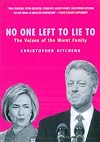
"This little book has no `hidden agenda.' It is offered in the most cheerful and open polemical spirit, as an attack on a crooked president and a corrupt and reactionary administration" (1).
So says Christopher Hitchens in the preface. All though it may be the case that the book is cheerful and polemical it is also, I'm afraid to say, fairly clumsy and transparently superficial.
Hitchens begins in the preface with the possibility that Clinton may have impregnated and African American woman during his term as Governor in Arkansas only to drop the implication based on the relevant DNA data. Hitchens has proven nothing here; he has merely introduced what we already know; Clinton's sexual infidelities and callous disregard for his family and other females along the way.
-The majority of this slim book seeks to prove that Clinton in fact raped who was never given a fair hearing. Hitchens more or less accepts her testimony out of hand because he believes she is a good and honorable person and has not "agenda" in making up such dribble. Hmmm....Oh that's right, no one could ever gain anything from being associated in a sex scandal with the President (see Monica's story).
-But there is a deeper problem with this complaint. The president's sexual behavior has nothing to do with the relevant political factors of his leadership and diplomacy. If Clinton is guilty of sexual assault then he should be tried as an ordinary citizen. But Hitchens' evidence is merely from second-hand testimony show more at best, and at worst it is derived from an awkward transcript of an interview with Al Gore in which he refused to comment.
-The only worth while material in this book is Chapter 5, Clinton's War crimes. In it he discusses Clinton's bombing of the Al-Shifa plant in Khartoum in 1998, a clear war crime based on the evidence presented. I urge you to check this book out of the library, skip the sexual babble, and turn to this section as it is one of the view discussions on the topic aside from Noam Chomsky's comments in 9/11, which Hitchens would later blast him for as surprising as that sounds. show less
So says Christopher Hitchens in the preface. All though it may be the case that the book is cheerful and polemical it is also, I'm afraid to say, fairly clumsy and transparently superficial.
Hitchens begins in the preface with the possibility that Clinton may have impregnated and African American woman during his term as Governor in Arkansas only to drop the implication based on the relevant DNA data. Hitchens has proven nothing here; he has merely introduced what we already know; Clinton's sexual infidelities and callous disregard for his family and other females along the way.
-The majority of this slim book seeks to prove that Clinton in fact raped who was never given a fair hearing. Hitchens more or less accepts her testimony out of hand because he believes she is a good and honorable person and has not "agenda" in making up such dribble. Hmmm....Oh that's right, no one could ever gain anything from being associated in a sex scandal with the President (see Monica's story).
-But there is a deeper problem with this complaint. The president's sexual behavior has nothing to do with the relevant political factors of his leadership and diplomacy. If Clinton is guilty of sexual assault then he should be tried as an ordinary citizen. But Hitchens' evidence is merely from second-hand testimony show more at best, and at worst it is derived from an awkward transcript of an interview with Al Gore in which he refused to comment.
-The only worth while material in this book is Chapter 5, Clinton's War crimes. In it he discusses Clinton's bombing of the Al-Shifa plant in Khartoum in 1998, a clear war crime based on the evidence presented. I urge you to check this book out of the library, skip the sexual babble, and turn to this section as it is one of the view discussions on the topic aside from Noam Chomsky's comments in 9/11, which Hitchens would later blast him for as surprising as that sounds. show less
Christopher Hitchens is consistently one of the most provocative (if at times arrogant) journalists in the world. This book is a collection of essays he's published in the Nation, Vanity Fair, and a number of other publications in the last few years. The first section, titled "Love," is purely literary criticism, and it's a fabulous demonstration of his elegance with the pen. He writes on a number of authors, Joyce, Proust, Orwell (of course), Borges, and a number of others. These essays are all pretty much first-rate; I may even come to take pleasure in his work about the arts more than his political analysis.
The second section, titled "Poverty," contains essays on a number of political/sociological topics and figures such as Mother Teresa, Michael Moore, David Irving, and so forth. They vary in quality and levels of intellectual content, and are perhaps mostly mere polemics.
The third section titled "War," is pure politics, and it begins with some fine essays about September 11, in which Hitchens provides his insight/feelings about that event. However, the final half of the section is more or less devoted to the Iraq war, which is where Hitchens very badly misses the mark. I don't object to his decidedly more "Hawkish" view of combating Islamic Jihad than the majority of the left, however I do object to his sweeping indictments of those on the left who do not hold the same point of view. Hitchens includes his embarrassing "Rejoinder to Noam Chomsky," wherein he stupidly show more responds to a rebuttal from Chomsky which he himself instigated by trying to argue that Chomsky was "rationalizing" Al Qida's crimes by comparing them to Clinton's bombing of a pharmaceutical factory in Khartoum in 1998. Unfortunately the book does not include any of Chomsky's side of the debate so it appears as though Hitchens has rightly corrected Chomsky's error, however when you read all four of the articles written collectively it's clear that it was actually Chomsky who won the debate in a number of crucial respects; Hitchens refuses to admit that the bombing of the plant was a greater crime than 9/11 (which it was, approximately 10,000 people perished), which reveals is ethnocentrism. I don't think Hitchens still actually believes that the U.S. invasion of Iraq is truly humanitarian in nature; he is simply unwilling to admit his error. Despite his unevenness, Hitchens is a bright writer and worth reading, and "Love, Poverty, and War" is a potent collection. show less
The second section, titled "Poverty," contains essays on a number of political/sociological topics and figures such as Mother Teresa, Michael Moore, David Irving, and so forth. They vary in quality and levels of intellectual content, and are perhaps mostly mere polemics.
The third section titled "War," is pure politics, and it begins with some fine essays about September 11, in which Hitchens provides his insight/feelings about that event. However, the final half of the section is more or less devoted to the Iraq war, which is where Hitchens very badly misses the mark. I don't object to his decidedly more "Hawkish" view of combating Islamic Jihad than the majority of the left, however I do object to his sweeping indictments of those on the left who do not hold the same point of view. Hitchens includes his embarrassing "Rejoinder to Noam Chomsky," wherein he stupidly show more responds to a rebuttal from Chomsky which he himself instigated by trying to argue that Chomsky was "rationalizing" Al Qida's crimes by comparing them to Clinton's bombing of a pharmaceutical factory in Khartoum in 1998. Unfortunately the book does not include any of Chomsky's side of the debate so it appears as though Hitchens has rightly corrected Chomsky's error, however when you read all four of the articles written collectively it's clear that it was actually Chomsky who won the debate in a number of crucial respects; Hitchens refuses to admit that the bombing of the plant was a greater crime than 9/11 (which it was, approximately 10,000 people perished), which reveals is ethnocentrism. I don't think Hitchens still actually believes that the U.S. invasion of Iraq is truly humanitarian in nature; he is simply unwilling to admit his error. Despite his unevenness, Hitchens is a bright writer and worth reading, and "Love, Poverty, and War" is a potent collection. show less
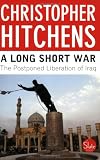
This is an unbelievably terrible effort at polemicisism by a usually brilliant journalist. Hitchens was, and still is in favor of regime change in Iraq. He accepts the hard-line Neo-Conservative agenda of Wolfowitz and Cheney, and doesn't seem to have any problem with accepting each and every one of their lies.
-To begin, Hitchens has no problem with the knowledge that the US has supported Hussein throughout his worst atrocities, and somehow believes that the sudden desire to remove him is the product of noble and benign humanitarian intervention.
-Yet later he seems to have no problem with the knowledge that this war is about oil, writing "of course it's about oil, stupid." Hitchens thinks oil is worth fighting for. Are we supposed to accept this from a former Trotskyite? It is worth sacrificing human life for the sake of oil profits for the whores at Halliburton? This is sheer nonsense.
-The book is replete with dated material. Hitchens believed that Hussein had WMD, that he had well established ties to Al-Queda, and that the removal of Hussein was necessary for the stability of the region. This is utterly ridiculous.
-Long, Short, War is easily Hitchens' worst work of writing, and you shouldn't believe a word of it. The Iraq war is a miserable failure motivated by the forces of greed and barbarity. Hitch never should have stooped to the low level of Bush, Cheney, and all the rest. May he redeem himself in the future and admit the error of his ways.
-To begin, Hitchens has no problem with the knowledge that the US has supported Hussein throughout his worst atrocities, and somehow believes that the sudden desire to remove him is the product of noble and benign humanitarian intervention.
-Yet later he seems to have no problem with the knowledge that this war is about oil, writing "of course it's about oil, stupid." Hitchens thinks oil is worth fighting for. Are we supposed to accept this from a former Trotskyite? It is worth sacrificing human life for the sake of oil profits for the whores at Halliburton? This is sheer nonsense.
-The book is replete with dated material. Hitchens believed that Hussein had WMD, that he had well established ties to Al-Queda, and that the removal of Hussein was necessary for the stability of the region. This is utterly ridiculous.
-Long, Short, War is easily Hitchens' worst work of writing, and you shouldn't believe a word of it. The Iraq war is a miserable failure motivated by the forces of greed and barbarity. Hitch never should have stooped to the low level of Bush, Cheney, and all the rest. May he redeem himself in the future and admit the error of his ways.
This may be Sontag's most rigorous and important collection of essays, complete with topics ranging from Levi-Strauss to Godard. In it is her famous essay "On Camp," which would later make her a superstar in the New York artistic community.
Sontag is worried about intellectual interpretation, the erudite and narrow approach to understanding a work of art. She calls on us to "show how it is what it is, even that it is what it is, rather than to show what it means." Her approach is far reaching and yet acute and highly attuned to the intellectual aspects of the fine arts.
This collection includes fabulous essays on Sartre, Bresson, Beckett, Lukacs, Resnais, and many others. It is evidence of her astonishing ability to think seriously and with tremendous beauty about that which is most important.
Sontag is worried about intellectual interpretation, the erudite and narrow approach to understanding a work of art. She calls on us to "show how it is what it is, even that it is what it is, rather than to show what it means." Her approach is far reaching and yet acute and highly attuned to the intellectual aspects of the fine arts.
This collection includes fabulous essays on Sartre, Bresson, Beckett, Lukacs, Resnais, and many others. It is evidence of her astonishing ability to think seriously and with tremendous beauty about that which is most important.

Sontag has once again compiled an intelligent collection of essays on widely varying aesthetic topics. Though she begins with a rather artificial and patronizing obituary for the late man of letters Paul Goodman, whose body of work she is evidently less than enthused with, though she feels obliged to compare him to Sartre. The essay rings of false piety.
She moves into an expansive and favorable essay on Antonin Artaud, the great playwright and artist of the avant-garde movement. Sontag reviews the developments of his great career within the context of moralistic philosophic aesthetics, liking him with Nietzsche, then Sade, then Breton.
Yet the most impressive essay in Under the Sign is titled `Fascinating Fascism,' and it is truly fascinating. In it, Sontag overviews the work of filmmaker, actress, and photographer Leni Riefenstahl, the Nazi propagandist whose body of work includes the esteemed documentaries Triumph of the Will, and Olympia, the latter about the 1936 Olympic games. Sontag reviews Riefenstahl's book of photography on the Nuba tribe in Sudan, which is apparently breathtaking. Sontag concludes that Reifenstahl, despite her `de-Nazification' and renunciation of her political past is still enamored with a fascist ideal, valuing the masculine strength of the male Nuba and placing their bodies in the foreground, while the women remain vulnerable and tucked away in shadowy corners. The essay is highly provocative.
The title essay is about the great philosopher and show more literary critic Walter Benjamin, whom she reviews favorably. This essay provides some interesting tidbits of information that Hannah Arendt neglects to include in her introduction, such as Benjamin's apparent hatred for Heidegger's philosophy.
Also included in this volume is an excellent and terse review of Roland Barthes, and the fine novelist Elias Canetti, whom she holds in great esteem. show less
She moves into an expansive and favorable essay on Antonin Artaud, the great playwright and artist of the avant-garde movement. Sontag reviews the developments of his great career within the context of moralistic philosophic aesthetics, liking him with Nietzsche, then Sade, then Breton.
Yet the most impressive essay in Under the Sign is titled `Fascinating Fascism,' and it is truly fascinating. In it, Sontag overviews the work of filmmaker, actress, and photographer Leni Riefenstahl, the Nazi propagandist whose body of work includes the esteemed documentaries Triumph of the Will, and Olympia, the latter about the 1936 Olympic games. Sontag reviews Riefenstahl's book of photography on the Nuba tribe in Sudan, which is apparently breathtaking. Sontag concludes that Reifenstahl, despite her `de-Nazification' and renunciation of her political past is still enamored with a fascist ideal, valuing the masculine strength of the male Nuba and placing their bodies in the foreground, while the women remain vulnerable and tucked away in shadowy corners. The essay is highly provocative.
The title essay is about the great philosopher and show more literary critic Walter Benjamin, whom she reviews favorably. This essay provides some interesting tidbits of information that Hannah Arendt neglects to include in her introduction, such as Benjamin's apparent hatred for Heidegger's philosophy.
Also included in this volume is an excellent and terse review of Roland Barthes, and the fine novelist Elias Canetti, whom she holds in great esteem. show less
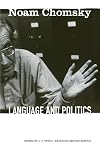
This collection is an impressive gathering of interviews collected from the early sixties to the present. In it, the Professor gives some of his best long-range insights on a number of topics, such as linguistics, philosophy, science, politics, the Middle East, the media, and education. This volume is not the place to start if you are new to Chomsky's work, but it is an excellent supplement to his famous writings. As to the interviews themselves, they are mostly fascinating, Chomsky proves once again that he may be the most important intellectual of the latter half of the 20th century. My one complaint is that some of the interviews overlap, as he is asked to speak multiple times on a number of topics, he is asked what the conncection between his linguistic work and his political work is about twenty times for instance, as the title would suggest. Aside from that, this is an invaluable read.
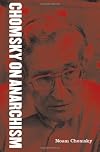
It seems like AK press is hell bent on publishing everything Chomsky has ever written and said over and over again. Unfortunately there is nothing in this text that hasn't already been printed, so readers of Chomsky are more than likely to be disappointed as I was. There are excellent articles in here however, such as "Objectivity and Liberal Scholarship, an article on Vietnam and the Spanish Revolution which originally appeared in Chomsky's first political book, "American Power and the New Mandarins." The article is first-rate scholarship and includes excellent bibliographical information. Chomsky was probably the only American dissident in the 1960's who was discussing issues like Anarcho-Syndicalism in relation to the Vietnam conflict. The other articles in the book have also appeared elsewhere, and they vary in quality a great deal. There is some interesting discussion here on Libertarian Socialist life in the Israeli Kibbutzim as well. "Language and Freedom," is an excellent lecture which connects his linguistic work with political ideology (which Chomsky now refuses to do), and discusses classical anarchist thinkers like Bakunin and Rocker. The last couple of interviews get slightly too informal for my taste and there are hardly any footnotes to back them up, but still this is a moderately helpful collection of material which gives an insight into Chomsky's anarchist convictions
Hegemony or Survival: America's Quest for Global Dominance (The American Empire Project) by Noam Chomsky
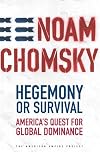
Noam Chomsky provides yet another sweeping political indictment of the United States, and this time he places the human species entire as potential victims of far-right elite power. This volume is extraordinarily broad and far-reaching. Chomsky discusses the Bush doctrine, Iraq, the Middle East, Globalization, the Cold War, and Nuclear proliferation to name justa few. His scholarship is praiseworthy, although he continues to overstretch himself. On the issue of the FRY, Chomsky continues to make false assumptions about the appropriate response to Serbian aggression. He is not an expert on this issue, and relies almost entirely on leftist publications, though his section on Israel-Palestine is evidence of his continued mastery of the topic.
A few points to raise: Chomsky occasionally applies passing references to well established systems of thinking without quoting directly. For example, in discussing Clinton's unilateral bombing of the al-Shifa plant in Sudan in 1998, he refers to "the Hegelian doctrine that Africans are `mere things', whose lives have `no value.'" (pg. 207). No direct reference to Hegel is provided. Additionally Chomsky claims on page 100 that "the figure of $17 billion is the amount that Iraq has paid to people and companies [...]", without a citation. Chomsky also quotes Paul Wolfowitz to the fact that he was "praising the monstrous Suharto and supporting the brutal and corrupt Marcos" (pg. 114), without proper citation. One last scholarly issue, on show more page 233, Chomsky writes that "Washington had argued that `access to American bio-defense installations' might reveal military secrets" but he refers to the Judith Miller in the footnote (see #35 pg. 266), who later of course turned out to be a rubbish journalist.
Never the less, Chomsky's belief that the forces of U.S. power are a threat to the survival of the human race are legitimate and worth taking seriously. His knowledge of politics is undeniably intimidating, yet I disagree with his incessant employment of the term "truism" (see esp. chapter 8 `Terrorism and Justice, pgs. 187- 216), there are no "truisms" in human affairs. No matter how scrupulously one arranges facts, facts are all they remain, not "truisms." Even the most reputable journalists, scholars, and human rights organizations are incapable of reporting the facts truthfully and correctly. show less
A few points to raise: Chomsky occasionally applies passing references to well established systems of thinking without quoting directly. For example, in discussing Clinton's unilateral bombing of the al-Shifa plant in Sudan in 1998, he refers to "the Hegelian doctrine that Africans are `mere things', whose lives have `no value.'" (pg. 207). No direct reference to Hegel is provided. Additionally Chomsky claims on page 100 that "the figure of $17 billion is the amount that Iraq has paid to people and companies [...]", without a citation. Chomsky also quotes Paul Wolfowitz to the fact that he was "praising the monstrous Suharto and supporting the brutal and corrupt Marcos" (pg. 114), without proper citation. One last scholarly issue, on show more page 233, Chomsky writes that "Washington had argued that `access to American bio-defense installations' might reveal military secrets" but he refers to the Judith Miller in the footnote (see #35 pg. 266), who later of course turned out to be a rubbish journalist.
Never the less, Chomsky's belief that the forces of U.S. power are a threat to the survival of the human race are legitimate and worth taking seriously. His knowledge of politics is undeniably intimidating, yet I disagree with his incessant employment of the term "truism" (see esp. chapter 8 `Terrorism and Justice, pgs. 187- 216), there are no "truisms" in human affairs. No matter how scrupulously one arranges facts, facts are all they remain, not "truisms." Even the most reputable journalists, scholars, and human rights organizations are incapable of reporting the facts truthfully and correctly. show less
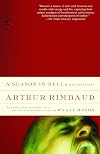
Rimbaud skillfully draws the reader into the world of damnation, the world of the self. He confronts the essence of nihilism and self-loathing in this remarkable poem, composed at the astonishing age of 19. Like Dante, Milton, and perhaps Pound, Rimbaud is able to bend the language to engage the reader in a transcendental understanding of the human condition and psyche.
There are poems in here of promethean beauty that prefigure the rebellious spirit of French artistic bohemians in the dawn of the 20th century:
"Long ago, if my memory serves, life was a feast where every heart was open, where every wined flowed. One night, I sat Beauty on my knee.-And I found her bitter.-And I
hurt her.
I took arms against justice.
I fled, entrusting my treasure to you, o witches, o misery, o hate.
I snuffled any hint of human hope from my consciousness. I made the muffled leap of a wild beast into any hint of joy, to strangle it. (3).
This is an altogether excellent edition of Season and Hell and Illuminations, with a lucid and stark translation by Wyatt Mason. The Modern English library has also included the original French text, complete with a chronology of the poet's life and comprehensive facsimiles of the original texts for true bookworms who want to look at Rimbaud's corrections.
There are poems in here of promethean beauty that prefigure the rebellious spirit of French artistic bohemians in the dawn of the 20th century:
"Long ago, if my memory serves, life was a feast where every heart was open, where every wined flowed. One night, I sat Beauty on my knee.-And I found her bitter.-And I
hurt her.
I took arms against justice.
I fled, entrusting my treasure to you, o witches, o misery, o hate.
I snuffled any hint of human hope from my consciousness. I made the muffled leap of a wild beast into any hint of joy, to strangle it. (3).
This is an altogether excellent edition of Season and Hell and Illuminations, with a lucid and stark translation by Wyatt Mason. The Modern English library has also included the original French text, complete with a chronology of the poet's life and comprehensive facsimiles of the original texts for true bookworms who want to look at Rimbaud's corrections.
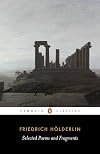
I don't have much to say about Holderlin's poetry, which I find a bit stodgy and ungraceful, but I have to say I cannot read it in German, which I believe is a necessary prerequisite to any true read of poetry. I would merely like to share a poem that I found beautiful:
Sunset
Where are you? Dazzled, drunken my soul grows faint
And dark with so much gladness; for even now
I listened while, too rich in golden
Sounds, the enrapturing youth, the sun-god
Intoned his evening hymn on a heavenly lyre;
All round the hills and forests re-echoed it,
Though far from here-to pious nations
Who still revere him-by now he's journeyed.
Wo bist du? Trunken dammert die Seele mir
Von aller deiner Wonne; denn eben ist's,
Dass ich gelauscht, wie, goldner Tone
Voll der entzukende Sonnenjungling
Sein Abendlied af himmlischer Leyer speilt';
Es tonten rings die Walder und Hugel nach.
Doch fern ist er zu frommen Volkern,
Die ihn noch ehren, hinweggegangen. (pp 16).
Enjoy the archaic read.
Sunset
Where are you? Dazzled, drunken my soul grows faint
And dark with so much gladness; for even now
I listened while, too rich in golden
Sounds, the enrapturing youth, the sun-god
Intoned his evening hymn on a heavenly lyre;
All round the hills and forests re-echoed it,
Though far from here-to pious nations
Who still revere him-by now he's journeyed.
Wo bist du? Trunken dammert die Seele mir
Von aller deiner Wonne; denn eben ist's,
Dass ich gelauscht, wie, goldner Tone
Voll der entzukende Sonnenjungling
Sein Abendlied af himmlischer Leyer speilt';
Es tonten rings die Walder und Hugel nach.
Doch fern ist er zu frommen Volkern,
Die ihn noch ehren, hinweggegangen. (pp 16).
Enjoy the archaic read.
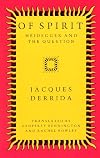
The question of Heidegger and politics has plagued (and will continue to plague) continental philosophy since Heidegger's induction into the Recktorship under the Nazi regime in the thirties.
Why did he? But, and perhaps more importantly, why does something like Nazism come up? What is it about the West that breeds this kind of pathological racism? And how could Heidegger, for all his time concerned with, and working on authenticity and inauthenticity get swept up in the most inauthentic political movement of the century?
For Derrida, this kind of fascistic-nationalistic racism is not a problem of facticity, it is a problem of Spirit (Geist). Heidegger avoids the question and problem of Spirit, and it is a failure of his fundamental ontology and onto-theology.
This is a fascinating lecture from the late Derrida, who investigates Heidegger in new and unfamiliar modes. He relates (what he and the majority of others perceives to be) Heidegger's avoiding (vermeiden), of the question of Spirit ( Hegelian Geist). Avoiding means the saying without saying, the writing without writing, using words, without using them.
"No one ever speaks of spirit in Heidegger" (pg.4), well now Derrida has provided us with the speaking.
"The question of spirit must be recognized in indifference" (pg. 19), and Derrida performs this with remarkable coolness, though not lucidity.
This lecture is about spirit, about politics, about Europe, and about language. All students of Heidegger should read it, as it show more is one of the best. show less
Why did he? But, and perhaps more importantly, why does something like Nazism come up? What is it about the West that breeds this kind of pathological racism? And how could Heidegger, for all his time concerned with, and working on authenticity and inauthenticity get swept up in the most inauthentic political movement of the century?
For Derrida, this kind of fascistic-nationalistic racism is not a problem of facticity, it is a problem of Spirit (Geist). Heidegger avoids the question and problem of Spirit, and it is a failure of his fundamental ontology and onto-theology.
This is a fascinating lecture from the late Derrida, who investigates Heidegger in new and unfamiliar modes. He relates (what he and the majority of others perceives to be) Heidegger's avoiding (vermeiden), of the question of Spirit ( Hegelian Geist). Avoiding means the saying without saying, the writing without writing, using words, without using them.
"No one ever speaks of spirit in Heidegger" (pg.4), well now Derrida has provided us with the speaking.
"The question of spirit must be recognized in indifference" (pg. 19), and Derrida performs this with remarkable coolness, though not lucidity.
This lecture is about spirit, about politics, about Europe, and about language. All students of Heidegger should read it, as it show more is one of the best. show less
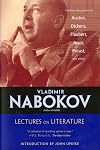
Excellent and brilliantly witty and dry series of lecture courses on literature from the master, Vladimir Nabokov. In this volume, Nabokov fights against all interpretive lenses, he denounces the sociological, political, and autobiographical perspectives on literature, arguing that a true reader should pay attention to the detail of the author's narrative, to the artistry and creativity, and not get drawn into banal generalizations. He writes that "the novels in this series are supreme fairy tales" (pg. 2).
According to Nabokov, good reader should:
1. Have an imagination
2. Have a memory
3. Have a dictionary
4. Have some artistic sense
In this volume, Nabokov lectures on a wide variety of great literature, including Jane Austin's `Mansfield Park,' Charles Dickens' `Bleak House,' `Dr. Jekyll and Mr. Hyde by Robert Louis Stevenson (an unusual choice at the time), `Madame Bovary' by Flaubert, Proust's great `a la recherché,' `the Metamorphosis,' by Kafka, `Ulysses,' by Joyce, and an excellent essay called `The Art of Literature and Commensense.'
This volume is filled with pleasurable surprises, especially the marvelous facsimiles of Nabokov's lecture preparations with complete annotations, and many wonderful diagrams and illustrations of the works analyzed. He has some great drawings of Gregor Samsa the beetle, and the floor-map of his apartment. It really helps the reader appreciate the work unlike the bulk of literary criticism, which seeks to mystify and empower the show more interpreter. This is a true appreciation of the novel form, and a classic of lit criticism from one of the greatest writers of the 20th century. His depth and breadth of understanding and attention to detail will astound you. show less
According to Nabokov, good reader should:
1. Have an imagination
2. Have a memory
3. Have a dictionary
4. Have some artistic sense
In this volume, Nabokov lectures on a wide variety of great literature, including Jane Austin's `Mansfield Park,' Charles Dickens' `Bleak House,' `Dr. Jekyll and Mr. Hyde by Robert Louis Stevenson (an unusual choice at the time), `Madame Bovary' by Flaubert, Proust's great `a la recherché,' `the Metamorphosis,' by Kafka, `Ulysses,' by Joyce, and an excellent essay called `The Art of Literature and Commensense.'
This volume is filled with pleasurable surprises, especially the marvelous facsimiles of Nabokov's lecture preparations with complete annotations, and many wonderful diagrams and illustrations of the works analyzed. He has some great drawings of Gregor Samsa the beetle, and the floor-map of his apartment. It really helps the reader appreciate the work unlike the bulk of literary criticism, which seeks to mystify and empower the show more interpreter. This is a true appreciation of the novel form, and a classic of lit criticism from one of the greatest writers of the 20th century. His depth and breadth of understanding and attention to detail will astound you. show less
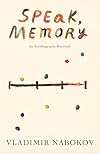
This is the way memoirs ought to be written. Nabokov takes the reader on a journey of the senses, of the dim and yet luminous memories of a childhood, through the eyes of a genius with an unprecedented attention for detail. Nabokov does not walk us through every relationship, every transition, etc. Rather, he gathers and recollects the memories of color, of feeling, and learning that are most important to him. There are remarkable passages in this text, including remarkably varied intellectual topics, i.e.: literature, politics, chess, mathematics, lepidoptery, ect. There is a passage on camoflauge and Nabokov's suspicion of Darwinian evolution that I love:
"Natural selection, in the Darwinian sense, would not explain the miraculous coincidence of imitative aspect and imitative behavior, nor could one appeal to the theory of `the struggle for life' when a protective device was carried to a point of mimetic subtlety, exuberance, and luxury far in excess of a predator's power of appreciation. I discovered in nature the nonutilitarian delights that I sought in art. Both were a form of magic, both were a game of intricate enchantment and deception" (pg. 125).
And so too is, `Speak Memory' a nonutilitarian delight. It is a magical work of enormous imaginative and evocative energy.
"Natural selection, in the Darwinian sense, would not explain the miraculous coincidence of imitative aspect and imitative behavior, nor could one appeal to the theory of `the struggle for life' when a protective device was carried to a point of mimetic subtlety, exuberance, and luxury far in excess of a predator's power of appreciation. I discovered in nature the nonutilitarian delights that I sought in art. Both were a form of magic, both were a game of intricate enchantment and deception" (pg. 125).
And so too is, `Speak Memory' a nonutilitarian delight. It is a magical work of enormous imaginative and evocative energy.