This review was originally published on Reedsy Discovery.
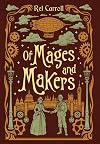
No one knows the real Art Keyes, and he is more than happy to keep it that way. But when his sister shares her new, terribly dangerous creation at the annual Maker Exhibition, he is forced to step in and risk everything to save the person he most cares about.
Audrey Clune is trapped in a life of duty and strict rules, dreading the moment she will have to accept the proposal of a man she dislikes but is being forced to marry. She longs for a life of adventure like that of the famous heroine Robin Renegade, and she may just get her wish when her carriage is attacked by highwaymen during her last journey before the dreaded engagement.
As Art and Audrey have to navigate high society and a thick web of lies, it is hard to know whom to trust when the stakes are so high and the "honest truth" becomes a precious commodity.
Of Mages and Makers is a delightful gaslamp fantasy novel brimming with rich, full characters and adventure at every turn. The book features a slow-burn romance that is an absolute joy to watch unfold. Readers looking for spice will not find it here, but anyone seeking a tender romance based on mutual trust and respect won't be disappointed.
The world is described vividly and built so that, after an initial disorientation due to the complex social structure, it feels easy to understand the politics and (im)balances of power at play. The entire cast is characterised extremely well, with even the secondary show more characters being easy to love (or despise, depending on the case), feeling essential to the story and entirely unforgettable.
The two main characters of course steal the show. I particularly loved the journey of self-discovery and acceptance that Audrey goes on, and reading in the author's final note that it is inspired by the experience of living with chronic pain made it even more touching. The romance is beautifully constructed, never coming across as forced. Although a few passages felt slightly too repetitive in their attempts to reiterate the characters' emotions or thoughts process, the banter is witty and sharp and the writing flows easily. Any (very minor) flaws are entirely forgiven with that near-perfect epilogue.
Overall, Of Mages and Makers is the perfect novel to kickstart autumn and cosy reading season with a sweet, swashbuckling romance that is never banal.
I received an e-arc of this book for free via Reedsy Discovery. This did not affect my opinion of the book in any way. show less
No one knows the real Art Keyes, and he is more than happy to keep it that way. But when his sister shares her new, terribly dangerous creation at the annual Maker Exhibition, he is forced to step in and risk everything to save the person he most cares about.
Audrey Clune is trapped in a life of duty and strict rules, dreading the moment she will have to accept the proposal of a man she dislikes but is being forced to marry. She longs for a life of adventure like that of the famous heroine Robin Renegade, and she may just get her wish when her carriage is attacked by highwaymen during her last journey before the dreaded engagement.
As Art and Audrey have to navigate high society and a thick web of lies, it is hard to know whom to trust when the stakes are so high and the "honest truth" becomes a precious commodity.
Of Mages and Makers is a delightful gaslamp fantasy novel brimming with rich, full characters and adventure at every turn. The book features a slow-burn romance that is an absolute joy to watch unfold. Readers looking for spice will not find it here, but anyone seeking a tender romance based on mutual trust and respect won't be disappointed.
The world is described vividly and built so that, after an initial disorientation due to the complex social structure, it feels easy to understand the politics and (im)balances of power at play. The entire cast is characterised extremely well, with even the secondary show more characters being easy to love (or despise, depending on the case), feeling essential to the story and entirely unforgettable.
The two main characters of course steal the show. I particularly loved the journey of self-discovery and acceptance that Audrey goes on, and reading in the author's final note that it is inspired by the experience of living with chronic pain made it even more touching. The romance is beautifully constructed, never coming across as forced. Although a few passages felt slightly too repetitive in their attempts to reiterate the characters' emotions or thoughts process, the banter is witty and sharp and the writing flows easily. Any (very minor) flaws are entirely forgiven with that near-perfect epilogue.
Overall, Of Mages and Makers is the perfect novel to kickstart autumn and cosy reading season with a sweet, swashbuckling romance that is never banal.
I received an e-arc of this book for free via Reedsy Discovery. This did not affect my opinion of the book in any way. show less
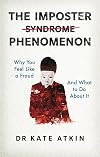
Who here hasn’t heard about “imposter syndrome”? I’ve certainly been seeing it around a lot, and in fact I’m sure I’ve said I “had it” multiple times. So, when I saw the cover for The Imposter Phenomenon by Dr. Kate Atkin, with that “syndrome” crossed out, I was immediately intrigued.
The reframing of imposterism as a phenomenon instead of a syndrome, and imposter feelings as something a person may experience instead of something they “have” was eye-opening and really made me reflect on how much power the way in which we talk about something has.
Although this book is based on the author’s PhD research, it’s completely accessible and an extremely pleasant read that does need or expect the reader to be an academic, as complex concepts are broken down and practical examples from research participants are used throughout to illustrate the various ways in which imposter thoughts can manifest.
I particularly liked that the author included little spaces for “time in”, offering questions to guide introspective reflections and very practical ways in which a reader could reflect on their own imposter feelings or support someone who is experiencing them. Having been both at some point or another, I found them an incredibly useful tool that I will certainly refer back to in the future. I highlighted a made notes throughout – which I don’t often do to this degree! – as I really wanted to be able to find those powerful quotes again.
I also really show more appreciated the fact that the author included one’s context as a factor to consider when dealing with imposter feelings. This is something I often find is missing from “self-help” books, which tend to take a very individualistic approach and ignore the ways in which the context we live and work in can affect our thoughts, feelings, and reactions.
The only thing stopping this from being a full 5 stars for me is that I found some sections to be slightly too repetitive, while in a few passages I would have liked to see the book go a bit more in depth. These were fairly minor though and I really enjoyed this overall!
I received a digital review copy of this book for free from the publisher as part of the online book tour organised by Literally PR. This did not affect my opinion of the book in any way. show less
The reframing of imposterism as a phenomenon instead of a syndrome, and imposter feelings as something a person may experience instead of something they “have” was eye-opening and really made me reflect on how much power the way in which we talk about something has.
Although this book is based on the author’s PhD research, it’s completely accessible and an extremely pleasant read that does need or expect the reader to be an academic, as complex concepts are broken down and practical examples from research participants are used throughout to illustrate the various ways in which imposter thoughts can manifest.
I particularly liked that the author included little spaces for “time in”, offering questions to guide introspective reflections and very practical ways in which a reader could reflect on their own imposter feelings or support someone who is experiencing them. Having been both at some point or another, I found them an incredibly useful tool that I will certainly refer back to in the future. I highlighted a made notes throughout – which I don’t often do to this degree! – as I really wanted to be able to find those powerful quotes again.
I also really show more appreciated the fact that the author included one’s context as a factor to consider when dealing with imposter feelings. This is something I often find is missing from “self-help” books, which tend to take a very individualistic approach and ignore the ways in which the context we live and work in can affect our thoughts, feelings, and reactions.
The only thing stopping this from being a full 5 stars for me is that I found some sections to be slightly too repetitive, while in a few passages I would have liked to see the book go a bit more in depth. These were fairly minor though and I really enjoyed this overall!
I received a digital review copy of this book for free from the publisher as part of the online book tour organised by Literally PR. This did not affect my opinion of the book in any way. show less
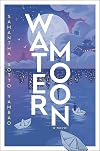
This book was one of my most anticipated reads this year, as everything in the blurb basically screamed at me to read it. Despite having a NetGalley e-arc for this one, I ended up reading the Illumicrate hardcover - which is just stunning, by the way.
Water Moon is a whimsical fantasy starting from a great premise: I absolutely loved the concept of a pawnshop for regrets and it sounded really different to other books I'd read recently. The vibes are immaculate here and the world is fascinating. It really shows what rich imagination this author has! It is a shame that the book is too busy jumping from one plot point to the next with no breathing room to really savour the worldbuilding and delve deeper into the lore, its pacing completely off.
Unfortunately, the execution didn't fully live up to the hype for me. The writing is just too stilted and repetitive for my taste, with a strong over-reliance on short, simple sentences. There's nothing wrong with short sentences per se, but they were so overused here that it ended up feeling clunky to read and not at all the smooth, dream-like experience it could have been. There are sparks of deeper writing here and there, but they end up falling into nothing.
The romance also didn't work for me at all: it was all too insta-love and I just couldn't buy the dynamic between the two main characters, pining over each other despite having literally just met. And don't get me started on the love triangle... The character development was also show more quite lacking for me: they all felt pretty much one-dimensional and barely ever acted their age. I mean, Kei is supposed to have a PhD, yet he acts and talks like a (very unnatural) teenager for the vast majority of the book!
I did like the themes the book was trying to explore and the way in which reflections on choices, regrets, duty and - ultimately - the purpose of living were woven into a fantastical adventure, but unfortunately it ended up remaining fairly surface level for me. There were a few quotes I highlighted because they were so beautiful, but sadly they were too few and far between to make this a new favourite read.
"Life is about finding joy in the space between where you come from and where you are going. I may never get to where I want to go, but I can look back on my life and say that I did not waste a second of it being bitter that I was not someplace else. Happiness does not exist in a place. It lives in every breath we take. You need to choose to take it in, over and over again."
This is a classic example of a missed opportunity sadly, with so much unrealised potential. I will probably give this author another chance when her new book comes out, as the premise for that one sounds good too, but I will certainly approach it with lowered expectations. show less
Water Moon is a whimsical fantasy starting from a great premise: I absolutely loved the concept of a pawnshop for regrets and it sounded really different to other books I'd read recently. The vibes are immaculate here and the world is fascinating. It really shows what rich imagination this author has! It is a shame that the book is too busy jumping from one plot point to the next with no breathing room to really savour the worldbuilding and delve deeper into the lore, its pacing completely off.
Unfortunately, the execution didn't fully live up to the hype for me. The writing is just too stilted and repetitive for my taste, with a strong over-reliance on short, simple sentences. There's nothing wrong with short sentences per se, but they were so overused here that it ended up feeling clunky to read and not at all the smooth, dream-like experience it could have been. There are sparks of deeper writing here and there, but they end up falling into nothing.
The romance also didn't work for me at all: it was all too insta-love and I just couldn't buy the dynamic between the two main characters, pining over each other despite having literally just met. And don't get me started on the love triangle... The character development was also show more quite lacking for me: they all felt pretty much one-dimensional and barely ever acted their age. I mean, Kei is supposed to have a PhD, yet he acts and talks like a (very unnatural) teenager for the vast majority of the book!
I did like the themes the book was trying to explore and the way in which reflections on choices, regrets, duty and - ultimately - the purpose of living were woven into a fantastical adventure, but unfortunately it ended up remaining fairly surface level for me. There were a few quotes I highlighted because they were so beautiful, but sadly they were too few and far between to make this a new favourite read.
"Life is about finding joy in the space between where you come from and where you are going. I may never get to where I want to go, but I can look back on my life and say that I did not waste a second of it being bitter that I was not someplace else. Happiness does not exist in a place. It lives in every breath we take. You need to choose to take it in, over and over again."
This is a classic example of a missed opportunity sadly, with so much unrealised potential. I will probably give this author another chance when her new book comes out, as the premise for that one sounds good too, but I will certainly approach it with lowered expectations. show less
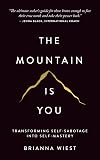
Read for research. This book offers a few interesting reflections and exercises, but honestly it's unlikely to be anything you haven't heard before. I found it to be highly repetitive to the detriment of substance, which was annoying at times, and a tad too over-simplistic in some of the solutions it offers (though that's often an issue I have with self-help books). I'd heard most of the advice before, but it was nice to be reminded of a few points I hadn't thought about in a while, and it was overall a very easy read. The audiobook narrator is really pleasant to listen to, and her voice is very soothing which works perfectly for a book of this type.
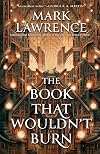
Beautifully written and developed marvellously, this is an original and intriguing book which defies genre labels (primarily mixing sci-fi and fantasy) and challenges beliefs and preconceptions. I was very confused at times, but losing myself in this story was nonetheless a beautiful experience. That ending is brutal though - I’ll need to pick the next book up soon!
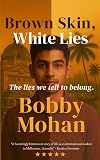
This review was originally published on Reedsy Discovery.
Arjun has a dream: leave his hometown in India to pursue an MBA in Australia. Arjun has a problem: restrictive immigration systems and prohibitive enrolment fees make his dream nearly impossible to achieve. Soon, he is thrown into a spiral of debt, desperation, and lies that may very well cause him to lose everything - even himself.
Brown Skin, White Lies starts strong, sharing the often-forgotten story of a person stuck in an unfair immigration system, where paperwork and bureaucracy erase any trace of humanity, equity or understanding. Arjun - like so many other people across the world - is only seeking a better life, but the hurdles he faces in doing so have significant repercussions on his family as well as on himself.
Unfortunately, this does not translate into a compelling narrative, largely due to the stylistic choices made in this book. The idea to use an unconventional narration is admirable, but ultimately ineffective: while the idea was probably to rely on logs and serrated sentences in an attempt to convey the sense of gradual dehumanisation generated by the immigration system, the result is often confusing and hard to read, negating the possibility for the reader to develop any sort of emotional connection with Arjun. By the end, there is no empathy to be felt nor any righteous anger towards the system, as both have been annulled by ledgers and account balances throughout.
The narrative often feels show more fragmented and sterile, certainly unaided by the frequent repetitions and occasional inconsistencies which suggest that the book might have benefited from another round of editing rather than appearing to be intentional stylistic choices. There is simultaneously too much and not enough going on, with loan sharks, crime gangs and even a human trafficking/labour exploitation ring making an appearance but failing to generate any sense of urgency or a strong emotional response, again mostly due to the almost clinical narration. The final act, by contrast, feels almost rushed and underdeveloped, with very few feelings left once the final page is turned.
The intention to share the story of someone made to be invisible by an unjust system is praise-worthy, however in its current form Brown Skin, White Lies fails to hit the mark, though it has the potential to tell a deeply compelling story.
I received an e-arc of this book for free via Reedsy Discovery. This did not affect my opinion of the book in any way. show less
Arjun has a dream: leave his hometown in India to pursue an MBA in Australia. Arjun has a problem: restrictive immigration systems and prohibitive enrolment fees make his dream nearly impossible to achieve. Soon, he is thrown into a spiral of debt, desperation, and lies that may very well cause him to lose everything - even himself.
Brown Skin, White Lies starts strong, sharing the often-forgotten story of a person stuck in an unfair immigration system, where paperwork and bureaucracy erase any trace of humanity, equity or understanding. Arjun - like so many other people across the world - is only seeking a better life, but the hurdles he faces in doing so have significant repercussions on his family as well as on himself.
Unfortunately, this does not translate into a compelling narrative, largely due to the stylistic choices made in this book. The idea to use an unconventional narration is admirable, but ultimately ineffective: while the idea was probably to rely on logs and serrated sentences in an attempt to convey the sense of gradual dehumanisation generated by the immigration system, the result is often confusing and hard to read, negating the possibility for the reader to develop any sort of emotional connection with Arjun. By the end, there is no empathy to be felt nor any righteous anger towards the system, as both have been annulled by ledgers and account balances throughout.
The narrative often feels show more fragmented and sterile, certainly unaided by the frequent repetitions and occasional inconsistencies which suggest that the book might have benefited from another round of editing rather than appearing to be intentional stylistic choices. There is simultaneously too much and not enough going on, with loan sharks, crime gangs and even a human trafficking/labour exploitation ring making an appearance but failing to generate any sense of urgency or a strong emotional response, again mostly due to the almost clinical narration. The final act, by contrast, feels almost rushed and underdeveloped, with very few feelings left once the final page is turned.
The intention to share the story of someone made to be invisible by an unjust system is praise-worthy, however in its current form Brown Skin, White Lies fails to hit the mark, though it has the potential to tell a deeply compelling story.
I received an e-arc of this book for free via Reedsy Discovery. This did not affect my opinion of the book in any way. show less
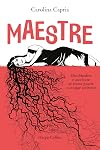
Carolina Capria riesce sempre a farmi riflettere e scoprire cose nuove, o a contagiarmi col suo entusiasmo anche su ciò che già sapevo. Scoprire (o riscoprire) con lei le sue Maestre è stato molto piacevole e mi ha sicuramente fatto venire voglia di leggere e rileggere questi libri.
Jun 30, 2025Italian
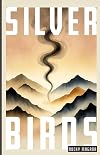
Every so often, I'll decide to join a blog tour for no other reason than to read books I normally wouldn't be aware of, knowing very little (or nothing at all) about them or their authors but simply because their blurb intrigues me and they somehow seem to call to me. Sometimes I'm lucky enough to discover some truly breathtaking books that make me feel so deeply grateful for having this space and for the opportunities it brings to read outside the beaten path. Silverbirds is one of those books.
There's something deeply compelling about the way the author chose to narrate Kosha's story and his struggles. The lyrical, almost poetic, writing style crashes against the brutality of the world, the consequences of war and the tragedies that unfold, in a contrast that somehow works against all odds. I was completely captivated right from the first few sentences, and I would have honestly read this in one sitting if only I had the time to do so.
The interweaving perspectives work wonderfully to highlight both Kosha's struggles and the path that led his family to meet such senseless violence. I appreciated the thoughtful reflections on vengeance and the cycle of violence that were sprinkled throughout the book, as both Kosha and his parents in their flashbacks are faced with terrible choices - some of which will have devastating consequences. Although there is definitely a lot to chew on here, I won't go into too much detail as part of the beauty of this book for me was going along show more as different backstories are slowly unveiled, gradually making sense of causes and effects and the way they can bleed into each other to breed resentments and pain.
One thing that kept this from being a perfect read for me was that it got slightly too didascalic for my taste towards the end. This is personal preference, of course, but one of the things that made this stand out for me was the nuance in the narrative and the use of silverbirds as a metaphorical element, and I felt this was missing a bit in the end as the messaging became much more overt and straightforward. The other element that slightly confused me was Kosha's characterisation at times, as he sometimes behaved and talked as someone much older - almost an adult - rather than the way I would expect an eight-year-old boy to speak and act. Now, this is me nitpicking a bit, but it took me out of the narrative a few times and felt a bit odd compared to the otherwise extremely engaging and compelling prose.
Overall, Silverbirds was a fantastic surprise and one of those books I'm happy to have discovered, feeling especially timely given global news at the moment. Just be mindful that it tackles some pretty heavy themes, so make sure to check the content warnings before picking it up if that might be an issue for you.
CWs:This book contains depictions of death, including graphic scenes involving animal death, war, and violence; grief; religious bigotry and terrorism; sexual assault; and some swearing. I received a review copy of this book for free from the author as part of the blog tour organised by TheWriteReads. This did not affect my opinion of the book in any way. show less
There's something deeply compelling about the way the author chose to narrate Kosha's story and his struggles. The lyrical, almost poetic, writing style crashes against the brutality of the world, the consequences of war and the tragedies that unfold, in a contrast that somehow works against all odds. I was completely captivated right from the first few sentences, and I would have honestly read this in one sitting if only I had the time to do so.
The interweaving perspectives work wonderfully to highlight both Kosha's struggles and the path that led his family to meet such senseless violence. I appreciated the thoughtful reflections on vengeance and the cycle of violence that were sprinkled throughout the book, as both Kosha and his parents in their flashbacks are faced with terrible choices - some of which will have devastating consequences. Although there is definitely a lot to chew on here, I won't go into too much detail as part of the beauty of this book for me was going along show more as different backstories are slowly unveiled, gradually making sense of causes and effects and the way they can bleed into each other to breed resentments and pain.
"I am their silverbird.
Everyone is someone else's silverbird in one way or another.
Even if it's just our passive silence to the tragedies around us.
We all have a part in someone dying every day."
One thing that kept this from being a perfect read for me was that it got slightly too didascalic for my taste towards the end. This is personal preference, of course, but one of the things that made this stand out for me was the nuance in the narrative and the use of silverbirds as a metaphorical element, and I felt this was missing a bit in the end as the messaging became much more overt and straightforward. The other element that slightly confused me was Kosha's characterisation at times, as he sometimes behaved and talked as someone much older - almost an adult - rather than the way I would expect an eight-year-old boy to speak and act. Now, this is me nitpicking a bit, but it took me out of the narrative a few times and felt a bit odd compared to the otherwise extremely engaging and compelling prose.
Overall, Silverbirds was a fantastic surprise and one of those books I'm happy to have discovered, feeling especially timely given global news at the moment. Just be mindful that it tackles some pretty heavy themes, so make sure to check the content warnings before picking it up if that might be an issue for you.
CWs:
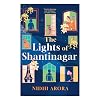
Actual rating: 3.5/5, rounded up.
As much as I love action-packed books, the slower, quieter ones have a special power to capture my heart with their characters and philosophical musings. The Lights of Shantinagar is exactly that kind of book, one in which nothing much happens, but the human element is key and the relationships deeply fascinating.
In the small colony of Shantinagar, aspiring quantum physicist and newlywed Sumi has just moved into her husband’s family home. Soon, she realises that the tranquil lives of the family and its neighbours are deeply entangled in ways none of them fully appreciate and there be much more to these people than initially meets the eye. How much does any of us truly know the people around us, and how much do each of us hide from others? What impact do our actions have on our surroundings? These are all questions that Sumi will have to grapple with if she is to understand her new family and find her place within it.
This is a very quiet book almost entirely based on the characters and their relationships, with frequent references to quantum physics. Although the blurb mentions disappearing objects and unexpected interactions that might lead one to think this is some sort of mystery, it is really not. There are missing objects and a search for a thief, but it is not the focus of the book. The centre of everything is life and the bonds that develop and grow in the daily, often overlooked moments such as sharing dinner or drinking chai. show more Social expectations and their weight, changing traditions, family bonds, growing up and being true to oneself are all themes that emerged for me when reading this book, and I was fascinated by how the author chose to explore them.
I loved being immersed in the lives of these Indian families and, even though I sometimes didn’t understand absolutely everything, I liked that the author kept some words in the original language and included a glossary at the end to clarify some of these concepts. I did struggle a bit in the beginning to keep all the names straight as there are quite a few characters who are introduced in close succession, but that may be more to do with my own tiredness at the moment than the book itself.
Despite it being a very slow-moving book, I was hooked almost immediately and the reading flowed smoothly. I did find some of the central sections a bit too slow, even for this kind of book, and at some point the quantum physics references lost me completely – again, probably a ‘me problem’ more than an actual issue with the book. Still, the characters are rich and the writing simple yet elegant. I heard somewhere recently that reading a book can be compared to meditating, and I think this book really embodies that feeling.
The Lights of Shantinagar was a really pleasant surprise, and I look forward to seeing what this author writes next. I’d recommend it to anyone looking for a quietly philosophical, character-based book with a non-Western worldview.
I received a digital review copy of this book as part of the blog tour organised by TheWriteReads. This did not affect my opinion of the book in any way. show less
As much as I love action-packed books, the slower, quieter ones have a special power to capture my heart with their characters and philosophical musings. The Lights of Shantinagar is exactly that kind of book, one in which nothing much happens, but the human element is key and the relationships deeply fascinating.
In the small colony of Shantinagar, aspiring quantum physicist and newlywed Sumi has just moved into her husband’s family home. Soon, she realises that the tranquil lives of the family and its neighbours are deeply entangled in ways none of them fully appreciate and there be much more to these people than initially meets the eye. How much does any of us truly know the people around us, and how much do each of us hide from others? What impact do our actions have on our surroundings? These are all questions that Sumi will have to grapple with if she is to understand her new family and find her place within it.
This is a very quiet book almost entirely based on the characters and their relationships, with frequent references to quantum physics. Although the blurb mentions disappearing objects and unexpected interactions that might lead one to think this is some sort of mystery, it is really not. There are missing objects and a search for a thief, but it is not the focus of the book. The centre of everything is life and the bonds that develop and grow in the daily, often overlooked moments such as sharing dinner or drinking chai. show more Social expectations and their weight, changing traditions, family bonds, growing up and being true to oneself are all themes that emerged for me when reading this book, and I was fascinated by how the author chose to explore them.
I loved being immersed in the lives of these Indian families and, even though I sometimes didn’t understand absolutely everything, I liked that the author kept some words in the original language and included a glossary at the end to clarify some of these concepts. I did struggle a bit in the beginning to keep all the names straight as there are quite a few characters who are introduced in close succession, but that may be more to do with my own tiredness at the moment than the book itself.
Despite it being a very slow-moving book, I was hooked almost immediately and the reading flowed smoothly. I did find some of the central sections a bit too slow, even for this kind of book, and at some point the quantum physics references lost me completely – again, probably a ‘me problem’ more than an actual issue with the book. Still, the characters are rich and the writing simple yet elegant. I heard somewhere recently that reading a book can be compared to meditating, and I think this book really embodies that feeling.
There’s no meaning in why things happen. ‘Meaning’ is not something that sits hidden in the real world, waiting to be found. It is what we, as observers, choose to superimpose on things.
The Lights of Shantinagar was a really pleasant surprise, and I look forward to seeing what this author writes next. I’d recommend it to anyone looking for a quietly philosophical, character-based book with a non-Western worldview.
I received a digital review copy of this book as part of the blog tour organised by TheWriteReads. This did not affect my opinion of the book in any way. show less
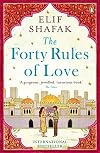
Despite having seen Elif Shafak’s books around many, many times, I had never read any of her work. So, when the opportunity to join this blog tour came, I jumped at the chance to finally read one of the author’s most famous books. Shafak’s books have been praised far and wide, and this book boasts an impressive average rating on Goodreads, so my expectations were very high. Perhaps this was my mistake, and my expectations were too high, but I feel as though I didn’t find something to match them in this book. Now, I didn’t dislike the book, but I also wasn’t blown away. To be perfectly honest, it was just fine for me, which is what made this review so hard to write.
The premise is actually very intriguing. Ella, a lonely, depressed housewife in the USA, starts reading an unpublished manuscript about 13th-century Sufi poet Rumi and his companion/mentor Shams of Tabriz. By exploring the lives and teachings of the two mystics, Ella is compelled to change her life and is determined to meet the manuscript’s mysterious author. This is a classic book-within-a-book set-up, as we readers follow both present-day Ella and Sweet Blasphemy, the fictional manuscript which is itself narrated through multiple POVs. So far, so good.
I don’t know enough about Sufism to weigh in on how historically accurate this is, but I enjoyed reading and learning more about it. Those parts of the book that focused more on Shams and Rumi’s relationship and their philosophical and spiritual show more quest were by far my favourites. The author’s writing style also worked very well for those sections, enhancing their mystical qualities in a way that reminded me of the feeling of reading Paulo Coelho’s books. The short chapters further made the story flow easily, so that despite the topics tackled it was a smooth read.
I had a few issues with this though, which mainly boil down to the characters and their (lack of) development. As I already mentioned, there are several POVs here – arguably a few too many – which should serve to provide different perspectives from which to observe Shams and Rumi, and reflect on their teachings. Regrettably, though, none of these characters felt developed at all beyond being a generic placeholder for highly stereotypical and one-dimensional figures.
So, we are presented with the exploited prostitute seeking spiritual redemption, the shunned leper beggar, the wise benevolent drunk, the violent enforcer, or the close-minded religious extremist, and so on. Their main purpose seems to be acting as conduits through which Shams’s titular forty rules can be presented to the reader. Although I did like the forty rules themselves and the idea to have other characters show us Shams through their eyes, this often felt clumsy. And by this I mean characters literally saying things like: “Rule number so-and-so says this: [proceeds to enunciate the rule]”.
I was also surprised by how little space any of the female characters is given within this narrative. They are essentially left to play the mother, the wife or the prostitute, with no role or agency beyond what Shams – directly or indirectly – gives them. Although, to a certain extent, that could be said of most characters. There was also a certain degree of orientalism that seemed to permeate the novel – manifesting itself especially but not exclusively in Ella’s POV – which I was not expecting in a novel written by a Turkish author, but which was nonetheless somewhat disturbing.
Despite the issues I had with it, the historical part of the novel was still interesting. Whereas I can’t really say the same of the present-day storyline. Ella’s character is as flat as they come – a housewife and mother-of-three who is thoroughly disappointed with her life finding new resolve once she stumbles upon the exotic mysticism embodied by the mysterious author of the book she’s reading. I’m heading near spoiler territory here, so I won’t say more, but I found this to be the weakest part of the book and, quite frankly, I wouldn’t have felt its absence had it been removed from the book.
If you read this far, thank you! I had actually not meant to write such a long review, but overall, I feel very conflicted about this book and needed to get my thoughts out fully. Like I said at the start, I didn’t dislike the book despite all the issues I had with it, and picking it up at night never felt like a chore. There were also some really beautiful passages, especially in the more reflective and spiritual/philosophical parts, that I found to be very touching.
However, I was expecting more from this book than a collection of meaningful quotes and I found that to be quite lacking. I seem to definitely be in the minority on this, though, as many other readers seem to have adored this book! I would like to try reading more of Shafak’s books too, as I’m curious to see if I’ll end up liking any of her other works better. Let me know in the comments if there are any you’d recommend I try next!
I received an e-arc of this book for free as part of the blog tour organised by Random Things Tours. This did not affect my opinion of the book in any way. show less
The premise is actually very intriguing. Ella, a lonely, depressed housewife in the USA, starts reading an unpublished manuscript about 13th-century Sufi poet Rumi and his companion/mentor Shams of Tabriz. By exploring the lives and teachings of the two mystics, Ella is compelled to change her life and is determined to meet the manuscript’s mysterious author. This is a classic book-within-a-book set-up, as we readers follow both present-day Ella and Sweet Blasphemy, the fictional manuscript which is itself narrated through multiple POVs. So far, so good.
I don’t know enough about Sufism to weigh in on how historically accurate this is, but I enjoyed reading and learning more about it. Those parts of the book that focused more on Shams and Rumi’s relationship and their philosophical and spiritual show more quest were by far my favourites. The author’s writing style also worked very well for those sections, enhancing their mystical qualities in a way that reminded me of the feeling of reading Paulo Coelho’s books. The short chapters further made the story flow easily, so that despite the topics tackled it was a smooth read.
I had a few issues with this though, which mainly boil down to the characters and their (lack of) development. As I already mentioned, there are several POVs here – arguably a few too many – which should serve to provide different perspectives from which to observe Shams and Rumi, and reflect on their teachings. Regrettably, though, none of these characters felt developed at all beyond being a generic placeholder for highly stereotypical and one-dimensional figures.
So, we are presented with the exploited prostitute seeking spiritual redemption, the shunned leper beggar, the wise benevolent drunk, the violent enforcer, or the close-minded religious extremist, and so on. Their main purpose seems to be acting as conduits through which Shams’s titular forty rules can be presented to the reader. Although I did like the forty rules themselves and the idea to have other characters show us Shams through their eyes, this often felt clumsy. And by this I mean characters literally saying things like: “Rule number so-and-so says this: [proceeds to enunciate the rule]”.
I was also surprised by how little space any of the female characters is given within this narrative. They are essentially left to play the mother, the wife or the prostitute, with no role or agency beyond what Shams – directly or indirectly – gives them. Although, to a certain extent, that could be said of most characters. There was also a certain degree of orientalism that seemed to permeate the novel – manifesting itself especially but not exclusively in Ella’s POV – which I was not expecting in a novel written by a Turkish author, but which was nonetheless somewhat disturbing.
Despite the issues I had with it, the historical part of the novel was still interesting. Whereas I can’t really say the same of the present-day storyline. Ella’s character is as flat as they come – a housewife and mother-of-three who is thoroughly disappointed with her life finding new resolve once she stumbles upon the exotic mysticism embodied by the mysterious author of the book she’s reading. I’m heading near spoiler territory here, so I won’t say more, but I found this to be the weakest part of the book and, quite frankly, I wouldn’t have felt its absence had it been removed from the book.
If you read this far, thank you! I had actually not meant to write such a long review, but overall, I feel very conflicted about this book and needed to get my thoughts out fully. Like I said at the start, I didn’t dislike the book despite all the issues I had with it, and picking it up at night never felt like a chore. There were also some really beautiful passages, especially in the more reflective and spiritual/philosophical parts, that I found to be very touching.
However, I was expecting more from this book than a collection of meaningful quotes and I found that to be quite lacking. I seem to definitely be in the minority on this, though, as many other readers seem to have adored this book! I would like to try reading more of Shafak’s books too, as I’m curious to see if I’ll end up liking any of her other works better. Let me know in the comments if there are any you’d recommend I try next!
I received an e-arc of this book for free as part of the blog tour organised by Random Things Tours. This did not affect my opinion of the book in any way. show less
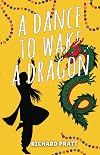
Set in the fantastical land of Tianya, A Dance to Wake a Dragon is an ambitious novel that maybe tries to bite off more than it can chew. The premise is intriguing and drew me in right from the start. Young Shengli embarks on a dangerous quest to reach the sacred place of Zamai to perform a magical dance which was taught to her by her now deceased mother. In a world that's increasingly off balance and where the old ways have been forgotten, Shengli will be able to count only on her skills, her cunning, and her faithful friends if she is to be successful in her mission to wake a dragon.
Though the book starts off fairly strong, I was soon slightly confused as to who the target audience is: Shengli is thirteen, although both she and her twin friends would seem somewhat younger based on their dialogue and thoughts. However, the writing style would suggest a much, much older audience, with complex, often run-on, sentences making this extremely hard to read even for me as an adult. I'll admit I actually found this quite tiring at times, and considered DNFing for this reason alone. There also seem to be far too many themes tackled here, though I applaud the author for attempting to weave reflections on industrialisation, urbanisation, climate change and the exploitation of natural resources in such an original way in a YA fantasy novel.
My general feeling upon finishing this book was that it tried to do a lot, but in doing so ended up losing much of the emotional punch it could show more have packed - especially with a couple of hard-hitting scenes that snuck up unexpectedly but had little space for development. There was one in particular that left me somewhat perplexed, as I'm not quite sure what purpose it served at that point in the book, appearing to be there mostly as shock-value - and again, not something I would expect to be included in such a manner for a younger audience.
Alongside the sometimes confusing writing style, I struggled with the pacing in this book: there were long stretches in which nothing much seemed to be happening, characters talking over the same points repeatedly as if to ensure the message had actually been delivered to the reader, only to then have everything happen at once, with no space for any of the emotions to settle. I don't say this often, but I feel this book could have benefited from being a bit longer and take its time to expand more on certain scenes instead of rushing on to the next thing.
Despite this, I did like to spend time in Tianya and I enjoyed getting to know Shengli and the twins. Again, I would have liked to see them being developed a bit more fully, as well as delving deeper into the rich lore of this world, which was sketched more than painted. Although this book didn't fully work for me, I truly enjoyed the bits that did and the general idea behind this.
I received an e-arc of this book from the publisher. This did not affect my opinion of the book in any way. show less
Though the book starts off fairly strong, I was soon slightly confused as to who the target audience is: Shengli is thirteen, although both she and her twin friends would seem somewhat younger based on their dialogue and thoughts. However, the writing style would suggest a much, much older audience, with complex, often run-on, sentences making this extremely hard to read even for me as an adult. I'll admit I actually found this quite tiring at times, and considered DNFing for this reason alone. There also seem to be far too many themes tackled here, though I applaud the author for attempting to weave reflections on industrialisation, urbanisation, climate change and the exploitation of natural resources in such an original way in a YA fantasy novel.
My general feeling upon finishing this book was that it tried to do a lot, but in doing so ended up losing much of the emotional punch it could show more have packed - especially with a couple of hard-hitting scenes that snuck up unexpectedly but had little space for development. There was one in particular that left me somewhat perplexed, as I'm not quite sure what purpose it served at that point in the book, appearing to be there mostly as shock-value - and again, not something I would expect to be included in such a manner for a younger audience.
Alongside the sometimes confusing writing style, I struggled with the pacing in this book: there were long stretches in which nothing much seemed to be happening, characters talking over the same points repeatedly as if to ensure the message had actually been delivered to the reader, only to then have everything happen at once, with no space for any of the emotions to settle. I don't say this often, but I feel this book could have benefited from being a bit longer and take its time to expand more on certain scenes instead of rushing on to the next thing.
Despite this, I did like to spend time in Tianya and I enjoyed getting to know Shengli and the twins. Again, I would have liked to see them being developed a bit more fully, as well as delving deeper into the rich lore of this world, which was sketched more than painted. Although this book didn't fully work for me, I truly enjoyed the bits that did and the general idea behind this.
I received an e-arc of this book from the publisher. This did not affect my opinion of the book in any way. show less
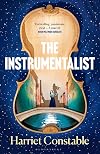
This is one of those books I really struggled to review (as evidenced by how late this review is actually being published, compared to the original date on the draft which has been waiting patiently for me to hit that "post" button for several months). On the one hand, I am always interested in narratives aiming to re-centre women, their experiences, achievements and fights for freedom after literal centuries of them being hidden, sidelined, and forgotten. On the other hand, I have been growing increasingly frustrated with "feminist" anything (be they retellings or historical fiction books) which seemingly use it solely as a marketing tool (and I do think that's mostly to do with sales strategy rather than individual authors' positioning). I have said this before, and I will say it again for as long as it's needed: having a female protagonist does not make a book inherently feminist
Although I'm by no means an expert, I enjoy classical music and, living very close to Venice, was immediately intrigued by the premise of this book, and longed to learn more about Anna Maria della Pietà and Vivaldi, two historical figures I wasn't very familiar with beyond what is generally well-known. Sadly, my expectations fell mostly flat. This was due to a variety of reasons including the writing style, which I found to be highly repetitive and simplistic, unchanging even as time passed, so that Anna Maria spoke and thought like an adult even at the age of 8. I did like the fact that Anna show more Maria is described as having synesthesia, and I enjoyed the descriptions of vibrant colours while she played the violin. I was entertained enough to finish this, but by the end I was deeply frustrated and sad at another missed opportunity.
The Instrumentalist is based on the true story of Anna Maria della Pietà, an orphan raised at the Ospedale della Pietà, a brilliant violinist who displayed her musical prowess as a young child and was taught by Vivaldi, who also composed pieces specifically for her. This premise held incredible potential, telling the story of a woman who fought for her place in a patriarchal, misogynistic society, a talented musician relegated to a footnote in musical history. And yet...
I have a few issues with this book, but my main one is the character of Anna Maria herself. She is not simply unlikeable - which would be fine, unlikeable people exist and they often make for very compelling main characters. Anna Maria is essentially a proto-girlboss, single-mindedly ambitious and ruthless to excess, to the point that she comes across as inauthentic. I will happily accept that some of these character traits would fit Anna Maria's circumstances more than generosity of spirit and kindness - it was a ruthless world after all. Where I draw the line is having an 18th century child worry about being "professional", feeling concerned by being average or behind her peers, or barging into her highly acclaimed teacher's office, making demands. This just feels lazy, as though taking a modern woman and inserting her forcefully into a historical setting.
This is compounded by one of the other main issues I had with this book, which is the way in which Vivaldi's character is constructed. There is very little development there, as he is the object of Anna Maria's adoration and fantasies of success for the majority of the book, only to be revealed as an opportunistic, abusive and cruel man, who full-on steals Anna Maria's work for himself - and nothing less than La Stravaganza and the Four Seasons, his most famous works.
Now, I think we can all agree that certain men in history have been idolised and paraded as geniuses with probably little reason. And we can also agree that women's contributions have frequently been overlooked or downright ignored. However, it is quite different to suggest that a composer's most famous works were actually the fruit of his protégé's work and stolen by him for his own greatness, effectively reducing him as a one-note villain. Especially when, as the author's note admits, some events and timelines were shuffled around "for dramatic purposes".
Just as it's not enough to have a female protagonist to write a feminist novel, it is disingenuous to write male characters either as the driving force behind a woman's accomplishments or as evil villains standing in the way of their success. Which brings me to another point: despite the novel seemingly aiming to bring to light a successful woman's forgotten achievements, Anna Maria still exists only in Vivaldi's shadow, either as his star pupil or as a victim of his own ambition. Her actual, historically documented, successes and the efforts that must have been needed to get her there are never shown: she is a prodigy, knowing how to play from the moment she picks up the violin and, despite the odds being stacked against her, she tends to get what she wants. For me, this diminishes Anna Maria's achievements rather than celebrating them: her work is not worthy of being remembered if it cannot be linked directly to a man's most famous creations, even if it becomes necessary to force historical events to make it so.
The other female characters in the book are almost non-existent except as fillers. Friends are discarded once they seem to be weighing down Anna Maria, then forgiving her for all kinds of awful behaviour without ever needing her to make amends; and the other girls are either too incompetent for her to be bothered with them, or rivals needing to be annihilated. To be clear, I wouldn't expect something like "female solidarity" or "sisterhood" to appear as it would also be anachronistic. But the "figlie di coro" were professional musicians and composers in their own right, highly trained and renowned as one of the best orchestras in Europe at the time. To erase all of them and celebrate Anna Maria as the sole genius, demonising the previously revered male genius and substituting him with her, thus perpetuating the same patterns of idolisation without ever challenging them, ultimately feels like a betrayal and a missed opportunity.
I received an e-arc of this book for free from the publisher via NetGalley and as part of the readalong organised by The Tandem Collective. This did not affect my opinion of the book in any way. show less
Although I'm by no means an expert, I enjoy classical music and, living very close to Venice, was immediately intrigued by the premise of this book, and longed to learn more about Anna Maria della Pietà and Vivaldi, two historical figures I wasn't very familiar with beyond what is generally well-known. Sadly, my expectations fell mostly flat. This was due to a variety of reasons including the writing style, which I found to be highly repetitive and simplistic, unchanging even as time passed, so that Anna Maria spoke and thought like an adult even at the age of 8. I did like the fact that Anna show more Maria is described as having synesthesia, and I enjoyed the descriptions of vibrant colours while she played the violin. I was entertained enough to finish this, but by the end I was deeply frustrated and sad at another missed opportunity.
The Instrumentalist is based on the true story of Anna Maria della Pietà, an orphan raised at the Ospedale della Pietà, a brilliant violinist who displayed her musical prowess as a young child and was taught by Vivaldi, who also composed pieces specifically for her. This premise held incredible potential, telling the story of a woman who fought for her place in a patriarchal, misogynistic society, a talented musician relegated to a footnote in musical history. And yet...
I have a few issues with this book, but my main one is the character of Anna Maria herself. She is not simply unlikeable - which would be fine, unlikeable people exist and they often make for very compelling main characters. Anna Maria is essentially a proto-girlboss, single-mindedly ambitious and ruthless to excess, to the point that she comes across as inauthentic. I will happily accept that some of these character traits would fit Anna Maria's circumstances more than generosity of spirit and kindness - it was a ruthless world after all. Where I draw the line is having an 18th century child worry about being "professional", feeling concerned by being average or behind her peers, or barging into her highly acclaimed teacher's office, making demands. This just feels lazy, as though taking a modern woman and inserting her forcefully into a historical setting.
This is compounded by one of the other main issues I had with this book, which is the way in which Vivaldi's character is constructed. There is very little development there, as he is the object of Anna Maria's adoration and fantasies of success for the majority of the book, only to be revealed as an opportunistic, abusive and cruel man, who full-on steals Anna Maria's work for himself - and nothing less than La Stravaganza and the Four Seasons, his most famous works.
Now, I think we can all agree that certain men in history have been idolised and paraded as geniuses with probably little reason. And we can also agree that women's contributions have frequently been overlooked or downright ignored. However, it is quite different to suggest that a composer's most famous works were actually the fruit of his protégé's work and stolen by him for his own greatness, effectively reducing him as a one-note villain. Especially when, as the author's note admits, some events and timelines were shuffled around "for dramatic purposes".
Just as it's not enough to have a female protagonist to write a feminist novel, it is disingenuous to write male characters either as the driving force behind a woman's accomplishments or as evil villains standing in the way of their success. Which brings me to another point: despite the novel seemingly aiming to bring to light a successful woman's forgotten achievements, Anna Maria still exists only in Vivaldi's shadow, either as his star pupil or as a victim of his own ambition. Her actual, historically documented, successes and the efforts that must have been needed to get her there are never shown: she is a prodigy, knowing how to play from the moment she picks up the violin and, despite the odds being stacked against her, she tends to get what she wants. For me, this diminishes Anna Maria's achievements rather than celebrating them: her work is not worthy of being remembered if it cannot be linked directly to a man's most famous creations, even if it becomes necessary to force historical events to make it so.
The other female characters in the book are almost non-existent except as fillers. Friends are discarded once they seem to be weighing down Anna Maria, then forgiving her for all kinds of awful behaviour without ever needing her to make amends; and the other girls are either too incompetent for her to be bothered with them, or rivals needing to be annihilated. To be clear, I wouldn't expect something like "female solidarity" or "sisterhood" to appear as it would also be anachronistic. But the "figlie di coro" were professional musicians and composers in their own right, highly trained and renowned as one of the best orchestras in Europe at the time. To erase all of them and celebrate Anna Maria as the sole genius, demonising the previously revered male genius and substituting him with her, thus perpetuating the same patterns of idolisation without ever challenging them, ultimately feels like a betrayal and a missed opportunity.
I received an e-arc of this book for free from the publisher via NetGalley and as part of the readalong organised by The Tandem Collective. This did not affect my opinion of the book in any way. show less
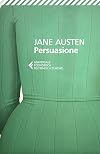
Starts off very slowly but that ending more than makes up for it! Anne is such a layered character, I think I'd love her even more on a re-read. And that letter at the end...
Not my favourite Jane Austen for now but definitely the right one to read as an adult, as it becomes easier to relate to more mature characters. I'll revisit it for sure in the future, so I can fully appreciate the nuances of Austen's witty writing.
Not my favourite Jane Austen for now but definitely the right one to read as an adult, as it becomes easier to relate to more mature characters. I'll revisit it for sure in the future, so I can fully appreciate the nuances of Austen's witty writing.
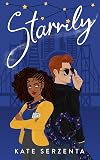
This review was originally published on Reedsy Discovery.
Simon Montague, the charismatic CEO of a successful tech company, seems to have a death wish: from eating pufferfish to rock-climbing, he appears to always be on the lookout for a new dangerous activity. For sensible, risk-averse astrophysicist Callie Guidry, this is deeply annoying and close to infuriating.
Yet when circumstances force the two of them to spend time together in order to secure funding for Callie's research, she finds that there may be more to Simon than meets the eye, and his outgoing personality and thirst for life re-awaken in Callie something she had long since buried away. But everything is not as it seems, and rational thought might have to give way to a part of Callie's past she has been trying to forget if there is to be any hope of saving Simon from the supernatural phenomenon that threatens his very existence.
Kate Serzenta continues to deliver a cozy and heartwarming slow-burn romance in this second instalment of the Perks of Being Paranormal series. Both Callie and Simon have suffered in the past, reacting in completely opposite ways, and watching them learn from one other and lean into each other's strengths to support their vulnerabilities makes for a delightful reading experience.
Where this book seems to struggle slightly is with the paranormal element itself which, though original and somewhat surprising, does not appear to be developed to its full potential, remaining a largely show more marginal element until fairly late in the story. The conflicts, though appearing solid in the build-up, are also resolved far too easily in the end, leaving the feeling of a rush preventing the reader from feeling fully satisfied by the (extremely cute) ending. Secondary characters could have also benefited from slightly greater development, especially those introduced later in the narrative, as they came across as little more than cookie-cutter figures embodying specific traits, making little to no impression and being forgotten as easily as they were introduced.
Overall, Starrily is a pleasant read that is sure to entertain and delight fans of the genre, despite a few minor issues.
I received an e-arc of this book via Reedsy Discovery. This did not affect my opinion of the book in any way. show less
Simon Montague, the charismatic CEO of a successful tech company, seems to have a death wish: from eating pufferfish to rock-climbing, he appears to always be on the lookout for a new dangerous activity. For sensible, risk-averse astrophysicist Callie Guidry, this is deeply annoying and close to infuriating.
Yet when circumstances force the two of them to spend time together in order to secure funding for Callie's research, she finds that there may be more to Simon than meets the eye, and his outgoing personality and thirst for life re-awaken in Callie something she had long since buried away. But everything is not as it seems, and rational thought might have to give way to a part of Callie's past she has been trying to forget if there is to be any hope of saving Simon from the supernatural phenomenon that threatens his very existence.
Kate Serzenta continues to deliver a cozy and heartwarming slow-burn romance in this second instalment of the Perks of Being Paranormal series. Both Callie and Simon have suffered in the past, reacting in completely opposite ways, and watching them learn from one other and lean into each other's strengths to support their vulnerabilities makes for a delightful reading experience.
Where this book seems to struggle slightly is with the paranormal element itself which, though original and somewhat surprising, does not appear to be developed to its full potential, remaining a largely show more marginal element until fairly late in the story. The conflicts, though appearing solid in the build-up, are also resolved far too easily in the end, leaving the feeling of a rush preventing the reader from feeling fully satisfied by the (extremely cute) ending. Secondary characters could have also benefited from slightly greater development, especially those introduced later in the narrative, as they came across as little more than cookie-cutter figures embodying specific traits, making little to no impression and being forgotten as easily as they were introduced.
Overall, Starrily is a pleasant read that is sure to entertain and delight fans of the genre, despite a few minor issues.
I received an e-arc of this book via Reedsy Discovery. This did not affect my opinion of the book in any way. show less
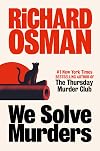
Light and entertaining, but overly chaotic and overstuffed. There are way too many characters and not enough space to develop them, making the majority utterly forgettable. I was entertained and annoyed, which is rarely a good mix, and I kept thinking this is no Thursday Murder Club. Not the best start to the series, but I am curious to see if it will improve with the second book. In the meantime, I'm definitely looking forward to the next TMC.
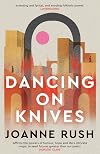
I have fallen completely in love with this book, and I wouldn't be surprised if it ended up as one of my favourites of the year. In her final note, the author describes this as a "quiet book", and it certainly is that but it's one of those books that quietly builds up an incredible amount of power, with characters I wasn't fully ready to let go of when we finally reached the end of our journey together.
The execution is flawless, as the very real experiences of war, loss and trauma blend with elements of magical realism. Laura is a fascinating main character, trying to come to terms with the ghosts of the past and the scars left by the war. How do you keep on living after such a dramatic experience, keeping the memories of those who were lost to such senseless violence alive in a world that desperately wants to forget and move on? This is one of the central questions that kept popping up for me as I was reading this book, and one that certainly seems incredibly relevant today.
Dancing on Knives felt like a rare book, and the kind that I was desperately craving without even realising it. A book that takes its time, leaving space for reflection without trying to provide easy answers - of which there are none. Belonging, home, grief, healing, justice were all themes that kept popping up for me while on this journey with Laura. I feel this would make for a great book club pick, as there are several different elements that I would have loved to discuss with others. Yet despite show more its quietness, I kept turning the pages, unable to stop reading as with the best thrillers.
Deeply reflective, hopeful and haunting at once, with some truly unforgettable characters and stunning writing: discovering this little gem felt like a true privilege, and I think it won't be a book I'll forget anytime soon. I saw some other reviewers compare this to Black Butterflies, which the author also mentioned in her note, so I think I'll have to pick that up sometime soon!
I received an advance review copy of this book for free from the publisher as part of the blog tour organised by Random Things Tours. This did not affect my opinion of the book in any way. show less
The execution is flawless, as the very real experiences of war, loss and trauma blend with elements of magical realism. Laura is a fascinating main character, trying to come to terms with the ghosts of the past and the scars left by the war. How do you keep on living after such a dramatic experience, keeping the memories of those who were lost to such senseless violence alive in a world that desperately wants to forget and move on? This is one of the central questions that kept popping up for me as I was reading this book, and one that certainly seems incredibly relevant today.
Dancing on Knives felt like a rare book, and the kind that I was desperately craving without even realising it. A book that takes its time, leaving space for reflection without trying to provide easy answers - of which there are none. Belonging, home, grief, healing, justice were all themes that kept popping up for me while on this journey with Laura. I feel this would make for a great book club pick, as there are several different elements that I would have loved to discuss with others. Yet despite show more its quietness, I kept turning the pages, unable to stop reading as with the best thrillers.
Deeply reflective, hopeful and haunting at once, with some truly unforgettable characters and stunning writing: discovering this little gem felt like a true privilege, and I think it won't be a book I'll forget anytime soon. I saw some other reviewers compare this to Black Butterflies, which the author also mentioned in her note, so I think I'll have to pick that up sometime soon!
I received an advance review copy of this book for free from the publisher as part of the blog tour organised by Random Things Tours. This did not affect my opinion of the book in any way. show less
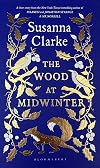
Cosy and whimsical short story with strong Christmas vibes. The audiobook production is lovely: the music and woodland sounds really add to the experience. At little over 30 minutes long (including the author's afterword), I wasn't really expecting a lot of depth but it still felt way too short to convey everything the author suggested in her note. The concept and characters are interesting, and the setting fascinating, but they needed just a little more space to really work for me. Susanna Clarke's writing is always impeccable though, and this really made me want to catch up on Piranesi.
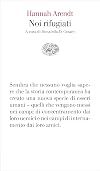
"La società ha trovato nella discriminazione il più grande strumento sociale di morte che permette di uccidere le persone senza spargimento di sangue: i passaporti e i certificati di nascita, talvolta perfino le dichiarazioni dei redditi, anziché essere documenti amministrativi, diventano mezzi di differenziazione sociale."
"Il consesso dei popoli europei è andato in frantumi quando si è consentito che i membri più deboli venissero esclusi e perseguitati."
Breve ma indimenticabile e ancora tristemente attuale.
"Il consesso dei popoli europei è andato in frantumi quando si è consentito che i membri più deboli venissero esclusi e perseguitati."
Breve ma indimenticabile e ancora tristemente attuale.
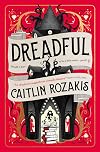
A man wakes up with no memory after what seems to be some sort of spell gone wrong. Soon, he realises that he must be in a dark wizard's lair, although he has no clue how he got there... unless the dark wizard is him.
So begins Dreadful, a magical tale of a dark wizard with amnesia trying to figure out why he feels like saving the royal princess he kidnapped in the first place. This was a fun read, and the (mostly) lighthearted escape I needed from very busy days. I wasn't a fan of some choices employed here, but I did appreciate the attempt at introducing more serious topics. The reflection on identity and making choices was particularly interesting to me, even though at times it felt just a tad too easy to the detriment of depth.
I don't think this will end up being particularly memorable, but it was a fun, easy read.
So begins Dreadful, a magical tale of a dark wizard with amnesia trying to figure out why he feels like saving the royal princess he kidnapped in the first place. This was a fun read, and the (mostly) lighthearted escape I needed from very busy days. I wasn't a fan of some choices employed here, but I did appreciate the attempt at introducing more serious topics. The reflection on identity and making choices was particularly interesting to me, even though at times it felt just a tad too easy to the detriment of depth.
I don't think this will end up being particularly memorable, but it was a fun, easy read.
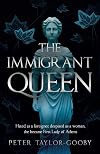
I rarely pass by an opportunity to read a female-centred retelling or historical fiction, so when I heard about The Immigrant Queen featuring Aspasia, I knew I had to read it.
Athens clearly comes across as a city of contradictions: it is widely regarded as "the cradle of democracy" thanks to the fact that citizens could vote on public matters in the Assembly, yet "citizens" were a very limited category made up exclusively of free men - a minority of the city's inhabitants. Women and foreigners had virtually no rights, and slavery was widely accepted.
In this context, Aspasia is a truly fascinating figure: a foreigner with a past as a sex-worker who became the only woman in Socrates's circle, debating with the wisest men of the time and composing dialogues much like Plato's (which were sadly lost). She also became the lover-then-wife of Pericles, the city's most formidable statesman at the time, frequently counselling him on political strategy. She was ambitious, highly intelligent and capable - and mostly erased from history.
I appreciated the fact that Aspasia's story was told through the eyes of her slave, Limander, who is an educated bard taken captive when the Athenian army attacked his hometown. Limander is a keen observer with access to rooms others wouldn't normally be allowed in, who reports back on the conversations that are had behind closed doors. He is favoured by his mistress, yet he is keenly aware of the living conditions of his fellow slaves and the inhumanity of it all, highlighting the contrast between the way Athenians think of themselves and how they behave towards all those groups they consider to be inferior. The relationships he builds with the other slaves in Aspasia's household are deep and meaningful, their solidarity built out of necessity and the desire to keep hold of their humanity.
In Limander's outings in the city on errands for Aspasia or secretly meeting his noble-born lover, we readers are offered a snapshot of what life in Athens must have looked like, amid great cultural ferment in theatres, politics and philosophy, and devastating social inequalities and iniquities. It is clear the author did an amazing amount of research to fully recreate the atmosphere and make ancient Athens come alive (despite a couple of anachronisms in dialogue, which I hope will be fixed in the final version of the text - such as a character saying "OK"), and it really shines through.
What I was perhaps less taken with was the character of Aspasia herself. As the story is told from Limander's POV, we are never privy to her innermost thoughts and feelings, only to what she chooses to share with those around her. Despite some powerful quotes on the role of women in society, Aspasia is still predominantly portrayed in connection with Pericles and her relationship with him. For instance, there is only one scene by my count in which she converses with Socrates by herself, sharing with him passages of the dialogue she is writing on outlanders and citizens. This honestly disappointed me and felt like a missed opportunity to tell a woman's story without having her portrayed only in relation to the famous man in her life. I did appreciate the scenes in which Pericles counsels with Aspasia on his political strategy, and that was precisely what I would have liked to see more of.
Overall though this was an engaging read, and I was interested in seeing the parallelisms that could be drawn between populist rhetoric in the past and nowadays - perhaps with a bit of sadness that not much seems to have changed at all.
I received an e-arc of this book as part of the blog tour organised by Random Things Tours. This did not affect my opinion of the book in any way. show less
Athens clearly comes across as a city of contradictions: it is widely regarded as "the cradle of democracy" thanks to the fact that citizens could vote on public matters in the Assembly, yet "citizens" were a very limited category made up exclusively of free men - a minority of the city's inhabitants. Women and foreigners had virtually no rights, and slavery was widely accepted.
"Of course. I understand the rules for women in Athens: always keep your eyes cast down, as if ashamed", her voice strengthened as she spoke, "always you must walk behind, as if you needed guidance; always be veiled, as if you carried the plague; never have an opinion, as if you were a child."
In this context, Aspasia is a truly fascinating figure: a foreigner with a past as a sex-worker who became the only woman in Socrates's circle, debating with the wisest men of the time and composing dialogues much like Plato's (which were sadly lost). She also became the lover-then-wife of Pericles, the city's most formidable statesman at the time, frequently counselling him on political strategy. She was ambitious, highly intelligent and capable - and mostly erased from history.
"The goddess offered Achilles the choice: a short life but glorious, remembered in song and story, or to plough the fields in a forgotten kingdom and grow old byshow more
the fire. He chose glory. Why should a woman not choose glory too? Not to be remembered for the man who chose her and the children she bore but for the deeds she did."
I appreciated the fact that Aspasia's story was told through the eyes of her slave, Limander, who is an educated bard taken captive when the Athenian army attacked his hometown. Limander is a keen observer with access to rooms others wouldn't normally be allowed in, who reports back on the conversations that are had behind closed doors. He is favoured by his mistress, yet he is keenly aware of the living conditions of his fellow slaves and the inhumanity of it all, highlighting the contrast between the way Athenians think of themselves and how they behave towards all those groups they consider to be inferior. The relationships he builds with the other slaves in Aspasia's household are deep and meaningful, their solidarity built out of necessity and the desire to keep hold of their humanity.
In Limander's outings in the city on errands for Aspasia or secretly meeting his noble-born lover, we readers are offered a snapshot of what life in Athens must have looked like, amid great cultural ferment in theatres, politics and philosophy, and devastating social inequalities and iniquities. It is clear the author did an amazing amount of research to fully recreate the atmosphere and make ancient Athens come alive (despite a couple of anachronisms in dialogue, which I hope will be fixed in the final version of the text - such as a character saying "OK"), and it really shines through.
What I was perhaps less taken with was the character of Aspasia herself. As the story is told from Limander's POV, we are never privy to her innermost thoughts and feelings, only to what she chooses to share with those around her. Despite some powerful quotes on the role of women in society, Aspasia is still predominantly portrayed in connection with Pericles and her relationship with him. For instance, there is only one scene by my count in which she converses with Socrates by herself, sharing with him passages of the dialogue she is writing on outlanders and citizens. This honestly disappointed me and felt like a missed opportunity to tell a woman's story without having her portrayed only in relation to the famous man in her life. I did appreciate the scenes in which Pericles counsels with Aspasia on his political strategy, and that was precisely what I would have liked to see more of.
"They remember so many great men - Aegeus, Theseus, Solon, Draco, Cleisthenes, Themistocles, Aeschylus, Miltiades and all the others. Why should they not one day remember a woman?"
Overall though this was an engaging read, and I was interested in seeing the parallelisms that could be drawn between populist rhetoric in the past and nowadays - perhaps with a bit of sadness that not much seems to have changed at all.
I received an e-arc of this book as part of the blog tour organised by Random Things Tours. This did not affect my opinion of the book in any way. show less
Recently I’ve been finding it hard to be completely drawn in by a book, fully losing myself in the world and deeply caring about its characters. I’m not sure whether that’s due to this particular period of time in which life feels too full or if I’ve been unlucky in mostly picking up books that left me lukewarm, but I was almost resigned to it happening again. And then I met Kavithri.
Let me start by saying this is absolutely not a book to pick up if you have a hard time with explicit violence as there is a lot of it here. Although it is essential to the story and none of it feels gratuitous, it was hard for me to stomach a few scenes and I definitely had a difficult time with certain passages in the final third. I’ll leave some more detailed content warnings under the spoiler tag below if you wish to check them out.
With that out of the way, I was truly surprised by how much I enjoyed this book. I went into it knowing very little – having mostly only read the blurb when I applied for the blog tour and, as often happens, promptly forgotten about it. I was really glad for that though because it allowed me to be surprised multiple times as I was reading and slowly getting to know the characters and the world they inhabit.
The world of Kavithri is a brutal, South-Asian inspired fantasy with a dash of dystopia, which I would personally class somewhere between grimdark and epic. The world is complex yet clearly drawn, with information being slowly conveyed in show more different ways without ever descending into long infodumps. The magic system is particularly intriguing even though it took me a while to wrap my head around it, but I won’t go into any more detail as this slow discovery was an essential part of my enjoyment of this book.
I loved how the author managed to build up towards the explosive ending, carefully balancing worldbuilding, character growth and plot with very satisfying results. I was completely glued to the pages, finding it really hard to put this down. Honestly, I was quite surprised that this was a debut as it shows some really impressive writing skills and maturity – if this is the first, I can’t wait to see what this author does next!
Kavithri is an amazing main character: her resilience and resistance in the face of adversity is truly admirable, determined as she is to achieve her goals through sweat, tears and blood if needed (quite literally) in spite of everything life keeps throwing at her. For Kavithri is not only poor, she is a Taemu – the lowest of the low in this world’s caste system – and for that she is reviled and abused at every turn. The treatment of the Taemu in general is brutal, as they have been consistently dehumanised, subjected to multiple forms of violence and genocide, and used as scapegoats very deliberately by those in power who seek to maintain systems of oppression in place in ways that at this particular historical moment are achingly very familiar.
This is where the book shines particularly for me, as it addresses some very timely themes revolving around inequality, oppression and the legacy of colonialism. Despite everything, Kavi keeps going and she tries desperately to hold onto her values as she does so, to keep the flame of kindness and empathy alive. Yet, there is also space for rightful rage, challenging these systems that annihilate people with no real reason if not the accumulation of power. Even in the most desperate of times, there is hope to be found in community and solidarity and – at the very least – in freely choosing to live and die on one’s own terms for what one believes in. The road to breaking free of social conditioning is long and arduous, and cannot be travelled alone.
Aside from the sometimes excessively explicit violence (which is entirely personal sensitivity), the only other thing I would say is that I would have appreciated having a glossary as there were a lot of unfamiliar terms which I sometimes struggled to keep straight in my mind – not a huge deal, but it would have been helpful!
This is a truly powerful read and one of the best fantasy novels I have read in quite a while. I suspect that Kavithri and the rest of these colourful, complicated, contradictory characters will stay with me for a while yet, and I look forward to seeing how their stories will progress in the next book in the series.
Content Warnings:This book contains explicit violence and gore, including mutilations, death and violence against animals. There are also mentions of genocide, classism, discrimination, necromancy, bullying, medical negligence, suicide.
I received a free review copy of this book as part of the blog tour organised by The Write Reads. This did not affect my opinion of the book in any way. show less
Let me start by saying this is absolutely not a book to pick up if you have a hard time with explicit violence as there is a lot of it here. Although it is essential to the story and none of it feels gratuitous, it was hard for me to stomach a few scenes and I definitely had a difficult time with certain passages in the final third. I’ll leave some more detailed content warnings under the spoiler tag below if you wish to check them out.
With that out of the way, I was truly surprised by how much I enjoyed this book. I went into it knowing very little – having mostly only read the blurb when I applied for the blog tour and, as often happens, promptly forgotten about it. I was really glad for that though because it allowed me to be surprised multiple times as I was reading and slowly getting to know the characters and the world they inhabit.
The world of Kavithri is a brutal, South-Asian inspired fantasy with a dash of dystopia, which I would personally class somewhere between grimdark and epic. The world is complex yet clearly drawn, with information being slowly conveyed in show more different ways without ever descending into long infodumps. The magic system is particularly intriguing even though it took me a while to wrap my head around it, but I won’t go into any more detail as this slow discovery was an essential part of my enjoyment of this book.
I loved how the author managed to build up towards the explosive ending, carefully balancing worldbuilding, character growth and plot with very satisfying results. I was completely glued to the pages, finding it really hard to put this down. Honestly, I was quite surprised that this was a debut as it shows some really impressive writing skills and maturity – if this is the first, I can’t wait to see what this author does next!
Kavithri is an amazing main character: her resilience and resistance in the face of adversity is truly admirable, determined as she is to achieve her goals through sweat, tears and blood if needed (quite literally) in spite of everything life keeps throwing at her. For Kavithri is not only poor, she is a Taemu – the lowest of the low in this world’s caste system – and for that she is reviled and abused at every turn. The treatment of the Taemu in general is brutal, as they have been consistently dehumanised, subjected to multiple forms of violence and genocide, and used as scapegoats very deliberately by those in power who seek to maintain systems of oppression in place in ways that at this particular historical moment are achingly very familiar.
This is where the book shines particularly for me, as it addresses some very timely themes revolving around inequality, oppression and the legacy of colonialism. Despite everything, Kavi keeps going and she tries desperately to hold onto her values as she does so, to keep the flame of kindness and empathy alive. Yet, there is also space for rightful rage, challenging these systems that annihilate people with no real reason if not the accumulation of power. Even in the most desperate of times, there is hope to be found in community and solidarity and – at the very least – in freely choosing to live and die on one’s own terms for what one believes in. The road to breaking free of social conditioning is long and arduous, and cannot be travelled alone.
Aside from the sometimes excessively explicit violence (which is entirely personal sensitivity), the only other thing I would say is that I would have appreciated having a glossary as there were a lot of unfamiliar terms which I sometimes struggled to keep straight in my mind – not a huge deal, but it would have been helpful!
This is a truly powerful read and one of the best fantasy novels I have read in quite a while. I suspect that Kavithri and the rest of these colourful, complicated, contradictory characters will stay with me for a while yet, and I look forward to seeing how their stories will progress in the next book in the series.
Content Warnings:
I received a free review copy of this book as part of the blog tour organised by The Write Reads. This did not affect my opinion of the book in any way. show less

Actual rating: 3.5/5
Despite my best intentions, I haven't been very good at following through on my goal to read more books in theme with spooky season this year. Of course, I'll still try to do so after tonight but I really wanted to share at least one Halloween-themed read this year, so enter A Curse for Samhain!
This queer fantasy cozy mystery is a delightful quick and easy read, which was perfect to get that light spooky, witchy feeling while also being really fun. The story is told in alternating POVs, following Hyde - a genderfluid autistic vampire who runs the village bookstore - and his neighbour Teresa - a witch with a taco bus (not truck!). I really enjoyed the characters and their relationship and budding romance. There is so much diversity in this book and it refreshing for once to read about an accepting community, where every resident does their bit to make others feel welcome and boundaries are clearly communicated and respected.
Of course it isn't all blissful as there is still a murder mystery to deal with. This is the part that worked slightly less well for me, as it seemed to remain very surface-level and was resolved far too quickly. Granted, this is a cozy mystery set in a very small village so it's not as if there could be many suspects and a really intricate mystery, but I was still left wanting a little more depth and structure to it than there actually was. That being said, I really liked the depiction of grief and the way the deceased's life is show more celebrated by the village community.
Overall, this was a pleasant read with a lot more potential than was realised here. It would work well for readers looking for a quick and easy read featuring diverse characters and a quirky, accepting small community, or as a palate-cleanser between tough reads, but might leave anyone looking for a more compelling mystery unsatisfied. I'll look forward to returning to this world with the next book though, to see where the author will take their characters next. show less
Despite my best intentions, I haven't been very good at following through on my goal to read more books in theme with spooky season this year. Of course, I'll still try to do so after tonight but I really wanted to share at least one Halloween-themed read this year, so enter A Curse for Samhain!
This queer fantasy cozy mystery is a delightful quick and easy read, which was perfect to get that light spooky, witchy feeling while also being really fun. The story is told in alternating POVs, following Hyde - a genderfluid autistic vampire who runs the village bookstore - and his neighbour Teresa - a witch with a taco bus (not truck!). I really enjoyed the characters and their relationship and budding romance. There is so much diversity in this book and it refreshing for once to read about an accepting community, where every resident does their bit to make others feel welcome and boundaries are clearly communicated and respected.
Of course it isn't all blissful as there is still a murder mystery to deal with. This is the part that worked slightly less well for me, as it seemed to remain very surface-level and was resolved far too quickly. Granted, this is a cozy mystery set in a very small village so it's not as if there could be many suspects and a really intricate mystery, but I was still left wanting a little more depth and structure to it than there actually was. That being said, I really liked the depiction of grief and the way the deceased's life is show more celebrated by the village community.
Overall, this was a pleasant read with a lot more potential than was realised here. It would work well for readers looking for a quick and easy read featuring diverse characters and a quirky, accepting small community, or as a palate-cleanser between tough reads, but might leave anyone looking for a more compelling mystery unsatisfied. I'll look forward to returning to this world with the next book though, to see where the author will take their characters next. show less
 This review was written for LibraryThing Early Reviewers.
This is one of those books I actually had to think long and hard about after finishing it because I was so conflicted over how to rate it, since there quite a few things I enjoyed but also at least as many I was frustrated with.
Starting with the positives, I was immediately hooked on the premise for this book: a light academia epistolary underwater fantasy mystery romance sounds like a mouthful, but also exactly like the type of book I would enjoy. Told entirely through letters, the book revolves around the disappearance of reclusive E. and scholar Henerey Clel following a mysterious discovery they made, and their siblings' attempts at making sense of this.
The relationships that develop between the different characters, which readers can witness slowly unfurling through their correspondence, were by far my favourite part of the book. Interactions between the different characters are realistic and rich, whether that's the sisterly relationship between E. and her Sophy, the budding romance between Henerey and E., or the friendship between Sophy and Henerey's brother Vyerin, bound together by grief and the need for closure. It is hard to convey such deep levels of human connections only through letters, but the author did a wonderful job of it.
The world is also intriguing and lavishly built, with many natural wonders and sea creatures being thoroughly presented throughout the book as the different characters engage in their research, and I was keen to learn as much as show more possible about them. What comes across as less clear in the world building is the way society is structured and functions, despite references to academia and its structure throughout. Now, it is entirely possible that this will become clearer in the next book (or books?) in the series, since this is only the first one - something which I realised very late on, as for some reason I was convinced I was reading a standalone.
What I struggled most with in reading this book were the writing style and the pacing. As the characters are all scholars or researchers, their use of language reflects this, with a prose reminiscent of Victorian English laced with academic jargon. This isn't typically an issue for me, since I'm used to reading academic papers for work, and I enjoyed other books written in a similar style: for instance, Emily Wilde’s Encyclopaedia of Faeries is narrated through research journal entries and I had a great time with it. With A Letter to the Luminous Deep though, the sparks just didn't fly, and I ended up finding the style verbose and overly weighed down by unnecessary formalities, even in letters between siblings.
I was also completely unable to distinguish between the different voices, as all the characters sounded exactly the same in their writings. At one point, I had to switch to the audiobook version (which is excellent, by the way), as the production featuring multiple narrators finally allowed me to understand whose letter I was reading without constantly having to go back to check. This made me feel as though the book was just dragging along, something which wasn't helped by the extremely slow pace. Now, I generally prefer character development to plot so maybe this was a case of me reading this book at the wrong time, but I really struggled to get through it for large sections in which it felt as though nothing at all was happening. And then, everything happened all at once, ending on a pretty huge cliffhanger, which I found pretty frustrating.
I think I'll probably pick up the next book in the series since I am somewhat curious as to where the story might go next. This is also a debut and I see some great potential for the author in the next books, especially given how the relationships in this book were some of the best written I have come across recently. I also liked the queer normative society and the mental health rep (with depictions of OCD and anxiety), so there's definitely a lot to save here!
I received an advanced review copy of this book for free from the publisher via NetGalley. This did not affect my opinion of the book in any way. show less
Starting with the positives, I was immediately hooked on the premise for this book: a light academia epistolary underwater fantasy mystery romance sounds like a mouthful, but also exactly like the type of book I would enjoy. Told entirely through letters, the book revolves around the disappearance of reclusive E. and scholar Henerey Clel following a mysterious discovery they made, and their siblings' attempts at making sense of this.
The relationships that develop between the different characters, which readers can witness slowly unfurling through their correspondence, were by far my favourite part of the book. Interactions between the different characters are realistic and rich, whether that's the sisterly relationship between E. and her Sophy, the budding romance between Henerey and E., or the friendship between Sophy and Henerey's brother Vyerin, bound together by grief and the need for closure. It is hard to convey such deep levels of human connections only through letters, but the author did a wonderful job of it.
The world is also intriguing and lavishly built, with many natural wonders and sea creatures being thoroughly presented throughout the book as the different characters engage in their research, and I was keen to learn as much as show more possible about them. What comes across as less clear in the world building is the way society is structured and functions, despite references to academia and its structure throughout. Now, it is entirely possible that this will become clearer in the next book (or books?) in the series, since this is only the first one - something which I realised very late on, as for some reason I was convinced I was reading a standalone.
What I struggled most with in reading this book were the writing style and the pacing. As the characters are all scholars or researchers, their use of language reflects this, with a prose reminiscent of Victorian English laced with academic jargon. This isn't typically an issue for me, since I'm used to reading academic papers for work, and I enjoyed other books written in a similar style: for instance, Emily Wilde’s Encyclopaedia of Faeries is narrated through research journal entries and I had a great time with it. With A Letter to the Luminous Deep though, the sparks just didn't fly, and I ended up finding the style verbose and overly weighed down by unnecessary formalities, even in letters between siblings.
I was also completely unable to distinguish between the different voices, as all the characters sounded exactly the same in their writings. At one point, I had to switch to the audiobook version (which is excellent, by the way), as the production featuring multiple narrators finally allowed me to understand whose letter I was reading without constantly having to go back to check. This made me feel as though the book was just dragging along, something which wasn't helped by the extremely slow pace. Now, I generally prefer character development to plot so maybe this was a case of me reading this book at the wrong time, but I really struggled to get through it for large sections in which it felt as though nothing at all was happening. And then, everything happened all at once, ending on a pretty huge cliffhanger, which I found pretty frustrating.
I think I'll probably pick up the next book in the series since I am somewhat curious as to where the story might go next. This is also a debut and I see some great potential for the author in the next books, especially given how the relationships in this book were some of the best written I have come across recently. I also liked the queer normative society and the mental health rep (with depictions of OCD and anxiety), so there's definitely a lot to save here!
I received an advanced review copy of this book for free from the publisher via NetGalley. This did not affect my opinion of the book in any way. show less
This review was originally published on Reedsy Discovery
Picking up shortly after the events of the previous book, Of Warriors and Sages takes readers back to Dál Gaedhle where Arlan and his faithful companions must face a perilous quest in order for him to win the high kingship and save his land from Lord Ciarán's nefarious plans. Meanwhile, in modern-day Scotland, Rhiannon has been waiting for two years for Arlan's return so she may finally join him in his world - her true home. But with her past still shrouded in mystery, will she even be allowed to be with Arlan? Or can their love surpass all obstacles?
In this second instalment in the series, the author displays tremendous skills in building on the previous book while avoiding the dreaded second-book crisis to deliver an even richer tale. As more time is spent in Dál Gaedhle, the world building takes centre stage, fully displaying the richness of this setting inspired by medieval Scotland. The different peoples, customs and history are presented without descending into pure exposition, but rather are seamlessly woven into the narrative.
The secondary characters, particularly members of Arlan's war band, are also much more present, allowing readers a chance to get to know them better and fleshing out the different relationships. The introduction of some new characters - especially Lady Leynarve and former assassin Vygeas - alongside others whom readers had already met offered new group dynamics as well as some truly show more fascinating subplots. Arlan and Rhiannon remained the focal points and, although their romance has to contend with a host of other pressing matters, the challenges they face (both individually and jointly) allow them to grow and adapt. The narration through multiple perspectives works truly well to allow a glimpse into different characters' thoughts, feelings and fears, forging a bond between them and readers. Action abounds in this book and, between battles, crimes, and a quest, there is never a dull moment.
Of Warriors and Sages is a fast-paced novel brimming with excitement and magic that will leave readers guessing right up to the end and aching for the next instalment.
Perfect for anyone who ever wished Outlander had dragons.
I received an advance review copy of this book for free from the author via Reedsy Discovery. This did not affect my opinion of the book in any way. show less
Picking up shortly after the events of the previous book, Of Warriors and Sages takes readers back to Dál Gaedhle where Arlan and his faithful companions must face a perilous quest in order for him to win the high kingship and save his land from Lord Ciarán's nefarious plans. Meanwhile, in modern-day Scotland, Rhiannon has been waiting for two years for Arlan's return so she may finally join him in his world - her true home. But with her past still shrouded in mystery, will she even be allowed to be with Arlan? Or can their love surpass all obstacles?
In this second instalment in the series, the author displays tremendous skills in building on the previous book while avoiding the dreaded second-book crisis to deliver an even richer tale. As more time is spent in Dál Gaedhle, the world building takes centre stage, fully displaying the richness of this setting inspired by medieval Scotland. The different peoples, customs and history are presented without descending into pure exposition, but rather are seamlessly woven into the narrative.
The secondary characters, particularly members of Arlan's war band, are also much more present, allowing readers a chance to get to know them better and fleshing out the different relationships. The introduction of some new characters - especially Lady Leynarve and former assassin Vygeas - alongside others whom readers had already met offered new group dynamics as well as some truly show more fascinating subplots. Arlan and Rhiannon remained the focal points and, although their romance has to contend with a host of other pressing matters, the challenges they face (both individually and jointly) allow them to grow and adapt. The narration through multiple perspectives works truly well to allow a glimpse into different characters' thoughts, feelings and fears, forging a bond between them and readers. Action abounds in this book and, between battles, crimes, and a quest, there is never a dull moment.
Of Warriors and Sages is a fast-paced novel brimming with excitement and magic that will leave readers guessing right up to the end and aching for the next instalment.
Perfect for anyone who ever wished Outlander had dragons.
I received an advance review copy of this book for free from the author via Reedsy Discovery. This did not affect my opinion of the book in any way. show less
Dál Cruinne is a land of warriors, mages and dragons, connected to our world through well-hidden portals which occasionally let a traveller pass. As happens to Arlan, second son of the high sovereign of Dál Gaedhle, thrown into modern Scotland mid-battle just in time to meet Rhiannon as she fights off a creep. Brought together by chance - or destiny - Arlan and Rhiannon will need to work out how to get Arlan back where he is needed to save his world from a terrible fate, and what that will mean for their future.
Of Myths and Portals is a well-built clean romance fantasy, combining classic elements of the genre with time travel and reflections on war, peace and finding one's way. The worldbuilding is rich and well constructed, giving Dál Cruinne a medieval Scotland feel while incorporating the fantastical elements. It is also interesting to see the modern world seen through Arlan's eyes, though he seems to adapt to it awfully quickly avoiding the "fish out of water" effect. Though off to a rocky start, the budding romance between him and Rhiannon is sweet and believable, adding an extra layer to the story.
What I struggled with slightly from a style point of view was the alternating between Rhiannon's POV in the first person and Arlan's POV in the third person, which often felt unnecessary as both character's thoughts and feelings were presented all the same by a seemingly omniscient narrator, which rendered the occasional sudden switch to first-person narration somewhat show more confusing.
Still, this is a captivating read and after that ending I'm really glad to already have the second book ready to start!
I received an advance review copy of this book for free from the author via Reedsy Discovery. This did not affect my opinion of the book in any way. show less
Of Myths and Portals is a well-built clean romance fantasy, combining classic elements of the genre with time travel and reflections on war, peace and finding one's way. The worldbuilding is rich and well constructed, giving Dál Cruinne a medieval Scotland feel while incorporating the fantastical elements. It is also interesting to see the modern world seen through Arlan's eyes, though he seems to adapt to it awfully quickly avoiding the "fish out of water" effect. Though off to a rocky start, the budding romance between him and Rhiannon is sweet and believable, adding an extra layer to the story.
What I struggled with slightly from a style point of view was the alternating between Rhiannon's POV in the first person and Arlan's POV in the third person, which often felt unnecessary as both character's thoughts and feelings were presented all the same by a seemingly omniscient narrator, which rendered the occasional sudden switch to first-person narration somewhat show more confusing.
Still, this is a captivating read and after that ending I'm really glad to already have the second book ready to start!
I received an advance review copy of this book for free from the author via Reedsy Discovery. This did not affect my opinion of the book in any way. show less
This review was originally published on Reedsy Discovery.
Fabienne Beaumont wakes up in 1864 Connecticut with no memory of how she got there nor anything that happened after she was shot in New York City two years earlier. Her husband is a complete stranger to her, and she is consumed by grief and guilt at discovering her siblings both died on the day she was shot as they were trying to secure passage to France in a last-ditch effort to leave a country ravaged by the Civil War.
In 2008 Georgia, Emily is trying hard to keep up with her studies when she stumbles upon an old diary while doing research for a history assignment on the Civil War. A diary which, it turns out, was written by none other than her ancestor Fabienne and contains the secrets of time travel - a once-in-a-lifetime opportunity for Emily to attempt saving her dying mom. But danger lurks in every corner, and Emily's present efforts might just tear Fabienne's past life apart.
Time Watcher builds a fascinating story following these intersecting dual timelines to deliver a captivating read which is sure to keep readers guessing right up until the very end. Both Fabienne and Emily are compelling protagonists, each facing some truly heartbreaking choices while dealing with extremely painful circumstances, accompanying readers on a reflection on love, loss and the lengths to which people might go to get it back.
As with most novels centred around time travel, the plot is intricate and requires some attention on the show more reader's part not to miss the clues the author cleverly disseminates throughout the novel. Still, the author did a great job in making even the most complex temporal twists and turns easy to follow, with clear explanations seamlessly woven through the narrative mostly avoiding excessive reliance on exposition. The historical background of the American Civil War perfectly conveys the sense of urgency and the climate of mistrust which allows the story to develop, while the contrast with the modern setting allows for some "fish out of water" type humour that balances the overall more dramatic tone. The romance is also sweet and works well within the story, complementing but never overshadowing it.
Overall, Time Watcher is a twisty read combining time travel, romance, history and family which is likely to appeal to readers seeking a multilayered story reminiscent of The Time Traveler's Wife by Audrey Niffenegger.
I received a digital advanced review copy of this book from the author via Reedsy Discovery. This did not affect my opinion of the book in any way. show less
Fabienne Beaumont wakes up in 1864 Connecticut with no memory of how she got there nor anything that happened after she was shot in New York City two years earlier. Her husband is a complete stranger to her, and she is consumed by grief and guilt at discovering her siblings both died on the day she was shot as they were trying to secure passage to France in a last-ditch effort to leave a country ravaged by the Civil War.
In 2008 Georgia, Emily is trying hard to keep up with her studies when she stumbles upon an old diary while doing research for a history assignment on the Civil War. A diary which, it turns out, was written by none other than her ancestor Fabienne and contains the secrets of time travel - a once-in-a-lifetime opportunity for Emily to attempt saving her dying mom. But danger lurks in every corner, and Emily's present efforts might just tear Fabienne's past life apart.
Time Watcher builds a fascinating story following these intersecting dual timelines to deliver a captivating read which is sure to keep readers guessing right up until the very end. Both Fabienne and Emily are compelling protagonists, each facing some truly heartbreaking choices while dealing with extremely painful circumstances, accompanying readers on a reflection on love, loss and the lengths to which people might go to get it back.
As with most novels centred around time travel, the plot is intricate and requires some attention on the show more reader's part not to miss the clues the author cleverly disseminates throughout the novel. Still, the author did a great job in making even the most complex temporal twists and turns easy to follow, with clear explanations seamlessly woven through the narrative mostly avoiding excessive reliance on exposition. The historical background of the American Civil War perfectly conveys the sense of urgency and the climate of mistrust which allows the story to develop, while the contrast with the modern setting allows for some "fish out of water" type humour that balances the overall more dramatic tone. The romance is also sweet and works well within the story, complementing but never overshadowing it.
Overall, Time Watcher is a twisty read combining time travel, romance, history and family which is likely to appeal to readers seeking a multilayered story reminiscent of The Time Traveler's Wife by Audrey Niffenegger.
I received a digital advanced review copy of this book from the author via Reedsy Discovery. This did not affect my opinion of the book in any way. show less
Dieci cose che ho imparato da Jessica Fletcher: Un mistero, due indagini, tre musi da can by Alice Guerra
Sui libri scritti da influencer parto sempre un po' prevenuta, perché spesso finiscono per essere solo una trovata commerciale di poca sostanza spinta dal nome in copertina. Però seguo Alice Guerra su Instagram e apprezzo i suoi contenuti, per cui ho deciso di dare una possibilità a questo libro in un momento in cui avevo bisogno di una lettura leggera.
La storia è accattivante e a tratti anche molto divertente, e i followers dell'autrice ritroveranno la sua voce in questo libro. Pur non avendo sentito l'audiolibro (che è narrato da Alice Guerra), mi sembrava talvolta di sentirla parlare mentre leggevo. L'uso del dialetto veneto - uno dei suoi tratti distintivi - è molto presente qui, con delle comode note esplicative per coloro che non avessero familiarità con le espressioni citate. Sebbene a tratti ciò funzioni molto bene per restituire l'impressione di genuinità del testo, alla lunga risulta pesante e mi è stato impossibile non pensare a più riprese che il libro avrebbe avuto bisogno di un editing più serio. L'autrice non è una scrittrice professionista e, purtroppo, questo è molto evidente: più che un libro sembra a tratti di leggere una serie di didascalie di reel sui social, e la povertà della scrittura si riflette negativamente sulla qualità del testo finale.
Nonostante questo, è una lettura leggera e anche molto godibile a tratti. I personaggi sono fortemente stereotipati e macchiettistici, ma in linea di massima questo funziona nel restituire show more l'effetto comico desiderato anche se rimane il desiderio di vederli maggiormente sviluppati. Ho anche apprezzato come l'autrice abbia inserito cenni autobiografici e riflessioni personali sul voler bene a se stessi: benché anche qui la sensazione di leggere una collezione di post sia quasi onnipresente e a tratti sembrino leggermente forzate e fuori luogo, queste riflessioni nel complesso aggiungono una maggiore profondità a un testo che altrimenti rischierebbe di risultare eccessivamente banale.
Spero veramente che l'autrice sia maggiormente supportata nella stesura del secondo libro per valorizzare i suoi talenti ed evitare di essere nuovamente penalizzata da una scrittura ancora troppo acerba. show less
La storia è accattivante e a tratti anche molto divertente, e i followers dell'autrice ritroveranno la sua voce in questo libro. Pur non avendo sentito l'audiolibro (che è narrato da Alice Guerra), mi sembrava talvolta di sentirla parlare mentre leggevo. L'uso del dialetto veneto - uno dei suoi tratti distintivi - è molto presente qui, con delle comode note esplicative per coloro che non avessero familiarità con le espressioni citate. Sebbene a tratti ciò funzioni molto bene per restituire l'impressione di genuinità del testo, alla lunga risulta pesante e mi è stato impossibile non pensare a più riprese che il libro avrebbe avuto bisogno di un editing più serio. L'autrice non è una scrittrice professionista e, purtroppo, questo è molto evidente: più che un libro sembra a tratti di leggere una serie di didascalie di reel sui social, e la povertà della scrittura si riflette negativamente sulla qualità del testo finale.
Nonostante questo, è una lettura leggera e anche molto godibile a tratti. I personaggi sono fortemente stereotipati e macchiettistici, ma in linea di massima questo funziona nel restituire show more l'effetto comico desiderato anche se rimane il desiderio di vederli maggiormente sviluppati. Ho anche apprezzato come l'autrice abbia inserito cenni autobiografici e riflessioni personali sul voler bene a se stessi: benché anche qui la sensazione di leggere una collezione di post sia quasi onnipresente e a tratti sembrino leggermente forzate e fuori luogo, queste riflessioni nel complesso aggiungono una maggiore profondità a un testo che altrimenti rischierebbe di risultare eccessivamente banale.
Spero veramente che l'autrice sia maggiormente supportata nella stesura del secondo libro per valorizzare i suoi talenti ed evitare di essere nuovamente penalizzata da una scrittura ancora troppo acerba. show less
Sep 10, 2024Italian
I've recently developed a real taste for all things cosy - whether mystery, romance or fantasy - maybe because of how utterly full-on real life has been in these past few months, maybe because they feel safe and comforting and leave me buzzing with warm, fuzzy, positive feelings. Or maybe both. Regardless, when I read the blurb for Can't Spell Treason Without Tea, I immediately knew I had to read it, because it sounded exactly like the type of book I would love. Perhaps that's why the disappointment I felt over this book stung worse than others, but it was probably the worst let-down of the year so far.
For starters, I feel this was mislabelled as cosy fantasy. The fact that the main characters drop everything to open a bookstore and tea room in a remote town is not enough for this to be a cosy fantasy: the main plot lines are rife with danger and the stakes are high - life-threatening even - involving both a vengeful royal and dragons, whereas everything related to Reyna and Kianthe's new life is so easy and conflict-free it would almost be laughable if it weren't boring. This is, essentially, a fantasy with some cosy elements and, in truth, not even a great one at that.
The worldbuilding is insufficiently developed, and when we do get any information it's usually through exposition, either in dialogue or in one of the main characters' internal monologue - of which there is a lot. I was also incredibly annoyed by the blatant attempts to be "woke" and diverse by show more continuously drawing attention to any elements pointing in that direction, some of which frankly made no sense in the context of a semi-medieval-feeling world. One clear example is a lengthy passage in which the use of pronoun pins by a very minor non-binary character is discussed. Pronoun pins, seriously?? Couldn't characters just, you know, use the correct pronouns? But perhaps was that too radical a choice for a fantasy world…
The main characters also came across as really bland. Any conflict between them is immediately resolved with a lengthy conversation and the use of great communication tactics, which of course comes with a side of commentary on just how good they are at communicating and a detailed list of all the things they do to keep such a good level of communication between them. The book is told in alternating POVs and, at least in theory, we're told just how different these two characters' personalities are but, in practice, I sometimes had trouble distinguishing between the two voices and forgot whose POV I was supposed to be following at that moment. I did like the idea of them having a pre-existing relationship, but I didn't really feel as if I got to see them being in love - though I was repeatedly told just how much they loved each other and how good they were together.
This was, essentially, the main flaw of Can't Spell Treason Without Tea for me: everything was told, nothing (or very little) was shown. The overarching storylines are not even resolved in this book, leaving everything hanging in anticipation for the next one, while the cosy fantasy plot is solved even too quickly: everyone in town immediately loves Kianthe and Reyna, including the local lords; the shop is magically fixed in one afternoon; suppliers are secured with one trip to the neighbouring city.
I listened to the audiobook for this one and I did like the narrator: Jessica Threet did a great job at trying to infuse some life in these characters and differentiating between them in some way, but she couldn't fix everything else that just didn't work here. It was a real shame as I was truly looking forward to this book and I think it had great potential, but it just ended up not working for me.
I received an advanced review copy of this audiobook for free from the publisher via NetGalley. This did not affect my opinion of the book in any way. show less
For starters, I feel this was mislabelled as cosy fantasy. The fact that the main characters drop everything to open a bookstore and tea room in a remote town is not enough for this to be a cosy fantasy: the main plot lines are rife with danger and the stakes are high - life-threatening even - involving both a vengeful royal and dragons, whereas everything related to Reyna and Kianthe's new life is so easy and conflict-free it would almost be laughable if it weren't boring. This is, essentially, a fantasy with some cosy elements and, in truth, not even a great one at that.
The worldbuilding is insufficiently developed, and when we do get any information it's usually through exposition, either in dialogue or in one of the main characters' internal monologue - of which there is a lot. I was also incredibly annoyed by the blatant attempts to be "woke" and diverse by show more continuously drawing attention to any elements pointing in that direction, some of which frankly made no sense in the context of a semi-medieval-feeling world. One clear example is a lengthy passage in which the use of pronoun pins by a very minor non-binary character is discussed. Pronoun pins, seriously?? Couldn't characters just, you know, use the correct pronouns? But perhaps was that too radical a choice for a fantasy world…
The main characters also came across as really bland. Any conflict between them is immediately resolved with a lengthy conversation and the use of great communication tactics, which of course comes with a side of commentary on just how good they are at communicating and a detailed list of all the things they do to keep such a good level of communication between them. The book is told in alternating POVs and, at least in theory, we're told just how different these two characters' personalities are but, in practice, I sometimes had trouble distinguishing between the two voices and forgot whose POV I was supposed to be following at that moment. I did like the idea of them having a pre-existing relationship, but I didn't really feel as if I got to see them being in love - though I was repeatedly told just how much they loved each other and how good they were together.
This was, essentially, the main flaw of Can't Spell Treason Without Tea for me: everything was told, nothing (or very little) was shown. The overarching storylines are not even resolved in this book, leaving everything hanging in anticipation for the next one, while the cosy fantasy plot is solved even too quickly: everyone in town immediately loves Kianthe and Reyna, including the local lords; the shop is magically fixed in one afternoon; suppliers are secured with one trip to the neighbouring city.
I listened to the audiobook for this one and I did like the narrator: Jessica Threet did a great job at trying to infuse some life in these characters and differentiating between them in some way, but she couldn't fix everything else that just didn't work here. It was a real shame as I was truly looking forward to this book and I think it had great potential, but it just ended up not working for me.
I received an advanced review copy of this audiobook for free from the publisher via NetGalley. This did not affect my opinion of the book in any way. show less
The idea behind this book is engaging and immediately captured my attention: we all know how Romeo and Juliet's story plays out, but what if there was a way for two friends-turned-lovers to go back in time and prevent the tragedy from unfolding?
Any readers familiar with the original tale should be aware that the setting in this retelling differs from the original, to a more modern 1900s steampunk version of Verona, which promised to be an interesting change. Starting from this premise, I was looking forward to following Benvolio and Mercutio on their journey through time, and especially seeing how their relationship would play out. Unfortunately, I was seriously disappointed by the execution.
The pacing of this book is messy, with the first part essentially being devoted solely to Benvolio and Mercutio jumping around through time with no connection to the stated aim, which was to prevent Mercutio's death, but also with no time being devoted to exploring any of the timelines further. The book itself moves frantically from one thing to the next, with no breathing room nor space to delve deeper, leaving the sense that it remained consistently surface-level, leaving me unsatisfied.
The worldbuilding is also severely lacking, with no clear sense of how anything works nor the rules of the world. I was especially frustrated when a demon was suddenly summoned, when there had been no previous indication of the existence of magical creatures within this world.
The characters could show more have been better developed. As they were, they appeared to be largely one-dimensional, their dialogues often stilted and their behaviour nonsensical. The romantic element is cute though, and I did enjoy watching it develop although I would have appreciated it more if more time was spent significantly developing this instead of meandering through a messy plot.
I received an advanced review copy of this book for free via BookSirens. This did not affect my opinion of the book in any way. show less
Any readers familiar with the original tale should be aware that the setting in this retelling differs from the original, to a more modern 1900s steampunk version of Verona, which promised to be an interesting change. Starting from this premise, I was looking forward to following Benvolio and Mercutio on their journey through time, and especially seeing how their relationship would play out. Unfortunately, I was seriously disappointed by the execution.
The pacing of this book is messy, with the first part essentially being devoted solely to Benvolio and Mercutio jumping around through time with no connection to the stated aim, which was to prevent Mercutio's death, but also with no time being devoted to exploring any of the timelines further. The book itself moves frantically from one thing to the next, with no breathing room nor space to delve deeper, leaving the sense that it remained consistently surface-level, leaving me unsatisfied.
The worldbuilding is also severely lacking, with no clear sense of how anything works nor the rules of the world. I was especially frustrated when a demon was suddenly summoned, when there had been no previous indication of the existence of magical creatures within this world.
The characters could show more have been better developed. As they were, they appeared to be largely one-dimensional, their dialogues often stilted and their behaviour nonsensical. The romantic element is cute though, and I did enjoy watching it develop although I would have appreciated it more if more time was spent significantly developing this instead of meandering through a messy plot.
I received an advanced review copy of this book for free via BookSirens. This did not affect my opinion of the book in any way. show less
Let me start by saying that there should be so many trigger warnings for this book, as virtually every conceivable bad thing happens to women, and some scenes are quite vividly depicted and can be graphic. I have listed some content warnings below, but I'm sure there may be some I've missed as so many things happen throughout the book. Please be mindful of your own wellbeing before approaching this.
Weyward was a slow start for me but eventually it drew me in and kept me going to the end, even though I contemplating abandoning this fairly early on. I listened to this in audiobook and the narrators do a great job keeping the three POVs distinct, something which might not have worked quite as well if I'd only read this. I liked how the three storylines came together in the end, tying up all the loose knots and having the story come full circle. The author definitely shows a lot of potential for a debut, with vivid descriptions of the natural world and the settings carrying most of the book.
The underlying themes of female resilience and embracing one's true nature and self were interesting (albeit not innovative) but they were slightly undermined by the magical realism element in my view, and came across as rather simplistic in their development and resolution. I would also have liked for the side characters to be better developed and nuanced, especially for a book ostensibly focused on the power of female relationships, as well as a larger focus on the good men in these show more women's lives. They absolutely didn't need to take centre stage, but it would have been nice to see some more attention being given to recognising their existence and support instead of sidelining them to focus almost exclusively and in excruciating detail on the (also one-note) men who wish to hurt the Weyward women.
Overall, an interesting read but not the most memorable book I've read on the topic. Perhaps my expectations were too high after all the hype surrounding this and I would have enjoyed it more had I expected less… still worth a read if you're curious about it though.
CWs:This book contains misogyny, domestic abuse; physical, sexual and psychological violence; rape (including of a minor); abortion and miscarriage; pregnancy; suicidal ideation and attempt; war; car accident; PTSD; death; imprisonment; blood; medical trauma. show less
Weyward was a slow start for me but eventually it drew me in and kept me going to the end, even though I contemplating abandoning this fairly early on. I listened to this in audiobook and the narrators do a great job keeping the three POVs distinct, something which might not have worked quite as well if I'd only read this. I liked how the three storylines came together in the end, tying up all the loose knots and having the story come full circle. The author definitely shows a lot of potential for a debut, with vivid descriptions of the natural world and the settings carrying most of the book.
The underlying themes of female resilience and embracing one's true nature and self were interesting (albeit not innovative) but they were slightly undermined by the magical realism element in my view, and came across as rather simplistic in their development and resolution. I would also have liked for the side characters to be better developed and nuanced, especially for a book ostensibly focused on the power of female relationships, as well as a larger focus on the good men in these show more women's lives. They absolutely didn't need to take centre stage, but it would have been nice to see some more attention being given to recognising their existence and support instead of sidelining them to focus almost exclusively and in excruciating detail on the (also one-note) men who wish to hurt the Weyward women.
Overall, an interesting read but not the most memorable book I've read on the topic. Perhaps my expectations were too high after all the hype surrounding this and I would have enjoyed it more had I expected less… still worth a read if you're curious about it though.
CWs: