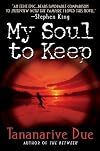
A series about an ancient African society of immortals. (They aren't vampires, but they've got that secret immortal thing going on.): My Soul to Keep, The Living Blood, and Blood Colony.

"O Outro Pé da Sereia"-- literally, "The Mermaid's Other Foot", which should give you a fair idea of his style-- but that hasn't been translated into English yet, as far as I can tell.
The narrative in "O Outro Pé da Sereia" is poetic, filled with thoughtful contradictions, such as the death in life and the life in death. The novel straddles two time periods: modern day Mozambique and ~1500 India/Mozambique. It's a... beautiful but hard read, questioning the ties between past and future, the legacy of slavery, the greediness and self-sacrifice of human beings, the distance between central and peripherical nations, and the overlap of religions/cultures/hopes.
The narrative in "O Outro Pé da Sereia" is poetic, filled with thoughtful contradictions, such as the death in life and the life in death. The novel straddles two time periods: modern day Mozambique and ~1500 India/Mozambique. It's a... beautiful but hard read, questioning the ties between past and future, the legacy of slavery, the greediness and self-sacrifice of human beings, the distance between central and peripherical nations, and the overlap of religions/cultures/hopes.
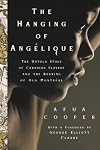
I'm part way through "The Hanging of Angelique", which is about the Atlantic Slave Trade in Canada. I know that Canadian history rarely, if *ever*, talks about our history of slavery, so this whole book has been both appalling and eye-opening for me.
Basically, Angelique was accused of burning down Montreal in the 1700s (the book's at home right now, so I'm fuzzy on the details). She had been a slave coming out of Portugal (I am learning so much about the Atlantic Slave Trade this school-year, between my class on Forced & Free Immigration to Latin America and this book), been taken to New York, and then brought up to Canada. The author, who dedicates the book to our then-new Govenor General, believes that Angelique's testimony about herself and her life may be the first Slave Narrative in North America, because she goes into so much detail about her experiences as a Slave, and about her *rage*.
It's a hard read for me, because I *like* the idea that Canada is a Post-Racist Utopia. I want to believe our only connection to the Slave Trade in North America is the end of the Underground Railway. But it's not. And just like we shouldn't ignore Africville here in Halifax, or Priceville in Ontario, we shouldn't ignore this.
Sadly, none of my reading right now *at all* is fluffy, or even fiction, so I have no recommendations, but if you want to get an idea of what's going on in Canadian historic circles right now, this may be a good book.
Basically, Angelique was accused of burning down Montreal in the 1700s (the book's at home right now, so I'm fuzzy on the details). She had been a slave coming out of Portugal (I am learning so much about the Atlantic Slave Trade this school-year, between my class on Forced & Free Immigration to Latin America and this book), been taken to New York, and then brought up to Canada. The author, who dedicates the book to our then-new Govenor General, believes that Angelique's testimony about herself and her life may be the first Slave Narrative in North America, because she goes into so much detail about her experiences as a Slave, and about her *rage*.
It's a hard read for me, because I *like* the idea that Canada is a Post-Racist Utopia. I want to believe our only connection to the Slave Trade in North America is the end of the Underground Railway. But it's not. And just like we shouldn't ignore Africville here in Halifax, or Priceville in Ontario, we shouldn't ignore this.
Sadly, none of my reading right now *at all* is fluffy, or even fiction, so I have no recommendations, but if you want to get an idea of what's going on in Canadian historic circles right now, this may be a good book.
I recently started to reread Chinua Achebe's Things Fall Apart and a friend gave me her copy of Buchi Emecheta's The Bride Price and both books are in my bag at the moment. I can heartily recommend them both if you haven't read them.
The Revolutionary Imagination in the Americas and the Age of Development by María Josefina Saldaña-Portillo
The Revolutionary Imagination in the Americas and the Age of Development 822331667 This taught me a lot of things I didn't know about when and how we came to have 'the developed world' and 'the developing world,' how the links to colonialism and gender and capitalism work in a really complex way. I didn't know how shallow my own critical analysis of that stuff was before!

I discovered an author called Zhang Jie who was published by Virago in the 80s, stunning short story writer.
I've recently started reading Stolen Harvest by Vandana Shiva, who is a dedicated activist, prolific writer, and seriously cool lady.
Just started re-reading Morrison's Beloved this weekend, for seminar, and my students had a brilliant conversation about it today, about the relationship between past and present, about how the narrating consciousness is collective and shape-shifting, about how sometimes fiction is the best way to tell the truth about history, about what it means that America's truth is a ghost story.
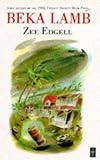
My favorite book by a writer of color (one of my top 5 favorite novels EVER!) is Beka Lamb by Zee Edgell.
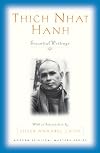
His poetry is beautiful in its simplicity (though I definitely have favorites) and his books are stunning, though not fiction.
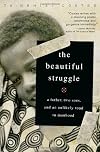
I just finished [The Beautiful Struggle] by Ta-Nehisi Coates, which I have mixed feelings about. More than anything, it's about Coates' father, and yet I don't feel like I know him at all for reading about his life. The distance between reader and writer may reflect the distance between the inner lives of father and son - love and respect don't require full disclosure on anyone's part. Still, this is a book crammed with personalities, with lives long and short, and yet few - if any- really flower on the page. Even Coates seems a mystery to himself as he describes his past. Perhaps that's his tendency toward checking out, toward dreaming, given prose form? Or, equally, perhaps it's just me.
The book's very much about fathers, sons, brothers, friends - it's about manhood, and masculinity, and carving meaning and identity for yourself in a world that will rip it from you as fast as it can. And while I understand the need, the drive for the space and ritual of manhood that acts as this book's center stage, I missed the women. More than missed them, I wondered who they were, and how their lives looked, living and growing up and trying to survive - even flourish - in West Baltimore.
The book's very much about fathers, sons, brothers, friends - it's about manhood, and masculinity, and carving meaning and identity for yourself in a world that will rip it from you as fast as it can. And while I understand the need, the drive for the space and ritual of manhood that acts as this book's center stage, I missed the women. More than missed them, I wondered who they were, and how their lives looked, living and growing up and trying to survive - even flourish - in West Baltimore.

Depressingly, all I read lately is law, but the opinion for Canterbury v. Spence is comprehensible to a lay reader, has flawless logic, and set down some of the first legal statements about informed consent in medicine. It was written by Spottswood Robinson III, the first African-American to serve on the US Court of Appeals for the DC Circuit and the first to hold the position of Chief Judge for that circuit as well. (I would also recommend almost anything Thurgood Marshall ever wrote, but most people in the US who don't live under a rock know who he is. Robinson isn't particularly well-known outside of the legal community, which I think is unfortunate.)
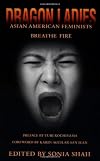
Oh! And I finally finished Dragon Ladies and now totally want to re-talk about modern imperialism and Canadian healthcare and Filipina immigrants.
Body Hunters: How the Drug Industry Tests Its Products On the World's Poorest Patients by Sonia Shah
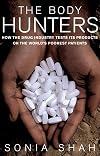
Just made it through Sonia Shah's The Body Hunters (indictment of Big Pharma's drug research on disempowered peoples); I think I would have been more impressed prior to reading Smith and Roberts.
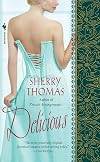
Next on my list is Sherry Thomas' Delicious, which I have not yet started but which I'm looking forward to -- it looks fairly light and fun, and I need some of that after the Seed to Harvest books, which were very rewarding and worth the read but sort of the opposite of light.
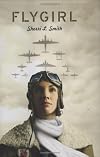
I just read and really liked Sherri L. Smith's Flygirl, about an African-American girl in the 1940s who has to pass for white in order to join the WASPs: great historical detail and characterization.
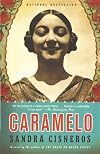
Caramelo, her 2002 novel, is really wonderful. I don't know why it didn't get as much media love as her earlier works.
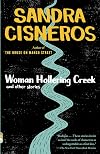
Lyrical and powerful and it, along with "House on Mango Street" and her poetry, were very influential to me. My copy of the short stories was one she gave me after I told her a story at a signing, and she signed it in big loopy letters. I haven't followed her writing in recent years. I will have to change that.
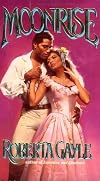
I'm reading some historical romances written by and featuring black characters (we weren't all slaves y'all!).
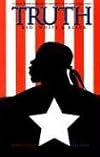
One of the best things I've read in a couple of years is the seven-issue Marvel series Truth: Red, White, And Black by Robert Morales (art, which is nowhere near as good as the writing, by Kyle Baker). It's the story of the Black Captain America -- or rather, the Black soldiers who served as test subjects for the super-soldier serum that created Captain America, and it's horrifying and fascinating and heartbreaking and all too realistic, given how America has treated its people of color over the years. The fact that we have real-life situations that are quite analogous to what happens in the series makes it seem that much more real and instantly believable in a way that most comics aren't. I'm so glad Marvel decided to make it canon, even though people howled about that. (Big shock.)
Finally, also in the comics world, there's the short-lived seven issues of The Crew, by Priest, which was basically canceled before it got started. It drew together several heroes of color but was not directly about race; it was about a bunch of down-on-their-luck superheroes who were forced to band together out of necessity, not out of choice. For all that it wasn't directly about race, the contrasts between the characters and where they've ended up (through either backstories that couldn't be avoided or years of mistreatment by other writers) versus where all-white teams started out is pretty stark. A carryover from Truth is the son of the Black Captain America, Josiah X -- a character that I'm sorry to say hasn't been seen in the Marvel Universe since, as far as I can tell.

I'm reading some historical romances written by and featuring black characters (we weren't all slaves y'all!).
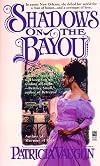
I'm reading some historical romances written by and featuring black characters (we weren't all slaves y'all!).
I'm reading some historical romances written by and featuring black characters (we weren't all slaves y'all!).
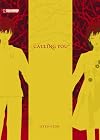
Right now I'm (slowly) reading Otsu-Ichi's short story collection Ushinawareru monogatari. Two of the stories in it ("Calling You" - which I loved - and "Kizu") have translations out.

My favorite Octavia Butler book, well toward the top of my list of favorite books ever, is Mind of My Mind, which is part of the Patternmaster/Clay's Ark universe. It follows Mary, daughter of Doro (from Wild Seed, as her mental powers develop and she actually creates the Pattern. Origin stories done well are really excellent, and this one creates something that I was familiar with after Patternmaster and makes it all logical and fascinating and easy to see, and it also focuses hard on a powerful Black woman who's in no way willing to turn away from the responsibilities her power grants her. It's awesome.
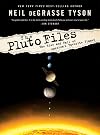
But my favorite, and the one I keep recommending to people, is Neil deGrasse Tyson's wonderful, interesting and very funny The Pluto Files (on 'the rise and fall' of Pluto as a planet, including his own experiences with the debate). After seeing Tyson on The Daily Show (where he made me grin from ear to ear), I just couldn't resist, and the book was a joy from start to finish.
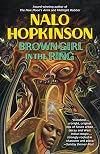
If you're looking for a great post-apocalyptic sf/f book by a PoC, I read Brown Girl in the Ring by Nalo Hopkinson and found it wonderful. She does incredible, interesting and juicy stuff in her writing weaving magic and spirituality through the story.