I think some of the best books are the ones that defy pigeon-holing - and I had some difficulty with what to make of this one. It's Beha's first novel and I think some of the heavy-handed use of conventions are indicative of that. I was prematurely dismissive though - Beha has a beautiful ability to write instructionally without being preachy. Even the alternating points of view (first person for the protagonist, third person for the eponymous Wilder) seemed an over-used trope but at the novel's conclusion you realize it for the subtle genius it actually is.
It's a first novel by an author in Manhattan about an author in Manhattan who's just finished his first novel - so you can't help but infer a sense of autobiography. He deals with crises of faith, failed relationships, personal motive - but more than that, delves into what it means to fulfill artistic callings. It's remarkable that a non-Christian can intuit so well the effects of faith and religious devotion without caricaturing.
"They sang as though they knew that was the best way of being in the world."
"He wanted to know what I learned from Keats, when I was more interested in that I liked how he made me *feel*."
It's a first novel by an author in Manhattan about an author in Manhattan who's just finished his first novel - so you can't help but infer a sense of autobiography. He deals with crises of faith, failed relationships, personal motive - but more than that, delves into what it means to fulfill artistic callings. It's remarkable that a non-Christian can intuit so well the effects of faith and religious devotion without caricaturing.
"They sang as though they knew that was the best way of being in the world."
"He wanted to know what I learned from Keats, when I was more interested in that I liked how he made me *feel*."
Couldn't finish. I'm sure it's great - I've heard good things. I found it meandering and very difficult to keep all the stories and people straight. The forward by 'antitheist' Christopher Hitchens was both riveting and discomforting because of parallels drawn between the fundamentalist Islamic practices condemned and mocked in the book and fundamentalist (actually misunderstood and malpracticed) Christianity as it is viewed by non-Christians. Though intended to be an exposé of radical Islam, I think this book poses a greater importance to how Christianity is viewed by unbelievers.
TL;DR - British butlers are self-unaware in a way that is both brilliant and endearing.
Once again, it's almost impossible to classify Capon's writing. Part parable, sermon, and coffee-chat, this book tackles the concept of grace with a perspective I've never quite considered. No one can write like Capon, and I'm tempted to just list a bunch of quotes. With his signature dry wit, Capon angered and annoyed me with his description of grace, and then casually pulled the rug out from under me, showing me how performance-oriented I still am. Added bonus: this is the best defense against antinomianism I've encountered - not because of the theological arguments (that was there) but because Capon's imagery and storytelling convey his points so much more organically. Capon uncannily anticipates and answers my logical pushbacks just before I've quite articulated them myself.
And because I can't resist:
"The church, by and large, has a poor record of encouraging freedom. She has spent so much time inculcating in us the fear of making mistakes that she has made us like ill-taught piano students: we play our songs, but we never really hear them because our main concern is not to make music but to avoid some flub that will get us in the dutch... [we] live, not in fear of mistakes, but in the knowledge that no mistake can hold a candle to the love that draws us home. ...Grace - the imperative to hear the music, not just listen for errors - makes all infirmities occasions for glory."
"Now then. Ask yourself a question. Do you seriously think that, in their joy at having been show more admitted with all their deformity, they will somehow begin to think more kindly of their ugliness? Do you imagine that the man with no nose will suddenly come to the conclusion that he has been given *permission* to have no nose? Do you think he will stop wanting a nose? Can you believe that at this moment of unmerited acceptance he will begin to take pleasure, not in our acceptance of him but in his own noselessness? That he will, as a logical consequence, begin to advocate cutting off everybody's nose? Of course you don't." show less
And because I can't resist:
"The church, by and large, has a poor record of encouraging freedom. She has spent so much time inculcating in us the fear of making mistakes that she has made us like ill-taught piano students: we play our songs, but we never really hear them because our main concern is not to make music but to avoid some flub that will get us in the dutch... [we] live, not in fear of mistakes, but in the knowledge that no mistake can hold a candle to the love that draws us home. ...Grace - the imperative to hear the music, not just listen for errors - makes all infirmities occasions for glory."
"Now then. Ask yourself a question. Do you seriously think that, in their joy at having been show more admitted with all their deformity, they will somehow begin to think more kindly of their ugliness? Do you imagine that the man with no nose will suddenly come to the conclusion that he has been given *permission* to have no nose? Do you think he will stop wanting a nose? Can you believe that at this moment of unmerited acceptance he will begin to take pleasure, not in our acceptance of him but in his own noselessness? That he will, as a logical consequence, begin to advocate cutting off everybody's nose? Of course you don't." show less
I started this yesterday and finished it today, which is no small feat for a Wright book.
I loved the simplicity N. T. brings to the table. He speaks conversationally, yet tackles deep philosophical issues in a method reminiscent of Socratic dialogues. I was a bit confused by his treatment of the Reformers. Did they successfully handle medieval misconceptions about God and the sacred/secular divide or not? He seems inconclusive, or at least takes for granted that his readers will know what he's talking about; which is odd, given that the majority of this book could be easily read by an unbeliever unschooled in church history. Most beautiful, though, was how Wright's love for his gracious Father spills over in delighted prose. Here's someone with a grasp on truly good news and a breathless impatience to tell anybody who will hear.
I loved the simplicity N. T. brings to the table. He speaks conversationally, yet tackles deep philosophical issues in a method reminiscent of Socratic dialogues. I was a bit confused by his treatment of the Reformers. Did they successfully handle medieval misconceptions about God and the sacred/secular divide or not? He seems inconclusive, or at least takes for granted that his readers will know what he's talking about; which is odd, given that the majority of this book could be easily read by an unbeliever unschooled in church history. Most beautiful, though, was how Wright's love for his gracious Father spills over in delighted prose. Here's someone with a grasp on truly good news and a breathless impatience to tell anybody who will hear.
This review is as difficult to write as the book was to read - not because of the content but because I can't do it's beauty justice. This is not your typical action-packing, plot-twisting, character-developing can't-put-it-down novel. The exquisitely graceful prosody forces a restrained, thoughtful reading. This book must be allowed to percolate; but doing so is profoundly fulfilling.
Though the novel reads as a sort of fictional autobiography of an elderly John Ames writing memoirs to his young son who will otherwise have few memories of his father, it accomplishes far more than this simplistic plot. Through Ames' eyes, the reader discovers a trove of intricacies far more subtle than a mere account of an old life. The book delivers through impression, suggestion, and intuition across a spectrum of theology, church life, grace, relationship, war, and humanity without ever feeling preachy or heavy-handed; instead inviting the reader to thoughtfully savour each morsel as it presents itself.
Though the novel reads as a sort of fictional autobiography of an elderly John Ames writing memoirs to his young son who will otherwise have few memories of his father, it accomplishes far more than this simplistic plot. Through Ames' eyes, the reader discovers a trove of intricacies far more subtle than a mere account of an old life. The book delivers through impression, suggestion, and intuition across a spectrum of theology, church life, grace, relationship, war, and humanity without ever feeling preachy or heavy-handed; instead inviting the reader to thoughtfully savour each morsel as it presents itself.
The Secret Thoughts of an Unlikely Convert : An English Professor's Journey into Christian Faith by Rosaria Champagne Butterfield
Rosaria packs more theology in 153 pages than many scholars do in ten times the length - and she does it in the construct of personal memoir. This is my most important book of 2013.
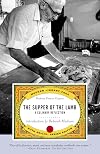
I picked up this book ignorantly expecting a theological discussion of the Eucharist, only to find I'll never look at an onion the same way, and I'm re-inspired to try my hand again at baking croissants. Capon writes in a slow, meandering, whimsical style; perhaps reminiscent of Chesterton, and certainly lending itself to savouring.
"Cookbook" is too mean a classification; although I'll refer to it time and again for the recipes, I realized this book is more a celebration of simple, material things, giving hope and anticipation for the great feast that awaits us in the life to come. In mindfulness of the goodness of even the smallest and most insignificant of God's gifts (mushrooms!), we become aware of C. S. Lewis's 'sehnsucht' - that 'inconsolable longing' of being made in God's image yet waiting to be finally realized into the fullness of what he's created us to be.
"Cookbook" is too mean a classification; although I'll refer to it time and again for the recipes, I realized this book is more a celebration of simple, material things, giving hope and anticipation for the great feast that awaits us in the life to come. In mindfulness of the goodness of even the smallest and most insignificant of God's gifts (mushrooms!), we become aware of C. S. Lewis's 'sehnsucht' - that 'inconsolable longing' of being made in God's image yet waiting to be finally realized into the fullness of what he's created us to be.
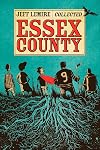
A fun afternoon easy read. This was my first real foray into graphic novels (other than the likes of 'Tintin' and 'Asterix and Obelisk') and it was different/better than expected. The drawings were often more keyed into plot development than the actual text, and I certainly didn't spend the time with the book it deserved. I'm not sure this was deserving of the title of one of CBC's top five Canadian books of 2010, but if the listing was looking to round out genres then this one more than likely adequately fit the bill. Subject matter was often dark, very realistic, and quite compelling. And of course, the added draw of Essex County being the next county over from my hometown, the familiarity of the subject matter easily drew me in.
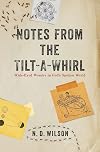
This book is an apologetic for God (both his existence and his nature) from the perspective of wonder. A better book to accomplish this goal would be R.F. Capon's Supper of the Lamb - where you are truly drawn into the wonderful, mysterious world in which we live, instead of annoyed by the heavy-handed list of metaphors and poeticky jargon that inhabits this book. Wilson's discussion of heaven and hell in the end of the book is worth the entire thing - skip the first few chapters and read the end.
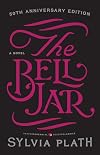
Knowing this novel was Plath's semi-autobiographical roman à clef made this work more gripping than it may have been otherwise. Particularly intriguing to me was her description of electrotherapy and the stigma surrounding/dependence on asylums for people with mental illness. Her first-person descriptions of the awareness of the presence of sickness in one's own mind was fascinating, and I'm sure this book came at a key point in time when mental illness was just beginning to be understood and effective treatments developed.
I have not been able to get into Plath's poetry so was a bit surprised to discover how readable this novel is.
I have not been able to get into Plath's poetry so was a bit surprised to discover how readable this novel is.
The Whole Five Feet: What the Great Books Taught Me About Life, Death, and Pretty Much Everything Else by Christopher Beha
I can't write a review because Beha writes so beautifully and poignantly on his reflections of the books he's read and how they inform his life, that my attempting to do the same would be ridiculous. I'll be coming back to this book, I hope.
Thanks to weather cancelling my classes, I could actually read this book in one sitting and lose myself for a few dark, tragically beautiful, and hopeful hours. Essentially, the plot revolves around the captivity of a young woman and her son, born in that captivity; their life together in a Room, and their eventual escape and recovery of that trauma. The story is told from the point of view of the five year old son, Jack, for whom the Room was the only reality he knows. This point of view worked in some respects and didn't in others - the childish language sometimes felt overly cumbersome, like an adult imagining what it's like to be five - though ultimately the first-time experience of the Outside reality after growing up in an 11 foot square space is what makes this book tick.
There were a number of psychological elements hinted at that I think would have made the novel stronger had they been fully explored. For instance, Ma's transformation of mindlessly existing in the room before her son was born, watching TV or sleeping her time away and gradually losing her 'personhood', to the disciplined woman giving her son structure and routine and as 'normal' a life as she could, was not a strong element in the book but I think is a fascinating study in human psychology and determination. It was because of Ma's care and education and pouring her life into her son that his role in the escape and later ability to develop and recover were ultimately plausible. Later, during their show more recovery, Jack often longs for the safety and familiarity of Room, and Ma doesn't seem to understand his longing for the familiar; she only sees the room for the prison cell it was. This felt implausible - Ma was otherwise sympathetic to Jack's entire world and perception of reality shifting. I desperately wanted someone (not even a psychiatrist!?) to recognize how difficult this change was for him and to realize that he couldn't view the Room as a prison, but as a safe and familiar haven. Lastly, and probably because of the five-year-old perspective, the character of Ma remained largely unexplored and underdeveloped. There were many hints of complexity to her character, and the challenges she would have gone through mentally and emotionally recovering from such a trauma in a completely different world than the one from which she was kidnapped were mentioned only on the surface.
Also, a five year old's improbable depth of perspective on the Outside life often came across as moralistic. In one scene, Jack notices the busyness of those around him, contrasting this with the beautiful suspension of time and focus on living he and his mother had in Room. This short scene was awkwardly wedged into the narrative and felt more 'preachy' about the sad state of our rushed lives than a plausible perception of a young child.
The novel ends beautifully; almost too beautifully - a rather neat way to tie up loose ends. It felt sudden, a little rushed, and too definite, as though closure could really be that simple. Overall, the book was a difficult read because of the subject matter, and imagining the horror of such a traumatic experience through the innocent eyes of a child who didn't know any different was an effective and unique perspective. Highly recommended. show less
There were a number of psychological elements hinted at that I think would have made the novel stronger had they been fully explored. For instance, Ma's transformation of mindlessly existing in the room before her son was born, watching TV or sleeping her time away and gradually losing her 'personhood', to the disciplined woman giving her son structure and routine and as 'normal' a life as she could, was not a strong element in the book but I think is a fascinating study in human psychology and determination. It was because of Ma's care and education and pouring her life into her son that his role in the escape and later ability to develop and recover were ultimately plausible. Later, during their show more recovery, Jack often longs for the safety and familiarity of Room, and Ma doesn't seem to understand his longing for the familiar; she only sees the room for the prison cell it was. This felt implausible - Ma was otherwise sympathetic to Jack's entire world and perception of reality shifting. I desperately wanted someone (not even a psychiatrist!?) to recognize how difficult this change was for him and to realize that he couldn't view the Room as a prison, but as a safe and familiar haven. Lastly, and probably because of the five-year-old perspective, the character of Ma remained largely unexplored and underdeveloped. There were many hints of complexity to her character, and the challenges she would have gone through mentally and emotionally recovering from such a trauma in a completely different world than the one from which she was kidnapped were mentioned only on the surface.
Also, a five year old's improbable depth of perspective on the Outside life often came across as moralistic. In one scene, Jack notices the busyness of those around him, contrasting this with the beautiful suspension of time and focus on living he and his mother had in Room. This short scene was awkwardly wedged into the narrative and felt more 'preachy' about the sad state of our rushed lives than a plausible perception of a young child.
The novel ends beautifully; almost too beautifully - a rather neat way to tie up loose ends. It felt sudden, a little rushed, and too definite, as though closure could really be that simple. Overall, the book was a difficult read because of the subject matter, and imagining the horror of such a traumatic experience through the innocent eyes of a child who didn't know any different was an effective and unique perspective. Highly recommended. show less
I think I wasn't in the right frame of mind...this didn't grab my emotional shoulders and give me a good walloping like I was expecting. Gilead was, to me, more investigative in human motivation and spiritual wrestling; Home simply read narratively. I was arrested by a few passages where the characters wrestle with what 'home' means and how we are to interact with the sense of 'home' in our adulthood. As a nomad, these wrestlings are far too familiar!
“Because of their two-realm theory (seeing all things as either “sacred” or “secular”), Christians have themselves to blame for the rapid secularization of the West.
If political, industrial, artistic, and journalistic life, to mention only these areas, are branded as essentially ‘worldly,’ ‘secular,’ and part of the natural domain of ‘creaturely life,’ then is it surprising that Christians have not more effectively stemmed the tide of humanism in our culture?” -pg 54
Excellent, scholarly, philosophical, dry, challenging, convincing. Not for the faint of heart.
If political, industrial, artistic, and journalistic life, to mention only these areas, are branded as essentially ‘worldly,’ ‘secular,’ and part of the natural domain of ‘creaturely life,’ then is it surprising that Christians have not more effectively stemmed the tide of humanism in our culture?” -pg 54
Excellent, scholarly, philosophical, dry, challenging, convincing. Not for the faint of heart.
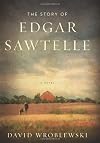
had promise - often quite beautiful prose but mixed with a rather incredulous story. I couldn't finish it. It felt like the story tried too hard - like the narrative was being forced and pulled instead of being gently spun in an intricately woven tale.
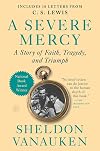
not sure whether this is a love story, an autobiography, a treatise on aesthetics, an apologetic of Christianity, a manual on dealing with grief, or a book of poetry and literature...but I was awfully pleased to read of CS Lewis using the designation "corking good" in reference to another author.
My only beef is that the author examines his grief so scientifically and philosophically that, should I find myself in a similar position, I would not draw any comfort from his hypotheses.
On the other hand...what a mind! To gain the insights from examining his life as he has...makes me feel the rest of us (myself chiefly) muddle through life like a bunch of bumbling idiots.
My only beef is that the author examines his grief so scientifically and philosophically that, should I find myself in a similar position, I would not draw any comfort from his hypotheses.
On the other hand...what a mind! To gain the insights from examining his life as he has...makes me feel the rest of us (myself chiefly) muddle through life like a bunch of bumbling idiots.
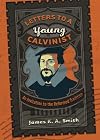
A great introduction to Calvinism but not 'dumbed-down' too much for those already acquainted with theologies. Since it's written in letter format, the style is engaging and each chapter thorough while still managing to be delightfully concise. The emphasis was less on the 'intellectual-ness' that an understanding of Calvinism tends to generate and more on the broader beauty of the catholicity and engagement of the heart in relationship to a beautiful Saviour that is typically misunderstood or entirely overlooked in current perspectives on Calvinism.
In light of recent developments of neo-Calvinists, New Calvinists, and even emergent thought, I think traditional Calvinism (or broader, "Reformed" or even broader, as the author prefers, "Augustinianism") gets a bad rap for being cold, intellectual, and overly concerned with predestination and how a loving God could possibly predestine some to hell. This small book serves as a warm and gentle defense to shed light on some misperceptions of Calvin himself and his theology, which was certainly not original thought during the Reformation,
I could have stopped after the second chapter, in which Smith addresses theological pride. Even in my own Dutch Reformed background I have often come across arrogance from an individual level to entire bodies and denominations - the subtle attitude that "finally, we've got it right, and everyone else will catch up if they keep studying." Smith shows that this attitude, which is sadly show more characteristic of many Calvinists, is actually opposite to Calvin's intention and to the heart of Reformed teaching, which rightly turns the focus from ourselves (and adding the 'work' of theological understanding and doctrine to grace) and towards the glory of a great, gracious, and benevolent God. show less
In light of recent developments of neo-Calvinists, New Calvinists, and even emergent thought, I think traditional Calvinism (or broader, "Reformed" or even broader, as the author prefers, "Augustinianism") gets a bad rap for being cold, intellectual, and overly concerned with predestination and how a loving God could possibly predestine some to hell. This small book serves as a warm and gentle defense to shed light on some misperceptions of Calvin himself and his theology, which was certainly not original thought during the Reformation,
I could have stopped after the second chapter, in which Smith addresses theological pride. Even in my own Dutch Reformed background I have often come across arrogance from an individual level to entire bodies and denominations - the subtle attitude that "finally, we've got it right, and everyone else will catch up if they keep studying." Smith shows that this attitude, which is sadly show more characteristic of many Calvinists, is actually opposite to Calvin's intention and to the heart of Reformed teaching, which rightly turns the focus from ourselves (and adding the 'work' of theological understanding and doctrine to grace) and towards the glory of a great, gracious, and benevolent God. show less
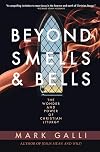
I grew up in a Dutch/Reformed/Presbyterian/Calvinist background, where anything in the liturgy that smacks of Romanism is highly suspect (except for paedobaptism, which is obviously biblical, *wink wink nudge nudge* to my readership). This delightful little book reminds us of the values of participating in a liturgy that has its roots not in Romanism, but instead in the earliest Christian worship. One gathers from this book a sense of the 'catholic' (universal) nature of the Body of Christ - not only being joined to believers worldwide but in a very real sense joined in worship with saints from generations past. Ultimately, this points us to a worship that is diametrically opposed to self-centred worship and brings us into worship that is bigger than ourselves, outside of ourselves, and fundamentally worship that is Christ-centred. And for those who are suspect of high liturgy itself because of lifeless and empty ritualism, this book is a keen reminder that the form of the worship itself, regardless of tradition, is empty and ritualistic if not flowing from a regenerated heart pointed away from self and towards community with Christ.
Galli does not write apologetically here; rather he provides a simple primer of the liturgy, gently forming his arguments through the timeless words and prayers themselves, and through the rhythms and flow of the Christian calendar connecting his readers with the Body of Christ throughout the ages. Especially helpful are the appendices at the show more end with a simple glossary of liturgical terminology for anyone unfamiliar with the lingo, charts comparing the liturgy across traditions, and a basic understanding of the Church year and it's symbolism and importance. show less
Galli does not write apologetically here; rather he provides a simple primer of the liturgy, gently forming his arguments through the timeless words and prayers themselves, and through the rhythms and flow of the Christian calendar connecting his readers with the Body of Christ throughout the ages. Especially helpful are the appendices at the show more end with a simple glossary of liturgical terminology for anyone unfamiliar with the lingo, charts comparing the liturgy across traditions, and a basic understanding of the Church year and it's symbolism and importance. show less
So, it was a fun summer read. And by 'fun' I mean I am embarrassed to admit I may have shed a few tears. For chick lit, it was surprisingly not awful. I've taken part in my guilty pleasure, and it was good.
Now it may seem odd at first glance that I, a single, childless woman, would pick up a book on parenting, but I have a bit of a love-affair with grace and happened across this lovely tome whilst babysitting at my sister's. The beautiful thing about this one is that it's less of a parenting how-to (totally irrelevant to me) and more of understanding and developing my relationship with God by understanding and developing all sorts of relationships around me. In short, this book is about living life with a keen awareness of my own desperate need for constant grace! This should really be titled something like Grace-Based Living (or Christocentric or Gospel-Oriented… you get the idea). It's not a difficult read and sometimes I feel Kimmel tries to hard in making his points – the average intellect got it a couple pages ago already – but then there are many other passages that you can only ingest a sentence or two at a time. I recommend this to anyone with any kind of relationship to any other human. Slash "all y'all".
Some favourite moments (this is mostly for my failing memory, not necessarily anyone else's edification, though take from it what you will):
- Truth is inseparable from grace. Boundaries in one's life stem from a passionate and grateful relationship with Christ rather than a moral checklist of human invention. Grace and truth are like Siamese twins joined at the heart – to separate is to kill both.
- "Cheap grace" isn't really grace at all. Rather, grace show more pushes toward holiness and propels us to embrace truth. "Cheap grace" holds people down and sets them up for heartache. "Cheap grace" is cowardice, laziness, and selfishness.
- Raising "safe Christian kids" is a spiritual disaster in the making. Folks, I'm a huge fan of the theory of Christian education (to take one small example) but in reality, I've seen Christian schools become 'safe havens' for parents too lazy or just plain unable to parent well. The result is kids who are ill equipped to live fruitfully in the world or to be able to respond well to any ideas that don't fit into the safe little boxes we've contrived for them. Jesus is good, but He isn't safe (yes, that's an Aslan reference). There are risks to living Christianly – read Hebrews 11! In attempting to provide a sanitary, hermetically sealed Christian existence, we forget the power of God – we think God is incapable of doing what He said He would do. Friends, that's a strong indictment. Raising safe kids produces a generation of people who must stay within a spiritually sterilized environment in order to thrive. These are nice systems that produce nice kids who marry nice kids who go to nice churches and hang out with like-minded friends. (Dare I mention the majority of Dutch Reformed churches?!)
- Legalism is the lazy man's religion. It doesn't require much thinking, or a relationship with God.
- Grace, on the other hand, is freeing – it gives the freedom to be different, to be vulnerable, to be candid, to make mistakes (that last one is a toughie for any Dutchie). Therefore, living by grace can be hard, because it is unnatural.
- Grace isn't a nice little theological system that allows you to do anything you want. Rather, it's a lifestyle and set of choices that are the outgrowth of a walk (a lifelong journey with twists and turns!) with Him.
- Grace-based families aren't preoccupied with keeping sin out by putting a fence between themselves and the world. These fences don't exist, because grace-based people understand that sin is already present and accounted for inside each one of us. Sin is not an action or object that somehow managed to penetrate our defenses; it is a pre-existing condition that permeates our being. Grace-based parents aren't surprised or angry by sin; they expect it – and point the sinner to the work of Christ on his behalf.
- Legalism: an exoskeleton that depends on an external environment to hold our urges in check and temptation at bay.
- Grace: an endoskeleton that sees our strength by Who is working inside us. The unlimited power of Christ and thorough effect of His finished work on the cross form the internal belief system that functions as the skeleton keeping us strong.
- "Your propensity toward sin shouldn't surprise, threaten, or even bother you. You know you're a sinner. You realize you have a bent toward selfishness, stubbornness, and lawlessness – exactly the kind of person Christ loves and for whom He died. By acknowledging your children's sin from the outset, you can encourage them to struggle with their sin out in the open where you can talk about it and direct them to the power of Christ. And when the children are actually sinning, grace makes it easy for you to have open, candid, and vulnerable discussions about the areas in which they struggle. You should be able to talk openly and honestly about sin because you're aware of your own sin. Grace demands a humility and sensitivity toward your children's battles with sin because grace is a daily reminder of how desperately you need the Saviour as well." show less
Some favourite moments (this is mostly for my failing memory, not necessarily anyone else's edification, though take from it what you will):
- Truth is inseparable from grace. Boundaries in one's life stem from a passionate and grateful relationship with Christ rather than a moral checklist of human invention. Grace and truth are like Siamese twins joined at the heart – to separate is to kill both.
- "Cheap grace" isn't really grace at all. Rather, grace show more pushes toward holiness and propels us to embrace truth. "Cheap grace" holds people down and sets them up for heartache. "Cheap grace" is cowardice, laziness, and selfishness.
- Raising "safe Christian kids" is a spiritual disaster in the making. Folks, I'm a huge fan of the theory of Christian education (to take one small example) but in reality, I've seen Christian schools become 'safe havens' for parents too lazy or just plain unable to parent well. The result is kids who are ill equipped to live fruitfully in the world or to be able to respond well to any ideas that don't fit into the safe little boxes we've contrived for them. Jesus is good, but He isn't safe (yes, that's an Aslan reference). There are risks to living Christianly – read Hebrews 11! In attempting to provide a sanitary, hermetically sealed Christian existence, we forget the power of God – we think God is incapable of doing what He said He would do. Friends, that's a strong indictment. Raising safe kids produces a generation of people who must stay within a spiritually sterilized environment in order to thrive. These are nice systems that produce nice kids who marry nice kids who go to nice churches and hang out with like-minded friends. (Dare I mention the majority of Dutch Reformed churches?!)
- Legalism is the lazy man's religion. It doesn't require much thinking, or a relationship with God.
- Grace, on the other hand, is freeing – it gives the freedom to be different, to be vulnerable, to be candid, to make mistakes (that last one is a toughie for any Dutchie). Therefore, living by grace can be hard, because it is unnatural.
- Grace isn't a nice little theological system that allows you to do anything you want. Rather, it's a lifestyle and set of choices that are the outgrowth of a walk (a lifelong journey with twists and turns!) with Him.
- Grace-based families aren't preoccupied with keeping sin out by putting a fence between themselves and the world. These fences don't exist, because grace-based people understand that sin is already present and accounted for inside each one of us. Sin is not an action or object that somehow managed to penetrate our defenses; it is a pre-existing condition that permeates our being. Grace-based parents aren't surprised or angry by sin; they expect it – and point the sinner to the work of Christ on his behalf.
- Legalism: an exoskeleton that depends on an external environment to hold our urges in check and temptation at bay.
- Grace: an endoskeleton that sees our strength by Who is working inside us. The unlimited power of Christ and thorough effect of His finished work on the cross form the internal belief system that functions as the skeleton keeping us strong.
- "Your propensity toward sin shouldn't surprise, threaten, or even bother you. You know you're a sinner. You realize you have a bent toward selfishness, stubbornness, and lawlessness – exactly the kind of person Christ loves and for whom He died. By acknowledging your children's sin from the outset, you can encourage them to struggle with their sin out in the open where you can talk about it and direct them to the power of Christ. And when the children are actually sinning, grace makes it easy for you to have open, candid, and vulnerable discussions about the areas in which they struggle. You should be able to talk openly and honestly about sin because you're aware of your own sin. Grace demands a humility and sensitivity toward your children's battles with sin because grace is a daily reminder of how desperately you need the Saviour as well." show less
I love when I pick up a book that doesn't let me put it down. Though I did have to get a good night's sleep somewhere in the middle - apparently I'm not as young as I used to be. Great organized crime plot, mildly predictable, but satisfyingly gripping writing anyway. A great palate-cleanser from the heavier reading I've been doing.
This was a pretty fun gothic romance sort of novel, set in 1950's Barcelona. I anticipated a lot more intrigue, and while there were some unexpected twists I felt the novel moved relatively slowly and the unfolding was a little heavy handed at times. That said, the writing rarely got in the way of the story, the descriptions were breathtaking and appropriately eerie when necessary, and there were lots of witty one-liners I'd love to adopt into my repertoire. Overall - a very entertaining read that held the attention and didn't require a lot of attention span. While compelling at times, it was easy to put down when necessary. Probably good for a beach read.
So many times I've heard flimsy defenses of American slavery in the form of "not all slave owners were awful! There were Christian slaveowners who were kind to their slaves." This may be true - but this autobiography brutally reminds us that good, kind slaveowners are STILL slaveowners - they still actively participate in unjust ownership of their fellow human beings. The system in which even the good, kind slaveowners grew up made them unable (unwilling?) to see their unjustices, instead believing that justice and love was merely displayed in how they treated their slaves. This discussion of the value of humanity was really a small part of Northup's narrative tale, but definitely the part that hit closest to home.