Dawson, A. (2019). Extreme cities: The peril and promise of urban life in the age of climate change. Verso.
Investigative | Veracious | Insubordinate
Summary:
In this thoroughly researched and at times scathing work, Dawson plays devil's advocate against nearly every structural actor in urban development. He shows how extreme cities--"urban space(s) of stark economic inequality" (p. 6)--are not natural phenomena. Property is valued or devalued by those who can afford to develop it, and these actors actively participate in building flood-prone affordable housing, underpaying disaster victims, and using taxpayer dollars to fix problems caused by anthropogenic design. The conditions placing marginalized inhabitants on the frontlines of climate breakdown are not the work of mysterious natural forces; they are the result of deliberate decisions made by elites over generations. By shedding light on these decisions, Dawson argues that elites sowed the conditions for socio-economic inequality, instigated the climate breakdown, and now seek to use climate resiliency to buy cheap waterfront property, extract public funds, and maintain a status quo of progress over consideration. For Dawson, the question isn't whether cities can fight a warming planet--they can't--but whether we will safeguard the people who live in them or allow faceless forces of cruelty to act on marginalized communities. Grounded in communist ideals and bolstered by real-life examples of community-led aid efforts, show more Dawson ties the defeatism of survivability with the idealism of equity, pushing for planned migration away from the coasts and supporting the communities who are both the victims of climate change and champions of justice.
This is a very dense read, but one worthy of your reading list.
Selected Quote:
"
Response: show less
Investigative | Veracious | Insubordinate
Summary:
In this thoroughly researched and at times scathing work, Dawson plays devil's advocate against nearly every structural actor in urban development. He shows how extreme cities--"urban space(s) of stark economic inequality" (p. 6)--are not natural phenomena. Property is valued or devalued by those who can afford to develop it, and these actors actively participate in building flood-prone affordable housing, underpaying disaster victims, and using taxpayer dollars to fix problems caused by anthropogenic design. The conditions placing marginalized inhabitants on the frontlines of climate breakdown are not the work of mysterious natural forces; they are the result of deliberate decisions made by elites over generations. By shedding light on these decisions, Dawson argues that elites sowed the conditions for socio-economic inequality, instigated the climate breakdown, and now seek to use climate resiliency to buy cheap waterfront property, extract public funds, and maintain a status quo of progress over consideration. For Dawson, the question isn't whether cities can fight a warming planet--they can't--but whether we will safeguard the people who live in them or allow faceless forces of cruelty to act on marginalized communities. Grounded in communist ideals and bolstered by real-life examples of community-led aid efforts, show more Dawson ties the defeatism of survivability with the idealism of equity, pushing for planned migration away from the coasts and supporting the communities who are both the victims of climate change and champions of justice.
This is a very dense read, but one worthy of your reading list.
Selected Quote:
"
Response: show less
A Natural History of Empty Lots: Field Notes from Urban Edgelands, Back Alleys, and Other Wild Places by Christopher Brown Esq
Brown, C. (2024). A natural history of empty lots: Field notes from urban edgelands, back alleys, and other wild places. Timber Press.
Abstruse | Remorseful | Enlightening
Summary:
In an updated (and more mindful) style of Thoreau, Mr. Brown guides us through his journey to identify the false binaries of human-Nature, civilization-wilderness, interior-exterior and his attempts to realign himself into a intentional, fulfilling balance. In extensive detail, he describes the natural world that rises in the interstitial--unowned/valueless--spaces of built environments. Through his eyes, we see a new layer of connectivity and history in the edgelands of Austin. I particularly love how his legal expertise accentuates his ecological observations--even if it meant having to put the book down out of frustration at times--and his specificity in defining Nature vs. wilderness.
Selected Quote:
"Their repurposing of discards of human industry as materials to build a better nest blurred the boundaries in a way we didn't expect, revealing a survival advantage obtained not through the generosity of our supposed stewardship, but through canny adaptation to the world the birds found themselves in." p198
Response:
This statement evokes both horror and admiration in me. Horror that species are forced to degrade themselves by using industrial scraps that impose numerous health complications on individuals. Admiration that these supposedly 'non-sentient' creatures are using synthetic materials to show more build more effective structures than their ancestors ever could. Underlying this lies a fundamental truth about wilderness and wild species: nature is neither good nor bad, neither pretty nor ugly. Wild nature simply lives, dies and decomposes. While humans prefer nature filtered and corrected to suit our tastes, in doing so we prioritize our own needs (food, beauty, comfort) over the reality that the wild is an ambivalent, all-encompassing system of every uncontrolled interaction. Nature's complexity nurtured our ingenuity, compassion, and adaptability, and this statement demonstrates that it can survive—if not flourish—under our dominion. show less
Abstruse | Remorseful | Enlightening
Summary:
In an updated (and more mindful) style of Thoreau, Mr. Brown guides us through his journey to identify the false binaries of human-Nature, civilization-wilderness, interior-exterior and his attempts to realign himself into a intentional, fulfilling balance. In extensive detail, he describes the natural world that rises in the interstitial--unowned/valueless--spaces of built environments. Through his eyes, we see a new layer of connectivity and history in the edgelands of Austin. I particularly love how his legal expertise accentuates his ecological observations--even if it meant having to put the book down out of frustration at times--and his specificity in defining Nature vs. wilderness.
Selected Quote:
"Their repurposing of discards of human industry as materials to build a better nest blurred the boundaries in a way we didn't expect, revealing a survival advantage obtained not through the generosity of our supposed stewardship, but through canny adaptation to the world the birds found themselves in." p198
Response:
This statement evokes both horror and admiration in me. Horror that species are forced to degrade themselves by using industrial scraps that impose numerous health complications on individuals. Admiration that these supposedly 'non-sentient' creatures are using synthetic materials to show more build more effective structures than their ancestors ever could. Underlying this lies a fundamental truth about wilderness and wild species: nature is neither good nor bad, neither pretty nor ugly. Wild nature simply lives, dies and decomposes. While humans prefer nature filtered and corrected to suit our tastes, in doing so we prioritize our own needs (food, beauty, comfort) over the reality that the wild is an ambivalent, all-encompassing system of every uncontrolled interaction. Nature's complexity nurtured our ingenuity, compassion, and adaptability, and this statement demonstrates that it can survive—if not flourish—under our dominion. show less

Kingsnorth, P., Hines, D. (2019). Uncivilisation: The dark mountain manifesto. Dark Mountain Project.
Rebellious | post-Anthropocentric | Cynically Hopeful
Summary: I don't even want to try and summarize this text. It's short and every page should be savored and critically investigated. To anyone reading this; find a copy.
Selected Quote:
"The civili[z]ed eye seeks to view the world from above, as something we can stand over and survey. The Uncivili[z]ed writer knows the world is, rather, something we are enmeshed in--a patchwork and a framework of places, experiences, sights, smells, sounds." p24
Response:
Under our exploitive stewardship, we have destroyed the grown environment that birthed us. The progress of civilization became explicitly tethered to the consumption of Nature and in its name, we granted ourselves the justification to prune Nature's complexity and exchange it for our simple-output demand. Every day, urbanites suffer from the extinction of experience, the impacts of the climate breakdown and the commercialization of existence. The story of civilization--the story of our superiority over Terra--failed us. Rather than continue down the path of direct and centralized control, I believe that places should be designed with, not against, temporal change and must embrace Nature's complexity and inspire compassion for it.
Rebellious | post-Anthropocentric | Cynically Hopeful
Summary: I don't even want to try and summarize this text. It's short and every page should be savored and critically investigated. To anyone reading this; find a copy.
Selected Quote:
"The civili[z]ed eye seeks to view the world from above, as something we can stand over and survey. The Uncivili[z]ed writer knows the world is, rather, something we are enmeshed in--a patchwork and a framework of places, experiences, sights, smells, sounds." p24
Response:
Under our exploitive stewardship, we have destroyed the grown environment that birthed us. The progress of civilization became explicitly tethered to the consumption of Nature and in its name, we granted ourselves the justification to prune Nature's complexity and exchange it for our simple-output demand. Every day, urbanites suffer from the extinction of experience, the impacts of the climate breakdown and the commercialization of existence. The story of civilization--the story of our superiority over Terra--failed us. Rather than continue down the path of direct and centralized control, I believe that places should be designed with, not against, temporal change and must embrace Nature's complexity and inspire compassion for it.
Gorgolewski, M., Komisar, J., Nasr, J. (2011). Carrot city: creating places for urban agriculture. The Monacelli Press.
Inspiring | Informative | Digestible
Summary: This book is an excellent 2011 time capsule for urban agroecology in the Global North. Gorgolewski et al. organized this text around specific placemaking initiatives and uses a narrative style to explain their ideation, design and implementation/construction phases. Lots of great pictures and drawings, and the best part is that they aren't AI generated!
For Emerald City residents, you'll particularly enjoy the "Center for Urban Agriculture" by Mithun Architects on p144-147. [https://mithun.com/project/center-for-urban-agriculture/].
Selected Quote:
"Although this project was not conceived to play a role in a Continuous
Productive Urban Landscape, it is indicative of the type of structure that could fit seamlessly into one if and when one was developed for Seattle." p147
Response:
I feel oddly ambivalent about Seattle--one of the top five most sustainable cities in America--having slept on an award-winning, agroecologically designed structure for nearly two decades (2007-2026). An excellent addition, albeit a small one, to the gorgeous I-5 skyline. I love how Mithun's design imprinted the need for synergistic input-output streams to reduce the communities fixed and variable carbon footprint. Simple input-output structures and isolationist placemaking cannot generate sustainability, a truth Seattle architects figured show more out in the Bush era. show less
Inspiring | Informative | Digestible
Summary: This book is an excellent 2011 time capsule for urban agroecology in the Global North. Gorgolewski et al. organized this text around specific placemaking initiatives and uses a narrative style to explain their ideation, design and implementation/construction phases. Lots of great pictures and drawings, and the best part is that they aren't AI generated!
For Emerald City residents, you'll particularly enjoy the "Center for Urban Agriculture" by Mithun Architects on p144-147. [https://mithun.com/project/center-for-urban-agriculture/].
Selected Quote:
"Although this project was not conceived to play a role in a Continuous
Productive Urban Landscape, it is indicative of the type of structure that could fit seamlessly into one if and when one was developed for Seattle." p147
Response:
I feel oddly ambivalent about Seattle--one of the top five most sustainable cities in America--having slept on an award-winning, agroecologically designed structure for nearly two decades (2007-2026). An excellent addition, albeit a small one, to the gorgeous I-5 skyline. I love how Mithun's design imprinted the need for synergistic input-output streams to reduce the communities fixed and variable carbon footprint. Simple input-output structures and isolationist placemaking cannot generate sustainability, a truth Seattle architects figured show more out in the Bush era. show less
The Ultimate Guide to Urban Farming: Sustainable Living in Your Home, Community, and Business by Nicole Faires
Faires, N. (2016). The ultimate guide to urban farming: Sustainable living in your home, community, and business. Skyhorse.
Comprehensive | Essential | Interdisciplinary
Summary:
This text is a "how-to" for urban agriculture. It starts with defining urban agriculture, runs through starting up operations, farm design, methods, plants, animals and everything in between. There are two focuses of its insights that make it special; its focus on commercial viability (urban farming/farm as a business/asset) and the prevalence of permaculture in the author's recommendations, methods and values. Faires clearly states the consequences of applying permacultural ideology into urban landscapes, but by doing so is able to clear the air and dive further into the intangible and non-monetary benefits of synergistic, organic farm design. Must-have text if you are/will be a small-scale urban farmer.
Selected Quote:
"Categorize all the resources you have mapped and list them in three groups: life, energy, and social. Life resources are the plants, animals, and insects growing there. Energy is the potential wind, wood, water, or gas energy you can use. Social resources are the teaching, recreation, and gathering possibilities for people. There are also resources off the land such as restaurants and markets for selling products, sawdust from sawmills, schools, and a population of people who might be a potential market for your farm produce." p41
Response:
What's not to love about the beautiful show more simplicity of these categories. Brevity, and the clarity of purpose it can ingrain, is a stool's leg of impactful bottom-up design. Imagine if this paragraph was taught in every agriculture, design and architecture course. Repeating this statement enough times could change the world. show less
Comprehensive | Essential | Interdisciplinary
Summary:
This text is a "how-to" for urban agriculture. It starts with defining urban agriculture, runs through starting up operations, farm design, methods, plants, animals and everything in between. There are two focuses of its insights that make it special; its focus on commercial viability (urban farming/farm as a business/asset) and the prevalence of permaculture in the author's recommendations, methods and values. Faires clearly states the consequences of applying permacultural ideology into urban landscapes, but by doing so is able to clear the air and dive further into the intangible and non-monetary benefits of synergistic, organic farm design. Must-have text if you are/will be a small-scale urban farmer.
Selected Quote:
"Categorize all the resources you have mapped and list them in three groups: life, energy, and social. Life resources are the plants, animals, and insects growing there. Energy is the potential wind, wood, water, or gas energy you can use. Social resources are the teaching, recreation, and gathering possibilities for people. There are also resources off the land such as restaurants and markets for selling products, sawdust from sawmills, schools, and a population of people who might be a potential market for your farm produce." p41
Response:
What's not to love about the beautiful show more simplicity of these categories. Brevity, and the clarity of purpose it can ingrain, is a stool's leg of impactful bottom-up design. Imagine if this paragraph was taught in every agriculture, design and architecture course. Repeating this statement enough times could change the world. show less
Written by cakbb
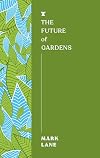
Lane, M. (2025). Future series: The future of gardens. Melville House.
Visionary | Intuitive | Quick
Summary:
In this thought-provoking book, we are offered a glimpse of the future where technology is interwoven into our gardens to increase resource efficiency, accessibility and connection. For specific segments within horticulture (xeriscape, permaculture, etc.), Lane delves into how technology can reinforce and strengthen the bonds of humans to Nature. The structure of the chapters can be disjointed and none of the chapters provide technical steps, but that is part of the joy in reading this text.
Selected Quote:
"What are known as bio-hybrid systems involve the integration of biological components, such as plants, microbes or animals, with artificial sensors and monitoring devices." pg. 141
Response:
Maybe not the most useful and/or tangible quote to pull from this book ("Community collaboration in gardening embodies a spirit of unity and shared purpose."), but I love it because it's both straight out of science fiction and soon-to-be reality. Will saving Nature require fusing it with anthropomorphic technology?
Lane, M. (2025). Future series: The future of gardens. Melville House.
Visionary | Intuitive | Quick
Summary:
In this thought-provoking book, we are offered a glimpse of the future where technology is interwoven into our gardens to increase resource efficiency, accessibility and connection. For specific segments within horticulture (xeriscape, permaculture, etc.), Lane delves into how technology can reinforce and strengthen the bonds of humans to Nature. The structure of the chapters can be disjointed and none of the chapters provide technical steps, but that is part of the joy in reading this text.
Selected Quote:
"What are known as bio-hybrid systems involve the integration of biological components, such as plants, microbes or animals, with artificial sensors and monitoring devices." pg. 141
Response:
Maybe not the most useful and/or tangible quote to pull from this book ("Community collaboration in gardening embodies a spirit of unity and shared purpose."), but I love it because it's both straight out of science fiction and soon-to-be reality. Will saving Nature require fusing it with anthropomorphic technology?
Written by cakbb
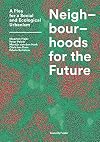
Hajer, M., Buitelaar, E., Dam, C., Pelzer, P., Hurk, M. (2021). Neighbourhoods for the future: A plea for a social and ecological urbanism. Valiz.
Informed | Well-formatted | Authoritative
Summary:
Written by an incredible team from Utrecht University, this is a great book that defines 'ecological urbanism' that merges the studies of our physical, built environments with those of social interactions. If cities are living organisms; we must treat ecological fabrics and principles as fundamental tenets of urbanization, not add-ons. It defines four (4) dimensions of neighborhood ecologies--sustainability performance, conditions for sociability, affordability and inclusiveness and adaptability--to grade by and details the four (4) elements of neighborhood arrangements--discourse, actors, resources and rules--to actuate ideal neighborhood ecologies. This text includes 13 vignettes about neighborhoods, projects and stories which make ecological urbanism digestible for a novice. It ends with providing nine (9) recommendations to nurturing a ideal ecological neighborhood.
Selected Quote:
"A 'good' neighbourhood arrangement is one in which (most) actors have a long-term commitment ('skin in the neighbourhood'); there is a strong narrative (i.e. discourse) that activates and mobilizes people; the rules are simple, in the sense that they are stringent on the goals yet leave room for trying out different solutions; and financial resources are created, captured, and show more circulated in the neighbourhood itself as much as possible." p.202-203
Response:
In this description of high-quality neighborhood arrangements, each element is described in the human-scale. Urbanization reflects the inhabitants that reside within it and vice versa, and designs, plans, projects and Nature must be instigated in the human-scale. show less
Hajer, M., Buitelaar, E., Dam, C., Pelzer, P., Hurk, M. (2021). Neighbourhoods for the future: A plea for a social and ecological urbanism. Valiz.
Informed | Well-formatted | Authoritative
Summary:
Written by an incredible team from Utrecht University, this is a great book that defines 'ecological urbanism' that merges the studies of our physical, built environments with those of social interactions. If cities are living organisms; we must treat ecological fabrics and principles as fundamental tenets of urbanization, not add-ons. It defines four (4) dimensions of neighborhood ecologies--sustainability performance, conditions for sociability, affordability and inclusiveness and adaptability--to grade by and details the four (4) elements of neighborhood arrangements--discourse, actors, resources and rules--to actuate ideal neighborhood ecologies. This text includes 13 vignettes about neighborhoods, projects and stories which make ecological urbanism digestible for a novice. It ends with providing nine (9) recommendations to nurturing a ideal ecological neighborhood.
Selected Quote:
"A 'good' neighbourhood arrangement is one in which (most) actors have a long-term commitment ('skin in the neighbourhood'); there is a strong narrative (i.e. discourse) that activates and mobilizes people; the rules are simple, in the sense that they are stringent on the goals yet leave room for trying out different solutions; and financial resources are created, captured, and show more circulated in the neighbourhood itself as much as possible." p.202-203
Response:
In this description of high-quality neighborhood arrangements, each element is described in the human-scale. Urbanization reflects the inhabitants that reside within it and vice versa, and designs, plans, projects and Nature must be instigated in the human-scale. show less
Written by cakbb
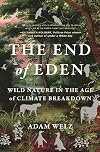
Welz, A. (2023). The end of eden: Wild nature in the age of climate breakdown. Bloomsbury Publishing.
Gorgeous | Heartrending | Explicit
Summary:
This book takes on the difficult task of reframing the 'changing climate' into the 'climate breakdown' and makes the argument that this new vocabulary is a more accurate description that carries the proper urgency. Welz does this by translating the stories and tapestries of our wild landscapes and seemingly drawing the etymological truth of the 'breakdown'. It's a style and message that's reminiscent of George P. Marsh, but Welz is writing on the brink of a planetary collapse and keeps the same cynical edge of any environmentalist in 2026.
Selected Quote:
"A second wild population [of Attwater's Prairie Chicken] is now being built up on a private ranch, also on the coastal plain and vulnerable to flooding, and so far that population has grown. But it seems likely that the Attwater's Prairie Chicken will reliably remain in its natural habitat only for as long as young continue being produced in captivity." p81.
Response:
A 'change' is something that can be mitigated, adapted to or controlled. What's described above is a 'breakdown', the evisceration of flowing processes that cascade into ecosystem failure. We put ourselves in a position to either abandon the landscape or to actively prop it up. This is what happens when we enforce process-simple principles to process-complex Nature.
Welz, A. (2023). The end of eden: Wild nature in the age of climate breakdown. Bloomsbury Publishing.
Gorgeous | Heartrending | Explicit
Summary:
This book takes on the difficult task of reframing the 'changing climate' into the 'climate breakdown' and makes the argument that this new vocabulary is a more accurate description that carries the proper urgency. Welz does this by translating the stories and tapestries of our wild landscapes and seemingly drawing the etymological truth of the 'breakdown'. It's a style and message that's reminiscent of George P. Marsh, but Welz is writing on the brink of a planetary collapse and keeps the same cynical edge of any environmentalist in 2026.
Selected Quote:
"A second wild population [of Attwater's Prairie Chicken] is now being built up on a private ranch, also on the coastal plain and vulnerable to flooding, and so far that population has grown. But it seems likely that the Attwater's Prairie Chicken will reliably remain in its natural habitat only for as long as young continue being produced in captivity." p81.
Response:
A 'change' is something that can be mitigated, adapted to or controlled. What's described above is a 'breakdown', the evisceration of flowing processes that cascade into ecosystem failure. We put ourselves in a position to either abandon the landscape or to actively prop it up. This is what happens when we enforce process-simple principles to process-complex Nature.


Would love to learn more about this excellent city!