
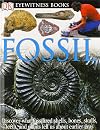
In this fossil survey book, a variety of fossil pictures with information about their bodies, habitats, era, etc.
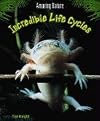
In this survey book, life cyles of various organisms including plants and animals are described. New words presented in the book are bolded with a glossary. The pictures in the book capture amazing animals and plants in the wild. Although this book does not show the life cycle (especially complete or incomplete metamorphosis) of organisms, it does provide many facts as well as further reading opportunities. This book would make an excellent accessory when learning about life cycles for early finishers.
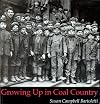
Growing Up in Coal Country was an awe-inspiring non-fiction story about the men, women, and children who did backbreaking work for extremely long hours and little money in the 1900's. This book would make a great addition to my science classroom when we are discussing renewable and non-renewable energy sources, such as coal, to make it more personable to the students who have never seen coal, much less know how it was mined.
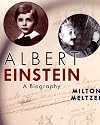
This biography of Albert Einstein tells the story of one of the greatest scientists in the world. In this 32 page book, the story of Einstein is very consise and includes original photos and letters as well as several famous quotes from Einstein. The author, Milton Meltzer, has received many awards for his work, however his inclusion of many references makes me feel that this book is very accurate. Also included at the end of the book is a timeline of Einstein's life.
In this series nonfiction book, various military vehicles are discussed. Author David Baker, a specialist in defense and space programs and consultant to various government and industry organizations, brings to life some of these extremely useful vehicles. In addition to a glossary and index, further reading materials are provided. Books in the series follow very similar patterns, both that I read have 6 chapters and end on page 32. Fonts and colors are the same, as well.
Cause of Death is one book in a series of forensics nonfiction books. Its goal is to inform the reader through a nonpartisan but narrative tone. The information provided seems accurate although no information is given about the author or references; the book does contain several websites and books that readers can look at if they are interested in learning more. The intended reading level is grades 4-8, however some of the pictures and information is too mature for 4th and 5th graders, in my opinion.
This is a well-told biography of 13 women who paved the way for women astronauts in the United States. Tanya Lee Stone tells this chronological story in a manner that has the reader yearning for more. Furthermore, she provides much evidence of her research through the appendixes, biographical sources, source notes, and further reading sections.
Author and illustrator Caroline Mockford does a great job illustrating the life cycle of a sunflower from seed to wilting in this informational picture storybook. The watercolor paints flow nicely with the text to tell the story of a lonely seed that is planted by a little girl and studied through it's growth.
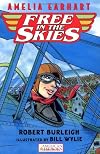
This is comic-book style illustrated biography os the story of Amelia Earhart according to Robert Burleigh. Although it is a good story to tell and could interest readers that are interested in comic books, it is hard to distinguish how accurate the portrayal of Ms. Earhart is due to the lack of resources and author creditials.
Diving to a Deep-Sea Volcano takes the reader on a chronological trip following Rich Lutz, a deep-sea biologist studying organisms living in the deepest parts of the oceans near underwater volcanoes. This book has extraordinary pictures of organisms found in the deepest parts of the ocean, submersibles used to dive deep, and photographs of scientists at work in the field. Author Kenneth Mallory does an excellent job of providing further knowledge to the reader including a glossary and suggested further reading, however the book lacks any biography to provide references.
In this journal, Jennifer Owings Dewey chronologically recalls her trip to Antartica. Utilizing a grant received from the National Science Foundation, the author tells hers story and describes the many aspects of Antartica through letters sent home, drawings, and photographs.
This Weather Field Guide is a great reference book to use when studying clouds and atmospheric storms. The book is broken into four parts: an explanation about weather, how to look at weather, the field guide, and a reference section. The pictures and illustrations used capture the various parts of weather & clouds well, and the book is very user-friendly.
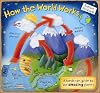
This is a great pop-up / interactive book that gives a brief overview of the many aspects of Earth. From the creation of our world to Earth's timeline, plate tectonics, the water & carbon cycle, photosynthesis and the food web, this book is a great way to engage students in topics before learning about them!
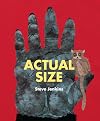
In this children's picture book, animals are shown using cut and torn paper to create real-life sized images. From the smallest insect to the mouth of a shark, this book will keep children engaged in learning about the different sizes of animals and how they compare to them.
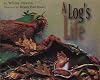
A Log's Life is a nonfiction story about the process of becoming a log. The three-dementional paper sculptures make the book, as they show a very realistic view of a tree branch changing into a log.
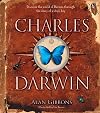
This book takes you on the travels of Charles Darwin through the diary of a fictional ship boy, James. Although the narration is told through a fictional character, the recollection and information is based on actual events. The majority of the book focuses on the ship's 5 year journey, but only 2 pages are dedicated to the Galapagos Islands. The last few pages of the book are dedicated to explaining the rest of Darwin's life, information about the ship, and other 19th Century scientists.
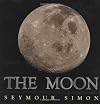
This book does a great job of highlighting some of the best moon photographs taken from Earth and from NASA moon missions. The information provided with the picture is on a basic level, however it relates well to the pictures being depicted and would be useful to those students in 4th or 5th grade, or possibly a reference book for middle school students.

This concept book shows familiar animals from A to Z. Each animal picture is very artfully done in Asian or African style art with gold foil and bright colors. A paragraph of information is given about each animal, probably a little too much information for a toddler, but an acceptable amount for an emergent reader being read to.
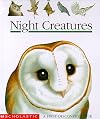
This First Discovery Book shows and discribes in an early-reader format owls and bats. It is very creatively done as it has some clear pages with picturs that change when you flip them and more information hiding underneath.
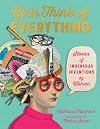
This book gives the story of 12 women / girl inventors and their inventions that changed the world. From chocolate chip cookes to Kevlar, this book can inspire boys and girls alike to think like an inventor - to ask questions and think outside the box. It is very informative but also gives a good look into the how and why of these inventions.
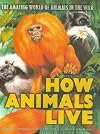
This informational non-fiction book shows illustrations of hundreds of different animals, insects, and aquatic life. It is separated into different chapters - Starting Out in Life, Sharing, Fighting to Live, Defenses, and Now You See Me. Each chapter is further categorized into sections. Although photographs would be better than illustrations, there is quite a lot of information that is easy to find and understand.
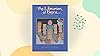
Very good story about a woman struggling against social norms in Iraq whose passion drives her to secretly remove 30,000 books from the library to stash and protect them in her home.