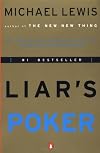
A very good read, and despite being 20 years old (or so) quite illuminating as to our current financial crisis.
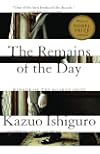
Americans, at least, seem to think of butlers as kind of comic figures -- pointy-nosed Jeeves "at your service" sorts. "The Remains of the Day" kind of inflates that stereotype and uses it as a launching off point for a deeper discussion about loyalty and service over the course of a life. It reminds me a bit of Sinclair Lewis' "Bobbitt," except instead of boosterism, bulterism. Certainly it touches on good topics for someone at my point in life -- trying to figure out work-life balances and decide which kinds of professional loyalties to pursue. It's a good read! (Later...) And I want to amend this to say that I didn't take this to be a sad story. A lot of people do. Ishiguro may have intended it to be. The movie may have painted it that way. But I felt Stevens' seemingly odd desire to continue on his pursuit of learning how to jest with his odd new American master right at the end of the novel kind of illuminated the idea that his life had not misguided. His job was his puzzle. It fit him. He felt satisfaction. This is acceptable. Just because he missed Ms. Kenton's signals and may have felt pangs of regret over it doesn't mean that was the path he should've taken. Anyway, the fact that I've come back to this book to add to my review probably indicates how much I enjoyed it. Stevens is a nerd. He enjoys rules and systems. I definitely see shades of myself in him.
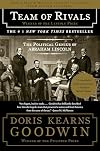
"Team of Rivals" is great. It's amazingly detailed and, yet, very engaging and readable. By the end, you really do feel deeply involved with the personalities of Lincoln and his advisers. DKG breathes vibrant life into it all. Even the ending, the assassination, stings in a new sort of way.
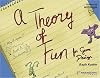
This is a cute book -- kind of reminded me of Scott McCloud's "Understanding Comics" or Martin Gardner's "Aha!" The title mostly refers to the first part of the book during which Koster gives a quick overview of his take on a theory of how "fun" works. The second half of the book is more of a manifesto on games as art. People deep in the world of game design might not get much out of this directly -- although it's nice to just see an important game designer's take on the subject. But this book would be great for folks just digging into the theory and practice of game design for the first time. It almost begs to be on the reading list in college classes about game design, interactive media, or art theory in general.
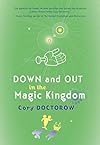
Hm. So I read this simply because I'm working on a project where we're throwing around the term "whuffie" quite often. I wanted to make sure I understood where the term came from. And Magic Kingdom is a short read -- and free -- so why not?
Overall: I like some of the ideas. I like exploring what happens when people live in a world of total abundance -- when they don't die, they don't starve, they can totally remake their bodies at a whim, etc. But this book kind of suffers from existing in this universe where Nothing Really Matters: Magic Kingdom is way too light. There's almost no substance to it. The central plot feels utterly inconsequential. The hundred-plus year-old characters have the wisdom of teenagers. And the moments when the story should take us aside and really explore some of the implications of all of this life-extension, social-currency ("whuffie") economy, etc stuff -- it doesn't. Which is a shame.
Anyway: It's a fun read. A quick read. Just lacking in substance.
Overall: I like some of the ideas. I like exploring what happens when people live in a world of total abundance -- when they don't die, they don't starve, they can totally remake their bodies at a whim, etc. But this book kind of suffers from existing in this universe where Nothing Really Matters: Magic Kingdom is way too light. There's almost no substance to it. The central plot feels utterly inconsequential. The hundred-plus year-old characters have the wisdom of teenagers. And the moments when the story should take us aside and really explore some of the implications of all of this life-extension, social-currency ("whuffie") economy, etc stuff -- it doesn't. Which is a shame.
Anyway: It's a fun read. A quick read. Just lacking in substance.
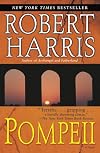
It's a fun read. I think I enjoyed Harris' two Cicero books better -- they have a bit more tightly-wound political intrigue. Pompeii moves a bit slower, but it's still a fun summer read.
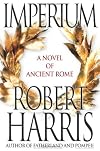
Good read! I don't know about the historical accuracy, although Harris notes at the end that he tried not to get any known facts wrong, but! It's a great read. Especially if you're into political intrigue. Also puts a human face on a lot of historical figures: Cicero, obviously, and Julius Caesar, Pompey the Great, etc. Recommended. Especially if you happen to be in Rome.
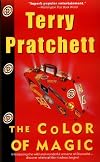
I don't know, man. Not for me. I'm not a big fantasy genre fan, anyway -- or, really, a fan of genre fiction in general. But boring. Random. Not particularly funny. Etc. I might've appreciated this more around age 13.
(Scott Pilgrim's Precious Little Life) By O'Malley, Bryan Lee (Author) Paperback on 24-Aug-2004 by Bryan Lee O'Malley

A cute little story about indie rocker kids, but with a weird sort of Japanese superhero challenge twist. Fun, but a *really* fast read. Which makes the entire series kind of expensive if you can go through all six $12 volumes in an hour or so apiece. (This desperately needs to be available in cheaper form on a digital book service -- Amazon Kindle or Comixology or something.)
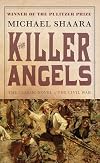
Excellent! Worth reading just to get to know Longstreet and Chamberlain.
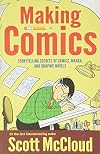
It's no Understanding Comics, for sure. And it's aimed more at the aspiring comics creator than the casual reader. But! McCloud's always got a crisp take on the art that's fun to read and easy to absorb and does shed extra light on how comics work. A good, fast read.
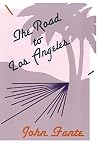
One of the few Fante books I haven't read. It's good. Like the other Arturo Bandini books it's tense and tightly wound, the fantasies of a young writer ramming up against the indignities of real life.
A few great essays about art. A bunch of pretty good ones. I do like Hickey's style, though, and respect his thinking.
Just a guy talking about life and stuff. A mellow read. Good for getting a little perspective.
It's good. I like the set-up: Monty's last 24hrs before heading off for a stretch in federal prison. And the characters are very well-painted. But it fizzles a little bit at the end and doesn't wrap things up in a totally satisfying way, which is a bit disappointing. But I like Benioff's style. "City of Thieves" is definitely a better work of his, though.
My girlfriend thinks it's amusing that kids in Texas have to take at least one year of Texas History in junior high or high school. She's from Florida -- but I'm from Texas and it never struck me as that weird. Don't kids in Iowa have to take an Iowa History class? Maybe not.
Anyway. Regardless of the class, growing up in Austin, Texas a lot of Texas history works its way into your brain. Everyone knows the core elements of the revolution, for example: The Alamo. Goliad. San Jacinto. Houston. Crockett. Travis. Bowie. Santa Anna.
This book fleshed out that vague history very nicely. It provides a wide breadth of historical context, starting several decades in advance of the revolution with Moses Austin's arrival in the region and takes us up to Sam Houston's death during the US Civil War. Most of the book does, though, take place during the 1830s. And it does a great job of presenting these characters and situations in a realistic light, rather than as glowing-gold statues of perfection. The slavery issue, for example, is not shied away from and much discussion is given to how many in the US found the idea of annexing Texas repellent for this and a variety of other reasons.
It's also the first time I've really felt like I understood what the real situation in Texas was at that time. It was a fucking mess, for lack of a better term. Very little centralized control. Lots of crime and speculation. Continuing conflicts with the Native American populations. A mess.
Finally, one of show more the very interesting things about this book: It's the first time (I think) that I've really seen the Heroes of the Texas Revolution painted as real people. I knew kind of who belonged where. Travis, Bowie, Crockett = Alamo. Houston = General, later President. But I guess I hadn't been aware that Crockett had been a legitimate celebrity before he ever came to Texas. Or that William Travis was only 26 when he commanded the troops at the Alamo. I also hadn't been aware of the closeness of many of these guys to the power structure in the US Government. Both Crockett and Houston were at times considered viable candidates for the US Presidency. I guess when Texans present Texas History they keep it a bit artificially isolated from American History.
Anyway: Very good book. And continuing along my US history reading kick that started last year... show less
Anyway. Regardless of the class, growing up in Austin, Texas a lot of Texas history works its way into your brain. Everyone knows the core elements of the revolution, for example: The Alamo. Goliad. San Jacinto. Houston. Crockett. Travis. Bowie. Santa Anna.
This book fleshed out that vague history very nicely. It provides a wide breadth of historical context, starting several decades in advance of the revolution with Moses Austin's arrival in the region and takes us up to Sam Houston's death during the US Civil War. Most of the book does, though, take place during the 1830s. And it does a great job of presenting these characters and situations in a realistic light, rather than as glowing-gold statues of perfection. The slavery issue, for example, is not shied away from and much discussion is given to how many in the US found the idea of annexing Texas repellent for this and a variety of other reasons.
It's also the first time I've really felt like I understood what the real situation in Texas was at that time. It was a fucking mess, for lack of a better term. Very little centralized control. Lots of crime and speculation. Continuing conflicts with the Native American populations. A mess.
Finally, one of show more the very interesting things about this book: It's the first time (I think) that I've really seen the Heroes of the Texas Revolution painted as real people. I knew kind of who belonged where. Travis, Bowie, Crockett = Alamo. Houston = General, later President. But I guess I hadn't been aware that Crockett had been a legitimate celebrity before he ever came to Texas. Or that William Travis was only 26 when he commanded the troops at the Alamo. I also hadn't been aware of the closeness of many of these guys to the power structure in the US Government. Both Crockett and Houston were at times considered viable candidates for the US Presidency. I guess when Texans present Texas History they keep it a bit artificially isolated from American History.
Anyway: Very good book. And continuing along my US history reading kick that started last year... show less
This is really the kind of storytelling I like best, the sort of slice-of-life stuff. I guess it's the depiction of the little moments of beauty or epiphany in plain life... It helps me step back and appreciate the details in my own mundane world a bit more. Good stuff.
Fun. Like sugary cereal or a donut.
I read this before I heard about Jonah Lehrer's tendency to make up facts and cherry-pick his science. So not recommended at all. The author simply isn't trustworthy.
I enjoy reading about physics and astrophysics. And while I don't have much of a mathematical background in those sciences (beyond the basics), I took enough classes in high school and undergrad (and have read enough books with interest) that I feel like I know a thing or two about what goes on up there.
Tyson (whom I find utterly charming on television) doesn't break any new ground in science -- this isn't a book about string theory or any other single cutting-edge topic. (Most of it's not even about black holes.) What this book is, rather, is a series of science essays, each one tackling one specific piece of the astrophysics puzzle and explaining it in a very approachable, understandable way. In doing this, Tyson builds up a fairly detailed picture of how the universe works without ever getting too complicated or dull.
So while I felt like I had been exposed to much of this information in the past (in a liberal arts sort of way), I really appreciated the science refresher and I appreciated being taken away from my mundane day-to-day back to a place where I could appreciate space and science. It's something I used to enjoy -- but it's hard to find the time to fit into an otherwise rather busy life.
My only criticism is about the last two sections, which were mostly about earthly concerns such as lack of public scientific literacy and the place of religion and intelligent design in science. Tyson and I are on the exact same page on these issues and he, of course, can make show more his arguments much more elegantly than I could. But. I really don't need to be convinced of these issues and I really just wanted to hear more about the actual science. And it ended the book on a kind oddly combative note.
So: Great book! It's a relatively quick and easy read given the subject matter and Tyson's almost as charming on the printed page as he is on TV. show less
Tyson (whom I find utterly charming on television) doesn't break any new ground in science -- this isn't a book about string theory or any other single cutting-edge topic. (Most of it's not even about black holes.) What this book is, rather, is a series of science essays, each one tackling one specific piece of the astrophysics puzzle and explaining it in a very approachable, understandable way. In doing this, Tyson builds up a fairly detailed picture of how the universe works without ever getting too complicated or dull.
So while I felt like I had been exposed to much of this information in the past (in a liberal arts sort of way), I really appreciated the science refresher and I appreciated being taken away from my mundane day-to-day back to a place where I could appreciate space and science. It's something I used to enjoy -- but it's hard to find the time to fit into an otherwise rather busy life.
My only criticism is about the last two sections, which were mostly about earthly concerns such as lack of public scientific literacy and the place of religion and intelligent design in science. Tyson and I are on the exact same page on these issues and he, of course, can make show more his arguments much more elegantly than I could. But. I really don't need to be convinced of these issues and I really just wanted to hear more about the actual science. And it ended the book on a kind oddly combative note.
So: Great book! It's a relatively quick and easy read given the subject matter and Tyson's almost as charming on the printed page as he is on TV. show less
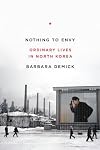
So, I read B. R. Myer's book "The Cleanest Race" a few months ago. This is a great follow-up. The Myer's book concentrated on the Official Story of North Korea -- their government-sanctioned origin story, history, and outlook. "Nothing to Envy" is about the actual lives of the people, constructed from interviews with a handful of defectors, mostly from the Chongjin area. It's a good read. Tragic, but well-constructed with moments of tension, surprise, and even a bit of humor. I flew through it quickly. If you find North Korea interesting, I'd recommend it. (Oddly, it's the second book I've read this year where everyone's starving through most of the story -- the other being "City of Thieves.")
(Disclaimer: I'm an American, so while the book uses "football" to refer to the sport, I use "soccer.")
Wow. What a tome. So this is a good book. Very much worth reading if you're interested in soccer, but a few things:
Firstly, it's really more of a history of the world as told through the eyes of soccer. Goldblatt goes into depth about the political and economic changes up to and through the 20th century for pretty much every country and region on the planet. You'll learn about South American economic collapse. You'll learn about a seemingly endless stream of African dictators. You'll learn all about the pre-war British relationships with the world. This is good, but it also makes for a very dense read.
Secondly -- and also contributing to the density of the text -- Goldblatt covers so many nation teams, region conferences, national leagues, and individual teams on all continents that you might get a bit overwhelmed if you're not very familiar with the global organization of soccer. There are a mess of soccer teams out there.
When there is a good story to tell, though, Goldblatt tells it well. And this is where the book shines. But there's also plenty of slog to get through when you'll just be trying to keep up with what team or country did what when and for what reason.
What you don't get, here, is much about soccer strategies or much in the way of details of the game itself -- except as it serves telling world history through the eye's of soccer. This isn't really a show more problem, but it's important to note what this book is an what it isn't.
If you're into soccer, though, this seems like a must-read. show less
Wow. What a tome. So this is a good book. Very much worth reading if you're interested in soccer, but a few things:
Firstly, it's really more of a history of the world as told through the eyes of soccer. Goldblatt goes into depth about the political and economic changes up to and through the 20th century for pretty much every country and region on the planet. You'll learn about South American economic collapse. You'll learn about a seemingly endless stream of African dictators. You'll learn all about the pre-war British relationships with the world. This is good, but it also makes for a very dense read.
Secondly -- and also contributing to the density of the text -- Goldblatt covers so many nation teams, region conferences, national leagues, and individual teams on all continents that you might get a bit overwhelmed if you're not very familiar with the global organization of soccer. There are a mess of soccer teams out there.
When there is a good story to tell, though, Goldblatt tells it well. And this is where the book shines. But there's also plenty of slog to get through when you'll just be trying to keep up with what team or country did what when and for what reason.
What you don't get, here, is much about soccer strategies or much in the way of details of the game itself -- except as it serves telling world history through the eye's of soccer. This isn't really a show more problem, but it's important to note what this book is an what it isn't.
If you're into soccer, though, this seems like a must-read. show less
I really enjoyed this. It looks at game design from the perspective of the design of the Atari VCS (2600) system itself -- how the limitations and quirks of that game console led to certain design decisions (good and bad) that affected some very seminal games.
I'm a programmer, so when I think about game design it's very hard for me to completely distance myself from thinking about what would be easy or difficult (or impossible) to actually implement. Sometimes laziness prevents me from making design choices that would be harder to execute. But I like to think that having an intimate understanding of the platform (say, iPhone) gives me a more refined sense of how to make something good particularly for that platform. I can avoid getting mired in things that just won't work. Like how painters study their brushes so they know what the possibilities as as far as texture, stroke weight, etc. So talking about game design from exactly this perspective clicked with me very nicely.
Also: I am just a bit young to have experienced the Atari 2600. I've seen them and probably poked at a game or two as a kid, but I'm of the Nintendo generation. Reading this book with the internet handy to watch some of these games in action gave a really great introduction to the Atari 2600 (or, at least, as good as one could get without really playing one). And this book contains a lot of info about the history of Atari (and Activision and other 3rd party devs) as well as the historical context of all show more of this.
Finally, this book seems like a great introduction to the hardware history of computers. The book talks about the chips, the design of the motherboard (if that's what it's called), and how the hardware impacted the platform. And get to learn a bit how TVs work. Electrical engineers won't be impressed, but I learned some stuff.
So, yeah -- even though this book can get fairly technical (on an introductory level, at least), it's still a very easy read. Well organized. Fun. Very interesting. Great book! show less
I'm a programmer, so when I think about game design it's very hard for me to completely distance myself from thinking about what would be easy or difficult (or impossible) to actually implement. Sometimes laziness prevents me from making design choices that would be harder to execute. But I like to think that having an intimate understanding of the platform (say, iPhone) gives me a more refined sense of how to make something good particularly for that platform. I can avoid getting mired in things that just won't work. Like how painters study their brushes so they know what the possibilities as as far as texture, stroke weight, etc. So talking about game design from exactly this perspective clicked with me very nicely.
Also: I am just a bit young to have experienced the Atari 2600. I've seen them and probably poked at a game or two as a kid, but I'm of the Nintendo generation. Reading this book with the internet handy to watch some of these games in action gave a really great introduction to the Atari 2600 (or, at least, as good as one could get without really playing one). And this book contains a lot of info about the history of Atari (and Activision and other 3rd party devs) as well as the historical context of all show more of this.
Finally, this book seems like a great introduction to the hardware history of computers. The book talks about the chips, the design of the motherboard (if that's what it's called), and how the hardware impacted the platform. And get to learn a bit how TVs work. Electrical engineers won't be impressed, but I learned some stuff.
So, yeah -- even though this book can get fairly technical (on an introductory level, at least), it's still a very easy read. Well organized. Fun. Very interesting. Great book! show less
This and "Imperium" are really good reads -- well-paced, gripping, and full of well-drawn characters. Looking forward to #3!

I hadn't thought too much about the Columbine massacre since first hearing about it and then around the time "Bowling for Columbine" came out. I enjoyed this book, though (as much as one can enjoy the story of something so horrible). Eric Harris and Dylan Klebold are painted in very vivid colors and Dave Cullen does, for the first time that I've heard, really get to the core cause of the tragedy. And very interesting to hear about the effect on the community over time.
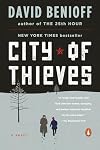
I really enjoyed this. I guess there's not too much to say about it that's not found on the book jacket -- it's about two kids who wind up tasked with hunting down a dozen eggs for a Russian general at the peak (nadir) of the Leningrad Blockade during World War II. I'm utterly fascinated by that theater of the war -- eastern Germany, Poland, northwest Russia -- and I felt this captured that sense of emptiness and exhaustion very well. Beyond that, though, I loved the depictions of the characters and Benioff packs a good amount of suspense in. So, yeah. I don't have anything genius to say about this except that I'm sorry it ended. Very good stuff. Maybe I'll pick up one of Benioff's other books...
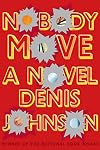
A punchy little story about a handful of ne'er-do-wells going after $2.3mil. Not really my style of novel, but a fun read (and quick), with just the right amount of plot twists, violence, sex, and discussion about eating testicles.
Super Freakonomics: Global Cooling, Patriotic Prostitutes, and Why Suicide Bombers Should Buy Life Insurance by Steven D. Levitt
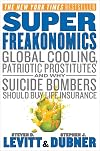
Sigh.
So I enjoyed the first book "Freakonomics" well enough, I suppose. And I really liked Levitt and Dubner's "Freakonomics" podcast -- that's very well done. But this. There's nothing to this. It's a series of essays kind of smashed awkwardly together. Some relate to the kind of behavioral economics that I guess they're trying to promote, but really it's just a collection of kind of "you never woulda guessed it!" sort of stories. With some attempts at edgy things like looking at the economics of prostitution in a very obvious sort of way. And the ultimate points made (hey -- sometimes seemingly hard challenges are solved simply!) aren't really that deep. I just found it hard to give a shit about these topics that are mostly only touched upon before the authors move onto the next freakonom-o-riffic thing.
What I *really* disliked, though, was the last quarter of the book, which mostly focused on Nathan Myhrvold and his patent company Intellectual Ventures. Myrhvold and the crew at IV are smart and accomplished, no doubt, but this 40-page chunk just felt like a fucking puff-piece for the technologies in their patent portfolio that aim to solve global warming. Maybe IV are right, maybe not -- but "Superfreakonomics" gives an incredibly one-sided presentation of their ideas. IV is a for-profit company. They want to sell their ideas and technology. To make a large chunk of a bestseller like this little more than softball marketing -- it struck me as both lazy and cynical. show more Lazy, mostly. If there are serious issues with IV's ideas in the scientific community, how about giving those ideas a bit more representation than a few crabby one-line quotes from Al Gore?
Anyway. Don't buy this. There's some okay stuff in it, but you'll get just as good with Levitt and Dubner's free "Freakonomics" material online. Check out the podcast. They clearly care about that. Clearly they didn't give a shit about this book, or else these two very capable writers and thinkers would've done something much more interesting and significant with it. show less
So I enjoyed the first book "Freakonomics" well enough, I suppose. And I really liked Levitt and Dubner's "Freakonomics" podcast -- that's very well done. But this. There's nothing to this. It's a series of essays kind of smashed awkwardly together. Some relate to the kind of behavioral economics that I guess they're trying to promote, but really it's just a collection of kind of "you never woulda guessed it!" sort of stories. With some attempts at edgy things like looking at the economics of prostitution in a very obvious sort of way. And the ultimate points made (hey -- sometimes seemingly hard challenges are solved simply!) aren't really that deep. I just found it hard to give a shit about these topics that are mostly only touched upon before the authors move onto the next freakonom-o-riffic thing.
What I *really* disliked, though, was the last quarter of the book, which mostly focused on Nathan Myhrvold and his patent company Intellectual Ventures. Myrhvold and the crew at IV are smart and accomplished, no doubt, but this 40-page chunk just felt like a fucking puff-piece for the technologies in their patent portfolio that aim to solve global warming. Maybe IV are right, maybe not -- but "Superfreakonomics" gives an incredibly one-sided presentation of their ideas. IV is a for-profit company. They want to sell their ideas and technology. To make a large chunk of a bestseller like this little more than softball marketing -- it struck me as both lazy and cynical. show more Lazy, mostly. If there are serious issues with IV's ideas in the scientific community, how about giving those ideas a bit more representation than a few crabby one-line quotes from Al Gore?
Anyway. Don't buy this. There's some okay stuff in it, but you'll get just as good with Levitt and Dubner's free "Freakonomics" material online. Check out the podcast. They clearly care about that. Clearly they didn't give a shit about this book, or else these two very capable writers and thinkers would've done something much more interesting and significant with it. show less
The Invention of Air: A Story Of Science, Faith, Revolution, And The Birth Of America by Steven Johnson
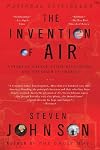
I don't believe I'd ever heard of Joseph Priestly previous to reading this. Which kind of shocks me. Johnson portrays him as an integral part of both the founding of the United States and the founding of modern chemistry and environmental science. The first 2/3rds of the book, describing his "hot hand" decade as an "electrician" in the company of Ben Franklin and then during his research into plant respiration and isolating oxygen are exciting and placed very nicely into historical context. Johnson doesn't just tell the story of Priestly, here, or even just the story of the science -- he places it in the full cultural context of the huge shift in the worldview of people in general that occurred during this time. The book lost some energy in the final third, but I liked the optimistic tone that is struck at the very end.
The one flaw of the book, I think, is that Johnson touches on a few deeper questions that could've used a bit of a lengthier treatment. Maybe a minor quibble. At any rate: It's got plenty of starting points for further investigation.
The one flaw of the book, I think, is that Johnson touches on a few deeper questions that could've used a bit of a lengthier treatment. Maybe a minor quibble. At any rate: It's got plenty of starting points for further investigation.