What To Do About Alice?: How Alice Roosevelt Broke the Rules, Charmed the World, and Drove Her Father Teddy Crazy! by Barbara Kerley
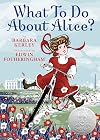
Alice Roosevelt, the daughter of Theodore Roosevelt, was a free-spirited woman who did what she pleased, even from when she was a little girl. As a girl, she enjoyed hearing her father’s tales of important historical figures, playing with boys, and hated going the thought of becoming a proper lady. She taught herself many things in her father’s library such as astronomy, geology, and Greek grammar, and read many books by authors such as Twain and Dickens. As her father took on the position of president of the United States, Alice became involved in politics as well, assuming her role as goodwill ambassador, and eventually going on to marry a congressman. But everywhere she went, she was well-loved by people. And even though she was the daughter of the president and wife of a congressman, she enjoyed dancing the turkey trot at diplomatic balls and playing poker with boys.
In addition to being used in history, this book can also be used in a 3rd grade classroom to teach children the importance of being themselves despite what other people think or say.
In addition to being used in history, this book can also be used in a 3rd grade classroom to teach children the importance of being themselves despite what other people think or say.
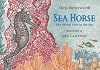
Sea horses are shy creatures that have a head like a horse, a tail like a monkey, and a pouch like a kangaroo. Unlike other fish, sea horses swim upright. One type of sea horse in particular, the Barbour’s sea horse, is a slow swimmer, so it uses camouflage to blend in with its surroundings in order to escape predators. Barbour’s sea horses have a mating ritual in which the mating sea horses twirl around each other and change color until they match with each other. The female sea horse deposits her eggs into her mate’s pouch. Baby sea horses form in the pouch, and when it’s time for them to be born, the father gently pushes them out and allows the current to carry the babies away to start their own life.
This book could be used in a 2nd or 3rd grade science classroom to teach students the life cycle of a sea horse.
This book could be used in a 2nd or 3rd grade science classroom to teach students the life cycle of a sea horse.
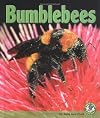
Bumblebees are fuzzy insects that can grow up to an inch long. They have a stinger to protect themselves from their enemies. Bumblebees live where flowers grow, and collect nectar, which is their food. They store the nectar in their honey stomachs. While looking for nectar, they also pick up pollen from flowers, which sticks to a bumblebee’s hairs whenever it lands on a flower. The pollen then sticks to the next flower that the bee visits pollinates that flower. Bumblebees live in colonies which are made up of a queen, some male bumblebees, and workers. The queen is responsible for forming the colony by laying eggs in a nest. These eggs hatch into larvae, which become pupas, a type of cocoon for bees. Then newly grown adult bees break out of the cocoons. The queen continues to lay eggs all summer long, with worker bees collecting pollen and nectar, which they bring back to the nest. Late in the summer, the young queens and males hatch and fly off together instead of staying in the nest. These new queens are responsible for forming new colonies when the old queen and workers die in the fall. For many years, people have found that they could use bees to help grow important plants.
I would use this book in a 1st-3rd grade science classroom to teach students about how the role bumblebees have in pollinating plants. This book could also be used to teach about a bumblebee's life cycle.
I would use this book in a 1st-3rd grade science classroom to teach students about how the role bumblebees have in pollinating plants. This book could also be used to teach about a bumblebee's life cycle.