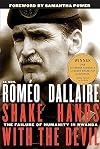
When a friend who was familiar with General Dallaire noticed "Shake Hands with the Devil" sitting on my coffee table asked me what I thought of the book, I could only respond that I felt it was a book that every human should read. The language used is straightforward, Dallaire hides nothing. Not his failures, nor the failures of others. He praises those whom he feels deserve praise, even when he might have doubted them earlier in the conflict. He describes in an almost day to day fashion the progress of thie UN Mission for Rwanda, lays bare each political quagmire, every unimaginable slaughter, and tells you about the horrors of the genocide the way you might hear it from an uncle. And that ring of honesty makes the account all the more horrifying.
In reading this book, I have come closer to understand what it is to be heroic, and am left with nothing but genuine admiration for the men and woman that served with Roméo Dallaire. At the same time, I am left with bewilderment at the process that led to this end. It doesn't make sense how humanity could fail so utterly. And I think that is exactly the sort of thing that needs to linger at the back of every persons mind who must make decisions that determine the welfare of others.
In reading this book, I have come closer to understand what it is to be heroic, and am left with nothing but genuine admiration for the men and woman that served with Roméo Dallaire. At the same time, I am left with bewilderment at the process that led to this end. It doesn't make sense how humanity could fail so utterly. And I think that is exactly the sort of thing that needs to linger at the back of every persons mind who must make decisions that determine the welfare of others.

This book a disturbing and powerful commentary on human nature that belongs in the same category as such classics as "The World's Most Dangerous Game". Pinol explores sex, violence, and human nature under warlike conditions in a setting of Lovecraft like horror. This is not easy reading. The book describes some truly abominable acts in service to its narrative. The primary fault I found was with the translation. The book is written from the first person, but somehow manages to feel clinical and removed. There's still a lot of power here, but it is a pity that the storytelling was blunted by a workmanlike translation.