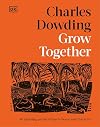
Charles Dowding takes companion planting, a subject usually drowning in folklore and wishful pairings, and gives it spine. Across 50 combinations he shows you what to plant, when, how close, and crucially why the pairing works: carrots tucked between lettuces, Brussels sprouts rising over carrots, coriander threaded through garlic, leeks beside celeriac. This is not a wish list. It is forty years of trial standing behind every claim.
What makes it work is restraint. Dowding never oversells. His grounding idea is simple and quietly radical, that in nature seedlings rarely start life in bare ground, and small plants benefit from the company of their neighbours rather than competing with them. From that principle the whole book unfolds with real clarity. He explains the mechanics underneath, the mycelial networks, the way one crop shelters or shades or feeds the next, so you understand the logic instead of just memorizing a chart.
The structure is its own pleasure. Organized by season, it reads less like a reference and more like a year spent walking the beds with him. Each combination comes with exact timings, spacings, sowing methods, harvest windows, cultivar recommendations, and alternatives if you want to improvise. The Jason Ingram photography does heavy lifting here too. These methods look genuinely lived, not staged.
Honest about the one limitation: everything is calibrated to Dowding's temperate Somerset conditions. If you garden somewhere hotter, colder, or drier, you show more will be doing your own translation on last frost dates and timings. He acknowledges this, but readers outside his climate will want a little more hand-holding than the book offers.
That caveat aside, this is the rare practical book that is also a pleasure to read straight through. Generous, precise, and quietly persuasive. It belongs in the hands of anyone with a small plot who wants more out of it.
One weird thing. Once you start seeing gaps in your own garden the way Dowding does, you cannot stop. Every empty patch becomes an accusation. show less
What makes it work is restraint. Dowding never oversells. His grounding idea is simple and quietly radical, that in nature seedlings rarely start life in bare ground, and small plants benefit from the company of their neighbours rather than competing with them. From that principle the whole book unfolds with real clarity. He explains the mechanics underneath, the mycelial networks, the way one crop shelters or shades or feeds the next, so you understand the logic instead of just memorizing a chart.
The structure is its own pleasure. Organized by season, it reads less like a reference and more like a year spent walking the beds with him. Each combination comes with exact timings, spacings, sowing methods, harvest windows, cultivar recommendations, and alternatives if you want to improvise. The Jason Ingram photography does heavy lifting here too. These methods look genuinely lived, not staged.
Honest about the one limitation: everything is calibrated to Dowding's temperate Somerset conditions. If you garden somewhere hotter, colder, or drier, you show more will be doing your own translation on last frost dates and timings. He acknowledges this, but readers outside his climate will want a little more hand-holding than the book offers.
That caveat aside, this is the rare practical book that is also a pleasure to read straight through. Generous, precise, and quietly persuasive. It belongs in the hands of anyone with a small plot who wants more out of it.
One weird thing. Once you start seeing gaps in your own garden the way Dowding does, you cannot stop. Every empty patch becomes an accusation. show less
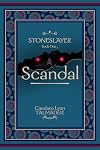
Helen Andros is a military doctor and a mixed race outcast in Azgard, a world where the dark skinned Toltecs rule and the pale Turanians serve. When she is dragged in to save a dying prince, her hidden parentage surfaces, and with it a powerful father she never knew and a demonic entity that wants the green stone she wears against her heart.
Helen carries the whole book. She is brilliant, exhausted, furious, and funny, the kind of heroine whose courage is the working kind: sleeves rolled up, triage brain switching on even when she is terrified. Talmadge never asks her to be grateful for the scraps of protection handed down by the people who benefit from the system crushing her. That refusal is the moral spine of the novel, and it is bracing.
What I admired most is how seriously the book takes its hierarchies. Talmadge flips the usual fantasy palette so the conquerors are the dark skinned overclass preaching racial purity, and the result reads like Game of Thrones crossed with The Handmaid's Tale: women treated as property, bloodlines weaponized, a Temple that would rather erase Helen than hear her. The queerness threaded quietly through the court, and a political marriage to a man who cannot love her back, give all that cruelty real texture. Layered. Angry. Alive.
It is not flawless. The cast is enormous and the names blur together (Jacob, Justin, James, John). The worldbuilding sometimes stops the story cold to explain itself, and there is a late assault scene that lands show more hard with no warning, so go in knowing that. The opening frame, an old woman writing the world down before it drowns, is haunting but asks for patience.
Still. I was hooked by Helen and I stayed for the slow tightening of the net. When the threat finally turns personal, the stakes snap shut.
One weird thing. The book ends in a glossary, a map, and family trees so elaborate they could pass for a separate volume. I read every word.
I would absolutely keep going. show less
Helen carries the whole book. She is brilliant, exhausted, furious, and funny, the kind of heroine whose courage is the working kind: sleeves rolled up, triage brain switching on even when she is terrified. Talmadge never asks her to be grateful for the scraps of protection handed down by the people who benefit from the system crushing her. That refusal is the moral spine of the novel, and it is bracing.
What I admired most is how seriously the book takes its hierarchies. Talmadge flips the usual fantasy palette so the conquerors are the dark skinned overclass preaching racial purity, and the result reads like Game of Thrones crossed with The Handmaid's Tale: women treated as property, bloodlines weaponized, a Temple that would rather erase Helen than hear her. The queerness threaded quietly through the court, and a political marriage to a man who cannot love her back, give all that cruelty real texture. Layered. Angry. Alive.
It is not flawless. The cast is enormous and the names blur together (Jacob, Justin, James, John). The worldbuilding sometimes stops the story cold to explain itself, and there is a late assault scene that lands show more hard with no warning, so go in knowing that. The opening frame, an old woman writing the world down before it drowns, is haunting but asks for patience.
Still. I was hooked by Helen and I stayed for the slow tightening of the net. When the threat finally turns personal, the stakes snap shut.
One weird thing. The book ends in a glossary, a map, and family trees so elaborate they could pass for a separate volume. I read every word.
I would absolutely keep going. show less