
[Avalanche] is a survival story aimed at children in about the 10 to 12 age range with a 14 year old hero. Chris has a day off from school and goes cross-country skiing taking his twenty-two along. After bagging some grouse, Chris to decides to go further from home than usual and try to make Hidden Lake further up in the mountains before heading back. On the way he spots a coyote and decides to try for it but this time the crack of the rifle sets off an avalanche burying Chris. The story is about how Chris survived for a week trapped in the snow and it is also about the thinking he did during that time about his relationships with the members of his family.
At the time I was reading this story it rang true and I didn't really notice that it was a bit dated (It was published in 1979.) until I had finished. Some children might take issue with the lack of cell phones, etc. but many would appreciate the old fashioned adventure story and cheer Chris on as he survives another day.
Tricia
At the time I was reading this story it rang true and I didn't really notice that it was a bit dated (It was published in 1979.) until I had finished. Some children might take issue with the lack of cell phones, etc. but many would appreciate the old fashioned adventure story and cheer Chris on as he survives another day.
Tricia
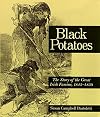
Black Potatoes covers a bit of history that I vaguely knew about from studying immigration in American history since it was a major cause of so many Irish coming to America in the mid-1800's. The details and the effects on the relationship between the Irish people and Great Britain (i.e. British government) were new to me. Although written at a YA level any interested reader would find Bartoletti's book a good introduction. As with many YA nonfiction books the illustrations and quotes are great features helping sustain interest in the text. Recommended for history buffs of any age but especially for our sixth year students.
Tricia
Tricia

A wonderful YA novel told in pictures as well as text. This book might be a good choice for a child's first 'long' historical novel as the actual text wouldn't be overwhelming. I loved the story and all the details about automata, clocks and the Paris of 1931. Then there was a great deal of early cinema history revealed, especially in Part Two. I would definitely recommend Selznick's book for late elementary and up.
Tricia
Tricia

[Wonderstruck] is a YA novel I've been curious about ever since it was published. Long, but a quick read, the novel is the story of Ben in 1977 and Rose beginning in 1927. Although 50 years apart the two children have some things in common and Selznick interweaves the stories with that of Ben told mostly through text and that of Rose mostly through Selznick's great drawings.
Not only is the story an interesting one about family, and discovering one's roots but it is also an exploration of the world of the Deaf and the world of museums from the first Cabinets of Wonder to more modern times with exhibitions and Dioramas and World's Fairs. While I was more impressed by [The Invention of Hugo Cabret] this is still a very good book in a similar style.
Tricia
Not only is the story an interesting one about family, and discovering one's roots but it is also an exploration of the world of the Deaf and the world of museums from the first Cabinets of Wonder to more modern times with exhibitions and Dioramas and World's Fairs. While I was more impressed by [The Invention of Hugo Cabret] this is still a very good book in a similar style.
Tricia

I took my time over this book, partly because of the large format but mostly because of the detailed illustrations accompanying the text. As in other volumes of this Time-Life series, it is the photographs that make this such an interesting book. The authors cover the history of the ancient Celts and the legends and myths of the various groups that made up the Celtic peoples, including an overview of the Arthurian legends. Recommended as an introduction to Celtic myth.
Tricia
Tricia
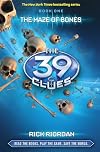
I had read the first book in this series to see if we wanted to get the rest of them for the students and was interested enough to read further. Since I was feeling a little under the weather, I just keep on reading til I finished book 10. These were short and quick reads except for #10 which was somewhat longer and a bit more complicated. Dan (11) and Amy (14) travel all over the world looking for the clues and finding out family secrets as they go.
While these are adventure stories a lot of history and geography are incorporated into the books in a fairly entertaining way. One thing that amused me was that I was reading about Napoleon in Egypt here shortly after finishing a book (See above, message 30) about that very subject. A theme to the series that is made explicit in the last book is that it is better for the branches of the Cahill family to cooperate than it is for them to fight.
Recommended for 9-12 years.
Tricia
While these are adventure stories a lot of history and geography are incorporated into the books in a fairly entertaining way. One thing that amused me was that I was reading about Napoleon in Egypt here shortly after finishing a book (See above, message 30) about that very subject. A theme to the series that is made explicit in the last book is that it is better for the branches of the Cahill family to cooperate than it is for them to fight.
Recommended for 9-12 years.
Tricia
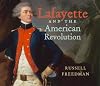
Freedman writes great nonfiction for younger audiences and Lafayette and the American Revolution is no exception. A fact-filled and well-illustrated book for the middle grades it would be an excellent addition to any school library. Lafayette, although married and with a child on the way, was only nineteen when he sailed for America to become a general in Washington's army and only 24 when he played a major part at the Battle of Yorktown, which effectively ended the war with the surrender of Cornwallis.
Although this book is primarily about his experiences during the Revolutionary War, Freedman does give us a summary of Lafayette's early life and also a chapter about his experiences after the War.
Recommended.
Tricia
Although this book is primarily about his experiences during the Revolutionary War, Freedman does give us a summary of Lafayette's early life and also a chapter about his experiences after the War.
Recommended.
Tricia

The further adventures of Percy Jackson in which he has lost his memory, complements of Juno/Hera. Percy travels to the Roman camp with its 'city' of New Rome and is sent on a new quest with new friends. Riordan explores myth from the Roman point of view in this YA novel. I enjoyed the book, but it does end in a way meant to make one eager for the next installment.
Tricia
Tricia

This book by Russell Freeman is an excellent introduction to World War I, covering some of the background and events just before various countries declared war, the course of the war itself, the eventual participation of the U.S. and the aftermath. He explains briefly why the world found itself once more at war only twenty years later.
Although written for middle school students (10 - 14 years old) I found it quite informative about a subject that I knew little about even though I've read some fiction recently that had the war as background. The many photographs were particularly interesting as were quotes from the journals and letters of the soldiers on the front lines.
Tricia
Although written for middle school students (10 - 14 years old) I found it quite informative about a subject that I knew little about even though I've read some fiction recently that had the war as background. The many photographs were particularly interesting as were quotes from the journals and letters of the soldiers on the front lines.
Tricia
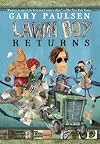
Cute book. Funny. Some students will like it. Sequel to Lawn Boy.
Tricia
Tricia

Set in Australia in the mid-eighties, this first person narrative follows the experiences of 14 year old Marina after being transferred from a hospital to a new boarding school. The narrative is in the form of entries in a journal that her English teacher is requiring all his students to keep. Only gradually do we begin to see her and learn why she is at the school and why she doesn't speak. I began reading this book to see if it should be included on my school's shelves and soon found myself unable to put the book down as Marina learned to relate to those around her. The publication page indicates an interest level of 6th grade and up and I would recommend it for that age group.
Tricia
Tricia

A novel that features some of same characters as The Cricket in Times Square. A good story that I would recommend for third graders.
Tricia
Tricia

This is an introduction to the Wright brothers for younger readers. It is well illustrated with drawings and covers the childhood and adolescence of Wilbur and Orville. Their early inventiveness is emphasized.
Tricia
Tricia

This is a well written description of how the Wright brothers approached and solved the problems that anyone wishing to achieve powered flight had to solve. Because they were first bicycle builders their approach was a different one from the ways other inventors were proceeding. Lots of detail and great photos make this a book interesting to both young readers and adults.
Tricia
Tricia