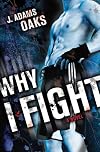
At 12 ½, Wyatt Reaves goes away with his horrible, grotesque uncle and becomes a bare-knuckle fighter, essentially a human fighting dog. For six years, Wyatt lives an itinerant life of horrific brutality while the demonic Uncle Spade profits off him. Oaks’ novel is not for the faint-hearted, and many of the characters could hold their own with the worst rogues in Dickens. The tough, jabbing prose keeps the reader going, and the story never becomes pat or falsely comforting. Strong stuff.
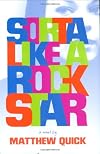
Quick has created one of the toughest and most appealing female characters in YA literature—Amber Appleton, an optimistic Catholic convert who lives in the bus her mother drives, essentially carries the world on her shoulders and also finds time to volunteer as a rockin’ chorus leader at a church made up of Korean parishioners in a Philadelphia suburb. A horrific tragedy tests Amber’s faith and ability to cope, but neither she nor Quick fall into easy cant about everything being for a reason or God is just testing you or any of that claptrap so insulting to those who have really suffered. An altogether astonishing, richly layered work, this novel should have a place in the YA canon (if such a canon exists).
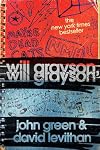
Starting out as a delightful distant cousin to Shakespeare’s The Comedy of Errors, this novel set in Chicago and its wealthy North Shore soon degenerates into a pity party for spoiled brats. Even after it goes downhill, though, pockets of sharp humor and neat observation still show up. The homosexual theme in the novel has an appealing toughness, and Tiny’s musical extravaganza at the end is entertaining. References to alternative bands such as Neutral Milk Hotel also have a strong pull for teen/young adult readers.
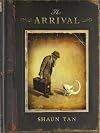
A considerable achievement but a somehow arch and irksome one. In a graphic novel with no text, Tan presents the story of an immigrant from what seems to be a Mitteleuropische country to a New World resembling New York. Tan presents these two worlds as somehow familiar—the time appears to be just after the First World War here on earth--but also alien. Strange unearthly creatures, such as a dog that resembles a sperm with legs and huge steampunkish robots appear in the sepia-toned images. Where this work fails is in the presentation of both worlds as alien. If the idea is the disorientation of the immigrant in a totally new environment, then shouldn’t the reader get a sense of that disorientation? If there are giant killer robots in Bizarro Bohemia, what’s so special about sperm dogs in Alternate America? If disorientation is NOT the theme, then the book just smacks of a frankly masturbatory “darklingness.” Still, fans of graphic novels and teen/young adult readers may find the images compelling and eerie.
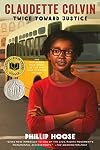
This book tells the little-known story of Claudette Colvin, who during the Montgomery Bus Boycott of 1955 was a brave teenage girl who fought for civil rights while undergoing numerous personal crises but who was ultimately overshadowed (and partially by the design of others) by the story of Rosa Parks. Hoose’s book, which includes many black-and-white photographs, shows its readers a starker look at the civil rights era than does Marching for Freedom. Both books are richly detailed and neither shies away from the violence and painful struggles of the period, but Claudette Colvin focuses on one person rather than several and includes details about Claudette’s personal life that made it difficult for her to be a public spokesperson for the civil rights movement. In depicting the ways in which some of the leaders of the movement tried to keep Claudette in the background because of her unwed pregnancy, Hoose shows the moral complexity of the movement itself. While definitely working for an eternally noble cause, members of the civil rights movement also had to worry about playing good politics, and that can sometimes mean making cynical decisions. Hoose also manages a delicate balancing act in maintaining Rosa Parks’ truly heroic status while still showing the understandable resentment Colvin felt for being shunted aside for so long not only at the moment but also in historical record. Hoose has written an inspirational book with no facile uplift—no mean feat.
In this hearty fantasy, 9-year-old Tiffany Aching must rescue her little brother Wentworth from the evil faerie Queen (in a plot reminiscent of the film Labyrinth) and enlists the aid of a witch named Miss Tick and a company of miniature Scotsmen called the Nac Mac Feegles (or Wee Free Men) to help her. The Scots dialect may confuse some American readers, but lovers of fantasy and especially that of the humorous kind should not mind the difficulty.
The plot to Delirium is in some ways reminiscent of 1984 with the "forbidden love" stuff, but in 1984 it's more directly sexual (and Orwell's book is for adult readers even if it is often assigned for teenagers.) There is also a bit of A Clockwork Orange in the name Alex as in A-lex--anti-law, though of course it would be interesting to see what Burgess's Alex would do to Oliver's Alex but horrifying to think what he would do to Lena. It is also like Orange in the sense of trying to stamp out people's instincts, though in this case the instincts are not so menacing and thus easier to see as tragically threatened. The rebels in the Wilds reminds me a little of Woody Allen's Sleeper as well. I was thinking Alex and Lena should destroy the Leader's nose. (Actually, change one letter and Lena would become Luna, Diane Keaton's character in that movie.) All kidding aside, though, this is another dystopian books that appeals to teenagers' sense of being censored and/or overcontrolled by adult authority. The crucial age of 18 plays an important role in the narrative, after all.
Eminently dystopian material—at sixteen, everyone is required to be “pretty.” The “Uglies” are those who have yet to go through the forced cosmetic transformation, the “Middlies” are those past their prime, and the deliciously named “Crumblies” are the elderly. Fascinating sociological structures and a funny creepiness add to this story of media standards of physical beauty becoming government policy.
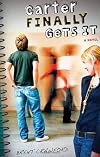
William Carter (not to be confused with Jimmy Carter’s brother Billy) suffers from attention deficit disorder (ADD) and from a stuttering problem. Hilarity ensues as he encounters girls, boobs, belly buttons, and bullies. This could serve as a companion to Guys Write for Guys Read, with this being the more realistic look at what it means to be a guy.
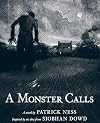
Patrick Ness took the story over from Siobhan Dowd, who died of cancer before the novel was finished. A haunting fairy tale, 13-year-old Conor receives visitations from a monster resembling an angry tree. The monster tells Conor it will tell him three stories in exchange for Conor telling it his own story on pain of the boy’s death. In addition to this narrative framework, Conor’s mother undergoes chemotherapy, his father is not around, and his grandmother does not provide any solace. A sad book, but one with a bitter humor.

Blume’s groundbreaking teen romance includes topics such as “going all the way, condoms, sex for pleasure being okay, and others that made it stand out when it was first published 37 years ago. Now all standard material, the novel serves as an artifact of changing attitudes in young adult literature in a different era. The love story between Katherine and Michael provides kitschy fun for many of today’s young (and not-so-young) readers.

17-year-old Ruby Cooper moves in with her older sister, Cora, after being abandoned by their drug- and drink-addled mother. After initial misunderstandings, Ruby discovers that her sister Cora had been trying to save her for years. The novel includes themes of changing environments, adjustment, and home/belonging symbolism such as the “yellow house” key around Ruby’s neck.
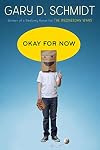
Schmidt’s depressing tale concerns misunderstood 14-year-old Doug Swieteck and a batch of other misunderstood/sad/tortured characters, such as Doug’s older brother who has been traumatized by Vietnam. Doug befriends a life-force character named Lil Spicer, and bird/flight (escape) imagery also plays a large role.
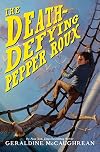
A nice taste of Continental weirdness, this novel concerns the odd adventures of Pepper Roux, who runs away to sea on his 14th birthday (the date on which a horrible old aunt has predicted he will die). Pepper wears many hats—captain of a coffin ship, journalist, Legionnaire, etc and encounters enough bizarre figures and places to make Odysseus blush. The feel is something like a Sacha Guitry version of Tintin.
This collection of short pieces about being a “guy” written by children’s and YA writers such as Scieszka himself, Mo Willems, Neil Gaiman, and about 784 others has some charm and some funny bits but somehow rings mostly false. The quintessential “guy” these men seem to be aiming for does not exist except in pop culture and even then in pop culture from at least 30 years ago. (Many of the writers are of older generations, but even the younger guys write as if they grew up in an era lost in the mists of time.) The gross-out stuff about flatulence and bowel difficulties and the stuff about guys wanting to try stupid physical stunts are particularly inapposite to the realities of today. Today’s guys (or at least the American ones) tend to be quite fastidious about their cloacal activities and if anything are quite squeamish about physical risk. They are much more interested in sex than anything else. Where did that stereotype go?
Marcelo Sandoval has a rare form of autism, but he can hear music no one else can hear. After spending years in a special school away from the “real world,” his father, an attorney, pulls strings to get Marcelo work in his law firm’s mailroom. Soon Marcelo finds himself mixed up in legal intrigue involving the slimy Wendell and potential romance with the beautiful and exotic Jasmine. Composed with great sensitivity and suspense, this novel provides a fine alternative to the glut of fantasy/science fiction/otherwise out-of-this-world YA literature. It is truly of the real world, yet it has its own lyrical magic.
This graphic novel tells the story of the tragic effects of Hurricane Katrina and the breaking of the levies in New Orleans in the late summer of 2005. Neufeld jumps among different stories of people living in widely divergent walks of life and socioeconomic conditions. Poor mostly African American people trying to survive complete devastation of their homes and neighborhoods contrast, for example, with the experiences of an insufferable, spoiled, wealthy young couple the male of whom is crushed by the loss of his comic book collection. Neufeld’s details are unsparing and harrowing, and the visual style certainly evokes a vision of hell on earth. This book serves as both a prime example of the art of the graphic novel and as a valuable historical document.
Based on the true story of Robert Sandifer, nicknamed “Yummy” because of his penchant for sweets, this devastating graphic novel portrays life in a dangerous neighborhood on the south side of Chicago and the violence this environment engenders in its youth. Sandifer, who was only 11, goes on an assassination mission for the gang Black Disciples Nation and accidentally kills a 14-year-old girl named Shavon Dean. On the run, Yummy is eventually tracked down and murdered by the gang he initially turned to for acceptance and protection. Difficult to take emotionally, this work gives teen readers a great deal to think about not only in terms of social issues but in terms of storytelling style and graphic imagery as well. Neri has created a work of exceptional power.

Part horror novel, part romance, part Scooby-Dooesque mystery thriller, this novel set in Canada’s Siberia-like Big Empty concerns a group of teenagers—newly transplanted city boy Danny, his tough-as-nails yet sexy crush Ash, and the brothers Pike (named after the weapon of the same name), Howie (not after Howard but after Howitzer), sons of a special forces veteran—who stand up to a mysterious beast that snatches, dismembers, and possibly steals the souls of its victims. Interesting bits of Native American folklore about the monster known as the Windigo accompany this story, but it ultimately the background information about the small town and the characters is far more interesting than the monster stuff. Still, teen readers especially in the middle school to early high school range may find this a palatable introduction to horror fiction.
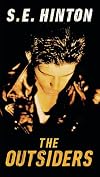
This classic teen novel written by a teen tells of gang and class warfare between the working class Greasers and the upper-class Socs. Family drama also plays a prominent part in the story with the three Greaser brothers Ponyboy, Sodapop, and Darry. Ponyboy becomes one of the greatest and most sympathetic figures in teen literature with his basic decency and wish to follow his literary dreams.
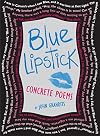
This wonderful collection of “concrete” poems—a new style of shape poems that appear as if George Herbert not only traveled from the 17th to the 21st century but also fell under the influence of glittery contemporary hipsters—tells the story of a teenage girl named Jessie. Jessie complains bitterly about petty things and comes across as a thoroughly bratty specimen—in short, she is utterly delightful. Funny and visually challenging, this should become a staple of Young Adult literature, even after Jessie herself goes out of style. This work also has the interesting quality of having been composed by an adult man writing as a teenage girl--quite an amazing feat that that does not come across as creepy.
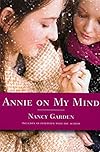
This beautifully crafted romance about the love between two New York girls—Anglo-Saxon Liza Winthrop, a student of the private Foster Academy, and Annie Kenyon, a daughter of Italian immigrants who lives in a troubled neighborhood—has more to offer than a simple story about a same-sex relationship. Garden lovingly describes great works of art at the Metropolitan Museum of Art, explores the differences between private and public schools, delves into ethnic and socioeconomic differences, and chronicles a harrowing and ugly inquisition against lesbianism conducted by Foster’s sadistic headmistress. She also manages all of this without it all becoming improbable or like a socially conscious assault. This is a work of exquisite balance.
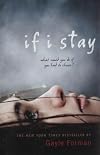
Definitely one to recommend to those who liked Alice Sebold’s The Lovely Bones, but more nuanced and less manipulative than Sebold’s novel. 17-year-old cellist Mia languishes in a coma after a devastating car accident that kills her immediate family while her spirit wanders the hospital which has custody of her body. Mia’s spirit agonizes over whether or not she should stay on earth to pursue her musical dreams and a life with her boyfriend Adam or whether she should join her family in the hereafter. Forman presents this choice in stark terms that sometimes make Mia less appealing in an obvious, good-girl sort of way but which come across as realistic and lacking false sentiment. The romance aspect, with the exception of a goofy love scene involving Mia and Adam impersonating musical instruments to achieve orgasm, speaks true in an adolescent sense—sincere, rapt, yet still a little childlike. Also unlike The Lovely Bones, there are no unnecessary subplots like the one in Sebold’s novel involving the mother having the affair with the detective. Forman keeps her work all of a piece, which is fitting considering the musical elements of the story—no cacophony here.
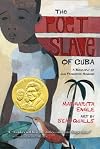
This novel in verse about the real-life poet Juan Francisco Manzano, who started life as a slave on the sugar plantations of Cuba, hauntingly and devastatingly captures the essence of the time (late 18th/early 19th century) and place (Cuba under the decadent Spanish Empire). Told from various points of view—Juan, his natural mother, the horrible, sadistic mistress whose resentment of him grows the crueler she is to him, her son who tries to show Juan kindness, an overseer who agonizes over the pain he causes. Stark yet gorgeous, angry yet graceful, this work challenges and exhilarates.
The ur-teen romance, this novel published during the Second World War takes place in Fond du Lac, Wisconsin and centers on the adolescent love affair between the wholesome 17-year-old Angeline “Angie” Morrow and 18-year-old basketball player Jack Duluth. Period detail and dialogue reminiscent of the era in which it was written make this novel a fascinating cultural artifact in Young Adult literature.
The misleading title suggests something on the order of a romantic comedy to be made in 2012 starring a be-fatsuited Ryan Reynolds as an ad exec who must try his hardest not to lose weight so that his heft-conscious best friend, played by Sandra Bullock, can look comparatively slinky in time for her wedding, yet she falls in love with Reynolds and—well, you get the point. At any rate, Crutcher’s novel is not a romantic comedy. A complex tale of suffering, abuse, love, and friendship, his novel concerns two best friends—the swimmer Eric Calhoune (cruelly nicknamed “Moby” because of his girth) and Sarah Byrnes, who has horrible scars on her hands and face because of a childhood incident the true nature of which is revealed later in the story. Eric tries to get Sarah Byrnes (who insists on the addition of her homophonic last name) to snap out of a sort of catatonia and eventually discovers the horrible, systematic abuse she has suffered at the hands of her satanic father, Virgil Byrnes. A subplot about a Christian fundamentalist boy whose girlfriend has an abortion (as it turns out on his urging) reflects the early-90sness of this novel but remains in its own melodramatic way moving.
A classic narrative both of the horrors of prep school and of Machiavellian scheming on an adolescent scale, Cormier’s brutal yet often funny novel introduces the reader to Jerry Renault, a thoughtful, sensitive young man who bravely challenges the quasi-fascist organization known as the Vigils. The eponymous war concerns a scheme between the oleaginous Assistant Headmaster Brother Leon and the Vigils to double the quota of sales in the annual chocolate drive. This novel also contains a great deal of potential discussion material about Catholic guilt, abuse of power, and male-dominated (and male-exclusive) institutions.
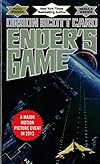
Andrew “Ender” Wiggin is one of a select few children of exceptional intelligence the dystopian world government recruits for officer training preparatory for another war with an insect-like alien race known colloquially as “buggers.” Seemingly endless scenes of genius little Napoleons and Alexanders floating around in an anti-gravity tank pushing and kicking each other accompany pretentious conversations about global politics and power struggles. It is as if Card wrote a novel based on his playing of Risk. Still, editorializing aside, the novel still should have a place in any public library as an example of grittier, darker science fiction for young people.
This tale of three best friends—Jaya, Maria, and Lola—has a depth and complexity that may challenge young adult readers. This is not to say that the work lacks entertainment value or is in any way turgid. Budhos manages both to explore issues such as the immigrant experience —Jaya’s parents include an Indian mother and Afro-Caribbean father both from Trinidad, Maria’s family is from Mexico, and Lola’s family from Romania—and racial and ethnic tension while still writing with a light touch. Serious episodes, such as Jaya’s mother being accused of robbing her employer and the sad decline of Lola’s father, are balanced with humor, hope, and true friendship. The audience for this book is without a doubt teenage girls, but though it would be a tough sell for boys, the many layers of the story—social, ethnic, emotional—could appeal to those boys willing to be seen reading it.
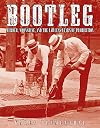
Blumenthal’s careful study of the Prohibition era of 1919-1933 in the United States works not only as a history text but also as an exploration of essential American attitudes about personal freedom and responsibility, attitudes toward intoxicating substances, religion, crime, and much more. Blumenthal also deserves credit for intelligently presenting the case of the dry side of the issue rather than simply portraying the prohibitionists as mindless fanatics. Both wets and dries get fair evaluations. Much like the Ken Burns documentary Prohibition (also from 2011), Blumenthal goes into meticulous detail (considering the length of the book and her audience) about just how complex the laws were and all the different groups involved—women, immigrants, African Americans, religious sects, organized crime syndicates, etc. One minor omission—she does not mention the role of the Ku Klux Klan on the dry side. Still, this book remains an excellent historical document for YA readers.