
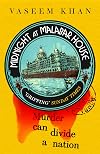
In this book there is a jaded superintendent of police called Roshan Seth while our heroine inspector Persis Wadia looks over case notes drinking whisky and listening to Schubert, and in the 1989 Pradip Krishen film In Which Annie Gives it Those Ones the actor Roshan Seth plays a crusty university department head who at some point sits sipping whisky and making architectural drawings listening to Beethoven…post-colonial hangover history I know too much about you against my will.

Intense self-identification happened, I want to read Susan Stryker's "My Words to Victor Frankenstein above the Village of Chamounix" right now happened, I woke up with anxiety and cried reading this a lot happened, I feel pulled and pushed in different directions, fantastic read.
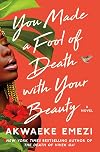
i've almost given up reading this past year because of some shitty circumstances that fried my brain. nonethefuckingless, i finished this book in a few days, after doing my damnedest to read slower. akwaeke's writing has ruined so much for me already--their books are full of textures of pleasure and depth, and there is never a tired, tiring conflict between the serious and the sensual. in this book, joy is something to be hounded and snatched, to be protected with bloody will and vim. i just love love love how close this hews to what it feels like to find love--you must kill some of the selves who helped you survive, because this is the dream baby. this is what you wanted, don't stop now you're so close.
Magpie Murders: The book of the major hit BBC series Magpie Murders from the Sunday Times bestselling author (Susan Ryeland series, 1) by Anthony Horowitz
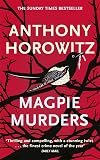
This was good company for the most part, but by the end I definitely felt like it worked mostly because it was constructed to offset my expectations of a whodunnit and not because it made an effort to tell a compelling story. The thing I love most about this genre is the double pleasure of having a puzzle solved for you and also feeling moved and surprised by how people act for petty, selfish, loving reasons. The second bit was somewhat missing and I could feel its loss by the time I finished.
The Lost Man of Bombay: The thrilling new mystery from the acclaimed author of Midnight at Malabar House by Vaseem Khan
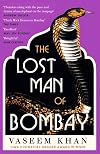
Whatever else I think about this series, it would be easier to articulate if this guy weren't trying to constantly tell you that:
—the Mughals were just bad everywhere
—the Portuguese were confused and incompetent
—the British may have overstayed their welcome but they also cleaned up this place and made it into a "clean" civilised society
—Indians cannot do self-governance akshully (but bRiTaIn can????)
—the problem with post-independence Bombay is that all these poor, illiterate Indians from all over the country keep coming here to infect the city (he uses the language of disease too much in these contexts it is very irritating)
Will try to write later about how he is turning my girl Persis into one of these women who (metaphorically) takes off her glasses and you realise she is pretty or whatever. By book 3 she is way overdue to have more interesting thoughts than "I wonder what people I meet today will think of me, India's First Female Police Officer." Even if you want each book to work as a standalone dive, a woman can think and live more than this surely.
—the Mughals were just bad everywhere
—the Portuguese were confused and incompetent
—the British may have overstayed their welcome but they also cleaned up this place and made it into a "clean" civilised society
—Indians cannot do self-governance akshully (but bRiTaIn can????)
—the problem with post-independence Bombay is that all these poor, illiterate Indians from all over the country keep coming here to infect the city (he uses the language of disease too much in these contexts it is very irritating)
Will try to write later about how he is turning my girl Persis into one of these women who (metaphorically) takes off her glasses and you realise she is pretty or whatever. By book 3 she is way overdue to have more interesting thoughts than "I wonder what people I meet today will think of me, India's First Female Police Officer." Even if you want each book to work as a standalone dive, a woman can think and live more than this surely.
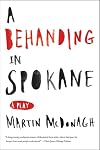
Read this out loud with a friend and enjoyed it more than I thought I would. Other than the weak characterisations and shoddily constructed social setting (what's new with Martin Mcdonagh) the buzzing energetic violent tone worked for me!