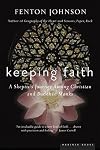
Fenton Johnson has written a candid story of his own spiritual journey as a gay man distanced from the Roman Catholic church of his youth. The story is told through Johnson's experiences of the contemplative life in Gethsemani, the Trappist monastery near his boyhood home in Kentucky, and in the San Francisco Zen Center. He asks important questions such as the difference between "faith" and 'belief", why Christianity embraced its hierarchical form after the first few centuries, and even what meaning can be found in monasticism. He extensively explores both Buddhism and Catholicism, having been set on that road at a conference between Buddhist monks (including the Dalai Lama) and the Trappist monks at Gethsemani Abbey. Johnson's own personal road mirrors mine in a remarkable number of ways, which made his personal spiritual journey all the more poignant for me (I briefly knew Fenton when we both lived in San Francisco many years ago). Johnson is able to hold open a questioning, skeptical mind, but make genuine efforts to reconcile the issues that so many of us struggle with when it comes to faith, forgiveness, hope, and the varieties of spiritual experience in the world. Johnson helped me frame my own struggle in ways I had not considered before. His book would be helpful for many who feel distanced from their church, but yearn to embrace anew the spiritual dimension of themselves.
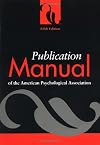
This style guide is a necessary evil for scholarly publishing in education, but it is bewilderingly fussy. One example of this fussiness is in the five levels of subheadings it prescribes.
Most sensible writers would use a simple sequential system, where the first level is always first, the second level is always second, and so forth through as many levels as needed. APA’s system starts with Level 1, but if you have two levels, you should use Level 1 and Level 3 (unless you use Level 1 and Level 4). If you use three levels you use Level 1, Level 3 and Level 4, while the orphaned Level 2 finally makes its appearance as a fourth level in its numerical position between Level 1 and Level 3. So where does Level 5 go? If you need five levels, Level 5 goes ahead of the other four. How sensible!
Also, the current publication manual (2001) does NOT contain the current style for citing electronic references. The APA published an updated APA Style Guide to Electronic References (2007), which they will be happy to sell you as a separate PDF for another $12. Do not put yourself through this pain unless it is absolutely required.
Most sensible writers would use a simple sequential system, where the first level is always first, the second level is always second, and so forth through as many levels as needed. APA’s system starts with Level 1, but if you have two levels, you should use Level 1 and Level 3 (unless you use Level 1 and Level 4). If you use three levels you use Level 1, Level 3 and Level 4, while the orphaned Level 2 finally makes its appearance as a fourth level in its numerical position between Level 1 and Level 3. So where does Level 5 go? If you need five levels, Level 5 goes ahead of the other four. How sensible!
Also, the current publication manual (2001) does NOT contain the current style for citing electronic references. The APA published an updated APA Style Guide to Electronic References (2007), which they will be happy to sell you as a separate PDF for another $12. Do not put yourself through this pain unless it is absolutely required.