Tells you a lot more about the games than the man, but that may be as it should be.
A terrific melding of buddy-cop and fantasy, with just the right amount of humor.
Like most recent books that create a counterfactual history of a U.S. President, injecting supernatural conspiracy elements, this one starts stronger than it ends. The voice matches Nixon's perfectly, and sucks you in nicely. The ending fizzles a bit, sort of like Nixon himself, I suppose. This doesn't make my recommended list for everyone, but people into Lovecraft (or Nixon) could do a lot worse.
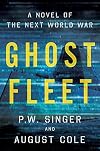
Though I'm not an avid reader of Clancy-style fiction, this story of a near-future war between the US and China (told largely from the US point of veiw) totally sucked me in. It starts much stronger than it finishes and some of the hacking bits are a little too magical, but I've been finding myself thinking about parts of it even weeks after finishing it. Also, the rationale portrayed by Chinese leadership for starting the war, while not entirely convincing, is a definite step up from the sort of hand-rubbing, cackling, Yellow Menace crap we might have been subjected to a couple of decades ago. Space dedicated to the Black Widow story line might have been better used on something else. (Also, they probably didn't need to resort to hardware hacks to bring down a bunch of F-35s. Just sayin'.)

I made the mistake of reading the first half in 15 minute increments, then leaving it for a couple of months before reading the rest. Given that the story involves dozens (human and AI) characters, many of whom have secret agendas, this sporadic reading meant that I'm sure some reveals at the end went by totally unnoticed. Still, this seems like what I expected a novel in the Culture series to be like, particularly the ship Minds being protagonists. Not entirely satisfied with the ending, but totally worth the time.
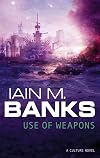
For a novel in the Culture series, the events in the book don't particularly rely on happening of and within the Culture; most of the story really could have been set in any generic future (or even present) setting. (Turns out that most of it was written before the author had even fully conceived the Culture, and it shows.) The book's construction, a Tarantino-style disjunct chronology, serves it well enough (even though I'm not fond of the technique), but by the time the big reveal came around, I just didn't care all that much for the main characters.
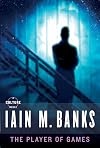
Though generally superior to the first Culture book, the climax took me totally out of the story, wrecking it a bit. Still an interesting angle from which to explore a post-scarcity society, and well defined, interesting characters (particularly the AIs).
Twinkie, Deconstructed: My Journey to Discover How the Ingredients Found in Processed Foods Are Grown, Mined (Yes, Mined), and Manipulated into What America Eats by Steve Ettlinger
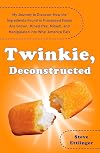
Now that you can get these again, this is worth reading. Pretty much everything you know about Twinkies is wrong.
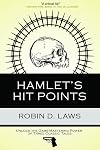
This odd little book about analyzing the "beats" of three dramatic works of stage and screen (Hamlet, Dr. No, Casablanca) as if they were sessions of a role-playing game serves pretty well at rewiring how your brain looks at scenes. The visual nature of the result of the technique also works pretty well, but a larger body of examples would make it patterns more evident. There is a bit more disagreement between the visual icons used and the text of the page (that is, editing mistakes) than you might expect, but they are easy to spot. If you like deconstructing stuff, this may be a book for you, even if you aren't a roleplayer.
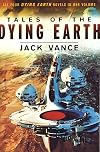
This collection of four books, sharing the same setting, appears on the famous-in-certain-circles "Appendix N": the "inspirational and educational reading" section of one of the early D&D rulebooks. (In fact, D&D's technique of spells needing to be memorised each day, then being forgotten when they are cast is known a "Vancian magic", after the author of this book). Vance mostly obliterates the line between antagonist and protagonist, so if you like to root for the main characters when you read, this probably isn't your book. Pretty much all the characters are selfish and, at best, kind of dickish, but still fascinating. Likewise, if you are looking for strong, or even slightly two-dimensional female characters, look elsewhere, as there are none to be found here.
The collection contains four books, written over wide timespan. The first of these, a collection of stories from 1950 clearly stands above the others, featuring a chain of characters, where a secondary character in one story becomes the main character of the next. The last (1984), also episodic, features the same cabal of characters and also shines. The center pair, which follow a single scumbag's misadventures, still entertain, but less strongly than the others.
All the characters in the last days of the earth speak in stylised language, which will have you saying things like "I do not care to listen; obloquy injures my self-esteem and I am skeptical of praise" for weeks after reading (though, I confess using my show more Kindle's dictionary lookup feature a lot while reading this one). This style, particularly the dialogue, make this book a delightful read, even when (especially when) all the characters are out to sabotage each other. show less
The collection contains four books, written over wide timespan. The first of these, a collection of stories from 1950 clearly stands above the others, featuring a chain of characters, where a secondary character in one story becomes the main character of the next. The last (1984), also episodic, features the same cabal of characters and also shines. The center pair, which follow a single scumbag's misadventures, still entertain, but less strongly than the others.
All the characters in the last days of the earth speak in stylised language, which will have you saying things like "I do not care to listen; obloquy injures my self-esteem and I am skeptical of praise" for weeks after reading (though, I confess using my show more Kindle's dictionary lookup feature a lot while reading this one). This style, particularly the dialogue, make this book a delightful read, even when (especially when) all the characters are out to sabotage each other. show less
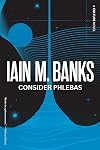
Several people have sung the praises of Banks' novels featuring The Culture (a post-scarcity, pan-galactic society based where individual liberty is paramount) so I expected to be blown away by this, the first novel in the series. Instead, I found it merely very good, containing interesting characters and story that kept me turning pages in spite of being a little episodic. One welcome technique is that, for a novel that introduces The Culture, the main character hates them, allowing the reader to see many points of view about them and drawing their own conclusions.
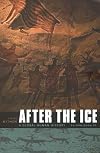
While interested in the subject matter, I had to abandon this book half way through. Much of it is presented in a fictionalised narrative, speculating what a particular time traveller sees when visiting the various times and places detailed by this book. While this is done, no doubt, because some editor thought it would pep up a dry text and connect better with the reader, it has the opposite effect on me, bringing the text to a grating and irritating halt. If I wanted hand-holding reenactments, I'd watch the history channel. (Note that my problem here is with the technique itself, not the particular use of it here; a biography on Tesla was similarly ruined for me using this style.) The author also visited many of these places himself and writes about those experiences. These are less jarring, but still mostly unnecessary, with lots of "I imagine I see". Who cares? The bits about actual research are great, but slogging through so much other cruft made me not care.
This is not the kind of book I usually read, but a will that gives you a choice of $10 million or the contents of a sealed envelope? Who can resist that? I enjoyed the ride, as well as the craft went into it. Even some interesting bits about applied encryption, sort of.
A cable TV show I caught, mostly at random, prompted me to read this for the first time. Like a lot of Clarke's stuff, it is thought-provoking in a slightly unsatisfying way, and somewhat depressing. Time well spent, though. Occasionally, the sensibilities of 1953 (when it was written) come thundering through, but it holds up pretty well for the most part.
This is the last of six books that, according to the author, were started on a bet. Someone bet him he couldn't make a decent story based on the Lost Roman Legion and Pokemon. Turns out he could. You might take the fact that I read all six of these books under two months as an indication that I enjoyed them immensely. Very fun fantasy. Good characters, good dialog, great fantasy ideas (and, if you want to know how to tell a story with a trad rpg-like escalating power curve, this is it).
I'm very late to the party on this series, but good things come to those who wait. There seems to be some disagreement about whether this is supposed to be a series for kids or not, but whatever; it's fun either way. This is the type of book where you see the movie it would make in your head, and try to cast each character as you encounter them (the actual movie is on hold, apparently). Not all that deep, but what do you expect from a "Die Hard with faries" story.
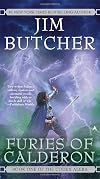
A refreshing bit of fantasy that totally sucked me in from the author of the Dresden Files series. The way magic is handled is totally brilliant and well realized. While there are clear protagonists and antagonists, all have believable points of view and motivation, so there is conflict without clear-cut good vs. evil. The whole thing left me wanting to run a role-playing game in this world, but not really seeing which system to use for it (Anima Prime comes close, but can't do some of what happens in the books). I'm already reading the second one.
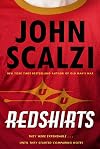
On reading another Scalzi book, The God Engines, I suspected that he might be my new favorite writer. This book, so different from that one, makes me sure of it. If you are a Trek fan, yes, the title means pretty much what you think it means. But somehow it becomes more along the way.

A quick and easy example of modern pulp (that is, like the old pulp adventures, but without so much overt rasicm and sexism). The premise would make the greatest popcorn movie ever.
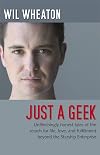
"You're supposed to be a writer, Wil." Most definitely. I may have to dig out that autographed picture of Wesley Crusher and display it in my office with pride now.
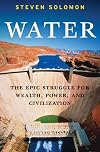
I wanted to like this book more than I did. Useful information, but presented somewhat dryly (and with the author far too in love with the word "precocious"). Still, if you still have any doubts that the rest of this century will be defined almost entirely by water, this book will dispel them.
The Coming Generational Storm: What You Need to Know about America's Economic Future by Laurence J. Kotlikoff
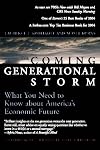
Recommended reading for anyone who cares even slightly about America's economic situation, and required reading for everyone in Generation X, who stand to loose the most from the generational war we are already in. One very quick lesson: fixing this problem will become a very slight bit easier once everyone on the right and the left divests themselves of the delusion that the crisis has a solution that doesn't involve raising taxes. Get over it. The historically low tax rate was fun while it lasted. You'll never see it again.
A point also made in the book: even if you increased the tax rate to 100% (which would never happen), it still doesn't come close to solving the problem. (Also, keep in mind the book was written in 2005, when Bush was president and we only owed the future $60 trillion.)
A point also made in the book: even if you increased the tax rate to 100% (which would never happen), it still doesn't come close to solving the problem. (Also, keep in mind the book was written in 2005, when Bush was president and we only owed the future $60 trillion.)
It's is a bit unfair to criticize a book called "The Naked God" for an ending that smells more than a little of deus ex machina. But even if that is true, it is telegraphed pretty well, and still satisfyingly surprising. Even more than the other books in the triology, this one is overly long, but still entertaining and engrossing overall.
Focussed more on plot development than world-building, not quite as fun as the first part, but still entertaining. You need a scorecard to track all the characters, though, especially when they start coming back from the dead.
Dense and thorough epic sci- fi, with a bit of hell mixed in. Setting-building at it's best.

I've always been a sucker for fictional "histories", and this one is better than most. Well written and well structured, and all too believable (assuming you buy into the notion of zombies as reality to start).
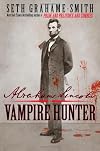
Quite wonderful, much better than Pride & Prejudice & Zombies. My first iPad ebook as well, and a nice reading experience. An ending more true to the character would have given it another star.
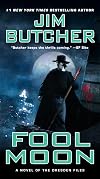
Didn't grab me as hard as the first one. There were also a few spots where the reader was clearly turning the page, adding odd stalls to the narration that were jarring. Still, worth the read.
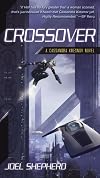
Surprisingly entertaining and creative, though the lead character is a bit of a Mary Sue (http://tvtropes.org/pmwiki/pmwiki.php/Main/MarySue).