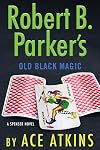
This is not Ace Atkins's best entry in the Spenser series. I felt that it had a few too many plot twists, and the ending was very unsatisfying. I understand that Parker was criticized for some degree of stagnation in the series toward the end of his life, but some of as actually appreciated returning again and again to familiar characters and themes. Atkins can seem at times preoccupied to introduce the element of noir tragedy. Sometimes that has worked well, but in this book it just makes the whole story unmemorable.
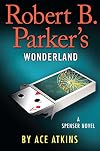
In his second novel continuing the Spenser series following Rober B. Parker's death, Ace Atkins turns in another strong effort. He succeeds in recreating the personality and especially the dialogue of the main character. He also shows a good grasp of the other denizens of Spenser's universe. As with "Lullaby," I never felt that the characters were alien or different to the ones I came to love reading Parker's novels. The story here is also satisfying in its complexity, and features several plot turns that keep the action moving. Spenser moves seamlessely, as usual, between the worlds of A-listers trying to bring a casino to Boston for profit, dangerous mobsters trying to protect their corner on the gambling market, and the street toughs that some or all of them have hired to get Spenser off the case. The story involves an old friend and long-time supporting character, Henry Cimoli, whose condo building is in the way of the planned casino devleopment. Spenser is pitted against rival corporate investors and the mobsters that they may or my not be in league with. He unravels the mystery with his usual knack for stirring up trouble to see how the plot unfolds. Hawk and Susan are both out of town for this one, so Spenser is accompanied by his relatively new sidekick Zebulon "Z" Sixkill, a character introduced in the last book written by Parker as a sort of trainee for Spenser. The relationship between these two is developed nicely. Again, Atkins captures the unwritten code show more that Spenser follows, the "rules" that imbue him with honor, and which he is trying to teach Z. These rules frequently get Spenser into a bind, and this is no exception. He needs to let Z stand on his own, even when this puts Z and Spenser in danger. The danger will not end with the closing of this story. Spenser has stirred up a rivalry that may pit him against one of the most dangerous characters in his world. Atkins seems willing to put Spenser into more danger, and to let him fail more dramatically, than Parker did in his later novels. In both Lullaby and Wonderland, Spenser and his colleagues get into fights or escalating situations that escape their control and go badly for the protagonists. This is the only departure I sense from Parker's late work, in which Spenser was rarely subject to that sort of setback. It could be argued that this makes the stories more compelling, but for me it is the only dissonant note in an otherwise harmonious continuation of one of my favorite literary series. show less
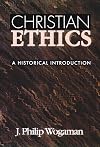
Wogaman's book is an overview of the history of Christian theological ethics. He starts and ends by reflecting on six tensions he finds in Biblical and church ethics. These are tensions between: revelation and reason; materialism and the life of the spirit; universalism and group identity; grace and law; love and force; and equality and status. Wogaman finds that each pole in these tensions is a legitimate and appropriate expression of theological orthodoxy, and that it is part of the life of the Christian to hold them in tension. Throughout history each tension has come to the fore at different times and left us a rich legacy of thought and reflection on how the Christian lives into the tension, without necessarily resolving it. Ultimately, the lean of this book is toward the individual spiritual life of the Christian as the domain of ethical consideration. For me this is too narrowly focused. The life of the Christian is lived in the church and the whole people of God, and ethics is properly the domain of this body, formed of clay though it be.
In Pursuit of Spenser: Mystery Writers on Robert B. Parker and the Creation of an American Hero by Otto Penzler
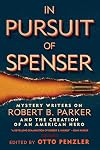
Great book of essays about Robert B. Parker's most famous character. It is a brilliant move to have the contributors to this volume reflect not only on their relationship with Parker himself, but also on their relationship to the character of Spenser. Parker was able to create a character that is remarkably real and relatable while simultaneously embodying the role of hero. The book is short on technical analysis (though what little there is is well-conceived), and long on admiration for the author and the character. It's a great way to mark the transition of Spenser into a second chapter of life inspired by Ace Atkins, whose essay is the strongest in this book.
Ace Atkins was a great choice to continue the Spenser series. His essay in Otto Penzler's volume "In Search of Spenser" is a must-read companion to "Lullaby" if for some reason this story itself leaves any doubt. Atkins uses spare prose in a way that does justice to Parker's voicing of Spenser, and in some ways brings back some of the spirit of the earlier Spenser novels. The plot finds Spenser in over his head more frequently than some of Parker's more recent entries, which on the one hand makes the action gripping, while on the other dimming just a bit of the lustre of invincibility seen on Spenser since "Small Vices." The other small faults I would find are that Hawk isn't quite right, nor is Susan. Atkins has them playing the right parts in the story, but the characterization is just a little off. I think this is largely because those characters existed primarily in Parker's head, and we see the edges of them as they intersect with Spenser's perceptions. Parker gave us more of Spenser, so there is more for Atkins to work with, to "get right," I suppose. And he does. In the end, as Spenser would say, "a thing is what it is, and not something else." This isn't a Robert B. Parker Spenser story, but it's a damn fine Spenser story all the same, and I liked the way it sounded.
In this novel, probably the last in the late Robert B. Parker's Spenser series, we work through the mystery with Spenser on his own, in some ways mirroring "The Godwulf Manuscript," the first Spenser story. Like "The Godwulf Manuscript," the theft of a historical artifact prompts the action. In this story, I am reminded of some of Parker's earlier tales about the wise-cracking detective - his first confrontation of the villain bringing out some of that dark side, where violence may not be a means only, but an end in itself - "my frustration level was saturating and I needed to hit someone." Though I missed Hawk, whom Spenser tells us is in central Asia helping the CIA, it is somehow fitting that Spenser takes this job so personally that he won't call for backup from any of his other stalwart companions. He is joined as always by his main squeeze, Susan, and regulars Healy, Quirk, Belson, and Rita Fiore come on the scene. But in the end this is a book about Spenser, setting right a situation that went bad on his watch, catching the killers of a client he didn't even like very much, clearing his name and proving he is better than the goons that set out to stop him. It is definitely not the best of the series, but it works as an endcap.
Met the author at the Printers Row book fair in 2009, and he said Robert B. Parker was a big influence. The story follows a female police detective in Chicago as she works out the identity of a serial killer who just may be in her inner circle. Konrath hides the identity well during the first half of the book. The second half descends into mind games between the killer and the detective, and is a bit too gorey for my taste.
Lewis unfolds the tale of the economic disaster with all the suspense and intrigue of a detective novel. His small band of anti-heroes who bet against the housing bubble, and the phantom wealth created on its back by Wall Street, are compelling, and even sympathetic. Telling a story about arcane financial instruments as an epic confrontation of heroes and villains is a brilliant way to make it accessible and explore its human dimensions. Lewis's style is entertaining without sacrificing accuracy as to the details of what happened, and his moral conclusions are clear without being overbearing.