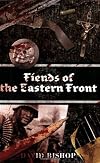
This trilogy, collected into one volume, traces the actions and atrocities of Rumanian undead vampires fighting on the Eastern Front in Russia and Germany in World War Two, and of the German and Russian soldiers who are allied with or fight against these inhuman predators throughout the course of that terrible conflict.
The first book relates the experiences of three German brothers, one pilot, one tank commander and one infantryman, and their gradually dawning realisation of the true nature of their Rumanian allies. The second book is written from the perspective of a Russian convict soldier and the battles he and his unit fight against their undead enemies. The third and final book in this trilogy follows both the German brothers and their Russian enemies as they come together in a union of humanity against the common undead foe that feasts upon those on either side of the battlefield.
Individually these books would be unsatisfactorily short but read together as a single volume they provide a sufficient substance. I read the original Fiends of the Eastern Front comic strip when it was first published in 2000AD in the early eighties, and Bishop has done a commendable job of rendering the classic and brilliant original concept into a novel. The comic roots show, with a pulpy, cinematic quality in the narrative and thin characterisation, but the stories within have pace and interest and colour making them worth reading.
Bishop has explicitly attempted to maintain historical show more accuracy around the central tenet of supernatural vampires and he succeeds in examining and relaying a somewhat obscure but significant and terrible piece of Second World War history, using in particular the blitzkrieg of Operation Barbarossa and the horrors of the siege of Leningrad as backdrops to his story lines. Bishop occasionally appears a bit weak in his knowledge of specific weaponry, military equipment and nomenclature but I was left with a genuine feeling of having learnt some real history of the Eastern Front of World War Two.
Vampires as a key focus are a dangerous choice, as many media consumers will feel they are currently being overdosed with vampiristic fiction, in writing, movies and video games. It is difficult to avoid clichés in writing a vampire book and Bishop appears to have not attempted to do so – very little appears original about his vampires. The one original concept, the central tenet of the comic strip and this novel, is that of covert vampires operating as soldiers in war, exhibiting even a semblance of nationalism. This is an interesting theme that well deserves the examination provided by the novel. It is a concept I have not otherwise encountered. It does provide freshness to the vampire genre and for that reason alone the original comic strip and Bishop’s later writings deserve recognition and reading. show less
The first book relates the experiences of three German brothers, one pilot, one tank commander and one infantryman, and their gradually dawning realisation of the true nature of their Rumanian allies. The second book is written from the perspective of a Russian convict soldier and the battles he and his unit fight against their undead enemies. The third and final book in this trilogy follows both the German brothers and their Russian enemies as they come together in a union of humanity against the common undead foe that feasts upon those on either side of the battlefield.
Individually these books would be unsatisfactorily short but read together as a single volume they provide a sufficient substance. I read the original Fiends of the Eastern Front comic strip when it was first published in 2000AD in the early eighties, and Bishop has done a commendable job of rendering the classic and brilliant original concept into a novel. The comic roots show, with a pulpy, cinematic quality in the narrative and thin characterisation, but the stories within have pace and interest and colour making them worth reading.
Bishop has explicitly attempted to maintain historical show more accuracy around the central tenet of supernatural vampires and he succeeds in examining and relaying a somewhat obscure but significant and terrible piece of Second World War history, using in particular the blitzkrieg of Operation Barbarossa and the horrors of the siege of Leningrad as backdrops to his story lines. Bishop occasionally appears a bit weak in his knowledge of specific weaponry, military equipment and nomenclature but I was left with a genuine feeling of having learnt some real history of the Eastern Front of World War Two.
Vampires as a key focus are a dangerous choice, as many media consumers will feel they are currently being overdosed with vampiristic fiction, in writing, movies and video games. It is difficult to avoid clichés in writing a vampire book and Bishop appears to have not attempted to do so – very little appears original about his vampires. The one original concept, the central tenet of the comic strip and this novel, is that of covert vampires operating as soldiers in war, exhibiting even a semblance of nationalism. This is an interesting theme that well deserves the examination provided by the novel. It is a concept I have not otherwise encountered. It does provide freshness to the vampire genre and for that reason alone the original comic strip and Bishop’s later writings deserve recognition and reading. show less
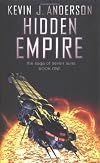
This far future space opera weaves a tale between human cultures and a humanoid alien civilisation that maintain cordial relationships across interstellar space.
Using knowledge gleaned from the archaeological remains of a mysterious, extinct alien civilisation, humanity constructs and activates an immensely powerful device which turns gas giant planets into stars.
The subsequent cataclysmic attacks by hitherto unknown aliens from within gas giant planets launches a new and unexpected crisis of threat and war drawing in all of humanity and their alien allies.
The story introduces a large number of protaganists from amongst various human and alien factions and thereby lays a base for several extensive and interwoven story lines. This makes it clear almost from the outset of this book that it is intended to serve primarily as an introduction to a series.
The number of characters and independent story lines make entry into this book difficult, although an attempt to mitigate this is made through the use of extremely short chapters, often of three pages or less. However, the short chapters increased my confusion as each one moves to a different character and allowed me little time to settle into one story arc.
The characters initially suffer from a lack of depth and some cliches, but over the course of the book work is done on several of the main characters to build them up. In any case this book appears to be primarily focussed on narrative. Unfortunately character dialogue is at show more times quite stilted and unconvincing, which distracted me from the characterisation and narrative.
Another failing is the repetitive exposition of key story points from one chapter to another in an apparent attempt to remind the reader of what has come before. In the context of the short length of the book, these felt more like the result of the chapters being written quite independently and cobbled together later.
Several aspects of the writing style, in particular the poor dialogue and the needlessly repetitious exposition, unfortunately reminded me of the dire Return to Dune books Anderson co-wrote with Brian Herbert. I had assumed the worst excesses of those aberrations were Herbert's fault but now I'm not so sure.
Several of the base ideas and themes in the book appeared familiar to me from other writings although there is plenty of legitimate cross pollination and common themes found throughout science fiction. However, the ideas and the narrative did progress well and with enough originality that the book is worth reading despite some failings. By its end the book had caught my interest sufficiently that I will continue on to read at least the next installment in the series. show less
Using knowledge gleaned from the archaeological remains of a mysterious, extinct alien civilisation, humanity constructs and activates an immensely powerful device which turns gas giant planets into stars.
The subsequent cataclysmic attacks by hitherto unknown aliens from within gas giant planets launches a new and unexpected crisis of threat and war drawing in all of humanity and their alien allies.
The story introduces a large number of protaganists from amongst various human and alien factions and thereby lays a base for several extensive and interwoven story lines. This makes it clear almost from the outset of this book that it is intended to serve primarily as an introduction to a series.
The number of characters and independent story lines make entry into this book difficult, although an attempt to mitigate this is made through the use of extremely short chapters, often of three pages or less. However, the short chapters increased my confusion as each one moves to a different character and allowed me little time to settle into one story arc.
The characters initially suffer from a lack of depth and some cliches, but over the course of the book work is done on several of the main characters to build them up. In any case this book appears to be primarily focussed on narrative. Unfortunately character dialogue is at show more times quite stilted and unconvincing, which distracted me from the characterisation and narrative.
Another failing is the repetitive exposition of key story points from one chapter to another in an apparent attempt to remind the reader of what has come before. In the context of the short length of the book, these felt more like the result of the chapters being written quite independently and cobbled together later.
Several aspects of the writing style, in particular the poor dialogue and the needlessly repetitious exposition, unfortunately reminded me of the dire Return to Dune books Anderson co-wrote with Brian Herbert. I had assumed the worst excesses of those aberrations were Herbert's fault but now I'm not so sure.
Several of the base ideas and themes in the book appeared familiar to me from other writings although there is plenty of legitimate cross pollination and common themes found throughout science fiction. However, the ideas and the narrative did progress well and with enough originality that the book is worth reading despite some failings. By its end the book had caught my interest sufficiently that I will continue on to read at least the next installment in the series. show less