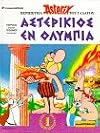
Because my Greek isn't too good I have not more than sampled it and so can't judge how good a translation it is but I can say that you shouldn't expect an easy read.
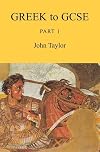
This is a very traditional textbook but it uses the traditional methods (exercises plus short stories ) very effectively. The exercises stick to a limited vocabulary which makes the English to Greek doable even if you are working on your own. And he somehow manages to make the sentences of the exercises interesting in a way no other Ancient Greek textbook writer has managed.
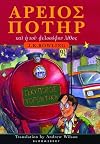
Rowling is known for her readability. I don't think this applies to this translation. I may change my view as my command of Greek improves but this is no way a beginners text and it seems to me that there easier texts in original Greek.

This is not really a time travel novel. Instead of people traveling to a different point in history a new earth has been created out a jigsaw puzzle of wildly different points in the history of the planet.. The potential culture clash is fascinating and the possibilities of such a scenario has been one of my favorite daydreams since reading this book. Sadly Hoyle does not really explore this idea. Indeed I suspect him of wanting to write a book on the philosophy of music and building a SF novel round that to sugar the pill. Further none of his characters are remotely memorable.
Some one ought to take up this idea and do it better.
Some one ought to take up this idea and do it better.
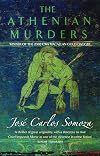
Clever, and I don't mean that as a complement. The author is so wrapped up in creating an intriguing puzzle that he neglected to make any of the characters sufficiently real for me to care about their fates. It was sufficiently intriguing for me to finish it though.
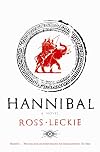
Gratuitous violence is piled on in a way that quickly becomes tedious. It is almost as if he tried to produce a piece of rabid anti Hannibal propaganda - except that everyone in this novel is deeply unpleasant - Romans included. You might expect that with such an interest in violence, his descriptions of battles would be excellent. However it is mindless violence that attracts Leckie so the description of Cannae is vague with Hannibal morosely wandering round not doing very much useful.
It is simply not believable that Leckie's Hannibal could have inspired men and led them to victory as the real Hannibal did
It is simply not believable that Leckie's Hannibal could have inspired men and led them to victory as the real Hannibal did