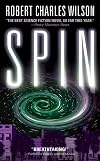
Such a disappointment. When I choose to read science fiction, I expect it to be plot driven. Spin has some good ideas but it is mostly concerned with its characters. Far too much of the book is filled with the relationships between brother and sister twins, friends from different backgrounds, privilege and class. This author seems to be more interested in human interactions than science. Early on, a whole chapter is given over to the protagonist’s relationship to his dying mother and reminiscing about his childhood. I DON’T CARE! It has nothing to do with the plot.

A meandering mess of a plot. Starts scifi gives up on that and decides to make it a fantasy with real, completely over-the-top, magic. The FBI are in there and a mafia type organisation with the usual henchmen, and religious cults. Throws in Dennis Wheatley style satanism and a stunningly beautiful, sexy, enchanting woman. Well why not? I didn’t believe any of it.
There are moments when I enjoyed some of the ideas but mostly it was a hard slog through to the obvious and unsatisfying ending. I see there are more books in the series. Not for me.
There are moments when I enjoyed some of the ideas but mostly it was a hard slog through to the obvious and unsatisfying ending. I see there are more books in the series. Not for me.
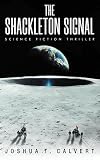
A race to find an alien artefact buried on the moon. Sounds like the kind of hard scifi that I love. I had to read it.
I feel cheated. If you are a fan of hard scifi, this book is NOT for you. Believe me, you are going to be deeply disappointed. I can’t say why without major spoilers. Joshua Calvert, I will never forgive you.
I feel cheated. If you are a fan of hard scifi, this book is NOT for you. Believe me, you are going to be deeply disappointed. I can’t say why without major spoilers. Joshua Calvert, I will never forgive you.

A difficult read but worthwhile for its original idea. If after reading you are tempted to see the movie “Stalker” then you are likely to be disappointed. It’s long and painfully slow and there are no alien artifacts, which removes the main reason that stalkers go to the zone. We have to believe that they can earn a living by taking clients to visit a mysterious room that grants wishes.
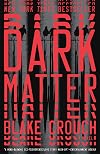
I read this book in 2 days, which I never do. All the while I was thinking “The science is wrong. Decoherence doesn’t need a conscious observer”, “The so-called super-intelligent protagonist is an idiot. I knew what was going on by chapter 3. Why doesn’t he?”, “Too much drinking and getting drunk. Is the author an alcoholic?”, “Not ANOTHER sex scene (yawn)”.
Despite the above, I enjoyed it. I cared about the characters. It is very well written. Some say the ending is lame. I couldn’t think of a better way to end it.
Despite the above, I enjoyed it. I cared about the characters. It is very well written. Some say the ending is lame. I couldn’t think of a better way to end it.

One of the best time travel stories I have read. Most time travel stories are concerned with paradoxes or the effect of changing the past. This story is more concerned with the mechanics of time travel. If it is possible to jump into the past or future how exactly does it work? How do you avoid fusing yourself with objects or people? What if there was an entire community of fellow travellers? The idea of “anchors” is novel and it takes patience to understand how they work. The author adds a psychotic killer to the plot to provide thrills. This makes it more than a workshop manual for time travellers.
Am I Dead?: A Gripping Psychological Thriller - The long-awaited page-turning sequel to 'London 2012 What If?' (now 'Who Stole My Life?') (' What If ... Gripping Psychological Thriller Series) by Ian C. P. Irvine
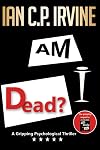
A huge disappointment after “2012 What If”. Far too many scenes of drunkenness and sex. I liked the protagonist in the first book and sympathised with his predicament. This time I disliked him and didn’t care what happened to him. I won’t be reading the next book, if there is one.
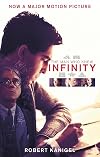
The short life of Indian mathematicial genius S. Ramanujan is fascinating and deserves a detailed biography but in my opinion this work goes too far with its repetitive detail. Do I need to know the life history of Ramanujan's 2nd cousin twice removed to tell his story? I exaggerate, but only slightly. A book half the length could have told everything you would ever want to know about him and his mathematics. For that reason I cannot recommend this bloated, over-indulgent labour of love.

This may just be the worst book I have ever endured and I am a geek, movie buff and video game player. It contains not even one original idea. It is a blatant rip-off of The Last Starfighter and Enders Game both of which Cline refers to in several places. At least they had an element of believability. The plot is supposed to be taken seriously but it is completely ludicrous. I kept hoping that before the end it would be revealed that the protagonist was suffering from mental delusions. No such luck. Avoid, and read "Ready Player One" instead.
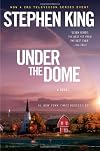
The only other Stephen King book I have read is 11/22/63, which I enjoyed a lot so I was looking forward to this. It could not be more different. King has an obsession with bodily fluids of every kind that I found quite revolting.The characters are all stereotypes who squabble, fight, rape and kill in more and more unbelievable scenarios. The source of the dome is discovered early on but after a cursory examination nobody seems to give a damn. They are all too busy fighting each other for no good reason that I could find.
Dull and unoriginal. An odd mix of primary school level simplicity and graduate level complexity.
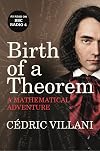
A strangely compelling account of a few years in the life of a celebrated french mathematician. There are many equations and descriptions of mathematical techniques that will baffle almost everyone who reads this book. Although I had no clue what he was writing about most of the time, Villani's passion for his chosen profession made me want to read through to the end.
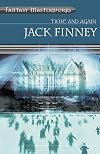
As a fan of time travel stories I found this to be very disappointing. The time travel theme is just an excuse to present a detailed description of New York in the 1880s. If I was looking for that I would have consulted a history book. The basic idea is good but it is totally wasted. it's a pity that it was not written by a scifi author who really knows the genre.
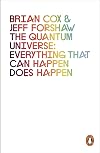
Disappointing. The attempt to simplify some of the difficult concepts of quantum mechanics by the use of analogy only manages to confuse the reader more. Introducing clocks with one hand to represent waves and probabilty amplitudes was a big mistake, in my opinion. If this is your first introduction to quantum theory you may be discouraged from reading more. I recommend "Quantum: a guide for the perplexed" by Jim Al-Khalili.

The negative reviews of this book make me wonder if the reviewers actually read it. I read the whole book in a week and loved it! It is a first rate introduction to the "new physics". The science is accurate if a little out of date (particularly the section on the" particle zoo"). The author has an enviable grasp of the difficult concepts of quantum mechanics which is surprising for someone not trained as a physicist. I agree that the references to eastern mysticism are misrepresented but they are few in number and easily skipped over.
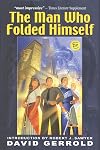
As a lover of time travel and sci-fi I was really looking forward to this. What I found was a homosexual fantasy with only one idea (a good one) which it wrings every drop out of but leaves many questions unanswered. A huge disappointment. A more suitable title would be "The Man who F**ked Himself".
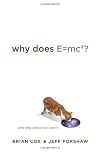
A very good introduction to a fascinating subject, worthwhile for novices or experienced readers. In most cases when I found myself asking "... but why?" they provided the answer. My only quibble is that the narrative seems to go off in many different directions; all interesting but not all relevant to the chapter's topic.

Farmelo achieves the seemingly impossible task of writing a riveting page-turner about a man who appeared to be dull and impenetrable to all but a few close friends. Highly recommended.
A fascinating collection of essays by mathematical guru and pseudo-science debunker, Martin Gardner. He is not afraid to tackle the most difficult questions ever asked and to candidly reveal his own, personal thoughts on them.
The book provides the most convincing arguments for atheism that I have ever read (and that includes Dawkin's "The God Delusion") but surprisingly Gardner is not an atheist. He calls himself a "philosophical theist". I was not convinced by the reasons he gives. I think it has more to do with his protestant fundamentalist upbringing than he is willing to face.
The book provides the most convincing arguments for atheism that I have ever read (and that includes Dawkin's "The God Delusion") but surprisingly Gardner is not an atheist. He calls himself a "philosophical theist". I was not convinced by the reasons he gives. I think it has more to do with his protestant fundamentalist upbringing than he is willing to face.
I was looking forward to this book. I like my opinions about religion to be challenged and as a supporter of Dawkins, I was hoping that McGrath would come up with some carefully considered arguments that would make me think.
It contains nothing of the sort. It is little more than a rant against Dawkins of the "how dare he say that!" kind, with an occasional, "this person doesn't agree with him" thrown in. He is constantly looking for exceptions to the rule, which is not difficult to do, but he adds nothing to the central argument: Is there as God or not?
Here is a typical quote: "Dawkins seems to think that saying something more loudly and confidently, while ignoring or trivializing counter-evidence, will persuade the open-minded public that religious belief is a type of delusion."
Counter evidence? Nowhere in this book is there any attempt to offer any evidence to support the basic tenets of religion. They are merely accepted as true.
The book gets a little more interesting when he challenges Dawkins' view that religion is a cause for violence and evil and the world would be a better place without it.
This tedious, thankfully slim volume is a wasted opportunity.
It contains nothing of the sort. It is little more than a rant against Dawkins of the "how dare he say that!" kind, with an occasional, "this person doesn't agree with him" thrown in. He is constantly looking for exceptions to the rule, which is not difficult to do, but he adds nothing to the central argument: Is there as God or not?
Here is a typical quote: "Dawkins seems to think that saying something more loudly and confidently, while ignoring or trivializing counter-evidence, will persuade the open-minded public that religious belief is a type of delusion."
Counter evidence? Nowhere in this book is there any attempt to offer any evidence to support the basic tenets of religion. They are merely accepted as true.
The book gets a little more interesting when he challenges Dawkins' view that religion is a cause for violence and evil and the world would be a better place without it.
This tedious, thankfully slim volume is a wasted opportunity.