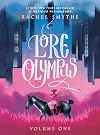
Intended for a much younger audience than myself, unfortunately. I expected a more "adult" treatment of the Persephone/Hades myth, but this felt like Greek mythology meets Degrassi.
I have read a bit of reviews that talk about how this depicts what a healthy, consensual, and respectful relationship looks like in later volumes, which is never a bad thing, but alas, I have no interest in continuing the series.
I have read a bit of reviews that talk about how this depicts what a healthy, consensual, and respectful relationship looks like in later volumes, which is never a bad thing, but alas, I have no interest in continuing the series.
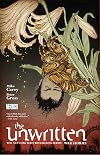
I am happy to see the main storyline back on track after the unnecessary detour of the last volume, but honestly, it feel like it’s taken perhaps a little longer than necessary for us to get to this point. This series has been enjoyable to nerd out to with so many literary references, but it’s good that it will wrap up with the next volume.
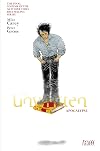
In general, this is an enjoyable series and especially fun for literary buffs who will take pleasure in identifying all the references. It’s hugely influenced by Gaiman’s Sandman series, but not nearly as tight with its plot lines and craft. It can be a bit meandering, and took much longer than necessary to get to the conclusion which resulted in certain story lines/plot devices being overused or recycled in slightly different ways. Still, glad I read to the conclusion and I was satisfied with the end.
His Bloody Project: Documents Relating to the Case of Roderick Macrae (Man Booker Prize Finalist 2016) by Graeme Macrae Burnet
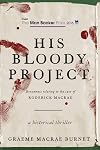
This wasn't what I expected in the least. I was anticipating something more akin to Perfume by Patrick Suskind, but His Bloody Project was much different, and provided a layered and nuanced historical mystery.
The "found documents" trope works well with the story, and illustrates the gray area around the crime that is committed. With so many angles to come from -- Roddy's own account, the prosecution, medical professionals of the time -- truth becomes a moving target, and each section of the book contributes to building a detailed picture of rural Scottish life in the 1860's from various social stations.
The "found documents" trope works well with the story, and illustrates the gray area around the crime that is committed. With so many angles to come from -- Roddy's own account, the prosecution, medical professionals of the time -- truth becomes a moving target, and each section of the book contributes to building a detailed picture of rural Scottish life in the 1860's from various social stations.
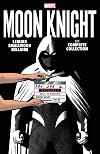
The TV series drew a ton of inspiration from this Moon Knight run. It’s a deft exploration of mental illness wrapped in a cape. Lemire and all of the artists use the medium well to illustrate mental health struggles and dive into how surreal the concept of identity can be.
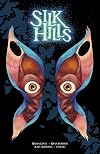
This horror graphic novel is part Mothman mythos, part mining-town-with-a-dark-backwoods-secret horror, part returned-soldier-trying-to-cope trope, and none of these elements are fully realized in a way to make the story compelling.
The artwork is too cartoonish to ever be truly scary or creepy, and the writing relies heavily on ambiguity to save its mediocre plot.
That being said, I really liked the color palette of the artwork, and the art itself would be great if this was a different genre. I could see this artist meshing well with a fantasy comic or graphic novel.
The artwork is too cartoonish to ever be truly scary or creepy, and the writing relies heavily on ambiguity to save its mediocre plot.
That being said, I really liked the color palette of the artwork, and the art itself would be great if this was a different genre. I could see this artist meshing well with a fantasy comic or graphic novel.
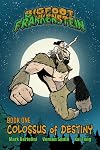
My nephew LOVES Frankenstein so I purchased this for him. He's 12, and the recommended reading age I could find for this online was 12+, but I gave it a read-through for suitability and don't think I'll be passing it along to him.
I'm certainly no pearl-clutcher when it comes to language, or anything really, and I don't think all content needs to be highbrow or educational, but there's something about how heavily this GN relies on the ol' dumb inbred redneck trope with "Damn" and "Goddamn" being every other word out of these villains' mouths that isn't sitting right with me when I think about gifting this to him. There's way too many awesome comics for kids out there to spend time with a mediocre one.
I'm certainly no pearl-clutcher when it comes to language, or anything really, and I don't think all content needs to be highbrow or educational, but there's something about how heavily this GN relies on the ol' dumb inbred redneck trope with "Damn" and "Goddamn" being every other word out of these villains' mouths that isn't sitting right with me when I think about gifting this to him. There's way too many awesome comics for kids out there to spend time with a mediocre one.
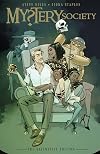
Came for Fiona Staples' art, stayed for Fiona Staples' art.
The writing pales in comparison.
The writing pales in comparison.
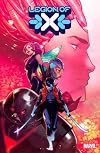
This was not the right place to try to jump back into the X-Men universe. WTH is even happening here?
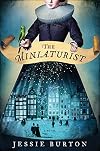
As it progressed I cared less and less.
This is a quick and easy read, and the kind of book I went to for some lighthearted escapism, but it ended up being quite a bummer plot-wise and I finished it just for finishing's sake.
This is a quick and easy read, and the kind of book I went to for some lighthearted escapism, but it ended up being quite a bummer plot-wise and I finished it just for finishing's sake.
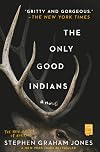
Revenge story? Sure, but that's just the first layer. Like most good horror, there's more than just shock value here, and you will find a ton of worthwhile social commentary if you're willing to.
Don't get me wrong, there are *some* shock value/slasher elements, and it's pretty hard to stomach if you're a pet owner/animal lover.
I've read some reviews that the writing style was hard to get into. That doesn't come through at all in the audiobook, and Shaun Taylor-Corbett was an excellent choice for narrator.
Don't get me wrong, there are *some* shock value/slasher elements, and it's pretty hard to stomach if you're a pet owner/animal lover.
I've read some reviews that the writing style was hard to get into. That doesn't come through at all in the audiobook, and Shaun Taylor-Corbett was an excellent choice for narrator.
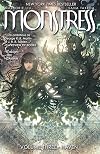
I'm not entirely sure what I just read, and I don't mean that in wow-that-was-far-out-man kind of way.
By the third volume of any series, I should have a decent grasp of the world I'm temporarily occupying in my imagination, but I don't. Monstress is ambitious in its world building, and I love that about it, but it's not solidifying anything in my mind due to some combination of the following:
- While I generally love Takeda's artwork, in this volume it wasn't always clear what I was looking at and that made it hard to follow the action, characters, plot, etc.
- Some of the spreads are frantic/incoherent and just don't scan well on the page
- I'm all for complexity, but the history of this world isn't coming together in a holistic way for me, and I think it's because we get ambiguous snippets here and there in the story, and then a text-dump from Professor Tam Tam at the end, and the two aren't coalescing for me
Still, I'm invested, and won't be able to live without resolving that cliffhanger, so volume 4 here I come...
By the third volume of any series, I should have a decent grasp of the world I'm temporarily occupying in my imagination, but I don't. Monstress is ambitious in its world building, and I love that about it, but it's not solidifying anything in my mind due to some combination of the following:
- While I generally love Takeda's artwork, in this volume it wasn't always clear what I was looking at and that made it hard to follow the action, characters, plot, etc.
- Some of the spreads are frantic/incoherent and just don't scan well on the page
- I'm all for complexity, but the history of this world isn't coming together in a holistic way for me, and I think it's because we get ambiguous snippets here and there in the story, and then a text-dump from Professor Tam Tam at the end, and the two aren't coalescing for me
Still, I'm invested, and won't be able to live without resolving that cliffhanger, so volume 4 here I come...
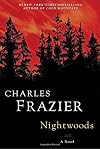
The writing isn’t bad, and at times is even quite beautiful. Despite this, there was nothing that compelled me to keep reading, not the plot, atmosphere, characters, or aforementioned writing, and I DNFed at about 40% after abandoning this on the nightstand for two months.

Better than Woman in Cabin 10 but still highly predictable with a pretty ridiculous plot.

It pains me to say this (Williams is the author of one of my favorite short stories of all time), but while I appreciated the premise of this book, I'm not sure I'm sold on how Williams gets us there. The premise really is compelling: the end times of all things after humans have pushed the environment beyond the tipping point and Earth's utter indifference to mankind's demise. The post-nature world that Williams creates captures a real sense of cosmic and ecological horror, and provides a dark vision of where we're headed that eclipses much of Williams' wit. Surrealism and allegory abound, and there's any number of ways to unpack the text, but around the halfway point it all became a bit of word salad for me that wasn't actually saying anything while giving the (false) impression of saying a whole lot.

Island by Siri Ranva Hjelm Jacobsen is understated and poetic and a little melancholic, too, as it follows two timelines in the same family: a Danish woman who is returning to the Faroes to visit family and that of her grandmother who immigrated to Denmark generations before.
Island is the literary equivalent of flipping through a family photo album filled with distant relatives that you've either never met or of whom you only have vague memories. Each small chapter in this novel is a snapshot in that photo album, a marker of a person or event or place in time that the protagonist is tenuously connected to by blood and collective memory, and also by her longing to connect to her origins while feeling outside of it all. In glimpsing through the generations of this family, we experience the fleetingness of memory, and the reality that some memories will disappear when those who remember are gone. All of these impressions build to a larger picture of the dynamics of this family, and also examines what "home" actually means, why we leave it, and why we return.
Island is the literary equivalent of flipping through a family photo album filled with distant relatives that you've either never met or of whom you only have vague memories. Each small chapter in this novel is a snapshot in that photo album, a marker of a person or event or place in time that the protagonist is tenuously connected to by blood and collective memory, and also by her longing to connect to her origins while feeling outside of it all. In glimpsing through the generations of this family, we experience the fleetingness of memory, and the reality that some memories will disappear when those who remember are gone. All of these impressions build to a larger picture of the dynamics of this family, and also examines what "home" actually means, why we leave it, and why we return.
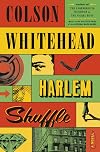
This was my first foray into the work of Colson Whitehead, and now I'm wondering why it's taken me so long to read one of his books.
Harlem Shuffle is touted as a crime novel and while it has elements of the genre (average family man choosing between the straight and crooked path, the seedy underbelly of the City, organized crime, and you know, a heist or two), there is much more going on here. Family dynamics, the American Dream, racism, and police brutality. In fact, you could hold a mirror up to the descriptions of the Harlem Race Riot of 1964 and see the protests from this past summer. If not much has changed in 60 years, is it fair to call this historical fiction either?
Whitehead's writing also offers more than your average crime fiction and provides a strong sense of time and place. He takes the reader down avenues of backstory in as seamless a manner as our protagonist, Ray Carney, navigates his familiar streets of New York. Anyone who has loved a city for all its good and bad will find a likeminded companion in Carney.
Overall a great read that will stick with you long after you've finished.
Harlem Shuffle is touted as a crime novel and while it has elements of the genre (average family man choosing between the straight and crooked path, the seedy underbelly of the City, organized crime, and you know, a heist or two), there is much more going on here. Family dynamics, the American Dream, racism, and police brutality. In fact, you could hold a mirror up to the descriptions of the Harlem Race Riot of 1964 and see the protests from this past summer. If not much has changed in 60 years, is it fair to call this historical fiction either?
Whitehead's writing also offers more than your average crime fiction and provides a strong sense of time and place. He takes the reader down avenues of backstory in as seamless a manner as our protagonist, Ray Carney, navigates his familiar streets of New York. Anyone who has loved a city for all its good and bad will find a likeminded companion in Carney.
Overall a great read that will stick with you long after you've finished.
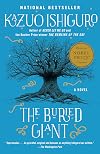
What a challenge it's proving to rate this book. Did I enjoy this read? I'm not quite sure. Would I recommend it? I can't say that I would. Do I think this is a "good" book? Yes, strangely, I think that I do.
I guess what this adds up to is that it's been a long time since a book has confounded me this much with understanding my own feelings about it, and that if part of literature's aim is to make you think about what you've read, Ishiguro hit the mark here.
I felt a whole lot of nothing while reading this. I didn't care about the characters or the story, which isn't necessary for me if the writing itself is interesting, but it wasn't. So on a story level and a technical level, I was leaning towards DNFing, which I don't often do. I felt held at arm's reach from engaging with the book in any meaningful way.
And then I somehow found myself at the end. It's not as if the ending is revelatory; it's fairly obvious what the story is building to, but the way that the last chapter unfolded, including the change in voice and tone, really brought everything together and turned a rather blasé tale into something complex and nuanced. How much of the inaccessibility of this tale is a result of deliberate planning? Are we readers kept at a distance from the narrative by the same mist that plagues the land?
I don't know if it was an intentional choice or a happy accident for our author. I don't know if it matters. I do know that I will be thinking about this book for a long time to come.
I guess what this adds up to is that it's been a long time since a book has confounded me this much with understanding my own feelings about it, and that if part of literature's aim is to make you think about what you've read, Ishiguro hit the mark here.
I felt a whole lot of nothing while reading this. I didn't care about the characters or the story, which isn't necessary for me if the writing itself is interesting, but it wasn't. So on a story level and a technical level, I was leaning towards DNFing, which I don't often do. I felt held at arm's reach from engaging with the book in any meaningful way.
And then I somehow found myself at the end. It's not as if the ending is revelatory; it's fairly obvious what the story is building to, but the way that the last chapter unfolded, including the change in voice and tone, really brought everything together and turned a rather blasé tale into something complex and nuanced. How much of the inaccessibility of this tale is a result of deliberate planning? Are we readers kept at a distance from the narrative by the same mist that plagues the land?
I don't know if it was an intentional choice or a happy accident for our author. I don't know if it matters. I do know that I will be thinking about this book for a long time to come.
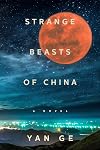
What at first seems a weird and fantastic compendium of various beasts from the fictional city of Yang’an, China quickly morphs into a tale that asks of its readers one of literature’s favorite queries, “What defines humanity?” Echoes abound from Shelley’s Frankenstein to Ishiguro’s Never Let Me Go as the characters edge along the cosmic loneliness of merely existing, but Yan Ge crafts a wholly original novel that is self-aware without being gimmicky, and touching without being precious about it.
It will appeal to those looking for a wild ride into the strange, anyone interested in an off-kilter mystery, as well as those who like a multilayered story to contemplate long after reading.
It will appeal to those looking for a wild ride into the strange, anyone interested in an off-kilter mystery, as well as those who like a multilayered story to contemplate long after reading.
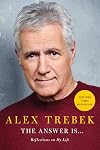
Of course this book is a treat for Jeopardy! fans. I loved learning more about the "TV Uncle" that I've grown up with, and who I've continued to welcome into my home every night for dinner from 7:00-7:30PM.
But what struck me while reading this is that you can't help but be reminded of the things that truly matter in life as Alex shares his anecdotes: family, hard work, aiding the world around you in the ways you can, never taking yourself too seriously, and just being content to be here while you're here.
Alex was a gem, and this read is too.
But what struck me while reading this is that you can't help but be reminded of the things that truly matter in life as Alex shares his anecdotes: family, hard work, aiding the world around you in the ways you can, never taking yourself too seriously, and just being content to be here while you're here.
Alex was a gem, and this read is too.
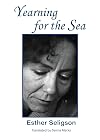
Esther Seligson's Yearning for the Sea is much more than a reimagining of the end of Homer's Odyssey. It quickly moves beyond this conceit into a very real portrayal of nuanced emotion, the messiness of love, desire, and hatred, and the competing narratives of two people in a relationship. Who is right? Whose needs hold more weight?
Poetic, moving, and though slim, this novella holds a vast ocean to immerse yourself in.
Poetic, moving, and though slim, this novella holds a vast ocean to immerse yourself in.
 This review was written for LibraryThing Early Reviewers.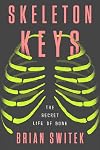
"Sometimes I like to just be still and think about my bones."
Same, Brian, same.
Knowing very little about bones, I quite enjoyed this overview of the natural history of bones, and their cultural context. It is more conversational than academic, and left me feeling like Brian Switek would be a chill dude to have a beer with.
I appreciate that he doesn't gloss over some of the more controversial ethical dilemmas that come with the study of bone: who has rights to the dead, the mistreatment of indigenous bodies, and the cultural assumptions we impose on remains.
Usually with these types of non-fiction books on niche subjects, I find the authors can veer off course from the subject itself and get lost in minutiae that isn't relevant to the topic, but this book is well-organized in digestible chapters and follows a progression from the more biological aspects of bones to the sociological and cultural considerations.
Same, Brian, same.
Knowing very little about bones, I quite enjoyed this overview of the natural history of bones, and their cultural context. It is more conversational than academic, and left me feeling like Brian Switek would be a chill dude to have a beer with.
I appreciate that he doesn't gloss over some of the more controversial ethical dilemmas that come with the study of bone: who has rights to the dead, the mistreatment of indigenous bodies, and the cultural assumptions we impose on remains.
Usually with these types of non-fiction books on niche subjects, I find the authors can veer off course from the subject itself and get lost in minutiae that isn't relevant to the topic, but this book is well-organized in digestible chapters and follows a progression from the more biological aspects of bones to the sociological and cultural considerations.
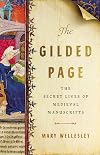
The Gilded Page explores not just Medieval manuscripts, but the world in which these manuscripts existed, and the forces that created, shaped, and preserved them. And while it serves as a highly researched exploration of the reasons and people who created these works of devotion and art, as well as what information we can glean from these texts in the modern day, overall I found the organization of the book to be a bit uneven. Some parts go into such detail that you forget if you’re reading about manuscripts or the epistolary habits of the 14th/15th Century Such-and-Suches. There are also moments where the author inserts herself into the text with personal anecdotes that don’t contribute to the research being presented, and these felt a bit out of context with the rest of the content.
This might be more enjoyable for those looking for a general potpourri of Medieval/manuscript trivia, but not a historical deep-dive into specific manuscripts themselves.
Thanks to NetGalley and the publisher for the review copy.
This might be more enjoyable for those looking for a general potpourri of Medieval/manuscript trivia, but not a historical deep-dive into specific manuscripts themselves.
Thanks to NetGalley and the publisher for the review copy.
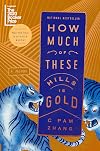
As American of a story as there ever was, replete with that OG American Dream: striking it rich in the gold of the west. But more than finding gold, it's a novel about searching; sometimes it's a search for the right burial spot, sometimes for home (but what makes a home a home? our protagonists ask), and sometimes it's the search for yourself. And much like life, we're left with no conclusive ending to this story, except an acknowledgement that the search itself is on-going, and that, perhaps, is the point.
The highly stylized prose at times steps on its own feet and comes tumbling down these golden hills. This pulled me out of what would have been a compelling narrative on its own sans bells and whistles.
The highly stylized prose at times steps on its own feet and comes tumbling down these golden hills. This pulled me out of what would have been a compelling narrative on its own sans bells and whistles.
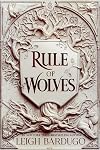
This book relies heavily on the charms of Nikolai as a character, yet despite it being "his duology," there is a lot of noise from the peanut gallery that isn't nearly as engaging.
Cameos from our favorite dregs were the highlight of the entire story, and some ships sailed happily off into the sunset, which will delight a number of fans. Call me messy & masochistic, but the ending left everything a bit too tidy for my liking.
Cameos from our favorite dregs were the highlight of the entire story, and some ships sailed happily off into the sunset, which will delight a number of fans. Call me messy & masochistic, but the ending left everything a bit too tidy for my liking.
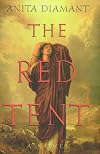
I appreciate any efforts to provide a story and voice to the marginalized women of the Bible, these characters whose stories are the victims of an extremely patriarchal and misogynistic worldview. And Anita Diamant does a good job of rounding out Dinah and reimagining a new context for her tale, while also giving her some semblance of agency (though extremely limited and blessed by a lot of luck).
But it was all just...fine. The writing is uncomplicated, though it does have some moments of beauty. The themes are clear and easily unpacked: motherhood, sisterhood, the various forms of love. I think I was hoping for a little more "oomph" that just wasn't there.
Added bonus: I do have a greater understanding/context for The Ceremony in The Handmaid's Tale and how grossly the Bible is misinterpreted in Gilead.
But it was all just...fine. The writing is uncomplicated, though it does have some moments of beauty. The themes are clear and easily unpacked: motherhood, sisterhood, the various forms of love. I think I was hoping for a little more "oomph" that just wasn't there.
Added bonus: I do have a greater understanding/context for The Ceremony in The Handmaid's Tale and how grossly the Bible is misinterpreted in Gilead.
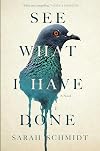
Where this book shoots itself in the foot – or I guess whacks itself in the head with a hatchet – is by somehow trying to be both too much and not enough all at once. It takes strong liberties in one area, and then holds back everywhere else, leaving us with an unbalanced book filled with ghosts of characters who never fully materialize.
What it comes down to is that I wish this book hadn’t been about Lizzie Borden, which I know lands us in the dubious area of judging a book more for what it isn’t versus what it is. The thing is, Schmidt isn’t a bad writer, and if she hadn’t put the constraints of history around her storytelling and character development, I feel like this could have been the disquieting and macabre tale of step-matri/patri-cide for which she was aiming.
What it comes down to is that I wish this book hadn’t been about Lizzie Borden, which I know lands us in the dubious area of judging a book more for what it isn’t versus what it is. The thing is, Schmidt isn’t a bad writer, and if she hadn’t put the constraints of history around her storytelling and character development, I feel like this could have been the disquieting and macabre tale of step-matri/patri-cide for which she was aiming.

For me, the sign of a successful historical fiction is this: does it make me want to learn more about the people, place, or time with which it’s taken creative liberties? Niall Leonard’s M, King’s Bodyguard accomplishes this and piqued my interest about a man and an event that would have otherwise remained in the shadows of history.
The novel follows William Melville, royal bodyguard and Detective Chief Superintendent of Britain’s Special Branch as he attempts to thwart an anarchist attack at Queen Victoria’s royal funeral procession. It runs the gamut from police procedural to espionage thriller, and even has its “buddy cop” moments with the arrival of Gustav Steinhauer, bodyguard to Kaiser Wilhelm, who assists Melville in his manhunt around Edwardian London.
There are no Sherlockian high theatrics of deduction in this, just a depiction of honest detective work, and Niall has given Melville a compelling narrative voice that shares the hits as well as the misses and their consequences, with the reader. Overall, this is a read that will leave you curious about what future cases await Melville and will have you happily googling to learn more about our protagonist and this cast of characters.
The novel follows William Melville, royal bodyguard and Detective Chief Superintendent of Britain’s Special Branch as he attempts to thwart an anarchist attack at Queen Victoria’s royal funeral procession. It runs the gamut from police procedural to espionage thriller, and even has its “buddy cop” moments with the arrival of Gustav Steinhauer, bodyguard to Kaiser Wilhelm, who assists Melville in his manhunt around Edwardian London.
There are no Sherlockian high theatrics of deduction in this, just a depiction of honest detective work, and Niall has given Melville a compelling narrative voice that shares the hits as well as the misses and their consequences, with the reader. Overall, this is a read that will leave you curious about what future cases await Melville and will have you happily googling to learn more about our protagonist and this cast of characters.
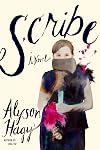
Disclaimer: this book draws from traditional folktales from Appalachia of which I have zero knowledge. Maybe I could have forgiven some of the narrative choices with this insight.
I enjoyed the general atmosphere of the book—independent witchy-ish woman living in relative seclusion who magics with the alphabet, dystopian setting with post-Civil War era vibes, decent and consistent dialect—but was put off once this turned into a surprise Romance novel. Not my jam, and it felt inconsistent with the main character’s entire attitude in the first half of the book.
Alyson Hagy does craft a pretty sentence though, and I’d be interested in giving another one of her books a go.
I enjoyed the general atmosphere of the book—independent witchy-ish woman living in relative seclusion who magics with the alphabet, dystopian setting with post-Civil War era vibes, decent and consistent dialect—but was put off once this turned into a surprise Romance novel. Not my jam, and it felt inconsistent with the main character’s entire attitude in the first half of the book.
Alyson Hagy does craft a pretty sentence though, and I’d be interested in giving another one of her books a go.
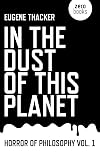
I wanted to love this, but only just liked it sometimes.
Fully owning that I don’t have much experience with many of the philosophers he cites so maybe my own ignorance affected my reading, but at times (really more often than not) it felt like Thacker was running in circles and even he didn’t quite know what point he was trying to make. The different frameworks in which he presents each section left the book poorly organized and created a disjointed feeling in the text.
This book reminded me of a paper you would write in college where you forgot your thesis halfway through and threw in as many convoluted sentences as possible with some made up words that describe your non-point in an effort to hide the fact that you don’t totally know what you’re trying to say.
That being said, there were some far out moments that were worthwhile, if you’re willing to work to get to them.
Fully owning that I don’t have much experience with many of the philosophers he cites so maybe my own ignorance affected my reading, but at times (really more often than not) it felt like Thacker was running in circles and even he didn’t quite know what point he was trying to make. The different frameworks in which he presents each section left the book poorly organized and created a disjointed feeling in the text.
This book reminded me of a paper you would write in college where you forgot your thesis halfway through and threw in as many convoluted sentences as possible with some made up words that describe your non-point in an effort to hide the fact that you don’t totally know what you’re trying to say.
That being said, there were some far out moments that were worthwhile, if you’re willing to work to get to them.