
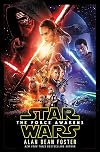
Great movie. Terrible novelization. If they'd wanted nostalgia for the Expanded Universe fans, they should've asked Timothy Zahn to write this.
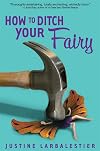
To be clear, I'm a fan of Larbalestier's past work. This book didn't immediately interest me when it first came out, but when I discovered Paperback Swap and remembered I hadn't read anything by this author in a while, I figured, why not give it a go? Truth be told, this book just isn't for me. As an adult, I read a lot of YA and get into it, but sometimes I come across a book that's just a bit too young, and in this case, our heroine Charlie was just too much of a teen for the first 100 pages (I stopped after page 100), and the slang used through-out the book was a constant distraction, despite the handy glossary in the back. This is not a criticism: the book is an easy read, so easy that it would be easy to just finish the book despite it not clicking with me. Obviously, the overall arc is one that will teach Charlie to grow up and not be so self-centered, but it boils down to the fact this book is a bit too young for me, and that's okay. If this premise interests you? Absolutely, give it a go, because you'll have a blast.
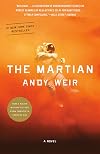
Copy received via LT Early Reviewers: THE MARTIAN is a pretty fast, easy, and accessible read, which surprised me a bit, because I knew this was meant to be a hard SF book, and those aren't always easy and accessible to read. THE MARTIAN, however, was, made so perhaps by the main character's easy banter and mostly enjoyable humor (there were a few cringe-worthy attempts at humor: something about a gay probe, and then comments about how sexy one of his crewmates was despite her being a nerd.... stuff that really doesn't have a place in the narrative and reinforces negative stereotypes). The book held my attention, and at one point I deemed it MACGYVER ON MARS, which is really the most apt description I can think of. Worth reading, especially since it's likely going to end up on the Hugo ballot in some form or fashion.
 This review was written for LibraryThing Early Reviewers.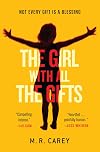
I saw this on LibraryThing’s Early Reviewer list, and after hearing such great things about the book (written by Mike Carey using a pseudonym), I was thrilled to win a copy and get a chance to read it. It’s a compelling read. The voice is engaging, the situation is an interesting one, and while I guessed early what was going on with Melanie, that’s not a secret that’s kept until the end of the book, and it’s a case where the author wants the reader to know. It’s a very character-driven novel for a zombie apocalypse, and characters you don’t think you’ll like when seeing them from Melanie’s perspective take on interesting depth and characterization when you finally get into their heads. A very solid read: fans of Mira Grant’s Feed books should definitely enjoy.
This review was written for LibraryThing Early Reviewers.
I won this in LibraryThing's Early Reviewer's Program, and it's cute. It's got stickers and in the back there's a section where the author teaches you how to draw cats and whatnot in his style. There's not much to the book itself, as it's not a story so much as showing you Simon's cat in some kind of conflict with something else, and again, it's cute. If you're a fan of Simon's Cat videos on YouTube, you'll get a kick out of this, but it's not something that you really HAVE to get unless you got kids who'll want to flip through the book again and again. For adults, it's easy to flip through in the span of a few minutes.
This review was written for LibraryThing Early Reviewers.
The premise: ganked from BN.com: When Jenny Lawson was little, all she ever wanted was to fit in. That dream was cut short by her fantastically unbalanced father and a morbidly eccentric childhood. It did, however, open up an opportunity for Lawson to find the humor in the strange shame-spiral that is her life, and we are all the better for it.
In the irreverent Let’s Pretend This Never Happened, Lawson’s long-suffering husband and sweet daughter help her uncover the surprising discovery that the most terribly human moments—the ones we want to pretend never happened—are the very same moments that make us the people we are today. For every intellectual misfit who thought they were the only ones to think the things that Lawson dares to say out loud, this is a poignant and hysterical look at the dark, disturbing, yet wonderful moments of our lives.
My Rating: My Precious
I made a conscious decision to STOP being so stingy with my #1 rating. I couldn't put this down. I laughed. I nearly cried. I kept recommending that my friends read this book before I was even done with it. I want to get a physical copy so that when I re-read the book, I can see the pictures and the captions better (and while I'd like the hardcover, word has it the upcoming trade paperback release will have an extra chapter. EXTRA CHAPTER!). And yes, I want to re-read this. Because the theme of this book, amongst all the craziness, the astounding stories and the heartbreaking ones, lies an important show more message that I wish I'd learned early and I'm still not sure I've taken to heart: life isn't defined by your perfect moments, but rather your imperfect ones, and how you react to those moments defines everything. Lawson writes about her unique upbringing in such a way that no matter how insane, it's relatable, and her humor had me constantly tickled. It's my kind of humor (see the wheelchair comment behind the cut). When she publishes her next book, I'll be there with bells on. Hell, I should be reading her blog religiously by this point, but I'm afraid of spoiling the next book!
I know this book isn't for everyone. Hell, I can barely coherently write about it myself (another hallmark of a 10 rating). But I do think there's something in here for everyone to enjoy, even if it's not every page. So read it however you're able, and come back and share your thoughts.
Spoilers, yay or nay?: Nay. It's a memoir, what am I going to spoil? Read on, unless you're in a super-hurry and don't want to read about how my reading this book disturbed my husband. :) The full review may be found at my blog, and you can get to full review by clicking on the link below. As always, comments and discussion are most welcome.
REVIEW: Jenny Lawson's LET'S PRETEND THIS NEVER HAPPENED
Happy Reading! show less
In the irreverent Let’s Pretend This Never Happened, Lawson’s long-suffering husband and sweet daughter help her uncover the surprising discovery that the most terribly human moments—the ones we want to pretend never happened—are the very same moments that make us the people we are today. For every intellectual misfit who thought they were the only ones to think the things that Lawson dares to say out loud, this is a poignant and hysterical look at the dark, disturbing, yet wonderful moments of our lives.
My Rating: My Precious
I made a conscious decision to STOP being so stingy with my #1 rating. I couldn't put this down. I laughed. I nearly cried. I kept recommending that my friends read this book before I was even done with it. I want to get a physical copy so that when I re-read the book, I can see the pictures and the captions better (and while I'd like the hardcover, word has it the upcoming trade paperback release will have an extra chapter. EXTRA CHAPTER!). And yes, I want to re-read this. Because the theme of this book, amongst all the craziness, the astounding stories and the heartbreaking ones, lies an important show more message that I wish I'd learned early and I'm still not sure I've taken to heart: life isn't defined by your perfect moments, but rather your imperfect ones, and how you react to those moments defines everything. Lawson writes about her unique upbringing in such a way that no matter how insane, it's relatable, and her humor had me constantly tickled. It's my kind of humor (see the wheelchair comment behind the cut). When she publishes her next book, I'll be there with bells on. Hell, I should be reading her blog religiously by this point, but I'm afraid of spoiling the next book!
I know this book isn't for everyone. Hell, I can barely coherently write about it myself (another hallmark of a 10 rating). But I do think there's something in here for everyone to enjoy, even if it's not every page. So read it however you're able, and come back and share your thoughts.
Spoilers, yay or nay?: Nay. It's a memoir, what am I going to spoil? Read on, unless you're in a super-hurry and don't want to read about how my reading this book disturbed my husband. :) The full review may be found at my blog, and you can get to full review by clicking on the link below. As always, comments and discussion are most welcome.
REVIEW: Jenny Lawson's LET'S PRETEND THIS NEVER HAPPENED
Happy Reading! show less
I absolutely loved Wilkins' VEIL OF GOLD. So much that I backordered a few of her older titles, and I'm just now getting to try this one, THE AUTUMN CASTLE. And boy, is it utterly different. There's always a chance that my tastes have changed, but I can't believe this book was written by the same author as VEIL OF GOLD, a book I've enthusiastically recommended to others. The writing is mostly bland and generic, with very little spark and life to it. The plot itself might've interested me ten years ago, but it doesn't grab me now (and if the writing had a little more spark and life to it, I wouldn't care). A shame, but after 94 pages and my peeking at the ending, there's really no need to continue.
For those readers interested in Wilkins' work, I'd highly recommend starting with VEIL OF GOLD instead.
For those readers interested in Wilkins' work, I'd highly recommend starting with VEIL OF GOLD instead.
This was rather disappointing. It had SO MUCH POTENTIAL but the writing felt particularly blah with a heroine I never liked whether we saw her in the present or in flashbacks. Motivations were murky, and I felt the author sometimes took the reader's knowledge for granted, which is the shame, because portraying a society of Jedi BEFORE they were the Jedi we know and love (with lightsabers)? SUPER PROMISING. Unless you're a die-hard SW fan, I wouldn't recommend starting here.

My Review: 4 - Problematic, but Promising
Let's be honest: I went into this with LOW expectations. LOW because when it comes to media tie-in novels, they have a bad reputation for not being well-written, and most of the time, the authors skimp on all the usual things that original novels demand: setting, characterization, world-building, etc, knowing their readers are fans of the franchise they're writing in and will therefore fill in the blanks. Not ALL media tie-in novels are like this, but that's the reputation, and that's what I expected when I broke down and pre-ordered Fringe: The Zodiac Paradox for my Kindle. Because while I assumed it would be bad, I miss Fringe and I couldn't resist seeing what the spin-off novels would be like.
I got what I expected, with a notch above in terms of quality/interest level. The pluses: Nina was very well presented on the page (I was going to say very sharp on the page, but that would've been a grown-worthy pun), and I liked her interactions with Walter, Bell, and her housemates. I also really liked Faust's characterization and POV of the Zodiac Killer (where he comes from rocked my world), because while some of it was a little too pat and stereotypical for me, I couldn't deny feeling very engaged by his POV.
Walter, as much as I love that character, left me in confusing shambles. I kept seeing OUR Walter: the Fringe universe Walter, the Walter after he's been in a mental institute for years and years, the Walter who's missing some show more vital parts of his noggin. That's how he came off to me, but this story? Is a YOUNG Walter. A Walter before all that other stuff happened. And while I could acknowledge the author may be making a case that OUR Walter was the original Walter all along, but events shaped him into the hard man he became that cost him so much, and the Zodiac Killer was one of the main triggering events. I can get that as an argument, but on paper, as shown in the novel, I couldn't. I wanted a different Walter, one different from the man I know and love and cried for. I want a devil-may-care Walter, someone who might feel a bit guilty about some of the things he has to do, but is able to put them aside for the sake of science, for justice.
William Bell, as a character, came off as a sounding box for whatever needed to be said, whenever it needed to be said. I never fully bought him as a character so much as a mouthpiece, but given William Bell's role in the show, I can't say I'm surprised. The character has always been enigmatic.
The writing as a whole is mostly generic (including one painful shout-out to William Gibson's Neuromancer), with nothing fleshed out and, as expected, the reader is required to fill in the blanks. This isn't a book I'd give to someone to introduce them to the Fringe universe: this is a book I'd give to someone who's missing that universe, wants new adventures, and doesn't place too much stock in whether or not the book is considered "high literature." It's fun and fast to read, and I'll admit it: I've pre-ordered the next two books, if only to see what Olivia and Peter's prequel adventures will be like. show less
Let's be honest: I went into this with LOW expectations. LOW because when it comes to media tie-in novels, they have a bad reputation for not being well-written, and most of the time, the authors skimp on all the usual things that original novels demand: setting, characterization, world-building, etc, knowing their readers are fans of the franchise they're writing in and will therefore fill in the blanks. Not ALL media tie-in novels are like this, but that's the reputation, and that's what I expected when I broke down and pre-ordered Fringe: The Zodiac Paradox for my Kindle. Because while I assumed it would be bad, I miss Fringe and I couldn't resist seeing what the spin-off novels would be like.
I got what I expected, with a notch above in terms of quality/interest level. The pluses: Nina was very well presented on the page (I was going to say very sharp on the page, but that would've been a grown-worthy pun), and I liked her interactions with Walter, Bell, and her housemates. I also really liked Faust's characterization and POV of the Zodiac Killer (where he comes from rocked my world), because while some of it was a little too pat and stereotypical for me, I couldn't deny feeling very engaged by his POV.
Walter, as much as I love that character, left me in confusing shambles. I kept seeing OUR Walter: the Fringe universe Walter, the Walter after he's been in a mental institute for years and years, the Walter who's missing some show more vital parts of his noggin. That's how he came off to me, but this story? Is a YOUNG Walter. A Walter before all that other stuff happened. And while I could acknowledge the author may be making a case that OUR Walter was the original Walter all along, but events shaped him into the hard man he became that cost him so much, and the Zodiac Killer was one of the main triggering events. I can get that as an argument, but on paper, as shown in the novel, I couldn't. I wanted a different Walter, one different from the man I know and love and cried for. I want a devil-may-care Walter, someone who might feel a bit guilty about some of the things he has to do, but is able to put them aside for the sake of science, for justice.
William Bell, as a character, came off as a sounding box for whatever needed to be said, whenever it needed to be said. I never fully bought him as a character so much as a mouthpiece, but given William Bell's role in the show, I can't say I'm surprised. The character has always been enigmatic.
The writing as a whole is mostly generic (including one painful shout-out to William Gibson's Neuromancer), with nothing fleshed out and, as expected, the reader is required to fill in the blanks. This isn't a book I'd give to someone to introduce them to the Fringe universe: this is a book I'd give to someone who's missing that universe, wants new adventures, and doesn't place too much stock in whether or not the book is considered "high literature." It's fun and fast to read, and I'll admit it: I've pre-ordered the next two books, if only to see what Olivia and Peter's prequel adventures will be like. show less
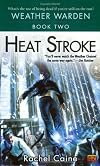
My Review: 7 - Good Read
When I read the first book in this series, Ill Wind, I loved it. Loved it so much I immediately bought books two and three, but if you've been following this blog for any length of time, you know what happened: no matter how much I love something, I let the sequels sit in my TBR pile for years and years, gathering dust. That's got to end sometime, right? So I grabbed book two off the shelf, blew off the dust, and settled in for a fast read (something I needed after wading through the morass that was A Dance with Dragons).
I got exactly what I wanted. Sure, I'd forgotten details from the first book (give me some credit, I read it back in 2008!), but Caine does a great job of making sure the reader has what they need to know to keep going. The book starts out fun and fast, a little more paranormal romancey than I remember book one being, but as Joanne's situation changes, as does the story, landing it solidly in the urban fantasy category by time the book ends. I'm still in a bit of awe regarding the unique nature of this series: how often does urban fantasy focus on the weather, of all things, as its main sticking point? Heat Stroke teaches us a lot more about the djinn, as well as introduces elements that will definitely be in play in later books. So far, I'm quite enjoying the ride, and look forward to book three. And if you're a reader who likes urban fantasy but wants something other than the usual round of vampires, werewolves, and fairies? You show more might want to give Ill Wind a shot. show less
When I read the first book in this series, Ill Wind, I loved it. Loved it so much I immediately bought books two and three, but if you've been following this blog for any length of time, you know what happened: no matter how much I love something, I let the sequels sit in my TBR pile for years and years, gathering dust. That's got to end sometime, right? So I grabbed book two off the shelf, blew off the dust, and settled in for a fast read (something I needed after wading through the morass that was A Dance with Dragons).
I got exactly what I wanted. Sure, I'd forgotten details from the first book (give me some credit, I read it back in 2008!), but Caine does a great job of making sure the reader has what they need to know to keep going. The book starts out fun and fast, a little more paranormal romancey than I remember book one being, but as Joanne's situation changes, as does the story, landing it solidly in the urban fantasy category by time the book ends. I'm still in a bit of awe regarding the unique nature of this series: how often does urban fantasy focus on the weather, of all things, as its main sticking point? Heat Stroke teaches us a lot more about the djinn, as well as introduces elements that will definitely be in play in later books. So far, I'm quite enjoying the ride, and look forward to book three. And if you're a reader who likes urban fantasy but wants something other than the usual round of vampires, werewolves, and fairies? You show more might want to give Ill Wind a shot. show less
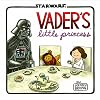
My Review: 6 - Worth Reading, with Reservations
So I was utterly charmed by Brown's previous Star Wars contribution, Darth Vader and Son, and absolutely had to pre-order Vader's Little Princess as soon as I was able. Because Leia! And the art, yet again, is cute and a lot of fun, but I had one quibble with this book: the author has sons, and his Darth Vader and Son, while obviously showing father & son activities, really felt universal, stuff that you could see doing with your dad whether you were a boy or a girl. With Vader's Little Princess, I couldn't help but feel the author was having to reach for daughter stereotypes: the dad hating the boyfriend, the daughter listening to loud music and wearing clothes that are too revealing. Like the daughter looking at a closet full of clothes and complaining of having nothing to wear, or dragging her father to the ballet. Some of it was cute, mind, and there's a reason it's a stereotype, but it just wasn't really Leia. Leia, who's tough as nails. That bothered me a bit, but I could be overreacting. However, one thing I noted: in Vader's Little Princess, Leia has to share 8 panels with Luke. In Darth Vader & Son, Luke shares a grand total of one single panel with Leia.
Erm….
I'm sure I'm overreacting. I just wish THIS book was as clever as the previous one. For those of you who've "read" both, thoughts?
So I was utterly charmed by Brown's previous Star Wars contribution, Darth Vader and Son, and absolutely had to pre-order Vader's Little Princess as soon as I was able. Because Leia! And the art, yet again, is cute and a lot of fun, but I had one quibble with this book: the author has sons, and his Darth Vader and Son, while obviously showing father & son activities, really felt universal, stuff that you could see doing with your dad whether you were a boy or a girl. With Vader's Little Princess, I couldn't help but feel the author was having to reach for daughter stereotypes: the dad hating the boyfriend, the daughter listening to loud music and wearing clothes that are too revealing. Like the daughter looking at a closet full of clothes and complaining of having nothing to wear, or dragging her father to the ballet. Some of it was cute, mind, and there's a reason it's a stereotype, but it just wasn't really Leia. Leia, who's tough as nails. That bothered me a bit, but I could be overreacting. However, one thing I noted: in Vader's Little Princess, Leia has to share 8 panels with Luke. In Darth Vader & Son, Luke shares a grand total of one single panel with Leia.
Erm….
I'm sure I'm overreacting. I just wish THIS book was as clever as the previous one. For those of you who've "read" both, thoughts?

My Review: 2 - Below Standard
First thing's first: OMG!!! I'M FINALLY CAUGHT UP ON THIS SERIES!!!! WOO-HOO!!!!!
*coughs*
Now that that's out of my system, can I just say that a whole lot of nothing happened in this book? It's weird: I was all prepared for A Feast for Crows to be the absolute worst, but save for a few POV sections, I was actively engaged in what was happening. I figured A Dance with Dragons would be the same, just with the POVs I missed from A Feast for Crows.
Not so. Jon Snow's arc was the only one that really engaged me, as did the very few snippets we got from Arya, Jamie, and Ceresi. Okay, Reek's sections were interesting too, but the rest? Even Daenerys' chapters were full of WTF-ery. Maybe it's because I've slept since reading A Storm of Swords, but her motivations are completely muddled to me, and I can't say I agreed with a single thing she did. She's reversed as a character, lost some of her hard-earned growth from A Storm of Swords. There is one, just one, awesome moment for her, but it's minimized by her last chapter in the book.
And Tyrion's sections? Totally anti-climatic. I'm serious: NOTHING HAPPENS. We learn an interesting factoid about another legit contender in the Game of Thrones, but really, I can't say I'm invested in how it plays out: it'll either end badly for the contender, in which case, why did Martin even BOTHER, or it'll end well, which feels like I've wasted a lot of time for a character I didn't meet until now to win. No, that's show more not a spoiler. If you want spoilers, and if you want a really good breakdown about what's WRONG with this book, you should read fantasy author Marie Brennan's post here. Seriously, it's really good, and far more articulate about the glaring problems (and why they're there) than I can be.
But I can say this: as a unpublished writer who's been through many a workshop, who's had many a critique, I've often been told that every chapter needs to move the story FORWARD in some way. If it doesn't move the story forward, the chapter isn't doing it's job and needs to be cut and/or reconsidered. I've always took that advice with a grain of salt: I think there's room for chapters that allow for character growth only, but here, with Martin? THIS IS WHY THE RULE IS IN PLACE!!!! If Martin were in my shoes, or any other unpublished writer's shoes and getting workshopped, he'd be raked over coals for this crap.
Oh, I could go on and on. I'll say this: I didn't believe in the cliffhanger, if that makes sense. I also don't mind waiting however many years for the next installment. I need the break, and I'm not even worried about forgetting stuff: very little of importance happened. A very few choice things happened that were awesome: that one moment for Dany, and Arya's arc is becoming very satisfying. A few other tidbits of interest, but all of that's already forgotten due to the pages upon pages of description of food, of heraldry and banners and armies, of rumors from different people saying the exact same thing. Of a single character's mantra being repeated over and over in all of their chapters, and each character has their own mantra. This was a drudge of a book, and it felt like it took forever to read (possibly symptomatic of reading it on the Kindle -- there were lots of formatting issues there too). This book could've been a novella for what little really happens, and that's a shame. At this point, I just want to know where it all ends up. At this point, I'm starting to think the HBO show will do it better. But despite my dissatisfaction, I'll probably keep reading. It's just that the excitement is gone, so I'm in no hurry.
I guess that's a good thing, considering the publishing schedule…. show less
First thing's first: OMG!!! I'M FINALLY CAUGHT UP ON THIS SERIES!!!! WOO-HOO!!!!!
*coughs*
Now that that's out of my system, can I just say that a whole lot of nothing happened in this book? It's weird: I was all prepared for A Feast for Crows to be the absolute worst, but save for a few POV sections, I was actively engaged in what was happening. I figured A Dance with Dragons would be the same, just with the POVs I missed from A Feast for Crows.
Not so. Jon Snow's arc was the only one that really engaged me, as did the very few snippets we got from Arya, Jamie, and Ceresi. Okay, Reek's sections were interesting too, but the rest? Even Daenerys' chapters were full of WTF-ery. Maybe it's because I've slept since reading A Storm of Swords, but her motivations are completely muddled to me, and I can't say I agreed with a single thing she did. She's reversed as a character, lost some of her hard-earned growth from A Storm of Swords. There is one, just one, awesome moment for her, but it's minimized by her last chapter in the book.
And Tyrion's sections? Totally anti-climatic. I'm serious: NOTHING HAPPENS. We learn an interesting factoid about another legit contender in the Game of Thrones, but really, I can't say I'm invested in how it plays out: it'll either end badly for the contender, in which case, why did Martin even BOTHER, or it'll end well, which feels like I've wasted a lot of time for a character I didn't meet until now to win. No, that's show more not a spoiler. If you want spoilers, and if you want a really good breakdown about what's WRONG with this book, you should read fantasy author Marie Brennan's post here. Seriously, it's really good, and far more articulate about the glaring problems (and why they're there) than I can be.
But I can say this: as a unpublished writer who's been through many a workshop, who's had many a critique, I've often been told that every chapter needs to move the story FORWARD in some way. If it doesn't move the story forward, the chapter isn't doing it's job and needs to be cut and/or reconsidered. I've always took that advice with a grain of salt: I think there's room for chapters that allow for character growth only, but here, with Martin? THIS IS WHY THE RULE IS IN PLACE!!!! If Martin were in my shoes, or any other unpublished writer's shoes and getting workshopped, he'd be raked over coals for this crap.
Oh, I could go on and on. I'll say this: I didn't believe in the cliffhanger, if that makes sense. I also don't mind waiting however many years for the next installment. I need the break, and I'm not even worried about forgetting stuff: very little of importance happened. A very few choice things happened that were awesome: that one moment for Dany, and Arya's arc is becoming very satisfying. A few other tidbits of interest, but all of that's already forgotten due to the pages upon pages of description of food, of heraldry and banners and armies, of rumors from different people saying the exact same thing. Of a single character's mantra being repeated over and over in all of their chapters, and each character has their own mantra. This was a drudge of a book, and it felt like it took forever to read (possibly symptomatic of reading it on the Kindle -- there were lots of formatting issues there too). This book could've been a novella for what little really happens, and that's a shame. At this point, I just want to know where it all ends up. At this point, I'm starting to think the HBO show will do it better. But despite my dissatisfaction, I'll probably keep reading. It's just that the excitement is gone, so I'm in no hurry.
I guess that's a good thing, considering the publishing schedule…. show less
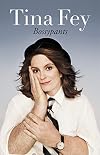
My Review: It's a Gamble
This rating means one thing: I'm rather ambivalent about the book. It also means that whatever you think you'll feel about the book before reading is probably how you'll feel about it after reading. If that makes sense.
I will say this before explaining the rating: I hear the audiobook, which is read by Tina Fey herself, is fantastic. If I hadn't been lured by the super-cheap Kindle sale of $0.99, I would've sprung for the audio version, because I think that would've really heightened my experience, especially in the cases where I was reading along and questioned whether or not Fey was joking. And that's just it, if I were to compare Tina Fey to someone like, say, Jenny Lawson (the Bloggess), the difference is staggering: Lawson's humor is all about the written form and how her personality influences the written form (not saying she wouldn't be a riot in person: I bet she is, but my experience with her humor is all written); Fey, on the other hand, is an actress and visual comedian. In that I see her jokes and I hear her jokes. I've not been introduced to Fey on a blog. Writing, even though, ironically, she wrote for SNL and 30 Rock, is not her performance medium. She writes humor that's meant to be performed, whereas Lawson writes humor that's meant to be read. And really, I have no business comparing the two, so let's move on.
That's not to say Fey doesn't say some very funny and poignant things in her autobiography: she does. I grinned a few times show more and enjoyed myself. I especially enjoyed those sections where she talked about SNL and her Sarah Palin skits. I never watched 30 Rock, so while that was interesting from a television perspective, it wasn't as engaging as it might've been had I watched the show. Also, Fey as a feminist I want to read loads more about. I think she'd be amazing to talk to in person, especially on this topic. :)
But your mileage may vary. It's certainly an enjoyable read for $0.99, and I'm glad I finally got to read it. But it didn't make me clutch my sides laughing my ass off, and for some reason, I was hoping it would. Maybe we should chalk this rating up to misplaced expectations? Still, if you're a fan of Tina Fey, you should get your hands on this: but get the audiobook. Because I'm pretty sure that would've had me clutching my sides laughing my ass off. :)
But I'll be honest: reading this book just for the chapter about photo-shoots is freaking worth it. :)
However, I hate this freaking cover. I would've bought this sucker in hardback if not for the cover, yo! show less
This rating means one thing: I'm rather ambivalent about the book. It also means that whatever you think you'll feel about the book before reading is probably how you'll feel about it after reading. If that makes sense.
I will say this before explaining the rating: I hear the audiobook, which is read by Tina Fey herself, is fantastic. If I hadn't been lured by the super-cheap Kindle sale of $0.99, I would've sprung for the audio version, because I think that would've really heightened my experience, especially in the cases where I was reading along and questioned whether or not Fey was joking. And that's just it, if I were to compare Tina Fey to someone like, say, Jenny Lawson (the Bloggess), the difference is staggering: Lawson's humor is all about the written form and how her personality influences the written form (not saying she wouldn't be a riot in person: I bet she is, but my experience with her humor is all written); Fey, on the other hand, is an actress and visual comedian. In that I see her jokes and I hear her jokes. I've not been introduced to Fey on a blog. Writing, even though, ironically, she wrote for SNL and 30 Rock, is not her performance medium. She writes humor that's meant to be performed, whereas Lawson writes humor that's meant to be read. And really, I have no business comparing the two, so let's move on.
That's not to say Fey doesn't say some very funny and poignant things in her autobiography: she does. I grinned a few times show more and enjoyed myself. I especially enjoyed those sections where she talked about SNL and her Sarah Palin skits. I never watched 30 Rock, so while that was interesting from a television perspective, it wasn't as engaging as it might've been had I watched the show. Also, Fey as a feminist I want to read loads more about. I think she'd be amazing to talk to in person, especially on this topic. :)
But your mileage may vary. It's certainly an enjoyable read for $0.99, and I'm glad I finally got to read it. But it didn't make me clutch my sides laughing my ass off, and for some reason, I was hoping it would. Maybe we should chalk this rating up to misplaced expectations? Still, if you're a fan of Tina Fey, you should get your hands on this: but get the audiobook. Because I'm pretty sure that would've had me clutching my sides laughing my ass off. :)
But I'll be honest: reading this book just for the chapter about photo-shoots is freaking worth it. :)
However, I hate this freaking cover. I would've bought this sucker in hardback if not for the cover, yo! show less
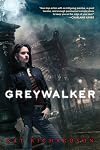
My Review: 6 - Worth Reading, with Reservations
I've been eyeing this book and its author ever since the debut in 2006. To this day, I'm not sure why I never splurged and bought it. I know that as time went by, I was reading other urban fantasies and general apathy was setting in and I didn't want to pick up another, and as time went by, I wasn't hearing great things about this book, but I wasn't hearing bad things either. However, a friend of mine discovered this series when a friend of hers gave it to her to read, and she promptly asked me if I was interested in borrowing them as she finished. Sure, why not? Next thing I know, I've got the first four books to read, so I settled down with Greywalker to see how well it'd click.
And I enjoyed it. This book is very clearly a debut, but in a weird way, it's a refreshing read compared to what's being published now. It's refreshing in that it doesn't depend on a romance to keep the tension going, and it also relies heavily on real-world investigation, as Harper is a private investigator. She fights the notion of the supernatural and paranormal, despite the fact that she was, technically, dead and that death has given her insight to the Grey itself, a kind of parallel world but not where all kinds of magical things and stuff resides. While I appreciate her wanting to cling to the real, I did find myself a bit frustrated at her constant lack of acceptance, yet I get it: the author was really trying to portray how a real person show more would react in that situation. I thoroughly enjoyed the supporting cast, especially Mara, a witch who's trying to guide Harper through the Grey itself. We also meet vampires, at which point I had a private giggle when two of the main vampires in the book were named Edward and Alice. No, the vampires were not necessarily nice vampires. And no, Richardson wasn't making a comment on Twilight: her book was at the publishers when Twilight debuted. It's just really funny in hindsight.
Greywalker does a pretty solid job setting things up, and I look forward to seeing not only the author improve with each book (it is currently a seven book series, going on eight, so she's clearly doing something right), but also seeing how the world fleshes out and watch how Harper deals with it all. It's definitely worth reading, so long as you keep in mind it is a debut, and so long as you aren't expecting a romance component to drive the story. show less
I've been eyeing this book and its author ever since the debut in 2006. To this day, I'm not sure why I never splurged and bought it. I know that as time went by, I was reading other urban fantasies and general apathy was setting in and I didn't want to pick up another, and as time went by, I wasn't hearing great things about this book, but I wasn't hearing bad things either. However, a friend of mine discovered this series when a friend of hers gave it to her to read, and she promptly asked me if I was interested in borrowing them as she finished. Sure, why not? Next thing I know, I've got the first four books to read, so I settled down with Greywalker to see how well it'd click.
And I enjoyed it. This book is very clearly a debut, but in a weird way, it's a refreshing read compared to what's being published now. It's refreshing in that it doesn't depend on a romance to keep the tension going, and it also relies heavily on real-world investigation, as Harper is a private investigator. She fights the notion of the supernatural and paranormal, despite the fact that she was, technically, dead and that death has given her insight to the Grey itself, a kind of parallel world but not where all kinds of magical things and stuff resides. While I appreciate her wanting to cling to the real, I did find myself a bit frustrated at her constant lack of acceptance, yet I get it: the author was really trying to portray how a real person show more would react in that situation. I thoroughly enjoyed the supporting cast, especially Mara, a witch who's trying to guide Harper through the Grey itself. We also meet vampires, at which point I had a private giggle when two of the main vampires in the book were named Edward and Alice. No, the vampires were not necessarily nice vampires. And no, Richardson wasn't making a comment on Twilight: her book was at the publishers when Twilight debuted. It's just really funny in hindsight.
Greywalker does a pretty solid job setting things up, and I look forward to seeing not only the author improve with each book (it is currently a seven book series, going on eight, so she's clearly doing something right), but also seeing how the world fleshes out and watch how Harper deals with it all. It's definitely worth reading, so long as you keep in mind it is a debut, and so long as you aren't expecting a romance component to drive the story. show less

My Review: 6 - Worth Reading, with Reservations
I had been warned. I knew, going into A Feast for Crows, that I would not get Tyrion's POV. I would not get Daenerys'. Or Jon Snow's. Or a few others. I heard, long before picking this up, that because of these omissions, this was the worst book of the series. Well, I'm here to say that for whatever reasons, this was not the worst book in the series for me (that honor goes to A Clash of Kings, which would've made me quit the series if 1) I hadn't already had books three and four in my TBR and 2) I hadn't already heard that book three was the most awesome thing ever).
So how'd I get through it? One, my expectations were in check. Two, I was really looking forward to POVs like Sansa's and Cersei's, as well as favorites Jamie's and Brienne's. Three, this is the second book I've read in the series since HBO's Game of Thrones adaptation came out, and if there's one thing that can reliably get me through big, thick epic fantasy books, it's already having a visual in place for the characters and the landscapes. I swear, having seen The Fellowship of the Ring five times in theaters was the only reason I was able to get through Tolkien's The Lord of the Rings trilogy. Anyway, that really helped.
But your expectations have to be in check. And you have to wrestle with a bit of frustration when you suddenly get POVs of characters in Dorne (where we learn what's going on with Princess Myrcella and Princess Arianne, and believe me, I really show more didn't care in either case) as well as the Iron Islands (again, short of one particular interesting event, I did not care). I know all of these additional and sudden POVs are developing and enriching the main story to come: I can already see where the Iron Island POVs are going to intersect with, say, Daenerys, and while I don't know what's going on with Arianne and Dorne, I'm interested in finding out.
Still, I couldn't help but wonder what this book -- hell, what this whole SERIES -- would look like if it were abridged. Because I get tired of meeting characters and learning what the coat of arms is, the colors worn, etc, etc. The details that so flesh out this world become tiring by this point, and I just want to move on to the story. Yet Martin takes his time, treating each character POV chapter like . . . I don't want to say a novella. But I can say that these books are truly character-driven, and each POV is like getting your own individual, character-driven story. They just all take place in the same land.
There are some interesting pieces moved into place and set up. I can't wait to find out what's next for Ceresi, and I'm dying to know what's next for Brienne and Arya. Every time I think I have a handle on how things are going to end up, Martin throws a twist. That being said, at this point, I'm ready for Dany to get her ass in Westeros and start showing everyone who's REALLY boss. Maybe book five will give me that? I'll find out soon! show less
I had been warned. I knew, going into A Feast for Crows, that I would not get Tyrion's POV. I would not get Daenerys'. Or Jon Snow's. Or a few others. I heard, long before picking this up, that because of these omissions, this was the worst book of the series. Well, I'm here to say that for whatever reasons, this was not the worst book in the series for me (that honor goes to A Clash of Kings, which would've made me quit the series if 1) I hadn't already had books three and four in my TBR and 2) I hadn't already heard that book three was the most awesome thing ever).
So how'd I get through it? One, my expectations were in check. Two, I was really looking forward to POVs like Sansa's and Cersei's, as well as favorites Jamie's and Brienne's. Three, this is the second book I've read in the series since HBO's Game of Thrones adaptation came out, and if there's one thing that can reliably get me through big, thick epic fantasy books, it's already having a visual in place for the characters and the landscapes. I swear, having seen The Fellowship of the Ring five times in theaters was the only reason I was able to get through Tolkien's The Lord of the Rings trilogy. Anyway, that really helped.
But your expectations have to be in check. And you have to wrestle with a bit of frustration when you suddenly get POVs of characters in Dorne (where we learn what's going on with Princess Myrcella and Princess Arianne, and believe me, I really show more didn't care in either case) as well as the Iron Islands (again, short of one particular interesting event, I did not care). I know all of these additional and sudden POVs are developing and enriching the main story to come: I can already see where the Iron Island POVs are going to intersect with, say, Daenerys, and while I don't know what's going on with Arianne and Dorne, I'm interested in finding out.
Still, I couldn't help but wonder what this book -- hell, what this whole SERIES -- would look like if it were abridged. Because I get tired of meeting characters and learning what the coat of arms is, the colors worn, etc, etc. The details that so flesh out this world become tiring by this point, and I just want to move on to the story. Yet Martin takes his time, treating each character POV chapter like . . . I don't want to say a novella. But I can say that these books are truly character-driven, and each POV is like getting your own individual, character-driven story. They just all take place in the same land.
There are some interesting pieces moved into place and set up. I can't wait to find out what's next for Ceresi, and I'm dying to know what's next for Brienne and Arya. Every time I think I have a handle on how things are going to end up, Martin throws a twist. That being said, at this point, I'm ready for Dany to get her ass in Westeros and start showing everyone who's REALLY boss. Maybe book five will give me that? I'll find out soon! show less

My Review: 0 - No Rating
This is a rare rating so I need to clarify: "No Rating" doesn't mean it's a bad book. It means that it's just not the kind of book that I feel comfortable with REVIEWING. I want to talk about it, but I can't look at it critically. I do this if I know the author, or if the book is COMPLETELY outside of my regular reading wheelhouse, and let's face it: have you ever seen me review a book that's so obviously about womens' health? I thought not.
So this is what I'll say: I discovered Andrew Goldstein through The Dr Drew Podcast (you can download for free here), wherein Drew and Goldstein talk about birth control and some of its surprising but little-known side effects. Hearing about those side effects made me suddenly feel they were making this podcast for me personally, so when I learned that Goldstein has this book out, and that the book would talk about those specific issues (among other things, as indicated by the title), I decided I'd read this as a bit of homework before going to see my own personal physician about my own reactions to oral contraceptives (because it all makes SENSE now!).
Yes, that's deeply personal, but I'll say this: if you're a woman (or a doctor or gynecologist or someone in the field) and this title resonates with you at all? Read this book. If you're shy about doing so, listen to Goldstein's podcast with Dr. Drew first (just click here) and see if it speaks to you or not. The book is NOT a self-help book, but rather a book of show more guidance: it gives you the tools you need to talk to your own physician, and if that doesn't work, it gives you the tools you need to seek out one who can help.
So yeah. That's all that needs to be said about that. show less
This is a rare rating so I need to clarify: "No Rating" doesn't mean it's a bad book. It means that it's just not the kind of book that I feel comfortable with REVIEWING. I want to talk about it, but I can't look at it critically. I do this if I know the author, or if the book is COMPLETELY outside of my regular reading wheelhouse, and let's face it: have you ever seen me review a book that's so obviously about womens' health? I thought not.
So this is what I'll say: I discovered Andrew Goldstein through The Dr Drew Podcast (you can download for free here), wherein Drew and Goldstein talk about birth control and some of its surprising but little-known side effects. Hearing about those side effects made me suddenly feel they were making this podcast for me personally, so when I learned that Goldstein has this book out, and that the book would talk about those specific issues (among other things, as indicated by the title), I decided I'd read this as a bit of homework before going to see my own personal physician about my own reactions to oral contraceptives (because it all makes SENSE now!).
Yes, that's deeply personal, but I'll say this: if you're a woman (or a doctor or gynecologist or someone in the field) and this title resonates with you at all? Read this book. If you're shy about doing so, listen to Goldstein's podcast with Dr. Drew first (just click here) and see if it speaks to you or not. The book is NOT a self-help book, but rather a book of show more guidance: it gives you the tools you need to talk to your own physician, and if that doesn't work, it gives you the tools you need to seek out one who can help.
So yeah. That's all that needs to be said about that. show less
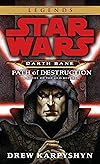
My Review: 3 - Not My Cup of Tea
This is a tough one to rate, because honestly, I feel it has a lot in common with Star Wars: Galaxies: The Ruins of Dantooine, in that both main characters are Mary Sue/Marty Stu. I gave Dantooine a "2 - Below Standard," and I had to think hard about this rating, because again, a lot of this book really felt like wish fulfillment to Stu-ish levels (and I'm allowed to apply that term to media tie-ins, because they are, by nature, authorized fan fiction). Of course, being the greatest Sith ever isn't exactly MY kind of wish fulfillment, but to each their own. And honestly, if this wasn't a Star Wars book, I probably wouldn't never finished it, let alone picked it up. Be that as it may, while it's clearly history of the Sith, I felt coming back to the fact that this just doesn't feel like the Star Wars universe in any form or fashion, not even the prequel era. Sure, this takes place LONG before said prequel era, but it just didn't click the way I wanted history to do so. Maybe it's because the story is primarily told through the Sith viewpoint, rather than the traditional Jedi one. We get a lot of telling instead of showing, a lot of summarization. The description often gets clunky, and there's ANOTHER PROPHECY!!! Which I'm sure applies to Darth Bane, because why would this trilogy feature him otherwise?
I think the biggest problem with this book is it relies too heavily on what the reader brings to the book. You're expected to understand the show more conflict between the Sith and Jedi going into the book, which means the author really doesn't have to world-build like he would in an original novel and, you know, justify the war between the Sith and the Jedi and what they're fighting for and why. But even though I, as a fan, am armed with that knowledge (though let's be fair, this is yet another game spin-off, and I'm not and never have been a Star Wars gamer), I found the whole conflict to be weak and uninteresting. I was interested in learning more about the Sith, seeing how they came to be what we know and love in the prequel movies, but beyond that, I was pretty bored with the whole experience. I would not recommend this book except to the most hardcore of Star Wars fans, especially those fans obsessed with Sith legend and history. Everyone else, this is an easy pass. Newbies? Do not start here. The only reason this gets a "3 - Not My Cup of Tea" over a "2 - Below Standard" is because despite my issues with the writing, it doesn't make the same outright mistakes that Dantooine did, and it's a more solidly constructed story as a whole. Obviously, because I'm a glutton for punishment, I'll be reading the rest of the trilogy. I know, I'm insane. Fortunately, Darth Bane: The Rule of Two is several books away in publication order. :) show less
This is a tough one to rate, because honestly, I feel it has a lot in common with Star Wars: Galaxies: The Ruins of Dantooine, in that both main characters are Mary Sue/Marty Stu. I gave Dantooine a "2 - Below Standard," and I had to think hard about this rating, because again, a lot of this book really felt like wish fulfillment to Stu-ish levels (and I'm allowed to apply that term to media tie-ins, because they are, by nature, authorized fan fiction). Of course, being the greatest Sith ever isn't exactly MY kind of wish fulfillment, but to each their own. And honestly, if this wasn't a Star Wars book, I probably wouldn't never finished it, let alone picked it up. Be that as it may, while it's clearly history of the Sith, I felt coming back to the fact that this just doesn't feel like the Star Wars universe in any form or fashion, not even the prequel era. Sure, this takes place LONG before said prequel era, but it just didn't click the way I wanted history to do so. Maybe it's because the story is primarily told through the Sith viewpoint, rather than the traditional Jedi one. We get a lot of telling instead of showing, a lot of summarization. The description often gets clunky, and there's ANOTHER PROPHECY!!! Which I'm sure applies to Darth Bane, because why would this trilogy feature him otherwise?
I think the biggest problem with this book is it relies too heavily on what the reader brings to the book. You're expected to understand the show more conflict between the Sith and Jedi going into the book, which means the author really doesn't have to world-build like he would in an original novel and, you know, justify the war between the Sith and the Jedi and what they're fighting for and why. But even though I, as a fan, am armed with that knowledge (though let's be fair, this is yet another game spin-off, and I'm not and never have been a Star Wars gamer), I found the whole conflict to be weak and uninteresting. I was interested in learning more about the Sith, seeing how they came to be what we know and love in the prequel movies, but beyond that, I was pretty bored with the whole experience. I would not recommend this book except to the most hardcore of Star Wars fans, especially those fans obsessed with Sith legend and history. Everyone else, this is an easy pass. Newbies? Do not start here. The only reason this gets a "3 - Not My Cup of Tea" over a "2 - Below Standard" is because despite my issues with the writing, it doesn't make the same outright mistakes that Dantooine did, and it's a more solidly constructed story as a whole. Obviously, because I'm a glutton for punishment, I'll be reading the rest of the trilogy. I know, I'm insane. Fortunately, Darth Bane: The Rule of Two is several books away in publication order. :) show less
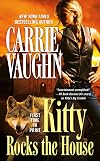
My Review: 7 - Good Read
As I said above, Kitty Rocks the House was my reward for getting through the Star Wars book below. And aside from Star Wars, I think the Kitty Norville novels are the longest-running series I read. This current installment clocks in at book eleven, and later this summer, Vaughn's releasing book twelve, Kitty in the Underworld. I rather enjoyed last year's Kitty Steals the Show, and while I know not every installment is going to be a home run, I can at least count on a comfort read.
Kitty Rocks the House brings Kitty and company back to Denver, and things are getting a bit hairy, no pun intended. I enjoyed seeing a new crop of problems arise and I found myself impressed with how Vaughn resolved those various sets of problems. We also learn a key fact about Roman and the Long Game, and that's even more surprising. I enjoyed this installment quite a bit, and tore through it in a day. Fans of the series should have fun with this, especially fans of Rick, who gets an interesting storyline, and Cormac, who's clearly getting closer to his own spin-off. ;)
As I said above, Kitty Rocks the House was my reward for getting through the Star Wars book below. And aside from Star Wars, I think the Kitty Norville novels are the longest-running series I read. This current installment clocks in at book eleven, and later this summer, Vaughn's releasing book twelve, Kitty in the Underworld. I rather enjoyed last year's Kitty Steals the Show, and while I know not every installment is going to be a home run, I can at least count on a comfort read.
Kitty Rocks the House brings Kitty and company back to Denver, and things are getting a bit hairy, no pun intended. I enjoyed seeing a new crop of problems arise and I found myself impressed with how Vaughn resolved those various sets of problems. We also learn a key fact about Roman and the Long Game, and that's even more surprising. I enjoyed this installment quite a bit, and tore through it in a day. Fans of the series should have fun with this, especially fans of Rick, who gets an interesting storyline, and Cormac, who's clearly getting closer to his own spin-off. ;)
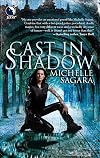
My Review: 6 - Worth Reading, with Reservations
I've been wanting to read this book for quite a long time now. I was familiar with the author through LJ, and when this came out, it seemed like it'd be right up my alley. But I never got it. I waited forever, kept it on my wishlist, but never got around to picking it up. But a couple of years ago, the Christmas fairy delivered it to my doorstep, and it's been waiting on my attentions ever since. Thanks to all of YOU, dear readers, I've finally gotten the motivation to give it a go.
The world-building is fascinating, and the crafting of characters is very well done. Each of the characters stand as individuals, with their own demons driving them. Even if I don't know entirely where they're coming from, I don't get the characters confused with one another, not even the minor ones. That's impressive, because the book is told predominantly from a single POV, so there's a lot of secondary, tertiary, and very minor characters to keep track of. And as I said before, the world-building is fascinating. I was quite impressed with the way the world and its magic and races were crafted, and I can see why this book has garnered quite a lot of praise.
However, and you knew this was coming due to the rating, I can't say I ever really connected to the material emotionally. Or intellectually. It took me a while to warm up to the book. I recognized that this is well written, and Sagara doesn't bother spoon-feeding her readers: she makes you wait show more for your revelations, and furthermore, she forces you to figure things out for yourself. Whereas some writers would come out and just explain what's happening and why, Sagara uses character-building moments that build the tension, so that when the information is given that reveals what's happening, you really feel like you've earned it. My trouble is I felt like I was kept as such a distance the entire book that I really wanted, at some point, was for someone or something to give me a quick pat on the head and confirm what I thought was revealed. I don't need it info-dumped or spelled out in neon lights: just some kind of little confirmation in certain cases would've been great. This may be a me-thing, but it's weird when I finally think I figure out what's going on but feel unsatisfied because the author's been so deft, and so coy with the revelations that it's not like a light bulb turning on with all its dazzling brightness; instead, it's like one of those florescent bulbs that slowly brightens, but flickers while doing so and you're not sure if it's going to die or not.
But there are moments of great beauty in this book: the description of the Dragons (and they're not what you think they are) was utterly fantastic. Then there's the hard-earned relationships that Kaylin has with her co-workers: I really feel those relationships, and the end rang on a fantastic note. So while I'm not rushing out to buy the next installment, I am sufficiently engaged to consider glomming onto this series when that mythical day of my conquering my TBR passes. For those looking for a unique take in the epic fantasy sense, you should consider this. show less
I've been wanting to read this book for quite a long time now. I was familiar with the author through LJ, and when this came out, it seemed like it'd be right up my alley. But I never got it. I waited forever, kept it on my wishlist, but never got around to picking it up. But a couple of years ago, the Christmas fairy delivered it to my doorstep, and it's been waiting on my attentions ever since. Thanks to all of YOU, dear readers, I've finally gotten the motivation to give it a go.
The world-building is fascinating, and the crafting of characters is very well done. Each of the characters stand as individuals, with their own demons driving them. Even if I don't know entirely where they're coming from, I don't get the characters confused with one another, not even the minor ones. That's impressive, because the book is told predominantly from a single POV, so there's a lot of secondary, tertiary, and very minor characters to keep track of. And as I said before, the world-building is fascinating. I was quite impressed with the way the world and its magic and races were crafted, and I can see why this book has garnered quite a lot of praise.
However, and you knew this was coming due to the rating, I can't say I ever really connected to the material emotionally. Or intellectually. It took me a while to warm up to the book. I recognized that this is well written, and Sagara doesn't bother spoon-feeding her readers: she makes you wait show more for your revelations, and furthermore, she forces you to figure things out for yourself. Whereas some writers would come out and just explain what's happening and why, Sagara uses character-building moments that build the tension, so that when the information is given that reveals what's happening, you really feel like you've earned it. My trouble is I felt like I was kept as such a distance the entire book that I really wanted, at some point, was for someone or something to give me a quick pat on the head and confirm what I thought was revealed. I don't need it info-dumped or spelled out in neon lights: just some kind of little confirmation in certain cases would've been great. This may be a me-thing, but it's weird when I finally think I figure out what's going on but feel unsatisfied because the author's been so deft, and so coy with the revelations that it's not like a light bulb turning on with all its dazzling brightness; instead, it's like one of those florescent bulbs that slowly brightens, but flickers while doing so and you're not sure if it's going to die or not.
But there are moments of great beauty in this book: the description of the Dragons (and they're not what you think they are) was utterly fantastic. Then there's the hard-earned relationships that Kaylin has with her co-workers: I really feel those relationships, and the end rang on a fantastic note. So while I'm not rushing out to buy the next installment, I am sufficiently engaged to consider glomming onto this series when that mythical day of my conquering my TBR passes. For those looking for a unique take in the epic fantasy sense, you should consider this. show less

My Review: 7 - Good Read
While reading my latest Star Wars pick, I realized I wouldn't finish it in time for my Wednesday flash review post. So in order to ensure I would have at least TWO reviews for you all today, I decided to put the SW novel aside and pull up Carson's latest novella on my Kindle. The Shattered Mountain takes place in the Girl of Fire and Thorns world, and in many ways, could be considered a prequel to the events in The Girl of Fire and Thorns. However, I don't feel this story stands on its own two feet: you really need to have read at least the first book in the trilogy, better still, the second, The Crown of Embers, to really appreciate the events of the story, which focus on Mara's history. The novella is utterly fast-paced: I finished it in a single sitting, and I constantly admire how Caron puts her heroines in horribly difficult situations and makes them do HARD THINGS. She makes her heroines make HARD DECISIONS, and poor Mara, she's no different. And even though this story was fast-paced, I'll be damned if Carson didn't make me all teary-eyed near the end, something I don't think would've happened if I hadn't read the first two books in the trilogy to date. So in short, if you're caught up on the trilogy and need something to tide you over until the third book, The Bitter Kingdom, comes out this fall, this is great. If you're new to the series, hold off until you're caught up, because the payoff is much more satisfying if you do.
While reading my latest Star Wars pick, I realized I wouldn't finish it in time for my Wednesday flash review post. So in order to ensure I would have at least TWO reviews for you all today, I decided to put the SW novel aside and pull up Carson's latest novella on my Kindle. The Shattered Mountain takes place in the Girl of Fire and Thorns world, and in many ways, could be considered a prequel to the events in The Girl of Fire and Thorns. However, I don't feel this story stands on its own two feet: you really need to have read at least the first book in the trilogy, better still, the second, The Crown of Embers, to really appreciate the events of the story, which focus on Mara's history. The novella is utterly fast-paced: I finished it in a single sitting, and I constantly admire how Caron puts her heroines in horribly difficult situations and makes them do HARD THINGS. She makes her heroines make HARD DECISIONS, and poor Mara, she's no different. And even though this story was fast-paced, I'll be damned if Carson didn't make me all teary-eyed near the end, something I don't think would've happened if I hadn't read the first two books in the trilogy to date. So in short, if you're caught up on the trilogy and need something to tide you over until the third book, The Bitter Kingdom, comes out this fall, this is great. If you're new to the series, hold off until you're caught up, because the payoff is much more satisfying if you do.
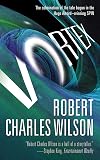
My Review: 7 - Good Read
It feels like forever since I read and fell in love with Spin. The sequel, Axis, didn't pack the same punch in terms of sense of wonder, but there was no doubt I'd read the third and final installment of this trilogy, Vortex. It's not as good as Spin, I'll be honest, but it's a lot better than Axis, and the last part of the book packs a wonderful punch in terms of sense of wonder that I had a hard time putting it down once I got into those final pages. Vortex kept me guessing: while I have forgotten most of Axis, it kept my memory refreshed, but trying to put together what happened there with what's happening in Vortex was a fascinating exercise and a lot of fun. The story felt more accessible, because by now, I understand the world-building pretty well, despite what I've forgotten, because I've had two books introducing and reinforcing it. Putting the pieces together while reading two narratives: near-future Earth and the far-far future (I won't give you a setting, so no spoilers) was a smooth read, despite getting three to four alternating POVs over the course of the book. We learn so much more about the Hypotheticals, and by time I finished, I found myself wanting to re-read the trilogy back-to-back-to-back. Vortex is definitely worth reading: there's plenty to consider, to chew on, and to wonder about. I'm glad I finally got around to it.
It feels like forever since I read and fell in love with Spin. The sequel, Axis, didn't pack the same punch in terms of sense of wonder, but there was no doubt I'd read the third and final installment of this trilogy, Vortex. It's not as good as Spin, I'll be honest, but it's a lot better than Axis, and the last part of the book packs a wonderful punch in terms of sense of wonder that I had a hard time putting it down once I got into those final pages. Vortex kept me guessing: while I have forgotten most of Axis, it kept my memory refreshed, but trying to put together what happened there with what's happening in Vortex was a fascinating exercise and a lot of fun. The story felt more accessible, because by now, I understand the world-building pretty well, despite what I've forgotten, because I've had two books introducing and reinforcing it. Putting the pieces together while reading two narratives: near-future Earth and the far-far future (I won't give you a setting, so no spoilers) was a smooth read, despite getting three to four alternating POVs over the course of the book. We learn so much more about the Hypotheticals, and by time I finished, I found myself wanting to re-read the trilogy back-to-back-to-back. Vortex is definitely worth reading: there's plenty to consider, to chew on, and to wonder about. I'm glad I finally got around to it.
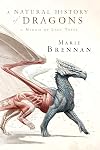
My Review: 6 - Worth Reading, with Reservations
The moment I saw this cover, I knew I had to get this book ASAP. Sure, I'm behind on my Brennan books (I've only read the first in her Onyx Court series), but seriously, guys, THIS COVER. I had to get it! So pre-order it I did, and when I decided to get caught up on my new purchases, this was at the top of the pile.
It took me a tic to warm up to Brennan's writing style here: I've been spoiled by Gail Carriger's flighty fun when it comes to this kind of era, and my brain kept expecting a Carriger-esque turn of phrase, and that never came. I finally shook off those unreasonable expectations and came to enjoy the heroine and her narrative for what it was: an insight into a woman in a fantasy world, based heavily on our own Victorian period, who doesn't fit in with the social expectations for women and dreams of dragons. But I recommend this book with reservations for one very important reason: the title. The full title is A Natural History of Dragons: A Memoir by Lady Trent. Such a title led this particular to believe we would be getting the heroine's life story. We did not get the heroine's life story, but what rather felt like volume one of it. It gets painfully obvious as the book goes on that there's no way we're going to get the FULL life story of Lady Trent, and therefore, we won't get the FULL story of all her adventures with dragons, and I don't mind that, save for the fact it doesn't say "Volume 1" in the title. I also show more don't recall seeing any promotion indicating that this book was the first in a series, which I sorely hope it is. I enjoyed this quite a bit, and Isabella, our heroine, has a solid, grounded narration that lends itself to smooth reading. So I may have missed the memo indicating one way or the other, but I sincerely hope this is the first in a series. It's an enjoyable read with enjoyable characters. It's just a wee bit misleading due to the title.
And you GUYS!!! THE COVER!!!!!!!!! It's made of awesome!!!!! show less
The moment I saw this cover, I knew I had to get this book ASAP. Sure, I'm behind on my Brennan books (I've only read the first in her Onyx Court series), but seriously, guys, THIS COVER. I had to get it! So pre-order it I did, and when I decided to get caught up on my new purchases, this was at the top of the pile.
It took me a tic to warm up to Brennan's writing style here: I've been spoiled by Gail Carriger's flighty fun when it comes to this kind of era, and my brain kept expecting a Carriger-esque turn of phrase, and that never came. I finally shook off those unreasonable expectations and came to enjoy the heroine and her narrative for what it was: an insight into a woman in a fantasy world, based heavily on our own Victorian period, who doesn't fit in with the social expectations for women and dreams of dragons. But I recommend this book with reservations for one very important reason: the title. The full title is A Natural History of Dragons: A Memoir by Lady Trent. Such a title led this particular to believe we would be getting the heroine's life story. We did not get the heroine's life story, but what rather felt like volume one of it. It gets painfully obvious as the book goes on that there's no way we're going to get the FULL life story of Lady Trent, and therefore, we won't get the FULL story of all her adventures with dragons, and I don't mind that, save for the fact it doesn't say "Volume 1" in the title. I also show more don't recall seeing any promotion indicating that this book was the first in a series, which I sorely hope it is. I enjoyed this quite a bit, and Isabella, our heroine, has a solid, grounded narration that lends itself to smooth reading. So I may have missed the memo indicating one way or the other, but I sincerely hope this is the first in a series. It's an enjoyable read with enjoyable characters. It's just a wee bit misleading due to the title.
And you GUYS!!! THE COVER!!!!!!!!! It's made of awesome!!!!! show less
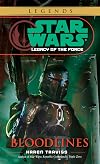
My Review: 7 - Good Read
So this was both a weird but interesting read. Weird because I basically had one book between this and Betrayal (a fluke of jury duty and a DNF), so I hadn't had a long enough break to process the previous Star Wars book. But it was interesting because at this point in the publishing chronology, it's Traviss' first book after Republic Commando: Triple Zero, and this book, which takes place YEARS and YEARS later, seems to foreshadow events to come after RC: TZ. I say seems to because Boba Fett's storyline refers to what happened to a particular Kaminoan scientist years back, and that same scientist is the same that Skirata's wanting to hunt down at the end of the last RC book. And there's also a mysterious Mandalorian whose name, translated, means "little saber" and I so think I know who that refers to, even though I haven't yet met the character. So that was a lot of fun, to guess what I might be reading about in future RC books.
Yes, you may have seen me mention Boba Fett. Honestly, there's a part of me that's super-tired of fandom's obsession with this bounty hunter, but I did like K.W. Jeter's The Bounty Hunter Wars trilogy back in the day, and if anyone can make me give a fig about Boba Fett, it's Karen Traviss. I'm very, very partial to her writing style and storytelling methods, and I'll be damned if Boba Fett's storyline in this book wasn't the most riveting and interesting.
We also get Jacen's, Ben's, Luke's, and Han's POV (huh… no female show more POVs that I recall) to varying degrees of success: I liked how Traviss handled Jacen's, erm, transition and made it more believable (though what happened with Habuur? I wish he'd been mad instead). I also really liked her portrayal of Ben (for the most part: I'm still having trouble swallowing his fear of his father). Han's POV was solid, and Luke's…. Luke and Mara's storyline at the moment just frustrates me, because I feel they're slaves to the larger narrative dictated not by Traviss, but by Lucasflim. But we'll see. I really, really wished we'd gotten Jaina's POV, because if anyone can figure out Jaina's character and get her right, it's gotta be Karen Traviss. Yeah, I may live to regret saying that, but allow me to be optimistic for now, okay? Also, and this may be my ignorance in military matters showing, but I'm not sure a Colonel is supposed to or even be expected to follow another Colonel's orders, nor do I believe one Colonel can court-marshal another. Obviously, I could be wrong, but that rubbed me the wrong way. Technicalities aside, though, it was supposed to rub me the wrong way, so there is that.
Anyway, it's a promising installment, even despite my misgivings with the overall arc. We'll see how the rest goes…. show less
So this was both a weird but interesting read. Weird because I basically had one book between this and Betrayal (a fluke of jury duty and a DNF), so I hadn't had a long enough break to process the previous Star Wars book. But it was interesting because at this point in the publishing chronology, it's Traviss' first book after Republic Commando: Triple Zero, and this book, which takes place YEARS and YEARS later, seems to foreshadow events to come after RC: TZ. I say seems to because Boba Fett's storyline refers to what happened to a particular Kaminoan scientist years back, and that same scientist is the same that Skirata's wanting to hunt down at the end of the last RC book. And there's also a mysterious Mandalorian whose name, translated, means "little saber" and I so think I know who that refers to, even though I haven't yet met the character. So that was a lot of fun, to guess what I might be reading about in future RC books.
Yes, you may have seen me mention Boba Fett. Honestly, there's a part of me that's super-tired of fandom's obsession with this bounty hunter, but I did like K.W. Jeter's The Bounty Hunter Wars trilogy back in the day, and if anyone can make me give a fig about Boba Fett, it's Karen Traviss. I'm very, very partial to her writing style and storytelling methods, and I'll be damned if Boba Fett's storyline in this book wasn't the most riveting and interesting.
We also get Jacen's, Ben's, Luke's, and Han's POV (huh… no female show more POVs that I recall) to varying degrees of success: I liked how Traviss handled Jacen's, erm, transition and made it more believable (though what happened with Habuur? I wish he'd been mad instead). I also really liked her portrayal of Ben (for the most part: I'm still having trouble swallowing his fear of his father). Han's POV was solid, and Luke's…. Luke and Mara's storyline at the moment just frustrates me, because I feel they're slaves to the larger narrative dictated not by Traviss, but by Lucasflim. But we'll see. I really, really wished we'd gotten Jaina's POV, because if anyone can figure out Jaina's character and get her right, it's gotta be Karen Traviss. Yeah, I may live to regret saying that, but allow me to be optimistic for now, okay? Also, and this may be my ignorance in military matters showing, but I'm not sure a Colonel is supposed to or even be expected to follow another Colonel's orders, nor do I believe one Colonel can court-marshal another. Obviously, I could be wrong, but that rubbed me the wrong way. Technicalities aside, though, it was supposed to rub me the wrong way, so there is that.
Anyway, it's a promising installment, even despite my misgivings with the overall arc. We'll see how the rest goes…. show less
My Review: 8 - Excellent
I didn't know a whole lot about this book going in except it was by Karen Lord (and I adored her debut, Redemption in Indigo), and that it was science fiction. That was enough to make me pre-order the hardcover, but it took a while for me to get around to it. And really, I don't know why I waited: this book was an utterly enjoyable read for me. In many ways, this book is very, very, very kin to my own project, my SF novel that came THISCLOSE to getting a publishing contract last year. Lord's playing around with more than a few similar themes, and admittedly, telepathy in SF is nothing new, but Lord's treatment of it ensured I was never tired of her take, and furthermore, her world-building when it comes to humanity and its origins was fascinating. I loved how, essentially, that Earth humans were basically the last type of humanity created: that there are others out there, and in this future, all of those different versions interact and live together. It's wonderful because it allows Lord to portray alien cultures without having true aliens, and it also allows interbreeding in a way you can't question, because we're all the same stock.
It's a quiet story. It's, surprisingly, a love story. It's a story about science, exploration, and anthropology and dying worlds and the act of rebuilding. I was utterly swept away by this, but I guess that's biased, given my own interests in similar themes in my own work. Still, this book enchanted me, so if you're a show more fan of Lord's work, I highly encourage you to check this out. If you're a fan of mature, non-traditional love stories? You should give this a go too.
The cover: love it. However: I pictured our heroes to have darker, with browner skin than the models on the front and back portray. Maybe I misread something…. show less
I didn't know a whole lot about this book going in except it was by Karen Lord (and I adored her debut, Redemption in Indigo), and that it was science fiction. That was enough to make me pre-order the hardcover, but it took a while for me to get around to it. And really, I don't know why I waited: this book was an utterly enjoyable read for me. In many ways, this book is very, very, very kin to my own project, my SF novel that came THISCLOSE to getting a publishing contract last year. Lord's playing around with more than a few similar themes, and admittedly, telepathy in SF is nothing new, but Lord's treatment of it ensured I was never tired of her take, and furthermore, her world-building when it comes to humanity and its origins was fascinating. I loved how, essentially, that Earth humans were basically the last type of humanity created: that there are others out there, and in this future, all of those different versions interact and live together. It's wonderful because it allows Lord to portray alien cultures without having true aliens, and it also allows interbreeding in a way you can't question, because we're all the same stock.
It's a quiet story. It's, surprisingly, a love story. It's a story about science, exploration, and anthropology and dying worlds and the act of rebuilding. I was utterly swept away by this, but I guess that's biased, given my own interests in similar themes in my own work. Still, this book enchanted me, so if you're a show more fan of Lord's work, I highly encourage you to check this out. If you're a fan of mature, non-traditional love stories? You should give this a go too.
The cover: love it. However: I pictured our heroes to have darker, with browner skin than the models on the front and back portray. Maybe I misread something…. show less
My Review: 9 - Couldn't Put It Down
Funny, because until I saw Ann Aguirre update her Facebook page, I didn't realize that Agave Kiss was the last in the Corine Solomon series. So if you haven't started this series yet, don't start here! Aguirre's urban fantasy has definitely been quite enjoyable. Admittedly, it took me a bit to warm up to the debut, but I was so enthralled with her Sirantha Jax space opera series that I was bound to feel that way. Yet there's so much that's wonderful in the Corine Solomon books. My favorite? Butch the chihuahua. He answers yes or no questions with a given set of barks, and he also talks to the characters using Scrabble tiles. It's awesome. Butch is more than welcome in my imaginary fantasy home (which also includes a rose goblin and Aeslin mice).
At any rate, this is definitely a finale. Still reeling from the events that capped book four, Devil's Punch, Corine ends up on a path that definitely resolves arcs and subplots, sometimes giving me answers to questions I never knew I had. We finally meet Booke. We finally met Kel's boss. And Corine learns the value of friendship and family in a way that you know puts her on a better path. There's sacrifice, some predicable plot twists, but damn if I didn't enjoy it all the same. I had a horrible time putting the book down once I got started, so it was just as well that I had the weekend to read it. Fans of this series won't be disappointed.
One last note: the covers to this series have been so show more boring and bland for me. Devil's Punch is, by far, the bright and shining jewel of the bunch, and I figured after THAT awesome cover, that Agave Kiss would be just as awesome, if not more so. Nope, not so much. We're back to the weird, just-obvious-enough, Photoshop blandness. show less
Funny, because until I saw Ann Aguirre update her Facebook page, I didn't realize that Agave Kiss was the last in the Corine Solomon series. So if you haven't started this series yet, don't start here! Aguirre's urban fantasy has definitely been quite enjoyable. Admittedly, it took me a bit to warm up to the debut, but I was so enthralled with her Sirantha Jax space opera series that I was bound to feel that way. Yet there's so much that's wonderful in the Corine Solomon books. My favorite? Butch the chihuahua. He answers yes or no questions with a given set of barks, and he also talks to the characters using Scrabble tiles. It's awesome. Butch is more than welcome in my imaginary fantasy home (which also includes a rose goblin and Aeslin mice).
At any rate, this is definitely a finale. Still reeling from the events that capped book four, Devil's Punch, Corine ends up on a path that definitely resolves arcs and subplots, sometimes giving me answers to questions I never knew I had. We finally meet Booke. We finally met Kel's boss. And Corine learns the value of friendship and family in a way that you know puts her on a better path. There's sacrifice, some predicable plot twists, but damn if I didn't enjoy it all the same. I had a horrible time putting the book down once I got started, so it was just as well that I had the weekend to read it. Fans of this series won't be disappointed.
One last note: the covers to this series have been so show more boring and bland for me. Devil's Punch is, by far, the bright and shining jewel of the bunch, and I figured after THAT awesome cover, that Agave Kiss would be just as awesome, if not more so. Nope, not so much. We're back to the weird, just-obvious-enough, Photoshop blandness. show less
My Review: 9 - Couldn't Put It Down
Saving the best for last: I enjoyed the hell out of last year's Discount Armageddon, and was looking forward to see what the second installment had to bring. The answer: more of the same super fun read, but the book does take a SERIOUS turn for the SERIOUS, which makes it all the richer. But the voice of the book remains super-fun, even in its dark moments. The Aeslin Mice continue to entertain, as does Ista, lover of carnage. The POV is split between Verity and Sarah, the latter being a welcome addition to the book, and both characters are faced with making epic decisions that will affect the rest of their lives. I'll be honest: I couldn't put this down. I know that's the rating, but still, it's true. What else is there to say? Other than the fact I totally hate how awesome McGuire makes Gingerbread Pudding's hot chocolate and actual gingerbread sound. It's no fair that I get to read how awesome something is, but not actually eat it. If I have any criticism, it's that. Everything else? Was a delight, even when it made me squirm uncomfortably in my seat.
And the cover? HAIL! I want Verity's haircut. :)
Saving the best for last: I enjoyed the hell out of last year's Discount Armageddon, and was looking forward to see what the second installment had to bring. The answer: more of the same super fun read, but the book does take a SERIOUS turn for the SERIOUS, which makes it all the richer. But the voice of the book remains super-fun, even in its dark moments. The Aeslin Mice continue to entertain, as does Ista, lover of carnage. The POV is split between Verity and Sarah, the latter being a welcome addition to the book, and both characters are faced with making epic decisions that will affect the rest of their lives. I'll be honest: I couldn't put this down. I know that's the rating, but still, it's true. What else is there to say? Other than the fact I totally hate how awesome McGuire makes Gingerbread Pudding's hot chocolate and actual gingerbread sound. It's no fair that I get to read how awesome something is, but not actually eat it. If I have any criticism, it's that. Everything else? Was a delight, even when it made me squirm uncomfortably in my seat.
And the cover? HAIL! I want Verity's haircut. :)

My Review: 3 - Not My Cup of Tea (DNF)
Google the author. Seriously. Type the author's name in Google and see what comes up. I'll wait. Done? Are you as surprised as I am? Because when I started reading this, the POV of Vera, who falls insta-love with a boy who's wasted water by letting a drop of it fall in the sand, in a story that's more info-dumps and telling than story for the first half, and a premise that just seems utterly implausible to me (not saying it isn't possible; it's just that the author didn't make me believe in it, and that's just as bad), I assumed we had another dystopian wanna-be romance that was just an excuse to put these two characters together. I assumed that it was written by a woman. Not because I consider it bad and it's therefore written by a female, but because all the most of the dystopias/post-apocalyptics flooding the market are thinly veiled excuses for romances, and most of those are written by women. So I'm glad to be wrong.
But I didn't finish this, and that has nothing to do with the author's gender. I didn't know the author's gender until I was looking for his website. No, I didn't finish this for the reasons listed above, and really, that's not a surprise. This was an impulse buy: my FIRST impulse buy after I got the Kindle and saw it was on sale for super-cheap on Amazon. It's the kind of book that, had I not bought it, I would've lost interest in and never bought it to begin with. So my bad. I started reading this during jury duty show more (not during the trial, but during the portions where we were waiting in the back room while the lawyers debated what could be admitted for evidence) because I wanted something easier to carry around than my Star Wars hardcover, but this never grabbed my attention, and I read quite a bit of it even after jury duty was over, so you can't say I didn't give this book a fair shake. I did. It just never interested me, and I never believed in it for an instant. The Water Wars is my first DNF of 2013, but at least it has a very compelling cover. show less
Google the author. Seriously. Type the author's name in Google and see what comes up. I'll wait. Done? Are you as surprised as I am? Because when I started reading this, the POV of Vera, who falls insta-love with a boy who's wasted water by letting a drop of it fall in the sand, in a story that's more info-dumps and telling than story for the first half, and a premise that just seems utterly implausible to me (not saying it isn't possible; it's just that the author didn't make me believe in it, and that's just as bad), I assumed we had another dystopian wanna-be romance that was just an excuse to put these two characters together. I assumed that it was written by a woman. Not because I consider it bad and it's therefore written by a female, but because all the most of the dystopias/post-apocalyptics flooding the market are thinly veiled excuses for romances, and most of those are written by women. So I'm glad to be wrong.
But I didn't finish this, and that has nothing to do with the author's gender. I didn't know the author's gender until I was looking for his website. No, I didn't finish this for the reasons listed above, and really, that's not a surprise. This was an impulse buy: my FIRST impulse buy after I got the Kindle and saw it was on sale for super-cheap on Amazon. It's the kind of book that, had I not bought it, I would've lost interest in and never bought it to begin with. So my bad. I started reading this during jury duty show more (not during the trial, but during the portions where we were waiting in the back room while the lawyers debated what could be admitted for evidence) because I wanted something easier to carry around than my Star Wars hardcover, but this never grabbed my attention, and I read quite a bit of it even after jury duty was over, so you can't say I didn't give this book a fair shake. I did. It just never interested me, and I never believed in it for an instant. The Water Wars is my first DNF of 2013, but at least it has a very compelling cover. show less
My Review: 6 - Worth Reading, with Reservations
Reservation #1: if you haven't been keeping up with the post-Return of the Jedi Expanded Universe novels, this is, by far, one of the worst places you can jump aboard. While there is some merit in believing that every story set in a franchise should be friendly to newbies, the thing with the Star Wars Expanded Universe is that it's grown so large, with so many important characters that have nothing to do with the movies, that if you pick up this book just wanting to get the further adventures of Han, Luke, and Leia, you are going to be sorely disappointed.
If you are caught up, like I was, you may still be disappointed. This book is… strange. I was accidentally, then on purpose, spoiled for the MAJOR EVENTS that happen in this Legacy of the Force series, so I read this book with a kind of dread, but also with a kind of expectation: I wanted to see just how on Earth the writers were going to pull this off. Betrayal reveals to the readers the FIRST MAJOR EVENT. Which, if you've been reading the books in publication order, shouldn't come as any surprise: it was pretty clear where a particular character was heading after the Dark Nest Trilogy, but still: it's tough, especially when you've been reading this series as long as I have.
Aaron Allston, for his part, does the best he can: there are great moments in this book: fantastic characterizations of fan-favorites like Wedge Antilles, and introductions to promising new characters show more like his daughter. Allston's trademark humor, while not in full-force, does permeate the book and provide some much needed levity. And the action of the story starts up quick and doesn't let up until halfway through the book, wherein Allston allows the readers and the characters to stop and catch their breath before plunging headfirst into the rest of the action. There's a lot to digest in this book, and I'm torn between thinking that this was the right approach, that we needed to get through this stuff and quickly as possible, and thinking that perhaps the EU powers-that-be could've taken a little more time with it and given the readers a chance to really swallow the Civil War that's brewing. Because it is a tough book to swallow: both the events that are rattling characters' lives and the changes those events wrought in them. If there's anything to walk away from in this book, it's that theme of change, of transformation. It's a fascinating theme, but it's also a very, very painful one.
There's some good stuff in this novel. There's some stuff that I'm not wholly convinced about, so the rest of the series will have to do its best to convince me. However, I don't recommend reading this if you aren't already through the New Jedi Order and the Dark Nest Trilogy, and even that's the bare minimum for you fully appreciate the events of this book. If you've already read this, though, I'd love to hear your thoughts (just don't spoil me, because even though I know the MAJOR EVENTS, I'd like the little things to be a surprise). show less
Reservation #1: if you haven't been keeping up with the post-Return of the Jedi Expanded Universe novels, this is, by far, one of the worst places you can jump aboard. While there is some merit in believing that every story set in a franchise should be friendly to newbies, the thing with the Star Wars Expanded Universe is that it's grown so large, with so many important characters that have nothing to do with the movies, that if you pick up this book just wanting to get the further adventures of Han, Luke, and Leia, you are going to be sorely disappointed.
If you are caught up, like I was, you may still be disappointed. This book is… strange. I was accidentally, then on purpose, spoiled for the MAJOR EVENTS that happen in this Legacy of the Force series, so I read this book with a kind of dread, but also with a kind of expectation: I wanted to see just how on Earth the writers were going to pull this off. Betrayal reveals to the readers the FIRST MAJOR EVENT. Which, if you've been reading the books in publication order, shouldn't come as any surprise: it was pretty clear where a particular character was heading after the Dark Nest Trilogy, but still: it's tough, especially when you've been reading this series as long as I have.
Aaron Allston, for his part, does the best he can: there are great moments in this book: fantastic characterizations of fan-favorites like Wedge Antilles, and introductions to promising new characters show more like his daughter. Allston's trademark humor, while not in full-force, does permeate the book and provide some much needed levity. And the action of the story starts up quick and doesn't let up until halfway through the book, wherein Allston allows the readers and the characters to stop and catch their breath before plunging headfirst into the rest of the action. There's a lot to digest in this book, and I'm torn between thinking that this was the right approach, that we needed to get through this stuff and quickly as possible, and thinking that perhaps the EU powers-that-be could've taken a little more time with it and given the readers a chance to really swallow the Civil War that's brewing. Because it is a tough book to swallow: both the events that are rattling characters' lives and the changes those events wrought in them. If there's anything to walk away from in this book, it's that theme of change, of transformation. It's a fascinating theme, but it's also a very, very painful one.
There's some good stuff in this novel. There's some stuff that I'm not wholly convinced about, so the rest of the series will have to do its best to convince me. However, I don't recommend reading this if you aren't already through the New Jedi Order and the Dark Nest Trilogy, and even that's the bare minimum for you fully appreciate the events of this book. If you've already read this, though, I'd love to hear your thoughts (just don't spoil me, because even though I know the MAJOR EVENTS, I'd like the little things to be a surprise). show less
What a fun, fast read. While the beginning took a little getting used to -- after all, I'm used to Carriger's Parasol Protectorate series, which pretty much focused on Alexia Tarabotti -- but once I found my footing (and the timeline, as this is set prior to the events of the Parasol Protectorate series), I found myself having a blast reading this. For fans of Carriger, there's a lot of cameos from Parasol Protectorate to delight over, historical connections to be made. For readers not already familiar with Carriger's work, I'm not sure how this comes off: it's a standard YA trope in which a teenager gets picked to do something for an unknown gift of theirs and then develops said gift in a setting far away from home, a setting that lends itself to adventures. For this particular intro to a trilogy/series, the stakes aren't exactly high, but it is fun and entertaining to see our heroine, Sophronia, figure out what's going on, why it's going on, and how to stop it. Carriger's narrative can be rather delightful. Seriously. Some of her phrases make me cackle. And I think the best way to describe this book to readers unfamiliar with Carriger is that it's a hyrbid of J.K. Rowling's Harry Potter books and Scott Westerfeld's Leviathan trilogy (minus the war, of course). I'll definitely be picking up the sequel, Curtsies & Conspiracies, when it comes out in November. In fact, I've already pre-ordered it.
Yes, you're welcome readers: I finally read the next installment of Lois McMaster Bujold's Miles Vorkosigan books. I'd already read Cordelia's Honor, an omnibus prequel made up of Shards of Honor and Barrayar, so reading the "first" of the official Miles books was something to look forward to. And it was a fun read: it's weird to pick this up and see recognize how many other authors I've read that have clearly been influenced, in some form or fashion, by Bujold's work. Hell, the start of this reminded me very much of Elizabeth Moon's Trading in Danger, in that the set-up for the hero/heroine is very similar, but the paths they end up taking, while still similar, end up being very different. Miles was a fun character to root for, a super-likable con-man of sorts, and I think the one thing that kept Miles from being a wish-fulfillment fantasy was his disability, which -- looking back at when this was published -- is kind of remarkable: I don't see a lot of disabled heroes and heroines in fantasy and science fiction these days, so to have Miles be one (and be such a hugely popular one at that) is kind of a revelation. Yet unsurprising: what SF and fantasy reader doesn't empathize with the underdog hero/heroine? I did get a teeny bit antsy with the story, because I knew a lot of background the characters didn't: background that would've made for a more powerful revelation later, despite the events that happened due to the revelation being surprising in and of themselves. show more Whew, that's a mouthful. My point is: one can easily read this book (or the omnibus it appears in, Young Miles) without having read Cordelia's Honor, and you may actually be better off for it. I think I'll continue with the stories collected in the Young Miles omnibus (there's "The Mountains of Mourning" and The Vor Game), but I'm in no hurry. I'm entertained, but I also have a lot on my TBR plate right now. :) show less