
This book is written by an unknown editor, from the stories provided by the illiterate Nelson Lee. Lee, from New York, travels down to Brazil and chases pirates on sailing ships, then after a shipwreck which he miraculously survives, travels to Texas and becomes a Texas Ranger. There he miraculously survives out-swimming a 14' alligator, the Mier Expedition, and capture by Comanches. He was truly blessed.
But more likely, he made the whole thing up. This allegation is substantiated by the fact that Comanches were not agriculturalist, as he claims and he does not show up in any Texas Ranger or Mexican War rosters in addition to the aforesaid miraculous escapes. I was particularly surprised that he essentially skips over his claimed service in the Mexican War. Maybe he was saving that for the sequel.
That said, the account is highly entertaining and a quick read. No doubt much of it was lifted from contemporary news accounts up to the Comanche bit. Highly entertaining, not true at all.
But more likely, he made the whole thing up. This allegation is substantiated by the fact that Comanches were not agriculturalist, as he claims and he does not show up in any Texas Ranger or Mexican War rosters in addition to the aforesaid miraculous escapes. I was particularly surprised that he essentially skips over his claimed service in the Mexican War. Maybe he was saving that for the sequel.
That said, the account is highly entertaining and a quick read. No doubt much of it was lifted from contemporary news accounts up to the Comanche bit. Highly entertaining, not true at all.

A good book containing a series of unconnected accounts of major Indian battles and interactions. Mayhall was a historian and has included extensive citatations for each chapter. It is clear each chapter was written separately and events, such as the Elm Creek Raid, are described from multiple viewpoints. Overall a very good description of the action in most cases and one that fairly presents those involved.
Events covered are:
The Battle of Adobe Walls, 1874
The Council House Fight
The Battle of Plum Creek
Alvar Nunez Cabeza de Vaca
The Wagon Train Massacre of 1871
Early Texas Indian Agents
Cynthia Ann Parker
Millie Dugan
The Elm Creek Raid of Oct. 13, 1864
Kit Carson and the Battle of Adobe Walls, 1864
The Battle of Palo Duro Canyon, 1874
Events covered are:
The Battle of Adobe Walls, 1874
The Council House Fight
The Battle of Plum Creek
Alvar Nunez Cabeza de Vaca
The Wagon Train Massacre of 1871
Early Texas Indian Agents
Cynthia Ann Parker
Millie Dugan
The Elm Creek Raid of Oct. 13, 1864
Kit Carson and the Battle of Adobe Walls, 1864
The Battle of Palo Duro Canyon, 1874

This volume is a travel account written by Wilhelm Steinert, a Prussian schoolmaster sent to Texas in May1849 by the Luckenwalde Craftsmen's Guild. Steinert's job was to tour Texas and determine its suitability for potential German emigrants. Steinert describes his experiences traveling to and through Texas, and not liking what he found, proceeds to other points in the US before returning to Berlin.
Steinert came into Texas under the impression that it was a favorable place for settlement. He mentions Viktor Bracht's Texas Im Jahre 1848 many times, usually ironically pointing out how things went downhill since the previous year. Steinert enters Texas at Galveston, then travels to Houston, San Antonio, New Braunfels, Fredericksburg, Bastrop, La Grange, Castroville, and points in between. He then travels up the Mississippi and then to New York. During his travels through Texas, he almost dies swimming a river, meets friendly and unfriendly Germans and Americans already in Texas, and generally finds the place too unrefined for decent folk. I’m not sure if he was overly disappointed to not find the paradise promised by Bracht or if he was just unaware of how primitive he would find a recently settled area in comparison to a Europe under constant development since the middle ages.
His descriptions of the farms and houses of the people living in Texas are almost uniformly negative and he found the disorderly farms not to his liking . He was also disappointed by the poverty in show more the area and decried the lack of money present on the Texas frontier. His descriptions of the social situation present is similarly negative as he did not appreciate the less genteel attitude held by most Texans. It’s not a very optimistic read, but one that is very informative about the state of recent immigrants and settlers into these areas of central Texas. It's a very candid, if jaded, look into the settlement of Texas. show less
Steinert came into Texas under the impression that it was a favorable place for settlement. He mentions Viktor Bracht's Texas Im Jahre 1848 many times, usually ironically pointing out how things went downhill since the previous year. Steinert enters Texas at Galveston, then travels to Houston, San Antonio, New Braunfels, Fredericksburg, Bastrop, La Grange, Castroville, and points in between. He then travels up the Mississippi and then to New York. During his travels through Texas, he almost dies swimming a river, meets friendly and unfriendly Germans and Americans already in Texas, and generally finds the place too unrefined for decent folk. I’m not sure if he was overly disappointed to not find the paradise promised by Bracht or if he was just unaware of how primitive he would find a recently settled area in comparison to a Europe under constant development since the middle ages.
His descriptions of the farms and houses of the people living in Texas are almost uniformly negative and he found the disorderly farms not to his liking . He was also disappointed by the poverty in show more the area and decried the lack of money present on the Texas frontier. His descriptions of the social situation present is similarly negative as he did not appreciate the less genteel attitude held by most Texans. It’s not a very optimistic read, but one that is very informative about the state of recent immigrants and settlers into these areas of central Texas. It's a very candid, if jaded, look into the settlement of Texas. show less

This is the right kind of revisionist history, presenting the Comanche as sophisticated active competitors with the Mexicans, Anglos, and other NA Indians. Hamalainen's contention that the Comanche held an empire is backed up by the record of tribute they collected from Spanish New Mexico and Texas and the surrounding tribes who became their clients. Hamalainen may verge into giving the Comanche too much credit for their own demise, but a fairly well-balanced book.
Very thorough and well documented, but the text is often dense and tough to get through. The last chapter is a long-form summary of the book itself.
Very thorough and well documented, but the text is often dense and tough to get through. The last chapter is a long-form summary of the book itself.
Good information on ranch life in the early 20th century

about the Sesquicentennial Texas Wagon Train

Tolbert's "Day of San Jacinto" is an engaging description of the titular battle, including the days leading up to and immediately after the battle. Tolbert starts off his narrative briefly discussing the events of the early revolution, then jumping to Santa Anna's conduct of the Texas Campaign. He uses many first person accounts of the Runaway Scrape, the battle, and actions afterward. Tolbert then wraps up the book by giving brief treatments of the lives of prominent actors including Santa Anna, Houston, Burnet, Lamar, Deaf Smith, and others.
Tolbert is rather disdainful of Santa Anna's military capabilities and often sends snide remarks his way, such as "Santa Anna loved quick, cheap victories like the one at Zacatecas. After such triumphs, he could watch the firing squads at work." However, he sometimes almost comes across as admiring Santa Anna and his ability to continually come out on top of the Mexican political scene.
Urrea gets the adulation commonly seen in texts on the war. I'm not sure that Urrea deserves his accolades since there wasn't a lot to compare him to during the war, and he did manage to be the first to run out of Texas, but I digress.
Tolbert includes many details in his account that I, personally, have not come across before, such as the common referral of the two sides as "Santanistas" and "Soldados God Dammes", for Santa Anna's supporters and the profane Texans respectively. He also details the many sordid controversies of the time, such as show more Houston's alcoholism and womanizing, the near rebellion of the Texas Army as it retreated, and the accusations against Commissary General John Forbes for graft and killing a woman on the battlefield.
Tolbert's tale is well written and amusing. One of my favorite lines deals with the French invasion of Mexico in 1838. Speaking of Santa Anna's actions in the Mexican-French "Pastry War," he writes, "His Excellency also lost the battle, but his defeat was not much publicized because the French got bored and left the country."
Tolbert's engaging writing and details make this book an enjoyable read even 50+ years later. The book has footnotes after the text, but it is by no means a scholarly effort. For a general discussion focused on San Jacinto, this is a readable and useful book. Recommended. show less
Tolbert is rather disdainful of Santa Anna's military capabilities and often sends snide remarks his way, such as "Santa Anna loved quick, cheap victories like the one at Zacatecas. After such triumphs, he could watch the firing squads at work." However, he sometimes almost comes across as admiring Santa Anna and his ability to continually come out on top of the Mexican political scene.
Urrea gets the adulation commonly seen in texts on the war. I'm not sure that Urrea deserves his accolades since there wasn't a lot to compare him to during the war, and he did manage to be the first to run out of Texas, but I digress.
Tolbert includes many details in his account that I, personally, have not come across before, such as the common referral of the two sides as "Santanistas" and "Soldados God Dammes", for Santa Anna's supporters and the profane Texans respectively. He also details the many sordid controversies of the time, such as show more Houston's alcoholism and womanizing, the near rebellion of the Texas Army as it retreated, and the accusations against Commissary General John Forbes for graft and killing a woman on the battlefield.
Tolbert's tale is well written and amusing. One of my favorite lines deals with the French invasion of Mexico in 1838. Speaking of Santa Anna's actions in the Mexican-French "Pastry War," he writes, "His Excellency also lost the battle, but his defeat was not much publicized because the French got bored and left the country."
Tolbert's engaging writing and details make this book an enjoyable read even 50+ years later. The book has footnotes after the text, but it is by no means a scholarly effort. For a general discussion focused on San Jacinto, this is a readable and useful book. Recommended. show less

This account of the Texas Revolution is told from the perspective of José Enrique de la Peña, a brevet Lt. Colonel in the Zapadores (Sappers) attached to the Toluca Battalion of the Mexican Army of Operations in Texas. De la Peña has produced one of the more readable first hand Mexican accounts of the war. It is vastly easier to comprehend than the convoluted writing of his superior officers, Generals FIlisola, Urrea, and Santa Anna.
The first part, comprising most of the book, details the movements of the Mexican Army leading up to April 21, including accounts of the battles at Coleto and the Alamo. De la Peña describes the hardships endured by the Mexican Army, especially the lack of adequate food and clothing. He also casts aspersions on the Army’s leadership, attacking leaders from Santa Anna, to Ramirez y Sesma, to Secretario de Guerra y Marina Tornel. De la Peña is very fair to the Texan soldiers, noting their courage and tenacity, while still decrying their efforts to separate Texas from Mexico. He also attacks the execution of American and Texan prisoners as inhumane and unworthy acts.
De la Peña was not present at San Jacinto, but was with Filisola at Thompson’s Crossing on April 21. He describes the reaction of the Mexican leadership as panicked and irredeemable, and claims that the Mexican Army rank and file is chomping at the bit to go attack the Texans under Houston. While de la Peña and his compatriots might have been ready to go, I highly doubt show more that the typical mestizo draftees who comprised most of the remaining Mexican troops in Texas wanted anything but to go home. De la Peña goes on to describe the terrible conditions during the retreat back to Mexico.
It is relevant to note here that de la Peña was a Federalist and eventually joined a short-lived rebellion against the Centralist government, along with Urrea. Most of de la Peña’s attacks are targeted at Centralist generals and should be read with that in mind. I don’t think that de la Peña was immune to exaggeration in promoting his side of the Federalist-Centralist debate. Also, de la Peña was caught up in the finger-pointing after the loss of Texas and actively sided with Urrea in attacking Filisola and other Centralists in the editorial battle between the two sides.
Of course, de la Peña’s account is famous (or infamous) due to his account of the battle of the Alamo, including the surrender and execution of Davy Crockett. Entire books have been written supporting and attacking the authenticity of this book because of this one passage.
I think that there is little evidence that the diary as a whole was a forgery. The text is rich with details about the Mexican and Texan Armies, the towns the Army passed through and descriptions of the American colonies in Texas. If this was a forgery created in the 1950s as some have claimed, new information discovered over the last 50 years would have exposed errors in the text. As far as I know, no glaring errors have been found except for a description about Travis fighting in the Alamo after the Mexicans breached the walls.
I consider this book essential reading for anyone interested in the revolutionary history of Texas. For someone dipping a toe into Mexican accounts of the Revolution, this is a great starting place as it is very readable and entertaining. The end of de la Peña’s book will also give you a taste of the attacks the Mexican generals made on each other after returning to Mexico. show less
The first part, comprising most of the book, details the movements of the Mexican Army leading up to April 21, including accounts of the battles at Coleto and the Alamo. De la Peña describes the hardships endured by the Mexican Army, especially the lack of adequate food and clothing. He also casts aspersions on the Army’s leadership, attacking leaders from Santa Anna, to Ramirez y Sesma, to Secretario de Guerra y Marina Tornel. De la Peña is very fair to the Texan soldiers, noting their courage and tenacity, while still decrying their efforts to separate Texas from Mexico. He also attacks the execution of American and Texan prisoners as inhumane and unworthy acts.
De la Peña was not present at San Jacinto, but was with Filisola at Thompson’s Crossing on April 21. He describes the reaction of the Mexican leadership as panicked and irredeemable, and claims that the Mexican Army rank and file is chomping at the bit to go attack the Texans under Houston. While de la Peña and his compatriots might have been ready to go, I highly doubt show more that the typical mestizo draftees who comprised most of the remaining Mexican troops in Texas wanted anything but to go home. De la Peña goes on to describe the terrible conditions during the retreat back to Mexico.
It is relevant to note here that de la Peña was a Federalist and eventually joined a short-lived rebellion against the Centralist government, along with Urrea. Most of de la Peña’s attacks are targeted at Centralist generals and should be read with that in mind. I don’t think that de la Peña was immune to exaggeration in promoting his side of the Federalist-Centralist debate. Also, de la Peña was caught up in the finger-pointing after the loss of Texas and actively sided with Urrea in attacking Filisola and other Centralists in the editorial battle between the two sides.
Of course, de la Peña’s account is famous (or infamous) due to his account of the battle of the Alamo, including the surrender and execution of Davy Crockett. Entire books have been written supporting and attacking the authenticity of this book because of this one passage.
I think that there is little evidence that the diary as a whole was a forgery. The text is rich with details about the Mexican and Texan Armies, the towns the Army passed through and descriptions of the American colonies in Texas. If this was a forgery created in the 1950s as some have claimed, new information discovered over the last 50 years would have exposed errors in the text. As far as I know, no glaring errors have been found except for a description about Travis fighting in the Alamo after the Mexicans breached the walls.
I consider this book essential reading for anyone interested in the revolutionary history of Texas. For someone dipping a toe into Mexican accounts of the Revolution, this is a great starting place as it is very readable and entertaining. The end of de la Peña’s book will also give you a taste of the attacks the Mexican generals made on each other after returning to Mexico. show less
A Long Ride in Texas is the diary of John Riddell during his travels through the wild land which was Central Texas in 1839. Riddell was engaged to undertake a survey as part of the search for the lost San Saba silver mine of Texas legend. Unfortunately, Riddell did not find the silver mine, but he did take some interesting notes on the geology, flora, and fauna of central Texas.
Riddell was a botanist, geologist, and medical doctor who lived in New Orleans. His diary is the earliest record of Central Texas made by a trained scientist, predating even Ferdinand Roemer. Riddell and a companion accompanied a group of surveyors who were to survey the county line between Bexar and Bastrop counties. This group and a military escort trace their way from San Antonio, across the Edwards Plateau, back past Enchanted Rock and then on to Austin. The diary abruptly ends before Dr. Riddell returns to Louisiana, but the description of his journey is interesting nonetheless.
The various adventures include a description of 1839 travel from Houston to San Antonio, a fight with a Comanche war party (second-hand - the good Doctor stayed to guard the camp), hunting on the Texas frontier, and accidental shootings. Riddell's first love was botany, which is evident from the description of plants he came across during his travels. However, he also made many notes on other aspects of Texas' natural environment. For example, he notes that bears were very common in Central Texas at the time. In fact, a show more large part of the group's diet was composed of bear meat. To avoid attracting unwanted attention from the ever-present Comanches, Mexicans in the party used lances and lariats to hunt the bears.
Breeden has done an excellent job of preserving Riddell's text while keeping the whole readable and informative. Breeden has left many of Riddell's misspellings, which give the account flavor and has included numerous footnotes to support and clarify Riddell's observations. He has also included a report written by Riddell on the geology of the Trinity Country (north of Houston), which was published by the American Journal of Science and Arts in 1839. A brief biography of Riddell, well footnoted, is included at the beginning of the book and lends a great deal of insight to the man making this journey.
Overall, this is a short, but interesting view of early Texas. The description of the Hill Country before settlement is very interesting as is the description of San Antonio. The footnotes are extensive and extremely helpful, going so far as to attempt to match people mentioned in Riddell's manuscript to Texas tax rolls. A short read, but very useful for research, in my opinion. show less
Riddell was a botanist, geologist, and medical doctor who lived in New Orleans. His diary is the earliest record of Central Texas made by a trained scientist, predating even Ferdinand Roemer. Riddell and a companion accompanied a group of surveyors who were to survey the county line between Bexar and Bastrop counties. This group and a military escort trace their way from San Antonio, across the Edwards Plateau, back past Enchanted Rock and then on to Austin. The diary abruptly ends before Dr. Riddell returns to Louisiana, but the description of his journey is interesting nonetheless.
The various adventures include a description of 1839 travel from Houston to San Antonio, a fight with a Comanche war party (second-hand - the good Doctor stayed to guard the camp), hunting on the Texas frontier, and accidental shootings. Riddell's first love was botany, which is evident from the description of plants he came across during his travels. However, he also made many notes on other aspects of Texas' natural environment. For example, he notes that bears were very common in Central Texas at the time. In fact, a show more large part of the group's diet was composed of bear meat. To avoid attracting unwanted attention from the ever-present Comanches, Mexicans in the party used lances and lariats to hunt the bears.
Breeden has done an excellent job of preserving Riddell's text while keeping the whole readable and informative. Breeden has left many of Riddell's misspellings, which give the account flavor and has included numerous footnotes to support and clarify Riddell's observations. He has also included a report written by Riddell on the geology of the Trinity Country (north of Houston), which was published by the American Journal of Science and Arts in 1839. A brief biography of Riddell, well footnoted, is included at the beginning of the book and lends a great deal of insight to the man making this journey.
Overall, this is a short, but interesting view of early Texas. The description of the Hill Country before settlement is very interesting as is the description of San Antonio. The footnotes are extensive and extremely helpful, going so far as to attempt to match people mentioned in Riddell's manuscript to Texas tax rolls. A short read, but very useful for research, in my opinion. show less
Jeff Davis's Own is a splendid book which details both the early U.S. attempts to secure the western frontier as well as the development of several important general officers of the Civil War. The book is concentrated on the 2nd U.S. Cavalry, which was composed of officers hand-picked by then Secretary of War Jefferson Davis. Davis, noted for his long memory, rewarded officers he thought superior by placing them in this elite regiment designed specifically to combat the swift-moving Comanche.
The regiment experimented with everything from saddles to tactics in an effort to defend against the Comanche. Some of their experiments, such as the use of gutta percha ponchos, were successful. Other aspects of the regiment belonged only on the parade ground. For instance, the regiment arrived in Texas riding thoroughbred horses, the colors of which were uniform in each company. However, it seems that no one bothered to think about the effect sparse feed and hard use would have on these animals and many died or simply gave out. Additionally, the command was consistently hampered by poor logistics, a fact which greatly reduced the ability of the unit to carry out its duty.
The effectiveness of the unit was questionable. They employed tactics similar to those used in Vietnam, in that patrols went out from the forts in an effort to find the enemy, who proved remarkably elusive. While there were some fierce battles, the periodic large sweeps usually resulted in nothing more than days of show more riding with a few sightings if the unit was lucky. Comanche raids were not noticeably reduced and the civilians of Texas were less than pleased with the effectiveness of their new protectors. However, the unit did serve to train several of the leaders of the next great war.
Of the officers who accepted positions in the 2nd Cavalry, 16 became generals in the Civil War. 11 Confederate, including four full generals, and five Union. These generals included notables such as Albert Sidney Johnston (Colonel), Robert E. Lee (Lieutenant Colonel), George H. Thomas (Major), Earl Van Dorn (Captain), Edmund Kirby Smith (Captain), and John B. Hood (Second Lieutenant). Other notables who appear in this book are Texas Ranger Captain Sul Ross and Tonkawa Chief Placedo. In fact, the exploits of Ross detailed in the book are worth the price.
Throughout this well written and very readable book, Arnold has included the writings of the principle participants. One of the more fascinating aspects of the book for me was a description written by R. E. Lee of his hand-to-hand combat with a Comanche indian. For some reason, I had never thought of Lee as participating in battle, but directing it from afar. This book gave me new insight into the man and his character.
This book was a wonderfully easy book to read and kept me up late at night. The tales of Texas heroes and the frontier will appeal to Texana lovers and the inclusion of so many Civil War generals will do the same for students of that struggle. The book is indexed and contains a plethora of footnotes which serve to greatly enhance the educational aspects of the book. This is one volume no Texas or Civil War historian should leave out of their collection. show less
The regiment experimented with everything from saddles to tactics in an effort to defend against the Comanche. Some of their experiments, such as the use of gutta percha ponchos, were successful. Other aspects of the regiment belonged only on the parade ground. For instance, the regiment arrived in Texas riding thoroughbred horses, the colors of which were uniform in each company. However, it seems that no one bothered to think about the effect sparse feed and hard use would have on these animals and many died or simply gave out. Additionally, the command was consistently hampered by poor logistics, a fact which greatly reduced the ability of the unit to carry out its duty.
The effectiveness of the unit was questionable. They employed tactics similar to those used in Vietnam, in that patrols went out from the forts in an effort to find the enemy, who proved remarkably elusive. While there were some fierce battles, the periodic large sweeps usually resulted in nothing more than days of show more riding with a few sightings if the unit was lucky. Comanche raids were not noticeably reduced and the civilians of Texas were less than pleased with the effectiveness of their new protectors. However, the unit did serve to train several of the leaders of the next great war.
Of the officers who accepted positions in the 2nd Cavalry, 16 became generals in the Civil War. 11 Confederate, including four full generals, and five Union. These generals included notables such as Albert Sidney Johnston (Colonel), Robert E. Lee (Lieutenant Colonel), George H. Thomas (Major), Earl Van Dorn (Captain), Edmund Kirby Smith (Captain), and John B. Hood (Second Lieutenant). Other notables who appear in this book are Texas Ranger Captain Sul Ross and Tonkawa Chief Placedo. In fact, the exploits of Ross detailed in the book are worth the price.
Throughout this well written and very readable book, Arnold has included the writings of the principle participants. One of the more fascinating aspects of the book for me was a description written by R. E. Lee of his hand-to-hand combat with a Comanche indian. For some reason, I had never thought of Lee as participating in battle, but directing it from afar. This book gave me new insight into the man and his character.
This book was a wonderfully easy book to read and kept me up late at night. The tales of Texas heroes and the frontier will appeal to Texana lovers and the inclusion of so many Civil War generals will do the same for students of that struggle. The book is indexed and contains a plethora of footnotes which serve to greatly enhance the educational aspects of the book. This is one volume no Texas or Civil War historian should leave out of their collection. show less

Duel of Eagles
I have to admit that the reputation of this book preceded it. I had read on several sites and boards that Long was attacking the hallowed heroes of Texas history and was therefore to be cast aside. Get thee behind me, Long!
I have a deep dislike for the whole deconstructionist viewpoint that’s been in vogue with the academic set and I eagerly await the day when they grow out of it. This is not to say that I only want to read hagiographic depictions of history, it’s just that I think the Western tradition is valuable and should not be thrown under the wheels of multiculturalism. But I like to hear the truth. It’s valuable to teach what actually happened, there’s just no need to be nasty about it. Sure George Washington owned slaves, but does that mean everything he accomplished was evil? Just because you were a rich white man doesn’t mean that what you accomplished was worthless. But I digress. . .
I was just itching to hate this book. I looked forward to being outraged and disappointed. But once I started reading, I couldn’t put the book down. Long has written an excellent overview of Texas history. He has drawn on numerous sources to tell the tale of the Texas Revolution, which coupled with his flowing narrative style, make this book a necessary component of any Texana library. Long has an enviable ability to craft very evocative phrases; one of my favorites is “the Texians wallowed in their freedom like pigs in mud.” That’s good show more stuff.
However, Long is handicapped by his deconstructionist viewpoint. Not only must he offset the pro-Anglo history of the past, he has to swing just as far the other way to make them look as bad as possible. Therefore, Houston becomes an opium addict, Travis a suicidal dreamer unable to lead men, and Bowie is just plain nasty. Even Santa Anna gets smeared to a lesser extent. It’s like everyone was bad, bad, bad. I’m the first to admit that the Texans fighting in the revolution were there for one reason: money. I don’t think you can find a revolution where financial incentives were not a leading cause of the fight. There is no reason to continually refer to the men fighting for Texas independence as mercenaries other than to make them look bad to modern readers. The Mexican side was fighting to keep Texas in the Mexican quasi-Republic for the same reasons the Texans were fighting to leave, it’s just that the Mexican troops would never directly benefit from the war, just their leaders.
Long also contradicts himself several times in the book. First, the common Mexican infantryman is an untrained piece of cannonfodder forced into the Army, then he’s suddenly a well-trained, patriotic soldier. More importantly, he often notes the unreliability of first-person accounts which detail what the Texians were fighting for, then turns around and presents first-person accounts which support his theories as undisputable facts. Just a comparison of Filisola’s and de la Pena’s works shows that facts were rather mutable things in the mid to late 1800s.
He also makes several misrepresentations. Mexican presidial troops are presented as latter-day special forces when the were routinely victimized by Indian raiders who stole their horses and livestock, were often not paid for years on end, and were thought of as borderline criminals by their own officers. These are the shock troops Santa Anna took with him to run down the Texian dogs only to be overrun and exterminated by a bunch of greedy, drunk, opium-addicted, undisciplined rabble at San Jacinto. Long really needs to make up his mind.
Reviewing what I have written so far, it seems that I found more faults than good in the book, but that’s not the case. This is a valuable book for any person interested in Texas history and is extremely readable. I would recommend it for all who have a basic grounding in Texas history, but not for newcomers to the field. Read something a bit less nihilistic first. show less
I have to admit that the reputation of this book preceded it. I had read on several sites and boards that Long was attacking the hallowed heroes of Texas history and was therefore to be cast aside. Get thee behind me, Long!
I have a deep dislike for the whole deconstructionist viewpoint that’s been in vogue with the academic set and I eagerly await the day when they grow out of it. This is not to say that I only want to read hagiographic depictions of history, it’s just that I think the Western tradition is valuable and should not be thrown under the wheels of multiculturalism. But I like to hear the truth. It’s valuable to teach what actually happened, there’s just no need to be nasty about it. Sure George Washington owned slaves, but does that mean everything he accomplished was evil? Just because you were a rich white man doesn’t mean that what you accomplished was worthless. But I digress. . .
I was just itching to hate this book. I looked forward to being outraged and disappointed. But once I started reading, I couldn’t put the book down. Long has written an excellent overview of Texas history. He has drawn on numerous sources to tell the tale of the Texas Revolution, which coupled with his flowing narrative style, make this book a necessary component of any Texana library. Long has an enviable ability to craft very evocative phrases; one of my favorites is “the Texians wallowed in their freedom like pigs in mud.” That’s good show more stuff.
However, Long is handicapped by his deconstructionist viewpoint. Not only must he offset the pro-Anglo history of the past, he has to swing just as far the other way to make them look as bad as possible. Therefore, Houston becomes an opium addict, Travis a suicidal dreamer unable to lead men, and Bowie is just plain nasty. Even Santa Anna gets smeared to a lesser extent. It’s like everyone was bad, bad, bad. I’m the first to admit that the Texans fighting in the revolution were there for one reason: money. I don’t think you can find a revolution where financial incentives were not a leading cause of the fight. There is no reason to continually refer to the men fighting for Texas independence as mercenaries other than to make them look bad to modern readers. The Mexican side was fighting to keep Texas in the Mexican quasi-Republic for the same reasons the Texans were fighting to leave, it’s just that the Mexican troops would never directly benefit from the war, just their leaders.
Long also contradicts himself several times in the book. First, the common Mexican infantryman is an untrained piece of cannonfodder forced into the Army, then he’s suddenly a well-trained, patriotic soldier. More importantly, he often notes the unreliability of first-person accounts which detail what the Texians were fighting for, then turns around and presents first-person accounts which support his theories as undisputable facts. Just a comparison of Filisola’s and de la Pena’s works shows that facts were rather mutable things in the mid to late 1800s.
He also makes several misrepresentations. Mexican presidial troops are presented as latter-day special forces when the were routinely victimized by Indian raiders who stole their horses and livestock, were often not paid for years on end, and were thought of as borderline criminals by their own officers. These are the shock troops Santa Anna took with him to run down the Texian dogs only to be overrun and exterminated by a bunch of greedy, drunk, opium-addicted, undisciplined rabble at San Jacinto. Long really needs to make up his mind.
Reviewing what I have written so far, it seems that I found more faults than good in the book, but that’s not the case. This is a valuable book for any person interested in Texas history and is extremely readable. I would recommend it for all who have a basic grounding in Texas history, but not for newcomers to the field. Read something a bit less nihilistic first. show less
Sea Of Mud: The Retreat of the Mexican Army after San Jacinto, An Archeological Investigation by Gregg Dimmick
Sea of Mud is a new book published by Texas A&M University Press. I acquired it recently, but it was such an enjoyable read that I thought I would include it as my first review. Gregg Dimmick, a doctor out of Wharton County, authored this book and has done a fine job. His interest apparently started with some archeological digs he participated in, and he translated that interest into this book. What resulted was an excellent account of the Mexican Army's retreat from Texas after the Battle of San Jacinto.
Dimmick describes the way the Mexican Army was organized and the various personalities within it. His writing is crisp and happily devoid of most deconstructionist cant. I was especially interested in the primary documentation he included (all retranslated or translated for the first time for this book). The conflict between General Filisola and his subordinate, General Urrea, is well documented, and Dimmick attempts to lead the reader through the maze of contradictory accounts from both sides. It's fascinating to see the extent to which these Generals and their followers went to slime the other side and absolve themselves of any blame for the disaster.
Throughout the book, Dimmick describes the gradual, but quickening erosion of the Mexican Army based on poor supply, poor decisions, and really crappy weather. The archeological aspect comes into play at the end of each section of the book. There Dimmick displays pictures and descriptions of various artifacts he and his show more fellows excavated along the Mexican Army's route of retreat. These items are fascinating pieces of history and I would give my eye teeth to have some of them. They found everything from musket pieces to cannister rounds to howitzer shells primed to fire (one of which Army EOD detonated - how fun would that be to see?). Fortunately for history, they decided not to call the Army for the rest of the howitzer shells they found and instead washed out the gunpowder at a car wash.
This book was one of the most interesting books I've come across, especially since it deals with a topic not often mentioned in the past. Highly recommended. show less
Dimmick describes the way the Mexican Army was organized and the various personalities within it. His writing is crisp and happily devoid of most deconstructionist cant. I was especially interested in the primary documentation he included (all retranslated or translated for the first time for this book). The conflict between General Filisola and his subordinate, General Urrea, is well documented, and Dimmick attempts to lead the reader through the maze of contradictory accounts from both sides. It's fascinating to see the extent to which these Generals and their followers went to slime the other side and absolve themselves of any blame for the disaster.
Throughout the book, Dimmick describes the gradual, but quickening erosion of the Mexican Army based on poor supply, poor decisions, and really crappy weather. The archeological aspect comes into play at the end of each section of the book. There Dimmick displays pictures and descriptions of various artifacts he and his show more fellows excavated along the Mexican Army's route of retreat. These items are fascinating pieces of history and I would give my eye teeth to have some of them. They found everything from musket pieces to cannister rounds to howitzer shells primed to fire (one of which Army EOD detonated - how fun would that be to see?). Fortunately for history, they decided not to call the Army for the rest of the howitzer shells they found and instead washed out the gunpowder at a car wash.
This book was one of the most interesting books I've come across, especially since it deals with a topic not often mentioned in the past. Highly recommended. show less
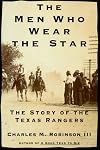
Now, I know what everyone is saying, “Oh no, not another book about Rangers.” But let me tell you, this is a book that has something going for it. Robinson has written a tale that captures the true feeling of the Rangers without becoming so enamored with them that he glosses over the less tasteful parts of their history. In the process, he also addresses eras of Ranger history not usually covered.
Robinson, who has written other books on Texas subjects, has crafted a fine, easily tackled book on the Rangers from the era when they were minutemen on horses to the days when they finally became a professional police agency. The book starts with the description of the first rangers (note the lower case ‘r’) of the empresario days. These settlers cum soldiers rode when called for little if any pay and about as much logistical support. This lack of money and supply seems to be as much of a hallmark of Ranger service as the Colt revolver of later years. Robinson’s tales of these days are well researched and heavily footnoted.
The book is hyped to include the Civil War and post-bellum eras of the Rangers, but I was disappointed with Robinson’s effort in this area. The Civil War era was especially sparse. It seems that nothing happened during those four years that was worth much telling. Perhaps this is because it was only four years, but maybe I was hoping for too much. The post-bellum era was better treated with various tales such as that of Dan Stuart’s Fistic show more Carnival (an early prize fight) which occurred near Judge Roy Bean’s saloon. The failings of the Rangers under Pa Ferguson and other cronyistic governors was also well treated.
One part of the book I particularly looked forward to was the treatment of the bad men in Texas in the late 1800s. The “Big Four,” as Robinson names them, included Sam Bass, John Wesley Hardin, John King Fisher, and Ben Thompson. After good discussions on Bass, Hardin, and Fisher and their demises, Robinson inexplicably simply notes Thompson’s death in passing. I was baffled and a bit disappointed.
However, the book as a whole was well written and definitely well-documented. show less
Robinson, who has written other books on Texas subjects, has crafted a fine, easily tackled book on the Rangers from the era when they were minutemen on horses to the days when they finally became a professional police agency. The book starts with the description of the first rangers (note the lower case ‘r’) of the empresario days. These settlers cum soldiers rode when called for little if any pay and about as much logistical support. This lack of money and supply seems to be as much of a hallmark of Ranger service as the Colt revolver of later years. Robinson’s tales of these days are well researched and heavily footnoted.
The book is hyped to include the Civil War and post-bellum eras of the Rangers, but I was disappointed with Robinson’s effort in this area. The Civil War era was especially sparse. It seems that nothing happened during those four years that was worth much telling. Perhaps this is because it was only four years, but maybe I was hoping for too much. The post-bellum era was better treated with various tales such as that of Dan Stuart’s Fistic show more Carnival (an early prize fight) which occurred near Judge Roy Bean’s saloon. The failings of the Rangers under Pa Ferguson and other cronyistic governors was also well treated.
One part of the book I particularly looked forward to was the treatment of the bad men in Texas in the late 1800s. The “Big Four,” as Robinson names them, included Sam Bass, John Wesley Hardin, John King Fisher, and Ben Thompson. After good discussions on Bass, Hardin, and Fisher and their demises, Robinson inexplicably simply notes Thompson’s death in passing. I was baffled and a bit disappointed.
However, the book as a whole was well written and definitely well-documented. show less
Lone Star Nation: How a Ragged Army of Volunteers Won the Battle for Texas Independence - and Changed America by H. W. Brands
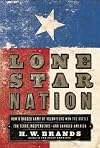
I just finished H.W. Brands’ Lone Star Nation: How a Ragged Army of Volunteers Won the Battle for Texas Independence and Changed America. This book is a history of Texas from the first American colonization of Texas until the annexation, with a brief chapter on post-annexation Texas to the Civil War. Brands has a highly readable style of writing, and this is makes for a very fast read. Even though the book itself is 526 pages, it only took me about a week and ½ of evening reading to get through it.
Brands hits the high points of the Mexican and Republic eras, but rarely gets into too much detail except with some of the major characters, such as Austin, Travis, and Houston. Other famous players, such as Bowie, Crockett, and Santa Anna, receive briefer, but interesting, treatment. I was pleased to see that Brands did not attempt to destroy such traditional heroes as Houston, Bowie, and Travis as is popular with historical revisionists like Eric Long (Duel of Eagles). He takes a realistic approach to those men and acknowledges that they were not the saints of early Texas legend, but also showcases their attributes.
Brands also does not delve far into controversial issues, such as the death of Crockett at the Alamo, or the bickering between Mexican Generals Filisola and Urrea after San Jacinto. Similarly, he glosses over complex actions, such as the Texian victory at San Jacinto without examining the reasons behind the Mexican Army’s total collapse.
I think that for what show more it is, a popular history for a broad audience, it is a very good book. It is readable, informative, and balanced. I could recommend this for anyone getting started in or interested in a broad overview of Texas history
It's not really about "How a Ragged Army won the Battle for Texas Independence and Changed America." Brands did not examine the battles of the Revolution in detail, and spent comparatively little time on the Revolution itself compared to the words spent describing the settlement of Texas. It's much more of a general history. I would probably subtitle it "How Anglo-americans Settled Texas and its Subsequent Revolution." show less
Brands hits the high points of the Mexican and Republic eras, but rarely gets into too much detail except with some of the major characters, such as Austin, Travis, and Houston. Other famous players, such as Bowie, Crockett, and Santa Anna, receive briefer, but interesting, treatment. I was pleased to see that Brands did not attempt to destroy such traditional heroes as Houston, Bowie, and Travis as is popular with historical revisionists like Eric Long (Duel of Eagles). He takes a realistic approach to those men and acknowledges that they were not the saints of early Texas legend, but also showcases their attributes.
Brands also does not delve far into controversial issues, such as the death of Crockett at the Alamo, or the bickering between Mexican Generals Filisola and Urrea after San Jacinto. Similarly, he glosses over complex actions, such as the Texian victory at San Jacinto without examining the reasons behind the Mexican Army’s total collapse.
I think that for what show more it is, a popular history for a broad audience, it is a very good book. It is readable, informative, and balanced. I could recommend this for anyone getting started in or interested in a broad overview of Texas history
It's not really about "How a Ragged Army won the Battle for Texas Independence and Changed America." Brands did not examine the battles of the Revolution in detail, and spent comparatively little time on the Revolution itself compared to the words spent describing the settlement of Texas. It's much more of a general history. I would probably subtitle it "How Anglo-americans Settled Texas and its Subsequent Revolution." show less