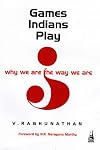
This book is an accurate description of the psychological reflexes a majority of Indians would have given any social or business situation using statistics/mathematics as a tool to simplify understanding. It is sad that the negative character traits that the author talks about in this book are all very true and are so commonly found in India that it is okay for the author to express them as a generalistic view. It is a great attempt at putting forward explicitly and simply the flaws of the modern Indian value system.

I have just finished chapter six of this book. Being somewhat interested in science and technology/research, I connect with this chapter the most. The author speaks about the lack of scientific inclination, the lack of humility that encourages learning and experimentation with due diligence (which is replaced by a nonchalant arrogance behind a veil of age or seniority) and of an "intellectual parasitism" that has hampered India's forays in research and development of new technology. I cannot stop myself making a connect between this and modern India's inclination to manufacturing rather than research and design, the poor management of intellectual property rights and aspects that relate to encouraging innovation and invention and the insecurity inventors and researchers face in India. The author rightly points out that most research and development in India is based, even today, on mimicry and/or a sluggish inertia that clings on to archaic design and hapless efforts to increase the functionality of old tools with minimal and/or impractical modifications which sometimes are no longer applicable to the productivity needs modern world. Rightly claimed, hypocrisy and arrogance are rampant in India (especially among the "intellectuals") along with a lack of civic sense and concern for society or collective development. A segmentation of society based on cast, religion and language, though disregarded by the constitution, is hard wired into the thought process of the masses. show more The book is an eye opener to the underlying psychology that has driven India for most of the past millennium; Naipaul captures its many facets without being stereotypical and provides a truly damning (as Time magazine puts it) account of contemporary India. show less