The style of the book is new, telling story in a comical form. But the story itself didn't compel me to pick up its another volume.
The Truth Is a Cave in the Black Mountains: A Tale of Travel and Darkness with Pictures of All Kinds by Neil Gaiman
Short, crisp, filled with a feeling that something magical/unreal is about to happen. Nice turn of events towards the end, which then felt, as if it was all pre-planned. The short story nicely tells the greed of humans and the consequences that come.
Pleasant, steady, soft and heart-warming.
There must be someone somewhere out there with whom the food is tasty. And children always bring out the best in us.
From the love for food, and eating together, the story progresses into dealing with more delicate feelings and tastes. From a past that leaves us scared, to a brighter future where we can relieve ourselves. From the fear of losing someone and the pain that comes with it, to the love of bearing that pain and enjoying the few moments we have together.
There must be someone somewhere out there with whom the food is tasty. And children always bring out the best in us.
From the love for food, and eating together, the story progresses into dealing with more delicate feelings and tastes. From a past that leaves us scared, to a brighter future where we can relieve ourselves. From the fear of losing someone and the pain that comes with it, to the love of bearing that pain and enjoying the few moments we have together.
I like the gory details that Dan Brown puts into his works. Now that it is being made into a series (not a movie), I expect to see the same thrill that runs down in the book to be presented on the screen. However, besides creating a close-to-be-true fiction out of real buildings, artifacts, locations, communities, etc., the charm of Brown is fading away for me. After reading Angels and Demons, and Origin, I can now predict that a particular thing would not be revealed in this or that chapter. And I know that when the next chapter will shift to an entirely different person. Even the ending plots are similar. I am in an in-between state where I like the vivid imagery conveyed by the sentences glorified with numerous feelings and adjectives, but at the same time I am frustrated to read those lines conveying repetitive events. Overall, if I had read this book without knowing some of the works of Dan, it would certainly have blown me away. Yet, I can assure that it is not a bad read either.
Learn Python 3 the Hard Way: A Very Simple Introduction to the Terrifyingly Beautiful World of Computers and Code (Zed Shaw's Hard Way Series) by Zed Shaw
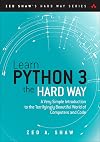
There is nothing hard about it if you are able to follow instructions that the author has laid out for you.

This book is an emotional roller coaster ride. I liked that it made me laugh in the end too! I hugged this book tight and close to me for a while because I knew Aristotle and Dante live inside this book. They are there. They are safe there. A lot of Aristotle is in me too along with some part of Dante. But that isn't safe as the book. I can preserve them in the book. I can cherish and be happy about this sincere love story. But can I preserve myself? Change can be hard. Ari was able to change. And what a remarkable character development it was! I am trying too. Thank you for this book. It did help me grow and will continue to do so. A few lines and moments from the book pop up at times and help me relax and control myself in the moment.

What was this? Apart from the description of a dream of a child, I do not find any value in any of its statements.
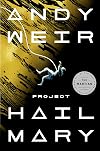
It was a pleasant read, althought there were sections which I read fast, not putting in enough concentration on them. The book is highly factual and detailed in its scientific adventures. It is kinda a "nerdy" book and that's what I liked it for most of the times that it didn't just feel superficial, it worked through the problems "scientifically" but there were moments where it overdid and it felt annoying and stretching. Overall, I enjoyed it, especially the last couple of chapters where the pace picks up very fast and makes you bound. Also the first half of the book was more interesting than the later half.
"math is procedure, memory is storage. they are not thinking. Thinking is problem, solution"
It is obvious fact but it made me think a lot, because if I see a guy doing calculations fast (mostly the sabji vala or vendors or normal people), then I feel like they are "intelligent". However, I also, always tell people that I can solve more involved problems (like integration) than arithmetic.
I felt very good when calculators (math) were allowed in college exams because the point was to "solve "problems". Not "calculate". Same with open book exams (storage), the concept is to have access to information and convert it into a "solution".
"math is procedure, memory is storage. they are not thinking. Thinking is problem, solution"
It is obvious fact but it made me think a lot, because if I see a guy doing calculations fast (mostly the sabji vala or vendors or normal people), then I feel like they are "intelligent". However, I also, always tell people that I can solve more involved problems (like integration) than arithmetic.
I felt very good when calculators (math) were allowed in college exams because the point was to "solve "problems". Not "calculate". Same with open book exams (storage), the concept is to have access to information and convert it into a "solution".
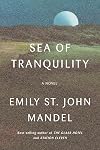
This was the first book I could finish without forcing myself "to read". The language is very simple.
There are very good paragraphs instead of sentences, that I had to highlight whole paragraphs instead of a sentence. This was also new for me. The beauty lies in the paragraph as a whole, not in its individual sentences.
What I also liked about the author was her fore-shadowing of the "phrases" she wanted for us to believe in. For example, she would describe X thing and make us resonate with her reasoning and then she would describe Y thing (which is a superset of X) and then she doesn't show the proof. By then, the reader has already known that X is proven, so why not Y?
I disliked that she changes the way of her writing, italics, first person, third person, conversations, book inside book, etc etc. Maybe it's just my dislike.
Overall, an enjoyable and quick read.
There are very good paragraphs instead of sentences, that I had to highlight whole paragraphs instead of a sentence. This was also new for me. The beauty lies in the paragraph as a whole, not in its individual sentences.
What I also liked about the author was her fore-shadowing of the "phrases" she wanted for us to believe in. For example, she would describe X thing and make us resonate with her reasoning and then she would describe Y thing (which is a superset of X) and then she doesn't show the proof. By then, the reader has already known that X is proven, so why not Y?
I disliked that she changes the way of her writing, italics, first person, third person, conversations, book inside book, etc etc. Maybe it's just my dislike.
Overall, an enjoyable and quick read.

The overly elaborate description of the events and places is, most of the times, enjoyable, but also, sometimes, skip-able. It uses educated choice for words to pin point an emotion/description. But the vocabulary is often, for me, unfamiliar, so many a times, I can "feel" what the author is conveying, but not "feel it enough". There are descriptions where I feel that if only I knew the geography of the area first hand, I would be able to appreciate and be one with the contents the author has painted. It is like seeing the cake on display but never tasting it. I appreciate it but I can never appreciate it well enough.
Yes, it does make my heart beat faster at moments and make me swell up at others. There are parts too which, although I have never experienced them, hit me up as nostalgia. Overall, when I finished the book, it felt like I finsihed a lifestory. And this story could be well relatable. I would like to re-read it again and highlight the sentences that I refrained from doing in the first reading. I want to devour those lines. And hope that someday, I might be able to cherish them first-handed.
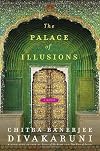
The initial half of the book is fast paced and binding. However, the second half starts to become a drag, sometimes repeting the thoughts of Panchali over and over. However, it is a very good take on an ancient tale and has numerous "to-ponder-over" lines that I have highlighted throughout the book.
The story is debatable, as often these tales are. It leaves me with questions that I don't want to seek answers for, yet.
The story is debatable, as often these tales are. It leaves me with questions that I don't want to seek answers for, yet.
I want to read it again! This book is more like "Secure coding in C" along with the introductions to all the programming constructs in C. However, it doesn't merely introduce a construct but also tells about its proper use, pitfalls, limitations, correlations, etc. This is not a very beginner-friendly book. But it does so good for a person who already has some knowledge about C. This is my second C book and I have started noticing changes in the way I code now in C. This book certainly has helped me to not only improve my own code (and become a better programmer as in having a holistic view of things) but also has greatly helped me to review others' code.
Also, as a matter of fact, this book is a very good reading experience! I almost completed the entire book traveling to and fro from office to home in bus. The language is simple and it doesn't expect you to code along while reading, however, it makes you to think on "many" edge cases in just very simple lines of code (max 10-20).
Also, as a matter of fact, this book is a very good reading experience! I almost completed the entire book traveling to and fro from office to home in bus. The language is simple and it doesn't expect you to code along while reading, however, it makes you to think on "many" edge cases in just very simple lines of code (max 10-20).
For me, the story line seemed forced. It appears as if the story line is crafted based on the motive to make the protagonist succeed instead of the events / story itself. If it was created as a story-first narrative in which the protagonist tries to fit in and makes her way to success, it would have been more enjoyable, but it goes the other way round by making the story revolve around her. The plot isn't boring in spite of being predictive.
The character development happens fast and always brings a positive effect. However, the character development of side characters is very under cooked, sometimes non-existent. It is very odd to see certain characters like Marcus (? he kid who was put in stasis) and Katrina's parents, Aunty Floresta almost disappear later in the book, or are spoken of very little. Only Miss Satomi and Katrina form the centre of character play, even Lan comes off as a side kick at many places.
Science fiction is used without any creative engines. We all know star gates, energy from tectonic plates, holographic AI (Shirley), shape shifting, etc. I didn't find any new (hypothetical) concept. Religion is used forcibly. What was the need of Hell anyways? Soul trading, demon, what? It all felt very under-cooked if you look broadly at the story line. Nothing was debated about. Everything was accepted to exist without giving an explanation of the co-existence. Tremon was able to reach the speed of the spaceship just because he was a demon doesn't comprehend show more well enough. It is acceptable to read but if a backdrop of the technique used by tremon was justified, it would be better. Lan was able to sense the presence of demon also didn't make any sense if we see it from the perspective of Lan (who is portrayed as a being from a superior civilization). There could have been a more scientific explanations (thought hypothetical) of the symbiosis of science and religion (Oh, how I yearn for an explanation like Angels & Demons, at this point!).
Astrid's housekeeping was perfect and one can always crave for a homekeeper like Astrid. Her food made an actual imagery while reading. Book is filled with visual descriptions. There are simple lines which carry more depth when read along with the context of previous lines and at some places the author has made a very good creation of impact by subtly changing the context from one to another.
For example,
> "Legacy. It mattered for burritos. For donut shops. For violin."
> "Will you be giving her additional discipline?” “It depends upon her behavior, but probably not. Knowledge is often the worst punishment.”
> "Shirley, you can’t control how people see you. All you can do is accept it, right?”
Some of the other good lines are -
> "Even as the piece progresses from season to season, from movement to movement, there is no anxiety about how the next section may or may not fit. Instead, the whole piece is always realized and complete—in that note."
> "even if Miss Grohl wasn’t perfect, might she not be enough?"
Overall, it was an easy and NOT a boring read. Although it had very less elements of surprise, it did entertain well enough. show less
The character development happens fast and always brings a positive effect. However, the character development of side characters is very under cooked, sometimes non-existent. It is very odd to see certain characters like Marcus (? he kid who was put in stasis) and Katrina's parents, Aunty Floresta almost disappear later in the book, or are spoken of very little. Only Miss Satomi and Katrina form the centre of character play, even Lan comes off as a side kick at many places.
Science fiction is used without any creative engines. We all know star gates, energy from tectonic plates, holographic AI (Shirley), shape shifting, etc. I didn't find any new (hypothetical) concept. Religion is used forcibly. What was the need of Hell anyways? Soul trading, demon, what? It all felt very under-cooked if you look broadly at the story line. Nothing was debated about. Everything was accepted to exist without giving an explanation of the co-existence. Tremon was able to reach the speed of the spaceship just because he was a demon doesn't comprehend show more well enough. It is acceptable to read but if a backdrop of the technique used by tremon was justified, it would be better. Lan was able to sense the presence of demon also didn't make any sense if we see it from the perspective of Lan (who is portrayed as a being from a superior civilization). There could have been a more scientific explanations (thought hypothetical) of the symbiosis of science and religion (Oh, how I yearn for an explanation like Angels & Demons, at this point!).
Astrid's housekeeping was perfect and one can always crave for a homekeeper like Astrid. Her food made an actual imagery while reading. Book is filled with visual descriptions. There are simple lines which carry more depth when read along with the context of previous lines and at some places the author has made a very good creation of impact by subtly changing the context from one to another.
For example,
> "Legacy. It mattered for burritos. For donut shops. For violin."
> "Will you be giving her additional discipline?” “It depends upon her behavior, but probably not. Knowledge is often the worst punishment.”
> "Shirley, you can’t control how people see you. All you can do is accept it, right?”
Some of the other good lines are -
> "Even as the piece progresses from season to season, from movement to movement, there is no anxiety about how the next section may or may not fit. Instead, the whole piece is always realized and complete—in that note."
> "even if Miss Grohl wasn’t perfect, might she not be enough?"
Overall, it was an easy and NOT a boring read. Although it had very less elements of surprise, it did entertain well enough. show less
An academic book, no doubt that it is taught in universities in India and abroad. The flow of the book is like a butter melting slowly and changing its texture gradually. The shift in the theme and story is natural and "one-thing-leads-to-another" type. At first, I was confused about the era in which the story has been set (but later found out from the back cover of the book that it was set in an era which is just after the Independence of India), because, if you read it, it is still relevant in the present era too (well, for the most of the parts!). You can still find people who can trace back their roots (or someone in their ancestors) who have similar stories. Yet, many people hail from such backgrounds even today. The villages have been developed since then, however, the elements of imagery that Markandaya puts for a typical village are very ubiquitous even now.
> India lives in many timelines simultaneously.
> - *Vinay Lal, Lec. 1 "India After Independence"*
It is one thing to know about the plot and what elements the author could have decided to portray before reading the novel, just from its description, but it is an all-together "fulfilling" read after the book finishes. Being an Indian and seeing all the context of the book first-hand around me, relates me more to the book than it does to *skip* certain paragraphs. Markandaya has depth in her lines throughout the book at several places and she does that in a way that is simple and yet arouses complex thoughts. show more Again, it reminds me of Vinay's words -
> *Complexity of prose and complexity of arguments therein are two different things. The prose can be simple, but that doesn't mean that the arguments it raises are simple too.*
There are times when the reader expects that the protagonist somehow does something extraordinary or something extraordinarily good happens to them. But it is an ordinary story of ordinary people and the author doesn't make it fantasy in any way, which I liked the most. Yes, there were times, when I hoped that the misery of people in the book vanish away magically, but nothing magical happens. People toil hard and hard, and either their sufferings diminish for a while or they diminish themselves. Yes, it is dark to put it in this way, but it is how it is in real life. At one place in the story when the parents arrive at the temple, I wish the Gods to do something to unburden their plight, however, unfortunately (or fortunately?) that doesn't happen (or does it? Well, we can debate on that too.).
One can write essays and debate on many of the social topics pointed out directly or indirectly throughout the book. One such topic of having too many mouths to feed and too little money to do so comes to my mind. While it logically "is" counterproductive to have more children than what one is capable of feeding, yet, I want to point out some factors which one can look up to for an "in-favour" of the statement. If we look at the era just after the independence, then we will find that the average life expectancy of people, in general, is as low as [32 years](https://en.wikipedia.org/wiki/1951_Census_of_India). Therefore, having more of a kind can be better than having none eventually. As is showcased in the book, 2 of her children have gone in pursuit of higher-wage work in the city and never returned, 2 of them dead, 1 missing (most likely spoilt by alcohol abuse), 1 who herself has an illegitimate child and cannot provide on her own. Only 1, who earns meagre, takes care of the parent and siblings. If there weren't too many hands, maybe Rukmani would have been abandoned too.
Although the story is set in Southern India, nothing can distinguish that it is distinct from that of Northern India. Poverty, urbanization, industrialization, migration, hunger, unemployment, illiteracy, and so forth and so on, were (and are) themes throughout the book and India.
Markandaya also makes a very sharp comparison of Rukmani to Kenny at times during their conversations. Some of the comparisons are similar, others are contrasting. Although certain essays and college teachings might portray Kenny as a face of British / urbanization / westernization / not-in-a-very-good-sense, yet, I tend to disagree with those thoughts. Sure, he was a doctor and a white man, but he was no less Indian than either Rukmani or any of the villagers. Yes, he had income more than others, but he too had times when his construction of the hospital was halted several times due to either unavailability of materials, manpower, money, or geopolitics. Were not these same factors affecting Nathan's family and his crops? Unavailability of materials (rains had failed several times, they had to sell and buy seeds at higher rates), unavailability of manpower (none of Nathan son's worked in the fields), money (they never had plenty), geopolitics (the land which sheltered them was to be sold to the tannery). Yet, Kenny was a visionary (or maybe a figure among the cyphers), nevertheless, he was different. Where Rukmani couldn't see the future beyond their current and next harvesting season, Kenny saw an opportunity for the hospital. Rukmani was literate and she did teach her children the basics, but that wasn't out of a vision to earn more or work a job different than the fields. When 2 of her sons had caused trouble demanding more wages in the tannery (education became a dangerous weapon that hung like knives on the children themselves) and when they were leaving for more income, a preference of less and together-ness overshadowed the anticipation of never seeing them again (of course, that is true). Even after losing all their belongings in the temple, they entrusted their money to Puli, where I remembered Kenny's lines saying, *"You people are a fool, you never learn"*. However, that luckily didn't happen. However, a man like Kenny didn't belong to "his" family, he was for the people of the village, yet he was never one of them. Rukmani "belonged" and at times was "happier" than Kenny could have ever been.
Various other cultural elements are portrayed which can be studied from an "academic" perspective, like a culture of hospitality which is given even to strangers; a culture of street food and street life which is evident across India widely even today; a culture of wearing new clothes on festivals; a culture of receiving help from the mass (gatherings of people to help a cause); a culture of biological and *sworn* family (Puli was adopted as their own, not out of pity, or for the sake of adoption). show less
> India lives in many timelines simultaneously.
> - *Vinay Lal, Lec. 1 "India After Independence"*
It is one thing to know about the plot and what elements the author could have decided to portray before reading the novel, just from its description, but it is an all-together "fulfilling" read after the book finishes. Being an Indian and seeing all the context of the book first-hand around me, relates me more to the book than it does to *skip* certain paragraphs. Markandaya has depth in her lines throughout the book at several places and she does that in a way that is simple and yet arouses complex thoughts. show more Again, it reminds me of Vinay's words -
> *Complexity of prose and complexity of arguments therein are two different things. The prose can be simple, but that doesn't mean that the arguments it raises are simple too.*
There are times when the reader expects that the protagonist somehow does something extraordinary or something extraordinarily good happens to them. But it is an ordinary story of ordinary people and the author doesn't make it fantasy in any way, which I liked the most. Yes, there were times, when I hoped that the misery of people in the book vanish away magically, but nothing magical happens. People toil hard and hard, and either their sufferings diminish for a while or they diminish themselves. Yes, it is dark to put it in this way, but it is how it is in real life. At one place in the story when the parents arrive at the temple, I wish the Gods to do something to unburden their plight, however, unfortunately (or fortunately?) that doesn't happen (or does it? Well, we can debate on that too.).
One can write essays and debate on many of the social topics pointed out directly or indirectly throughout the book. One such topic of having too many mouths to feed and too little money to do so comes to my mind. While it logically "is" counterproductive to have more children than what one is capable of feeding, yet, I want to point out some factors which one can look up to for an "in-favour" of the statement. If we look at the era just after the independence, then we will find that the average life expectancy of people, in general, is as low as [32 years](https://en.wikipedia.org/wiki/1951_Census_of_India). Therefore, having more of a kind can be better than having none eventually. As is showcased in the book, 2 of her children have gone in pursuit of higher-wage work in the city and never returned, 2 of them dead, 1 missing (most likely spoilt by alcohol abuse), 1 who herself has an illegitimate child and cannot provide on her own. Only 1, who earns meagre, takes care of the parent and siblings. If there weren't too many hands, maybe Rukmani would have been abandoned too.
Although the story is set in Southern India, nothing can distinguish that it is distinct from that of Northern India. Poverty, urbanization, industrialization, migration, hunger, unemployment, illiteracy, and so forth and so on, were (and are) themes throughout the book and India.
Markandaya also makes a very sharp comparison of Rukmani to Kenny at times during their conversations. Some of the comparisons are similar, others are contrasting. Although certain essays and college teachings might portray Kenny as a face of British / urbanization / westernization / not-in-a-very-good-sense, yet, I tend to disagree with those thoughts. Sure, he was a doctor and a white man, but he was no less Indian than either Rukmani or any of the villagers. Yes, he had income more than others, but he too had times when his construction of the hospital was halted several times due to either unavailability of materials, manpower, money, or geopolitics. Were not these same factors affecting Nathan's family and his crops? Unavailability of materials (rains had failed several times, they had to sell and buy seeds at higher rates), unavailability of manpower (none of Nathan son's worked in the fields), money (they never had plenty), geopolitics (the land which sheltered them was to be sold to the tannery). Yet, Kenny was a visionary (or maybe a figure among the cyphers), nevertheless, he was different. Where Rukmani couldn't see the future beyond their current and next harvesting season, Kenny saw an opportunity for the hospital. Rukmani was literate and she did teach her children the basics, but that wasn't out of a vision to earn more or work a job different than the fields. When 2 of her sons had caused trouble demanding more wages in the tannery (education became a dangerous weapon that hung like knives on the children themselves) and when they were leaving for more income, a preference of less and together-ness overshadowed the anticipation of never seeing them again (of course, that is true). Even after losing all their belongings in the temple, they entrusted their money to Puli, where I remembered Kenny's lines saying, *"You people are a fool, you never learn"*. However, that luckily didn't happen. However, a man like Kenny didn't belong to "his" family, he was for the people of the village, yet he was never one of them. Rukmani "belonged" and at times was "happier" than Kenny could have ever been.
Various other cultural elements are portrayed which can be studied from an "academic" perspective, like a culture of hospitality which is given even to strangers; a culture of street food and street life which is evident across India widely even today; a culture of wearing new clothes on festivals; a culture of receiving help from the mass (gatherings of people to help a cause); a culture of biological and *sworn* family (Puli was adopted as their own, not out of pity, or for the sake of adoption). show less
The book takes a new approach rather than old aged methods. It challenges the frameworks and ideologies setup in software development since ages and debates prod and cons of either side. However, it doesn't try to seek a middle ground for as long as possible. It tries to uphold the virtues it sets. It is an enjoyable read since it doesn't require much cognitive load, which is one of the guiding principles outlined in the book too. It has good advice for modern software development.
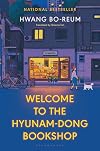
It's pleasant. Relaxing. It gives good thought afterwards. Like a reflection. Introspection. There are 5-6 characters overall and each of them fit into the story well. None of the characters are special but each has a centre to be pulled towards.
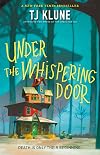
This is the book that reminds me of Neil Gaiman's book The Ocean at the End of the Lane. Because it describes events, people and places with such vivid clarity that it leaves an impression upon my mind, the same way as Gaiman's book had left. There is warmth in those images, like a safe place, even though some events could be disturbing and horrifying, yet the magic of the environment the author has setup makes sure that things will be normal in the end. It is expected, but it doesn't mean it is boring. The journey to reach the end through each person, is unique.
The queerness in this book is so subtle that it can be easily passed as non-existent. The slight romance budding in the mid of the book is gentle, non-vulgar, non-overly enthusiastic to be the central theme of the book. It progresses and matures, along with the other elements of the story, never consuming the bigger plot.
The book also sets clear boundaries between characters and the characters respect that. This is particularly new to me because this is what is needed in the post modern age where everything and every person is instantly accessible, exploitable. But does one really have to? Shouldn't one preserve and respect others lines, and in return get the same treatment?
and,
There are not many characters, similar to the book Welcome to the Hyunam-Dong Bookshop, it builds a few group of people, explores their lives, but unlike the other book, it lives in the "present" moment a lot more than in the past. And I think this is the premise the book is offering us. "And a death spent in building a home!"
and,
The bonds between all people are unique, and equally important, there is no person who is more than other. Sometimes, I have wondered if even the main two characters got their full screentime hahaha.
It goes over other post-modern age problems which are a must for spreading awareness, like panic attacks.
and,
At one point, I knew what Nelson would say to Hugo, but the author really did surprise me in the way it was presented, showing that each individual is capable on their own, they are "them" before they meet someone and become "more".
and,
It also celebrates being "human", something, which is more important than ever, in this pre-agentic world, knowing how we are different than autonomy.
and,
and,
and,
and,
The queerness in this book is so subtle that it can be easily passed as non-existent. The slight romance budding in the mid of the book is gentle, non-vulgar, non-overly enthusiastic to be the central theme of the book. It progresses and matures, along with the other elements of the story, never consuming the bigger plot.
The book also sets clear boundaries between characters and the characters respect that. This is particularly new to me because this is what is needed in the post modern age where everything and every person is instantly accessible, exploitable. But does one really have to? Shouldn't one preserve and respect others lines, and in return get the same treatment?
p. 105
You're just not hearing what you want to hear. I know it might be hard to understand, but not everything is about you, Wallace. You have your own story. She has hers. If you’re meant to know what it is, you will.
and,
show more
p. 300
He
didn’t know if what they’d done had been enough. He wasn’t foolish enough to think he’d alleviated her pain, but he hoped she’d at least have the foundation to start to build again if she wanted.
There are not many characters, similar to the book Welcome to the Hyunam-Dong Bookshop, it builds a few group of people, explores their lives, but unlike the other book, it lives in the "present" moment a lot more than in the past. And I think this is the premise the book is offering us. "And a death spent in building a home!"
p. 249
And that was the rub, wasn’t it? A life built upon inconsequential things made important simply because he desired them to be.
and,
p. 108
I’ve learned from my mistakes, even as I continue to make new ones.
The bonds between all people are unique, and equally important, there is no person who is more than other. Sometimes, I have wondered if even the main two characters got their full screentime hahaha.
It goes over other post-modern age problems which are a must for spreading awareness, like panic attacks.
p. 249
It’s like a panic attack. I can try to explain it to you, but unless you’ve ever had one yourself, you’ll never understand just how harsh they can be. And though I’m surrounded by death, I can never understand what it does to a person because I’ve never died.”
and,
p. 250
I should’ve second-guessed some of the decisions I made. [...] We second-guess everything because it’s in our nature. People with anxiety and depression just tend to do it more.
At one point, I knew what Nelson would say to Hugo, but the author really did surprise me in the way it was presented, showing that each individual is capable on their own, they are "them" before they meet someone and become "more".
p. 367
You’ve found it in Mei and Wallace, but even before them, you were already on your way. You've built this life, this wonderful life with your own hands.
and,
p. 216
“I can handle it.” “I know you can. I never doubted that for a second. But it’s okay not to be okay.”
It also celebrates being "human", something, which is more important than ever, in this pre-agentic world, knowing how we are different than autonomy.
p. 134
Curiosity, maybe? A desire to understand that bordered on desperation. I told myself that if I did this, I might find answers to questions I didn’t even know I had.
and,
p. 139
It was a start. And it terrified the hell out of him.
and,
p. 239
[...] that he didn’t really believe in fate. Hugo laughed. “That’s okay. I’ll believe in it enough for the both of us. [...]”
and,
p. 266
People like him, they’re rare. There’s beauty in the chaos, if you know where to look for it.
and,
show less
p. 345
Everyone loses their way at some point, and it’s not just because of their mistakes or the decisions they make. It’s because they’re horribly, wonderfully human.

I think one cannot get the depth of the writing in just one reading of this epic poem. It reflects from the writing that the poet has put an enormous amount of research and effort into this masterpiece. Speaking from the POV of Karna and Krishna, and sometimes other key players in the epic war, the poet has conflicted the reader not to side with any one character. Although there's an apparent liking towards Karna and his praise throughout, it is left to the reader to understand how things had played out in the epic war. There are a number of POVs of the war, and it is good to know that one from the POV of Karna exists. Again, the writing has a lot to take away from. Some pages are like a ballad, while others are more like proverbs. There's not enough time to let the reader get bored of one style and of perpetual rhyme. The rhyme and rhythm breaks for good. So that the main rhythm is emphasized as it appears. It is a hard Hindi. And at times, it looks pure, unlike the Hindi of today.