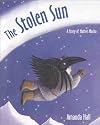
The Stolen Sun is a traditional story about Raven creating animals and people and giving them the sun.
When the people become disconnected and no longer show respect to each other, Raven takes the sun back. Raven’s son, Little Darkness discovers the sun and Raven must save him from a fall and returns the sun. The story is serious and informational, but the illustrations are bright, soft, and help support the story. This story isn’t one that I’d reach for as a first choice, but deserves a space in primary libraries.
Alaska Connection: Raven, Setting, Animals
Activity: discuss respect, explore traditional Alaskan Native values, discuss consequences
When the people become disconnected and no longer show respect to each other, Raven takes the sun back. Raven’s son, Little Darkness discovers the sun and Raven must save him from a fall and returns the sun. The story is serious and informational, but the illustrations are bright, soft, and help support the story. This story isn’t one that I’d reach for as a first choice, but deserves a space in primary libraries.
Alaska Connection: Raven, Setting, Animals
Activity: discuss respect, explore traditional Alaskan Native values, discuss consequences
How Snowshoe Hare Rescued the Sun is a simple story from the Yuit people who share language and stories with their Inuit relatives in Alaska. The story tells the tale of demons who stole the sun and drag it back to their cave. Several animals attempt to get the sun back, but only snowshoe hare is successful and when he kicks the sun back into the sky he also creates the moon and starts. The illustrations have a very traditional feel to them which helps add to the traditional feel of the story. The tone is serious, but also inspirational. The illustrations are colorful though simple and easy to understand. I don’t know if I would pick this book up again, but I do think there is value in the connection of cultures.
Alaskan Connection: Yuit people and their relation to Inuit people, Tundra Animals
Activity: Discuss and learn about Yuit people and how they are related to Inuit people, explore Alaskan History, and learn about and share projects based on tundra animals.
Alaskan Connection: Yuit people and their relation to Inuit people, Tundra Animals
Activity: Discuss and learn about Yuit people and how they are related to Inuit people, explore Alaskan History, and learn about and share projects based on tundra animals.
The Hungry Giant of the Tundra is a traditional story with a giant similar to that of Jack and the Giant Beanstalk. The story is about Yupik children playing in a field who chose to not listen to their parents and go inside when it was getting dark. Consequently, the giant was able to find them and takes them to be eaten. With the help of animals, the children were able to escape and the giant falls into the ocean and is swept to see. The illustrations are rather dull in regard to color, but they capture a lot of traditional Yupik clothing and Alaskan scenery and animals. The tone of the book feels cautionary, like a warning to children who do not follow directions. It’s not a book I would pick up again unless I was doing a compare and contrast lesson between tales of different cultures.
Alaskan Connection: Yupik children, Alaskan animals
Activity: Compare and contrast tales across cultures featuring giants, discuss following rules, safety, and consequences.
Alaskan Connection: Yupik children, Alaskan animals
Activity: Compare and contrast tales across cultures featuring giants, discuss following rules, safety, and consequences.
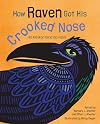
How Raven Got His Crooked Nose is a confusing story about Raven loosing his nose and it being found by a woman who uses it as a tool. The raven turns himself into a human and creates sand people to scare the people out of the village so that he can find his nose. When he does it is worn and crooked, but he still puts it on. The illustrations are confusing and set up like a comic book. Combining that with the fact that the story seemed to leave out important pieces like how the raven lost his beak in the first place made the story confusing even for me as an adult. The tone of the book was cautionary but lost its impact due to the confusion. I will not be using this book in the future.
Alaskan Connection: Raven, Dena’ina, salmon, Alaskan tools
Activity: discuss the importance of patience and doing things correctly
Alaskan Connection: Raven, Dena’ina, salmon, Alaskan tools
Activity: discuss the importance of patience and doing things correctly
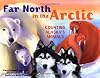
Far North in the Arctic: Counting Alaska’s Animals is a poetic book that uses rhyming and pattern along with counting and Alaskan animals. The illustrations are more realistic than other picture books, colorful, and show Alaskan animals in numbers to support the counting and text. The tone is educational. I would recommend this book be included in all primary libraries.
Alaskan Connection: Alaskan Animals
Activity: Counting, learn about Alaskan animals
Alaskan Connection: Alaskan Animals
Activity: Counting, learn about Alaskan animals

The Gnome from Gnome is the story of a gnome who is cold and in Alaska. It tells his journey through Alaska and the ways he tries to get warm including shouting and a fire that catches his beard on fire. The gnome decides to use magic to turn everything in to gold in hopes he can trade it to the humans for their secret on how to stay warm. The illustrations are simple, but effective in supporting the story and giving imagery to the words. The tone of the book is adventurous.
Alaskan Connections: Nome, Alaska, Alaskan Animals, Northern Lights, Gold Rush
Activity: discuss temperature, appropriate dress for different types of weather
Alaskan Connections: Nome, Alaska, Alaskan Animals, Northern Lights, Gold Rush
Activity: discuss temperature, appropriate dress for different types of weather
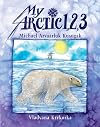
My Arctic 1, 2, 3 is a simple story that incorporates counting with Alaskan animals. The story counts to 10 in sequence, but then jumps to 20, 100, and then 1,000,000. The illustrations are colorful, water-color like, and sure to engage children through their depictions of Alaskan scenery and animals. The tone is educational. I will include this book in my library.
Alaska Connections: Alaskan animals
Activity: Practice number recognition and counting, Alaskan Animals
Alaska Connections: Alaskan animals
Activity: Practice number recognition and counting, Alaskan Animals
Non-Fiction, Picture Book, Alphabet and Animals
Asper-Smith, Sarah. Have You Ever Seen a Smack of Jellyfish? Little Bigfoot, 2010.
UNP. Primary.
Have You Ever Seen a Smack of Jellyfish is a simple, but cute alphabet book that goes through the alphabet letter by letter and talks about different groups of animals that begin with that letter. The illustrations are simple, but colorful and engaging for young readers. I will include this book in my library.
Alaskan Connections: Animals that can be found in Alaska.
Activity: Practice and learn the alphabet, learn about different animals and their group names.
Asper-Smith, Sarah. Have You Ever Seen a Smack of Jellyfish? Little Bigfoot, 2010.
UNP. Primary.
Have You Ever Seen a Smack of Jellyfish is a simple, but cute alphabet book that goes through the alphabet letter by letter and talks about different groups of animals that begin with that letter. The illustrations are simple, but colorful and engaging for young readers. I will include this book in my library.
Alaskan Connections: Animals that can be found in Alaska.
Activity: Practice and learn the alphabet, learn about different animals and their group names.

Raven and the Tide Lady is a cute story about a raven trying to get food from the ocean, but he can’t because the tide lady never lets the tide go low. Raven pokes the tide lady with a sea urchin until she lets the tide down and then all of ravens animal friends get to eat. The tide lady agrees to let the tide rise and fall so the animals can eat. This story is simple, but very fun. These illustrations are by far the most beautiful I have seen in any of the books I have read so far. I would absolutely recommend this book and will use it as a read-aloud in my classroom.
Alaska connections: sea life, tides, Alaskan Native culture
Activity: Discuss and explore the cause of tides, take a field trip to the beach during low tide to explore, discuss and learn about the food sources that come from the ocean and how to harvest them
Alaska connections: sea life, tides, Alaskan Native culture
Activity: Discuss and explore the cause of tides, take a field trip to the beach during low tide to explore, discuss and learn about the food sources that come from the ocean and how to harvest them

Raven Makes the Aleutians is a simple story about a raven who is flying across the ocean and needed a place to rest. He rests upon some seaweed where he befriends a sea otter who he asks to dive to the bottom of the ocean to gather stones. The raven then drops the stones as he flies over the ocean and as he does they become the islands we now know as the Aleutians. The illustrations are vivid and detailed. The story is simple and intriguing and I would recommend keeping the book in your library.
Alaska connections: raven, sea otters, Aleutian Islands
Activity: discuss and explore sea life, learn about how islands are formed, look at the Alaskan map to identify the Aleutian Islands and look for other islands on the map.
Alaska connections: raven, sea otters, Aleutian Islands
Activity: discuss and explore sea life, learn about how islands are formed, look at the Alaskan map to identify the Aleutian Islands and look for other islands on the map.
Raven Brings Us Fire is a simple creation story about raven and how he brought fire to people when he drops an ember that burns half of his beak off. The ember fell to earth and created fire with stone and wood.
Alaska connections: ravens, Alaska Native culture
Activity: discuss fire safety
Alaska connections: ravens, Alaska Native culture
Activity: discuss fire safety

The Woman Who Married the Bear is an adorable story about a woman who is out picking blueberries when she encounters a bear who has disguised himself as a man. The woman follows the bear back to his cave and they are married, but the bear warns her to never leave the cave. When she does, she realizes he is not a man, but a bear and her brothers come to save her. The bear will not hurt his brother-in-laws and in turn they respect him and his fur. The illustrations are beautiful, full or color, and bring life to the story. This story was engaging and was one of my favorite stories and I would use it as a read-aloud.
Alaskan connection: bears, Alaskan Native culture, foraging, harvesting, respect for animals
Activity: Discuss and explore wild foods, harvesting, and ways Alaskan Native culture respects animals
Alaskan connection: bears, Alaskan Native culture, foraging, harvesting, respect for animals
Activity: Discuss and explore wild foods, harvesting, and ways Alaskan Native culture respects animals
Am’ala is a simple story of a man named Am’ala who is teased by his brothers as he prepares for a competition. Am’ala sleeps all day but at night trains with spirts and with magic becomes so strong that no man or animal can beat him. Ultimately he ends up being responsible for keeping the world spinning upon a pole on his chest. The story is simple and straightforward. The illustrations are also simple, but feel almost digitally created. It’s a quick, easy read that would be great for elementary classroom libraries.
Alaskan connection: Alaskan Native culture
Activity: Discuss and explore Native Youth Olympics and have students participate in Alaskan Native games, discuss bullying and confidence.
Alaskan connection: Alaskan Native culture
Activity: Discuss and explore Native Youth Olympics and have students participate in Alaskan Native games, discuss bullying and confidence.
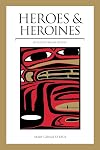
Heroes and Heroines in Tlingit-Haida Legend is a fascinating collection of legends from the Tlingit and Haida cultures and includes 9 legends that explore nature, animals, creation, culture and values. The book is educational and draws connections between these stories and Greek mythology. The illustrations are traditional and utilize formline which emphasizes the Alaskan Native culture. A great book for Alaskan libraries for students who are interested traditional stories.
Alaskan connections: formline, Alaskan Native culture
Activity: Under the guidance of an Alaskan Native, have students explore formline art. Compare and contrast folktales from different cultures.
Alaskan connections: formline, Alaskan Native culture
Activity: Under the guidance of an Alaskan Native, have students explore formline art. Compare and contrast folktales from different cultures.

How Raven Brought Light to People is a mischievous story about a raven who tricks a great chief into giving him the sun, moon, and stars by turning himself into a pine needle and then a baby born to the chief’s daughter. It also explains why ravens are black. The story is playful and traditional and the illustrations support this through color and supporting details. This is a great story to include in place-based literacy in the classroom.
Alaskan Connections: raven, Alaskan Native culture, nature
Activity: invite elders to come to the classroom to tell this story, explore the science of the moon, sun, and stars
Alaskan Connections: raven, Alaskan Native culture, nature
Activity: invite elders to come to the classroom to tell this story, explore the science of the moon, sun, and stars
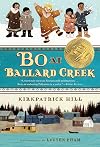
Bo at Ballard Creek is a sentimental story about a young girl named Bo, her father’s, and their life in a mining camp in Alaska. The story details the life of a miner in Alaska in the 1920s, it’s hardships, but more importantly the community of the village, their connections with each other and their roles in the camp. Bo learns about mining, cooking, sewing, and survival while building relationships with other villagers. The book is straightforward and easy to read and is written in short episodic chapters that leaves the reader feeling like each chapter is a short story, a glimpse of an important memory for Bo. I thoroughly enjoyed this book and think it would be an excellent steppingstone into Alaskan history, culture and people for young readers.
Alaska connections: Village life, Alaskan history and the goldrush, the science and history of flight and it’s impact on Alaskan life, cultural values about family.
Activity: Learn about the goldrush, how it changed Alaska, and the process of mining gold. Discuss the importance of family and community with an emphasis on the meaning of family, how families can be different, and all families are valid. Learn about and practice some of the ways of life in the mining days such as baking, sewing and survival skills. Take the students outdoors to try their hand at mining.
Alaska connections: Village life, Alaskan history and the goldrush, the science and history of flight and it’s impact on Alaskan life, cultural values about family.
Activity: Learn about the goldrush, how it changed Alaska, and the process of mining gold. Discuss the importance of family and community with an emphasis on the meaning of family, how families can be different, and all families are valid. Learn about and practice some of the ways of life in the mining days such as baking, sewing and survival skills. Take the students outdoors to try their hand at mining.
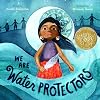
We Are Water Protectors is an inspirational children’s book about a young girl who learned from her Nokomis about the importance of water, protecting that water, damage to the environment that will come when a black snake (oil pipeline) arrives and poisons the land, and her role alongside her people to fight back. The tone of the book is courageous and brave, and the style is lyrical, poetic, and flowing. The illustrations are soft, flowing, and beautiful but powerful and strong just like water itself. Its powerful plot is one of great importance, lends itself to place-based learning about culture and environment and should be a book included in every classroom library especially in Alaska.
Alaskan connections: Native culture, the importance of water for survival, pipelines and the oil industry, climate change, and activism.
Activity: Lesson plan around climate change, explore issues that are important to different cultures, welcome Alaskan Native elders to the classroom to discuss the importance of water and climate change, have the students explore a cultural value of their own that is important to them and create a short story of their own.
Alaskan connections: Native culture, the importance of water for survival, pipelines and the oil industry, climate change, and activism.
Activity: Lesson plan around climate change, explore issues that are important to different cultures, welcome Alaskan Native elders to the classroom to discuss the importance of water and climate change, have the students explore a cultural value of their own that is important to them and create a short story of their own.
The Red Cedar of Afognak is a fact-based book where the boys of a village learn about science and history from Apaa through storytelling. The storytelling is based around a log that was carried inland by a tidal wave and what natural phenomenon must have occurred in order for that log to land where it exists now. The boys learn about and discuss tides, earthquakes, the rings of a tree, and currents. The book is dry and matter-of-fact, but thanks to its storytelling style and supporting illustrations it is easy to read and packed with educational information. The illustrations help to support and expand upon the story and have a very scientific, text-book feel to them. Though the book is not very interesting to read, it does contain a lot of valuable information and deserves a spot on the shelf of Alaskan classroom libraries.
Alaskan connections: Alaskan native languages, Alaskan history, geography.
Activity: Count the rings of a tree and discuss age, size, and history of the trees in our area. Explore weather and natural phenomena like earthquakes and tidal waves. Partner with our Tlingit language teacher, Mr. Frank Katasse to learn language. Lesson plan around the ocean, tides, currents, and phases of the moon.
Alaskan connections: Alaskan native languages, Alaskan history, geography.
Activity: Count the rings of a tree and discuss age, size, and history of the trees in our area. Explore weather and natural phenomena like earthquakes and tidal waves. Partner with our Tlingit language teacher, Mr. Frank Katasse to learn language. Lesson plan around the ocean, tides, currents, and phases of the moon.

Alaska a Land in Motion is a useful book that contains research and facts about the Alaskan landscape, it’s people, and the regions that make up the state. It is an easy ready with visuals that support the facts in a way that is inviting and exciting. Because this book is published by a university, we can trust that the information within it is accurate. I would recommend this book to all Alaskan students and any students outside of Alaska who want a better understanding of the state.
Alaskan Connections: All the information in this book directly relates to the state of Alaska and its people.
Related activity: Introduce the book when learning about Alaska. Break the class up into five groups and have them each research a region of the state. This book could be a tool in projects, presentations, and discussions about Alaska as well as the people, language, animals, and art of this state.
Alaskan Connections: All the information in this book directly relates to the state of Alaska and its people.
Related activity: Introduce the book when learning about Alaska. Break the class up into five groups and have them each research a region of the state. This book could be a tool in projects, presentations, and discussions about Alaska as well as the people, language, animals, and art of this state.
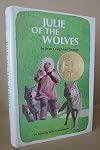
Julie of the Wolves is a controversial story about a young girl by the name of Miyax otherwise known as Julie surviving in the wilderness of Alaska after fleeing an arranged marriage and the relationships, she builds with the wolves who help her survive as she attempts to escape to San Francisco. The tone is often serious but sprinkled with hope and the illustrations support these tones as they are black and white, sketched, but add supportive imagery. Due to Alaskan Native’s request to have it removed and its brief description of implied assault and domestic violence, I will not be using this book in my classroom.
Alaska Connections: The story is based on the Tundra in Alaska and has a lot of references to Alaskan towns, animals, language, and people.
Related Activity: Discuss and practice outdoor survival skills with Alaskan Native Elders. Discuss the importance of safe, healthy relationships and consent.
Alaska Connections: The story is based on the Tundra in Alaska and has a lot of references to Alaskan towns, animals, language, and people.
Related Activity: Discuss and practice outdoor survival skills with Alaskan Native Elders. Discuss the importance of safe, healthy relationships and consent.
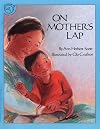
On Mother’s Lap is a cute story that follows a child named Michael in a traditional northern (Alaskan) home as he collects his favorite belongings while he rocks on his mother’s lap and his experience with sharing with his baby brother. The book is repetitive and soothing with illustrations that are as soft and comforting as the text. This is a simple book with a comforting message that would be suitable for younger students and/or students who are learning to share.
Alaska Connection: Illustrations show a traditional northern (Alaskan) home and a traditional family.
Related activity: Discuss Alaskan Native values, sharing, love and family.
Alaska Connection: Illustrations show a traditional northern (Alaskan) home and a traditional family.
Related activity: Discuss Alaskan Native values, sharing, love and family.