Reading the Bible again for the first time : taking the Bible seriously but not literally by Marcus J. Borg

The chapter on Paul is weak but the rest is great.

The garment selection is quite nice (only one truly ugly costume). The pics are decently large. The text, however, is some of the worst artspeak I've read.
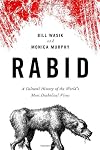
I wanted—want—to like this book, I really did/do.
But in the first place, the style is painfully overblown. If the book were a Shakespeare performance, the lines would be declaimed melodramatically rather than just spoken. It's grating and makes it harder to bear reading what's been written.
The first chapter is supposedly about the ancient cultural history of rabies. There are exactly two genuine examples of rabies having cultural significance in some part of the ancient world. The rest of the chapter is spent on what ancient writers had to say about rabies treatment and about dogs. Some of the connections the book tries to make seem weaselly (e.g., trying to impute a connection to rabies that isn't clearly present in an ancient passage). The fact is that there just isn't enough to say about the cultural meaning of rabies in the ancient world to justify the chapter. And while it's true that dogs had much more ancient cultural significance than rabies, little of it had anything to do with rabies so most of the stuff about dogs is just there as padding. (If the ancients' takes on dogs are your thing, great; but I want to know about rabies.) Also I suspect there's a lot more about dogs in ancient writings than this book covers, so I don't trust it even to have represented that topic very well.
But in the first place, the style is painfully overblown. If the book were a Shakespeare performance, the lines would be declaimed melodramatically rather than just spoken. It's grating and makes it harder to bear reading what's been written.
The first chapter is supposedly about the ancient cultural history of rabies. There are exactly two genuine examples of rabies having cultural significance in some part of the ancient world. The rest of the chapter is spent on what ancient writers had to say about rabies treatment and about dogs. Some of the connections the book tries to make seem weaselly (e.g., trying to impute a connection to rabies that isn't clearly present in an ancient passage). The fact is that there just isn't enough to say about the cultural meaning of rabies in the ancient world to justify the chapter. And while it's true that dogs had much more ancient cultural significance than rabies, little of it had anything to do with rabies so most of the stuff about dogs is just there as padding. (If the ancients' takes on dogs are your thing, great; but I want to know about rabies.) Also I suspect there's a lot more about dogs in ancient writings than this book covers, so I don't trust it even to have represented that topic very well.
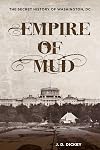
Excellent survey of DC's character through time.
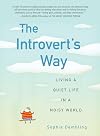
A quick, easy read. Lots of very short chapters written in a very breezy style. In fact they read like blog posts, which is unsurprising given that she has long maintained a blog about introversion.
I found many of the many more thoughts that she mentions to be familiar ones, but at the same time they were revealed in the book as though they are all self-evidently introverted feelings. While it was satisfying to see that someone else has knows about such feelings, I consider a number of them to be rather less than respectable and in fact I'm a pretty fucked up human being. So I'm not convinced on her say-so that all of them are indeed signals of introversion.
That said, one of the points she made was something I had not paid much attention to before, which is that in descriptions of extro and introversion, extroversion is always presented as normative and introversion as a deviation: the consequence of having poorly developed extroverted behaviors rather than a legitimate characteristic in its own right. For whatever reason that caught my attention and is something I can't not notice now.
I found many of the many more thoughts that she mentions to be familiar ones, but at the same time they were revealed in the book as though they are all self-evidently introverted feelings. While it was satisfying to see that someone else has knows about such feelings, I consider a number of them to be rather less than respectable and in fact I'm a pretty fucked up human being. So I'm not convinced on her say-so that all of them are indeed signals of introversion.
That said, one of the points she made was something I had not paid much attention to before, which is that in descriptions of extro and introversion, extroversion is always presented as normative and introversion as a deviation: the consequence of having poorly developed extroverted behaviors rather than a legitimate characteristic in its own right. For whatever reason that caught my attention and is something I can't not notice now.

Pretty white dresses!! (Would have been nice if the publisher had splurged on a copy editor.)

Lovely photos of Grace Kelly being a movie star, with brief captions, and organized by movie. I just wish it were bigger!
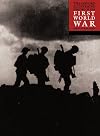
This is far more a contextual history than a descriptive narrative of events. The reader is assumed to be familiar with the details of even the most significant events, such as the October Revolution, the 1917 mutinies, the Rape of Belgium, and pretty much any battle one could name. And have a detailed map handy: a scale of 1 : 1 million was good, 1 : 2.5 million was not so good.
That said, a contextual history was, I think, more satisfying in the long run. This one devotes only 4 chapters out of 23 to operations on the western front. The other 19 address theaters worldwide, political maneuvering throughout the war on all sides, economic aspects of belligerence, and other things. I have a much greater appreciation of the "world" scope now. But it was not so satisfying as it might have been because the chapters (each by a different author) are of widely varying quality. Some are descriptive, some analytical, and some more lyrical than anything else; some do these things well, and some not so well. I did find the illustrations quite satisfying. I can't say exactly how, but they complement the text more than illustrate it.
Overall this is an OK book. I wouldn't buy it, though, not even used.
That said, a contextual history was, I think, more satisfying in the long run. This one devotes only 4 chapters out of 23 to operations on the western front. The other 19 address theaters worldwide, political maneuvering throughout the war on all sides, economic aspects of belligerence, and other things. I have a much greater appreciation of the "world" scope now. But it was not so satisfying as it might have been because the chapters (each by a different author) are of widely varying quality. Some are descriptive, some analytical, and some more lyrical than anything else; some do these things well, and some not so well. I did find the illustrations quite satisfying. I can't say exactly how, but they complement the text more than illustrate it.
Overall this is an OK book. I wouldn't buy it, though, not even used.

Lies, all lies. But man I love those illustrations.

Maybe not a page-turner, but absolutely an eye-opener. She made the beginning of the war matter to me, when before it had always seemed basically ridiculous. She did a marvellous job of impressing the importance of chance/fortune in the unfolding of events without making them seem at all like convenient coïncidences.

This is a curious little book. My survey of fashion history has been guided mainly by Pinterest and Google Images, so maybe I've acquired a skewed perception of the Fifties. I mention this because Reed's book does not parallel my perception. Because of that, it overcame my initial disappointment with it.
I buy fashion books for the pictures. This one has 102 pages (not counting front and end matter), and half of them are pictures. It's laid out in facing-page pairs (50 of them plus an intro pair), text on the left and picture on the right. Each pair is addressed to a single aspect of Fifties fashion, few of which are what I would consider to be a "look." The vast majority are people as groups or individuals, a few are articles of dress, and a couple actually are what I'd call a "look."
The people includes some I'd heard of (not all of whom I associate with Fifties fashion, or even with fashion at all), several I had not, and several omissions that astonished me. For example, Dovima is on the dust jacket and nowhere else—not even a mention.
I am glad to have heard now of many of the people I'd not heard of at all, so that's all right. Then there are the interesting atypical takes on people I *had* heard of, like Grace Kelly. And then there are the people I didn't associate with fashion. With some, like Alfred Hitchcock, she makes a decent case for their influence. Others, like the Duke and Duchess of Windsor, still perplex me.
The writing style is breathless, there are more show more than a few suspect statements, and it manages to contradict itself: the page on synthetic fibers describes them first as "easy care" and later as "hard to keep clean." On the other hand, there are times when Reed didn't say enough: I'm perfectly willing to accept that Gossard made a new corset better suited to Fifties dresses than its predecessors—but how was it better, or at least why was it worth the mention? Still, there is enough seemingly legit stuff that interests or is new to me that I didn't resent the flaws. I genuinely appreciate the book, even if it is mainly for giving me new people to wish I looked like.
Now I would like to complain about the title, specifically the "changed the 1950s" part. Those things did not change the Fifties, they made the Fifties (as far as fashion is concerned). The Fifties began as a blank slate that was filled in as it passed. One cannot change what does not yet exist, one can only change from what has been. (I don't think Reed called anything "timeless," though, so she gets points for that.) show less
I buy fashion books for the pictures. This one has 102 pages (not counting front and end matter), and half of them are pictures. It's laid out in facing-page pairs (50 of them plus an intro pair), text on the left and picture on the right. Each pair is addressed to a single aspect of Fifties fashion, few of which are what I would consider to be a "look." The vast majority are people as groups or individuals, a few are articles of dress, and a couple actually are what I'd call a "look."
The people includes some I'd heard of (not all of whom I associate with Fifties fashion, or even with fashion at all), several I had not, and several omissions that astonished me. For example, Dovima is on the dust jacket and nowhere else—not even a mention.
I am glad to have heard now of many of the people I'd not heard of at all, so that's all right. Then there are the interesting atypical takes on people I *had* heard of, like Grace Kelly. And then there are the people I didn't associate with fashion. With some, like Alfred Hitchcock, she makes a decent case for their influence. Others, like the Duke and Duchess of Windsor, still perplex me.
The writing style is breathless, there are more show more than a few suspect statements, and it manages to contradict itself: the page on synthetic fibers describes them first as "easy care" and later as "hard to keep clean." On the other hand, there are times when Reed didn't say enough: I'm perfectly willing to accept that Gossard made a new corset better suited to Fifties dresses than its predecessors—but how was it better, or at least why was it worth the mention? Still, there is enough seemingly legit stuff that interests or is new to me that I didn't resent the flaws. I genuinely appreciate the book, even if it is mainly for giving me new people to wish I looked like.
Now I would like to complain about the title, specifically the "changed the 1950s" part. Those things did not change the Fifties, they made the Fifties (as far as fashion is concerned). The Fifties began as a blank slate that was filled in as it passed. One cannot change what does not yet exist, one can only change from what has been. (I don't think Reed called anything "timeless," though, so she gets points for that.) show less

Tries to braid narratives about family, history, and religion into a unified story, but doesn't succeed.

On the one hand, one would expect the culmination of an epic series to be far grander than this volume is. On the other, this pedestrian dénouement is perfectly appropriate to such a turgid series.

No idea of its value as kids' book today. Of more interest to me were the implicit values conveyed (Grecophilia, democracy good except when it's not {execution of Socrates}, tyranny bad except when it's not {Pericles}, Athenians wonderfully civilized except when they weren't {conviction of Socrates}, &c.).

Not bad for what it is (50 small, well-illustrated pages for children), I suppose. It's showing its age, though.

Excellent for what it is (a 25-page kids' intro to ballet as art). I learned a great many things.

A wanna-be coffee-table book. Half of the book (all of the right-hand pages) is pretty pictures of food and/or ingredients.
The other half has pictures, recipes, and captions. I thought the book would contain actual Civil War recipes, and maybe it does, but I have my suspicions: some of the recipes are described as "updated" (in what ways is left unsaid), and the author seems to use words like "original," "traditional," and "authentic" with enough care for me to view them as weasel-words in respect to the recipes' actual-Civil-War-ness. Apparently the book was published with the idea that one can prepare the included recipes for oneself; however, some recipes lack quantities for certain ingredients, or omit certain instructions. And whereas the photograph sources are credited, the recipe sources are not.
In each page's general comments on Civil War military food, the author states some very suspect things as fact (e.g., that dysentery among soldiers had to do with the greasiness of their food, or that saltpeter is rock-salt). The proportion of things I found suspicious on their face is high, and I'm just a dilettante.
The comments on Civil War military cookery are repetitive. One could wish for more careful copyediting. Using "a piece of butter the size of an egg" to indicate 4 Tbsp of butter in the ingredient list was cute the first time and tiresome the other six. There are other, less consistently employed historical cutseyisms.
It gets two stars because I learned two show more things from it: what paste has to do with pastry, and why beaten biscuits are called that. show less
The other half has pictures, recipes, and captions. I thought the book would contain actual Civil War recipes, and maybe it does, but I have my suspicions: some of the recipes are described as "updated" (in what ways is left unsaid), and the author seems to use words like "original," "traditional," and "authentic" with enough care for me to view them as weasel-words in respect to the recipes' actual-Civil-War-ness. Apparently the book was published with the idea that one can prepare the included recipes for oneself; however, some recipes lack quantities for certain ingredients, or omit certain instructions. And whereas the photograph sources are credited, the recipe sources are not.
In each page's general comments on Civil War military food, the author states some very suspect things as fact (e.g., that dysentery among soldiers had to do with the greasiness of their food, or that saltpeter is rock-salt). The proportion of things I found suspicious on their face is high, and I'm just a dilettante.
The comments on Civil War military cookery are repetitive. One could wish for more careful copyediting. Using "a piece of butter the size of an egg" to indicate 4 Tbsp of butter in the ingredient list was cute the first time and tiresome the other six. There are other, less consistently employed historical cutseyisms.
It gets two stars because I learned two show more things from it: what paste has to do with pastry, and why beaten biscuits are called that. show less

They aren't bad stories, but they aren't particularly good ghost stories. Has a nice list of related anthologies in the back.
CatSpeak : how to learn it, speak it, and use it to have a happy, healthy, well-mannered cat by Bash Dibra
Well, let's see. It . . . parts of it are about cats . . . and . . . um . . . there are useful tables on pages 133 and 138 . . . and . . . that's about it, really, for those who have ever crossed paths with a cat. Did I mention the tables on pages 133 and 138? Those were good.

Absorbing photographs, questionable captions. My main reasons for skepticism are (1) a number of captions provide a description of their photo that is in my opinion based upon a (usually but not always) superficially reasonable but incorrect assessment of their photo's depiction, and (2) a number of captions are more about how unqualifiedly wonderful the Children's Aid Society is, rather than about the kids. On the other hand, this means that the captioner's biases are fairly obvious.
Also, I wish the photos were clearly dated.
Also, I wish the photos were clearly dated.


If you've ever read a collection of "true" ghost stories, this is similar, only about the kāhuna. It is a collection of (mostly unsourced) statements purporting to demonstrate that the Hawaiians, like all non-industrialized societies colonized by Europeans, knew more about the world and the universe than Europeans did prior to the 20th century. True? Some of it. Possibly. Good luck identifying which parts, though. It is folklore presented uncritically as anthropology or history, and as long as you take it as such, it's tolerable.
What's intolerable is the writing . . . style, shall we say? The chapter organization is fair, but below that it's crap. Within each chapter the train of thought meanders. Sometimes one paragraph accommodates several ideas, sometimes one idea is discussed in the course of several paragraphs (and the meandering can make that hard to follow). Many, many Hawaiian words are provided, to no purpose that I can tell. If this were a technical work and McBride wanted to be clear what Hawaiian concept he was glossing in English, that would be fine; but it's not a technical work. The writing is what I would expect from a middle-school term paper.
Evidently it was originally intended as a (possibly souvenir?) corrective to an implied popular American conception of the kāhuna as 'witch doctors.' From that perspective it's interesting as an artifact of cultural politics, for which the veracity of specifics isn't the goal: driving out the notion that the show more Hawaiians were benighted heathens is. show less
What's intolerable is the writing . . . style, shall we say? The chapter organization is fair, but below that it's crap. Within each chapter the train of thought meanders. Sometimes one paragraph accommodates several ideas, sometimes one idea is discussed in the course of several paragraphs (and the meandering can make that hard to follow). Many, many Hawaiian words are provided, to no purpose that I can tell. If this were a technical work and McBride wanted to be clear what Hawaiian concept he was glossing in English, that would be fine; but it's not a technical work. The writing is what I would expect from a middle-school term paper.
Evidently it was originally intended as a (possibly souvenir?) corrective to an implied popular American conception of the kāhuna as 'witch doctors.' From that perspective it's interesting as an artifact of cultural politics, for which the veracity of specifics isn't the goal: driving out the notion that the show more Hawaiians were benighted heathens is. show less

Better than every self-help book at which I've ever looked, but, after the first Part, still not great. To warrant its thesis it relies upon claims developed less than rigorously, where it doesn't simply employ "common sense" uncritically. And the thesis has proven to be more than a little naïve. But the clarity of the writing is remarkable, especially in comparison to the social sciences today; and the first Part, wherein he develops his model of obstacles to personal development, is, if not accurate, at least something that I found useful for practical self-reflective purposes.
Much of the story is interesting and nicely told, even if the story itself is nothing special. The prologue and the two final chapters, however, have a rare grace to them. The prologue gives poignancy to the bulk of the story. The last two chapters offer expiation for what happens in the bulk of the story. Many books are satisfying; this one is rewarding. And to think I almost didn't read it....
Discusses the uses to which mythology was and is put, and how those uses are what turn stories into myths. I found it more useful and credible than many academic theories treating myth as though it were an organic category. The first five chapters are quite good. Scattered through them is discussion of the coalescence of what is now considered classical mythology, and the reciprocal development of scholarly interest in it. The historical consumption of myth (e.g., as allegory) receives far more attention than scholarly inquiries into the original functions of myths, many of which seem inductive rather than empirical. One chapter considers the importance of myth to psychoanalysis, and implicitly considers the possibility that Freud was just talking out of his backside (the fact that they acknowledge this as a possibility gives the entire argument that much more credibility). It left me thinking that, had he lived today, he'd be considered a quack. The last two chapters (politics of sex; hippies' use of myth) are muddled and weak. The first of them, I think, is so simply because of a paucity of VSI-appropriate research to summarize; the latter, I think, is so because pastiche is form without substance and there just isn't much to be said about it.

The two or three chapters that were actually about historical development of languages were tantalizingly good, but fell measurably short of what I was hoping for. Much of the rest of the book is a collection of trivia organized by themes. Some of it's interesting but overall those parts smacked too much of the Book of Useless Information, the existence in this universe of which is a waste of perfectly good matter-energy.
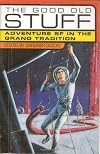
Mostly is what it claims. A couple of stories are memorable. A couple are more abstruse than I think good writing can accommodate. Dozois' introductory notes to each story are, on the whole, exemplary. As an anthology, one of the more successful I have encountered.

A fairly flat story that goes nowhere and doesn't seem to have much of a point.
I found this fundamentally unsatisfying. There is a plot but it's kept in the background. Some interesting magical things happen but aren't described or explained very well. There isn't much depth to the characters. The story just sort of develops and then ends before the important events that are being protected get to occur. It's almost like a stream of consciousness, with nothing being much more or less significant than anything else. Perhaps that's all as it's intended to be, though; the protagonist is a minor piece in a medieval siege, having some magical but little social or military importance. But I have a hard time thinking it's an intentional device. There is magic and myth but they're mostly just wall hangings, with little influence on anything. Again, maybe that's how magic and myth would work, but it doesn't make for much of a story.
The standout feature is the humorousness.
I found this fundamentally unsatisfying. There is a plot but it's kept in the background. Some interesting magical things happen but aren't described or explained very well. There isn't much depth to the characters. The story just sort of develops and then ends before the important events that are being protected get to occur. It's almost like a stream of consciousness, with nothing being much more or less significant than anything else. Perhaps that's all as it's intended to be, though; the protagonist is a minor piece in a medieval siege, having some magical but little social or military importance. But I have a hard time thinking it's an intentional device. There is magic and myth but they're mostly just wall hangings, with little influence on anything. Again, maybe that's how magic and myth would work, but it doesn't make for much of a story.
The standout feature is the humorousness.

A simple fable, meaning no more than it says and saying no more than it means, that doubtlessly has been and will continue to be overinterpreted and argued about as an actual program for happiness.
Still, in and of themselves, there's poetry in them thar words. I'm rather surprised that I did actually read it. And all in one sitting, too, mainly because of the style and the language.
Still, in and of themselves, there's poetry in them thar words. I'm rather surprised that I did actually read it. And all in one sitting, too, mainly because of the style and the language.