Fascinating concept, but spoiled for me by too many implausible coincidences.
Spare, somewhat limited by the first-person narrative by
an autistic adult, but enjoyed.
an autistic adult, but enjoyed.
A heartbreaking desent from high intelligence to loss of self - essential reading for anyone with a history of Alzheimer's disease in their gene pool.
I was fortunate to receive an ARC of this debut novel, and have high hopes for David Abbott's future ventures into fiction. Currently I'm on a bit of an Anglophile role in my reading, having recently finished Major Pettigrew's Last Stand, Ordinary Thunderstorms, and was in the midst of Stone's Fall when The Upright Piano Player appeared on my doorstep. Recalling my ability in college, many moons ago, to be reading several texts simultaneously, I've spent the past week devouring Mr. Abbott's book with only some momentary returns to Stone's Fall to keep that complex mystery fresh in my mind.
Abbott's book begins with a spare but haunting prelude four years after the main time frame of the novel, delicately framing what comes next - four years prior - with a palpable air of foreboding. Estranged from his only son, grappling with the imminent death of his ex-wife, stalked by a perverted hater, Henry Cage tries as best he can to mend damaged relationships, begin a new one with his toddler grandson, and come to terms with a life as a widower and retiree. The short chapters easily introduce us to each of the players in this drama, sometimes with a jarring lack of segue away from the company we'd just been keeping, but always with purpose towards building the circumstances that connect these players. Reminiscent of the quirky fiction of Margot Livesey and Rachel Cusk, I look forward to more from David Abbott. Kudos to my fellow advertising professional!
Abbott's book begins with a spare but haunting prelude four years after the main time frame of the novel, delicately framing what comes next - four years prior - with a palpable air of foreboding. Estranged from his only son, grappling with the imminent death of his ex-wife, stalked by a perverted hater, Henry Cage tries as best he can to mend damaged relationships, begin a new one with his toddler grandson, and come to terms with a life as a widower and retiree. The short chapters easily introduce us to each of the players in this drama, sometimes with a jarring lack of segue away from the company we'd just been keeping, but always with purpose towards building the circumstances that connect these players. Reminiscent of the quirky fiction of Margot Livesey and Rachel Cusk, I look forward to more from David Abbott. Kudos to my fellow advertising professional!
 This review was written for LibraryThing Early Reviewers.
My high expectations for this book were dashed by the melodrama of an implausible love story, and coincidences that oh-so-perfectly moved the plot along in the author's intended direction.
Not quite Philip Roth, not quite Tom Perrota - but close enough an amalgam of the two to keep me entertained and nodding knowingly at some of his all-too-familiar experiences with Jewish family angst.
When heaven and earth changed places : a Vietnamese woman's journey from war to peace by Le Ly Hayslip

I read this book when it first came out, and was reminded of its affect on me as I started reading The Lotus Eaters. The latter, written on the basis of research rather than personal experience, failed to engage me. One woman's harrowing tale of survival nakedly exposes the futility of that long and senseless war.
So unscary the story. Never brought the promised chills down my spine, despite the mysterious self-chilling bottle of water.
Like several other reviewers, I am drawn to stories of ordinary characters being driven to darkly extraordinary lengths. After devouring David Vann's Caribou Island yesterday, I was reminded of A.M. Homes' Music for Torching - another chilling account of a marriage imploding beneath the weight of disappointment. Here against the vast expanse of Alaska, Vann exposes the claustrophobic aloneness of lives filled with regret or false hope. After thirty-plus years of marriage, Irene grows painfully aware that she's been tethered to Gary as a mere accessory in his life, and her 30-year old daughter Rhoda is on the verge of recreating such a life with her narcisstic fiancé Jim. Irene suffers unrelenting and unbearable headaches, her realization of a wasted life as palpable as the hard, cold rain assaulting her on the island where Gary insists on building his misbegotten log cabin. Vann sustains a propelling air of suspense to the end, as Irene's illness and Gary's cabin - dueling metaphors for their roles in the long seige of their marriage - drive them to their inevitable resolution.
Too son after reading JC Oates "The Falls", I was unable to latch onto this story and am saving it to enjoy after putting some distance between those two titles.
This review was written for LibraryThing Early Reviewers.
There are two types of fiction that populate my personal library. Many are filled with characters I cannot bear to let go, with writing that forces me to pace slowly, to savor every thought or description as I nod in agreement, approval, recognition of truth, and dreading the approach of the end of the story. Such books are works of art. And then there are books like The Cookbook Collector that aspire to such greatness but lose me halfway, and I cannot wait for them to be over. They grab me, and then generate mounting impatience as I cannot wait for the coincidences to be done with and the plot threads to be neatly tied up. Allegra Goodman is a gifted writer who draws me to her through the appeal of her subject matter and locations familiar to me - technology, the addictiveness of research, Jewishness, food, alienation from family, Cambridge and its surrounds. These themes have been mesmerizing in her hands, as with Intuition and Kaaterskill Falls - but fail when crammed together between the same covers. Five stars for effort, three for execution - a summer read that could have been a work of art.
(PS - as a college student back in the day, I took a course in Philosophy of Art, and had to choose a work of art of any genre to defend as such in the final paper. My choice was Slaughterhouse Five. Not to compare at all to the book currently reviewed, but to demonstrate where the bar was set.)
(PS - as a college student back in the day, I took a course in Philosophy of Art, and had to choose a work of art of any genre to defend as such in the final paper. My choice was Slaughterhouse Five. Not to compare at all to the book currently reviewed, but to demonstrate where the bar was set.)
We read to know we're not alone, don't we? I finished this book the morning of September 6, before visiting the grave of my father who died suddenly forty-five years ago, two days before I started junior year of high school. Missing the father I adored has shaped every emotion, action, and relationship of my life, and so I believe and understand how Daley Amory put her own aspirations on hold to resurrect the father she was missing, and what she had with him until early adolescence. Beneath the hard shell of this cruel alcolohic, Daley Amory sees a father still worth loving, a relationship worth resurrecting, a broken and lonely man who's shattered so many lives and yet deserves to be saved. His drinking buddies won't do it, nor will the son or ex-wives he's driven away. He lavishes praise and affection only on his dogs, until he realizes his daughter also loves him unconditionally. So strong the bond between daughter and father - Lily King really gets it. I treasured every word and applaud her for delivering such a richly satisfying character study.
Contrary to steffiek's dismissively brief review, I see no corollary here between The Gargoyle and The English Patient other than the nature of the patient's injuries. This was a mesmerizing read, for the most part, although I must confess to having skipped across the Inferno-esque journey towards the end to return to real time for the final few pages. I have no doubt that Marianne was neither schizophrenic nor deranged in any other way. If she was a patient in the same hospital as the narrator (nameless), then it was by grand design. As for who exactly was the Gargoyle? That's easy - it was he who told the story. An engrossing narrative of love and redemption, superbly researched. I now know more about the nature of burn treatment and medieval bookmaking than I ever thought possible from a single work of fiction.
Several years ago I read Chaon's novel "You Remind me of Me," and was thus drawn to this new work to see how he again approached the concept of identity. Three divergent stories finally intersect in a most unsurprising and unsatisfying way. While I enjoyed much of the ride, the destination was ultimtely not worth the trip.
I've just breezed through an advance reader copy of this fast-paced thriller. While my reading life is more in line with literary fiction, I do enjoy an occasional thriller when it's populated with plausible, likable characters, verisimilitude, and surprises. Reading this book was a trip I enjoyed for the most part, and I suspect it will do well in release to the general public. The Honda dealership scenes in particular (product placement at its best, when the movie comes out?) had me nodding and laughing out loud, as my son works at the country's largest volume Honda dealership, and we are a three-Honda family. On the positive side, FEAR THE WORST had no down-time, briskly moving the narrative along from scene to scene. I could not help but envision Bruce Willis pulling off the role of Tim, or Sandra Bullock as Kip Jennings. Other imaginary Hollywood casting easily helped me put faces to the characters, and I'm sure a movie deal won't be too long in the works. The piling on of surprises, however, had me groaning in the latter third, by which point the planned surprises were a tad too predictable for me, and the red herrings too obvious. The climax was so utterly implausible and disappointing I could actually envision the credits rolling over a thumping soundtrack. Nonetheless, I'm recommending this book to my husband, who is more into thrillers by Dennis Lehane, Patricia Cornwell, John Grisham et al, and to others who enjoy the genre.
This review was written for LibraryThing Early Reviewers.
I became immersed in literature of the Holocaust - both personal accounts and fiction - while a student at Simmons College in the 60's, where Professor Lawrence Langer taught a course on the subject, and so I felt fortunate to be sent an advance copy of Thomas Buergenthal's "A Lucky Child". The author states up front that his memories may be clouded by the passage of time regarding events he may have personally witnessed versus those he heard talked about, and about specific chronology. That in no way detracts from his personal testament as a survivor of this atrocity. With the perspective of time and a life lived in the service of human rights, his narrative stands with those of Elie Weisel and others who have survived as voices for a population and culture eradicated by evil. As the population of survivors dwindles, these personal accounts become more imperative.
This review was written for LibraryThing Early Reviewers.
I enjoyed Jean Hanff Korelitz's "The White Rose" immensely, and was equally intrigued by the college setting and plot premise of this book. And because I do enjoy her writing and have enormous respect for the earnestness with which she researched and portrays the college admission process, I was captivated by those portions of the book dealing with Portia's professional life. There came a point however, about midway into the book, where the growing cast of stereotypical characters and wildly improbable plot twists sank this from a 5-star to a less enthusiastic 3-star review. Susannah, a mother so wrapped up in saving the world that she's oblivious to her own daughter's plight. John Halsey, the sensitive, well-bred, but oh-so-well-meaning amd sexy former Dartmouth classmate with whom Portia is reunited on her visit to the Quest School. And so on. And Portia has a secret - we know that early on, as it is referred to in vague references when she meets John, and It surfaces again with growing glints of clarity as the novel progresses, finally bursting forth like the penultimate episode of a Lifetime melodrama. My empathy for Portia evaporated at that point, and I finished the book feeling angry and annoyed with the implausible plot line and tidy feel-good denouement.
With an intriguing scenario filled with promise, this book went downhill for me after the arrival of Natalie, the mourning mother, to spend the month of August with her late daughter's friends. Some achingly true feelings expressed about the difference betweeen those who've experienced devastating loss, and those who haven't, but ruined for me by the unnatural intrusion of sex into every thread of the relationships.
It's been some time since I've read a book that satisfied on so many levels - vividly created characters, a sense of time and place, an engaging multi-level plot, and philosophical, scientific, and psychological theories. Now what? What to read next that will measure up? I'm hoping it's more of William Boyd.
The American Heritage Dictionary of the English Language, Fourth Edition : Print and CD-ROM Edition by Houghton Mifflin Company
Back in 1971 when I was fresh out of college and working at a Boston ad agency, we were launching the first edition of this outstanding dictionary. Since then, and despite the ubiquitous availability of online word-lookups, I have continued to update my AHD to the new edition whenever it's been released. It's partly brand loyalty, but moreso an appreciation for the uniquley entertaining way the dictionary was designed - with color photographs and often humorous references you won't find in Merriam Webster (and I worked on that account, too, in later years).
Essential for any baseball fan who needs to know the meaning of the infield fly ball rule, or the origins of other baseball arcania.
A fascinating history of salt, from its origins as a form of currency in ancient Rome (thus the word 'salary') to the many techniques of harvesting and varieties of salt on our planet. Kurlansky turns this basic chemical element into a saga of both historical and culinary delight.
Martha Stewart's Cookies: The Very Best Treats to Bake and to Share (Martha Stewart Living Magazine) by Martha Stewart Living
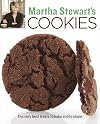
I was given a copy of this book yesterday by a friend who works for Martha Stewart Living. It's a gorgeous, impeccably edited and photographed (of course) compendium of all manner of cookie delights, with clear descriptions, techniques, and tips. Also some interesting interpretations of traditonal favorites, such as Rugelach Fingers - a bar-cookie interpretation of the traditional crescent-shaped confection. Sure to please your inner baker.
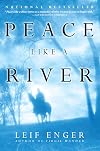
Leif Enger's gripping tale of family crisis and redemption elegantly unfolds with grace and foreboding through the eyes of a child- as heart-wrenching and enduring as the voice of Scout Finch in Harper Lee's masterpiece. Now that this exceptional work is in the hands of Billy Bob Thornton (who else but a younger Robert Duval could one envision as Jeremiah Land?), my hope is that he casts unknowns (and not Dakota Fanning or Haley Joel Osment) in the roles of Reuben and Swede. To Kill a Mockingbird is one of very few films that translated skillfully and faithfully to the screen. Read this before the film is released and hope for the same.
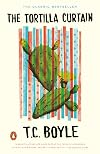
T.C. Boyle has been one of my favorite writers since college many years ago, with his short story collection, "Descent of Man". Having read all of his subsequent works, Tortilla Curtain resonates as perhaps his finest and most enduring. Like Russell Banks's classic "Continental Drift" and the movie "Crash", it presents a crash of two cultures inexorably moving toward a tragic but inevitable convergence. Others have written here that Boyle's characters are unlikeable, stereotypical. That is true, but it makes them no less real, no less capable of arousing in us a range of emotional response and genuine interest in their outcome. As Andre Dubus did with "House of Sand and Fog", Boyle alternates between the two sets of protagonists/antagonists, revealing both their humanity and their frailties. Read this before the movie comes out.
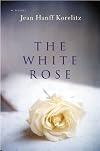
The White Rose is one of the most enjoyable books I've read in the past two years - a wickedly funny, often poignant entanglement of lives among the hierarchy of New York Jewish society which plays in the mind like a great Woody Allen film or stage play. Korelitz's spot-on characters are carried along in an engaging plot, and even when their road ahead seems easily preordained, her twists, turns, and tangents rarely fail to surprise. Ostensibly about an affair between a married 48-year old professor at Columbia and the 26-year old son of her oldest friend, it delves incisively into the many ways we can choose to love, allow ourselves to be open to possibillities, or deny ourselves happiness.
Throughout the three weeks I spent with David James Duncan's Chase family, I found myself emailing quotes from The Brothers K and recommending this book to friends and business colleagues alike. Though written in 1992, it feels so like today in its approach to religious fanaticism, war, and politics. It's time for this book to enjoy a much deserved revival. By turns hilarious and heart-wrenching, often philosphical and meandering to distraction, one finds at conclusion that it was all there for a reason. The paths that wind through baseball, religion, politics, and family relationships all converge into a most satisying whole. Truly one of the most thoroughly enjoyable reads of my life.
There was a time when the release of a new Anne Tyler or John Irving novel made my heart race with anticipation. However, her more recent works - Ladder of Years, Back When We Were Grownups, Amateur Marriage - fade in memory as an amorphous mass of sameness, while his have degenerated into aimless ramblings that try the patience of his staunchest fans. Sad to see one's favorites lose their touch. With an entirely new array of characters, Digging to America held so much potential, but sadly became just something to fill the reading void while waiting for a much more promising work by a new favorite, Julia Glass. We are given a modicum of back-story for Sami & Ziba, and for Bitsy & Brad. Maryam is the central character, and yet she, too, despite Tyler's effort at character development, remains largely an enigma. The complexity of her budding romance with Dave is skimmed oh-so lightly, while a drawn-out farewell to a baby's binkies is detailed ad nauseam. And the ending just feels pasted on like a Lifetime movie approaching its time limit. Perhaps Ms. Tyler, like Mr. Irving, has simply exhausted her reservoir of talent. In the hands of a more energetic writer, Digging to America could have struck gold.
After finishing Ms. Glass's "Three Junes" two summers ago and giving her five stars on this site, I was bereft that it would be years before I could be engrossed once again in her world populated by fascinating, real, eloquently perceived characters. I have just devoured "The Whole World Over" and vascillated between 4 and 5 stars, only because her earlier work set the bar so high.
There are no minor characters in the world created by Julia Glass- everyone has a story, a back-story, a depth of experience that creates fully-formed personalities whose actions and emotions feel natural because we know where they've been and how they got that way. She reprises her themes of family tensions, yearnings for parenthood, gourmet food preparation, dogs, gay relationships, and brings back Fenno McLeod and his parrot companion Felicity. Others have groused over the excessive detail about food and the lack of physical descriptions of characters. I find that one of the strengths of her writing - the details about what her characters do, what's important in their lives. We know them from their work, their actions, their emotions, and are free to conjure our own images of their physicality. I know people (except maybe for Governor Ray) exactly like those she's created, and so am even more impressed with her ability to flesh them out without actually coloring inside the lines.
The final chapters are reminiscent of Nicholas Rinaldi's "Between Two Rivers" - a book so deserving of a wider show more audience - where we come to know an eclectic and fascinating cast of characters who are ultimately confronted with the horror of September 11. Strongly recommended for Julia Glass fans who can't bear to wait for her next book. show less
There are no minor characters in the world created by Julia Glass- everyone has a story, a back-story, a depth of experience that creates fully-formed personalities whose actions and emotions feel natural because we know where they've been and how they got that way. She reprises her themes of family tensions, yearnings for parenthood, gourmet food preparation, dogs, gay relationships, and brings back Fenno McLeod and his parrot companion Felicity. Others have groused over the excessive detail about food and the lack of physical descriptions of characters. I find that one of the strengths of her writing - the details about what her characters do, what's important in their lives. We know them from their work, their actions, their emotions, and are free to conjure our own images of their physicality. I know people (except maybe for Governor Ray) exactly like those she's created, and so am even more impressed with her ability to flesh them out without actually coloring inside the lines.
The final chapters are reminiscent of Nicholas Rinaldi's "Between Two Rivers" - a book so deserving of a wider show more audience - where we come to know an eclectic and fascinating cast of characters who are ultimately confronted with the horror of September 11. Strongly recommended for Julia Glass fans who can't bear to wait for her next book. show less
Sara Gruen has created an engaging memoir narrated by the nonagenarian veteran and veterinarian of a depression-era circus. Her research into the caste hierarchy and politics of train circuses reveals a world which, much like HBO's Deadwood, had its own laws of lawlessness and morality of immorality. Into this world Jacob Jankowski is unwittingly dropped, and the recounting of his evolution from inheritor of his father's veternary practice to circus vet to aged resident of an assisted living facility is almost always convincingly told. While Jacob may be the hero/narrator, it is most definitely Rosie the elephant who steals the show and wins your heart. Like the rubes who paid their nickels and dimes to gawk at the freaks, I felt my $14.37 was well spent for a 332-page peek behind the big-top.