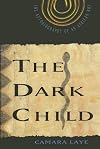
The Dark Child is an autobiography detailing the author’s childhood in French Guinea during the 1930’s and 40’s. Similar to Land of Childhood, which I’ve previously reviewed, this is a book that looks back fondly on a homeland that the author has left behind. In this case, the author wrote after traveling to France to continue his education, and it’s little wonder to me that he might have been homesick and experiencing culture shock.
The result is a book that provides a marvelous opportunity for the modern reader to learn about the customs of the time and for readers from other cultures to gain a window into this one. The author describes what his ordinary life was like, from watching his father work as a blacksmith/goldsmith to undergoing traditional coming-of-age practices. He expresses regret that there are aspects of his people’s traditions and beliefs that he does not understand because of his schooling, which was of an unusual amount compared to his peers and obviously a break from the way of life that had been traditional in his homeland up to that point. The reader is forced to wonder how much tradition has been lost.
This book is well written from beginning to end. The style is simple but powerful, and it’s clear from the beginning that the author had deep themes in mind while choosing which parts of his life to detail and in what ways.
The only thing readers may find potentially triggering is the presence of male and female circumcision. The author show more undergoes the former, and while the latter is mentioned so briefly it’s easy for an ignorant reader to miss it, readers who know the details from other sources may have a very different experience.
Apart from that, I was personally bothered by the description on the back of my copy, which describes French Guinea as “a place steeped in mystery”. From whose perspective? Surely not the people who lived there. And if readers such as myself are ignorant, it’s not because those native people are hiding anything. It’s likely because US schools (according to my experience) prefer to teach British literature and Greek and Roman mythology, effectively choosing which foreign countries should be familiar to us and which should seem “mysterious”.
Similarly, this back cover has a quote referring to the author as “Laye”, but after reading the book it became clear that “Laye” is his first name, while his family name is “Camara”. Unfortunately I could not find out from a web search whether the Mandinka people prefer to be referred to by their first name in cases where people with a European-style name would be referred to by their surname, but at best I find fault with the introduction that could have explained such things. After all, it was clearly setting about to provide historical and cultural context to non-African readers anyway. And that being the case, I’m not sure why this introduction was written by a man from Haiti who has no ties to or particular knowledge of French Guinea that his Wikipedia article sees fit to mention. It must have also been written quite a long time ago, since he died in 1975.
Overall, I’m glad that an English translation exists (as the original was written in French), but I’m disappointed by signs that the English-speaking world continues to showcase such little regard for the culture that Camara Laye himself celebrates. I would love to see a new edition of this classic, with an introduction by a modern author or scholar from what is now the independent country of Guinea. I’m sure such a person would have a lot of valuable things to say. In the meantime, I would advise readers to ignore everything on the back cover, skip the introduction, and simply read what the author himself wrote. You can do your own historical and cultural research if you would like.
I must say that, apart from these things, my greatest disappointment with the book was the fact that it didn’t go on to describe the author’s experiences in France and what happened after. Of course, this is an unfair criticism since it was written while the author was still in France, and the conclusion given is the surely the best he could have provided at that time of his life. But it goes to show how much I cared about him by the end that I wanted to see him build a good life for himself and be reunited with his family who were so aggrieved to part with him.
This is a good book. If you’re participating in an Around the World reading challenge or have any interest in learning about cultures you may not have been taught about at your school, I highly recommend it. Similarly, it’s a great choice if you like autobiographies portraying ordinary life with skillful writing. This one deserves more attention than it seems to have thus far received. show less
The result is a book that provides a marvelous opportunity for the modern reader to learn about the customs of the time and for readers from other cultures to gain a window into this one. The author describes what his ordinary life was like, from watching his father work as a blacksmith/goldsmith to undergoing traditional coming-of-age practices. He expresses regret that there are aspects of his people’s traditions and beliefs that he does not understand because of his schooling, which was of an unusual amount compared to his peers and obviously a break from the way of life that had been traditional in his homeland up to that point. The reader is forced to wonder how much tradition has been lost.
This book is well written from beginning to end. The style is simple but powerful, and it’s clear from the beginning that the author had deep themes in mind while choosing which parts of his life to detail and in what ways.
The only thing readers may find potentially triggering is the presence of male and female circumcision. The author show more undergoes the former, and while the latter is mentioned so briefly it’s easy for an ignorant reader to miss it, readers who know the details from other sources may have a very different experience.
Apart from that, I was personally bothered by the description on the back of my copy, which describes French Guinea as “a place steeped in mystery”. From whose perspective? Surely not the people who lived there. And if readers such as myself are ignorant, it’s not because those native people are hiding anything. It’s likely because US schools (according to my experience) prefer to teach British literature and Greek and Roman mythology, effectively choosing which foreign countries should be familiar to us and which should seem “mysterious”.
Similarly, this back cover has a quote referring to the author as “Laye”, but after reading the book it became clear that “Laye” is his first name, while his family name is “Camara”. Unfortunately I could not find out from a web search whether the Mandinka people prefer to be referred to by their first name in cases where people with a European-style name would be referred to by their surname, but at best I find fault with the introduction that could have explained such things. After all, it was clearly setting about to provide historical and cultural context to non-African readers anyway. And that being the case, I’m not sure why this introduction was written by a man from Haiti who has no ties to or particular knowledge of French Guinea that his Wikipedia article sees fit to mention. It must have also been written quite a long time ago, since he died in 1975.
Overall, I’m glad that an English translation exists (as the original was written in French), but I’m disappointed by signs that the English-speaking world continues to showcase such little regard for the culture that Camara Laye himself celebrates. I would love to see a new edition of this classic, with an introduction by a modern author or scholar from what is now the independent country of Guinea. I’m sure such a person would have a lot of valuable things to say. In the meantime, I would advise readers to ignore everything on the back cover, skip the introduction, and simply read what the author himself wrote. You can do your own historical and cultural research if you would like.
I must say that, apart from these things, my greatest disappointment with the book was the fact that it didn’t go on to describe the author’s experiences in France and what happened after. Of course, this is an unfair criticism since it was written while the author was still in France, and the conclusion given is the surely the best he could have provided at that time of his life. But it goes to show how much I cared about him by the end that I wanted to see him build a good life for himself and be reunited with his family who were so aggrieved to part with him.
This is a good book. If you’re participating in an Around the World reading challenge or have any interest in learning about cultures you may not have been taught about at your school, I highly recommend it. Similarly, it’s a great choice if you like autobiographies portraying ordinary life with skillful writing. This one deserves more attention than it seems to have thus far received. show less

The Cloak and Its Wizard is a fantasy novel best summarized as Doctor Strange through the POV of the magic cloak. This inspiration is even mentioned in the author's note, although there’s a lot of originality that sets it apart. The cloak’s chosen wizard is a trauma surgeon who cares deeply for her patients and resents the Order of the Open Eye for caring more about keeping the existence of magic a secret than using it to save lives. She clashes with the local superheroes for similar reasons: civilian casualties due to the thoughtless pursuit of villains and the careless nature of their resulting battles. In fact, I found much of this novel to be quite refreshing, as Doctor Veronica Noble shows plain good sense from beginning to end.
I also appreciated the fact that the Order of the Open Eye is an international organization that truly shows international diversity. It’s perfectly logical that a bunch of wizards who can make portals to anywhere they want would be made up of members who live all over the world. Their leadership structure reflects that. The locations of their regional headquarters reflect that. The languages spoken by members and written in their library books reflect that. And their interactions with other nations and cultures reflect current political tensions and the lingering effects of historical wrongs.
Of course, the order itself is far from perfect, but I appreciated that the author had all of this in mind while doing her worldbuilding. She even show more considered how mental differences like aphantasia might affect the magical abilities of certain wizards, and she did so in a way that’s neurodiversity-affirming.
The cloak also has far more thought put into it than what I noticed while watching the Doctor Strange movies. It has a fully-fledged personality, with independent thoughts and feelings and goals. When it gets locked in a coat closet, it doesn’t act like an inanimate coat until Veronica picks it up again. It breaks out, sneaks around, and causes minor mischief. When Veronica is having a boring conversation, it floats off her shoulders to explore its surroundings or eavesdrop on another conversation or play with a cat. It makes lighthearted commentary and banters back and forth with humans through any method of communication it has available. All of this not only cements the cloak as a well-rounded character, worthy of being the protagonist, it often provides a perfect way to move the action forward and keep things interesting while Veronica handles all the tedious practicalities of whatever needs to be accomplished.
The tone of the book also strikes a perfect balance. While the nature of the danger introduces the very real possibility of serious injury or death for all characters involved, and we see from Veronica’s first few encounters with an interdimensional interloper that the author has no qualms about going there, both Veronica and the cloak have the appropriate mindset to be able to handle it. Veronica, from her experience as a trauma surgeon, and the cloak from its extensive experience with this very thing. Although both care about the people around them, do their best to save lives and minimize risks, and never make a callous joke, they are able to process their emotions, including grief, in healthy ways. They’re able to enjoy life in their downtime, and the pacing gives them enough opportunities to do so that the reader is able to smile along with them.
The only real negative point I have to make is that the plot progressed to what I thought would be the climax long before the point at which I was expecting it. I didn’t end up minding much because I really wanted to find out what would happen next, but I was surprised. This novel reads almost like a book and its sequel rather than one book in two parts, and the conclusion of the second part, in my opinion, didn’t have as much tension as the first. I kind of liked it, since it allowed the mood to stay reasonably lighthearted, but readers who crave a plot structure of continuously rising tension might want to be aware.
Overall, I found this book to be very enjoyable, so much so that I would love to read a sequel if one is ever published. Or perhaps a companion book set in the same universe, in which a different magical artifact chooses a different wizard? I feel as though the book left a perfect opportunity for that, and I would love to see it. You might enjoy reading this book as well if you like fantasy adventure that has real stakes but never gets too dark.
I received an ARC (advanced review copy) of this book for the purpose of writing an honest review. It's set to be published on February 23rd. show less
I also appreciated the fact that the Order of the Open Eye is an international organization that truly shows international diversity. It’s perfectly logical that a bunch of wizards who can make portals to anywhere they want would be made up of members who live all over the world. Their leadership structure reflects that. The locations of their regional headquarters reflect that. The languages spoken by members and written in their library books reflect that. And their interactions with other nations and cultures reflect current political tensions and the lingering effects of historical wrongs.
Of course, the order itself is far from perfect, but I appreciated that the author had all of this in mind while doing her worldbuilding. She even show more considered how mental differences like aphantasia might affect the magical abilities of certain wizards, and she did so in a way that’s neurodiversity-affirming.
The cloak also has far more thought put into it than what I noticed while watching the Doctor Strange movies. It has a fully-fledged personality, with independent thoughts and feelings and goals. When it gets locked in a coat closet, it doesn’t act like an inanimate coat until Veronica picks it up again. It breaks out, sneaks around, and causes minor mischief. When Veronica is having a boring conversation, it floats off her shoulders to explore its surroundings or eavesdrop on another conversation or play with a cat. It makes lighthearted commentary and banters back and forth with humans through any method of communication it has available. All of this not only cements the cloak as a well-rounded character, worthy of being the protagonist, it often provides a perfect way to move the action forward and keep things interesting while Veronica handles all the tedious practicalities of whatever needs to be accomplished.
The tone of the book also strikes a perfect balance. While the nature of the danger introduces the very real possibility of serious injury or death for all characters involved, and we see from Veronica’s first few encounters with an interdimensional interloper that the author has no qualms about going there, both Veronica and the cloak have the appropriate mindset to be able to handle it. Veronica, from her experience as a trauma surgeon, and the cloak from its extensive experience with this very thing. Although both care about the people around them, do their best to save lives and minimize risks, and never make a callous joke, they are able to process their emotions, including grief, in healthy ways. They’re able to enjoy life in their downtime, and the pacing gives them enough opportunities to do so that the reader is able to smile along with them.
The only real negative point I have to make is that the plot progressed to what I thought would be the climax long before the point at which I was expecting it. I didn’t end up minding much because I really wanted to find out what would happen next, but I was surprised. This novel reads almost like a book and its sequel rather than one book in two parts, and the conclusion of the second part, in my opinion, didn’t have as much tension as the first. I kind of liked it, since it allowed the mood to stay reasonably lighthearted, but readers who crave a plot structure of continuously rising tension might want to be aware.
Overall, I found this book to be very enjoyable, so much so that I would love to read a sequel if one is ever published. Or perhaps a companion book set in the same universe, in which a different magical artifact chooses a different wizard? I feel as though the book left a perfect opportunity for that, and I would love to see it. You might enjoy reading this book as well if you like fantasy adventure that has real stakes but never gets too dark.
I received an ARC (advanced review copy) of this book for the purpose of writing an honest review. It's set to be published on February 23rd. show less
 This review was written for LibraryThing Early Reviewers.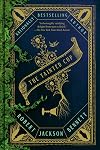
I found this book to be a wonderful blending of fantasy and mystery. Although the fantastical elements make it all but impossible for readers to puzzle out details of the crimes themselves (until close to the end), it is the perfect set up for a Sherlock Holmes style mystery where half the point is to marvel at the skills of the investigator.
And in this case, the parallel to John Watson actually is a leading character in his own right. Din’s skills as an engraver make him a natural and indispensable part of the team, and his fighting abilities add a lot to the excitement in a world where guns do not exist. He also has a thirst to prove himself that’s driven by a combination of his inexperience and some well-placed hints that he may not have earned his placement in the usual way. Indeed, the man who trained him seems to believe he doesn’t deserve the job at all.
I also enjoyed the worldbuilding, which showed that a great amount of thought went into the tangible consequences of living in a land where gigantic monsters attempt to invade every “wet season”. From the jaw droppingly impressive construction of the wall and fortifications themselves to the fact that houses are constructed of lightweight material designed to not kill anyone if (or most likely when) it collapses from the earthquakes caused by the leviathans’ movements, everything makes sense and nothing seems to have been forgotten. I also loved that a world without modern technology still includes some show more things associated with modern convenience, like mushrooms that cool the air (instead of air conditioning) and alterations that protect against various maladies (instead of vaccinations).
My biggest disappointment relates to Ana, the investigator. Although she’s interesting as a character and her good treatment of her assistant (despite him being an apprentice) makes her more than likeable enough, I was hoping for better in the depiction of her other characteristics.
Truthfully, I’m not even sure what term to use. The official description says “eccentricities”, but that doesn’t feel quite right to me. I would like to use “neurodivergence”, and I suspect it’s what the author was going for, but the depiction isn’t what I would expect even for a form of neurodivergence that the author made up.
Here’s an example of what I mean. We’re told that Ana wears a blindfold because, in her words, “too much stimulation drives a person mad” and cutting off one sense makes it easier for her to think. We're also told that the outside world having too much stimulation is the reason she doesn’t leave home even to get things her assistant refuses to fetch for her.
So when the investigation requires her to travel to a far-off region, and the carriage ride intended to make the journey a little easier is described by Din as “the most awful damned punishment I could imagine” because of how much “the walls and floors bucked and heaved” for hours on end, I initially felt for her. I was sure the constant physical stimulation, combined with the loss of her safe space, would cause Ana to feel overstimulated.
But instead of seeming irritated or withdrawn or nervous or tired or unfocused, she chats with Din as though she's excited to learn the pattern of the bumps, and she easily calls to mind obscure facts as she speculates about the techniques used to build and repair the road. She asks him to describe things to her as they pass by them, saying she’d like to puzzle them in her mind. She smiles as she explains things he hasn’t seen before. She doesn't complain about missing the familiarity of home. She doesn't mention bright light coming through the carriage windows or ask that curtains be drawn at any point during the ride so she can remove her blindfold and acclimate herself to what would then surely be a reasonably dim carriage interior devoid of visual clutter. I find it difficult to believe that she wanted Din to describe even the most boring of sights, and I don’t find it believable that the view would have never been blank forest or farmland or the equivalent for a stretch of many miles. So I went from very sympathetic to wondering why she wears a blindfold at all.
Because Ana’s condition may very well be fictional, I can’t say exactly what types of stimulation bother her or what symptoms she should have been experiencing while overstimulated, but it’s unbelievable that over the course of the whole book, she failed time and again to display any sign of difficulty or discomfort or inconvenience at the times when I expected it based on what she or Din had previously said. In fact, I only got more confused the more I read. This being the case, her traits truly do read more like eccentricities. To me, she does not represent an accurate portrayal of neurodiversity.
Which is a shame because the author clearly has a positive view of neurodiversity. As far as I can tell, he does a great job with the portrayal of dyslexia in main character Din. We see from the beginning that those previously in charge of his training thought his difficulties with reading and writing indicated a general lack of intelligence. It's obvious that he's developed a degree of internalized ableism as a result, and we see him struggle with it throughout the course of the book. We see the lengths he goes to hide his disability when required to memorize written material at his first crime scene. We feel his anxiety. We see that his brain makes it impossible to read in the way that others do, and this cannot be overcome. He must use techniques that do work for the brain he has. And, in doing so, he proves that the techniques a person uses do not matter, only that they accomplish the same goal. We also see a lot more aspects of him, such that we understand that his disability is not the only thing that defines him.
It’s a shame if the only problem with Ana’s portrayal is that the author didn’t do quite enough research to realize that portraying a neurodivergent individual as something of a superhuman (or super detective) without sufficient nuance is actually a bit flawed (see https://jael999.medium.com/the-problem-with-talking-about-autistic-superpowers-c... for more on that concept).
Regardless, I did very much enjoy the book overall, enough that I plan to give the sequel a chance. The only real content warning necessary is for violence and death, and I think fans of this type of fantasy will love it. But if you’d prefer to read something with more accurate disability representation, I’d recommend turning to something like Artifice and Access instead. show less
And in this case, the parallel to John Watson actually is a leading character in his own right. Din’s skills as an engraver make him a natural and indispensable part of the team, and his fighting abilities add a lot to the excitement in a world where guns do not exist. He also has a thirst to prove himself that’s driven by a combination of his inexperience and some well-placed hints that he may not have earned his placement in the usual way. Indeed, the man who trained him seems to believe he doesn’t deserve the job at all.
I also enjoyed the worldbuilding, which showed that a great amount of thought went into the tangible consequences of living in a land where gigantic monsters attempt to invade every “wet season”. From the jaw droppingly impressive construction of the wall and fortifications themselves to the fact that houses are constructed of lightweight material designed to not kill anyone if (or most likely when) it collapses from the earthquakes caused by the leviathans’ movements, everything makes sense and nothing seems to have been forgotten. I also loved that a world without modern technology still includes some show more things associated with modern convenience, like mushrooms that cool the air (instead of air conditioning) and alterations that protect against various maladies (instead of vaccinations).
My biggest disappointment relates to Ana, the investigator. Although she’s interesting as a character and her good treatment of her assistant (despite him being an apprentice) makes her more than likeable enough, I was hoping for better in the depiction of her other characteristics.
Truthfully, I’m not even sure what term to use. The official description says “eccentricities”, but that doesn’t feel quite right to me. I would like to use “neurodivergence”, and I suspect it’s what the author was going for, but the depiction isn’t what I would expect even for a form of neurodivergence that the author made up.
Here’s an example of what I mean. We’re told that Ana wears a blindfold because, in her words, “too much stimulation drives a person mad” and cutting off one sense makes it easier for her to think. We're also told that the outside world having too much stimulation is the reason she doesn’t leave home even to get things her assistant refuses to fetch for her.
So when the investigation requires her to travel to a far-off region, and the carriage ride intended to make the journey a little easier is described by Din as “the most awful damned punishment I could imagine” because of how much “the walls and floors bucked and heaved” for hours on end, I initially felt for her. I was sure the constant physical stimulation, combined with the loss of her safe space, would cause Ana to feel overstimulated.
But instead of seeming irritated or withdrawn or nervous or tired or unfocused, she chats with Din as though she's excited to learn the pattern of the bumps, and she easily calls to mind obscure facts as she speculates about the techniques used to build and repair the road. She asks him to describe things to her as they pass by them, saying she’d like to puzzle them in her mind. She smiles as she explains things he hasn’t seen before. She doesn't complain about missing the familiarity of home. She doesn't mention bright light coming through the carriage windows or ask that curtains be drawn at any point during the ride so she can remove her blindfold and acclimate herself to what would then surely be a reasonably dim carriage interior devoid of visual clutter. I find it difficult to believe that she wanted Din to describe even the most boring of sights, and I don’t find it believable that the view would have never been blank forest or farmland or the equivalent for a stretch of many miles. So I went from very sympathetic to wondering why she wears a blindfold at all.
Because Ana’s condition may very well be fictional, I can’t say exactly what types of stimulation bother her or what symptoms she should have been experiencing while overstimulated, but it’s unbelievable that over the course of the whole book, she failed time and again to display any sign of difficulty or discomfort or inconvenience at the times when I expected it based on what she or Din had previously said. In fact, I only got more confused the more I read. This being the case, her traits truly do read more like eccentricities. To me, she does not represent an accurate portrayal of neurodiversity.
Which is a shame because the author clearly has a positive view of neurodiversity. As far as I can tell, he does a great job with the portrayal of dyslexia in main character Din. We see from the beginning that those previously in charge of his training thought his difficulties with reading and writing indicated a general lack of intelligence. It's obvious that he's developed a degree of internalized ableism as a result, and we see him struggle with it throughout the course of the book. We see the lengths he goes to hide his disability when required to memorize written material at his first crime scene. We feel his anxiety. We see that his brain makes it impossible to read in the way that others do, and this cannot be overcome. He must use techniques that do work for the brain he has. And, in doing so, he proves that the techniques a person uses do not matter, only that they accomplish the same goal. We also see a lot more aspects of him, such that we understand that his disability is not the only thing that defines him.
It’s a shame if the only problem with Ana’s portrayal is that the author didn’t do quite enough research to realize that portraying a neurodivergent individual as something of a superhuman (or super detective) without sufficient nuance is actually a bit flawed (see https://jael999.medium.com/the-problem-with-talking-about-autistic-superpowers-c... for more on that concept).
Regardless, I did very much enjoy the book overall, enough that I plan to give the sequel a chance. The only real content warning necessary is for violence and death, and I think fans of this type of fantasy will love it. But if you’d prefer to read something with more accurate disability representation, I’d recommend turning to something like Artifice and Access instead. show less
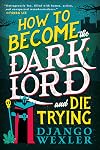
How to Become the Dark Lord and Die Trying is a fantasy novel with a humorous tone, although it's quite a bit darker than I was expecting based on the blurb and the marketing that led me to pick it up. I'm very glad it started with a content warning that explicitly addressed the fact that the main character's propensity for suicide is due to her "unique, fantastic circumstances" and offers a link to find suicide hotlines. It was also indispensable to me because it warned me about what was almost going to happen, so that I knew it wouldn't actually play out that way. If not for these things, I might not have continued reading past the first few chapters.
Because the opening is rough for our main character. She starts in an incredibly dark place, and when she resets, she acts out on her past trauma in some alarming ways. Also, when she takes it upon herself to join the other side, she does so from a position of almost total helplessness, which makes it extremely easy for others to enact violence against her. The humorous tone here contains some very dark humor, and it's difficult to get past if you, like myself, don't enjoy making light of suicide and/or murder.
But this is the rare type of book where the protagonist's situation actually improves throughout the course of the plotline. If you keep reading far enough, this book transforms into a fantasy adventure that balances the protagonist's unique expertise with what are for her brand-new experiences and discoveries. It show more also gives her opportunities to do some actually funny things, like teaching a bunch of orcs to sing "Yellow Submarine" while they march. And she does experience some character growth. Eventually she comes to regret the prior actions that I found the most alarming.
It should also be mentioned that there's some sexual content in this book. This came as a surprise to me because it wasn't marketed as romantic fantasy or romantasy, but that's completely fair because much of the sex is casual rather than an aspect of a romantic relationship, and because the action fades to black each time, the book is not erotica either. Even so, there was almost always at least one detail shared before or after the fade, and some of the jokes were sexual as well. This may be a perk for many readers. For myself, it's notable because I don't enjoy this sort of content and yet I still enjoyed the other aspects of the book so much that I read it to the end and then picked up the sequel.
I did enjoy the fact that this is a fantasy world in which the protagonist is free to express her bisexuality without any fear of prejudice or discrimination. Additionally, it was a relief that she had no need to overcome sexism or racism in order to earn respect as a leader. It was refreshing to read from the first-person perspective of someone who has Earth as their reference point while also being highly qualified to explain the magic and geography and inhabitants of the fantasy world in which the action takes place. It was also refreshing to have a protagonist in the position of "the chosen one" who actually knows what she's doing (as far as I can tell anyway) when it comes to things like combat and military strategy, so that it made sense for other characters to look up to her and trust in her leadership. She isn't just handed power "because the prophecy says so", and she doesn't win anything through pure luck or obvious plot armor. I also very much appreciated that the book was clearly plotted out as a duology from the beginning, meaning that the ending feels like the conclusion of book one rather than wrapping everything up because the publisher won't allow a sequel to be released at all unless the first book sells well enough (resulting in a sequel that has to be awkwardly tacked on instead of flowing naturally).
The world itself is well-developed, with a magic system that's easy to understand while also being unique and tying perfectly into the structure of the world and the main conflict within it. There are recognizable fantasy species like orcs alongside unique species like "rock eaters" (my personal favorite), and they're all intermixed in a way that makes the world feel realistic and appropriately populated. The terrain itself is also varied in a way that provides realistic challenges as well as fantasy wonder (rivers of lava!). Even the settlements and encampments each have their own personality, in the way their leaders run things or the tensions that exist among the people or the construction of buildings and fortifications themselves, so that each location was unique and memorable.
If you're considering this one, I'd recommend reading the content warning and a few pages that will give you a feel for the writing style. Usually I'd recommend the first few pages, but if you don't mind the chance of spoilers, you might want to randomly turn to a page a little farther back in this case. You know, far enough that the protagonist isn't desperately trying to stay lighthearted about being tortured and is instead able to be lighthearted about the adventures she has after she takes the path exactly opposite of the one that led to being tortured. On the other hand, if you enjoy both fantasy adventure and are on board for dark humor of that caliber, you're in for a treat from beginning to end. show less
Because the opening is rough for our main character. She starts in an incredibly dark place, and when she resets, she acts out on her past trauma in some alarming ways. Also, when she takes it upon herself to join the other side, she does so from a position of almost total helplessness, which makes it extremely easy for others to enact violence against her. The humorous tone here contains some very dark humor, and it's difficult to get past if you, like myself, don't enjoy making light of suicide and/or murder.
But this is the rare type of book where the protagonist's situation actually improves throughout the course of the plotline. If you keep reading far enough, this book transforms into a fantasy adventure that balances the protagonist's unique expertise with what are for her brand-new experiences and discoveries. It show more also gives her opportunities to do some actually funny things, like teaching a bunch of orcs to sing "Yellow Submarine" while they march. And she does experience some character growth. Eventually she comes to regret the prior actions that I found the most alarming.
It should also be mentioned that there's some sexual content in this book. This came as a surprise to me because it wasn't marketed as romantic fantasy or romantasy, but that's completely fair because much of the sex is casual rather than an aspect of a romantic relationship, and because the action fades to black each time, the book is not erotica either. Even so, there was almost always at least one detail shared before or after the fade, and some of the jokes were sexual as well. This may be a perk for many readers. For myself, it's notable because I don't enjoy this sort of content and yet I still enjoyed the other aspects of the book so much that I read it to the end and then picked up the sequel.
I did enjoy the fact that this is a fantasy world in which the protagonist is free to express her bisexuality without any fear of prejudice or discrimination. Additionally, it was a relief that she had no need to overcome sexism or racism in order to earn respect as a leader. It was refreshing to read from the first-person perspective of someone who has Earth as their reference point while also being highly qualified to explain the magic and geography and inhabitants of the fantasy world in which the action takes place. It was also refreshing to have a protagonist in the position of "the chosen one" who actually knows what she's doing (as far as I can tell anyway) when it comes to things like combat and military strategy, so that it made sense for other characters to look up to her and trust in her leadership. She isn't just handed power "because the prophecy says so", and she doesn't win anything through pure luck or obvious plot armor. I also very much appreciated that the book was clearly plotted out as a duology from the beginning, meaning that the ending feels like the conclusion of book one rather than wrapping everything up because the publisher won't allow a sequel to be released at all unless the first book sells well enough (resulting in a sequel that has to be awkwardly tacked on instead of flowing naturally).
The world itself is well-developed, with a magic system that's easy to understand while also being unique and tying perfectly into the structure of the world and the main conflict within it. There are recognizable fantasy species like orcs alongside unique species like "rock eaters" (my personal favorite), and they're all intermixed in a way that makes the world feel realistic and appropriately populated. The terrain itself is also varied in a way that provides realistic challenges as well as fantasy wonder (rivers of lava!). Even the settlements and encampments each have their own personality, in the way their leaders run things or the tensions that exist among the people or the construction of buildings and fortifications themselves, so that each location was unique and memorable.
If you're considering this one, I'd recommend reading the content warning and a few pages that will give you a feel for the writing style. Usually I'd recommend the first few pages, but if you don't mind the chance of spoilers, you might want to randomly turn to a page a little farther back in this case. You know, far enough that the protagonist isn't desperately trying to stay lighthearted about being tortured and is instead able to be lighthearted about the adventures she has after she takes the path exactly opposite of the one that led to being tortured. On the other hand, if you enjoy both fantasy adventure and are on board for dark humor of that caliber, you're in for a treat from beginning to end. show less
Beasts of Carnaval: A Caribbean Historical Fantasy Tale of Mystery and Magic at El Carnaval De Bestias by Rosália Rodrigo
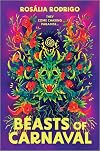
Beasts of Carnaval is a fantasy novel with a bit of horror woven in. It promises a world steeped in Puerto Rican culture, including the culture of the native Taíno people. On this front, the book absolutely delivers. The food, costumes, and decorations of Isla Bestia are described in detail. The legends of the Taíno can be seen filtering through, and eventually their culture is on full display. Although this is a fantasy world, the author's note explains every place where she chose to deviate from history and describes the research and personal connections that brought this intricate setting to life.
Unfortunately, the execution is lacking. Truthfully, I had some difficulty even writing a plot description for this book because there are certain details that are never quite explained. It's mentioned that the plantation owner's wife is "oblivious to her daughter's flagrant philanthropy" in regards to the way Adelina been running things since her father's disappearance, but how can this be the case? Why is the daughter running things instead of the wife? Where even is the wife? Why did Sofia wait two years after gaining her freedom to go to the island in search of her missing brother, especially if Adelina is so willing and eager to accompany her that she likely would have footed the bill? For that matter, why is Adelina so willing to go along? Does she actually want to get her father back (because if you ask me she's clearly better off without him)? If so, why has she show more waited so long? All these questions and more came up as I was reading the first chapter because the setup is so brief and so rushed that we dive right into the journey without fully understanding why it's being undertaken.
To be fair, some of the questions I had were answered later on, but in the majority of cases those explanations came far too late. I suppose I'm partially at fault for not taking it at face value when the narration told me early on that Sofia loves Adelina "like a sister". But in a book where Sofia and Adelina are the two major characters, I should not have to wait until page 184 to hear Adelina say that she never thought of Sofia as her property or to hear Sofia finally addressing the fact that she's never forgotten the way Adelina's parents treated her while Adelina herself either didn't notice or pretended not to. It's weird for a former slave to be on good terms with the woman she was "gifted to" when they were young. It's natural for readers to feel weird about their relationship until the obvious questions about it have been answered. It's also weird for the woman happily running a plantation in her father's absence to leave at the drop of a hat because she's discovered that one of her former slaves was planning to go on a journey without her. Even supposing that Adelina doesn't intend to be gone for very long, that's the sort of seemingly irresponsible emotional decision making that made me wonder if the two were in a romantic relationship or so in love with each other that they would be by the end of the book. I don't want to be reading pages and pages of two people bantering and attending parties and watching each other's backs while they investigate a mystery without understanding how they even feel about each other and how much trust there reasonably should be in that relationship.
And again, these are only examples taken from the first two or three chapters of the book. I'd love to say that the author cut too much from the beginning because she was afraid of readers getting bored by backstory, but unfortunately the trend of not explaining things the reader really ought to know continues throughout. There were so many times when I couldn't even determine the motivations of major characters or how the main character felt about important plot developments.
On top of that, I was disappointed in the way the author chose to portray prejudice and characters working against it. For example, there are instances of the main character being treated badly by people who judge based on her skin color. For example, there's a scene in the second chapter where Sofia is barred entry to a portion of the ship because she's assumed to be there as a servant. She responds by proudly stating that she paid for her own ticket and therefore has every right to be there, then slips her way past. The narration clearly states that this is "foolhardy" and likely to land her in trouble. We're told she has gotten herself into trouble many times before. Yet nothing ever happens. Nor does anything happen when she says, "I do not fetch" to the woman who's asked her to fetch something. Nor any of the other times when I got the feeling that we the readers are meant to be smiling or laughing and cheering her on. And we're never given a reasonable explanation as to what might be preventing that "trouble" from happening.
Of course I enjoy watching marginalized characters stand up for themselves, but when none of the supposedly racist characters react in the way that actual racists would, I don't feel right about it. Now, I recognize that I'm not particularly qualified to speak on racism, so I'll shift to discussing how Adelina, the privileged white woman, faces sexism. For example, it's great to see her insist on sitting down to a card game in a world where women are generally assumed to not have the skills and intelligence to play well, but when she wins a substantial amount of money with ease, the most sexist men around neither accuse her of cheating nor let their tempers fly out of control nor hatch any kind of plan to "teach her a lesson". She doesn't even face the sort of verbal harassment modern women are bombarded with when they dare to play certain video games. So she doesn't have to struggle to maintain her composure and concentration, to continue believing in herself against an onslaught of voices trying to tear her down. Just a bit of annoyance from one of the men she sits down to play against, a brief complaint that's voiced before the loser walks away.
This is not only unbelievable but it actually detracts from Adelina's bravery and cheapens the struggles of all the women who have ever failed to accomplish such feats because of real obstacles. When this is how a book depicts sexism, it suggests to readers that overcoming sexism is easy. It suggests that it's the woman's fault if she fails to overcome, rather than the fault of a patriarchy that's designed to keep even the strongest and most capable women down while systematically robbing them of power. Did Rosa Parks respond with a witty quip when asked to give up her seat? Did Susan B. Anthony kick herself for not just walking into city hall and being extra determined until they gave her a voter registration form? Of course not. That wouldn't have worked. I'm of the opinion that both women had more strength in their pinky fingers than any "strong female character" in a fictional society like this one.
It's fair to say this book made me angry. But it made me angry because I was hoping for so much more from it. I loved the setting. I loved that the author was drawing upon her own partial Taíno heritage, that she did her research on belief systems and a language that's been mostly lost, that she cited her sources for those who want to read and learn more for themselves. I love the concept of a sister looking for the twin brother who's been the only person she can rely on since both were sold away from their mother. I love the fantastical version of Carnaval, the monstrous vejigantes who are believed by the characters to be people in costumes but never say a word and appear so realistic it's downright creepy. I like the big twist in the middle portion of the book and what comes with it. And I was thrilled to discover that Sofia reads as asexual (although the term is never used) and embraces her lifestyle with no regrets. But none of this is written the way it deserves to be written.
This is the author's debut novel, so I'm hopeful that many of my complaints are due to inexperience. Actually, I hope many of them are due to the author being forced to conform to unfair expectations enforced by a traditional publisher for a debut novel about a marginalized population. I hope she had a much longer manuscript that she was forced to hack away at until it fit the maximum word count the publisher was willing to take a chance on. I hope the novel wasn't given the editor who works on all the books that are expected to become bestsellers, that it was rushed to market to save costs, that there was pressure to add or change elements to make the book more marketable even though they detracted from the overall quality. And most of all I hope that me buying a copy of this book and leaving a review will be a signal to publishers and agents and anyone else involved that readers do want books like this one and that this author should be given a deal for her next book. Because I want to see what she can do next.
That being said, you may read this book and enjoy it thoroughly. Maybe the things that bother me aren't a big deal to you. Maybe the positives appeal to you so much that the negatives will only take "perfect" down to "great". I won't deny that there are great aspects to this book, so if you love the concept and want to spend some time in the fantasy world this author created, I hope you do go read it and make up your own mind. show less
Unfortunately, the execution is lacking. Truthfully, I had some difficulty even writing a plot description for this book because there are certain details that are never quite explained. It's mentioned that the plantation owner's wife is "oblivious to her daughter's flagrant philanthropy" in regards to the way Adelina been running things since her father's disappearance, but how can this be the case? Why is the daughter running things instead of the wife? Where even is the wife? Why did Sofia wait two years after gaining her freedom to go to the island in search of her missing brother, especially if Adelina is so willing and eager to accompany her that she likely would have footed the bill? For that matter, why is Adelina so willing to go along? Does she actually want to get her father back (because if you ask me she's clearly better off without him)? If so, why has she show more waited so long? All these questions and more came up as I was reading the first chapter because the setup is so brief and so rushed that we dive right into the journey without fully understanding why it's being undertaken.
To be fair, some of the questions I had were answered later on, but in the majority of cases those explanations came far too late. I suppose I'm partially at fault for not taking it at face value when the narration told me early on that Sofia loves Adelina "like a sister". But in a book where Sofia and Adelina are the two major characters, I should not have to wait until page 184 to hear Adelina say that she never thought of Sofia as her property or to hear Sofia finally addressing the fact that she's never forgotten the way Adelina's parents treated her while Adelina herself either didn't notice or pretended not to. It's weird for a former slave to be on good terms with the woman she was "gifted to" when they were young. It's natural for readers to feel weird about their relationship until the obvious questions about it have been answered. It's also weird for the woman happily running a plantation in her father's absence to leave at the drop of a hat because she's discovered that one of her former slaves was planning to go on a journey without her. Even supposing that Adelina doesn't intend to be gone for very long, that's the sort of seemingly irresponsible emotional decision making that made me wonder if the two were in a romantic relationship or so in love with each other that they would be by the end of the book. I don't want to be reading pages and pages of two people bantering and attending parties and watching each other's backs while they investigate a mystery without understanding how they even feel about each other and how much trust there reasonably should be in that relationship.
And again, these are only examples taken from the first two or three chapters of the book. I'd love to say that the author cut too much from the beginning because she was afraid of readers getting bored by backstory, but unfortunately the trend of not explaining things the reader really ought to know continues throughout. There were so many times when I couldn't even determine the motivations of major characters or how the main character felt about important plot developments.
On top of that, I was disappointed in the way the author chose to portray prejudice and characters working against it. For example, there are instances of the main character being treated badly by people who judge based on her skin color. For example, there's a scene in the second chapter where Sofia is barred entry to a portion of the ship because she's assumed to be there as a servant. She responds by proudly stating that she paid for her own ticket and therefore has every right to be there, then slips her way past. The narration clearly states that this is "foolhardy" and likely to land her in trouble. We're told she has gotten herself into trouble many times before. Yet nothing ever happens. Nor does anything happen when she says, "I do not fetch" to the woman who's asked her to fetch something. Nor any of the other times when I got the feeling that we the readers are meant to be smiling or laughing and cheering her on. And we're never given a reasonable explanation as to what might be preventing that "trouble" from happening.
Of course I enjoy watching marginalized characters stand up for themselves, but when none of the supposedly racist characters react in the way that actual racists would, I don't feel right about it. Now, I recognize that I'm not particularly qualified to speak on racism, so I'll shift to discussing how Adelina, the privileged white woman, faces sexism. For example, it's great to see her insist on sitting down to a card game in a world where women are generally assumed to not have the skills and intelligence to play well, but when she wins a substantial amount of money with ease, the most sexist men around neither accuse her of cheating nor let their tempers fly out of control nor hatch any kind of plan to "teach her a lesson". She doesn't even face the sort of verbal harassment modern women are bombarded with when they dare to play certain video games. So she doesn't have to struggle to maintain her composure and concentration, to continue believing in herself against an onslaught of voices trying to tear her down. Just a bit of annoyance from one of the men she sits down to play against, a brief complaint that's voiced before the loser walks away.
This is not only unbelievable but it actually detracts from Adelina's bravery and cheapens the struggles of all the women who have ever failed to accomplish such feats because of real obstacles. When this is how a book depicts sexism, it suggests to readers that overcoming sexism is easy. It suggests that it's the woman's fault if she fails to overcome, rather than the fault of a patriarchy that's designed to keep even the strongest and most capable women down while systematically robbing them of power. Did Rosa Parks respond with a witty quip when asked to give up her seat? Did Susan B. Anthony kick herself for not just walking into city hall and being extra determined until they gave her a voter registration form? Of course not. That wouldn't have worked. I'm of the opinion that both women had more strength in their pinky fingers than any "strong female character" in a fictional society like this one.
It's fair to say this book made me angry. But it made me angry because I was hoping for so much more from it. I loved the setting. I loved that the author was drawing upon her own partial Taíno heritage, that she did her research on belief systems and a language that's been mostly lost, that she cited her sources for those who want to read and learn more for themselves. I love the concept of a sister looking for the twin brother who's been the only person she can rely on since both were sold away from their mother. I love the fantastical version of Carnaval, the monstrous vejigantes who are believed by the characters to be people in costumes but never say a word and appear so realistic it's downright creepy. I like the big twist in the middle portion of the book and what comes with it. And I was thrilled to discover that Sofia reads as asexual (although the term is never used) and embraces her lifestyle with no regrets. But none of this is written the way it deserves to be written.
This is the author's debut novel, so I'm hopeful that many of my complaints are due to inexperience. Actually, I hope many of them are due to the author being forced to conform to unfair expectations enforced by a traditional publisher for a debut novel about a marginalized population. I hope she had a much longer manuscript that she was forced to hack away at until it fit the maximum word count the publisher was willing to take a chance on. I hope the novel wasn't given the editor who works on all the books that are expected to become bestsellers, that it was rushed to market to save costs, that there was pressure to add or change elements to make the book more marketable even though they detracted from the overall quality. And most of all I hope that me buying a copy of this book and leaving a review will be a signal to publishers and agents and anyone else involved that readers do want books like this one and that this author should be given a deal for her next book. Because I want to see what she can do next.
That being said, you may read this book and enjoy it thoroughly. Maybe the things that bother me aren't a big deal to you. Maybe the positives appeal to you so much that the negatives will only take "perfect" down to "great". I won't deny that there are great aspects to this book, so if you love the concept and want to spend some time in the fantasy world this author created, I hope you do go read it and make up your own mind. show less
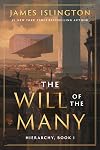
The Will of the Many is a dark academia fantasy novel that takes place in a world with similarities to the Roman Empire. Readers will pick up on bits of Latin, references to a pantheon of gods and goddesses, and gladiator-type contests, but I found the most interesting aspect to be that of an empire that's formed itself as a machine for endless conquering. This not only casts it immediately and irrevocably as a force of evil that killed the main character's family, forcibly subdued the people of his beloved homeland, and actively erases every language and culture it is able to subsume. It also presents a force of evil with a unique and fascinating flaw: when you've built your empire to depend upon the constant growth of conquering new nations, how can it go on when there is nothing left to conquer?
In this way and many others, the novel gives opportunities for contemplation, even as the action-packed plot keeps throwing the main character into dangerous and seemingly impossible situations. The stakes are so well constructed that even the smallest aspects of the main character's academic life take on profound importance. The air of secrecy and distrust lends itself perfectly to big reveals and plot twists that are perfectly believable to have been hidden for so long or to come so unexpectedly. And this, combined with the main character's need to keep his own identity and his own past a secret, denies him the opportunity to fully lean on any person other than himself. In show more every way, it's a very well-constructed framework that sets the stage for a stunning success.
In the afterword, the author mentions having been inspired by Brandon Sanderson and Patrick Rothfuss, and I was pleasantly surprised to find that the connections I was drawing between this book and The Name of the Wind were absolutely on point. I think if you enjoy the work of these other authors, you're very likely to enjoy this one as well. On the other hand, I know some people criticize The Name of the Wind for having an overpowered main character, and if that's the case for you, you'll likely have the same complaint about this one.
Even as a person who enjoys a plotline of an exceptionally talented main character learning and training and developing to the point at which they're almost unbelievably exceptional, I did find a few plot developments in The Will of the Many to be a bit of a stretch. The main character was just a bit too lucky, or another character acted in just the right way at just the right time in a way that didn't quite seem believable. In this sort of story structure, it's a serious mistake when readers can detect an author's hand weighing down one end of the scales. Luckily, this did only apply in a few instances for me, while the rest of the book worked perfectly.
As far as content warnings, this book doesn't have much beyond what you would expect from the description. There is a lot of violence and death. Characters from the empire display bigotry in regards to other cultures, though notably there is no evidence of the sort of racism that exists in our world. Women are less likely to have powerful roles in society because they are heavily encouraged to have children (in some cases as many as possible), but the female characters depicted are clearly just as capable as the male characters in terms of natural talent and abilities and there is no evidence of the sort of sexism that exists in our world.
Although this book felt particularly dark and hopeless in the beginning, I started to enjoy it more after the first few chapters, and by the middle I was hooked to the point of flying through the rest of it. I don't always continue a series after reading the first book, but in this case I definitely will be picking up the sequel as soon as it comes out in November. If it sounds like the type of book you might enjoy, now would be the perfect time to give it a read. You might find that by the time you're finished, you won't have to wait at all for the sequel you might be craving. show less
In this way and many others, the novel gives opportunities for contemplation, even as the action-packed plot keeps throwing the main character into dangerous and seemingly impossible situations. The stakes are so well constructed that even the smallest aspects of the main character's academic life take on profound importance. The air of secrecy and distrust lends itself perfectly to big reveals and plot twists that are perfectly believable to have been hidden for so long or to come so unexpectedly. And this, combined with the main character's need to keep his own identity and his own past a secret, denies him the opportunity to fully lean on any person other than himself. In show more every way, it's a very well-constructed framework that sets the stage for a stunning success.
In the afterword, the author mentions having been inspired by Brandon Sanderson and Patrick Rothfuss, and I was pleasantly surprised to find that the connections I was drawing between this book and The Name of the Wind were absolutely on point. I think if you enjoy the work of these other authors, you're very likely to enjoy this one as well. On the other hand, I know some people criticize The Name of the Wind for having an overpowered main character, and if that's the case for you, you'll likely have the same complaint about this one.
Even as a person who enjoys a plotline of an exceptionally talented main character learning and training and developing to the point at which they're almost unbelievably exceptional, I did find a few plot developments in The Will of the Many to be a bit of a stretch. The main character was just a bit too lucky, or another character acted in just the right way at just the right time in a way that didn't quite seem believable. In this sort of story structure, it's a serious mistake when readers can detect an author's hand weighing down one end of the scales. Luckily, this did only apply in a few instances for me, while the rest of the book worked perfectly.
As far as content warnings, this book doesn't have much beyond what you would expect from the description. There is a lot of violence and death. Characters from the empire display bigotry in regards to other cultures, though notably there is no evidence of the sort of racism that exists in our world. Women are less likely to have powerful roles in society because they are heavily encouraged to have children (in some cases as many as possible), but the female characters depicted are clearly just as capable as the male characters in terms of natural talent and abilities and there is no evidence of the sort of sexism that exists in our world.
Although this book felt particularly dark and hopeless in the beginning, I started to enjoy it more after the first few chapters, and by the middle I was hooked to the point of flying through the rest of it. I don't always continue a series after reading the first book, but in this case I definitely will be picking up the sequel as soon as it comes out in November. If it sounds like the type of book you might enjoy, now would be the perfect time to give it a read. You might find that by the time you're finished, you won't have to wait at all for the sequel you might be craving. show less
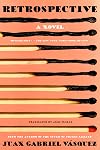
Retrospective is historical fiction based on the lives of real people. Despite its designation as a novel, it reads surprisingly like nonfiction, with a very factual tone and a lot of summary as opposed to scenes. The text even includes photographs scattered throughout, showing just how much of the story is real.
As someone who knew nothing about Sergio Cabrera or any of his family before reading this book, I was unable to tell what parts of it might have been fictionalized at all. In the afterword, the author states that he had extensive interviews with Segio Cabrera himself, while saying nothing about where he took some liberties. I find this to be an unusual way to write historical fiction, but there's nothing inherently wrong with it as long as the style associated with nonfiction doesn't bore you.
Although I read the English translation (and haven't read it in the original Spanish), I found the writing to be excellent. There were several quotes that stood out to me as I read, which were lovely or intriguing ways of expressing various thoughts or ideas. I do know enough Spanish that I didn't need explanations of the few words that were necessary for the translator to include, but the text provides them seamlessly regardless.
I also very much appreciated the depiction of the women of the family, whose stories were not pushed into the background but rather highlighted at various points, just as the stories of the men were in their turns. The women's strengths and show more accomplishments are celebrated, and neither the difficulties they went through nor the treatment they were sometimes forced to endure were downplayed or written as though they were at fault. Although Sergio receives the most attention in the novel, I got the impression that this was the case mainly because the author had the most information about him. Some of his sister's sections are supplemented by the inclusion of diary entries that I enjoyed seeing as a way to fill in some of the gaps, and I later learned she did in fact supply them to the author.
Given what the family experienced, readers should be aware that the book contains descriptions of violence, warfare, and death. Additionally, one of the characters experiences sexual harassment and wonders whether she was sexually assaulted while unconscious.
Assuming you have no concerns about the subject matter, this book is a fascinating one. Knowing that so much of it is based on true experiences makes it that much more compelling to me because it gives so much insight into the types of people who were involved in these extraordinary historical circumstances. If you have any interest in the Spanish Civil War, China's Cultural Revolution, or "La Violencia" and the conflict that followed in Colombia, I recommend this book to you. show less
As someone who knew nothing about Sergio Cabrera or any of his family before reading this book, I was unable to tell what parts of it might have been fictionalized at all. In the afterword, the author states that he had extensive interviews with Segio Cabrera himself, while saying nothing about where he took some liberties. I find this to be an unusual way to write historical fiction, but there's nothing inherently wrong with it as long as the style associated with nonfiction doesn't bore you.
Although I read the English translation (and haven't read it in the original Spanish), I found the writing to be excellent. There were several quotes that stood out to me as I read, which were lovely or intriguing ways of expressing various thoughts or ideas. I do know enough Spanish that I didn't need explanations of the few words that were necessary for the translator to include, but the text provides them seamlessly regardless.
I also very much appreciated the depiction of the women of the family, whose stories were not pushed into the background but rather highlighted at various points, just as the stories of the men were in their turns. The women's strengths and show more accomplishments are celebrated, and neither the difficulties they went through nor the treatment they were sometimes forced to endure were downplayed or written as though they were at fault. Although Sergio receives the most attention in the novel, I got the impression that this was the case mainly because the author had the most information about him. Some of his sister's sections are supplemented by the inclusion of diary entries that I enjoyed seeing as a way to fill in some of the gaps, and I later learned she did in fact supply them to the author.
Given what the family experienced, readers should be aware that the book contains descriptions of violence, warfare, and death. Additionally, one of the characters experiences sexual harassment and wonders whether she was sexually assaulted while unconscious.
Assuming you have no concerns about the subject matter, this book is a fascinating one. Knowing that so much of it is based on true experiences makes it that much more compelling to me because it gives so much insight into the types of people who were involved in these extraordinary historical circumstances. If you have any interest in the Spanish Civil War, China's Cultural Revolution, or "La Violencia" and the conflict that followed in Colombia, I recommend this book to you. show less
Having previously read an excerpt of this novel for a university philosophy course, I wasn't surprised to see the characters engage in lengthy discussions on religion in this book. In fact, I personally found these to be the most valuable passages, challenging the reader with such topics as the problem of evil, the role of religion in society, and what, if anything, is worth living for. For religious readers, Ivan's thesis is a force to be reckoned with, while readers who agree with Ivan may be troubled by passages that betray his own uncertainty as well as by events unfolding arguably as a direct result of his particular philosophy.
I was surprised by the amount of interpersonal drama that does, in fact, unfold over the course of these seven hundred-some pages. Scandals, love triangles, and a much-foreshadowed tragedy all take their turns on stage as a large cast of imperfect characters pursues often contradictory goals. In some cases, it's clear that a character's goals are even in direct contradiction to their own best interest.
While there are characters the author seemingly intended to be the few "good ones" readers can stand behind in a book full of despicable people, I personally found that I could sympathize with almost every character in at least one aspect. Doing so, however, was sometimes a challenge because of what I perceived to be the author's own flawed worldview forcing its way through.
For example, I naturally wanted to sympathize with many of the female show more characters because of my own understanding of the patriarchal system under which they were forced to live, but they were often depicted in ways that make very little sense unless you as a reader believe that women are often irrational and overly emotional and given to bouts of hysteria. Unlike in works like Henrik Ibsen's A Doll's House, which explicitly states that the female lead has been behaving according to certain feminine stereotypes because of the way her life has been shaped by patriarchal forces, the female characters in this book seem to be written by a sexist author who doesn't understand women at all.
In fact, I very often got the impression that the author's prejudices were affecting the way he depicted certain characters, and in some cases, I got the strong impression that he was expecting the reader to feel a certain way about certain characters because he assumes the reader to share his prejudice. For example, the story of a disabled woman named Lizaveta is recounted very early on, and her behavior once again seems entirely irrational based on my understanding of the disability she seems to have. Fyodor is implied to have raped to her, which I do believe is meant to be viewed negatively by the reader, but at the same time I got the sense that it's meant to be viewed that way mainly because of the author's belief that such people shouldn't have children. Indeed, the idea that such people are lesser than the nondisabled people around them is reinforced by the fact that the narrative treats it as completely natural that Lizaveta's son (who is disabled in a different way) grows up to become Fyodor's servant, making him a fourth Karamazov brother who isn't given nearly the same treatment as the others either in his fictional life or through the narration that presents it. In fact, he's given a surname that roughly translates to "stinking" because his mother was referred to this way, and he's consistently referred to only by this insulting surname even in narration. Despite having the given name of Pavel and being assumed by everyone to be Fyodor's son, he's only referred to as Pavel Fyodorovitch a single time, in the dialogue of the one character in the book who seems to treat him kindly. While he himself makes some indications of his dissatisfaction with his lot in life, I think by the end of the book it will be exceptionally clear to the reader how the author wanted us to think of this.
I would be remiss if I didn't also mention classism, of which there's one particularly glaring instance that I found quite disturbing. Namely, the fact that Dmitri nearly killed the servant who was like a father to him for a portion of his childhood, but everyone including the narrator seems to care only about whether he killed his actual father, heavily implying that he shouldn't feel guilty at all over what should have been treated as attempted murder . The book also contains many instances of antisemitism and many derogatory references to the Romani people.
All that being said, the book is written in an engaging way, assuming you're the type of person who at least sometimes finds classic literature to be engaging. I was surprised by how easily I found myself making progress, even during the beginning portions that mainly consisted of introducing characters and establishing back story. When the plot got to a certain point, I even found myself reading on and on without wanting to stop. The effect was only broken when I reached a portion of the book that seemed needlessly repetitive, recounting events that had already been depicted through the filter of a different character's opinion. While I think the book could have been trimmed down in that specific instance, I was able to see value in all the rest. Although it is a very long book, it didn't take nearly as long to read as I expected it would.
In fact, I was disappointed that the book didn't go on a little longer because I wanted to know more about the fate of certain characters beyond the point at which the ending cuts off. I was a little surprised that there wasn't more closure in certain regards, although perhaps I missed some subtle passages that were meant to tell the reader everything we should need to know.
Overall, I was definitely more invested in this book as an exploration of the ideas presented within it than anything else. Because I don't see many character portrayals as being realistic and could not stop seeing the setting as a fictional one created as a representation of what I presumed to be the author's flawed worldview, I treated it as one of those books that give an insight into an author's mind rather than an insight into the world itself. In some cases, this negates much of the value a book would otherwise have had, but in this case I think the heavy emphasis on philosophy and other "big ideas" is the very thing that saves it. Because I did come to see that much of the drama was tied into that philosophical underpinning in a way I never would have expected at the beginning.
I don't think this is a novel to be read as entertainment, but I do see it as a novel that can entertain the reader who engages with the deeper substance of it. In that way, I fully understand why it's a classic. I recommend you read it if you're at a point in your life where you can appreciate such a thing. But I also encourage you to skip it if you're sensitive to any of the potential triggers mentioned above, with the added warning that it includes incredibly disturbing stories of child abuse. I stand firmly by the statement that no novel in the world is a "must read" for every single person, even when it comes to classics that have rightfully earned a good portion of the respect they've been given. While you may benefit greatly from a thoughtful reading of The Brothers Karamazov, you're not a lesser reader or a lesser person if you choose to engage on that deep level with a book more suitable to you. show less
I was surprised by the amount of interpersonal drama that does, in fact, unfold over the course of these seven hundred-some pages. Scandals, love triangles, and a much-foreshadowed tragedy all take their turns on stage as a large cast of imperfect characters pursues often contradictory goals. In some cases, it's clear that a character's goals are even in direct contradiction to their own best interest.
While there are characters the author seemingly intended to be the few "good ones" readers can stand behind in a book full of despicable people, I personally found that I could sympathize with almost every character in at least one aspect. Doing so, however, was sometimes a challenge because of what I perceived to be the author's own flawed worldview forcing its way through.
For example, I naturally wanted to sympathize with many of the female show more characters because of my own understanding of the patriarchal system under which they were forced to live, but they were often depicted in ways that make very little sense unless you as a reader believe that women are often irrational and overly emotional and given to bouts of hysteria. Unlike in works like Henrik Ibsen's A Doll's House, which explicitly states that the female lead has been behaving according to certain feminine stereotypes because of the way her life has been shaped by patriarchal forces, the female characters in this book seem to be written by a sexist author who doesn't understand women at all.
In fact, I very often got the impression that the author's prejudices were affecting the way he depicted certain characters, and in some cases, I got the strong impression that he was expecting the reader to feel a certain way about certain characters because he assumes the reader to share his prejudice. For example, the story of a disabled woman named Lizaveta is recounted very early on, and her behavior once again seems entirely irrational based on my understanding of the disability she seems to have. Fyodor is implied to have raped to her, which I do believe is meant to be viewed negatively by the reader, but at the same time I got the sense that it's meant to be viewed that way mainly because of the author's belief that such people shouldn't have children. Indeed, the idea that such people are lesser than the nondisabled people around them is reinforced by the fact that the narrative treats it as completely natural that Lizaveta's son (who is disabled in a different way) grows up to become Fyodor's servant, making him a fourth Karamazov brother who isn't given nearly the same treatment as the others either in his fictional life or through the narration that presents it. In fact, he's given a surname that roughly translates to "stinking" because his mother was referred to this way, and he's consistently referred to only by this insulting surname even in narration. Despite having the given name of Pavel and being assumed by everyone to be Fyodor's son, he's only referred to as Pavel Fyodorovitch a single time, in the dialogue of the one character in the book who seems to treat him kindly. While he himself makes some indications of his dissatisfaction with his lot in life, I think by the end of the book it will be exceptionally clear to the reader how the author wanted us to think of this.
I would be remiss if I didn't also mention classism, of which there's one particularly glaring instance that I found quite disturbing. Namely,
All that being said, the book is written in an engaging way, assuming you're the type of person who at least sometimes finds classic literature to be engaging. I was surprised by how easily I found myself making progress, even during the beginning portions that mainly consisted of introducing characters and establishing back story. When the plot got to a certain point, I even found myself reading on and on without wanting to stop. The effect was only broken when I reached a portion of the book that seemed needlessly repetitive, recounting events that had already been depicted through the filter of a different character's opinion. While I think the book could have been trimmed down in that specific instance, I was able to see value in all the rest. Although it is a very long book, it didn't take nearly as long to read as I expected it would.
In fact, I was disappointed that the book didn't go on a little longer because I wanted to know more about the fate of certain characters beyond the point at which the ending cuts off. I was a little surprised that there wasn't more closure in certain regards, although perhaps I missed some subtle passages that were meant to tell the reader everything we should need to know.
Overall, I was definitely more invested in this book as an exploration of the ideas presented within it than anything else. Because I don't see many character portrayals as being realistic and could not stop seeing the setting as a fictional one created as a representation of what I presumed to be the author's flawed worldview, I treated it as one of those books that give an insight into an author's mind rather than an insight into the world itself. In some cases, this negates much of the value a book would otherwise have had, but in this case I think the heavy emphasis on philosophy and other "big ideas" is the very thing that saves it. Because I did come to see that much of the drama was tied into that philosophical underpinning in a way I never would have expected at the beginning.
I don't think this is a novel to be read as entertainment, but I do see it as a novel that can entertain the reader who engages with the deeper substance of it. In that way, I fully understand why it's a classic. I recommend you read it if you're at a point in your life where you can appreciate such a thing. But I also encourage you to skip it if you're sensitive to any of the potential triggers mentioned above, with the added warning that it includes incredibly disturbing stories of child abuse. I stand firmly by the statement that no novel in the world is a "must read" for every single person, even when it comes to classics that have rightfully earned a good portion of the respect they've been given. While you may benefit greatly from a thoughtful reading of The Brothers Karamazov, you're not a lesser reader or a lesser person if you choose to engage on that deep level with a book more suitable to you. show less
Artifice and Access is an anthology of fantasy stories written by disabled authors. From original worldbuilding to fractured fairytales that challenge the status quo, this collection shows that disabled characters can be the heroes of any fantastical adventure. Without sacrificing realism or being forced into a magical "cure". Along with a diversity in the types of disabilities shown, this collection showcases a diversity of LGBTQ+ perspectives, providing stories that challenge traditional narratives in multiple ways at once.
I think the strength of this collection lies in its variety, with each author's individual story adding a new facet to the polished jewel. I also believe each reader will find a story or two they consider their personal favorites, but as I read, I could easily imagine each one being favored by someone in that special way.
Personally, I enjoyed A Witch's Tale by Rascal Hartley, in which a young female knight seeks healing from a witch after losing a battle with a dragon. The first thing I loved is that witches in this world are clearly revered, as the very first sentence says, "There once was a witch who could cure almost anything". The second thing I loved was that "almost". When the witch is forced to tell the knight that the one thing she can't heal are burns caused by dragon fire, the plot begins. Readers of fantasy by nondisabled authors might immediately form some ideas about how it will develop and even how it will resolve, but the beauty of this show more story is that it was written by a fantasy reader who didn't see themself or their friends in any other story. This one shows how the others should have been written all along.
I also enjoyed The Changeling of Brushby by Natalie Kelda, which depicts the changelings of European mythology in a way that clearly understands the harm that was historically done by people who believed these myths. In a twist on such historical tragedies, the main character's parents refuse to believe their daughter is a changeling, even though the other villagers suggest it. Instead of putting their (actually autistic) child in a fire or heated oven in an attempt to regain the "normal" lookalike believed to have been kidnapped by mythical creatures, these parents decide their daughter can be disciplined into acting "as she should" and refuse to believe she actually has the sensory sensitivities and other characteristics she claims to. In this way, the story becomes intensely relatable to certain modern readers while also reimagining the elves of the author's culture (which do exist in this story after all!) in a way that removes their historic ties to ableism.
But I loved so many other stories, from To Make Her Eat by M. Stevenson, which depicts a teenage girl with celiac disease attempting to rescue the girl next door who got a little too interested in a fairy ring, to Stroke of Midnight, Shoes of Glass by Adie Hart, in which Cinderella doesn't want to go to the ball because she has chronic fatigue syndrome and desperately needs rest. And I also loved the author bios included after every story, which gave insights into the inspirations behind the stories and really demonstrates why they are so meaningful to those who wrote them.
Although there were a couple stories I didn't get much out of personally, I would overall recommend this collection wholeheartedly to lovers of fantasy looking for something that breaks from the usual offerings and of course to any disabled readers longing to see their own experiences reflected in fiction. show less
I think the strength of this collection lies in its variety, with each author's individual story adding a new facet to the polished jewel. I also believe each reader will find a story or two they consider their personal favorites, but as I read, I could easily imagine each one being favored by someone in that special way.
Personally, I enjoyed A Witch's Tale by Rascal Hartley, in which a young female knight seeks healing from a witch after losing a battle with a dragon. The first thing I loved is that witches in this world are clearly revered, as the very first sentence says, "There once was a witch who could cure almost anything". The second thing I loved was that "almost". When the witch is forced to tell the knight that the one thing she can't heal are burns caused by dragon fire, the plot begins. Readers of fantasy by nondisabled authors might immediately form some ideas about how it will develop and even how it will resolve, but the beauty of this show more story is that it was written by a fantasy reader who didn't see themself or their friends in any other story. This one shows how the others should have been written all along.
I also enjoyed The Changeling of Brushby by Natalie Kelda, which depicts the changelings of European mythology in a way that clearly understands the harm that was historically done by people who believed these myths. In a twist on such historical tragedies, the main character's parents refuse to believe their daughter is a changeling, even though the other villagers suggest it. Instead of putting their (actually autistic) child in a fire or heated oven in an attempt to regain the "normal" lookalike believed to have been kidnapped by mythical creatures, these parents decide their daughter can be disciplined into acting "as she should" and refuse to believe she actually has the sensory sensitivities and other characteristics she claims to. In this way, the story becomes intensely relatable to certain modern readers while also reimagining the elves of the author's culture (which do exist in this story after all!) in a way that removes their historic ties to ableism.
But I loved so many other stories, from To Make Her Eat by M. Stevenson, which depicts a teenage girl with celiac disease attempting to rescue the girl next door who got a little too interested in a fairy ring, to Stroke of Midnight, Shoes of Glass by Adie Hart, in which Cinderella doesn't want to go to the ball because she has chronic fatigue syndrome and desperately needs rest. And I also loved the author bios included after every story, which gave insights into the inspirations behind the stories and really demonstrates why they are so meaningful to those who wrote them.
Although there were a couple stories I didn't get much out of personally, I would overall recommend this collection wholeheartedly to lovers of fantasy looking for something that breaks from the usual offerings and of course to any disabled readers longing to see their own experiences reflected in fiction. show less
The Samurai's Garden is historical fiction that uses the Japanese invasion of China as a backdrop while showcasing the quiet lives of those not fighting. Since the narrator is a young man from China, he serves as a natural teacher on the aspects of Japanese culture that he himself is learning about or experiencing for the first time. And because all the young men his age are away, he gets to know characters like his housekeeper, a woman who lives in a leper colony, and a young woman who will only see him for short bursts of time due to her father's prejudices. In my opinion, these are all far more interesting than I imagine the young men would have been, and Stephen's character develops throughout his time with them.
I particularly appreciated the way the book handled the character of Sachi, whose experience of leprosy is realistic for the time period and cultural setting but who is also clearly valued and even beloved by Matsu. As someone who has himself experienced a serious illness, Stephen is able to relate to her in a way, and because of Matsu's introduction he is able to see her in a way she doesn't expect.
Likewise, I enjoyed the treatment of all the female characters in the story, who also take on roles realistic for the time period while also having admirable qualities and strength of character. Stephen's mother and sister write to him throughout the book, showcasing their own struggles, and Stephen's love interest shows independent thought simply through her show more choice to continue spending time with him.
The main character, for his part, is likeable as a young man with a painter's eye for beauty, a student's curiosity, and a deep respect for those around him. He listens to Matsu and Sachi, absorbing what they're willing to share with him without pushing too far. He supports his younger sister in her decisions and sympathizes with his mother in a situation where any modern reader would. He proves himself to be loyal and caring, and he only grows as a character throughout.
The writing of the book is also lovely, with many well-phrased descriptions that bring the setting to life and offer moments of reflection. The language tends to be simple yet powerful, easy to understand while conveying strong and even complex emotions.
Unfortunately, the book is not perfect. I've seen other reviewers cast doubt on the idea that he would be so easily welcomed in Japan during this time period, and I will admit that the turning point in the story of when he didn't feel so welcomed anymore felt a bit arbitrary to me. They also point out errors in the use of Japanese, such as a character using the wrong word to refer to her father and misspelling "genkan" as "genken". I find this extremely disappointing, since it seems the author didn't do sufficient research despite having a Japanese father. It certainly causes me to have less trust in anything depicted in the book that I haven't been able to confirm through research.
That being said, the book is still very enjoyable to read. Readers should be warned that it contains references to suicide and acts of warfare, but very little violence is shown directly. You're likely to enjoy it if you love stories that provide in-depth portrayals of characters living quiet lives, but you may want to make a different choice if you're specifically looking for accuracy in your historical fiction. show less
I particularly appreciated the way the book handled the character of Sachi, whose experience of leprosy is realistic for the time period and cultural setting but who is also clearly valued and even beloved by Matsu. As someone who has himself experienced a serious illness, Stephen is able to relate to her in a way, and because of Matsu's introduction he is able to see her in a way she doesn't expect.
Likewise, I enjoyed the treatment of all the female characters in the story, who also take on roles realistic for the time period while also having admirable qualities and strength of character. Stephen's mother and sister write to him throughout the book, showcasing their own struggles, and Stephen's love interest shows independent thought simply through her show more choice to continue spending time with him.
The main character, for his part, is likeable as a young man with a painter's eye for beauty, a student's curiosity, and a deep respect for those around him. He listens to Matsu and Sachi, absorbing what they're willing to share with him without pushing too far. He supports his younger sister in her decisions and sympathizes with his mother in a situation where any modern reader would. He proves himself to be loyal and caring, and he only grows as a character throughout.
The writing of the book is also lovely, with many well-phrased descriptions that bring the setting to life and offer moments of reflection. The language tends to be simple yet powerful, easy to understand while conveying strong and even complex emotions.
Unfortunately, the book is not perfect. I've seen other reviewers cast doubt on the idea that he would be so easily welcomed in Japan during this time period, and I will admit that the turning point in the story of when he didn't feel so welcomed anymore felt a bit arbitrary to me. They also point out errors in the use of Japanese, such as a character using the wrong word to refer to her father and misspelling "genkan" as "genken". I find this extremely disappointing, since it seems the author didn't do sufficient research despite having a Japanese father. It certainly causes me to have less trust in anything depicted in the book that I haven't been able to confirm through research.
That being said, the book is still very enjoyable to read. Readers should be warned that it contains references to suicide and acts of warfare, but very little violence is shown directly. You're likely to enjoy it if you love stories that provide in-depth portrayals of characters living quiet lives, but you may want to make a different choice if you're specifically looking for accuracy in your historical fiction. show less
Project Hail Mary is a sci-fi novel with a heavy emphasis on the science. From the very beginning, our protagonist is conducting experiments to measure the rate of gravity, explaining every step along the way. If you like a book liberally sprinkled with math and science to explain both the realities of space travel and fictional elements that read as realistic (at least to someone like me who didn't go far beyond high school physics), this is a book you might enjoy.
Written in a very conversational style, it's an easy book to understand even if you lack a scientific background. Although I read the print version, I heard many people recommend the audiobook, and I wonder if this style might be a factor. There are many points at which the narration gives the impression of a person having a conversation with the reader, like a friend telling you a story. And the narrator himself has a particular voice, characterized in large part by his child-friendly language and tendency to give "fun facts" or simplify difficult concepts, presumably all habits he's formed as part of his profession as a high school science teacher.
The novel is split between the protagonist's space mission in the present and his flashbacks to the past, which take the form of long scenes that establish all the backstory. At first, these flashbacks are fascinating, helping the reader to piece together what's happening along with the protagonist. As the book went on, however, I eventually found myself getting show more annoyed by flashbacks interrupting the action to reveal bits of backstory that held little relevance to the plot, particularly because I already knew the protagonist ended up on the mission.
Still, I did appreciate that the flashbacks brought other characters into the story, particularly characters from all different parts of the world. I felt the book was sometimes riding a thin line between promoting the idea of "American exceptionalism" and recognizing that other countries have just as much to offer, if not more. It's certainly true that the main character survived while his Chinese and Russian companions did not, but I think the book did a passable job by the end of expressing that he didn't get to be Earth's last hope purely by virtue of his own merits. In fact, the reader could conclude that another person might have been a better choice if the circumstances had allowed it.
Personally, though, I didn't get really hooked until the introduction of Rocky, who quickly became my favorite character by far. I couldn't read enough about him, although I do wish the narrator had used they/them pronouns for Rocky instead of he/him. Spoiler:Rocky is an alien from a planet of hermaphrodites who seemingly have no concept of gender. The protagonist's choice of he/him pronouns very much read to me as him considering male to be the default, which I didn't care for at all. Still, I feel the author did an excellent job in his depiction of Rocky overall, especially because so many of the emotional beats are tied to his relationship with the protagonist.
As far as content warnings, there's not much beyond what you know from the initial setup. The only other thing worth noting is that the mission is set up as a one-way trip, and there is a flashback scene in which the astronauts discuss the ways in which they'd like to kill themselves at the end of it. One of the characters discusses the use of highly addictive drugs within this context, framing them in a way that you might want to avoid reading if you're a recovering addict. Apart from that, you'll just find the standard sci-fi space adventure fare.
Overall, I think you'll enjoy this book if you like the writing style and the inclusion of math and science tidbits that are written to be understandable to a wide audience. It has an interesting take on a potential existential threat and plenty of other speculative elements explored through the lens of a character with a scientifically inclined mind. If that's your cup of tea, you'll like this book. show less
Written in a very conversational style, it's an easy book to understand even if you lack a scientific background. Although I read the print version, I heard many people recommend the audiobook, and I wonder if this style might be a factor. There are many points at which the narration gives the impression of a person having a conversation with the reader, like a friend telling you a story. And the narrator himself has a particular voice, characterized in large part by his child-friendly language and tendency to give "fun facts" or simplify difficult concepts, presumably all habits he's formed as part of his profession as a high school science teacher.
The novel is split between the protagonist's space mission in the present and his flashbacks to the past, which take the form of long scenes that establish all the backstory. At first, these flashbacks are fascinating, helping the reader to piece together what's happening along with the protagonist. As the book went on, however, I eventually found myself getting show more annoyed by flashbacks interrupting the action to reveal bits of backstory that held little relevance to the plot, particularly because I already knew the protagonist ended up on the mission.
Still, I did appreciate that the flashbacks brought other characters into the story, particularly characters from all different parts of the world. I felt the book was sometimes riding a thin line between promoting the idea of "American exceptionalism" and recognizing that other countries have just as much to offer, if not more. It's certainly true that the main character survived while his Chinese and Russian companions did not, but I think the book did a passable job by the end of expressing that he didn't get to be Earth's last hope purely by virtue of his own merits. In fact, the reader could conclude that another person might have been a better choice if the circumstances had allowed it.
Personally, though, I didn't get really hooked until the introduction of Rocky, who quickly became my favorite character by far. I couldn't read enough about him, although I do wish the narrator had used they/them pronouns for Rocky instead of he/him. Spoiler:
As far as content warnings, there's not much beyond what you know from the initial setup. The only other thing worth noting is that the mission is set up as a one-way trip, and there is a flashback scene in which the astronauts discuss the ways in which they'd like to kill themselves at the end of it. One of the characters discusses the use of highly addictive drugs within this context, framing them in a way that you might want to avoid reading if you're a recovering addict. Apart from that, you'll just find the standard sci-fi space adventure fare.
Overall, I think you'll enjoy this book if you like the writing style and the inclusion of math and science tidbits that are written to be understandable to a wide audience. It has an interesting take on a potential existential threat and plenty of other speculative elements explored through the lens of a character with a scientifically inclined mind. If that's your cup of tea, you'll like this book. show less
The Librarian and the Ghost is a cozy ghost story in the form of a novella. Booklovers will easily relate to the main character's passion for libraries. Introverts will relate to her desire to live a mostly-solitary life on an island and be left in peace. Anyone who struggles to afford a house under the current economic climate will definitely see the appeal of being granted an entire mansion to themselves. And, having everything else you could want, of course it adds the perfect splash of excitement to find a ghost thrown into the bargain.
For me, the book set the perfect tone from beginning to end. The main character experiences just the right amount of happiness and good fortune to keep things cozy, while the plotline provides just the right amount of tension to keep the reader interested without crossing any lines that would change the genre into horror. I smiled and laughed at several points, but I also found myself needing to know the answers to the mystery. Clues were laid out at just the right pace to keep me enticed.
I found the major characters to be very likeable, including the ghost, who I thought was very well-handled. The asexual spectrum representation was lovely to see and was depicted perfectly. Historical details seemed accurate and well-researched (although I didn't do any research myself to check up on that). It truly feels as though author was drawing upon her extensive experience as a ghost-tour guide, with all the historical knowledge that comes with show more as well as all the story-telling abilities.
The writing quality was very good as well. Apart from comma errors, which I suspect many readers wouldn't even notice, I only counted about three typos in the entire book, which is almost on par with what I'd expect in a traditionally published book. The sentences and paragraphs flow perfectly, chapters transition into each other with ease, and there are some really good quotes to be found.
My biggest criticism is that there were two story beats that didn't have quite enough setup for my taste. I think a few minor tweaks in just the right place could have made a difference, but the emphasis is on the word "minor". I wouldn't be surprised if a different reader, experiencing the book in their own way, disagreed with me entirely.
I don't think there are any trigger warnings necessary for this book unless you're sensitive to things like mild expressions of heteronormativity/allonormativity, simple acknowledgement that slavery once existed in the US, or the obvious fact that the ghost must have died of something.
This truly fits the bill of cozy ghost story, and I think anyone in the mood for one will enjoy it. It's a quick and pleasant read with a satisfying conclusion, a lovely reading experience from beginning to end. show less
For me, the book set the perfect tone from beginning to end. The main character experiences just the right amount of happiness and good fortune to keep things cozy, while the plotline provides just the right amount of tension to keep the reader interested without crossing any lines that would change the genre into horror. I smiled and laughed at several points, but I also found myself needing to know the answers to the mystery. Clues were laid out at just the right pace to keep me enticed.
I found the major characters to be very likeable, including the ghost, who I thought was very well-handled. The asexual spectrum representation was lovely to see and was depicted perfectly. Historical details seemed accurate and well-researched (although I didn't do any research myself to check up on that). It truly feels as though author was drawing upon her extensive experience as a ghost-tour guide, with all the historical knowledge that comes with show more as well as all the story-telling abilities.
The writing quality was very good as well. Apart from comma errors, which I suspect many readers wouldn't even notice, I only counted about three typos in the entire book, which is almost on par with what I'd expect in a traditionally published book. The sentences and paragraphs flow perfectly, chapters transition into each other with ease, and there are some really good quotes to be found.
My biggest criticism is that there were two story beats that didn't have quite enough setup for my taste. I think a few minor tweaks in just the right place could have made a difference, but the emphasis is on the word "minor". I wouldn't be surprised if a different reader, experiencing the book in their own way, disagreed with me entirely.
I don't think there are any trigger warnings necessary for this book unless you're sensitive to things like mild expressions of heteronormativity/allonormativity, simple acknowledgement that slavery once existed in the US, or the obvious fact that the ghost must have died of something.
This truly fits the bill of cozy ghost story, and I think anyone in the mood for one will enjoy it. It's a quick and pleasant read with a satisfying conclusion, a lovely reading experience from beginning to end. show less
The Dispossessed is a sci-fi classic that imagines a functioning society based on nonauthoritarian communism and a neighboring world not much different from ours. Urras is far more sexist than many countries on Earth today, yet it's better off in other ways, such as environmental responsibility. On Anarres, the terrain makes it difficult for humans to survive, yet its citizens are all descendants of those who fled from Urras and created a society where everyone is equal and resources are distributed according to each person's needs.
In some ways, this book reminded me of Ayn Rand's Anthem, except that where that book portrays communism as the ultimate evil and suggests that it will lead to a society that no longer uses electricity and bans the "invention" of the lightbulb, this book takes a far more nuanced approach in its examination of communism, as well as examining capitalism. For one thing, Shevek's research is so advanced that no other planet has advanced so far (at least of the planets his people are aware of). The reasons behind his struggle to advance that research are complex and even well-meaning. It takes many years for even him to develop an understanding of the underlying causes and begin to see flaws in his society that are invisible to many others. Likewise, after he arrives on Urras it takes a significant amount of time for him to see beyond the surface level of its society. And this despite his intention to do so, which he backs up with real effort. It's show more easy to see how both societies could have been built by people believing themselves to be good.
This was a very slow and thoughtful read for me. The two worlds are constructed so well that both feel entirely realistic, at least in terms of their governments and economies. I very much enjoyed seeing a world similar to earth viewed through the lens of a man who grew up on a world like Anarres, particularly when it came to critiques of sexism by a female author.
This book is also ahead of its time in its depiction of LGBTQ+ characters. Although transgender characters are entirely absent and the culture of Anarres is clearly built on an assumption that all people to be allosexual, no one on Anarres views homosexuality any differently than heterosexuality. In fact, the heterosexual main character even has a sexual relationship with a homosexual friend before deciding it's not working for him. The two end the sexual portion of their relationship on good terms, and all of this is treated as entirely normal.
In terms of trigger warnings, though, I must mention a scene depicting sexual assault. There is also one portion that contains a shocking outburst of police violence. Since most of the book is very calm and thoughtful, however, these scenes truly stand out as terrible tragedies. This book isn't dark in its overall tone, but its realism demands the portrayal of realistic outcomes.
I would recommend this book to anyone who enjoys science fiction that makes them think. In this book, Ursula Le Guin truly put the "speculative" in speculative fiction. If you want to spend several hours considering whether societies like these could truly be made to exist and whether either of them could be reformed into what you would consider a utopia, you'll love this reading experience. show less
In some ways, this book reminded me of Ayn Rand's Anthem, except that where that book portrays communism as the ultimate evil and suggests that it will lead to a society that no longer uses electricity and bans the "invention" of the lightbulb, this book takes a far more nuanced approach in its examination of communism, as well as examining capitalism. For one thing, Shevek's research is so advanced that no other planet has advanced so far (at least of the planets his people are aware of). The reasons behind his struggle to advance that research are complex and even well-meaning. It takes many years for even him to develop an understanding of the underlying causes and begin to see flaws in his society that are invisible to many others. Likewise, after he arrives on Urras it takes a significant amount of time for him to see beyond the surface level of its society. And this despite his intention to do so, which he backs up with real effort. It's show more easy to see how both societies could have been built by people believing themselves to be good.
This was a very slow and thoughtful read for me. The two worlds are constructed so well that both feel entirely realistic, at least in terms of their governments and economies. I very much enjoyed seeing a world similar to earth viewed through the lens of a man who grew up on a world like Anarres, particularly when it came to critiques of sexism by a female author.
This book is also ahead of its time in its depiction of LGBTQ+ characters. Although transgender characters are entirely absent and the culture of Anarres is clearly built on an assumption that all people to be allosexual, no one on Anarres views homosexuality any differently than heterosexuality. In fact, the heterosexual main character even has a sexual relationship with a homosexual friend before deciding it's not working for him. The two end the sexual portion of their relationship on good terms, and all of this is treated as entirely normal.
In terms of trigger warnings, though, I must mention a scene depicting sexual assault. There is also one portion that contains a shocking outburst of police violence. Since most of the book is very calm and thoughtful, however, these scenes truly stand out as terrible tragedies. This book isn't dark in its overall tone, but its realism demands the portrayal of realistic outcomes.
I would recommend this book to anyone who enjoys science fiction that makes them think. In this book, Ursula Le Guin truly put the "speculative" in speculative fiction. If you want to spend several hours considering whether societies like these could truly be made to exist and whether either of them could be reformed into what you would consider a utopia, you'll love this reading experience. show less
Witches Abroad is the third novel of the Discworld series centering on witches. Like the others, it's humorously written and full of lighthearted adventure. In this case, much of the plot involves fractured fairy tales and a trio of well-meaning witches who don't quite know what they're doing, either with a fairy godmother's wand in hand or when attempting to speak foreign languages. They turn their boat into a pumpkin. They fail to understand that the townsfolk who load their food with garlic and lock their doors at sunset are terrified of the local vampire. Yet they blunder their way through in a way that keeps the reader smiling and laughing along.
I'd previously reviewed Wyrd Sisters, which I criticized for certain aspects of its character portrayal. Mainly, the problem was with Magrat, and I found within the first twenty pages of this book that the author executed a complete turnaround. The characters discuss it in no uncertain terms: "She said she wanted to relate to herself", "she wanted to be more self-assertive", "she says she refuses to be a sex object".
Of course, there's no believable catalyst mentioned that would have sparked such changes. I would have preferred if she started taking self-defense classes because of, you know, being targeted by a group of men she ended up needing to be rescued from in the previous book. Instead, she picks up a bunch of pamphlets that promise a system of martial arts as a path to "cosmic wisdom", suggesting that she has this show more loftier goal in mind. Of course, it's very funny that the pamphlets claim the techniques are not to be used for aggression despite very obviously teaching readers how to "[knock] an attacker's kidneys out through his ears", and it's certainly not light-hearted fun to have a character anxious about the possibility of sexual assault. But I would argue the author made this problem for himself when he had it nearly happen in the previous book. This book reads like the author realized he'd made a mistake and "fixed it" with his goal being to make it fast instead of to make it meaningful.
But I chose to view these "fixes" as something similar to a retcon, and I can certainly say this book was a great improvement over the last as a result. Magrat has an important role in the plot because she's the one who's been asked to fill in as fairy godmother, and she also plays the role of "maiden" in the coven by questioning whether the older witches are stuck in their ways. This sparks both conflict in the group and fruitful discussions that give readers insight into the witches' unique philosophy. And of course, Magrat is given an opportunity to use one of her new self-defense techniques at a key moment.
Even Nanny Ogg's cat, who was previously described in a way that made me uneasy (and still is briefly here) plays a role in this book that shows him to be more of a "lady's man" than an unwanted aggressor, although he's riding a thin line that made me quite concerned for a while. His depiction in this book was almost enough to turn him into a likeable character for me, and I think all of this shows great development on the author's part. This book still doesn't reach modern standards in these respects, but I'm curious to see if the next one in the series is another improvement on the prior installment.
In terms of the fairy tales depicted, although they were quite familiar, the way the witches interacted with them was enough to keep them fresh. I especially loved the vampire portion and the conclusion to their Red Riding Hood encounter. There's also some nice messaging about all people (even fairy tale characters) needing to be free to be whoever they want to be.
I was a little iffy on the xenophobic comments of the older witches, but I didn't get the impression that readers were meant to agree with them on it or even take them seriously. I think they were intended to be character flaws of the type elderly people often have. StoryGraph also gives a warning for racial slurs. I only caught the incorrect term for the Romani people, but I may have missed others due to simple ignorance on my part (I'm only familiar with a few such slurs, and I tend to assume words I don't recognize in fantasy books are made-up fantasy terms). In a similar vein, I may have also missed inaccuracies in the depiction of voodoo in this book. Other than that, there's little to watch out for besides the violence typical of a fantasy adventure.
Overall, this is an enjoyable read if you're able to look past its faults, which are thankfully much fewer (in my opinion) than in the previous installment in the Witches subseries. Since all Discworld books are able to be read on their own, you can pick up this one without reading either of the others first if that's what you would like. I breezed through it in two days and found it to be a welcome respite from the current state of the world. show less
I'd previously reviewed Wyrd Sisters, which I criticized for certain aspects of its character portrayal. Mainly, the problem was with Magrat, and I found within the first twenty pages of this book that the author executed a complete turnaround. The characters discuss it in no uncertain terms: "She said she wanted to relate to herself", "she wanted to be more self-assertive", "she says she refuses to be a sex object".
Of course, there's no believable catalyst mentioned that would have sparked such changes. I would have preferred if she started taking self-defense classes because of, you know, being targeted by a group of men she ended up needing to be rescued from in the previous book. Instead, she picks up a bunch of pamphlets that promise a system of martial arts as a path to "cosmic wisdom", suggesting that she has this show more loftier goal in mind. Of course, it's very funny that the pamphlets claim the techniques are not to be used for aggression despite very obviously teaching readers how to "[knock] an attacker's kidneys out through his ears", and it's certainly not light-hearted fun to have a character anxious about the possibility of sexual assault. But I would argue the author made this problem for himself when he had it nearly happen in the previous book. This book reads like the author realized he'd made a mistake and "fixed it" with his goal being to make it fast instead of to make it meaningful.
But I chose to view these "fixes" as something similar to a retcon, and I can certainly say this book was a great improvement over the last as a result. Magrat has an important role in the plot because she's the one who's been asked to fill in as fairy godmother, and she also plays the role of "maiden" in the coven by questioning whether the older witches are stuck in their ways. This sparks both conflict in the group and fruitful discussions that give readers insight into the witches' unique philosophy. And of course, Magrat is given an opportunity to use one of her new self-defense techniques at a key moment.
Even Nanny Ogg's cat, who was previously described in a way that made me uneasy (and still is briefly here) plays a role in this book that shows him to be more of a "lady's man" than an unwanted aggressor, although he's riding a thin line that made me quite concerned for a while. His depiction in this book was almost enough to turn him into a likeable character for me, and I think all of this shows great development on the author's part. This book still doesn't reach modern standards in these respects, but I'm curious to see if the next one in the series is another improvement on the prior installment.
In terms of the fairy tales depicted, although they were quite familiar, the way the witches interacted with them was enough to keep them fresh. I especially loved the vampire portion and the conclusion to their Red Riding Hood encounter. There's also some nice messaging about all people (even fairy tale characters) needing to be free to be whoever they want to be.
I was a little iffy on the xenophobic comments of the older witches, but I didn't get the impression that readers were meant to agree with them on it or even take them seriously. I think they were intended to be character flaws of the type elderly people often have. StoryGraph also gives a warning for racial slurs. I only caught the incorrect term for the Romani people, but I may have missed others due to simple ignorance on my part (I'm only familiar with a few such slurs, and I tend to assume words I don't recognize in fantasy books are made-up fantasy terms). In a similar vein, I may have also missed inaccuracies in the depiction of voodoo in this book. Other than that, there's little to watch out for besides the violence typical of a fantasy adventure.
Overall, this is an enjoyable read if you're able to look past its faults, which are thankfully much fewer (in my opinion) than in the previous installment in the Witches subseries. Since all Discworld books are able to be read on their own, you can pick up this one without reading either of the others first if that's what you would like. I breezed through it in two days and found it to be a welcome respite from the current state of the world. show less
The Vanishing Half is historical fiction covering several decades of the twentieth century. I picked it up because I'd heard it was inspired by Nella Larsen's Passing, a novel from the Harlem Renaissance that I enjoyed reading in college. I was surprised by how much The Vanishing Half diverged from that influence, particularly in terms of being set in a different time period (Passing was published in the 1920's), but it certainly explored the theme of what it means to pass.
I really enjoyed the way the narrative focused on different characters in turn. Readers gain insight into the founding of the fictional town of Mallard, where the original inhabitants came by their lighter skin colors because of slave owners, as well as the way the inhabitants of the following generations practiced their own bigotry by way of colorism. We get to see the mother of the twins, the twins themselves before they leave as teenagers and after they separate. We get to see the men they marry and the children they have, and others who come into their lives and the lives of their children over time.
I felt that it was almost asking the question "What would you do if you were one of the Vignes twins?" and then showing the full impact of that decision, one way and then the other. On one hand, the reader sees the racism the non-passing twin and her daughter are subjected to, as well as the colorism that surprisingly affects them both. On the other, the reality of what it means to cut yourself off from show more your family and your entire culture, to be forced to participate in racism against members of your own race for fear of being discovered if you don't.
And I loved that the story even came to include characters who hide other aspects of themselves. One of the major characters is a trans man who allows the majority of people to assume that he's a cisgender man. The narrative also includes a close friend of his who has a "normal job" and moonlights as a drag queen. I thought the inclusion of these characters contributed a fascinating new angle, allowing me to really spend some time considering the similarities and differences between things like hiding the sex you were assigned at birth or your sexual orientation and hiding your racial identity.
It's also worth saying that I found all the characters to be very well-developed. Each one that was focused on had their own small storyline, and every one of them was compelling. This book tugged at my heartstrings again and again, all the way to an ending that wrapped up the story in a satisfying way.
Trigger warnings are necessary for racism, including slurs and a lynching. There's also spousal abuse and sexual assault and a certain amount of transphobia (on the part of certain characters, not on the part of the author). I felt the author did a great job of balancing the darker aspects of the story so that it never felt as though the situation of any character was hopeless, however. It always seemed possible for them to find happiness, and most of the time I could imagine a path towards it myself, which kept me reading on to see if they would take it.
I would recommend this book who like an emotional read that also lends itself to some deep reflection. You may also enjoy it if you enjoy reading about the time periods depicted, especially if you enjoy a book that shows the progression of history over several decades with a particular focus on one family. I highly recommend it if you're unfamiliar with the topic of passing or confused about how a town full of light-skinned people would have been discriminated against during this era. This book covers an important part of US history, the impact of which continues to this very day. If you want to educate yourself on that, this book is a great way to enjoy a good story while giving yourself a starting point. show less
I really enjoyed the way the narrative focused on different characters in turn. Readers gain insight into the founding of the fictional town of Mallard, where the original inhabitants came by their lighter skin colors because of slave owners, as well as the way the inhabitants of the following generations practiced their own bigotry by way of colorism. We get to see the mother of the twins, the twins themselves before they leave as teenagers and after they separate. We get to see the men they marry and the children they have, and others who come into their lives and the lives of their children over time.
I felt that it was almost asking the question "What would you do if you were one of the Vignes twins?" and then showing the full impact of that decision, one way and then the other. On one hand, the reader sees the racism the non-passing twin and her daughter are subjected to, as well as the colorism that surprisingly affects them both. On the other, the reality of what it means to cut yourself off from show more your family and your entire culture, to be forced to participate in racism against members of your own race for fear of being discovered if you don't.
And I loved that the story even came to include characters who hide other aspects of themselves. One of the major characters is a trans man who allows the majority of people to assume that he's a cisgender man. The narrative also includes a close friend of his who has a "normal job" and moonlights as a drag queen. I thought the inclusion of these characters contributed a fascinating new angle, allowing me to really spend some time considering the similarities and differences between things like hiding the sex you were assigned at birth or your sexual orientation and hiding your racial identity.
It's also worth saying that I found all the characters to be very well-developed. Each one that was focused on had their own small storyline, and every one of them was compelling. This book tugged at my heartstrings again and again, all the way to an ending that wrapped up the story in a satisfying way.
Trigger warnings are necessary for racism, including slurs and a lynching. There's also spousal abuse and sexual assault and a certain amount of transphobia (on the part of certain characters, not on the part of the author). I felt the author did a great job of balancing the darker aspects of the story so that it never felt as though the situation of any character was hopeless, however. It always seemed possible for them to find happiness, and most of the time I could imagine a path towards it myself, which kept me reading on to see if they would take it.
I would recommend this book who like an emotional read that also lends itself to some deep reflection. You may also enjoy it if you enjoy reading about the time periods depicted, especially if you enjoy a book that shows the progression of history over several decades with a particular focus on one family. I highly recommend it if you're unfamiliar with the topic of passing or confused about how a town full of light-skinned people would have been discriminated against during this era. This book covers an important part of US history, the impact of which continues to this very day. If you want to educate yourself on that, this book is a great way to enjoy a good story while giving yourself a starting point. show less
The Bell Jar is a novel based heavily on the author's own experiences, which was obvious to me from the very start. Everything in this book feels real, down to the smallest details. And, given the subject matter, that realism serves to give every plot development a special weight. Instead of questioning "could this really happen?", I had the inescapable feeling that it had happened. If not to the author herself, than to some other young woman struggling with the societal attitudes and expectations towards young women at that time, or to someone else suffering from depression in an era where shock treatments were seemingly forced upon patients after only a half-hearted attempt at talk therapy (it's my understanding that, although these treatments still exist today, they're generally only used with informed consent and only if other options like medication have proven ineffective).
During the first portion of this book, I fell in love with the narrative voice. The style is beautiful and clever and evocative. It draws you in. During the second portion, I was hooked in and couldn't put the book down even as the main character's situation became so awful I could hardly stand it. I cared about the character and her situation so deeply that if I stopped reading, I would have only kept imagining all the horrible things that might happen to her, such that it was actually better to find out the limits of what did happen to her.
This is a book for which trigger warnings are incredibly show more important. First off, there's sexual assault. Secondly, while it doesn't contain as many depressive thoughts as I originally feared, it definitely contains suicidal ideation, as well as suicide attempts. Beyond that, its depiction of twentieth century treatments for depression is horrifying in a way that I imagine could scare people away from getting modern treatment for their own depression because they may not know the difference or they may come to believe that treatments in general won't work (an incredibly dangerous falsehood!). I would not recommend reading this book if you are currently suffering from depression, and if you believe yourself to be at risk for depression, I would highly recommend following it up with a book that will restore your faith in modern psychiatry.
That being said, if you don't suffer from depression and want to better understand what it feels like, I can't recommend it highly enough. Especially if you don't understand modern advice regarding how you should treat people in your life who are suffering from it. For me, it wasn't only the description of the official medical treatments that was awful to read through but the depictions of people in the main character's life. People who love her, people who mean well, all of whom clearly have no idea what would actually help her and what will only leave a deeper emotional or psychological wound.
I sincerely hope that this book became a classic because of its power to enlighten and inspire change. Society has come a long way since it was written, a fact for which we can all be extremely grateful.
One last warning, though, is that, while the sexism and attitudes towards mental health were depicted in a way that allows modern readers to easily side with the main character, there are also bits of racism scattered throughout. Here you'll find a description to make you wince, there an emphasis on an identity characteristic that seems to imply the reader should feel a certain way about that character on the basis of it alone. This is still a book that should be read critically, even if it is forward-thinking in some aspects.
But I'm glad I read it. It's an incredibly worthwhile book if you're able to approach it from the proper mental state. If you're not able to at this time, I hope you're able to find the support you need and the books that will help you stay afloat. show less
During the first portion of this book, I fell in love with the narrative voice. The style is beautiful and clever and evocative. It draws you in. During the second portion, I was hooked in and couldn't put the book down even as the main character's situation became so awful I could hardly stand it. I cared about the character and her situation so deeply that if I stopped reading, I would have only kept imagining all the horrible things that might happen to her, such that it was actually better to find out the limits of what did happen to her.
This is a book for which trigger warnings are incredibly show more important. First off, there's sexual assault. Secondly, while it doesn't contain as many depressive thoughts as I originally feared, it definitely contains suicidal ideation, as well as suicide attempts. Beyond that, its depiction of twentieth century treatments for depression is horrifying in a way that I imagine could scare people away from getting modern treatment for their own depression because they may not know the difference or they may come to believe that treatments in general won't work (an incredibly dangerous falsehood!). I would not recommend reading this book if you are currently suffering from depression, and if you believe yourself to be at risk for depression, I would highly recommend following it up with a book that will restore your faith in modern psychiatry.
That being said, if you don't suffer from depression and want to better understand what it feels like, I can't recommend it highly enough. Especially if you don't understand modern advice regarding how you should treat people in your life who are suffering from it. For me, it wasn't only the description of the official medical treatments that was awful to read through but the depictions of people in the main character's life. People who love her, people who mean well, all of whom clearly have no idea what would actually help her and what will only leave a deeper emotional or psychological wound.
I sincerely hope that this book became a classic because of its power to enlighten and inspire change. Society has come a long way since it was written, a fact for which we can all be extremely grateful.
One last warning, though, is that, while the sexism and attitudes towards mental health were depicted in a way that allows modern readers to easily side with the main character, there are also bits of racism scattered throughout. Here you'll find a description to make you wince, there an emphasis on an identity characteristic that seems to imply the reader should feel a certain way about that character on the basis of it alone. This is still a book that should be read critically, even if it is forward-thinking in some aspects.
But I'm glad I read it. It's an incredibly worthwhile book if you're able to approach it from the proper mental state. If you're not able to at this time, I hope you're able to find the support you need and the books that will help you stay afloat. show less
Those familiar with Hemingway know he writes in a very particular style. The sentences themselves tend to be plain and unornamented, yet there's much that goes unsaid. To truly understand a book like this, one must read between the lines, which may be delightful for some and frustrating for others. It also increases the chances of readers interpreting the text in very different ways.
But unless you happen to be an incel combined with a white supremacist with a variety of other intolerances thrown in, modern readers can all agree the characters are awful people. I think that even Hemingway intended us to see them as deeply flawed, although I suspect his conception of their flaws differs greatly from mine. I certainly hope a major point of the book is for the reader to view these characters critically, recoiling from their racial slurs and antisemitism and threats invoking the KKK. If it wasn't intended, at least it's possible to read it that way, given the fact that the book has a first-person narrator the reader can disagree with whenever he voices an unsavory opinion.
I also felt free to make up my own mind about the leading female character, which was aided by the fact that she has deep flaws even when applying modern standards instead of old-fashioned sexist ones. Combined with the read-between-the-lines approach, I was able to choose to believe the narrative was criticizing her for, say, holding with intolerant attitudes and failing to establish an open relationship show more with her fiancé. Although I certainly had an inkling of how Hemingway might have wanted me to think about her instead.
Plotwise, the book starts very slow and never gets much better. Personally, my interest picked up a bit after the characters set off for Spain, although at first that was only because I was actually interested in long descriptions of the people and places they encountered. If you want a narrative picture of 1920's Spain, that will be a highlight of this book for you. Otherwise you'll have to wait for the festival and be satisfied with bull fighting and interpersonal drama.
I suspect most modern readers won't want to pick this up purely for entertainment value. Perhaps you love a classic novel that allows you to reflect on what the author might be saying about post-war disillusionment and the way it affected a generation (as multiple sources claim is the point... I found more value in analyzing the psyches of individual characters). Perhaps, like me, you're a writer interested in studying Hemingway's style in greater depth. Like me, you may find the ending to be satisfying, in that it's thought-provoking, perhaps a suitable reward for the attention you paid over long passages leading up to it. But unless you find something else to enjoy or at least be interested in along the way, you're likely to give up and declare this book to be terribly boring.
If you want to try some Hemingway, I recommend reading a short story first to see if his style appeals to you. show less
But unless you happen to be an incel combined with a white supremacist with a variety of other intolerances thrown in, modern readers can all agree the characters are awful people. I think that even Hemingway intended us to see them as deeply flawed, although I suspect his conception of their flaws differs greatly from mine. I certainly hope a major point of the book is for the reader to view these characters critically, recoiling from their racial slurs and antisemitism and threats invoking the KKK. If it wasn't intended, at least it's possible to read it that way, given the fact that the book has a first-person narrator the reader can disagree with whenever he voices an unsavory opinion.
I also felt free to make up my own mind about the leading female character, which was aided by the fact that she has deep flaws even when applying modern standards instead of old-fashioned sexist ones. Combined with the read-between-the-lines approach, I was able to choose to believe the narrative was criticizing her for, say, holding with intolerant attitudes and failing to establish an open relationship show more with her fiancé. Although I certainly had an inkling of how Hemingway might have wanted me to think about her instead.
Plotwise, the book starts very slow and never gets much better. Personally, my interest picked up a bit after the characters set off for Spain, although at first that was only because I was actually interested in long descriptions of the people and places they encountered. If you want a narrative picture of 1920's Spain, that will be a highlight of this book for you. Otherwise you'll have to wait for the festival and be satisfied with bull fighting and interpersonal drama.
I suspect most modern readers won't want to pick this up purely for entertainment value. Perhaps you love a classic novel that allows you to reflect on what the author might be saying about post-war disillusionment and the way it affected a generation (as multiple sources claim is the point... I found more value in analyzing the psyches of individual characters). Perhaps, like me, you're a writer interested in studying Hemingway's style in greater depth. Like me, you may find the ending to be satisfying, in that it's thought-provoking, perhaps a suitable reward for the attention you paid over long passages leading up to it. But unless you find something else to enjoy or at least be interested in along the way, you're likely to give up and declare this book to be terribly boring.
If you want to try some Hemingway, I recommend reading a short story first to see if his style appeals to you. show less
* I received an ARC in exchange for an honest review
Limitless is a collection of poetry focused on the experience of discovering and coming to accept an asexual and aromantic identity. The style is simple and easily accessible. Most poems in this collection are composed of a few stanzas with some end rhymes throughout. Some of these employ a stricter rhyme scheme than others. Other poems use the form of haikus or cinquains or nonets, all of which are labelled as such for readers to easily identify.
I enjoyed the way the poetry was arranged to show progression from a state of confusion to one of self-acceptance, including all the emotional highs and lows and the actions and reactions of other people. I think the strength of this collection lies in its approachability. I imagine many asexual and aromantic people will find it deeply relatable, while those who don't share these experiences will come to better understand them.
That being said, I found a few of the ideas presented to be a bit repetitive from poem to poem, possibly owing to the fact that many were previously published elsewhere and meant to stand alone rather than as part of a collection. I also would have put a few poems in a different order to create a stronger sense of progression, but perhaps the author wanted to show that the journey wasn't necessarily linear, that self-doubt and reflection on the past continued to resurface even after poems that seemed to reflect the most self-acceptance and internal show more strength.
I will say that I loved the way the collection ended. I also liked the recurring sailboat metaphor, which gives new meaning to the beautiful cover image. My favorite poem of the collection was "taco bell parking lot", which uses sensory imagery to evoke a strong memory and reflect on it almost twenty years later.
Overall, I think the simplicity of the language and the easily understandable nature of these poems makes it a perfect collection for those who don't want to delve deep into poetic analysis in order to get something valuable. Many poems read like ones I would have enjoyed in high school, when I was just starting to get into poetry, and I imagine many people I know who say they "don't get" poetry would be pleasantly surprised if they gave this collection a chance. I would recommend it for anyone who wants to learn more about asexuality and aromanticism or anyone who wants to see experiences like theirs reflected in poetic form. show less
Limitless is a collection of poetry focused on the experience of discovering and coming to accept an asexual and aromantic identity. The style is simple and easily accessible. Most poems in this collection are composed of a few stanzas with some end rhymes throughout. Some of these employ a stricter rhyme scheme than others. Other poems use the form of haikus or cinquains or nonets, all of which are labelled as such for readers to easily identify.
I enjoyed the way the poetry was arranged to show progression from a state of confusion to one of self-acceptance, including all the emotional highs and lows and the actions and reactions of other people. I think the strength of this collection lies in its approachability. I imagine many asexual and aromantic people will find it deeply relatable, while those who don't share these experiences will come to better understand them.
That being said, I found a few of the ideas presented to be a bit repetitive from poem to poem, possibly owing to the fact that many were previously published elsewhere and meant to stand alone rather than as part of a collection. I also would have put a few poems in a different order to create a stronger sense of progression, but perhaps the author wanted to show that the journey wasn't necessarily linear, that self-doubt and reflection on the past continued to resurface even after poems that seemed to reflect the most self-acceptance and internal show more strength.
I will say that I loved the way the collection ended. I also liked the recurring sailboat metaphor, which gives new meaning to the beautiful cover image. My favorite poem of the collection was "taco bell parking lot", which uses sensory imagery to evoke a strong memory and reflect on it almost twenty years later.
Overall, I think the simplicity of the language and the easily understandable nature of these poems makes it a perfect collection for those who don't want to delve deep into poetic analysis in order to get something valuable. Many poems read like ones I would have enjoyed in high school, when I was just starting to get into poetry, and I imagine many people I know who say they "don't get" poetry would be pleasantly surprised if they gave this collection a chance. I would recommend it for anyone who wants to learn more about asexuality and aromanticism or anyone who wants to see experiences like theirs reflected in poetic form. show less
Piranesi is perhaps best characterized simply as speculative fiction. It starts out slow, as seemingly just an account of a character who lives in a strange house, but the careful reader quickly begins picking up on details that spark questions. As more pieces fell into place, I got fully hooked on the story, reading the whole remaining chunk in just one sitting.
It's difficult to say too much about this one without spoiling the experience for other readers, so you'll have to take my word for it when I say it's best to go into this one without knowing much more than what I've already said. You can look up the trigger warnings on StoryGraph if you feel a need to, but doing so will spoil large aspects of the plot in this case. I will say there's no sexual assault or graphic violence. I don't think you should be overly concerned unless you have specific trauma in your past.
As for the characters, I definitely found the main character to be interesting and likeable. In a book narrated by the protagonist, where much of the time is spent with him alone, this is obviously very important. I think the author nailed it. The plot progression is also very satisfying once it gets going.
There is one section where I felt the author was shoehorning in a particular point, perhaps to avoid a specific criticism that could arise in a book with so few characters. I personally felt it was unnecessary, but this is absolutely a nitpick. It's the only criticism I can think of as I'm writing this show more review.
You should absolutely give this book a try if you're up for something a little different. Especially if you enjoy the sort of mystery where you put the pieces together as you read. show less
It's difficult to say too much about this one without spoiling the experience for other readers, so you'll have to take my word for it when I say it's best to go into this one without knowing much more than what I've already said. You can look up the trigger warnings on StoryGraph if you feel a need to, but doing so will spoil large aspects of the plot in this case. I will say there's no sexual assault or graphic violence. I don't think you should be overly concerned unless you have specific trauma in your past.
As for the characters, I definitely found the main character to be interesting and likeable. In a book narrated by the protagonist, where much of the time is spent with him alone, this is obviously very important. I think the author nailed it. The plot progression is also very satisfying once it gets going.
There is one section where I felt the author was shoehorning in a particular point, perhaps to avoid a specific criticism that could arise in a book with so few characters. I personally felt it was unnecessary, but this is absolutely a nitpick. It's the only criticism I can think of as I'm writing this show more review.
You should absolutely give this book a try if you're up for something a little different. Especially if you enjoy the sort of mystery where you put the pieces together as you read. show less
Elatsoe is a YA fantasy novel that takes place in a version of the US where ghosts can be raised, psychics are real, and fairy circles can be used for magical transport. I loved the worldbuilding in this book, which takes familiar fantasy beings like ghosts and vampires and combines their usual rules with fresh and clever takes. I also enjoyed the way it combines fantasy elements our main character is familiar with and mysterious new ones the reader figures out alongside her. The stories about her famous ancestor Six-Great also provided some great action scenes while informing us of what Ellie is already familiar with and also served as a natural way to show how she compares herself to her ancestors and wonders if she'll be able to live up to their legacies. And the illustrations at the top of every chapter were always a treat.
Along the way, it also addresses some tough topics in a way that's both fun to read and easy for teen readers to understand. For example, there's a scene (mild spoiler) where Ellie stops by a gas station with a museum in the back and notices the worker in the front is displaying some signs she associates with racism. When she buys a fossil from the back, she asks for a hand-written receipt, and readers may not understand why... until the worker at the front asks if she paid for the fossil and she whips it out to end the argument before it can even begin.
And this isn't just a scene inserted to force teen readers learn something, like a parent hiding show more vegetables in a dessert. We get to learn a lot about Ellie as a character, and the fossil becomes an important plot element. Everything flows naturally, just as it should when depicting a character for whom this is a part of life.
I also loved the fact that everyone in the book treats it as natural that Ellie's best friend is a teenage boy who happens to also be a cheerleader. Ellie is stated to be asexual and uninterested in romantic relationships, and no one gives her a hard time. No one makes jokes about her and Jay being "secretly interested in each other" or tells them they'd be "great together". No one makes fun of Jay for being a cheerleader, and his skills even come in handy. I do wish there was a scene in which Ellie watches Jay at cheer practice or a sports game, since the alternative is a few actions and dialogue bits that feel a little shoe-horned in to ensure the reader doesn't forget that he's a cheerleader. Truly, though, I just really appreciated a book that normalizes these things.
I actually have very few complaints about this book that aren't nitpicks. I do wish there had been a little more clarification regarding vampirism, and it feels like a scene is missing in the ending where one particular character (in my opinion) should have addressed their actions leading up to the climax, but apart from these small complaints, this book is so well-written. It's seriously impressive as a debut novel.
As far as content warnings go, it's just the ones you would expect from reading the description. There's death and violence, some depictions of racism against Ellie and her family, and appropriate attention given to things we all know were done to the Apache in the past. The only reason I can see teen readers avoiding it on these grounds would be if plot elements like a family member being murdered/dying in a car crash hit too close to home. For everyone else, it seems entirely suitable to me.
Truly, this seems like a fantastic book for teenage readers. I wish it would have been around when I was that age because I think it would have fit right in with my favorites. show less
Along the way, it also addresses some tough topics in a way that's both fun to read and easy for teen readers to understand. For example, there's a scene (mild spoiler) where Ellie stops by a gas station with a museum in the back and notices the worker in the front is displaying some signs she associates with racism. When she buys a fossil from the back, she asks for a hand-written receipt, and readers may not understand why... until the worker at the front asks if she paid for the fossil and she whips it out to end the argument before it can even begin.
And this isn't just a scene inserted to force teen readers learn something, like a parent hiding show more vegetables in a dessert. We get to learn a lot about Ellie as a character, and the fossil becomes an important plot element. Everything flows naturally, just as it should when depicting a character for whom this is a part of life.
I also loved the fact that everyone in the book treats it as natural that Ellie's best friend is a teenage boy who happens to also be a cheerleader. Ellie is stated to be asexual and uninterested in romantic relationships, and no one gives her a hard time. No one makes jokes about her and Jay being "secretly interested in each other" or tells them they'd be "great together". No one makes fun of Jay for being a cheerleader, and his skills even come in handy. I do wish there was a scene in which Ellie watches Jay at cheer practice or a sports game, since the alternative is a few actions and dialogue bits that feel a little shoe-horned in to ensure the reader doesn't forget that he's a cheerleader. Truly, though, I just really appreciated a book that normalizes these things.
I actually have very few complaints about this book that aren't nitpicks. I do wish there had been a little more clarification regarding vampirism, and it feels like a scene is missing in the ending where one particular character (in my opinion) should have addressed their actions leading up to the climax, but apart from these small complaints, this book is so well-written. It's seriously impressive as a debut novel.
As far as content warnings go, it's just the ones you would expect from reading the description. There's death and violence, some depictions of racism against Ellie and her family, and appropriate attention given to things we all know were done to the Apache in the past. The only reason I can see teen readers avoiding it on these grounds would be if plot elements like a family member being murdered/dying in a car crash hit too close to home. For everyone else, it seems entirely suitable to me.
Truly, this seems like a fantastic book for teenage readers. I wish it would have been around when I was that age because I think it would have fit right in with my favorites. show less
Station Eleven is post-apocalyptic sci-fi, which reads as being incredibly plausible in a world that has experienced its own global pandemic since. In this book, of course, the disease spreads rapidly, shows symptoms within hours, and kills nearly everyone. Published in 2014, it's not a reflection on recent events but still holds up as almost entirely realistic. My only real question was whether it would really be so easy for survivors to wait out the disease and emerge without contracting it through contact with seemingly asymptomatic people or surfaces touched by the recently deceased or anything along those lines. In our post-pandemic world, it can seem that the characters didn't use a number of useful precautions.
Regardless, the book provided a fascinating take on a world that experienced rapid and extensive population loss. I was interested to see what aspects of society were depicted as failing when and how, as well as how various characters coped and ultimately formed new social structures and survival strategies.
As dystopias go, I was surprised this one didn't go as dark as I expected, but it was also something of a relief. There were mentions of greater violence in other areas, and of course there are a few atrocities shown, but it's certainly not on the level of Parable of the Sower, which I read earlier this year. It was nice to read about at least one part of the world where, after enough time had passed, people are mostly decent to each other and able to band show more together against those who try to be violent. Maybe there's something about living in a colder climate that encourages greater cooperation for the sake of survival. Maybe it's just the author's belief that those who choose to form communities with ethical standards will ultimately prevail through strength of numbers and lack of in-fighting. Whatever the case, I found this to be a more hopeful book than one would expect, given all the death. Although that may in part have been due to the fact that I read Sea of Tranquility first and knew how some things were going to turn out due to these books sharing the same world.
As with Sea of Tranquility, the writing is excellent. There were long sections where I just sat back enjoying the prose while I waited to learn how what I was reading would end up connecting to what came before, savoring my time getting to know the characters and their individual stories because the writing made it just plain enjoyable to do so. Also as in Sea of Tranquility, I loved that my careful reading was rewarded with little surprises that I often picked up on slightly before they were pointed out in a more obvious way for readers who might have missed them. I also appreciated that these sections often served as a form of quiet rest from the more troubling or disturbing sections. It was nice to step back in time from the middle of the pandemic or my fears for the characters in the post-apocalyptic timeline and read about the life of a pre-pandemic celebrity for a few chapters. Especially knowing that some of what I learned while doing so would matter when I returned to those other timelines.
My biggest gripe is unfortunately a spoiler:I wish that Frank hadn't chosen to kill himself. I know the book clearly stated that he did it because he didn't want to live in a world like the one he expected to find after the pandemic rather than because he was disabled, but that felt like a bit of a cop-out to me. And I really didn't like that his brother condoned it by knowingly allowing it to happen, especially because the narrative suggests this will make his own escape from the city easier. I hate that this came so close to the incredibly harmful trope of a disabled person killing themself as a "noble sacrifice in order to not burden those they love" because I can see readers taking it that way even though the characters are never explicitly in line with this way of thinking. I would have loved to instead see a paraplegic man adapting to the post-apocalyptic world and showing that he can be a survivor and even a highly valued member of a new society. I don't know that the author failed to believe in him, but it felt that way to me. Soul Jar did a much better job with its post-apocalyptic stories, and I wish this author had talked to authors like those about possibilities for the character. Frank and Jeevan were cooped up together with nothing to do for weeks, and you expect me to believe they couldn't come up with a single clever plan?
In terms of trigger warnings, readers should certainly be aware of death, violence, and suicide. There's brief mention of a rape, depicted only through a scream heard by others, as well as suggestions of others that readers can assume have taken place. There's also children being forced into marriage. Nothing is terribly graphic, and none of this is glorified (although one of the suicides is depicted as a reasonable decision when I think it shouldn't have been). As always, read at your own discretion.
Overall, this is a beautifully written book that weaves multiple storylines together expertly. I found it to be a really enjoyable read and appreciated its take on human nature and our ability as humans to cope with disaster. I would certainly recommend it if you like dystopias and the subject matter isn't too much for you. show less
Regardless, the book provided a fascinating take on a world that experienced rapid and extensive population loss. I was interested to see what aspects of society were depicted as failing when and how, as well as how various characters coped and ultimately formed new social structures and survival strategies.
As dystopias go, I was surprised this one didn't go as dark as I expected, but it was also something of a relief. There were mentions of greater violence in other areas, and of course there are a few atrocities shown, but it's certainly not on the level of Parable of the Sower, which I read earlier this year. It was nice to read about at least one part of the world where, after enough time had passed, people are mostly decent to each other and able to band show more together against those who try to be violent. Maybe there's something about living in a colder climate that encourages greater cooperation for the sake of survival. Maybe it's just the author's belief that those who choose to form communities with ethical standards will ultimately prevail through strength of numbers and lack of in-fighting. Whatever the case, I found this to be a more hopeful book than one would expect, given all the death. Although that may in part have been due to the fact that I read Sea of Tranquility first and knew how some things were going to turn out due to these books sharing the same world.
As with Sea of Tranquility, the writing is excellent. There were long sections where I just sat back enjoying the prose while I waited to learn how what I was reading would end up connecting to what came before, savoring my time getting to know the characters and their individual stories because the writing made it just plain enjoyable to do so. Also as in Sea of Tranquility, I loved that my careful reading was rewarded with little surprises that I often picked up on slightly before they were pointed out in a more obvious way for readers who might have missed them. I also appreciated that these sections often served as a form of quiet rest from the more troubling or disturbing sections. It was nice to step back in time from the middle of the pandemic or my fears for the characters in the post-apocalyptic timeline and read about the life of a pre-pandemic celebrity for a few chapters. Especially knowing that some of what I learned while doing so would matter when I returned to those other timelines.
My biggest gripe is unfortunately a spoiler:
In terms of trigger warnings, readers should certainly be aware of death, violence, and suicide. There's brief mention of a rape, depicted only through a scream heard by others, as well as suggestions of others that readers can assume have taken place. There's also children being forced into marriage. Nothing is terribly graphic, and none of this is glorified (although one of the suicides is depicted as a reasonable decision when I think it shouldn't have been). As always, read at your own discretion.
Overall, this is a beautifully written book that weaves multiple storylines together expertly. I found it to be a really enjoyable read and appreciated its take on human nature and our ability as humans to cope with disaster. I would certainly recommend it if you like dystopias and the subject matter isn't too much for you. show less
The Ballad of Perilous Graves is an urban fantasy, written for adults despite its main characters being children. Well, despite three of its main characters being children; there's a trans man named Casey who has his own storyline as well. He just isn't mentioned in the description because, well, it's difficult to explain how his storyline fits into the overall plot. In fact, his storyline is confusing on the first readthrough, for reasons that would be a spoiler to reveal.
And that points to my biggest problem with this book. It keeps a lot of secrets that I don't think should be secrets. At least not for as long as they are. I'm used to reading fantasy, of course, stepping into an unfamiliar world that doesn't entirely make sense during the opening pages or opening chapters. I'm used to seeing words I don't yet know the meaning of and world-building pieces that are yet to be explained. But usually the book does hit a point at which the reader basically understands the world and how it functions. Even though new creatures or spells or places or concepts may continue to be introduced, the reader feels more like an explorer discovering something wonderful than like a foreigner lost and overwhelmed by culture shock. This book maintained that "opening pages" kind of feeling for me over the entire length. I would finally understand something that was written about pages ago while being confused about the current page. And, unfortunately, yes, this does mean I struggled to show more understand the ending.
To be fair, though, I'm not entirely sure this is the book's fault. It's written about a place I've only visited, from the perspective of a culture I don't belong to. I wouldn't be surprised if there were references I was meant to pick up on, narrative conventions or tropes or cultural stories that would have shed light on everything if I had only been familiar with them. From my perspective, I'm tempted to say that the author went a little too far down the "show don't tell" route, but who am I to demand that things be explained to me if I'm not in the target audience? Maybe there are some people who love this book precisely because it doesn't cater to the ignorant, wasting time and tragically simplifying a beautifully complex story that couldn't have been told otherwise. I just can't say.
What I can say is that it had fantastic world building. In the first few pages, Doctor Professor magically appears, playing and singing and almost compelling his listeners to dance along. Not long after, we're introduced to Peaches, a young girl with extraordinary powers that are treated as just a natural part of her, who never goes to school and lives alone in a house filled with every kind of pet. We get a magic system based on art and music, family traditions including powerful stories and magical artifacts and wisdom passed down through generations, fantastical creatures and modes of transportation and locations that defy the laws of physics. In short, we get an entire city brimming with life.
We also get great characters, each with their own set of desires and internal conflicts. They develop throughout the story, with the main characters each having their own journey. The children grapple with the weight of their responsibility, the loss of innocence, a coming of age. Perry and Brendy's parents are torn between protecting their children and their city's very survival. Peaches has a plotline involving her missing father. Casey is afraid of his own magical abilities. And of course the villains have a bit more going on than "they're just evil". There's also a minor romance subplot with Perry and Peaches, which plays out in a manner appropriate to their age.
It's a book of switching perspectives, multiple timelines, and plenty of action. There were definitely parts that kept me reading to find out what happened to the characters I cared about, although I did often wish I had a better understanding of the stakes, both in general and for the characters at a given moment. It took me a long time to figure out exactly what would happen if the songs weren't returned, and I often wasn't sure what the effects of a certain type of magic would be.
Content warnings are mostly in line with that: death, violence, etc. The book also spends some time grappling with racism. The family stories involve slavery. Perry has a terrifying encounter with a villainous judge (of sorts) who essentially wants to lynch him just for existing. But of course the book itself doesn't take a racist stance. The warning isn't so much "racism" as "depicting racism". You should take note if such things may be damaging to your mental health, not skip out if you're a privileged reader looking for accurate and powerful depictions. show less
And that points to my biggest problem with this book. It keeps a lot of secrets that I don't think should be secrets. At least not for as long as they are. I'm used to reading fantasy, of course, stepping into an unfamiliar world that doesn't entirely make sense during the opening pages or opening chapters. I'm used to seeing words I don't yet know the meaning of and world-building pieces that are yet to be explained. But usually the book does hit a point at which the reader basically understands the world and how it functions. Even though new creatures or spells or places or concepts may continue to be introduced, the reader feels more like an explorer discovering something wonderful than like a foreigner lost and overwhelmed by culture shock. This book maintained that "opening pages" kind of feeling for me over the entire length. I would finally understand something that was written about pages ago while being confused about the current page. And, unfortunately, yes, this does mean I struggled to show more understand the ending.
To be fair, though, I'm not entirely sure this is the book's fault. It's written about a place I've only visited, from the perspective of a culture I don't belong to. I wouldn't be surprised if there were references I was meant to pick up on, narrative conventions or tropes or cultural stories that would have shed light on everything if I had only been familiar with them. From my perspective, I'm tempted to say that the author went a little too far down the "show don't tell" route, but who am I to demand that things be explained to me if I'm not in the target audience? Maybe there are some people who love this book precisely because it doesn't cater to the ignorant, wasting time and tragically simplifying a beautifully complex story that couldn't have been told otherwise. I just can't say.
What I can say is that it had fantastic world building. In the first few pages, Doctor Professor magically appears, playing and singing and almost compelling his listeners to dance along. Not long after, we're introduced to Peaches, a young girl with extraordinary powers that are treated as just a natural part of her, who never goes to school and lives alone in a house filled with every kind of pet. We get a magic system based on art and music, family traditions including powerful stories and magical artifacts and wisdom passed down through generations, fantastical creatures and modes of transportation and locations that defy the laws of physics. In short, we get an entire city brimming with life.
We also get great characters, each with their own set of desires and internal conflicts. They develop throughout the story, with the main characters each having their own journey. The children grapple with the weight of their responsibility, the loss of innocence, a coming of age. Perry and Brendy's parents are torn between protecting their children and their city's very survival. Peaches has a plotline involving her missing father. Casey is afraid of his own magical abilities. And of course the villains have a bit more going on than "they're just evil". There's also a minor romance subplot with Perry and Peaches, which plays out in a manner appropriate to their age.
It's a book of switching perspectives, multiple timelines, and plenty of action. There were definitely parts that kept me reading to find out what happened to the characters I cared about, although I did often wish I had a better understanding of the stakes, both in general and for the characters at a given moment. It took me a long time to figure out exactly what would happen if the songs weren't returned, and I often wasn't sure what the effects of a certain type of magic would be.
Content warnings are mostly in line with that: death, violence, etc. The book also spends some time grappling with racism. The family stories involve slavery. Perry has a terrifying encounter with a villainous judge (of sorts) who essentially wants to lynch him just for existing. But of course the book itself doesn't take a racist stance. The warning isn't so much "racism" as "depicting racism". You should take note if such things may be damaging to your mental health, not skip out if you're a privileged reader looking for accurate and powerful depictions. show less
A Year of Moons: Stories from the Adirondack Foothills is a collection of essays, organized into thirteen parts to represent the lunar cycle of a year. As the author explains in the introduction, this is how most Native people of America marked the course of the year, and he uses this format to honor his own native tribe. He explains that each moon has a descriptive name, which can vary from place to place. Even using his tribe's names results in several possible translations because, as he says, "Western Abenaki names often have more than one meaning". And some moons even have more than one name in that language. Still, the author has selected a heading for each of the thirteen, taking readers from Alamikos (the New Year's Greeting Moon) to Pebonkas (the Moon of Long Nights) throughout the course of the book.
The essays within contain short stories from the author's life, tied in some way to the time of year being focused on. He feeds birds and squirrels in his backyard while reflecting on the deforestation and reforestation of the Adirondack region. He explains the traditional way of making maple syrup while also telling a story of college students accidentally starting a fire because they forgot about the modern gas burner cooking down sap while they played video games. He tells stories of teaching in Ghana and doing poetry readings with a friend accompanying on a red cedar flute. And he shares haikus appropriate to each moon.
I had the best time reading this in short show more bursts, pausing to reflect after each one. If you choose to do so, I imagine it would be a good book to read even more slowly, spreading it out over a whole year, reading sections as the lunar cycle progresses for you. It would be a good book to read outside, sitting for a few minutes to read, then reflecting as you walk through the nature you see around you.
I don't think any content warnings are necessary unless you're bothered by mentions of hunting or roadkill or animals fighting/eating each other. A few parts made me sad, mostly because of humans not caring for the environment as we should, and a few parts had that delightful truth-is-stranger-than-fiction quality that can only be pulled off in a book like this one. My favorite essay was the one about the frogs, which I won't spoil, but if you've read it, you know.
Overall, I would definitely recommend this book if it sounds like the type you would be interested in. I personally was emotionally invested, and I found the introduction in particular to be interesting and enlightening. I would put it in the same vein as Walden, though more easily approachable and with far less philosophy. If you enjoyed that book, or at least parts of it, I think you'll like this one as well. show less
The essays within contain short stories from the author's life, tied in some way to the time of year being focused on. He feeds birds and squirrels in his backyard while reflecting on the deforestation and reforestation of the Adirondack region. He explains the traditional way of making maple syrup while also telling a story of college students accidentally starting a fire because they forgot about the modern gas burner cooking down sap while they played video games. He tells stories of teaching in Ghana and doing poetry readings with a friend accompanying on a red cedar flute. And he shares haikus appropriate to each moon.
I had the best time reading this in short show more bursts, pausing to reflect after each one. If you choose to do so, I imagine it would be a good book to read even more slowly, spreading it out over a whole year, reading sections as the lunar cycle progresses for you. It would be a good book to read outside, sitting for a few minutes to read, then reflecting as you walk through the nature you see around you.
I don't think any content warnings are necessary unless you're bothered by mentions of hunting or roadkill or animals fighting/eating each other. A few parts made me sad, mostly because of humans not caring for the environment as we should, and a few parts had that delightful truth-is-stranger-than-fiction quality that can only be pulled off in a book like this one. My favorite essay was the one about the frogs, which I won't spoil, but if you've read it, you know.
Overall, I would definitely recommend this book if it sounds like the type you would be interested in. I personally was emotionally invested, and I found the introduction in particular to be interesting and enlightening. I would put it in the same vein as Walden, though more easily approachable and with far less philosophy. If you enjoyed that book, or at least parts of it, I think you'll like this one as well. show less
The Village Library Demon-Hunting Society is an urban fantasy novel that borrows heavily from the cozy mystery genre. Sherry is a typical cozy mystery heroine, a (seemingly) sweet elderly woman who works a cozy job and has a cat with an adorably funny name. She thinks of herself as being something like Miss Marple, and she genuinely enjoys solving mysteries. Until something happens that hits way too close to home.
The early portion of the book reads almost entirely like a cozy mystery, with just a few hints of something being off. Then things take a turn. By the end, the book reads like it's satirizing or at least lightly parodying the cozy mystery genre. Because of that, I think this book will appeal more to those anticipating the reveal of the demonic presence than those who unapologetically love cozy mysteries. Not that this is a problem as long as readers know enough about what's coming that the beginning doesn't put them off.
One thing that's consistent throughout the book, however, is its humor. Sherry's thoughts, reflected in the third-person limited narration, often contain observations and judgments with lighthearted phrasing and a comedic twist. I smiled and laughed throughout, although portions of the book were sad and certain moments were creepy. The humor was always present at appropriate times, creating a reading experience that was quite enjoyable, while the other elements prevented it from feeling one-note. Some of Sherry's thoughts grated on me in the show more beginning, but she gets a bit of a wakeup call at the same time as the twist I keep mentioning, so this again is something readers could wait out if they have the patience.
Personally, though, I was a bit annoyed by the depiction of Catholicism in this book. On the plus side, it isn't a negative portrayal, or at least not heavily negative. Sherry is a self-proclaimed "lapsed Catholic" who doesn't go into many details as to why and becomes interested again solely because she needs help with the demon problem. And the priest in the story is depicted as a kind man who does everything he can to help and becomes a good friend to her. But his actions consistently struck me as being unrealistic, Sherry uses some terminology that hasn't been in use since the early nineties, and neither of these things is addressed or resolved in the way the mysterious lack of technology eventually is.
I don't get the impression that the author was trying to give a negative impression of the Catholic church by doing such things as making Father Barry a newly ordained priest who's been put in charge of a small-town parish entirely on his own instead of, say, starting as an associate pastor to someone more experienced. And I don't want to say it's impossible for such a thing to happen. It just doesn't seem like something the church would do. It seems like a situation the author set up because she didn't want him to be exceptionally competent.
It also seems she didn't want to suggest that Catholic practices are the only way to deal with "demons", especially because it turns out the demon may not even be a demon but rather a supernatural something-or-other that presents itself according to the belief system of the person it's trying to possess or frighten. The book seems to be very explicit in showing that crystals and other such things do an equally good job if the person believes in them. All of which serves to make the book attractive to a wider audience, but in my opinion it comes at the cost of making it difficult to predict what weapons will be effective against the main antagonist and in what way they will even function. This system might have worked if each character was using techniques based on a strong personal faith in whatever they did believe in, but Sherry seemed to have little more than a superstitious belief in the power of such things as holy water. It often read as though she was tricking the demon into thinking she believed in it and not, in my opinion, being very convincing about it.
Overall, this book read as though the author wanted the atmosphere of Catholicism without its substance. As though the author wanted a demon without the religious "baggage" (as I imagine some might say). And that might work perfectly well for many readers. In fact, I imagine it may put some at ease... if they even got past the mention of demons in the title and to this point in a review.
I think this book has a bit of an uphill battle in terms of marketing, at least if it wants to market to its ideal audience instead of, say, fans of cozy mystery who don't want any of its conventions being questioned or people who like reading about traditional demons just fine. But if you are reading this review as one of those people who now feels encouraged to read through the opening until it gets to what, for you, will be the good part, I'm glad! I do think you'll have a great time smiling and laughing along as the book spins its supernatural twist on an otherwise clearly defined genre. Tell your friends the treat they're in for if they like the same. show less
The early portion of the book reads almost entirely like a cozy mystery, with just a few hints of something being off. Then things take a turn. By the end, the book reads like it's satirizing or at least lightly parodying the cozy mystery genre. Because of that, I think this book will appeal more to those anticipating the reveal of the demonic presence than those who unapologetically love cozy mysteries. Not that this is a problem as long as readers know enough about what's coming that the beginning doesn't put them off.
One thing that's consistent throughout the book, however, is its humor. Sherry's thoughts, reflected in the third-person limited narration, often contain observations and judgments with lighthearted phrasing and a comedic twist. I smiled and laughed throughout, although portions of the book were sad and certain moments were creepy. The humor was always present at appropriate times, creating a reading experience that was quite enjoyable, while the other elements prevented it from feeling one-note. Some of Sherry's thoughts grated on me in the show more beginning, but she gets a bit of a wakeup call at the same time as the twist I keep mentioning, so this again is something readers could wait out if they have the patience.
Personally, though, I was a bit annoyed by the depiction of Catholicism in this book. On the plus side, it isn't a negative portrayal, or at least not heavily negative. Sherry is a self-proclaimed "lapsed Catholic" who doesn't go into many details as to why and becomes interested again solely because she needs help with the demon problem. And the priest in the story is depicted as a kind man who does everything he can to help and becomes a good friend to her. But his actions consistently struck me as being unrealistic, Sherry uses some terminology that hasn't been in use since the early nineties, and neither of these things is addressed or resolved in the way the mysterious lack of technology eventually is.
I don't get the impression that the author was trying to give a negative impression of the Catholic church by doing such things as making Father Barry a newly ordained priest who's been put in charge of a small-town parish entirely on his own instead of, say, starting as an associate pastor to someone more experienced. And I don't want to say it's impossible for such a thing to happen. It just doesn't seem like something the church would do. It seems like a situation the author set up because she didn't want him to be exceptionally competent.
It also seems she didn't want to suggest that Catholic practices are the only way to deal with "demons", especially because it turns out the demon may not even be a demon but rather a supernatural something-or-other that presents itself according to the belief system of the person it's trying to possess or frighten. The book seems to be very explicit in showing that crystals and other such things do an equally good job if the person believes in them. All of which serves to make the book attractive to a wider audience, but in my opinion it comes at the cost of making it difficult to predict what weapons will be effective against the main antagonist and in what way they will even function. This system might have worked if each character was using techniques based on a strong personal faith in whatever they did believe in, but Sherry seemed to have little more than a superstitious belief in the power of such things as holy water. It often read as though she was tricking the demon into thinking she believed in it and not, in my opinion, being very convincing about it.
Overall, this book read as though the author wanted the atmosphere of Catholicism without its substance. As though the author wanted a demon without the religious "baggage" (as I imagine some might say). And that might work perfectly well for many readers. In fact, I imagine it may put some at ease... if they even got past the mention of demons in the title and to this point in a review.
I think this book has a bit of an uphill battle in terms of marketing, at least if it wants to market to its ideal audience instead of, say, fans of cozy mystery who don't want any of its conventions being questioned or people who like reading about traditional demons just fine. But if you are reading this review as one of those people who now feels encouraged to read through the opening until it gets to what, for you, will be the good part, I'm glad! I do think you'll have a great time smiling and laughing along as the book spins its supernatural twist on an otherwise clearly defined genre. Tell your friends the treat they're in for if they like the same. show less
Murder Past Due is a cozy mystery, with many scenes of Charlie's small-town life with his Maine Coon cat between the uncovering of clues. Diesel the cat was certainly an adorable character. Friendly, outgoing, and comfortable on a leash with a harness, he goes nearly everywhere with Charlie, making nearly everyone happy to see the pair.
Charlie's approach to investigating is similarly a very friendly one. He mostly talks to people he already knows, and he respects their boundaries. He doesn't snoop around in places he isn't meant to be, and he doesn't push people to answer questions when they aren't inclined to. He does, of course, end up doing a few things the police don't like, but he always has what he believes to be a good reason that's rooted in wanting what's best for those he cares about. And that includes the lead detective on the case. All of this makes him an easily likeable character.
One thing I felt iffy on was the fact that Charlie is motivated to continue helping with the case without permission because the lead detective's mother asks him to. And her stated reason is that she doesn't believe people will open up to her daughter the way they'll open up to Charlie. Because of racism. Personally, I don't want to discount the fact that people do indeed treat others differently because of racism, but I don't like the fact that the overall impression given is that the detective is therefore unable to do her job without the assistance of a white man. Based on what show more actually happens, I think the detective does prove her abilities, but I would have preferred if Charlie had acted based on other motivations. For example, the lead detective is actually a deputy who wouldn't normally be in charge, and her inexperience would have worked perfectly well as a reason for him to believe his assistance may be valued.
Apart from that, however, I have nothing to complain about. The plot unfolded perfectly, with suspects being presented to the reader, clues being revealed little by little, and cozy scenes interspersed at just the right intervals throughout. I had fun keeping track of all the evidence in my head and making guesses as to who did what and why. Some of my guesses turned out to be correct in a very satisfying way, while others came as surprises that I could have guessed if I'd focused on another set of possibilities. Everything made sense in the end, but the solution to the mystery wasn't obvious until the final reveal. Exactly the way I like these kinds of stories.
It's also worth mentioning that this is the first book in a series, for those who find comfort in returning to the same cozy setting again and again. I don't have any trigger warnings to share besides murder, allegations of child abuse (not described in detail), a side character battling cancer, and another side character who's sexist (and disliked by the main character for being so). If you can handle all of this, you'll have no problem.
Pick it up if you're a cozy mystery fan looking to start a new series. Especially if you like cats and libraries. show less
Charlie's approach to investigating is similarly a very friendly one. He mostly talks to people he already knows, and he respects their boundaries. He doesn't snoop around in places he isn't meant to be, and he doesn't push people to answer questions when they aren't inclined to. He does, of course, end up doing a few things the police don't like, but he always has what he believes to be a good reason that's rooted in wanting what's best for those he cares about. And that includes the lead detective on the case. All of this makes him an easily likeable character.
One thing I felt iffy on was the fact that Charlie is motivated to continue helping with the case without permission because the lead detective's mother asks him to. And her stated reason is that she doesn't believe people will open up to her daughter the way they'll open up to Charlie. Because of racism. Personally, I don't want to discount the fact that people do indeed treat others differently because of racism, but I don't like the fact that the overall impression given is that the detective is therefore unable to do her job without the assistance of a white man. Based on what show more actually happens, I think the detective does prove her abilities, but I would have preferred if Charlie had acted based on other motivations. For example, the lead detective is actually a deputy who wouldn't normally be in charge, and her inexperience would have worked perfectly well as a reason for him to believe his assistance may be valued.
Apart from that, however, I have nothing to complain about. The plot unfolded perfectly, with suspects being presented to the reader, clues being revealed little by little, and cozy scenes interspersed at just the right intervals throughout. I had fun keeping track of all the evidence in my head and making guesses as to who did what and why. Some of my guesses turned out to be correct in a very satisfying way, while others came as surprises that I could have guessed if I'd focused on another set of possibilities. Everything made sense in the end, but the solution to the mystery wasn't obvious until the final reveal. Exactly the way I like these kinds of stories.
It's also worth mentioning that this is the first book in a series, for those who find comfort in returning to the same cozy setting again and again. I don't have any trigger warnings to share besides murder, allegations of child abuse (not described in detail), a side character battling cancer, and another side character who's sexist (and disliked by the main character for being so). If you can handle all of this, you'll have no problem.
Pick it up if you're a cozy mystery fan looking to start a new series. Especially if you like cats and libraries. show less
Parable of the Sower is a dystopian sci-fi set in a speculative version of California. The author doesn't go into great detail about what caused the changes, but she does paint an alarming picture of the consequences. Homelessness, poverty, violence, and lawlessness surround the few remaining pockets of stable housing. Wealthy people are holing up in guarded compounds with hired servants they treat as they please, while wealthy corporations are doing the same to their employees. And fires are constant, set by addicts of a new drug that causes pyromania to the greatest possible extreme.
Despite living in the year this book takes place, and therefore knowing what didn't come to pass, this book gave me nightmares. Because even though some things now seem unlikely to happen, others seem as though they still very much could, just a little farther in the future than anticipated. I think this book is designed to frighten the reader, as well as to serve as a warning. The content may be too much for some readers—I was only able to keep going because I believed the main character's situation would take a turn at some point—but others may appreciate the fact that the book doesn't pull its punches. Just be aware that trigger warnings for violence, death, rape, cannibalism, and slavery are very much warranted.
On that last note, I think the way the book discusses slavery in a speculative setting is incredibly valuable. In particular, I was struck by the stories of corporations show more buying entire cities and turning them into a new version of company towns. That in itself references an aspect of history that I think many people know little about. I willingly believed that characters in this book would jump at the chance to have such an employment opportunity in a world with so much danger. If I was in their situation, I myself would have been strongly tempted. But the book does an excellent job of explaining how conditions for those employees are unfair to begin with and bound to worsen over time. Even as characters claim that the well-off people signing up for this would never allow themselves to be mistreated, the main character lays out exactly how it will inevitably happen to them against their will. Along with the stories of wealthy people with their servants, this book shows how slavery can become a reality in this country all over again if we forget the lessons of the past.
Honestly, my only complaint about this aspect of the book was that it seemed unrealistic that companies were only just starting to do this, according to the novel's timeline. I found it unbelievable that characters who still had jobs were braving the streets day after day in order to commute because I thought employers surely wouldn't put up with the unexpected loss of talent (aka murder rates) when they could simply fire anyone who doesn't work long hours and sleep under their desk. And I suspect this means some things have gotten worse than the author predicted, even if our country hasn't descended into lawlessness.
As for the drug use, I have mixed feelings. The drug that causes pyromania was absolutely terrifying, and seemed plausible enough to have worked by altering the brain. This absolutely contributed to the dystopian setting. On the other hand, I find it difficult to believe that a drug could cause the condition the main character experiences. For example, she says that as a child she used to start bleeding when she saw other people bleed, and I don't understand how that could be biologically possible.
To be fair though, I disliked the "hyperempathy" in this book in general. Because hyper empathy is a real psychological condition for many people (look it up if you're unfamiliar with it), and it doesn't work the way it's shown in this book. I consider myself to be a highly empathetic person (which is why the book affected me so strongly), and I would have loved to read about a character who has experiences similar to mine. Even if heightened to a degree beyond what I experience, I would have been able to think "what if it was like that for me?". Unfortunately, the condition shown in this book causes exclusively physical pain or pleasure when the main character witnesses someone experiencing physical pain or pleasure. The emotional aspect of empathy is entirely absent, and as a result the entire presentation of this condition felt off to me in a way I couldn't shake for the entire book.
This is obviously something that affected my own personal experience that may not affect everyone. Similarly, I imagine the religious aspects of this book are likely to appeal to others far more than they did to me. I think it's important to keep an open mind, but I'm sure some readers are actively in favor of the main character starting her own religion as they read this book. As always, each person's experience of a book will be unique. Many people consider this a must-read classic, and I do recommend giving it a try if you think your experience of it will be like theirs. But it's ok to find a book with less intensity if it takes a lot less for you to experience the same. show less
Despite living in the year this book takes place, and therefore knowing what didn't come to pass, this book gave me nightmares. Because even though some things now seem unlikely to happen, others seem as though they still very much could, just a little farther in the future than anticipated. I think this book is designed to frighten the reader, as well as to serve as a warning. The content may be too much for some readers—I was only able to keep going because I believed the main character's situation would take a turn at some point—but others may appreciate the fact that the book doesn't pull its punches. Just be aware that trigger warnings for violence, death, rape, cannibalism, and slavery are very much warranted.
On that last note, I think the way the book discusses slavery in a speculative setting is incredibly valuable. In particular, I was struck by the stories of corporations show more buying entire cities and turning them into a new version of company towns. That in itself references an aspect of history that I think many people know little about. I willingly believed that characters in this book would jump at the chance to have such an employment opportunity in a world with so much danger. If I was in their situation, I myself would have been strongly tempted. But the book does an excellent job of explaining how conditions for those employees are unfair to begin with and bound to worsen over time. Even as characters claim that the well-off people signing up for this would never allow themselves to be mistreated, the main character lays out exactly how it will inevitably happen to them against their will. Along with the stories of wealthy people with their servants, this book shows how slavery can become a reality in this country all over again if we forget the lessons of the past.
Honestly, my only complaint about this aspect of the book was that it seemed unrealistic that companies were only just starting to do this, according to the novel's timeline. I found it unbelievable that characters who still had jobs were braving the streets day after day in order to commute because I thought employers surely wouldn't put up with the unexpected loss of talent (aka murder rates) when they could simply fire anyone who doesn't work long hours and sleep under their desk. And I suspect this means some things have gotten worse than the author predicted, even if our country hasn't descended into lawlessness.
As for the drug use, I have mixed feelings. The drug that causes pyromania was absolutely terrifying, and seemed plausible enough to have worked by altering the brain. This absolutely contributed to the dystopian setting. On the other hand, I find it difficult to believe that a drug could cause the condition the main character experiences. For example, she says that as a child she used to start bleeding when she saw other people bleed, and I don't understand how that could be biologically possible.
To be fair though, I disliked the "hyperempathy" in this book in general. Because hyper empathy is a real psychological condition for many people (look it up if you're unfamiliar with it), and it doesn't work the way it's shown in this book. I consider myself to be a highly empathetic person (which is why the book affected me so strongly), and I would have loved to read about a character who has experiences similar to mine. Even if heightened to a degree beyond what I experience, I would have been able to think "what if it was like that for me?". Unfortunately, the condition shown in this book causes exclusively physical pain or pleasure when the main character witnesses someone experiencing physical pain or pleasure. The emotional aspect of empathy is entirely absent, and as a result the entire presentation of this condition felt off to me in a way I couldn't shake for the entire book.
This is obviously something that affected my own personal experience that may not affect everyone. Similarly, I imagine the religious aspects of this book are likely to appeal to others far more than they did to me. I think it's important to keep an open mind, but I'm sure some readers are actively in favor of the main character starting her own religion as they read this book. As always, each person's experience of a book will be unique. Many people consider this a must-read classic, and I do recommend giving it a try if you think your experience of it will be like theirs. But it's ok to find a book with less intensity if it takes a lot less for you to experience the same. show less
The Wishing Game is contemporary fiction with a romantic subplot. Not the type of book I usually read, but the main plot revolves around Lucy and Christopher's desire to become a family, while the romance aspects mostly involve the two characters getting to know and like each other. The competition is also a large aspect, providing some excitement as the characters play games, solve riddles, and race around.
From the beginning, I felt for Lucy and Christopher, and it wasn't long before I was fully on board with her fight against the system. Lucy's encounter with the social worker in charge of Christopher's case may have been a little oversimplified and unrealistic in terms of how much the social worker opposed Lucy's requests. I felt while reading it that the author was attempting to pull on heart strings perhaps a bit too much. But the reality of the situation got to me. It's perfectly true that teachers and teacher's aides are underpaid, and I'm sure that someone in Lucy's position would struggle to be allowed to adopt a child, even when it's what the child wants most. And that's a terrible injustice.
There were other portions that felt a little heavy-handed, like a particular riddle I was able to solve right away. To be fair, I'd heard one like it before, but every contestant except Lucy struggled in a way that seemed a little unrealistic and also became angry and combative in a way that seemed manufactured to ensure that readers didn't root for any of them to win the show more competition. There were also some lines that were trying to be clever that fell a little flat for me. And I was a little annoyed when a character estimated how rich Jack Masterson is by how many copies his books sold and how much they cost. As if all that money goes back to the author and none of it to publishers or agents or booksellers. Books like this contribute to the false notion that all or at least most authors can easily make a living and even become rich.
But I didn't predict the way that the book would end, and it kept me emotionally invested all the way. It even made me cry. In the best way.
It's also worth noting that there's positive representation of LGBTQ+ characters, and one character tells stories of their disabled sibling in a way I really liked. Lucy's backstory gives perspective on another type of life experience that truly deserves the attention it received here, and I loved the way it unfolded throughout the course of the book. This is a story of family and found family, and, yeah, not everyone can be so fortunate as to gain this sort of opportunity, but sometimes you just want to read a book where someone who deserves to does.
This is a great book to read if you want an emotional but feel-good experience. If you loved books growing up, it may even remind you of your own favorite series and allow you to imagine yourself in Lucy's place. And although you can't go to your favorite author's private island for the chance to make your dreams come true, you can be inspired to share your childhood favorites with your own children or your relatives' children or the children you teach or to donate some copies to children who will fall in love with them as much as you once did. show less
From the beginning, I felt for Lucy and Christopher, and it wasn't long before I was fully on board with her fight against the system. Lucy's encounter with the social worker in charge of Christopher's case may have been a little oversimplified and unrealistic in terms of how much the social worker opposed Lucy's requests. I felt while reading it that the author was attempting to pull on heart strings perhaps a bit too much. But the reality of the situation got to me. It's perfectly true that teachers and teacher's aides are underpaid, and I'm sure that someone in Lucy's position would struggle to be allowed to adopt a child, even when it's what the child wants most. And that's a terrible injustice.
There were other portions that felt a little heavy-handed, like a particular riddle I was able to solve right away. To be fair, I'd heard one like it before, but every contestant except Lucy struggled in a way that seemed a little unrealistic and also became angry and combative in a way that seemed manufactured to ensure that readers didn't root for any of them to win the show more competition. There were also some lines that were trying to be clever that fell a little flat for me. And I was a little annoyed when a character estimated how rich Jack Masterson is by how many copies his books sold and how much they cost. As if all that money goes back to the author and none of it to publishers or agents or booksellers. Books like this contribute to the false notion that all or at least most authors can easily make a living and even become rich.
But I didn't predict the way that the book would end, and it kept me emotionally invested all the way. It even made me cry. In the best way.
It's also worth noting that there's positive representation of LGBTQ+ characters, and one character tells stories of their disabled sibling in a way I really liked. Lucy's backstory gives perspective on another type of life experience that truly deserves the attention it received here, and I loved the way it unfolded throughout the course of the book. This is a story of family and found family, and, yeah, not everyone can be so fortunate as to gain this sort of opportunity, but sometimes you just want to read a book where someone who deserves to does.
This is a great book to read if you want an emotional but feel-good experience. If you loved books growing up, it may even remind you of your own favorite series and allow you to imagine yourself in Lucy's place. And although you can't go to your favorite author's private island for the chance to make your dreams come true, you can be inspired to share your childhood favorites with your own children or your relatives' children or the children you teach or to donate some copies to children who will fall in love with them as much as you once did. show less
The Home and the World is a classic Indian novel that focuses on a trio of characters living in the time of the Indian independence movement. Rotating between each of their perspectives, the novel does an excellent job of portraying each of their unique viewpoints, and, particularly when it comes to Nikhil and Sandip, playing them off each other in a way that allows the reader to ponder on their own beliefs. By the end of the book, I had a deep understanding of each character's ethical standpoint and how they disagreed on what should be done for the sake of the country despite all being in favor of independence.
I especially appreciated that Bimala was given so much focus. This in itself tells the reader that women are full people whose viewpoints matter. I also liked the development of Bimala's sister-in-law throughout the course of the story. In fact, she was my favorite character. But I also found myself questioning certain aspects of Bimala's characterization as I read. Most disturbing to me personally is her persistent belief that a "woman's heart... must worship in order to love". Is she attributing to all women something that applies only to herself? Is this a form of internalized sexism that real women experience or have experienced in the past? Or is it the result of a male author justifying the treatment of women in his society by claiming it aligns with their nature?
Unfortunately, I'm far from an expert when it comes to this cultural context, so I spent much of show more the book considering rather than concluding. I'm sure Indian readers have a far different reading experience, including appreciating aspects that went right over my head. As a US reader of the translation, I can only advise doing research on the Swadeshi movement and Indian history in general (if you were never taught much on the subject) before reading and say that, as I read, I found myself comparing the philosophies of these characters with others I'm familiar with and thinking about independence movements in general. I do believe books like this can provide readers with a deeper insight into humanity as well as specific insights into the history and culture of a particular country. I think it's a shame that my library system doesn't have a copy of this book, as I think it's an indication that not many people here are reading it.
Beyond that, I would be remiss to neglect the beauty of the writing itself. Although I read the English translation and therefore can't speak to the original, I can say that I highlighted more passages in this book than in any other I've read this year. The thoughts being communicated are striking in themselves. Each character expresses themselves so passionately and with such insight that I was truly impressed. This book undeniably deserves to be a classic, and I would have loved studying it in a university-level literature course. It's not difficult to understand without one, but I can feel how much depth there is to be explored and imagine how rewarding it would be.
Overall, I'm very glad I chose to read this book, and I hope this review will convince other readers to try it as well. If you love classics, you won't be disappointed. show less
I especially appreciated that Bimala was given so much focus. This in itself tells the reader that women are full people whose viewpoints matter. I also liked the development of Bimala's sister-in-law throughout the course of the story. In fact, she was my favorite character. But I also found myself questioning certain aspects of Bimala's characterization as I read. Most disturbing to me personally is her persistent belief that a "woman's heart... must worship in order to love". Is she attributing to all women something that applies only to herself? Is this a form of internalized sexism that real women experience or have experienced in the past? Or is it the result of a male author justifying the treatment of women in his society by claiming it aligns with their nature?
Unfortunately, I'm far from an expert when it comes to this cultural context, so I spent much of show more the book considering rather than concluding. I'm sure Indian readers have a far different reading experience, including appreciating aspects that went right over my head. As a US reader of the translation, I can only advise doing research on the Swadeshi movement and Indian history in general (if you were never taught much on the subject) before reading and say that, as I read, I found myself comparing the philosophies of these characters with others I'm familiar with and thinking about independence movements in general. I do believe books like this can provide readers with a deeper insight into humanity as well as specific insights into the history and culture of a particular country. I think it's a shame that my library system doesn't have a copy of this book, as I think it's an indication that not many people here are reading it.
Beyond that, I would be remiss to neglect the beauty of the writing itself. Although I read the English translation and therefore can't speak to the original, I can say that I highlighted more passages in this book than in any other I've read this year. The thoughts being communicated are striking in themselves. Each character expresses themselves so passionately and with such insight that I was truly impressed. This book undeniably deserves to be a classic, and I would have loved studying it in a university-level literature course. It's not difficult to understand without one, but I can feel how much depth there is to be explored and imagine how rewarding it would be.
Overall, I'm very glad I chose to read this book, and I hope this review will convince other readers to try it as well. If you love classics, you won't be disappointed. show less
Terry Pratchett is a hugely skilled writer, especially when it comes to humor. This book will make you smile and laugh and maybe even believe for a while that everything is going to turn out ok. Or at least allow you to escape into a world where it really will. And that's all we really want sometimes, isn't it?
It also has interesting characters. Each of the witches has a distinct personality, with character traits the reader can understand as being common to witches as a group but also separate ones that show their diversity. Personally, I loved the fact that one got married and had many children and grandchildren, while another stayed single into her old age, showing that both options are valid. The third witch is young and trying to do things a little differently but still dependent on the older witches as her mentors, and isn't that a reflection of life?
Another thing I greatly appreciated was that the witches are very practical and principled. They protect the innocent. They cast spells with common household supplies. They don't want to make a power grab because they know it wouldn't turn out well for anyone with magic to be in charge. They mostly use their powers in little ways, to help their communities, and this depiction reflects what I imagine to be the reality of women who were actually accused of being witches back in the day (if they actually had powers, I mean). This book even pushes the narrative closer to reality when the king decides to get back at the show more witches by spreading rumors of evil deeds to make people hate them. This, more than anything else, kept me eagerly awaiting the restoration of justice. I didn't see how it could happen, but I felt confident it would somehow, and I was looking forward to seeing the author pull it off.
In those ways, the book holds up quite well for having been published in the eighties. But then there's the narrative treatment of the youngest witch, Magrat. I liked some things about her, like the unique way she practices magic, but then there's the way she's described. The first time I frowned a bit was an explanation as to why the witches were surprised to be described as "charming". I didn't really see what being flat-chested had to do with anything, but it was at least presented as a judgment from a potentially imperfect character in direct response to something that had been said. As the book went on, though, that detail was repeated often, along with the fact that her hair tends to frizzy and other things that are clearly meant to color her as unattractive. This coming from an omniscient narrator. And she's self-conscious about it, even giving herself some artificial padding at one point.
Also, a large part of her importance to the plotline involves a "love at first sight" thing with an important male character. We're told he loves her in spite of her ugliness because he knows deep down he can't get anyone better. And I suppose we're supposed to be happy for them to have found each other? I wish all of this had been handled differently. Having a young woman who doesn't meet conventional beauty standards as one of the major protagonists could have been incredible if only the author hadn't insulted her while simultaneously finding a way to objectify her anyway.
There's also a potentially triggering scene in which Magrat (having attempted to beautify herself first because I suppose the author wouldn't have thought it believable otherwise) is cornered by a group of men who make their intentions quite clear. Even though she gets out of it with no physical harm done, it's another scene I wish wasn't included.
Another thing that put a damper on my enjoyment of the book was the fact that some of the humor is quite dark, with references to torture and evil acts of various kinds. I'm sure these are among the realities of medieval times, but thinking about horrible suffering isn't going to make me want to laugh right afterward. And trying to describe it in a lighthearted way just makes it seem like the author is trying to downplay how horrible they are. Which probably wasn't his intention, but it does seem possible that readers could get the impression that these things aren't actually so bad. And that's really not a good worldview to encourage.
In the end, I want to recommend this book because the good parts are so good. The writing is excellent, the humor is on point (when it isn't on dark subjects), and two out of three female protagonists were exactly the kind I like to read about. I just wish it didn't have such significant drawbacks.
I think this is a case in which it's left up to the readers to decide. If you're the type to be bothered by the drawbacks I laid out, I'd recommend skipping it in favor of something else. If you're a writer looking to learn from Pratchett's style, I couldn't recommend it more highly. show less
It also has interesting characters. Each of the witches has a distinct personality, with character traits the reader can understand as being common to witches as a group but also separate ones that show their diversity. Personally, I loved the fact that one got married and had many children and grandchildren, while another stayed single into her old age, showing that both options are valid. The third witch is young and trying to do things a little differently but still dependent on the older witches as her mentors, and isn't that a reflection of life?
Another thing I greatly appreciated was that the witches are very practical and principled. They protect the innocent. They cast spells with common household supplies. They don't want to make a power grab because they know it wouldn't turn out well for anyone with magic to be in charge. They mostly use their powers in little ways, to help their communities, and this depiction reflects what I imagine to be the reality of women who were actually accused of being witches back in the day (if they actually had powers, I mean). This book even pushes the narrative closer to reality when the king decides to get back at the show more witches by spreading rumors of evil deeds to make people hate them. This, more than anything else, kept me eagerly awaiting the restoration of justice. I didn't see how it could happen, but I felt confident it would somehow, and I was looking forward to seeing the author pull it off.
In those ways, the book holds up quite well for having been published in the eighties. But then there's the narrative treatment of the youngest witch, Magrat. I liked some things about her, like the unique way she practices magic, but then there's the way she's described. The first time I frowned a bit was an explanation as to why the witches were surprised to be described as "charming". I didn't really see what being flat-chested had to do with anything, but it was at least presented as a judgment from a potentially imperfect character in direct response to something that had been said. As the book went on, though, that detail was repeated often, along with the fact that her hair tends to frizzy and other things that are clearly meant to color her as unattractive. This coming from an omniscient narrator. And she's self-conscious about it, even giving herself some artificial padding at one point.
Also, a large part of her importance to the plotline involves a "love at first sight" thing with an important male character. We're told he loves her in spite of her ugliness because he knows deep down he can't get anyone better. And I suppose we're supposed to be happy for them to have found each other? I wish all of this had been handled differently. Having a young woman who doesn't meet conventional beauty standards as one of the major protagonists could have been incredible if only the author hadn't insulted her while simultaneously finding a way to objectify her anyway.
There's also a potentially triggering scene in which Magrat (having attempted to beautify herself first because I suppose the author wouldn't have thought it believable otherwise) is cornered by a group of men who make their intentions quite clear. Even though she gets out of it with no physical harm done, it's another scene I wish wasn't included.
Another thing that put a damper on my enjoyment of the book was the fact that some of the humor is quite dark, with references to torture and evil acts of various kinds. I'm sure these are among the realities of medieval times, but thinking about horrible suffering isn't going to make me want to laugh right afterward. And trying to describe it in a lighthearted way just makes it seem like the author is trying to downplay how horrible they are. Which probably wasn't his intention, but it does seem possible that readers could get the impression that these things aren't actually so bad. And that's really not a good worldview to encourage.
In the end, I want to recommend this book because the good parts are so good. The writing is excellent, the humor is on point (when it isn't on dark subjects), and two out of three female protagonists were exactly the kind I like to read about. I just wish it didn't have such significant drawbacks.
I think this is a case in which it's left up to the readers to decide. If you're the type to be bothered by the drawbacks I laid out, I'd recommend skipping it in favor of something else. If you're a writer looking to learn from Pratchett's style, I couldn't recommend it more highly. show less
In 1912, a young man named Edwin travels to Canada. No longer welcome at his family's home in England, but completely unprepared to be a farmer, he doesn't know what to do with himself. One day, he walks into the forest, looks up at a maple tree, and experiences something he can't explain. In 2020, a musician plays a video of his sister visiting the same tree, which has what he describes as a "glitch" in the footage. Something strange is happening, and as the book continues to jump forward in time, the novel tells the stories of four characters whose lives have become intertwined in the mystery.
This is one of those books with a plot that's difficult to describe without giving too much away. The final timeline, which in my opinion centers around the most important character, isn't introduced until about a hundred pages in, yet everything leading up to that point is compelling and ultimately essential to the book as a whole. Basically, if my review is the first thing you've read about this book, I'd recommend you go into it with just the description I gave above rather than looking up the official one. I went into it having only skimmed the official description, and I'm glad I'd forgotten nearly everything about it between the time I decided to read it and the time I actually picked it up.
That being said, I don't think it spoils too much to reveal some aspects of the book without explaining how they come into play. For example, you might have guessed that it's called Sea of show more Tranquility because part of it takes place on the moon. As much as the opening section reads like historical fiction, this is ultimately a science fiction novel, so it's most likely to appeal to readers who appreciate both.
I also want to mention that it reads very much as a pandemic book. The first two timelines including the years 1918 and 2020 is indeed significant, and reading it very much reminded me of my own experiences living through the Covid-19 pandemic. If you don't want to be reminded of what you experienced during that time, consider yourself warned.
I also want to mention that one of the characters reads like a self-insert for the author. I can't verify it since I don't know her life, but there were many parts that read like experiences that a well-known contemporary author would have. This could be seen as a positive thing, since it felt so incredibly real. But I personally find it a real downer when sexism as it exists in the present day is shown to not have changed at all hundreds of years in the future. And part of me finds it a bit implausible, given how much social change I've seen in my own lifetime. The future in this timeline just felt like the present, with a bit of new technology and space travel.
But the technology and space travel were interesting. There are certainly some cool descriptions of life on the moon. Characters who live in various colonies have different accents, which is the sort of detail that adds to the believability. And I thought the plotline of the character farthest in the future was very well-handled, dodging many of the clichés and pitfalls it could have fallen into given what's happening at that point.
The mystery, for its part, was well-handled through and through. The opening sections build up the perfect atmosphere of intrigue while seeding out elements that will come into play in sections to come. I was able to form connections while reading and take some guesses without ever feeling that I'd figured everything out too early. I got a few things right and felt a sense of satisfaction, while others came as a surprise but made perfect sense in hindsight. It was never too complicated or too confusing, yet it wasn't predictable. And all the plotlines tie together.
But the real strength of the book is the quality of the writing. There were so many sections that perfectly encapsulated a certain moment, a certain emotion or experience. Historical fiction isn't one of my favorite genres, yet I felt like I could have read about Edwin for another hundred pages because of the beautiful passages. It's a very literary science fiction novel to be sure.
Taking all those elements into consideration, then, I recommend this book to anyone for whom this is an appealing combination. I recommend reading the first few pages to see if you like the style, while keeping in mind that the setting and characters will change several times. Each piece is quite different, but they all share the same writing style, and together they form a composite that feels truly whole. show less
This is one of those books with a plot that's difficult to describe without giving too much away. The final timeline, which in my opinion centers around the most important character, isn't introduced until about a hundred pages in, yet everything leading up to that point is compelling and ultimately essential to the book as a whole. Basically, if my review is the first thing you've read about this book, I'd recommend you go into it with just the description I gave above rather than looking up the official one. I went into it having only skimmed the official description, and I'm glad I'd forgotten nearly everything about it between the time I decided to read it and the time I actually picked it up.
That being said, I don't think it spoils too much to reveal some aspects of the book without explaining how they come into play. For example, you might have guessed that it's called Sea of show more Tranquility because part of it takes place on the moon. As much as the opening section reads like historical fiction, this is ultimately a science fiction novel, so it's most likely to appeal to readers who appreciate both.
I also want to mention that it reads very much as a pandemic book. The first two timelines including the years 1918 and 2020 is indeed significant, and reading it very much reminded me of my own experiences living through the Covid-19 pandemic. If you don't want to be reminded of what you experienced during that time, consider yourself warned.
I also want to mention that one of the characters reads like a self-insert for the author. I can't verify it since I don't know her life, but there were many parts that read like experiences that a well-known contemporary author would have. This could be seen as a positive thing, since it felt so incredibly real. But I personally find it a real downer when sexism as it exists in the present day is shown to not have changed at all hundreds of years in the future. And part of me finds it a bit implausible, given how much social change I've seen in my own lifetime. The future in this timeline just felt like the present, with a bit of new technology and space travel.
But the technology and space travel were interesting. There are certainly some cool descriptions of life on the moon. Characters who live in various colonies have different accents, which is the sort of detail that adds to the believability. And I thought the plotline of the character farthest in the future was very well-handled, dodging many of the clichés and pitfalls it could have fallen into given what's happening at that point.
The mystery, for its part, was well-handled through and through. The opening sections build up the perfect atmosphere of intrigue while seeding out elements that will come into play in sections to come. I was able to form connections while reading and take some guesses without ever feeling that I'd figured everything out too early. I got a few things right and felt a sense of satisfaction, while others came as a surprise but made perfect sense in hindsight. It was never too complicated or too confusing, yet it wasn't predictable. And all the plotlines tie together.
But the real strength of the book is the quality of the writing. There were so many sections that perfectly encapsulated a certain moment, a certain emotion or experience. Historical fiction isn't one of my favorite genres, yet I felt like I could have read about Edwin for another hundred pages because of the beautiful passages. It's a very literary science fiction novel to be sure.
Taking all those elements into consideration, then, I recommend this book to anyone for whom this is an appealing combination. I recommend reading the first few pages to see if you like the style, while keeping in mind that the setting and characters will change several times. Each piece is quite different, but they all share the same writing style, and together they form a composite that feels truly whole. show less