
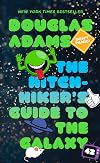
Probably my all time favourite book growing up. So wonderful and original. While I really liked the others in his [b:The Hitch Hiker's Guide to the Galaxy: A Trilogy in Five Parts|372299|The Hitch Hiker's Guide to the Galaxy A Trilogy in Five Parts|Douglas Adams|https://d202m5krfqbpi5.cloudfront.net/books/1322913171s/372299.jpg|40346746], the first one was the best by far. For people who like this book I would highly recommend anything by [a:Terry Pratchett|1654|Terry Pratchett|https://d202m5krfqbpi5.cloudfront.net/authors/1235562205p2/1654.jpg], who also has a wonderful and random British sense of humor.
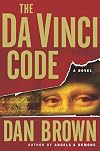
I read this after seeing that it was number 1 on the Globe and Mail's Best seller's list for something like a bajillion consecutive weeks as both a paperback and a hardcover-- I thought to myself: "Surely everyone in Canada can't be wrong about this".
I will acknowledge that it's a page turner-- but it's the equivalent of a summer blockbuster, all flash, no substance and makes you feel slightly stupider after you finish.
And seriously-- APPLE? No one on the team of cryptographers/ non-brain damaged individuals could come up with that as the clue that unlocks Issac "Apple head" Newton's codex? Also, why did the monk have to be an albino masochist? What did that add exactly? I feel like Dan Brown created his characters through a very silly game of mad libs
I will acknowledge that it's a page turner-- but it's the equivalent of a summer blockbuster, all flash, no substance and makes you feel slightly stupider after you finish.
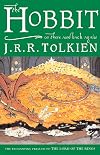
A great book. I'm not a huge fan of [b:The Lord of the Rings|33|The Lord of the Rings (The Lord of the Rings, #1-3)|J.R.R. Tolkien|https://d202m5krfqbpi5.cloudfront.net/books/1388181159s/33.jpg|3462456], and I think that's because if you read The Hobbit first-- as I imagine most people do-- you're in the action, while in LOTR you're observing from the outside. By narrating the adventure from Bilbo's perspective there's a much greater sense of suspense and danger; conversely in LOTR typically it's narrated such that we see the one giant army pouring down the mountain from the north, and the second giant army pouring down the other mountain to the south, and they clash, and there is much killing and bloodshed-- and it's boring because we have no one to identify with, or rather too many people to identify with. But in The Hobbit we're right there looking over Bilbo's shoulder as he's freeing the dwarves or sneaking into Smaug's lair-- and you're worried and wondering "Wow! Is he going to make it?" and that makes you care about him as a character, while Lord of the Rings doesn't have that.
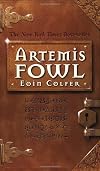
I love books where the hero is more villain than hero-- this is a smart fun book that's great for any budding evil genius. People who like it might also enjoy [b:Soon I Will Be Invincible|645180|Soon I Will Be Invincible|Austin Grossman|https://d202m5krfqbpi5.cloudfront.net/books/1320554514s/645180.jpg|955983], though it's not quite as good.
Freakonomics [Revised and Expanded]: A Rogue Economist Explores the Hidden Side of Everything by Steven D. Levitt
I’m always going to be down for a book that revolves around people using big data to slice up problems and try to solve interesting mysteries. Looking at problems from multiple angles and finding data to answer those intractable questions is the height of data analysis in my books. That said I think that while this book knocks it out of the park for the sections related to teachers cooking the books on standardized testing, cheating sumo wrestlers and (possibly) the link between abortion rates and crime I felt like the other questions were not as well answered or at least not as well supported by the data— maybe there’s more double-checking/supporting data not covered in the book— the minutiae— but I couldn’t help feeling that the discussions about kids’ names and later life success were, or police and crime were more poorly supported, or they relied more heavily on correlations and inferences and leaps of logic. They would have been absolute standout scientific papers but felt like something that just needed a little more support to push them into the realm of supported fact rather than being a likely possibility. But maybe there’s more going on under the hood than we see. Either way a great read and a really interesting compendium of data.

A wonderful spin on the classic Sherlock Holmes novels, that mashes up stories like [b:A Study in Scarlet|102868|A Study in Scarlet (Sherlock Holmes, #1)|Arthur Conan Doyle|https://d.gr-assets.com/books/1348362236s/102868.jpg|1997473] and [b:A Scandal in Bohemia|1848444|A Scandal in Bohemia (The Adventures of Sherlock Holmes, #1)|Arthur Conan Doyle|https://d.gr-assets.com/books/1189170223s/1848444.jpg|2766104]. My only regret is that [a:Neil Gaiman|1221698|Neil Gaiman|https://d.gr-assets.com/authors/1234150163p2/1221698.jpg] didn't turn them into a series, or a full novel.
An Okay book. A fairly interesting world, with a novel twist on magic, and a decent almost heist-like feel throughout. I've read reviews that equate it to being "magic meets The Italian Job" -- and that's a fair comparison to make. It reminded me a bit of [b:Sabriel|518848|Sabriel (Abhorsen, #1)|Garth Nix|https://d.gr-assets.com/books/1293655399s/518848.jpg|3312237] initially, though I ultimately ended up preferring Sabriel to this.
Minor issues I had with it:
-The author spends quite a lot of time focused on the goings on at royal balls, and the architecture of ballrooms, which is fine... when it contributes to the plot, but the reader spends an inordinate amount of time reading about the various types of stained glass windows at a variety of castles, and it ends up dragging in spots.
-The magic is almost so simple as to be boring. Magic should never be boring. Even [b:Jonathan Strange & Mr Norrell|14201|Jonathan Strange & Mr Norrell|Susanna Clarke|https://d.gr-assets.com/books/1357027589s/14201.jpg|3921305] had interesting magic despite the fact the rest of the book was a big snooze-fest.
-Other reviewers have pointed out that the author overuses the word 'maladroitly', I don't know if I would have noticed this otherwise, it shows up maybe 4 or 5 times throughout, but I did notice that he goes a little overboard with sighing. Everyone is sighing, all the time. It's a little distracting, and I wish that the author had chosen a different (less repetitive) way of conveying the show more characters' feelings.
Major issues I had with it:
-For a book that has such potential to have a strong female character it's almost criminal how easily the author back-slides into awful gender stereotypes. The main character (Vin), a street urchin with a recently discovered proficiency in allomancy (a very specific and fairly boring type of magic) spends her time: getting excited over dresses, being crushed when another girl says something mean about her outfit, and immediately falling in love with a fairly douchey guy who spends their first few meetings ignoring her. This is contrasted with the rest of the book where she is largely kicking-ass, taking names and stabbing people in the throat-- it's a weird contrast between this highschool-esque crap and some sort of ninja assassin thing, and neither aspect really feels natural.
-The last sentence:"Vin closed her eyes, simply feeling the warmth of being held. And realized that was all she had ever really wanted." Fuck that. It's a weak, patriarchal note to end on. show less
Minor issues I had with it:
-The author spends quite a lot of time focused on the goings on at royal balls, and the architecture of ballrooms, which is fine... when it contributes to the plot, but the reader spends an inordinate amount of time reading about the various types of stained glass windows at a variety of castles, and it ends up dragging in spots.
-The magic is almost so simple as to be boring. Magic should never be boring. Even [b:Jonathan Strange & Mr Norrell|14201|Jonathan Strange & Mr Norrell|Susanna Clarke|https://d.gr-assets.com/books/1357027589s/14201.jpg|3921305] had interesting magic despite the fact the rest of the book was a big snooze-fest.
-Other reviewers have pointed out that the author overuses the word 'maladroitly', I don't know if I would have noticed this otherwise, it shows up maybe 4 or 5 times throughout, but I did notice that he goes a little overboard with sighing. Everyone is sighing, all the time. It's a little distracting, and I wish that the author had chosen a different (less repetitive) way of conveying the show more characters' feelings.
Major issues I had with it:
-For a book that has such potential to have a strong female character it's almost criminal how easily the author back-slides into awful gender stereotypes. The main character (Vin), a street urchin with a recently discovered proficiency in allomancy (a very specific and fairly boring type of magic) spends her time: getting excited over dresses, being crushed when another girl says something mean about her outfit, and immediately falling in love with a fairly douchey guy who spends their first few meetings ignoring her. This is contrasted with the rest of the book where she is largely kicking-ass, taking names and stabbing people in the throat-- it's a weird contrast between this highschool-esque crap and some sort of ninja assassin thing, and neither aspect really feels natural.
-The last sentence:
I simultaneously love and hate Lev Grossman for witting his books. I loved the start of [b:The Magicians|6101718|The Magicians (The Magicians, #1)|Lev Grossman|https://d.gr-assets.com/books/1313772941s/6101718.jpg|6278977]-- Grossman found the nerve that's connected to your desire for someone to show up and pull back the curtain of reality revealing the magical world that you've always known was there but couldn't quite reach; he found that nerve and proceeded to jump up and down on it relentlessly. It was a dark gritty [b:The Catcher in the Rye|5107|The Catcher in the Rye|J.D. Salinger|https://d.gr-assets.com/books/1398034300s/5107.jpg|3036731] meets Harry Potter.
His take on magic was brilliant and wonderful-- magic was hard, not so much physically hard, or even mentally challenging, but more like demanding the utmost from its practitioners in terms of determination-- it was your classic Karate Kid style wax on/ wax off multiplied by a thousand. There was no wand waving, or channeling, and bravery meant almost nothing, the only thing that really mattered was your ability to knuckle down and persevere through stubborn determination. Perfection.
Then he went and screwed it all up by having his characters travel to a Narnia-esque world. Why? I'm still not quite sure. That being said I will add that Fillory is probably the best it ever is in this book; though that isn't saying much.
Overall I thought the story was very strong, though Grossman did lay it on a little thick in show more parts where it felt like he was getting a little trite and really trying to cram a moral down the reader's throat. Good writing like any form of art should leave the reader with a myriad of possible interpretations-- but forcing a message on the reader reduces your beautiful 3D world to a flat Fillorian cartoon. show less
His take on magic was brilliant and wonderful-- magic was hard, not so much physically hard, or even mentally challenging, but more like demanding the utmost from its practitioners in terms of determination-- it was your classic Karate Kid style wax on/ wax off multiplied by a thousand. There was no wand waving, or channeling, and bravery meant almost nothing, the only thing that really mattered was your ability to knuckle down and persevere through stubborn determination. Perfection.
Then he went and screwed it all up by having his characters travel to a Narnia-esque world. Why? I'm still not quite sure. That being said I will add that Fillory is probably the best it ever is in this book; though that isn't saying much.
Overall I thought the story was very strong, though Grossman did lay it on a little thick in show more parts where it felt like he was getting a little trite and really trying to cram a moral down the reader's throat. Good writing like any form of art should leave the reader with a myriad of possible interpretations-- but forcing a message on the reader reduces your beautiful 3D world to a flat Fillorian cartoon. show less
Excellent. Very weird to read a book that has so many conversations in it that I’ve had with other people at different times in my life. The oil sands is a truly bizarre world, and this book does an excellent job of capturing the feel of it. Beaton is a national treasure, and I’m so glad that she won Canada reads.
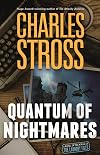
Wow Charles Stross really hates people who work in HR doesn’t he? A so-so entry in the Laundry Files chronicles— I feel like we’ve entered the era where Stross picks a topic (e.g. superheroes, Peter Pan, etc…) and just does a Laundry Files rif on it. This one happens to be Mary Poppins crossed with Sweeney Todd. I think the main issue with this one is that I don’t particularly care about any of the main characters, and the surplus of children makes it hard to keep track of who’s who, as they all largely seem to be interchangeable and not particularly interesting. Also, all the references to other IPs (Telly tubbies, Harley Quinn, Avengers, etc…) really takes you out of it. It’s a testament to how good the magic system is in the Laundry Files that it can carry this sub par entry through and earn it 4 stars.
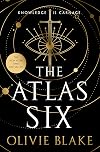
A borderline insultingly bad YA book— while there are some redeemable aspects (e.g. interesting takes on some forms of magic— mostly Callum’s and Tristan’s; an occasional interesting turn of phrase; and a commendable job of drawing out the very stupid mystery) overall it is quite bad. Here are my major critiques in no particular order:
(1) the midpoint “twist” (that one of the 6 has to be murdered) is given away on the dust jacket/cover/book summary
(2) It’s so internally inconsistent! The magicians get excited about creating a wormhole to travel short distances, which has never been done before apparently and is fantastically complicated— however, just beforehand we were shown how they travel all over the world instantly using their magical transportation system, and people can be summoned across the world instantly via enchanted business cards? This is just one of the more blatant instances of the internal inconsistency, but it is rampant.
(3) Evan and Atlas’s scheme is.:.. stupid? Insane? Nonsensical? Evan apparently decided to overturn the society as a prank in his youth? And they waited around for decades to assemble a fantastically specific team of magicians, each of whom was a once in a generation winder-kin, so the odds of it ever coming to fruition were essentially nil?
(4) Nothing happens, what really was accomplished by this book other than setting the foundation for the second book? Very little.
(5) The draw of the society is accepted by everyone, show more yet the motivations of what the characters hope to get from it are unclear, poorly articulated, and they are offered no hint of success— Libby gets no hints about her sister’s medical condition, Nico gets only a few clues about Gideon’s condition, Reina is the only one who gets her books, and the other three don’t even seem to be after anything, or ever request any books of interest.
(6) The level of snark from all the characters is unbearable— especially Libby, but pretty much everyone— every retort is sarcastic stupidity, or the cringiest dialogue I’ve ever read that seems intended to paint a character as “cool” or “aloof” but reads more like “insufferable little snot”. Libby is especially bad, but everyone is generally awful. show less
(1) the midpoint “twist” (that one of the 6 has to be murdered) is given away on the dust jacket/cover/book summary
(2) It’s so internally inconsistent! The magicians get excited about creating a wormhole to travel short distances, which has never been done before apparently and is fantastically complicated— however, just beforehand we were shown how they travel all over the world instantly using their magical transportation system, and people can be summoned across the world instantly via enchanted business cards? This is just one of the more blatant instances of the internal inconsistency, but it is rampant.
(3) Evan and Atlas’s scheme is.:.. stupid? Insane? Nonsensical? Evan apparently decided to overturn the society as a prank in his youth? And they waited around for decades to assemble a fantastically specific team of magicians, each of whom was a once in a generation winder-kin, so the odds of it ever coming to fruition were essentially nil?
(4) Nothing happens, what really was accomplished by this book other than setting the foundation for the second book? Very little.
(5) The draw of the society is accepted by everyone, show more yet the motivations of what the characters hope to get from it are unclear, poorly articulated, and they are offered no hint of success— Libby gets no hints about her sister’s medical condition, Nico gets only a few clues about Gideon’s condition, Reina is the only one who gets her books, and the other three don’t even seem to be after anything, or ever request any books of interest.
(6) The level of snark from all the characters is unbearable— especially Libby, but pretty much everyone— every retort is sarcastic stupidity, or the cringiest dialogue I’ve ever read that seems intended to paint a character as “cool” or “aloof” but reads more like “insufferable little snot”. Libby is especially bad, but everyone is generally awful. show less
The Whole-Brain Child: 12 Revolutionary Strategies to Nurture Your Child's Developing Mind by Daniel J. Siegel
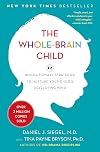
Lots of good info in here for both parents and kids on how they can each curate their internal emotional environment, and better perceive both their feelings and the feelings of others. I found it a little repetitive and overly simplistic in parts though— the sections explaining how the brain processes emotion were written out twice, once for the adult reader and once for a small child to understand and I thought the differences between the two versions were negligible.
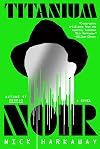
A shockingly by-the-numbers detective mystery with one weird little bit of world building added in. Maybe I’m being too harsh with this review, but I just came off of reading Harkaway’s Gnomon which was shockingly good— on top of that I’ve read The Goneaway World and Anglemaker by him, both of which have been exceptional. This was distinctly average in comparison. Maybe it was the lack of any kind of “how’d they do it” aspect to the mystery— it started off as a “why’d they do it” mystery which requires that you care about the characters involved, which is a tough ask right off of the bat. Also, unrelated, but every single one of these characters is snarky and sarcastic with each other. Every. Single. Sentence. It’s too much.
On a positive note there were some interesting fight scenes— Harkaway does a good job of this, as he has demonstrated previously with some of his other books like the Goneaway World.
On a positive note there were some interesting fight scenes— Harkaway does a good job of this, as he has demonstrated previously with some of his other books like the Goneaway World.
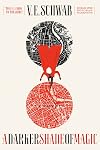
One of the stupidest and most internally inconsistent books I’ve ever read; from the characters who seemed to change their relationships with one another, manners of speech, and motivations from paragraph to paragraph; to the absolutely nonsensical system of magic that the author seemed to be making up on the fly— inventing new rules and spells as the narrative required them. I’d spend more time trashing it but I feel like I’ve already spent more time considering this review than the author did writing the book.
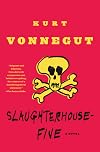
The non-linear timeline in this book was the most interesting aspect and really helped to elevate what would otherwise be a so-so plot and a rather flat set of characters. Overall an enjoyable read though.
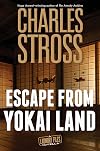
This felt like a long chapter that got cut from a regular laundry files book. Nice to see Bob back in action, but nothing new or novel in this one. Felt a bit like a book that got written so he could get a writers grant to go to Japan and walk around Tokyo and learn about the mythological and spiritual creatures there.
Also, what was the deal with Bob’s prophetic dream? Felt somewhat out of the norm and didn’t add anything.
Also, what was the deal with Bob’s prophetic dream? Felt somewhat out of the norm and didn’t add anything.
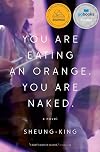
Summary: misanthropic sad boy is sad that his mean/emotionally distant girlfriend is mean/emotionally distant to him. Asian folktales and sophomoric philosophical discussions are peppered in as non-sequiters, to let you know that this is a SMART book for SERIOUS people.
The narrator is also very fixated on superficial things, which makes them come across as shallow and undercuts any semblance of counterculture edginess they’re trying to sell you on, from being fixated on the brands that everyone is wearing, to valuing the exclusivity of the restaurants they dine at over the way the food tastes, to being hyper fixated on how attractive everyone finds their girlfriend. It reads as pathetic superficiality, but also feels like that wasn’t the author’s intent.
The narrator is also very fixated on superficial things, which makes them come across as shallow and undercuts any semblance of counterculture edginess they’re trying to sell you on, from being fixated on the brands that everyone is wearing, to valuing the exclusivity of the restaurants they dine at over the way the food tastes, to being hyper fixated on how attractive everyone finds their girlfriend. It reads as pathetic superficiality, but also feels like that wasn’t the author’s intent.
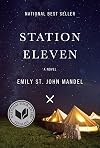
A mediocre post-appocalyptic pandemic story that probably rose to prominance becuase it happened to coincide with an actual global pandemic.
Things I liked:
- Some decent character development, mostly in the pre-pandemic world. I liked Andrew well enough and Miranda was decent as well.
- The Station Eleven comics sounded interesting, and I would have liked to see Kirsten or someone else develop them into a play which the symphony could perform, thereby connecting the prepandemic narrative, post-pandemic narrative and title.
- It is kind of nice to sit around and imagine what it would be like if the world was mostly wipped out.
Things I disliked:
- Nothing really happens in the post-pandemic world, the prophet who seems to be the main antagonist doesn't come across as especially menacing by post-apocalyptic standards and is ended rather quickly. I recently read an article in the New Yorker about how the Coronavirus hijacks your immune system which was written with more depth and intrigue than this narrative.
- I don't really care about any of the members of the symphony other than Kirsten because they have little to know character development.
- Elizabeth and Tyler have poor character development for Tyler to go on to become the main antagonist, maybe if he was more sympathtic or if there was a deeper explanation for him becoming bad than "his mom lost it when the world ended and happened to be vaugely religious".
- Throwing knives are a dumb weapon. Unless you have some other show more reason to have them e.g. you're a professional knife thrower in a circus then you'd probably be better off with almost anything else.
- So everyone in the country just simultaneously hit upon the idea of tattooing their wrists with a knife/arrow after they kill someone? That seems like it would really hinder your survival (from the potential for infection to the fact that not everyone may be cool with the fact that you're a murderer).
- I don't think the world would end this way-- the pandemic is too deadly and fast acting, anyone who lived in the country or managed to avoid people on day one would likely be fine. Most millitary bases would remain operational, anyone in the north, anyone on an island, anyone on a boat, anyone in a country that has irregular flights into or out of it, anyone with solar pannels or renewable energy, etc... [b:Oryx and Crake|46756|Oryx and Crake (MaddAddam, #1)|Margaret Atwood|https://i.gr-assets.com/images/S/compressed.photo.goodreads.com/books/1494109986l/46756._SY75_.jpg|3143431] did a much better job of this.
- Also the idea that the world would take more than 20 years to get an electric grid up and running seems crazy. I mean at a very basic level you could build a simple generator using a water wheel-- which would make infinitely more sense than trying to power a computer with a bicycle as one of the characters does.
- Too much of the book is devoted to people sitting around and gushing about how amazing air conditioners/planes/email was. We get it. Modern convinences are amazing, let's move on with the plot.
- Jeevan was a little too connected to Arthur for it to be realistic.
- Nothing really came of the "Dear V" Book.
- Seems like it's trying to set itself up for a sequel, but not really giving me any reason to care about any of the characters. show less
Things I liked:
- Some decent character development, mostly in the pre-pandemic world. I liked Andrew well enough and Miranda was decent as well.
- The Station Eleven comics sounded interesting, and I would have liked to see Kirsten or someone else develop them into a play which the symphony could perform, thereby connecting the prepandemic narrative, post-pandemic narrative and title.
- It is kind of nice to sit around and imagine what it would be like if the world was mostly wipped out.
Things I disliked:
- Nothing really happens in the post-pandemic world, the prophet who seems to be the main antagonist doesn't come across as especially menacing by post-apocalyptic standards and is ended rather quickly. I recently read an article in the New Yorker about how the Coronavirus hijacks your immune system which was written with more depth and intrigue than this narrative.
- I don't really care about any of the members of the symphony other than Kirsten because they have little to know character development.
- Elizabeth and Tyler have poor character development for Tyler to go on to become the main antagonist, maybe if he was more sympathtic or if there was a deeper explanation for him becoming bad than "his mom lost it when the world ended and happened to be vaugely religious".
- Throwing knives are a dumb weapon. Unless you have some other show more reason to have them e.g. you're a professional knife thrower in a circus then you'd probably be better off with almost anything else.
- So everyone in the country just simultaneously hit upon the idea of tattooing their wrists with a knife/arrow after they kill someone? That seems like it would really hinder your survival (from the potential for infection to the fact that not everyone may be cool with the fact that you're a murderer).
- I don't think the world would end this way-- the pandemic is too deadly and fast acting, anyone who lived in the country or managed to avoid people on day one would likely be fine. Most millitary bases would remain operational, anyone in the north, anyone on an island, anyone on a boat, anyone in a country that has irregular flights into or out of it, anyone with solar pannels or renewable energy, etc... [b:Oryx and Crake|46756|Oryx and Crake (MaddAddam, #1)|Margaret Atwood|https://i.gr-assets.com/images/S/compressed.photo.goodreads.com/books/1494109986l/46756._SY75_.jpg|3143431] did a much better job of this.
- Also the idea that the world would take more than 20 years to get an electric grid up and running seems crazy. I mean at a very basic level you could build a simple generator using a water wheel-- which would make infinitely more sense than trying to power a computer with a bicycle as one of the characters does.
- Too much of the book is devoted to people sitting around and gushing about how amazing air conditioners/planes/email was. We get it. Modern convinences are amazing, let's move on with the plot.
- Jeevan was a little too connected to Arthur for it to be realistic.
- Nothing really came of the "Dear V" Book.
- Seems like it's trying to set itself up for a sequel, but not really giving me any reason to care about any of the characters. show less
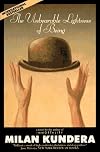
A fantastic read. It had really interesting analyses of interpersonal relationships, felt like a cross between classic Russian literature and Western European literature— I wonder if that’s the Czech style writ large as it straddles those worlds. There were some sections that had a very modern slant to them, the discussions on the repetition of time and reliving the same life, etc… felt like facets of discussions on Buddhism or quantum theories of time. I thought it did a great job of portraying such diverse characters and perspectives— felt very similar to Anna Karenina in many aspects which it also referenced several times which I thought was nice. One thing that I found odd was that the discussions about people having a vertiginous desire to fall were (mostly) only applied to the women. Tomas had a great desire to fall than most of the characters but the language used to discuss his choices in this area is different.
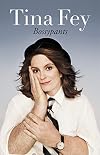
Great read, really fun and heartfelt. I preferred it to Amy Poehler's [b:Yes Please|20910157|Yes Please|Amy Poehler|https://d.gr-assets.com/books/1402815435s/20910157.jpg|40098620], which was in a similar vein. Tina Fey hits those serious topics with a great blend of wit and heart. I'd recommend it to anyone who wants a good laugh.
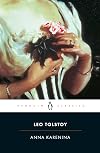
Amazing character development. Tolstoy writes in such a way that you understand every character as a fully realized individual. Too often I have read works that reduce fairly important supporting characters to caricatures who's only purpose is to serve as a tool in the development of the plot. Conversely Tolstoy develops his characters in such a way that you can fully understand the motivation behind every action that occurs in the book. Every character is unique, and interesting in their own way. A must read for anyone interested in writing dynamic characters.
p.s. I would add that which edition you read can be very important. As with many translations even minor differences in word choice can make a huge difference. I believe this edition is good-- however, I tried reading whichever edition Oprah recommended at one point and it was not nearly as well written. Proceed with caution, and maybe sample a few.
p.s. I would add that which edition you read can be very important. As with many translations even minor differences in word choice can make a huge difference. I believe this edition is good-- however, I tried reading whichever edition Oprah recommended at one point and it was not nearly as well written. Proceed with caution, and maybe sample a few.
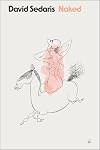
A fun read-- I like the part where he talks about hitchhiking around the country, it's like a better version of [b:On the Road|70401|On the Road|Jack Kerouac|https://d.gr-assets.com/books/1413588576s/70401.jpg|1701188]. The first few pages are a bit hard to get through as you're wondering what's going on, but overall the book strikes a nice balance between human drama and humor. While I preferred [b:Me Talk Pretty One Day|4137|Me Talk Pretty One Day|David Sedaris|https://d.gr-assets.com/books/1431013639s/4137.jpg|1030767], Naked is definitely worth the read.
The Family Firm: A Data-Driven Guide to Better Decision Making in the Early School Years (The ParentData Series) by Emily Oster
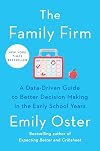
While I like the idea of having a structured framework to make decisions I’m not convinced this is the approach I want to go with.
I read Cribsheet and liked Osler’s deep dives into the data, and especially her assessment of the quality of the various studies— too often something will make the headlines that ends up being based on a single study of 15 people under poor experimental conditions. I was hoping for something similar here, but where Cribsheet offered the occasional definitive statement— e.g. sleep training might actually be good despite what you’ve heard.— the Family Firm had much less of this— possibly because there are no good studies, and it’s harder to control for other factors within this age range and the questions are more nuanced and individually specific. That being said it does feel very freeing knowing that most of the things you worry about as a parent actually aren’t that big a thing to worry about— e.g. screen time may be a problem for some kids in some situations, but it isn’t the major issue the media makes it out to be. I also like how Osler was able to reframe questions and alternatives to help the reader appreciate the cost-benefit analysis of many of these choices. I wish there was a bit more definitive guidance, or maybe more of a dive into how project management software can help families, or maybe more discussion of the effect sizes in some of the studies, but overall a solid book.
I read Cribsheet and liked Osler’s deep dives into the data, and especially her assessment of the quality of the various studies— too often something will make the headlines that ends up being based on a single study of 15 people under poor experimental conditions. I was hoping for something similar here, but where Cribsheet offered the occasional definitive statement— e.g. sleep training might actually be good despite what you’ve heard.— the Family Firm had much less of this— possibly because there are no good studies, and it’s harder to control for other factors within this age range and the questions are more nuanced and individually specific. That being said it does feel very freeing knowing that most of the things you worry about as a parent actually aren’t that big a thing to worry about— e.g. screen time may be a problem for some kids in some situations, but it isn’t the major issue the media makes it out to be. I also like how Osler was able to reframe questions and alternatives to help the reader appreciate the cost-benefit analysis of many of these choices. I wish there was a bit more definitive guidance, or maybe more of a dive into how project management software can help families, or maybe more discussion of the effect sizes in some of the studies, but overall a solid book.
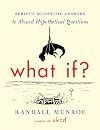
Felt a bit like the novelization of Mythbusters— “what if we took this thing and blew it up?” dressed up as “science”. There was also an odd amount of snark directed at the reader/people asking questions— I’m sure Randall Munroe gets all sorts of annoying repetitive questions, but presenting them and then trashing the people for asking them seems like an odd choice for a book. I should also note that I listened to the audio version of this book which was narrated by Will Wheaton, which probably carries some cache with the nerds, but I don’t find him great to listen to, maybe not the best choice as a narrator (I kept on thinking about that Picard bit where he says “Shut up Wesley”).
There were a few redeeming bits though— interesting ways of getting at answers to problems— I thought the bit where he used the information density of language to calculate how many Tweets you could generate that have actually unique/distinct information was interesting. Most of the other ones though related to explosion sizes, elliptical orbits, drag, thrust, etc… things that are probably the bread and butter for a former NASA scientist, so maybe that’s why he gravitated towards those ones, but when he’s forced to think outside the box in a different field we get some (occasionally) more interesting problems/solutions.
There were a few redeeming bits though— interesting ways of getting at answers to problems— I thought the bit where he used the information density of language to calculate how many Tweets you could generate that have actually unique/distinct information was interesting. Most of the other ones though related to explosion sizes, elliptical orbits, drag, thrust, etc… things that are probably the bread and butter for a former NASA scientist, so maybe that’s why he gravitated towards those ones, but when he’s forced to think outside the box in a different field we get some (occasionally) more interesting problems/solutions.
Teaming with Fungi: The Organic Grower's Guide to Mycorrhizae (Science for Gardeners) by Jeff Lowenfels
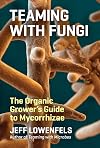
A so-so overview of the important role mycorrhizae play in the environment, and how they interact with plants. The first third was a bit of a dove into the taxonomy of the various fungi, and a bit of the history of research in the subject, the second third covered a mechanistic explanation of the structure of the fungi and how they interact with plants on a cellular level, the final section outlined what improvements have been shown from inoculating plants with fungi early on, as well as a description of how to propagate fungal hyphae/spores. As someone who’s interest was mostly in how to use fungi in my home garden this was the only relevant section.
Overall I found the book rather dry, very hung up on nailing down the taxonomic jargon at the expense of a more interesting/poetic interpretation of what’s going on. I found the section on the benefits of using fungi very repetitive, it pretty much just outlined the fact that it improved plant health and stress resistance in every case. More synthesis of results to paint a fuller picture of how fungi could be used might be worthwhile, or (since this is the third book in the series) some overview of how to balance the soil microcosm for plants in general— things that lead to health soil critters, bacteria and fungi all together.
I also felt like the author plugged their other books in the series too much, once is fine, twice is annoying, three times is too much.
Good information in there if you can stick it out, but you show more have to do some wadding to find it. show less
Overall I found the book rather dry, very hung up on nailing down the taxonomic jargon at the expense of a more interesting/poetic interpretation of what’s going on. I found the section on the benefits of using fungi very repetitive, it pretty much just outlined the fact that it improved plant health and stress resistance in every case. More synthesis of results to paint a fuller picture of how fungi could be used might be worthwhile, or (since this is the third book in the series) some overview of how to balance the soil microcosm for plants in general— things that lead to health soil critters, bacteria and fungi all together.
I also felt like the author plugged their other books in the series too much, once is fine, twice is annoying, three times is too much.
Good information in there if you can stick it out, but you show more have to do some wadding to find it. show less
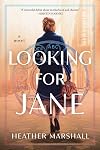
Pretty good read, heartbreaking in parts, and concerning that this history isn’t front and centre in Canadian history textbooks. Interesting twist at the end too.
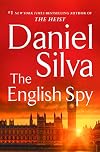
I enjoyed the opening of this book, Silva writes very directly and does a good job of building mystery and tension, and he has some decent witty repartee between his characters. However, the rest of the book felt rather stale, the writing comes off as formulaic and even the witty banter starts to feel repetitive. Plus the excessive levels of killing and torture start to wear on you after awhile.
Also, I started to notice a lot of strange conservative view points leaking through-- for example early in the book the master spy Gabriel Allon comments on how whenever a building is destroyed in Palestine and news organizations claim that innocent civilians died they're usually misinformed and only terrorists have been killed.... really? I suppose that one could say that this is just the character's view as an Israeli spy; but then I read the author's note in the back of the book which is oddly critical of Obama's foreign policy, so it seems strangely intentional. I don't have a problem with writers wanting to express their political views, but maybe the next time he's grinding his axe in a work of fiction he can use a softer touch.
Also, I started to notice a lot of strange conservative view points leaking through-- for example early in the book the master spy Gabriel Allon comments on how whenever a building is destroyed in Palestine and news organizations claim that innocent civilians died they're usually misinformed and only terrorists have been killed.... really? I suppose that one could say that this is just the character's view as an Israeli spy; but then I read the author's note in the back of the book which is oddly critical of Obama's foreign policy, so it seems strangely intentional. I don't have a problem with writers wanting to express their political views, but maybe the next time he's grinding his axe in a work of fiction he can use a softer touch.
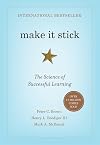
Excellent, excellent excellent! I cannot adequately convey how great this book is. From the way that it practices what it preaches through its varied and interleavened structure; it’s creative real-world examples; its division of advice for students, life long learners, teacher and coaches; it’s summation of a decade of cognitive neuroscience into an easily digestible format— 10/10. This should be at the top of the reading list of any teachers, educators, coaches, high school or university students, parents or anyone interested in improving educational outcomes for themselves or anyone in their lives. I wish that I had found this book earlier in my educational career as it would have saved me countless hours of stress and fruitless rereading of course material.
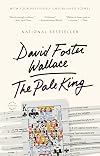
What a weirdly excellent book. I thought the foreword was very helpful at clarifying how the book came to be, as it helped explain some of the odd bits, like the occasional strange discordant repetitions, or how some sections seemed way too long compared to others. Overall really good though. Things I liked particularly:
(1) the little tableaus of the various characters lives— I particularly liked the girl who killed all her abusers, the contortionist child, the insufferably good child, and the lady who sows chaos wherever she goes (a real Breakfast Club 2.0)
(2) the bits that are supposed to be boring highlighting how insanely boring a lot of this is, and not trying to make it appear more interesting than it is— leaning into the boredom and somehow making the fact that it’s so boring a noble pursuit.
(3) the writer’s aside, inserting himself into the narrative in a way that makes it almost believable right up until it starts getting surreal.
(4) the little bits of magical realism. I’m learning that I’m a sucker for this. Write a very straightforward book about IRS accounting but then throw in a little snippet about how one of the auditors levitates when he focuses, but no one notices and it doesn’t affect anything significantly and I’m hooked.
My only real note is that I feel that it should be clearer who the characters that get introduced as kids end up becoming— would have liked to hear more about who the contortionist child becomes, or the insufferably show more good boy. Also, who was that lady of chaos with the two dogs at the end? Who drugged the picnic goers? So many unanswered questions. show less
(1) the little tableaus of the various characters lives— I particularly liked the girl who killed all her abusers, the contortionist child, the insufferably good child, and the lady who sows chaos wherever she goes (a real Breakfast Club 2.0)
(2) the bits that are supposed to be boring highlighting how insanely boring a lot of this is, and not trying to make it appear more interesting than it is— leaning into the boredom and somehow making the fact that it’s so boring a noble pursuit.
(3) the writer’s aside, inserting himself into the narrative in a way that makes it almost believable right up until it starts getting surreal.
(4) the little bits of magical realism. I’m learning that I’m a sucker for this. Write a very straightforward book about IRS accounting but then throw in a little snippet about how one of the auditors levitates when he focuses, but no one notices and it doesn’t affect anything significantly and I’m hooked.
My only real note is that I feel that it should be clearer who the characters that get introduced as kids end up becoming— would have liked to hear more about who the contortionist child becomes, or the insufferably show more good boy. Also, who was that lady of chaos with the two dogs at the end? Who drugged the picnic goers? So many unanswered questions. show less
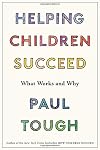
Really interesting read— I wouldn’t say any of the findings are particularly surprising, though the magnitude of the effects that the interventions can have was surprising to me, as were the strength of the negative effects in producing poor outcomes in the lives of the affected children.