Mauldin, the author of the wildly popular “Willie and Joe” cartoons in WWII, was a wild New Mexico boy with little education, a lot of talent, and plenty of drive. Dead broke, he joined the National Guard for rent money, and was shipped to North Africa, then Italy, where he worked for the 45th Division’s newspaper and covered the grinding war up the boot from the point of view of the infantry. After the war he was a political cartoonist, editorialist, and favorite on the veterans’ circuit. A lifelong distrust of authority and penchant for puncturing inflated egos led to noisy confrontations with George Patton, who wanted him arrested, and many other notables. In the Sixties, he was at first a supporter of the Vietnam War, then turned determinedly against it. This first biography of the two-time Pulitzer winner does not flinch from Mauldin’s tumultuous personal life, marked by three wives and serious alcohol use, but concentrates on his drawing and writing career. Illustrated with ninety of Mauldin’s drawings. A lively and thoroughly readable account of an American original. DePastino is a college teacher, author of Citizen Hobo , and editor of Willie and Joe and Jack London’s The Road.
Battle for the Rhine 1944: Arnhem and the Ardennes - The Campaign in Europe 1944-45 by Robin Neillands
July to December 1944: the Allies had broken out of the Normandy beachhead, the German armies were in full retreat and hastening back toward Germany, with French, British, and American armies in hot pursuit. SHAEF rosily predicted a January collapse, which was spectacularly refuted in the Ardennes. The author is interested in three intertwined issues: Allied strategy for the ground war, Eisenhower’s performance as the ground forces commander, and the various army commanders’ roles in the race for the Rhine. He attempts to correct American historians’ biases, re-examine the actions of the major subordinate commanders (Montgomery, Bradley, and Patton) and discuss the problems that kept the Allies from ending the war in 1944. Evaluations of the characters are balanced; Eisenhower was a fine coalition leader and a mediocre battlefield commander; Montgomery is shown as a solid and experienced commander but a total failure at relationships with the other generals; Patton as reasonably effective in the pursuit but constantly undermining Allied strategy. Neillands is the author of several military history books, including Eighth Army and Bomber War. Might have been better if Neillands had integrated the larger strategic picture, as for instance the firebombing of the German cities, to better describe the context. On the other hand he died shortly after finishing this book, so give him a break.

OK, I'm old. But no contemporary cartoonist (with the possible exception of Stephan Pastis) has so accurately skewered American social mores as Walt Kelly did for so may years. They still resonate.
From 1940 onward, the Allies bombed Germany and the occupied countries as thoroughly as they could manage. Precision bombing, area bombing, terror bombing, revenge, day- and night-bombing, strategic bombing; various names for a weapon that by the end left the great cities of the Reich in ruins. Friedrich examines at length, and with great intelligence, the origins and the conduct of the air war. What methods were successful: Why the Allies chose to prosecute the war primarily through the bombing campaign? What was the relationship between German culture and the Third Reich? What was the ethical underpinning and the effect on post-war morality of the campaign? Not so much a lament, although that is certainly powerfully present, as an indictment of Hitler’s appropriation of German history and the Allies’ destruction of a nation’s culture. Thoughtful and detailed, the author examines the science of fire and the evolving methods of destruction that by 1944 were quite capable of wiping out a city overnight and overwhelming the welfare apparatus with refugees. Why did it happen? Friedrich will impart quite a different understanding of what has become, in America at least, an invisible battle.
The Odyssey by Homer
If you've never actually read the Odyssey, you must take a shot at this translation. 16,000 lines of poetry may seem daunting, but Home is the source, the ur-source, of most of Western fantasy literature. You need to read this excellent translation to really understand the story, and dispel the various accretions that movies and TV have glopped on.
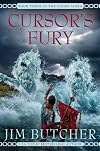
I'm impressed by Butcher, but I'm happier with his Chicago wizard. This series is quite good, well worth your time, not as original as the Chicago books.
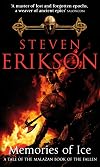
Erikson has got one heck of a word processor, or he's been writing mauscripts for years and just got them all published at once. Continuation of the Mazazan Book of the Fallen, and like its predecessors a major effort of worldbuilding. Well worth it, but start with "Gardens of the Moon."
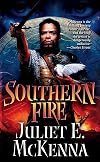
McKenna continues to amaze with her worldbuilding. In Book One of the Aldabreshin Compass she posits a society that rejects magic as an unacceptable interference with the natural order, unlike the mainlanders just to the north, who embrace magic and use it as a natural resource. The contrast is instructive to the hero, a local warlord. When faced with an incursion by apparently insane strangers who associate with dragons, he must find a way to save his realm, balance his disgust of magic, overcome a whole variety of obstacles, and, of course, get the woman. McKenna is an author with legs.
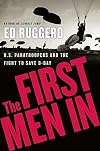
The 82nd Airborne Division jumped into Normandy the night before D-Day to prepare the battlefield for the main force. The operation was technically difficult, risky, and deemed vital to the breakout from the beaches into maneuver space in Normandy. The airdrop, using parachutists and glider-borne troops, spread 14,000 soldiers in and around the drop zones, their units thoroughly intermingled and dispersed. The author uses the usual technique of describing a battle, setting the scene with strategic and situational analysis, then focusing on individual soldiers as they embark. He effectively dissects the St. Mere Eglise and La Fiore actions, in some cases correcting previous historians’ errors. He presents the experiences of individual soldiers well, and does not flinch from the long-term psychological effects of close combat. The invasion is already so well documented that one might well ask why we need yet another book, and the author does build to a degree on his previous book on the 82nd, Combat Jump. Still, a stirring story of bravery, death, success, told very well. A good narrative of the battle and an excellent choice for most libraries. Ruggero is the author of several books on leadership and military history, and five military novels.
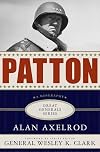
This compact biography of an already over-documented life is interesting for its attempt to place General George S. Patton and his accomplishments in the context of his dramatic effect on the U.S. Army’s doctrine, training, and operations long after World War II. No startling revelations about Patton the general or the man, although the author does bluntly describe attitudes and prejudices that at this remove are repugnant but which were entirely expectable for a man of Patton’s social class and upbringing. Patton's famous for his self-publicized command of an Allied Army but biographers (including axelrod) rarely mention how he undermined Allied strategy in Europe. Axelrod, prolific professional author of well over 30 books, provides readable prose and workmanlike descriptive material. General Wesley Clark’s forward adds nada. Extensive endnotes, mainly of primary sources. Although not a substitute for the Blumenson or D’Este biographies, it is much more concise and accessible. First in Palgrave’s Great Generals Series. Series editor is Clark. An excellent choice for most libraries and a good introduction to the subject.