A nice concise book about a couple's walk from Mexico to Canada along the Pacific Crest Trail. In this book, Tyler discovers that there is much to appreciate about the entire trail - not just the spectacular High Sierra. A good listen or read for fans of the PCT.
This book, whose 4th edition was published in 1997, looks at how southern California has sought out water in distant rivers to support its growth. The book primarily looks at the "theft" of the Owens River in the eastern Sierra Nevada, and then at how the Colorado River supports so much of California - a state that puts almost no water into that desert river. The book concludes with a look at the State Water Project that takes water from the northern Sierra Feather River and transports it all the was to near San Diego. The book concludes with the statement about a future when Los Angeles could no longer acquire any additional water: "To many this would not be a problem, but a solution."
This book covers the ecological, indigenous, political and economic history of the Klamath River basin - a piece of real estate that lies of the border of California and Oregon. However, it is a mostly unknown area to the urban populations of these states. What ties the entire basin together is the river. A river that was once full of salmon and steelhead. A river that irrigates farms carved out of shallow wetlands. A river that produces electricity via hydroelectric dams. The recent removal of four hydroelectric dams on the river is a victory for the tribes and environmentalists, although the recovery of these fish and the river ecosystem will take decades. Otherwise, the conflicts continue as there will never be enough water for all the demands. Can the basin find a sustainable future for all?
Having hiked the John Muir trail over 50 years ago, it was nice to revisit the entire trail through Gallogly's novel. While my experience as a teenager was much different that Gil and Syd's, I still enjoyed the side stories of a cancer survivor and a young paralegal searching for his place in the world.
Atomic Dreams: The New Nuclear Evangelists and the Fight for the Future of Energy by Rebecca Tuhus-Dubrow
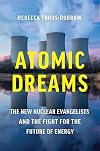
Nuclear energy needs another look, and this book does just that. In these times of climate change, why are we not looking at this relatively carbon free source of electricity? There are problems, but are they insurmountable?
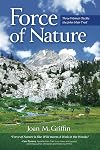
In 2006, three women hike most of the John Muir Trail through the high Sierra Nevada mountains. Having hiked the trail myself -- 5 section hikes from 1970 to 1974 -- this book brought back some great memories of this wonderful trail. They spent 27 days on the trail, with the author giving a day-by-day account of both the good and the bad. A well-written memoir by Ms. Griffin.
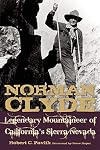
If you are at all interested in California's High Sierra and the history of its early mountaineers, then this story of Norman Clyde should be included in your library. Probably no one explored the High Sierra as well as he did, before and since. Somewhat of a tragic figure, he was also somewhat of a curmudgeon. An interesting read.
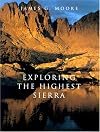
Moore, who is a geologist at Stanford University, focuses on the southern end of the Sierra Nevada mountains. While much of the Sierras are "high," this book covers the "highest" portion, mostly in Sequoia and Kings Canyon National Parks and the Inyo National Forest. The book touches upon the exploration and mapping of the highest Sierra, before making a deep diver into its geology. A great reference book.

Water for All, is a scholarly book looking at the world's current water crisis. Its both a mix of optimism and pessimism, with some ideas as to how we can ensure that people have access to clean water. He introduces the concept of the Great Acceleration, beginning after WWII in that the world saw an explosion of population, economic growth and resource development, resulting in many aspects of today's problems. A good read for those interested in international water issues and policies.
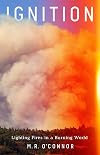
O'Connor is a journalist that catches the wildland "fire bug" and travels across the US learning about and the practicing both fire suppression and prescribed burning activities. She makes the case that our wildlands evolved with and need fire to be healthy and to support healthy communities. She especially connects with indigenous fire practitioners and the tragedy of removing both native peoples and their cultural practices from much of the land. There is some hope as indigenous burning seems to be getting more and more support from land managers. Finally, this is an interesting read for fire ecologists looking for the views of a layperson.
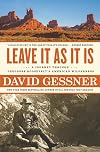
Gessner explores the conservation achievements of Teddy Roosevelt in visiting several western national parks and monuments. He looks at Roosevelt's use of the Antiquities Act to create monuments, with special attention given to Bears Ears during the time of Trump, who reduced the monument (that BIden re-established). Somewhat dated, unfocused and promotes the stereotypical environmentalist stance (grazing, mining and logging are bad -- preservation good). Actual management of natural resources is much more complex and not explored in this book.
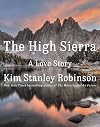
Having hiked, scrambled and fished through much of the High Sierra that Robinson loves, I was captivated by this book. In many ways, I regret books like these, because I want to keep all those special places somewhat secret. But hey, in this time of GoogleEarth, blogs, social media and other digital communications -- not much is secret anymore. To the younger generations -- enjoy and protect these wild areas.
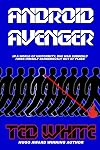
This is either Ted White's first novel or first novel under his own name. Its the prequel to Spawn of the Death Machine, which is much better.

Star Wolf! is the third book in White's Qanar series, following Phoenix Prime and The Sorceress of Qar. Not as good as the first two books, but still entertaining as the main character -- Makstarn -- travels the wilds of Qanar seeking answers to his history.

Sedgwick covers a nice piece of the western development story, that being of two competitors building railroad lines from the Midwest to southern California.

A good read for those interested in the history of the Colorado River basin's water management, and the political events leading up to today's problems. Fleck disputes that people always fight over scarce water, but instead come up with ingenious solutions in the face of conflict. The current megadrought and continued lowering of lakes Mead and Powell, put some of this book (published 2016) out of date.
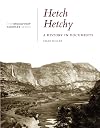
A thorough history of the Hetch Hetchy Valley in Yosemite National Park -- from its use by indigenous peoples to its flooding by the City of San Francisco as a secure source of water (and power). Many view the battle over Hetch Hetchy as the birth of the modern environmental movement, as "birthed" by John Muir. Miller also includes information on a 2012 ballot proposal in San Francisco to remove the dam and restore the valley, which lost in a landslide. However, the controversy lives on . . .
Wonderlandscape: Yellowstone National Park and the Evolution of an American Cultural Icon by John Clayton
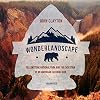
Clayton covers the natural, administrative and political history of America's first national park in a fine read. One chapter is dedicated to Ansel Adams who captured the park's beauty in his black and white photos, even though he preferred Yosemite National Park over Yellowstone. Another chapter covers the huge wildfires of 1988 and how what seemed so unusual at the time is now commonplace in the forested western United States. He points out the fallacy of early park supporters trying to portray the park as empty and rarely visited by Indians -- thus, no big deal making it off limits to everyone but visitors. We now know that assertion to be untrue, and the creation of the park displaced use of the area by several tribes.
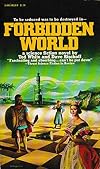
A fine story by Ted White in which a colony starship headed to a distant world falls apart for an unknown reason and a pod of 4 survivors find themselves on a strange world. This world has been colonized by humans, but it is made up of villages that are strangely vignettes of old earth. The people know nothing of other settled planets or earth. Its not long before the survivors run into the Overseers who are controlling the people and want to keep their planet forbidden. Good first 3/4's of the book, while the ending didn't grab me.

The starship carrying descendants of scientists banished from Earth is finally approaching an Earth-like planet for them to colonize. Unfortunately, the adult crew was killed off in an accident and the surviving children are ignorant and superstitious as how to operate the starship and finish the voyage. Luckily, one of the adults had survived, but is hidden away on the ship. A curious and frustrated kid finds the adult survivor and is taught how to operate the machines.

Book two of the Exiles trilogy sees a future generation from the scientists banished from Earth on a starship approaching Alpha Centauri. The challenge is whether they settle a less than desirable planet, with hurricane force winds and a sulfur atmosphere -- and genetically modify their children to survive -- or do they keep traveling to another star with better prospects. Divisions within the crew make the decision difficult.
Jedediah Smith: No Ordinary Mountain Man (Volume 23) (The Oklahoma Western Biographies) by Barton H. Barbour
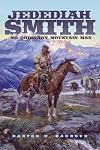
A very information account of an important figure in the Euro-American exploration of the west by mountain men trapping beavers, prior to wagon trains on the Oregon Trail and gold seekers heading to California. Smith may be more important than well known figures such as Kit Carson and Jim Bridger. The audio book version unfortunately contains many mis-pronounced words, taking away for the enjoyment of the book.
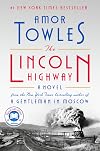
I loved A Gentleman In Moscow, this book not so much. Much of the book seems to be written like a YA novel, with clunky dialog and predictable plot. Also, the characters are mostly unlikable and annoying. I hope Towles' next novel lives up to A Gentleman.

I greatly enjoyed Ben Bova's Grand Tour set of novels. This book, part of a trilogy, was written in the early 70's and not quite up to par of Bova's later novels. The story is about a dystopian future, in which the world government decides to exile the best and brightest scientists as they feel they are a bad influence on a dysfunctional world. Actually, a story that could be written today with some updating.

Winik sure knows or knows of a lot of people that have died. Some stories were interesting, others only so-so.
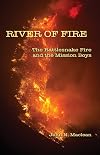
John N. Maclean is the go to author for writing about wildfires in which firefighters have lost their lives. Its a family tradition, as his father, Norman, wrote the best selling Young Men and Fire. John has written a number of books in this genre, with River of Fire being his latest. Not his best, as I would recommend Fire on the Mountain instead. River of Fire is best for wildland fire professionals.
Natural Rivals: John Muir, Gifford Pinchot, and the Creation of America's Public Lands by John Clayton
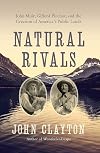
In the world of public land management and history, it is common to read that the preservationist John Muir did not get along with the conservationist Gifford Pinchot. Clayton does a nice job of showing that, at least prior to the Hetch Hetchy controversy, these two pioneers of natural resource management on federal lands shared much in common and inspired each other. The somewhat stiff Pinchot was enthralled by Muir's stories of the spirituality of being out in nature; whilst the rebel Muir came to appreciate the science of sustainable forestry as described by Pinchot. A good read for those interested in how the setting aside of public lands (national parks, forests, monuments, etc) plays an important role in America's history.
This book is a series of stories about the history of Lake Tahoe (and the surrounding region), ranging from the tragedy of native Americans being brutalized by Anglo-Americans to Frank Sinatra and his Cal-Neva casino and the famous and shady characters that walked through its doors.
The Quiet Americans: Four CIA Spies at the Dawn of the Cold War--a Tragedy in Three Acts by Scott Anderson
The early days of the CIA are fascinating in many ways. First, how the Soviets -- our ally in WWII -- quickly became our number one enemy in a cold war. Secondly, how miserably the US did in recruiting and placing spies in eastern Europe and North Korea -- most of whom were quickly captured and killed. And thirdly, how presidents, from Truman forward were obsessed with not letting communism flourish on their watch -- leading to many bad decisions to support tyrants just because they were anti-communistic. This book covers the early days of 4 spies, from how they were recruited, to their important assignments, and finally to how they finished their careers. Good information on how the US failed to support Hungary in its desperate attempt to free itself from the Soviets. A solid read, but too much detail for me. I recommend Legacy of Ashes by Timothy Weiner for a broad history of the CIA.