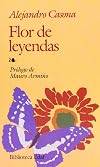
This is a wonderful collection of famous legends, and tales told with Mr. Casona's peculiar poetic sense. It is an especial experience to re-live those past myths and historic narrations developed by the charm and literary sense of the author.

Bernanos declared himself to be a writer who is a Catholic, instead of a Catholic writer as he was largely known in the reviews of his work.
The difference in meaning is clearly exposed in this book where his previous politic sympathies to Franco's insurrection was promptly replaced by the horrified rejection of the Phalanx actions.
His presence in Palma de Mallorca, Balearic Islands, during the Spanish war let him witness the cruel and unjust methods used to condemn poor innocent people to death under the regime. In his own words: «pauvres types simplement suspects de peu d'enthousiasme pour le mouvement» (...poor men simply suspected of little enthusiam for the movement...). All this under the blind eye of the local bishop.
This situation prompted him to write this essay where he pour all his pity and bitterness about the evil actions of human beings and his reverence for innocence and courage, in his words: «Et puis, je ne saurais dire quelle admiration m'ont inspirée le courage, la dignité avec laquelle j'ai vu ces malheureux mourir» (... «I would not know how to express the admiration that have inspired in me the courage, the dignity with which I have seen these unfortunantes die»...).
His work searches within the psychology of his characters, showing their souls as the place where the war between Good and Evil is carried on.
To understand the deep nuances depicted in this work we need to understand Bernanos as a man full of idealism, carrying the torch of show more liberty and self-determination, and conjugate his talent and his mistakes in the way he himseld does with his characters, knowing he was a man at the same time weak and strong trying to be honest in life working out the best as he understood the alloted time of his life and the events he had to face. show less
The difference in meaning is clearly exposed in this book where his previous politic sympathies to Franco's insurrection was promptly replaced by the horrified rejection of the Phalanx actions.
His presence in Palma de Mallorca, Balearic Islands, during the Spanish war let him witness the cruel and unjust methods used to condemn poor innocent people to death under the regime. In his own words: «pauvres types simplement suspects de peu d'enthousiasme pour le mouvement» (...poor men simply suspected of little enthusiam for the movement...). All this under the blind eye of the local bishop.
This situation prompted him to write this essay where he pour all his pity and bitterness about the evil actions of human beings and his reverence for innocence and courage, in his words: «Et puis, je ne saurais dire quelle admiration m'ont inspirée le courage, la dignité avec laquelle j'ai vu ces malheureux mourir» (... «I would not know how to express the admiration that have inspired in me the courage, the dignity with which I have seen these unfortunantes die»...).
His work searches within the psychology of his characters, showing their souls as the place where the war between Good and Evil is carried on.
To understand the deep nuances depicted in this work we need to understand Bernanos as a man full of idealism, carrying the torch of show more liberty and self-determination, and conjugate his talent and his mistakes in the way he himseld does with his characters, knowing he was a man at the same time weak and strong trying to be honest in life working out the best as he understood the alloted time of his life and the events he had to face. show less