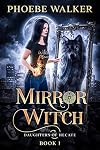
So, I loved it. I devoured this book in a couple of days. A couple of clunky sentences stuck out to me at the beginning, but overall, very well written, and the dialogue and character interactions flowed well and didn't feel too forced. I've read some books where the author is trying so hard to be snarky or sarcastic or whatever that it's painful to read, but that didn't happen with this one. The author did great with mythology and witchiness. The world-building was strong but not smack-you-over-the-head. I felt connected to the characters, and I cared about what happened to them. Plus the sex scene was pretty damn good.
 This review was written for LibraryThing Early Reviewers.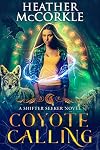
Read the prequel stuff from the other series or at least the preceding novella. I was so confused by the references to previous information. Since I hadn't read the other books, I also couldn't understand how she had this much experience at her... "job?" after only 10 months. BUT. I love this kind of urban fantasy, so I enjoyed it. Choosing a current issue to focus a fantasy storyline around was a fascinating and well-thought-out touch that I appreciated.
This review was written for LibraryThing Early Reviewers.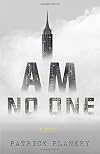
I struggled with this one. The thing that kept popping into my head as I read it was, "this is pretty navel-gazing." Ultimately, I just didn't like it. The story has a lot of potential and did pick up as it went but the writing tone didn't work for me, personally.
This review was written for LibraryThing Early Reviewers.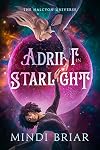
I liked it. Actually, I really liked it. Tai, Aisha, and the supporting cast are flawed and likable, and the story is unique and charming. Parts of the book are a little heavy-handed on current social issues in a way that didn't quite make sense if this book takes place 4,000 years in the future and assumes some things are shameful that seem incredibly out of place if so many other things are accepted, but taking that with a grain of salt, it's a fun jaunt of a book. (This is one of those books where it's hard to explain the issues without spoilers.) My biggest complaint, and it's not even a complaint, is that this is a YA book. It's not advertised that way, and it's maybe not meant to be one, but it is. I also wish there was more about the alien species. They're a huge part of the first portion of the book and then just disappear. I almost wish the book was just longer so the author could have explored some of the social issues and plot points further without feeling rushed, which would have helped the YA feel as well. Anyways, all that to say, this is a fast, fun read that made me smile and didn't cause too much anxiety. Once I get through some of my other TBR books, I'll probably read the second one to see what happens next.
This review was written for LibraryThing Early Reviewers.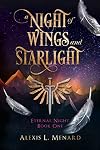
Well, it's a fun book. Overall, I enjoyed it. I laughed at some of the dialogue, and the story idea was original and thought-provoking, even as I anticipated some of the twists. I enjoy a quick romp of a read, and this fell nicely into that category. Even though it's almost cliche at this point, I enjoy a good, strong heroine who can kick a** and have witty comebacks. I do have a couple of issues, though. The chemistry between the main characters felt forced and their... connection, I suppose is the word, just sort of *poof* here it is. I felt like there needed to be another couple of chapters toward the beginning just to develop their relationship. I'm also not a fan of using jealousy or emotional manipulation to push forward a relationship, but that may just be a pet peeve, along with every character being gorgeous and chiseled. And the big "romance" scene was... fine? Maybe I've been spoiled by some good bodice rippers in my time. BUT all that to say, it was a fun quick read!
This review was written for LibraryThing Early Reviewers.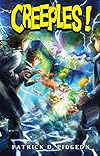
Ok, it's fun. For some reason I went into it thinking "Scooby Doo," but definitely not Scooby Doo. Is it a brilliant work of literature? No, but it's an enjoyable read that flows well and keeps you entertained.
This review was written for LibraryThing Early Reviewers.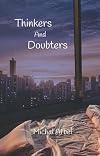
I remember thinking as I read this book, "wow, this author is young." Potential was there, but I felt like it would have hit home for me maybe a decade/decade and a half ago. It just felt... nostalgic for me instead. It reminded me of those high school emo years with underlying tones of sexual trauma of some sort.
This review was written for LibraryThing Early Reviewers.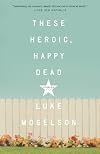
Sad, depressing, dark, violent... pretty on par for soldiers returning after deployment.
This review was written for LibraryThing Early Reviewers.Engineering Eden: The True Story of a Violent Death, a Trial, and the Fight over Controlling Nature by Jordan Fisher Smith
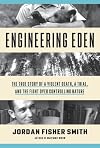
Fascinating. My original review got deleted, so I have no idea what I originally said, but the story was very intriguing. It made me feel even worse for bears as humans encroach into their territory. Great historical background on the national park (or was it state park?).
This review was written for LibraryThing Early Reviewers.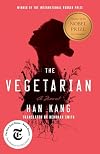
Apparently, if you remove the book from your LibraryThing Books, your review disappears. Good to know...
Anyways, I don't remember exactly what I wrote. The book was odd. Intriguing, but odd. Separated into three parts, if I remember correctly, and told from different viewpoints. The sexualization of eating so by the "main" character slowly refusing more and more foods, the desexualization and yet resexualization of her as object rather than person (the brother-in-law is really, really creepy).
Anyways, I don't remember exactly what I wrote. The book was odd. Intriguing, but odd. Separated into three parts, if I remember correctly, and told from different viewpoints. The sexualization of eating so by the "main" character slowly refusing more and more foods, the desexualization and yet resexualization of her as object rather than person (the brother-in-law is really, really creepy).
This review was written for LibraryThing Early Reviewers.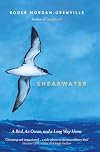
I’m absolutely in love with this book. The topic has the potential to veer toward boring but the author is funny and anecdotal and made the topic of a seabird completely enjoyable.
This review was written for LibraryThing Early Reviewers.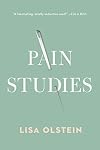
This book reads like a migraine. Not negatively, like it causes a migraine, but you can feel the author's migraine experiences radiate off the page. Reading this book reminds me of times I've had true migraines and the world is scattered and the colors are just a little skewed and sound is just a little off. The book is described as "lyric essay" and that pretty much perfectly sums up why I both liked it and struggled with it. It jumps around and winds through and gives an impression of pain because that's the only way to actually describe pain. As she says, the 1-10 pain scale isn't truly helpful when describing pain and many people don't understand what people in pain are trying to say and describe. My biggest criticism of the book is that some of her touchstones, such as the TV show House, MD (which I watched years ago) feel outdated and a little too on-the-nose considering how poetic many of the other examples meander. Also, for such a short book, it took me a while to get through because I couldn't just fly through it - her style forced me to slow down and take breaks.
This review was written for LibraryThing Early Reviewers.
I liked it. Was it simplistic? Yes. Was it weird? Yes. But I felt like it was a short, easily understood allegorical tale about human (or other intelligent animal in this book's case) environmental destruction and playing with things we don't truly understand.
This review was written for LibraryThing Early Reviewers.Inferior: How Science Got Women Wrong-and the New Research That's Rewriting the Story by Angela Saini
Well, our culture sure hasn’t changed since Darwin. Even today researchers are trying to show that women should be wives and mothers, secure in their empathy and intuition while letting men do all work requiring intelligence. Angela Saini fights that image, though sometimes it's hard to tell. Inferior does a good job of showing how sexist and biased even today's scientific research is regarding sex and gender and cultural roles; however, in what I assume is an attempt to not be too biased herself, the author gives these sexist theories too much room (in my opinion.) Maybe it only seems that way because the chapters usually start with these types of studies and researchers then debunks them, but I got frustrated with it a couple of times.
Beyond the book's layout mentioned above, my only real criticism is that how Saini discusses sex differences in a portion of chapter three makes me worried about that section being incredibly harmful to those on the LGBTQIA spectrum, especially people identifying as trans*. There's also a small part on page 144 where she lists hijabs, burkas, and the concept of tzniut as examples of religious female repression but doesn't mention Christian nun's habits, which bothers me because it's a common blind spot.
Overall, this was a really interesting book that packed a lot of scientific research into a short, easily-read format. Women are not inferior. Women's brains are not inferior. Women aren't "designed" to be wives and mothers to the show more exclusion of all else. Some scientists are finally starting to wake up from the Victorian, Darwinian nonsense to see that. Saini does a good job giving the reader the necessary arguments when faced with the next misogynist. show less
Beyond the book's layout mentioned above, my only real criticism is that how Saini discusses sex differences in a portion of chapter three makes me worried about that section being incredibly harmful to those on the LGBTQIA spectrum, especially people identifying as trans*. There's also a small part on page 144 where she lists hijabs, burkas, and the concept of tzniut as examples of religious female repression but doesn't mention Christian nun's habits, which bothers me because it's a common blind spot.
Overall, this was a really interesting book that packed a lot of scientific research into a short, easily-read format. Women are not inferior. Women's brains are not inferior. Women aren't "designed" to be wives and mothers to the show more exclusion of all else. Some scientists are finally starting to wake up from the Victorian, Darwinian nonsense to see that. Saini does a good job giving the reader the necessary arguments when faced with the next misogynist. show less
This review was written for LibraryThing Early Reviewers.
Elaine Khosrova was a magazine test kitchen editor, had a degree in food and nutrition, and spent eight months at the Culinary Institute of America studying pastry arts, but she is not a historian. The lack of citations always makes me nervous when non-historians write histories because it's more difficult to verify their information if I ever wanted to backtrack their information; however Khosrova's extensive first-hand accounts of meetings, discussions, and demonstrations by people directly involved in the butter industry helps allay that nervousness. Additionally, her background in food means she understands the use of butter in a way that others may not. Khosrova's background in a magazine also shows with her delightful, personable writing and seemingly extensive forays into a thesaurus.
Though I bake often, I didn't know the history of butter, just that higher butterfat makes better croissants. Butter: A Rich History was highly entertaining and enlightened me to the drama of butter, whether cow, goat, sheep, yak, camel, etc. For example, I had heard of bog butter before by watching Andrew Zimmer's Travel Channel show but Khosrova gave a much better explanation of what it was and why it was preserved. I also had no idea how ruminants' specific biological design helped create the fat found in their milk. It's fascinating. Overall, Butter: A Rich History is fascinating though a little shallow at points that I would definitely recommend to anyone interested in food and show more the people who create it. It also has an extra little treat in that two-thirds of the book is the history and the last third are butter-centered recipes. show less
Though I bake often, I didn't know the history of butter, just that higher butterfat makes better croissants. Butter: A Rich History was highly entertaining and enlightened me to the drama of butter, whether cow, goat, sheep, yak, camel, etc. For example, I had heard of bog butter before by watching Andrew Zimmer's Travel Channel show but Khosrova gave a much better explanation of what it was and why it was preserved. I also had no idea how ruminants' specific biological design helped create the fat found in their milk. It's fascinating. Overall, Butter: A Rich History is fascinating though a little shallow at points that I would definitely recommend to anyone interested in food and show more the people who create it. It also has an extra little treat in that two-thirds of the book is the history and the last third are butter-centered recipes. show less
This review was written for LibraryThing Early Reviewers.
Like One of the Family is a collection of anecdotes or vignettes, depending on how you look at them. Mildred, the main character, tells her friend, Marge, about her life, about being a domestic worker, about friends visiting, about standing up for herself. Originally individually published in the mid-twentieth century in the newspapers Freedom and the Baltimore Afro-American, each story shows Childress's background in performance and theater. Each story IS a performance. A performance of strength and wit in the face of mid-century society and racism. Each short tale is only a few pages long and read as if you were hearing just Mildred's side of a conversation. They could easily be monologues delivered on-stage.
This review was written for LibraryThing Early Reviewers.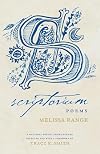
Scriptorium was a National Poetry Series winner, chosen by Tracy K. Smith. That name doesn't mean much to me currently but she's a Pulitzer Prize winning poet that I intend to look into further. Scriptorium combines Appalachia with ancient manuscripts and Christianity into 32 relatively short poems.
I... liked it.
Ok, disclaimer, poetry and I don't usually get a long very well. I tend to lean more literal and the poetry units in high school English class always ended up giving me a headache and major frustration. But there are some poems I like and Scriptorium is a collection that I like. Did I catch all, or most, of the subtleties? Ha! Definitely not. That'll take a couple re-readings and I still probably won't catch some. Could I be any more vague?
Scriptorium is a little more literal, in my opinion. At intervals are poems about the colors monks used to make ancient manuscript illustrations which are beautiful and a little angry. Actually, I read little peeps of anger in a lot of the poems. Anger at destruction, anger at Christianity, anger at government policies, anger at how the South and Appalachia both are and are seen. The poem about Navajo Code Talkers was brilliant.
So, I liked it. I liked the vividness. I liked the connection to a southern culture I can relate to. I liked that I had to Google some of the titles and words to figure out what they meant and place names to see where they were. I liked that it felt like a colorful, cheeky, jigsaw word puzzle.
I... liked it.
Ok, disclaimer, poetry and I don't usually get a long very well. I tend to lean more literal and the poetry units in high school English class always ended up giving me a headache and major frustration. But there are some poems I like and Scriptorium is a collection that I like. Did I catch all, or most, of the subtleties? Ha! Definitely not. That'll take a couple re-readings and I still probably won't catch some. Could I be any more vague?
Scriptorium is a little more literal, in my opinion. At intervals are poems about the colors monks used to make ancient manuscript illustrations which are beautiful and a little angry. Actually, I read little peeps of anger in a lot of the poems. Anger at destruction, anger at Christianity, anger at government policies, anger at how the South and Appalachia both are and are seen. The poem about Navajo Code Talkers was brilliant.
So, I liked it. I liked the vividness. I liked the connection to a southern culture I can relate to. I liked that I had to Google some of the titles and words to figure out what they meant and place names to see where they were. I liked that it felt like a colorful, cheeky, jigsaw word puzzle.
This review was written for LibraryThing Early Reviewers.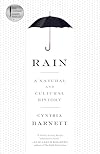
Rain as life; love; sex; death; Janus, the two-faced god; masculinity; chaos; enemy; weapon; memory; inspiration. Phew, talk about a lyrical history. In Rain, Cynthia Barnett creates a personable and inviting history of rain and water. Moving water is life for fragile humanity yet we are incapable of mastering it. The world lives by rain, adapts to rain, dies by rain. Honestly, this is one of the best natural and cultural histories I've read because it's so incredibly engaging and visual. Barnett paints images with her writing that are as vivid as color after a storm.
Rain is separated into five subsections centered on a different aspect of rain. Section 1, Elemental Rain, was my favorite section. It described how humanity evolved with rain and how both rain and drought influenced humanity's and civilization's development from the very beginning of evolution. (Finger wrinkles after being in water, anyone?) Section 2, Chance of Rain, described how humans tried to predict, define, and protect from rain. Section 3, American Rain, is pretty self-explanatory. Apparently Americans have always been big on trying to control everything, including the elements, without really paying attention to science. Section 4, Capturing the Rain, is about how artists, including writers, have used the rain as inspiration and setting; how the smell of rain can define a culture; and how cities have fought rain and, more recently, tried to work with rain to create a sustainable and healthy region. show more The last section, 5, Mercurial Rain, is about "strange" rain, maybe a frog or two, and climate change.
I really, really enjoyed this book, though it was a little jarring when the author inserted her own personal narratives, especially in the later sections. The book is well organized and very well written. It satisfied both the history/science nerd part of me and the yearning for lyricism part. This book even inspired me to a tweet my amusement with a line jabbing at inefficient political systems. Barnett's sources are nicely varied, though leaning toward secondary and news articles. Plus, I always appreciate an index.
Overall, if you're interested in natural history or human nature at all, or just enjoy a well written poetic non-fiction, read it! show less
Rain is separated into five subsections centered on a different aspect of rain. Section 1, Elemental Rain, was my favorite section. It described how humanity evolved with rain and how both rain and drought influenced humanity's and civilization's development from the very beginning of evolution. (Finger wrinkles after being in water, anyone?) Section 2, Chance of Rain, described how humans tried to predict, define, and protect from rain. Section 3, American Rain, is pretty self-explanatory. Apparently Americans have always been big on trying to control everything, including the elements, without really paying attention to science. Section 4, Capturing the Rain, is about how artists, including writers, have used the rain as inspiration and setting; how the smell of rain can define a culture; and how cities have fought rain and, more recently, tried to work with rain to create a sustainable and healthy region. show more The last section, 5, Mercurial Rain, is about "strange" rain, maybe a frog or two, and climate change.
I really, really enjoyed this book, though it was a little jarring when the author inserted her own personal narratives, especially in the later sections. The book is well organized and very well written. It satisfied both the history/science nerd part of me and the yearning for lyricism part. This book even inspired me to a tweet my amusement with a line jabbing at inefficient political systems. Barnett's sources are nicely varied, though leaning toward secondary and news articles. Plus, I always appreciate an index.
Overall, if you're interested in natural history or human nature at all, or just enjoy a well written poetic non-fiction, read it! show less
This review was written for LibraryThing Early Reviewers.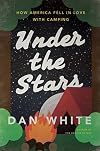
Wow, that was a really good read. Enjoyable, well written, mildly funny.
In Under the Stars, Dan White explores the history and current ideology and demographics of camping. How did camping start? What were its influences? Why do middle-class white people love pretending to be low-tech wilderness adventurers? This book will answer all these questions and more! In all seriousness, White's focus on the historical figures who influenced the development of what we know as camping today is interesting and well-researched. His own experiences and conclusions from trying out different types of camping, while already being a seasoned/experienced backpacker and recreational camper, give a more recent feel to the history and allow the reader to more deeply immerse themselves in the unfolding story. The glimpses of the past include such characters as Teddy Roosevelt, John Muir, Henry David Thoreau, and a slew of lesser known figures who have changed American culture with their outdoor experiences. As for White himself, he describes experiences with nude camping and wasps, Leave No Trace camping and human feces, camping with city-dwelling teenage girls, antifreeze-guzzling marmots, glamping, etc.
Under the Stars is only fifteen chapters but it's a hefty book nonetheless. I personally feel the chapters flow so well that the occasional longer chapter is hardly even noticed. Part memoir-part history lesson, this book is a treat, even if you're not much of a camper yourself. Maybe it'll show more be the push you need to take a tent out for a night and see some stars. show less
In Under the Stars, Dan White explores the history and current ideology and demographics of camping. How did camping start? What were its influences? Why do middle-class white people love pretending to be low-tech wilderness adventurers? This book will answer all these questions and more! In all seriousness, White's focus on the historical figures who influenced the development of what we know as camping today is interesting and well-researched. His own experiences and conclusions from trying out different types of camping, while already being a seasoned/experienced backpacker and recreational camper, give a more recent feel to the history and allow the reader to more deeply immerse themselves in the unfolding story. The glimpses of the past include such characters as Teddy Roosevelt, John Muir, Henry David Thoreau, and a slew of lesser known figures who have changed American culture with their outdoor experiences. As for White himself, he describes experiences with nude camping and wasps, Leave No Trace camping and human feces, camping with city-dwelling teenage girls, antifreeze-guzzling marmots, glamping, etc.
Under the Stars is only fifteen chapters but it's a hefty book nonetheless. I personally feel the chapters flow so well that the occasional longer chapter is hardly even noticed. Part memoir-part history lesson, this book is a treat, even if you're not much of a camper yourself. Maybe it'll show more be the push you need to take a tent out for a night and see some stars. show less
This review was written for LibraryThing Early Reviewers.Five Dollars and a Pork Chop Sandwich: Vote Buying and the Corruption of Democracy by Mary Frances Berry
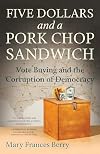
With "Five Dollars and a Pork Chop Sandwich," Dr. Berry dives right into corrupt voting practices. Vote buying, vote hauling, etc. are common features throughout American politics, even today and especially at local levels, and Dr. Berry makes no attempt to shy away from this fact. Dr. Berry focuses part of her narrative on the efforts of Greg Malveaux, the one-time director of Louisiana's Fraud Division, while also exploring the topic as a larger problem.
The first thing I have to say is Awesome! It's so exciting to see books like this come out with such knowledge and experience behind it. I was intrigued from when I first read the title; however, the book is far from perfect. "Five Dollars" didn't hit its stride until chapter three, when Dr. Berry gave her full attention to a specific case instead of trying to touch on a lot of cases without enough detail and falling into the problem of generalizations. (But chapters three and four were amazing.) Despite the lack of detail I desired, the book was overall well-written and informative with a lot of personality through the use of a few colloquialisms and an easy tone, yet Dr. Berry assumes her audience already has some political and historical knowledge, such as an understanding of "soft money," "public financing," and "slavery by another name," none of which are explained in the book. There is also an assumption that readers will understand the shifting ideologies of Republicans and Democrats, notably in the South, and show more when this shift occurred. Additionally, some of the attempts to tie in Malveaux's role seemed forced, especially in chapter two when Dr. Berry reviewed many Louisiana fraud cases. Finally, the shift between topics was a little abrupt when the first half of the book was about Louisiana, then there was a chapter on Chicago, then a chapter on various other places. It didn't flow well. Maybe if the book was longer and Dr. Berry was able to add more description and details to the various examples everything would have tied together better.
HOWEVER, now that I've sounded like one of those really cranky critics, I think this book is an important piece in showing readers that everything isn't peachy in the land of democracy. Dr. Berry seems very passionate about the subject and that passion shines through these pages. I would love to read more of her writing. show less
The first thing I have to say is Awesome! It's so exciting to see books like this come out with such knowledge and experience behind it. I was intrigued from when I first read the title; however, the book is far from perfect. "Five Dollars" didn't hit its stride until chapter three, when Dr. Berry gave her full attention to a specific case instead of trying to touch on a lot of cases without enough detail and falling into the problem of generalizations. (But chapters three and four were amazing.) Despite the lack of detail I desired, the book was overall well-written and informative with a lot of personality through the use of a few colloquialisms and an easy tone, yet Dr. Berry assumes her audience already has some political and historical knowledge, such as an understanding of "soft money," "public financing," and "slavery by another name," none of which are explained in the book. There is also an assumption that readers will understand the shifting ideologies of Republicans and Democrats, notably in the South, and show more when this shift occurred. Additionally, some of the attempts to tie in Malveaux's role seemed forced, especially in chapter two when Dr. Berry reviewed many Louisiana fraud cases. Finally, the shift between topics was a little abrupt when the first half of the book was about Louisiana, then there was a chapter on Chicago, then a chapter on various other places. It didn't flow well. Maybe if the book was longer and Dr. Berry was able to add more description and details to the various examples everything would have tied together better.
HOWEVER, now that I've sounded like one of those really cranky critics, I think this book is an important piece in showing readers that everything isn't peachy in the land of democracy. Dr. Berry seems very passionate about the subject and that passion shines through these pages. I would love to read more of her writing. show less
This review was written for LibraryThing Early Reviewers.